機械加工部品は 3 日以内に出荷されます。金属およびプラスチック部品を今すぐ注文してください。WhatsAPP:+86 189 2585 8912info@cncprotolabs.com
EV バッテリーインサート成形: カスタム精密熱管理部品

EV バッテリーインサート成形: カスタム精密熱管理部品

logo

作者

JSプレシジョン

発行済み
Apr 08 2026
  • インサート成形

フォローしてください

EV バッテリーのインサート成形は、電気自動車の急速充電の熱問題を解決する主要な方法です。

電気自動車の 2C を超える急速充電中、角型バッテリー セルと液体冷却プレートの間のサーマル グリース層の熱抵抗は、800 回の熱サイクル後に 300% 上昇し、ホットスポットの温度差は局所的な領域で 15°C を超えます。

これは、セルの老化の促進、さらには熱暴走のリスクに直接つながります。

「ヒートシンク + サーマルパッド + 絶縁フィルム」という従来の 3 層構造では、界面の凹凸や長期信頼性の問題を解決できませんでした。インサート成形は統合された高精度の機能により、この問題を克服するための主要なテクノロジーとして浮上しています。

主要な回答の概要

<頭> <本体>

重要なポイント

  • 界面の空隙を除去: インサート法による成形では、50~120MPa の成形圧力を加えて空隙を除去し、サーマル グリース溶液と比較して熱抵抗が 40% 減少します。これは冷却システムの強化とセル劣化の大幅な遅延の主な原因です。
  • 一体型コンポーネント: 3 層構造を 1 つのカスタム プラスチック パーツに置き換えることで、組み立て公差や経年劣化のリスクを回避し、同時にメンテナンス コストを削減できます。
  • コスト管理: 射出成形金型インサートは、定量化可能なメンテナンス費用を計算するための優れたツールです。摩耗が激しい部品は 50,000 回の金型サイクル後に 交換できるため、正確な予算計画が可能になります。
  • 生産的なプロセス: 金型プロセス制御センサーにより、インサート位置の CPK が 0.67 から 1.33 に上昇し、製品の歩留まりが向上します。

精密バッテリー コンポーネント: JS Precision のインサート成形ソリューション

インサート成形スペシャリストの献身的な専門知識により、お客様の精密製造要件を満たす EV バッテリーの熱管理システムを設計できます。 これが、この分野を専門とする JS Precision を選択すべき主な理由です

EV バッテリーインサート成形や射出成形インサートなどのコア製品の研究開発と量産サポートをお求めの場合、JS Precision は 20 社を超える世界的な自動車会社にカスタマイズされたソリューションを提供してきました。

このシステムを使用すると、800V の高電圧急速充電や走行距離の延長機能などの標準的な業界要件を満たしながら、基本的な生産上の問題に対処できます

同様のシナリオを例に挙げると、ある大手自動車メーカーは、主要な SUV バッテリー パック プロジェクト中に、挿入位置のずれの問題により材料の 12% が廃棄となり、熱抵抗測定値が承認制限を 30% 超えたという問題を経験しました。

お客様は、JS Precision の金型センサー閉ループ制御とインサート金型インサート設計により、スクラップ率の 1.5% 削減を達成しました。これにより、熱抵抗を 40% 削減することができ、同時に弊社をパートナーとして選択することで運用コストを毎年 120,000 ドル以上節約することができました。

JS Precision は、すべてのカスタム プラスチック部品の安全性と均一性を維持するために、IEC 62133-2:2017 国際安全規格への完全な準拠を要求する生産要件を満たすための完全なサポートを提供します。

当社は、材料の選択から金型設計、量産出荷までを一貫した品質管理システムを開発しました。

このシステムは完全なテスト レポートと信頼性検証データを提供します。これにより、品質管理のあらゆる側面を当社が処理しながら、コラボレーション中に安心感を得ることができます。

<ブロック引用>

専門的なインサート成形サービスを選択すると、お客様は技術的なリスクを軽減し、生産コストを管理できます。 EV バッテリー コンポーネントの熱抵抗やインサートのずれなどの課題に直面している場合は、当社のエンジニアに無料の技術相談とソリューション評価を依頼してください。

EV バッテリー インサート成形は、液冷プレートとバッテリー セル間の界面の熱抵抗問題をどのように解決できますか?

多くのお客様が同じ疑問を抱いています。EV バッテリーのインサート成形では、実際に液冷プレートとバッテリー セルの間の界面熱抵抗の問題にどのように対処するのでしょうか?

まず、アルミニウム合金または銅で作られた別個の部品を放熱インサートとして使用します。その後、熱伝導率の高いプラスチック(PPS + 熱伝導フィラー)をインサート成形によりコーティングします。

この操作中の金型内の圧力は界面の空隙を取り除くために 50 ~ 120 MPa に維持されます。これにより、熱抵抗を約 40% 低減できます。

金型内の圧力により界面の空隙が除去されます

射出成形の過程で、この段階で射出成形インサートには 50 ~ 120 MPa の保持圧力がかかります。その結果、溶融プラスチックが金属インサート表面の凹凸を埋め、接触面積が 95% 以上に増加し、 その結果熱伝導率が大幅に向上します

本質的には、これは高圧を使用して壁の小さな隙間をセメントで埋めるのと同じであり、これによりプラスチックと金属のインサートがしっかりと接着されるため、熱伝導率が大幅に向上し、接触不良による放熱の問題も防ぐことができます。

3 層構造の単一コンポーネントの置き換え

成形によって設計されるカスタム プラスチック部品は、熱伝導率 (2.5 W/mK)、絶縁 (4000 V 耐電圧)、および構造サポートのタスクを同時に達成します。

これはサーマル グリースや絶縁フィルムが必要ないことを意味し、その結果、調達コストと組み立てコストが削減され、経年劣化のリスクも最小限に抑えられます。

<ブロック引用>

EV バッテリーのインサート成形でバッテリー パックの熱抵抗をさらに低減する方法については、テクニカル ホワイト ペーパーをダウンロードして、金型内圧力制御の核心点を明確に理解してください。

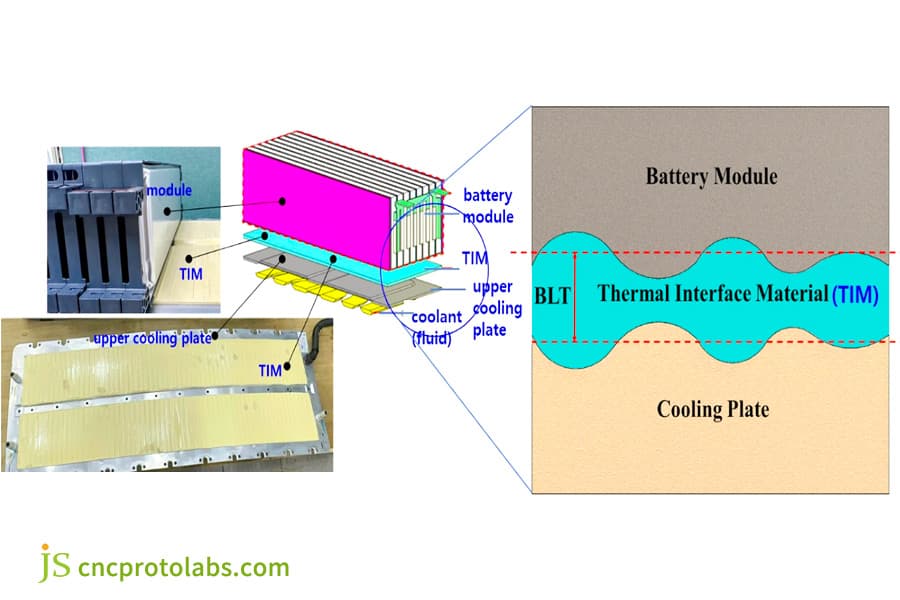
EV バッテリーインサート成形のサーマルインターフェイス

図 1: 実際のバッテリー モジュールと概略図および断面図を並べた合成画像。熱を管理するためにインサート成形によってサーマル インターフェイス マテリアル (TIM) がバッテリーと冷却プレートの間にどのように適用されるかを示しています。

カスタムインサート成形により、限られたバッテリーパックスペース内で両面の熱放散と沿面距離のバランスをどのように達成できるでしょうか?

インターフェースの熱抵抗の問題を解決することは別のことですが、お客様にとってもう 1 つの重要な側面は、小さなバッテリー パック スペース内の十分な沿面距離と両面の熱放散のバランスを取ることです。 カスタムインサート成形は、これらの課題に対する理想的な解決策を提供します。

たとえば、銅製のバスバーやヒート パイプをセル間隔 8 mm のインサートとして使用できます。プラスチック T は 2 つの機能を備えたインサートをサポートします。一方の面は熱を伝導し (2.5 W/m・K)、もう一方の面は絶縁します (沿面距離 4.1 mm)。

3D プリントされた等角水路モールドを使用して成形されたプラスチックが、この T 字型の特徴を形成します。

スペース不足を解消する T 字型バリアのコンセプト

800 V 高電圧プラットフォーム (クリープ距離 3.2 mm) 用のカスタム インサート成形 は、代替インサート配置を採用しています。断熱バリアが必要な側のプラスチック壁は 2.5 mm まで厚くなっています。したがって、 体積を増加させることなく放熱と断熱の両方が実現されます。

これは、限られたスペースにさまざまなストレージ ソリューションを積み重ねるようなもので、一方の面は放熱用、もう一方の面は断熱用であり、どの面も干渉を受けません。

つまり、限られたバッテリー パックのスペース内で、高電圧の安全性と放熱の両方の要件を同時に達成することができます。

3D プリント金型により壁厚の差別化が可能

コンフォーマル水路の金型を使用すると、プラスチックの流れを正確に制御できるため、同じカスタマイズされたプラスチック部品上に 0.8 mm の熱伝導性の薄肉領域と 2.5 mm の絶縁性の厚肉領域を同時に製造できるため、部品設計の柔軟性も向上します。

バッテリー モジュールの射出成形インサートに最適な材料はどれですか?

射出成形金型インサートの材料に関する決定は、金型の寿命、製品の精度、生産コストに直接影響します。 使用を通じて、私たちは最適なソリューションを特定しました。

高周波熱サイクル (-40°C ~ 85°C、3000 サイクル) の場合、H13 鋼金型インサートの寸法変化率は 0.012% であり、S136 の 0.025% よりも優れた性能です。

金属インサート (銅/アルミニウム) と PPS プラスチック間の CTE の不一致は 2.5 ppm/°C に制限する必要があります。これは、ISO 12165:2019 の寸法精度要件に準拠しています。

金型鋼の選択の比較

射出成形用インサートの材質の中で、表面窒化処理を施した H13 鋼 (硬度 1100HV) が最適です。 3,000 回の熱サイクル後でも、キャビティの寸法変化は 0.008 mm です。

さまざまな鋼の性能比較は次のとおりです:

核心的な問題
解決策
主要データ
インターフェースの熱抵抗
EV バッテリーインサート成形 直接金属インサート被覆
熱抵抗↓40%、金型圧力50~120MPa時
高電圧沿面距離
カスタムインサート成形Tタイプ/Zタイプバリア
沿面距離 4.1mm、耐電圧 4000V
変位を挿入
金型内センサーによるリアルタイム フィードバック圧力保持
スクラップ率が 12% から 1.5% に減少
金型摩耗
射出成形用インサート
交換時間を 4 時間から 40 分に短縮
<頭> <本体>

CTE マッチングの計算

銅インサート (CTE=16.8) と 30% ガラス繊維強化 PPS (CTE=14.3) の CTE の差は非常に小さい (わずか 2.5) のに対し、アルミニウム インサート (CTE=23.6) の CTE の差は 9.3 と大きいため、これはさらに 0.2 mm の干渉補正が必要であることを意味します。

CTE の差が小さいほど、製品の精度が高くなります。

本質的に、これは身体に着た服の適合性のようなものです。 CTE の差が小さいほどプラスチックとインサート間の「フィット」 が良くなり、温度変化による緩みや変形が防止され、長期にわたる製品精度の安定性が確保され、不良品も減少します。

金型鋼の種類
表面処理
3000 熱サイクル後の寸法変化 (mm)
硬度 (HV)
該当するシナリオ
交換サイクル (金型時間)
H13
窒化処理
≤0.008
1100
高電圧急速充電バッテリー コンポーネント
50,000 (高摩耗領域)
S136
研磨処理
≤0.025
950
通常のバッテリーコンポーネント
30,000 (高摩耗領域)
H11
窒化処理
≤0.015
1000
中電圧バッテリーのコンポーネント
40,000 (高摩耗領域)
ベリリウム銅
なし
≤0.010
850
精密なインサートの位置決め
20,000 (高摩耗領域)
W7718
窒化処理
≤0.012
1050
大型プラスチック部品成形
60,000 (高摩耗ゾーン)
<頭> <本体>

金型摩耗寿命の予測

ゲート近くに配置された金型インサートは、50,000 回の成形サイクルごとに摩耗が 0.003mm に達したときに交換する必要があります。摩耗しない部分は 200,000 サイクルにわたって機能するため、お客様は金型メンテナンス サイクルを正確にスケジュールすることができます。

インサート成形サービスは大規模な構造コンポーネントを処理できますか?

EV バッテリー パックが大型化するにつれて、大型部品のプラスチック成形もより困難になります。お客様からは、インサート成形サービスが大規模生産の需要に対応できるかどうかをよく尋ねられます。

私たちは、あらゆる課題に対処する準備ができている強力で成熟したテクノロジーと生産チームを示すことで、彼らの考えを変えます。

自動ロボット アームを使用すると、8 つのネジ付きスリーブ + 2 つの液体冷却プレートが、長さ 850 mm のバッテリー ベース プレート上に 0.05 mm の再現性で設定されます。

マルチキャビティ射出における圧力バランスも実装されており、 プラスチック部品の収縮率の偏差が 0.08% 以下であることが保証されており、これは精度要件を満たしています)。

自動事前位置決めシステム

レーザー測定でインサートの位置を確認した後、6 軸ロボット アームがインサートをピックアップして金型に配置します。インサート成形サービスは、1 個あたり 90 秒の生産サイクルを実現し、精度と効率のバランスを保ちます

マルチキャビティ圧力バランス技術

圧力センサーと組み合わせた 4 つの独立したホット ランナーは、各キャビティの射出圧力をリアルタイムで調整し、プラスチック成形大型部品の平坦度を 0.15mm/m 以内に制御し、製品の一貫性を保証します。

ワンストップの垂直統合プロセス

JS Precision は、金型設計からインサート加工、射出成形の量産までカスタム プラスチック部品をワンストップで提供することで、プロジェクト サイクルを短縮し、顧客とのコミュニケーション コストを削減します。

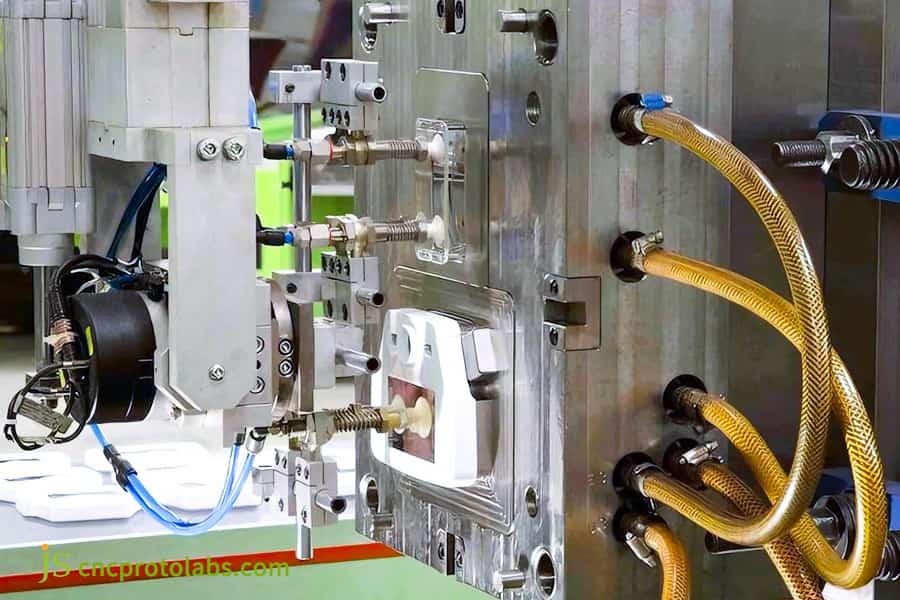
インサート成形による大型部品の製造

図 2: 産業用インサート成形セットアップの拡大図。流体ラインを備えた大型の金型が工場環境内の機械ベッド上に配置されており、実質的なバッテリー コンポーネントを製造できます。

射出成形金型インサートの摩耗と交換頻度は、1 個あたりのコストにどのような影響を与えますか?

大量生産では、射出成形インサートの摩耗と交換頻度が単価に直接影響します。私たちの方法は、お客様がこのコストを制御する方法を理解するのに非常に役立ちます。

ベリリウム銅インサートの摩擦損失は、金型サイクルごとに 0.003 mm です。位置決めピンの摩耗が 0.02mm を超えると、インサートの位置がずれる可能性が非常に高くなります。

インサート タイプの設計を採用することにより、金型メンテナンスの単価は 1 個あたり約 0.025 ドル に下がります (金型総生産数 500,000 個を想定)。

摩耗と位置ずれのしきい値

射出成形インサートの位置決めピンの直径の摩耗は 0.02 mm に達し、その結果、 インサートの位置ずれの標準偏差は0.02 mm から 0.07 mm に変化し、スクラップ率は 8% に上昇しました。そのため、摩耗した部品は適時に交換する必要があります。

インサートタイプのクイック交換設計

摩耗度の高い部品を別の金型インサートとして作成することで、4 本のボルトを取り外すだけで交換が可能になり、交換時間を 4 時間から 40 分に大幅に短縮すると同時にダウンタイムを制限し、効率を向上させます。

単体コスト計算モデル

全体の生産量が 500,000 ユニットの場合、高摩耗領域の交換コストは 1,758 ドル、低摩耗領域の交換コストは 293 ドル、ダウンタイム損失は 439.5 ドルとなります。金型あたりのメンテナンス費用は約 0.025 ドルです。

<ブロック引用>

射出成形インサートの摩耗による単体コストを正確に計算したいですか?生産規模を送信していただければ、無料のコスト計算レポートを提供いたします。

EV バッテリー部品の大型部品のプラスチック成形の重要公差とは何ですか?

大型部品のプラスチック成形の公差管理は、組み立て精度に影響を与える主要な要素です。私たちは継続的な作業から、主な許容基準とその管理方法を特定しました。

収縮のリアルタイム補正は、金型内圧力センサーによって行われます。シール面の最終的な平面度は 0.05 mm で、出荷前の包括的な検査には 3D ブルーライト スキャンが採用されています。

反り管理基準

プラスチック成型大型部品の長さが100mm増加すると、許容反り量も0.06mm増加します。したがって、許容される 620mm 部品の標準は 0.37mm です。実際には、制御を 0.35mm に制限しています。これは業界標準よりも優れています

動的収縮補償技術

圧力センサーは 4 つのキャビティすべてに取り付けられています。 3% の圧力変動が検出された場合、それぞれのノズル保持圧力が 5MPa ずつ自動的に調整されるため、不均一な収縮や許容差の問題が回避されます。

完全な検査方法

バッチの最初と最後の部分は3D ブルーライト スキャン (精度 0.008mm) を受けます。重要な取り付け面をマッピングするために画像測定ツールが使用されます。 CPK 1.33 のパーツのみがリリースされるため、欠陥のあるパーツが次のプロセスに渡されることはありません。

一度の成形中に、プラスチック成形品や複数のインサートが金型内センサーを通過して位置ずれするのを防ぐにはどうすればよいですか?

インサートの位置ずれは、複数のインサートを備えた大型プラスチック部品を 1 つのプロセスで成形するときによく発生する欠陥です。 当社には、金型センサー技術を使用して開発された、この問題を根絶する非常に効果的な方法があります

8 つのネジ付きスリーブと 2 つの液体冷却プレートで構成されるバッテリー ベース プレートの場合、ノズル保持圧力を瞬時に変更するために、各インサートに小さな磁歪変位センサー (精度 0.01 mm) が埋め込まれています。その結果、CPK は 0.67 から 1.33 に上昇しました。

変位故障モードを挿入

わずか 0.28 mm の射出圧力では、2 つの中間マニホールドの位置がずれる可能性があり、これは仕様限界の 0.10 mm の 3 倍を超えています。その結果、不良品率が 12% になり、 生産コストが増加し、 配送遅延が発生します

センサー閉ループ制御システム

各金型インサートには変位センサーが使用され、センサーは毎秒 1000 回サンプリングできます。1 つのインサートのホット ランナー ニードル バルブは、別のチャンネルを参照することで 0.05 mm 以上のオフセットが検出された後、0.3 秒遅れて閉じられ、同時にオフセットが補正されます。

収量向上データ

設置後、インサート位置 CPK は 1.33 (平均オフセット 0.02mm、標準偏差 0.015mm) となり、スクラップ率は 1.5% に減少しました。年間生産量 200,000 個に換算すると、これは年間約 126,000 米ドルのコスト削減に相当します。

JS Precision ケース分析: 800V 超高速充電バッテリー パック用の熱管理インサート成形

この記事では、実際のプロジェクト事例を参考として、当社が解決した 800 V 超高速充電バッテリー パックの熱管理問題について詳しく説明します。

Difficulties Encountered

The flagship sedan 800V ultra fast charging battery pack project of a leading car company faces three major pain points:

  • The cell spacing is only 9mm and must meet a crawling distance of ≥ 3.2mm.
  • The liquid cooled plate is in contact with the curved surface of the cylindrical battery cell, and the thermal resistance of the heat-conducting silicone grease increases to 480mm² · K/W after aging.
  • Three copper heat dissipation tubes and twelve busbar inserts are prone to displacement, resulting in a scrap rate of 18%.

Solution (Provided by JS Precision)

JS Precision delivered a complete custom insert molding solution to resolve the presented challenges.

1. Structural Design:

We use a Z-shaped plastic barrier to bias the copper tube to one side, achieving an insulation side wall thickness of 2.6mm (creepage distance of 4.5mm) and a thermal conductivity side wall thickness of 0.6mm, which not only meets insulation requirements but also ensures heat dissipation efficiency.

2. Mold and Process:

Our injection molds use H13 steel with surface nitriding treatment for their mold inserts. The in mold pressure control system operates at 855MPa. The laser roughening process creates a surface on the copper tube that reaches Ra=3.2μm which enhances plastic metal material adhesion and stops material failure at the bond point.

3. Displacement Control:

Every bus insert contains a small magnetostrictive displacement sensor which operates as a built in sensor system. The sensor provides continuous position information which allows for automatic adjustments of holding pressure to enable precise control of insert offset.

最終結果

The project outcome was a big surprise to all the stakeholders:

  • Thermal resistance was lowered to 84 mmK/W (82% reduction compared to aged thermal grease, and 44% reduction compared to conventional insert molding solutions).
  • Creepage distance was 4.5 mm, withstand voltage passed 5000V/60s.
  • Insert position CPK=1.41, scrap rate reduced to 2.1%, annual cost savings exceeding $170,000, unit cost reduced by 22%, and assembly efficiency improved by 30%.
<ブロック引用>

If you are facing similar challenges in an 800V battery pack project, please send your battery pack 3D drawings to our engineering team to receive a custom insert molding solution and quote within 24 hours.

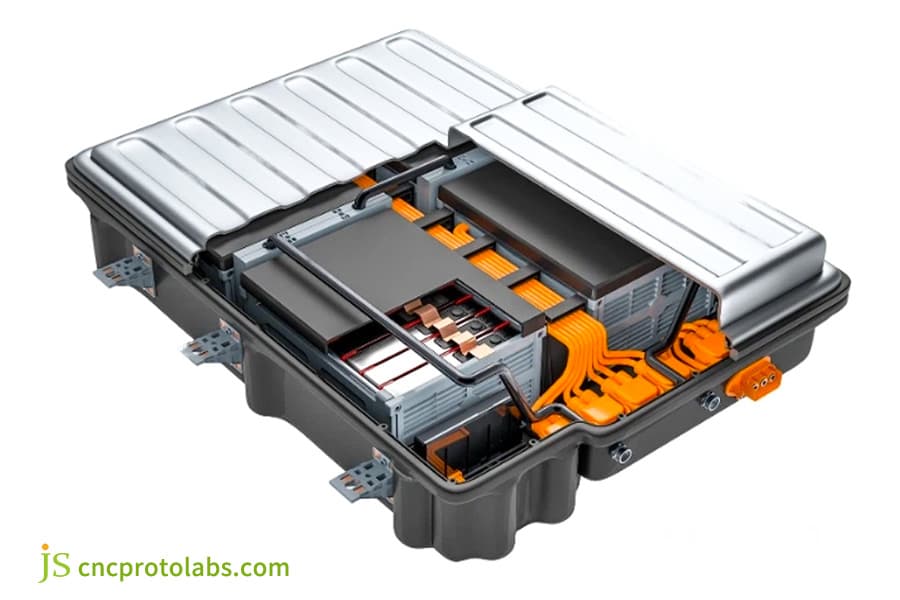
Inside an 800V EV Battery Insert Molding​ pack

Figure 3: A detailed internal view of a high-voltage battery pack, showcasing stacked battery cells, integrated metal and plastic components, and organized wiring harnesses, exemplifying the complexity achieved through precision insert molding.

Why Does Your EV Battery Thermal Management Project Require Professional Insert Molding Services?

The optimal method for clients to decrease project risks and expenses while increasing project efficiency involves their partnership with expert insert molding services. The project requires efficient EV battery thermal management because the professional services deliver essential support for project success.

JS Precision provides advanced engineering solutions which include material CTE matching and mold insert management and in mold sensor control while also delivering complete one stop delivery support system.

Lightweight and Integrated Design

The use of one custom plastic part instead of a three layer structure leads to a 35% weight reduction. We have reduced the battery pack assembly steps from four to one because this change enables us to decrease pack weight while achieving a longer vehicle range and reducing both assembly costs and errors.

Reliability Verification

The product underwent testing which included 3000 cycles of thermal cycling from -40°C to 85°C and showed that thermal resistance changed by 15% while creepage distance remained unchanged so the results demonstrated that the product would last longer and decrease after sales service expenses for customers.

Scalable Delivery Capability

JS Precision operates 10 injection molding machines which range from 160 to 1000 tons and combine with an automated insert feeding system to meet customer demands for large scale production while maintaining stable delivery cycles which reach an annual output of 2 million units.

よくある質問

Q1: What is the thinnest wall thickness that can be achieved in insert molding?

The thinnest wall thickness in insert molding is limited by plastic flow length and the shape of the insert. For thermally conductive areas, the minimum thickness is 0.6mm, and for insulating zones, it is 0.8mm, which most EV battery design standards require.

Q2: Is the insert supposed to be preheated?

Aluminum and copper inserts should ideally be preheated to 120-150°C to avoid rapid cooling of the melt front that can create a weld line and to enhance the bonding strength between the custom plastic parts and the inserts.

Q3: What is the typical time required to deliver insert molding molds?

Insert molding mold lead times can be classified into two categories: simple single insert molds (30-35 days) and complex multi insert molds (8 or more inserts) (45-50 days), which can be aligned with the customer's project timeline.

Q4: How is the position of inserts in the mold controlled?

A combination of magnetic attraction and mechanical positioning pins is employed for the dual fixing method. The positioning pin hardness is HRC55, and the wear is monitored every 50,000 molding cycles to guarantee precise insert positioning and to minimize the risk of displacement.

Q5: What are the flatness requirements for large plastic molded parts?

Flatness tolerance for large plastic molded parts is determined by the length of the part: 0.25mm for parts less than 500mm, 0.35mm for parts 500-1000mm. Straightening is necessary for trim parts.

Q6: Can insert molding produce threaded inserts?

Yes, threaded inserts can be made with insert molding. The insert must be knurled or milled to prevent rotation. Besides, the gate should not be hit directly during the injection molding in order to keep the threaded insert stable.

Q7: What is the difference between insert molding and secondary injection molding?

Simply put, insert molding is a process where the insert is loaded in the mold and the molding is done in one operation, while secondary injection molding requires first making a part and then covering it. So basically, they are for different cases.

Q8: What is the minimum order quantity for JS Precision's insert molding services?

JS Precision's insert molding services require a minimum of 100 pieces for prototype validation and 5000 pieces per year for mass production. The mold cost is quoted separately.

概要

With the arrival of 800V high voltage fast charging, EV battery insert molding is not an option but a must-have process to fix the contradiction between battery pack thermal management and electrical safety.

This technology helps you remove the interface air gaps, combine components, keep control of costs, raise the yield, and also make battery packs safer, more reliable, and more cost effective.

JS Precision, a highly experienced insert molding services provider, combines its rich experience, strict quality control, and full technical support to guarantee your project's success from the beginning to the end.

Submit your battery pack 3D drawings to our engineering team, and we will issue you an insert molding feasibility study and a unit cost estimate within a day. JS Precision - China's precision injection molding and insert molding service provider - stands ready to assist you in tackling the challenges of EV battery manufacturing.

JS Precision provides you with a free quote

免責事項

The contents of this page are for informational purposes only.JS Precision Services,there are no representations or warranties, express or implied, as to the accuracy, completeness or validity of the information. It should not be inferred that a third-party supplier or manufacturer will provide performance parameters, geometric tolerances, specific design characteristics, material quality and type or workmanship through the JS Precision Network. It's the buyer's responsibility Require parts quotation Identify specific requirements for these sections.Please contact us for more information.

JS プレシジョン チーム

JS Precision is an industry-leading company, focus on custom manufacturing solutions. We have over 20 years of experience with over 5,000 customers, and we focus on high precisionCNC machining,Sheet metal manufacturing,3D printing,Injection molding,Metal stamping,and other one-stop manufacturing services.

Our factory is equipped with over 100 state-of-the-art 5-axis machining centers, ISO 9001:2015 certified.当社は、世界 150 か国以上のお客様に、迅速、効率的、高品質の製造ソリューションを提供しています。少量生産でも大規模なカスタマイズでも、24時間以内の最速納期でお客様のニーズにお応えします。 Choose JS Precision this means selection efficiency, quality and professionalism.
To learn more, visit our website:www.cncprotolabs.com

リソース

JS Precision は即時見積もりを提供します

blog avatar

JSプレシジョン

ラピッドプロトタイピングとラピッドマニュファクチャリングのエキスパート

CNC機械加工、3Dプリント、ウレタン鋳造、ラピッドツーリング、射出成形、金属鋳造、板金、押出成形を専門としています。

素材の挿入
CTE (ppm/°C)
プラスチック素材
プラスチックの CTE (ppm/°C)
CTE の差 (ppm/°C)
干渉補正 (mm)
該当するシナリオ
熱伝導率 (W/m·K)
16.8
30% ガラス繊維 PPS
14.3
2.5
0
ハイエンドの急速充電
≥2.5
アルミニウム
23.6
30% グラスファイバー PPS
14.3
9.3
0.2
通常範囲
≥2.2
16.8
50% ガラス繊維 PPS
11.2
5.6
0.1
高電圧プラットフォーム
≥3.0
アルミニウム
23.6
50% ガラス繊維 PPS
11.2
12.4
0.3
低コストのソリューション
≥2.0
ステンレススチール
10.8
30% ガラス繊維 PPS
14.3
3.5
0
高い信頼性
≥1.8