English



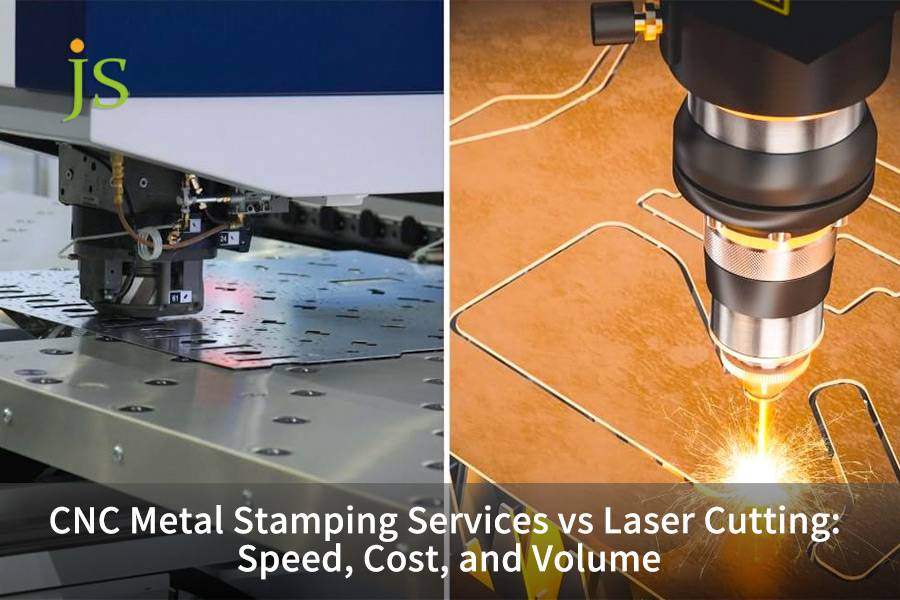

Metal stamping vs laser cutting: Choose laser cutting for prototypes and low volumes under 3,000 pieces, and CNC stamping for high volumes above 5,000–10,000 pieces to reduce unit cost by 60%–82%. Laser cutting offers zero mold costs, 24-hour turnaround, and design flexibility; stamping delivers high material utilization (80%–92%) and per-piece cycle times of 0.1–1.5 s. Selection should be based on the 3D characteristics of the parts and annual requirements.
Core Decision Matrix: Metal Stamping vs Laser Cutting
|
Evaluation Dimension |
CNC Metal Stamping |
Fiber Laser Cutting |
Best Process Selection Advice |
|---|---|---|---|
|
Tooling Investment |
High initial cost ($3,500 – $45,000+) |
Zero tooling cost (only CAD/CAM programming) |
Laser for prototyping and frequent design changes |
|
First Article Lead Time |
3–8 weeks (die making, wire EDM, tries) |
24–48 hours for cutting scheduling |
Laser for urgent delivery or small batches |
|
Production Cycle per Piece |
0.1–0.3 seconds (200–600 SPM) for most parts; up to 1.5 s for very large parts. |
15–90 seconds (depending on contour and thickness) |
Stamping for annual demand ≥5,000 pieces |
|
Material Utilization |
80%–92% (coil precision nesting) |
65%–80% (sheet with kerf and spacing) |
Stamping for precious and reflective metals |
|
Sheet Thickness Capability |
0.1 mm – 6.0 mm |
0.5 mm – 25.0 mm+ |
Laser for thickness >6.0 mm without forming |
|
Geometric Forming |
Drawing, flanging, embossing, louver in one die |
2D contour only (secondary forming needed) |
Stamping for complex 3D structures |
According to ISO 9013:2017, thermal cutting classification defines dimensional tolerances for laser-cut parts, ensuring quality control across various thickness ranges.
Based on JS Precision 2025–2026 project database (1,200+ projects), the speed and cost percentages in this table reflect real production benchmarks for stamping and laser cutting.
How Do CNC Metal Stamping Services and Laser Cutting Differ in Speed?
Production speed assessment must be divided into two phases: the initial preparation period and the continuous mass production cycle. Fiber laser cutting, relying on its mold-free characteristics, can complete setup within 5–30 minutes and achieve 24-hour delivery; while in the stable mass production stage, CNC metal stamping services, with press speeds of 200–600 strokes per minute (SPM), achieve a single-piece output rate 20 to 50 times that of laser cutting.
Comparison of initial preparation periods
- Fiber laser cutting does not use any molds, manufacturing can begin once a CNC machine is programmed with the CAD data, the setup time is just about 5–30 minutes, the first product can be ready in 24 hours.
- The tooling lead time covers die design, slow-wire EDM cutting, assembly, and try-out, and the first piece can be produced only after three to eight weeks.
- When there is a tight delivery schedule or frequent design modifications, laser cutting is the fastest option.
Mass production cycle time and performance in processing high-reflectivity materials
- Laser cutting speed is mainly limited by profile length and the thickness of the work piece. Straight cut on 1.0 mm stainless steel can achieve 35–45 m/min, yet in dense microhole arrays processing the overall cycle time is extends to 15–90 s/piece due to frequent machine acceleration and deceleration.
- Laser cutting brass is a challenging process because highly reflective brass can reflect the beam back into the optics and damage the lens; also, when the plate thickness reaches beyond 3.0 mm, slag easily appears at the lower cut edge. But, CNC stamping maintains constant high speed on brass, unaffected by thermal stress.
Based on JS Precision's 1,200+ project database, punching is 15–20× faster than laser cutting for micro-hole arrays under 3.0 mm.
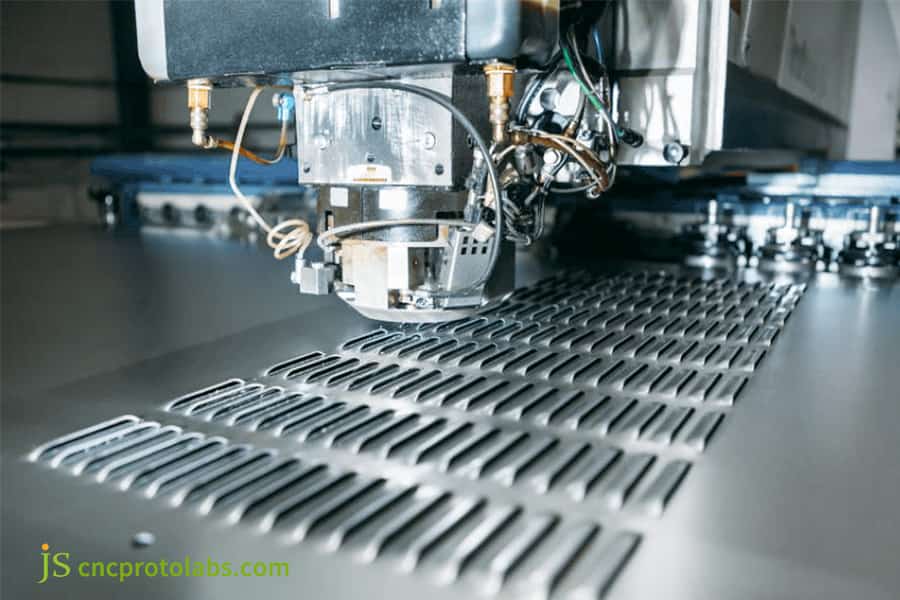
Figure 1: Laser cutting machine making slots on metal sheet.
Which Is Cheaper for Your Volume: Stamping vs Laser Cutting Cost?
Determining stamping vs laser cutting cost depends on total quantity and per-piece machining time. In the trial and small-batch production phase of up to 3,000 pieces, laser cutting offers lower total costs due to zero tooling investment and just-in-time scheduling. However, once order sizes exceed 5,000 to 10,000 pieces, high volume metal stamping service, with its coil progressive dies achieving over 85% material utilization and extremely short stamping cycles, can reduce per-piece manufacturing costs by 60% to 80%.
Total cost breakdown
- The calculation of the differences in costs between stamping and laser cutting should be approached separately. Total cost for laser cutting comprises machine hourly rate, assist-gas usage, secondary deburring labor, and scrap loss (scrap rate: 20%–35%)
- Overall, the stamping production cost composition involves tooling development cost, coil material cost (yield rate: 85%–92%), stamping time per second, and mold maintenance cost.
- Tooling costs are recovered when the per-piece saving versus laser cutting, multiplied by the total quantity, covers the mold investment (Society of Manufacturing Engineers, 2024).
Batch conversion criticality and cost ladder
|
Batch Quantity |
Laser Cutting Unit Cost (USD) |
Laser Total Cost (USD) |
Stamping Unit Cost (USD) |
Stamping Total Cost (USD) |
|---|---|---|---|---|
|
500 |
$4.20 |
$2,100 |
$12.50 |
$6,250 |
|
3,000 |
$3.80 |
$11,400 |
$4.00 |
$12,000 |
|
10,000 |
$3.40 |
$34,000 |
$1.10 |
$11,000 |
|
50,000 |
$3.10 |
$155,000 |
$0.55 |
$27,500 |
According to the Society of Manufacturing Engineers (SME), Manufacturing Engineering, Vol. 62, No. 3 (2024), pp. 42–45, the break-even point for typical 1.0–2.5 mm sheet metal parts falls between 3,500 and 5,000 pieces.
Calculating process costs for your parts? Contact JS Precision now for a free cost comparison analysis of typical parts. We will provide a tiered pricing plan based on your drawings and batch sizes.
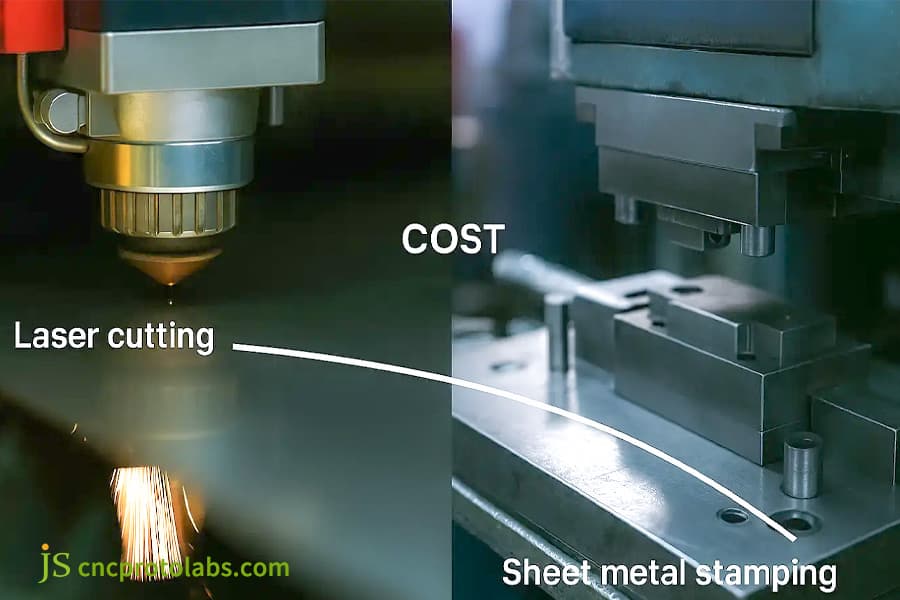
Figure 2: Comparison of laser cutting and sheet metal stamping cost.
Which Delivers Better Edge Quality and Precision: Laser Cutting vs Stamping Comparison?
In comparing laser cutting vs stamping accuracy, fiber laser cutting can stably maintain a linear tolerance of ±0.05 mm to ±0.1 mm on a two-dimensional planar contour, and there is no physical punching stress; while precision stamping, when used with high-rigidity stamping presses manufactured by mainstream international metal stamping press manufacturers (such as AIDA and Amada), can achieve a hole position and shape tolerance of ±0.02 mm, but the cross-section of the part will exhibit a four-layer microstructure of collapsed corners, bright shear bands, fracture bands and micro-burrs.
Microscopic cross-sectional mass comparison
- The HAZ (heat-affected zone) of laser cutting usually remains within about 0.05–0.15 mm. The cut is not subject to mechanical stress but can still produce a very subtle oxide color on the surface.
- The microstructure of the stamping edge cross-section basically divides the material into four regions: collapsed corner, bright shear band, fracture band, and burr. The average stamping shear band comprises 30%–40%, while precision stamping may achieve 85%–90%.
- For flat plates that need high flatness and edges free from localized hardening, laser cutting is the better option; stamping, on the contrary, will be more suitable for structural pieces where accurate chamfers or uniform hole positions in large batches are required.
Precision application scenarios and equipment entities
- Closed-type double crankshaft mechanical presses by prominent metal stamping press manufacturers like AIDA and Amada provide a hole position accuracy within ±0.02 mm which can stay unchanged for the whole working life of the die.
- JS Precision's field data shows that laser-cut 3D features still require multiple bending and riveting operations would still be necessary, and these might mean errors with tolerances accumulating to about ±0.3 mm. Still, the progressive die stamping gives far better results about assembly reference uniformity (CpK ≥ 1.67).
Why Can CNC Metal Stamping Handle Complex 3D Geometries That Laser Cutting Cannot?
The essential dividing line between metal stamping vs laser cutting lies in the ability to shape geometric dimensions: Fiber laser cutting is essentially a 2D contour separation process and cannot create 3D form (axial displacement) in a single operation; while CNC metal stamping services can integrate various three-dimensional forming features such as drawing, embossing, flanging, louvering, and thread riveting in a single progressive mold.
Multi-stage discrete processes vs. integrated progressive die
- Breaking a laser solution into 3–4 separate steps — cutting, CNC bending, and punching/tapping — drops overall positioning accuracy to ±0.3 mm and raises part-handling costs.
- With CNC metal stamping services, all surface features can be formed in just a single progressive die in only 0.5 seconds, which reduces dimensional variations.
- Laser cutting alone cannot create axial features; a single progressive-die stroke achieves stretching, flanging, and rib forming simultaneously, three-dimensional features such as stretching, flanging, and rib forming can be achieved at the same time.
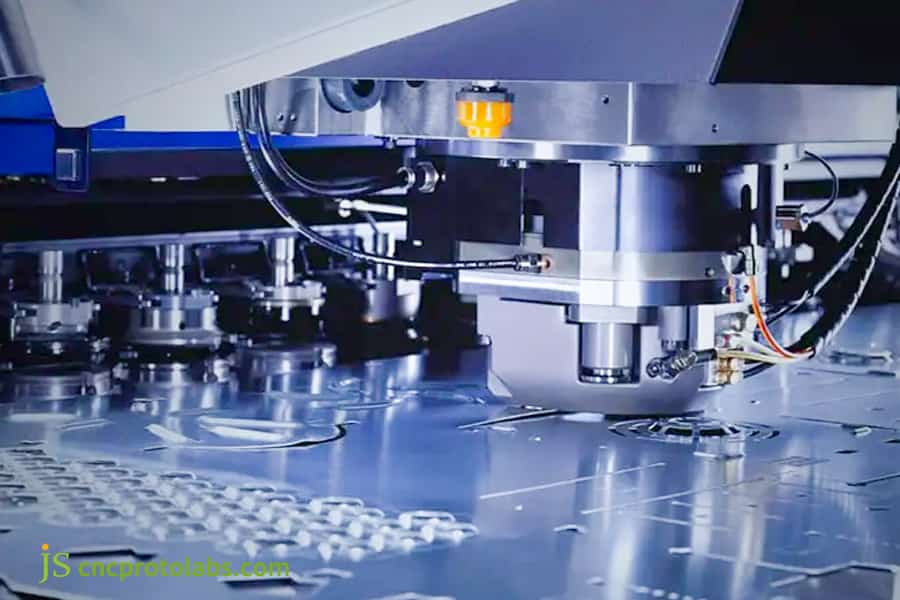
Figure 3: CNC metal stamping machine punching complex shapes.
What Technical Criteria Define a High Volume Metal Stamping Service for Mass Production?
The key indicators for a qualified high-volume stamping provider are its in-house die design and build capability for progressive dies, their press tonnage range (45T to 800T), and their in-mold quality monitoring system. Closed-type double-crankshaft presses and servo presses manufactured by mainstream metal stamping press manufacturers, combined with in-mold photoelectric anti-overlap sensors, can ensure that critical dimension fluctuations are controlled within Cp ≥ 1.33 when the die has been continuously running for over 1,000,000 strokes.
Mold material and feeding accuracy
- For high volume stamping tooling,DC53 or SKD11 steel with TD (thermal diffusion) coating or PVD titanium plating, giving up to 500,000 to 1,000,000 strokes service life; meanwhile, carbide dies service life is beyond 3,000,000 strokes.
- Servo feeder pitch adjustment accuracy is ±0.005 mm; with the automatic micro-spray lubrication system, it keeps the strip running and feeding steadily.
- The die design must suppress slug pulling; indentation and slug-pulling defects are eliminated by in-die real-time sensors.
Quality control and continuous cost reduction
- When closed-type double-crankshaft punch presses and servo punch presses are kept running at high speed for over 1 million punches, critical dimensions maintain a process capability of Cp ≥ 1.33.
- To meet product traceability requirements, JS Precision makes use of SPC (Statistical Process Control) during mass production.
- In-die self-inspection and automatic scrap separation enable unattended, 24/7 production, a measure that also contributes to cutting down on per-unit costs.
Evaluating the capacity and quality systems of high-volume stamping suppliers? Contact JS Precision to learn about their 45T–800T press clusters and in-mold monitoring systems, and obtain a free capacity assessment report.
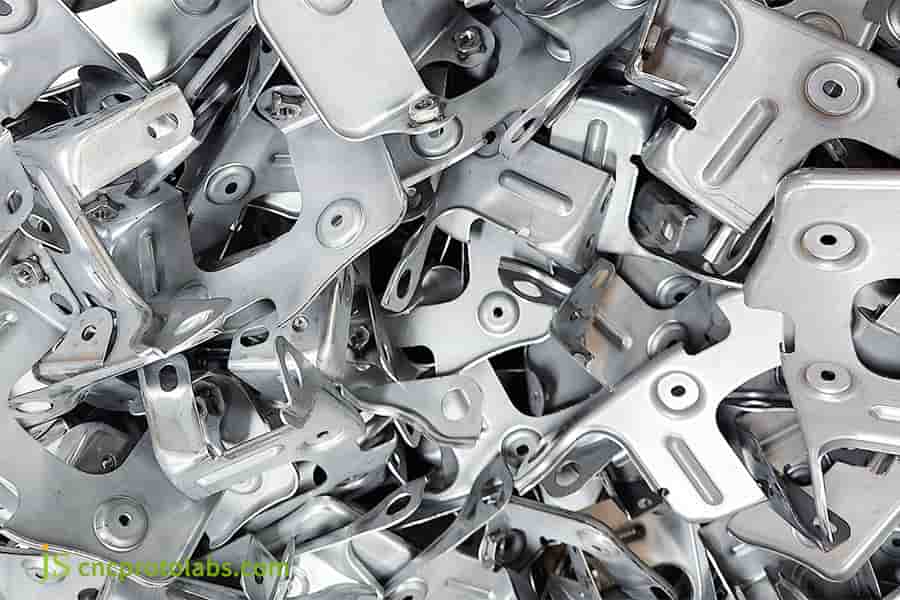
Figure 4: Pile of high volume metal stamping parts.
How JS Precision Engineered Custom Brass Shielding Cans from Laser Prototyping to Stamping Scale?
In a project producing 0.3 mm thick C2680 brass sensor shields for an automotive customer, JS Precision adopted a phased engineering implementation approach. During the R&D phase, fiber laser cutting was used to complete assembly verification within 24 hours. When the annual demand increased to 150,000 pieces, a 10-station precision progressive die high volume metal stamping service was introduced, achieving a 78.5% reduction in the overall manufacturing cost per piece.
Customer difficulties and technical pain points
Only 0.3 mm thick, the shield has twelve 0.4 mm micro-holes and tiny flanged claws around its edge, making the structure highly susceptible to deformation.
At the early stage of mass production that relied on a laser cutting service, brass's high reflectivity caused the yield to drop to 71%, and the microholes were surrounded by curled metal due to excessive thermal stress. Manual deburring pushed unit cost to $1.85. The monthly throughput could not reach the customer's daily requirement.
JS Precision Solution
- DFM optimization: our engineering team adjusted the hole edge distance by a mere 0.05 mm to mitigate the risk of stress concentration completely.
- Prototype verification: A self-tuning short-pulse laser with high-purity argon protection successfully produced 200 trial assemblies.
- Mass production implementation: The 10-station die used ASP-23 powder-metallurgy HSS punches and cemented-carbide inserts, running in a high-speed pneumatic stamping press.
Lessons learned from failures and parameter iteration
During the first trial run of T1 die pressing, the flange claw's springback exceeded the 0.08 mm tolerance because of the anisotropy of rolled brass.
Instead of re-cutting the die, JS Precision used CAE forming simulation and rotated the strip layout 45° relative to the rolling direction, added a correction and pre-pressing shaping step at station 4, completely solving the springback problem.
Final Results and Quantitative Benefits
|
KPI |
Laser Cutting (Initial) |
Progressive Die Stamping (Final) |
|---|---|---|
|
Unit Cost (USD) |
$1.85 |
$0.39 |
|
Yield Rate |
71% |
99.4% |
|
Daily Output |
5,000 pieces |
80,000 pieces |
|
CpK |
— |
1.74 |
According to JS Precision Internal Project File #QC-2025-BR09, all KPI data in this case study reflect verified production records from prototype laser cutting to final progressive die stamping scale-up.
Do your parts also have high reflectivity materials or complex sheet forming difficulties? Contact JS Precision immediately to submit drawings for a free DFM evaluation and stamping production plan. Drawing on the experience of the brass shielding case project, we can help you reduce single piece costs by over 78%.
Engineering Decision Matrix: How to Choose Between Stamping and Laser Cutting for Your Project?
Developing a process selection strategy for metal stamping vs laser cutting requires following a decision path comprised of five engineering metrics: annualized total production volume, design freeze state, sheet metal thickness, 3D forming feature requirements, and tolerance zone requirements. If the part includes 3D forming features and the annual demand remains stable at over 5,000 pieces, stamping is the optimal process route that balances dimensional consistency with the stamping vs laser cutting cost.
Five-step project determination path:
- Production batch planning: if the order size is less than 1,000 pieces, you can produce them with fiber laser cutting. If the order size is in the range of 1,000-5,000 pieces, you can produce them with laser cutting and a simple mold or CNC bending. Order sizes over 5,000 pieces are typically routed to progressive die stamping.
- Geometric feature decision: use laser cutting for flat 2D parts that have no need for forming, stamping for parts with 3D details like flanging, deep drawing, engraving, and embossing.
- Design change assessment: Laser cutting is the right choice while the R&D team is still iterating and the design could change every quarter. However, Stamping is the go-to option once engineering has officially frozen the drawings.
- Material thickness judgment: Laser cutting is suitable for manufacturing structural parts where the plate thickness exceeds 6.0 mm. Mass production of thin sheets (0.1–3.0 mm thick) can be done by high-speed stamping.
- Cross-sectional quality requirements: If HAZ is strictly forbidden and edges must be 100% perpendicular, choose stamping (fine blanking). If burrs are not allowed but a very small HAZ is acceptable, nitrogen-assisted laser cutting is preferred. Punching burrs are not allowed. A very small heat-affected zone is acceptable, and laser cutting with nitrogen is the preferred method.
|
Decision Dimension |
Condition |
Recommended Process |
|---|---|---|
|
Annual Quantity |
<1,000 pieces |
Fiber Laser Cutting |
|
Annual Quantity |
1,000–5,000 pieces |
Laser + Simple Die / CNC Bending |
|
Annual Quantity |
>5,000 pieces |
Progressive Die Stamping |
|
Geometric Features |
Pure 2D, no forming |
Fiber Laser Cutting |
|
Geometric Features |
Drawing, flanging, embossing |
CNC Stamping Required |
|
Design Iteration |
Frequent changes (R&D phase) |
Fiber Laser Cutting |
|
Design Iteration |
Design freeze confirmed |
Stamping |
|
Sheet Thickness |
>6.0 mm structural parts |
Fiber Laser Cutting |
|
Sheet Thickness |
0.1–3.0 mm, high volume |
High Speed Stamping |
|
Section Quality |
No HAZ, perpendicular edges |
Stamping (Fine Blanking) |
|
Section Quality |
Burr-free, minor HAZ acceptable |
Laser with Nitrogen |
Based on JS Precision 2025–2026 project database (1,200+ projects), the five-step selection criteria above have been validated across 800+ engineering consultations for stamping and laser cutting.
Unsure about the process route during the project initiation phase? Immediately conduct a self-check against the above 5-step judgment table, and send the drawings to JS Precision to obtain free DFM analysis. We will provide clear process selection suggestions.
FAQs
Q1: Can the CAD files used for laser cutting prototyping be directly utilized for stamping die manufacturing?
No, they cannot be directly applied; DFM adaptation is usually required. Laser cutting applies 2D contour compensation only; stamping dies must also account for blanking clearance, sheet springback compensation, and strip overlap dimensions. JS Precision can complete process development and tolerance optimization within 24 hours.
Q2: Which process is more cost-effective when processing brass or copper parts: laser cutting or stamping?
For small batches under 3,000 pieces, anti-reflective laser cutting has a lower overall cost; for batches exceeding 3,000 pieces, stamping significantly improves cost-effectiveness. Copper is expensive, but stamping achieves a coil utilization rate of over 88% and avoids oxidation defects in the heat-affected zone.
Q3: At what production volume can the stamping tooling cost typically be amortized and recovered?
It is generally expected that through per-piece cost savings, mold costs are typically amortized between 3,000 and 5,000 pieces for typical 1.0–2.5 mm sheet metal parts; the exact point depends on part complexity (≈2,000 for intricate parts, ≈8,000 for plain washers).
Q4: Do edge burrs and shear zones from metal stamping affect final product assembly?
Normally, any burrs formed during stamping are kept to 5% of the material thickness so that they won't interfere with routine assembly. To meet extremely tight tolerance standards, such as in automotive electronics or high-precision medical devices, precision stamping may be applied to generate a shear band which is 90%, or in-die coining ensures the part meets assembly tolerances on ejection.
Q5: If a part design might undergo minor modifications in the future, should we choose tooling or laser cutting?
A transitional approach is recommended. Before the design is finalized, use fiber laser cutting for small-batch trial production and assembly verification; after the geometry is frozen, switch to carbide progressive dies for mass production. This avoids mold modification costs and ensures low unit prices in mass production.
Q6: How can I obtain a comparative quotation for metal stamping vs laser cutting from JS Precision?
Upload your 3D model and 2D engineering drawings to the JS Precision website's inquiry channel, specifying the estimated annual demand and material grade. Our engineering team provides a transparent quotation within 12 hours, including the laser trial production cycle, mold budget, and stamping mass production costs.
Q7: What is the typical lifespan of a metal stamping die, and who covers future maintenance costs?
SKD11 or DC53 progressive dies can last anywhere from 500,000 to 1,000,000 stamping cycles whereas carbide dies far surpass 3,000,000 stamping cycles. The customer covers only the initial tooling cost; JS Precision handles inspection, maintenance, parts replacement, and re-grinding for the life of the program.
Q8: What is the minimum hole diameter to material thickness ratio (Aspect Ratio) achievable by laser cutting?
A fiber laser generally needs the hole diameter to material thickness ratio to be no less than 1:1; holes smaller than 0.8 mm are prone to thermal-ablation defects. CNC stamping with micro-hole punches produces stable 0.3 mm holes in 1.0 mm stainless steel without slag on the hole walls.
Summary
In precision sheet metal manufacturing, fiber laser cutting and CNC metal stamping are not opposing technologies, but rather complementary processes at different stages of the product lifecycle. Laser cutting, with its zero mold investment, extremely short setup time, and high flexibility, has become the preferred solution for prototype development, frequent modifications, and rapid small-batch delivery. CNC metal stamping, on the other hand, demonstrates a comprehensive capability in mass production, including ultra-fast per-piece cycle times (200–600 SPM), extremely low marginal cost, and the ability to integrally form complex 3D features. Clearly defining the volume threshold at which you switch processes — and matching material properties to the process — is crucial for quality and cost.
Struggling to choose the right process for a new project, or facing high costs for existing laser-cut parts? Contact the JS Precision Industrial Engineering team now. Simply upload your part's CAD drawings and specify your batch requirements, and our senior engineers will provide you with a free DFM manufacturability analysis, material nesting optimization plan, and a precise cost comparison report between stamping and laser cutting within 12 hours, helping you bring your products to market quickly and at a lower cost.

Disclaimer
The contents of this page are for informational purposes only. For JS Precision Services, there are no representations or warranties, express or implied, as to the accuracy, completeness, or validity of the information. It is the buyer's responsibility to identify specific technical requirements and request a formal parts quotation. Please contact us for more information.
Resource