English




Low-volume metal stamping prototypes refer to fast stamping testing of 50 to 5,000 metal structural parts with soft tooling for a quick confirmation of dimensional tolerance and springback. The main international suppliers are Protolabs, Xometry, Wiegel Tool Works, Fictiv, and JS Precision.
For low-volume metal stamping prototypes (50–5,000 pcs), JS Precision offers modular soft tooling with ±0.02 mm tolerance and 7–12 day lead times at $2,000–$8,000 tooling cost; Protolabs is fastest (3–7 days) for 1–50 pc concept parts; Xometry suits multi-process trials; Wiegel fits high-volume production.
Metal Stamping Companies: Core Supplier Comparison Matrix
|
Supplier |
Business Model |
Core Technical Strength |
Prototype Lead Time |
Recommended Scenario |
|---|---|---|---|---|
|
JS Precision |
Entity factory (Dongguan) |
Modular soft tooling, ±0.02mm tolerance, springback reverse compensation |
7 to 12 days |
50–5,000 high-precision parts, micro springs, complex housings |
|
Protolabs |
Digital rapid factory |
Automated DFM algorithm, standard sheet metal fast processing |
3 to 7 days |
1–50 simple geometry early-stage samples |
|
Xometry |
Manufacturing cloud network |
Global supplier network, broad process coverage |
10 to 15 days |
Cross-process multi-type trials, non-critical parts |
|
Wiegel Tool Works |
Established US/EU stamper |
Automotive-grade progressive dies, ultra-high-speed stamping |
15 to 25 days |
Tier-1 projects and large-volume pre-production validation |
|
Fictiv |
Managed digital platform |
Strong compliance workflow, end-to-end supply chain visibility |
10 to 14 days |
Medical device and regulated industry procurement |
According to ISTMA 2025 Supply Chain Quality Report, stamping prototype quality directly determines 70% of scrap risk in subsequent mass production. According to JS Precision 2025 internal production database (1,200+ European projects), modular soft tooling reduces mold development cost by 50% compared to traditional hard tooling.
Cloud-based platforms can perform quick initial assessments on minimalist structures, whereas those physical factories with in-house mold shops and soft tooling modification capabilities may even allow engineering groups to cut the cost tied to mold trial and error by up to 65% even before bulk production.
What Are the Core Evaluation Criteria for the Top 5 Rapid Stamping Prototype Companies?
Evaluating top rapid prototyping stamping companies requires four key dimensions: in-house tool room capability, ±0.02mm dimensional stability, material springback compensation technology, and transparent mold amortization mechanism.
Two major schools of thought on evaluation dimensions
- Digital algorithms and networks: Representing Protolabs and Xometry, the two main highlights of their business are fast online quoting combined with standardized delivery.
The ISTMA 2025 Supply Chain Quality Report says the main reason affecting whether the final mass production will have a high or low scrap rate of up to 70% is the quality of the stamping of the prototype.
- Precision tooling physical solutions: Represented by Wiegel Tool Works and JS Precision. Their major strengths are CAE for mold flow stress simulation, WEDM, and the ability to adjust molds with a resolution of several micrometers. The two types of manufacturing are clearly distinguished by metal stamping companies around the world.
Cost sharing logic of modular soft mold
- Actually running true short-run metal stamping with prototyping services is not easy because the cost can be absorbed through modular inserts only.
- To guarantee the traceability of tolerances, suppliers should give a full-sized CMM inspection report.
Want to know if your part is suitable for a modular soft mold solution? Contact our engineering team for a free feasibility assessment of drawings and a preliminary cost estimate.
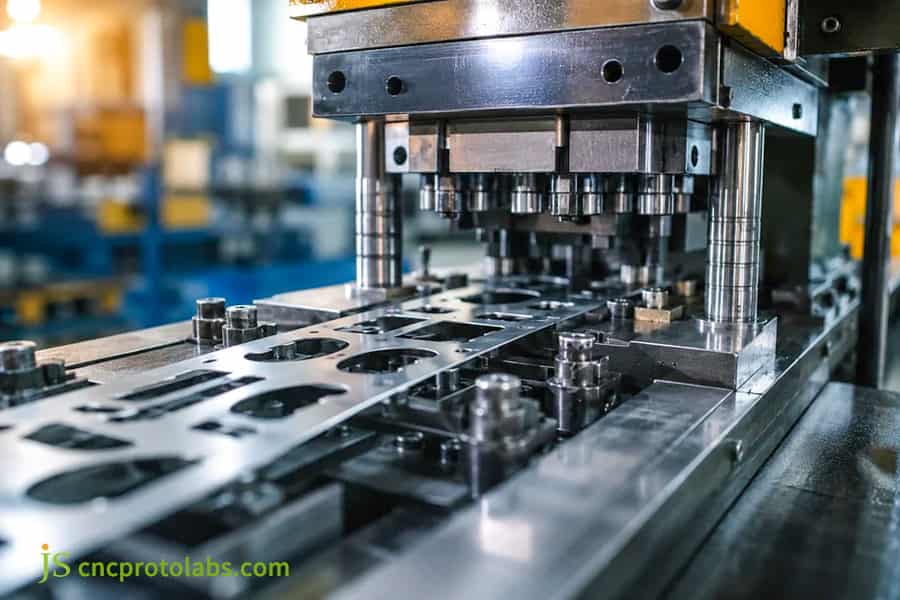
Figure 1: Stamping machine punching metal strip with holes.
What Are the Strengths and Weaknesses of the Top 5 Low-Volume Stamping Suppliers?
Global leading low-volume metal stamping prototypes suppliers each have distinct strengths: Protolabs and Xometry excel in fast digital interaction, while JS Precision and Wiegel offer superior mold customization depth, complex forming capability, and lower per-unit cost.
The digital advantages of Protolabs and Xometry
- Protolabs: uses automated DFM algorithms to deliver products very fast in a couple of business days, yet its versatility is not high at all when it comes to complicated multi-bending and deep-drawing progressive dies.
- Xometry and Fictiv: taking advantage of their large-scale online manufacturing networks, they allow customers to place multi-process mixed orders because work is subcontracted, communication overhead rises sharply when molds need iteration or replacement.
Depth of solid fabrication in Wiegel and JS Precision
- Wiegel Tool Works: One of the top suppliers of automotive-precision progressive stamping equipment in North America. However, initial hard-tooling costs are substantial, so they typically require larger order quantities.
- JS Precision: our specialized area is in prototype metal stamping service, and we use molds made up of 7075 aluminum and D2 modular tool steel, cutting tooling development costs by 50%–65%. Compared to traditional hard tooling, this modular approach typically achieves a 50% to 65% reduction in upfront mold costs for prototype runs of 50–5,000 pieces, greatly lowering the financial barrier for early-stage validation. Our manufacturing capability is from 1 to 5000 pieces and we guarantee direct involvement by mold engineers from production level.
Want to know how much mold cost our soft mold solution can save for your project? Send your drawings to us and get a free cost estimate and DFM analysis report within 48 hours.
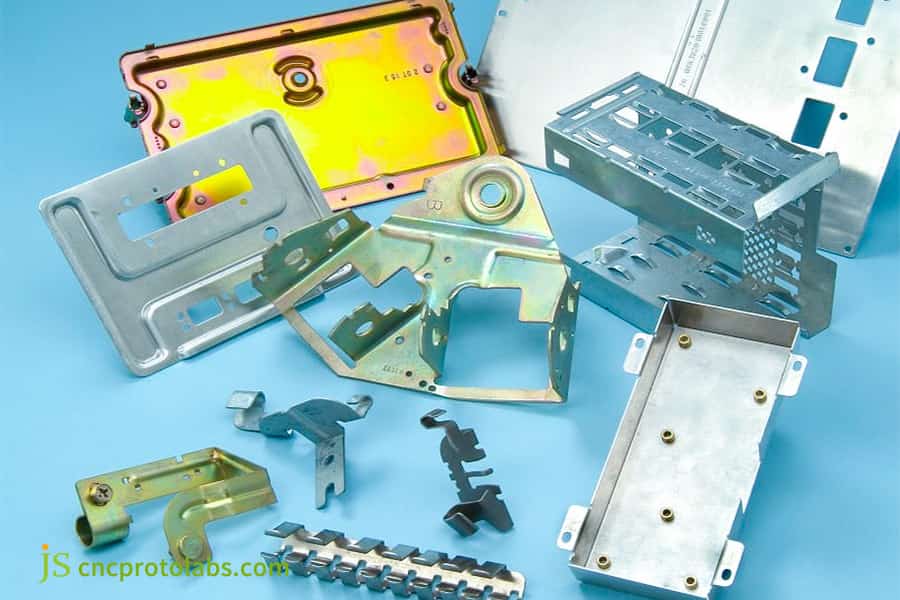
Figure 2: Various low-volume metal stamping prototype parts.
Why Is There a Fundamental Difference Between Cloud Platforms and Direct Stamping Factories?
Cloud platforms rely on algorithms to subcontract distributed capacity, while entity low-volume metal stamping service factories own stamping presses, in-house tool rooms, and on-site engineers capable of real-time springback adjustment.
Delivery differences between platform subcontracting and physical self-control
- Platform companies (Xometry, Fictiv): They are very efficient at standard laser cutting and CNC milling, but if there are problems like plastic flow, coining, and work hardening in stamping, their outsourcing can't be fine-tuned at the stamping line in real time.
- Physical Factory (JS Precision): When hardware engineers choose prototype stamping companies, the physical factory can provide real-time mold repair response, which is a core advantage that the platform cannot match.
JS Precision's self-built manufacturing closed loop
- JS Precision has different precision stamping machines ranging from 25 to 300 tons, apart from slow wire EDM and optical imaging equipment.
- If some dimensional deviations happen in the first part after the trial has been made, then the technical team can adjust the dies and realize online springback correction within 2 hours.
- It eliminates the time-consuming confirmation loops typical of platform subcontractors.
We have a complete self-built manufacturing loop, and you are welcome to schedule a video technical Q&A session with our senior mold engineers at any time.
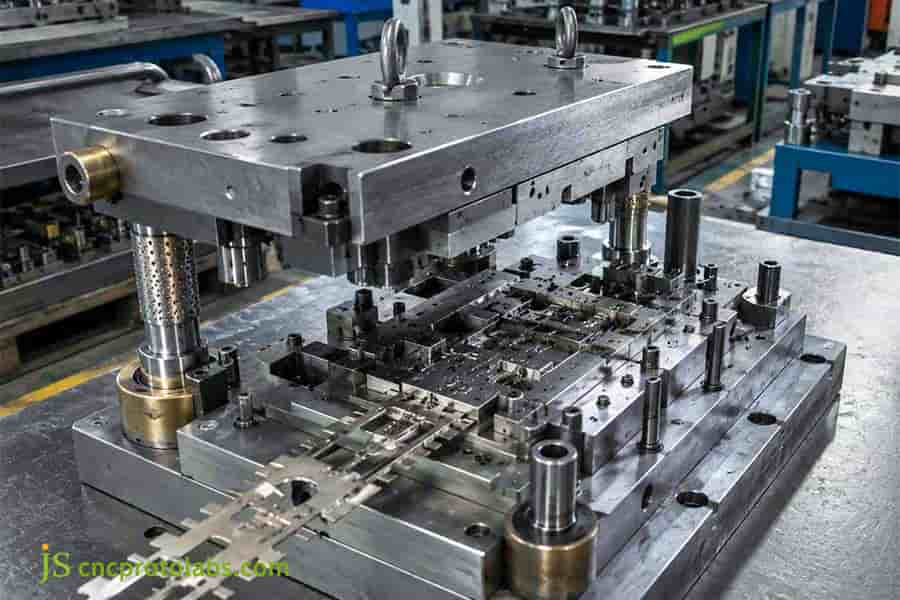
Figure 3: Progressive stamping die on factory floor.
How to Significantly Reduce Prototype Tooling Costs Using Modular Soft Tooling?
Modular soft tooling technology shares a standard universal die set while only customizing high-precision cavity inserts, reducing upfront mold investment by 50%–65% for low volume prototype stamping.
Comparison of Comprehensive Economy and Technology between Soft Mold vs Hard Mold vs laser Sheet Metal
|
Dimension |
Hard Tooling (Wiegel) |
Soft Tooling (JS Precision) |
Laser Cutting + Bending (Protolabs) |
|---|---|---|---|
|
Mold Cost (USD) |
$15,000–$50,000 |
$2,000–$8,000 |
$0 (no tooling) |
|
Lead Time |
4–6 weeks |
5–8 days |
1–3 days |
|
Per-Unit Cost (500 pcs) |
$0.50–$1.50 |
$1.00–$3.00 |
$5.00–$15.00 |
|
Tolerance |
±0.01mm |
±0.02mm |
±0.15mm |
|
Production Consistency |
Excellent (hardened die) |
Good (pre-hardened steel) |
Limited (no forming simulation) |
According to SME 2025 Precision Manufacturing Survey, soft tooling for 500 prototype parts reduces total cost by 45% compared to full CNC milling while retaining production-grade work hardening characteristics. As JS Precision 2025's soft tooling production data (840+ projects), the mold development time can be reduced by 60% if a modular insert method is used.
The most advanced method currently used for stamping prototype parts trial runs involves these steps:
- Hard-prepared tool steel (P20 or 7075-T6 aluminum) is used to make quick-release punches and die inserts.
- A combination of laser pre-cutting and soft tooling prototypes technology reduces the lead time for one soft mold to about 5-8 days. Compared to conventional hard die fabrication which typically takes 4-6 weeks, this represents a time saving of roughly 60%, allowing engineers to validate form, fit, and function much earlier in the development cycle.
How to Solve Springback and Tolerance Variations in Thin-Wall Metal Stamping?
Solving springback in thin-wall high-strength metals requires CAE forming finite element reverse compensation design, combined with restriking steps and servo pressure control in the die structure.
Physical principles and compensation strategies of rebound control
When conducting low volume metal stamping prototypes, especially when processing 301/304 stainless steel (hard state) or 5052/6061 aluminum alloy thin plates (thickness 0.2mm-1.5mm), the high yield strength of the material can lead to elastic recovery warping of up to 5° to 15°.
High-precision low-volume metal stamping service providers have already applied reverse angle compensation to the bending edge through Dynaform simulation software at the stage of die design. And, they incorporate small over-bending grooves to the mold that is strictly controlled to within ±0.25° of final product tolerance and the linear tolerance is locked at ±0.02mm.
Practical experience in rebound control with JS Precision
- From our real case studies in spring stamping works of thin-walled components, an over bend compensation of 2° to 3° was initially determined by dynaform simulation.
- After the real production trial, the compensation factor is fine - tuned to the CMM measurement data that guarantee the conformity of successive batches.
Are your thin-walled parts suffering from springback? Contact our engineering team for a free Dynaform simulation preview and springback compensation suggestions.
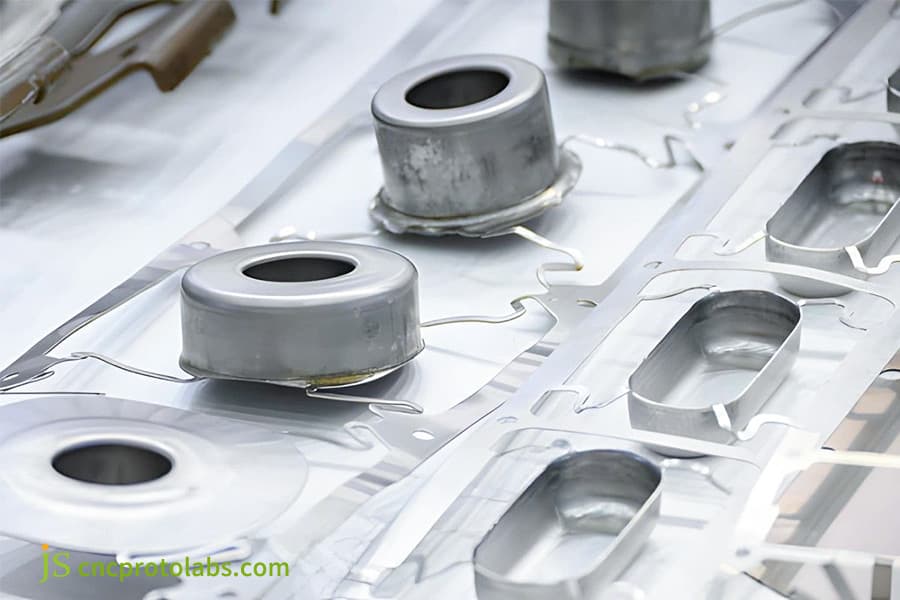
Figure 4: Thin wall metal stamping parts with holes.
JS Precision Case Study: Precision Micro-Stamping and Springback Compensation for Automotive Radar Shielding Covers
This case details how JS Precision resolved dimensional tolerance issues for a European automotive sensor Tier-1 client's nickel silver (C7701) shielding cover through modular soft tooling and dynamic pressure control in stamping prototype parts trial production.
Difficulties encountered by customers
- The customer is required to fabricate 800 pieces of 0.15mm ultra-thin Nickel Silver shields used for anti-interference testing in automotive-grade radar applications, all within 14 days.
- The other suppliers had used the conventional CNC bending technique, but this method caused a serious depression of the sidewalls of deep-drawn parts and left shear burrs on the mesh edges beyond 0.06mm (100% more than the standard).
- The flatness deviation is 0.15mm when the component is attached to the PCB substrate which renders SMT automated mounting impossible.
JS Precision Solution
- The mold technology team made a simple and affordable mold system consisting of a common mold base and quick-change micro-hole punches to meet the requirements of stamping micro-holes onto very thin strips of material with a low volume prototype stamping jobs.
- Mostly, it depends on the material thickness, which is the gap between the cutting edges on one side that is accurately controlled by the use of the wire EDM at 6% (0.009 mm).
- After adopting a micro-step stair-like drawing with bottom rib leveling structure and providing a 45-ton fast-precision punch press with an air-pressure compensating unit, the time required to perform each individual forming operation is reduced to only 1.2 seconds.
Lessons learned from failure
- In the first trial molding, uneven spring pressure exerted on the ejector plate gave rise to localized tensile ripples of 0.02mm on the part.
- Replacing the springs with high-response nitrogen springs, readjusting the verticality of the guide posts, the team completely eliminated residual stress.
Final result
The last 800 small batch parts were checked again using a coordinate measuring machine (CMM) as well as a panoramic optical inspection instrument. In general, the flatness was maintained at 0.03mm or less and the height of the cut edge burrs was lowered to 0.008mm. The customer secured a designated project with a major car manufacturer after the product passed its SMT automated reflow soldering test on the first attempt.
Need to solve similar micron-level stamping challenges? Send your CAD drawings to us now, and our engineering team will provide a DFM assessment and quote within 24 hours.
How Should Hardware Teams Choose Among Top 5 Suppliers and RFQ by Project Stage?
Hardware startups may want to select hardware solutions that are closely aligned with their product lifecycles: Protolabs is their first choice for the proof of concept; Xometry is the option considered for multi-category procurement; Wiegel is the best fit for high-volume production tooling; and JS Precision is the preferred choice for high-precision verification of 50 to 5000 pieces.
Top 5 Supplier Selection Decision Matrix Based on Product Development Stage
|
R&D Phase |
Order Volume |
Recommended Supplier |
Mold Budget |
Key Consideration |
|---|---|---|---|---|
|
Concept Validation |
1–20 pcs |
Protolabs |
$0–$500 |
Fastest turnaround, no tooling |
|
Functional Testing |
50–500 pcs |
JS Precision |
$2,000–$8,000 |
Soft tooling, production-grade consistency |
|
Multi-Type Trials |
100–1,000 pcs |
Xometry / Fictiv |
$500–$3,000 |
Broad process coverage |
|
Pre-Production |
500–5,000 pcs |
JS Precision |
$2,000–$8,000 |
Springback validation, CMM report |
|
Mass Production |
100,000+ pcs/year |
Wiegel / JS Precision |
$15,000–$50,000 |
Hardened progressive die |
According to ISTMA 2025 Supply Chain Quality Report, matching supplier type to R&D stage reduces prototype iteration cost by 40%. According to JS Precision 2025 project database (1,200+ European projects), soft tooling approach at functional testing stage eliminates 65% of mold trial-and-error cost before mass production.
Metal stamping companies must correctly align the supplier's capabilities with the particular engineering phase at hand.
- Protolabs can get you the quickest prototyping results for 1-20 piece appearance prototype runs.
- If your engineering prototypes numbering 50-5000 are intended for functional testing and you need to check on cold work hardening as well as complex deep drawing deformation, using JS Precision's prototype metal stamping service is the way to go. You can get mass production-level consistency with very low soft mold costs. More importantly, the springback compensation and material flow data validated during soft tooling trials can be directly ported to hardened progressive dies, eliminating redundant trial-and-error cycles in mass production ramp-up.
- Upon achieving annual mass production level of over 100,000 units, one can consider a direct transfer to fully hardened progressive die production line either from Wiegel or JS Precision for further production.
When requesting an RFQ, it is advisable to attach 2D/3D engineering drawings that are fully annotated with the state of the material (e.g. SUS301-CSP 1/2H), burr direction, and the most important assembly datum.
FAQs
Q1: What makes a metal stamping company suitable for rapid low-volume prototyping?
Small-batch stamping suppliers' competence is mainly in developing in-house modeling and tooling. Professional suppliers can accept these flexible orders: 50-5000 piece per time, control linear tolerances within 0.02mm, and provide samples with full CMM inspection reports in 7-12 days.
Q2: How do soft tooling costs compare to hard production tooling for prototypes?
Flexible tooling dies save 60-70% costs on a progressive hard die in mass production. Engineers can perform physical level stamping verification with pre-hardened steel modular inserts and general universal die sets for a few hundred dollars to a few thousand dollars, dramatically reducing the sunk-capital risk of mass-production tooling at the outset.
Q3: Why should I choose JS Precision over global digital manufacturing brokers?
The selection of JS Precision enables you to establish direct communication with the mold specialists in the physical factory located in Dongguan. JS Precision, relative to the subcontracting platform, has closed system process (full working flow in wire EDM, precision press and CMM inspection). On the mold trials, online mold repair within 2 hours, no middleman marks up the price.
Q4: What is the typical turnaround time for low-volume metal stamping prototypes?
The delivery time for low-volume metal stamping prototypes is usually 7–12 working days. With laser pre-blanking and quick change die sets, delivery of single and simple one hit stamping or bending parts can be achieved in 5 days. But sufficient lead time should be given to facilitate the DFM simulation and die trial calibration to produce complex multi-station deep draw parts.
Q5: How are prototype metal stamping service quotes calculated transparently?
A prototype stamping quote is made up of four components: mold making cost, raw material usage, single-piece stamping processing cost, and surface treatment cost. A trustworthy supplier will reveal the one-time mold engineering cost (NRE) separately from the part unit price and in the contract will indicate mold life and engineering change fee rate to avoid hidden price increments.
Q6: What engineering materials are supported in rapid metal stamping prototypes?
Metal stamping prototypes can be made of stainless steel (301/304/316), aluminum alloy (5052/6061) brass phosphor bronze, beryllium copper, and nickel silver (C7701), among other materials. Thickness of metal can range from 0.05mm ultra-thin foil to 3.5mm structural sheet. These thicknesses are perfect for electronic shielding covers and automotive connectors.
Q7: How do engineers prevent burrs and springback in small-batch stamped parts?
Engineers control punching clearance to 6%–10% of material thickness and applies CAE finite element analysis to deduce the over-bending angle so that springback is counteracted. Further vibratory grinding or chemical deburring methods can maintain the burr height on finished product's cut edge within 5% of material thickness.
Q8: Can low-volume prototype stampings easily transition into mass production dies?
Definitely. Modular soft molds have already checked the material's flow stress, unfolded dimensions, and springback compensation. Mold developers can transfer the verified process parameters from single-station dies to multi-station progressive dies without the risk of repeated changes which is common during mass production mold development.
Summary
Choosing the right low-volume stamping prototype supplier is highly dependent on finding the best technical solution aligned with the R&D stages. Protolabs offers rapid prototyping, Xometry has cloud-based allocation, Wiegel focuses on heavy-duty hard molds, and JS Precision is known for modular soft mold high-precision manufacturing. Each company is uniquely positioned in the market. For projects with 50 to 5,000 pieces needing strict tolerances and cost-effectiveness, the best options are in-house mold shops and physical factories with springback control capabilities to reduce the risks of trial and error.
Have you decided to test your hardware innovation project? Go to JS Precision website and upload your CAD engineering drawings with your technical requirements. Within 24 hours, you will receive a customized quotation from our senior mold engineers together with DFMA optimization suggestions and an accurate cost breakdown section.

Disclaimer
The contents of this page are for informational purposes only. For JS Precision Services, there are no representations or warranties, express or implied, as to the accuracy, completeness, or validity of the information. It is the buyer's responsibility to identify specific technical requirements and request a formal parts quotation. Please contact us for more information.
Resource