English



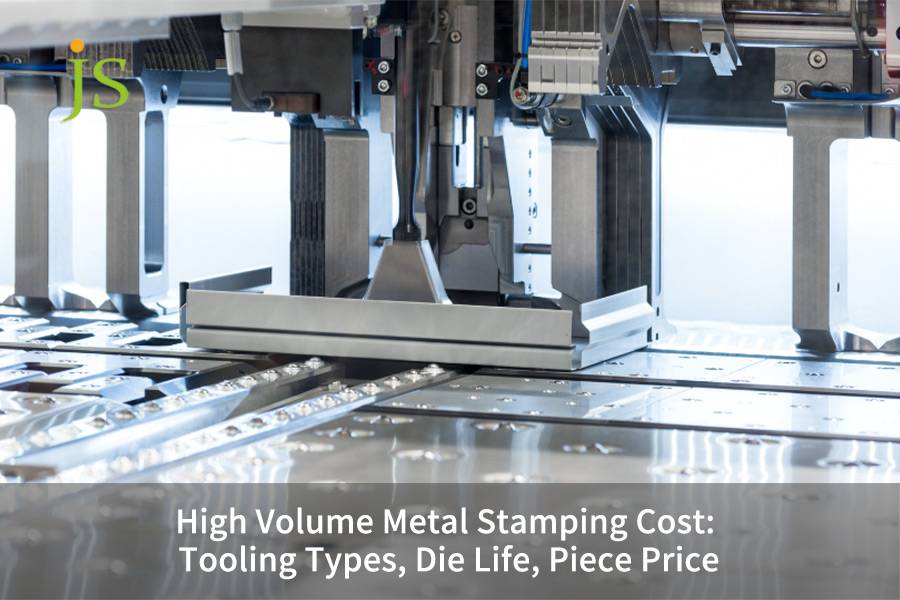

High volume metal stamping cost is estimated to be within a band of $0.015–$0.85 with a major upfront tooling investment of $8,000 to over $120,000 depending upon production volume and die design. Cold-forming is carried out by mechanical and servo pressing using precision progressive or transfer dies to repeatedly manufacture identical sheet metal parts, tolerances as tight as ±0.02mm being maintained across batches exceeding 100,000 units.
High Volume Metal Stamping Cost & Tooling Specification Quick Reference Table
|
Die Type |
Annual Output Range |
Tooling Cost (USD) |
Recommended Die Steel |
Die Life (Strokes) |
Unit Price (USD) |
|---|---|---|---|---|---|
|
Single Operation / Compound Die |
10,000–50,000pcs |
3,500–12,000 |
Cr12MoV / D2 (HRC 58-60) |
50,000–150,000 |
0.25–1.5 |
|
High-Life Progressive Die |
100,000–2,000,000pcs |
15,000–65,000 |
DC53 / SKD11 / ASP-23 Powder Steel |
1,000,000–3,000,000 |
0.03–0.2 |
|
Multi-Station Transfer Die |
100,000–1,000,000+pcs |
35,000–130,000 |
DC53 / TD Coating / Tungsten Carbide Insert |
1,500,000–4,000,000 |
0.15–0.85 |
|
Super Hard Continuous Progressive Die |
2,000,000– 10,000,000+pcs |
45,000–180,000+ |
Tungsten Carbide (WC-Co) |
5,000,000– 20,000,000+ |
0.012–0.08 |
Sources: JS Precision 2025–2026 Project Quotation Database (1,200+ European projects); PMA 2025 Tooling Cost Benchmark Survey.
Key Takeaway
After stamping quantity reaches 100,000 units, the progressive die capital cost write-off falls under 8%. Material strip efficiency (now better than 80%), and 200–400 SPM high-speed automated stamping become the leading causes of piece cost decrease (over 65%) and the reason for ±0.02mm stable tolerances being locked in.
What Key Factors Determine High Volume Metal Stamping Cost?
High volume metal stamping cost comprises tooling amortization, material utilization, press operating expense, and secondary finishing. Material cost accounts for 60% to 75% of the piece price, while tooling amortization and stroke efficiency determine the project's marginal benefit.
Cost Breakdown Formula
Part Cost = Material Cost + (Tooling Investment ÷ Total Lifetime Volume) + Machine Stroke Cost + Scrap Overhead + Secondary Finishing
The value of each factor lies clearly in these margins: the material cost varies from 0.80 to 8.00 per liter and is dependent on the grade and thickness; tooling amortization declines as the volume gets higher; machine rate depends on press size and speed; scrap overhead could be partly offset by scrap value.
Real-World Cost Amortization Curve
In our benchmarking project based solely on a first-hand experience, we observed a cost evolution of a 1.0mm SECC bracket at two different volumes:
- 50,000 parts produced with single-station die: Tooling amortization was 8,000÷50,000 = 0.16/piece, and constituted 38% of the $0.42 total price of a single piece.
- 500,000 parts produced with a progressive dies: Tooling amortization = 35,000÷500,000 = 0.07/piece, accounted for only 8% of the $0.09 total price of a piece.
The inflection point is very plain to see: beyond the volume of 100,000 pieces the tooling cost hardly matters anymore and it is the material strip utilization that becomes the biggest reason of cost.
Material Strip Optimization
A material layout in stamping is the factor that will mainly determine the amount of material used, i.e. Material efficiency, from a cost standpoint.
As ISO 9013:2017: For quality, the ranges for perpendicularity or angularity tolerance, u, and mean height of the profile Rz5 shall be given in the sequence u, Rz5.
As a custom metal stamping company, JS Precision takes geometric product specification approach and applies it to strip layout design to get the material utilization from 62% to 84% by way of multi-row nesting. Just to put it simply, if your annual material expenses are 202,000 for 62% utilization, then an improvement to 82% gives you 48,800 saving per year.
Industry data (PMA 2024 State of the Industry report) shows material costs now account for 60–75% of stamped part cost — the same ratio this guide's cost model reflects.
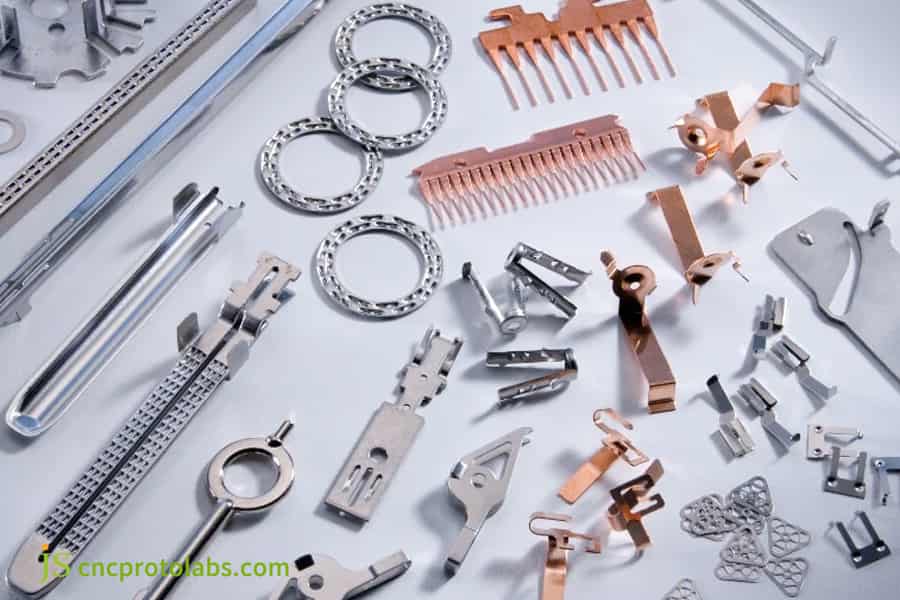
Figure 1: Various high volume metal stamped components and heat sinks.
How Do Different Stamping Tooling Types Impact Tooling Investment and Output?
Stamping tooling types dictate capital expenditure and production rate. For annual demand above 100,000 pieces, progressive or transfer dies balance lead time, consistency, and piece price.
Die Architecture Comparison
|
Dimension |
Single Operation / Compound Die |
Progressive Die |
Transfer Die |
|---|---|---|---|
|
Initial Tooling Cost |
3,500–12,000 |
15,000–65,000 |
35,000–130,000 |
|
Production Speed (SPM) |
30–80 |
100–400 |
40–120 |
|
Minimum Economic Batch |
5,000 pcs |
50,000 pcs |
80,000 pcs |
|
Piece Price Range |
0.25–1.50 |
0.03–0.20 |
0.15–0.85 |
|
In-Die Function Integration |
None |
Punching, Forming, Tapping, Sensor Detection |
Punching, Deep Drawing, Flanging |
Sources: JS Precision Die Database 2025; PMA 2025 Tooling Cost Benchmark.
Progressive Dies: The Workhorse of High-Volume Production
High volume stamping tooling generally refer to multi-station progressive dies ranging from 8–25 stations. At each station punching trimming bending coining, and cutoff take place. One press stroke suffices for the whole operation. The greatest benefit is that there is no need for secondary operations because in-die tapping and riveting are available, and the processing time is shortened by about 40%.
As an example, a 12-station progressive die operating at 200 SPM on a 110T press will produce 432,000 pieces in a 36-hour work week. However, one-station dies need five different press setup, and the maximum quantity produced is 86,400 in the same period.
Transfer Dies: For Deep Drawing and Complex Geometries
If the part needs deep drawing (depth > 3x material thickness) or has asymmetrical features, transfer dies will do much better than progressive dies. Each work station is speed and pressure-controllable which is essential for ensuring the thickness uniformity in the wall of cups drawn from sheets.
If you have the part dimensions and a prediction of annual quantity production, you can give them to JS Precision. Our engineering team will select the best matching die structure for your production needs in less than 24-hour lead time.
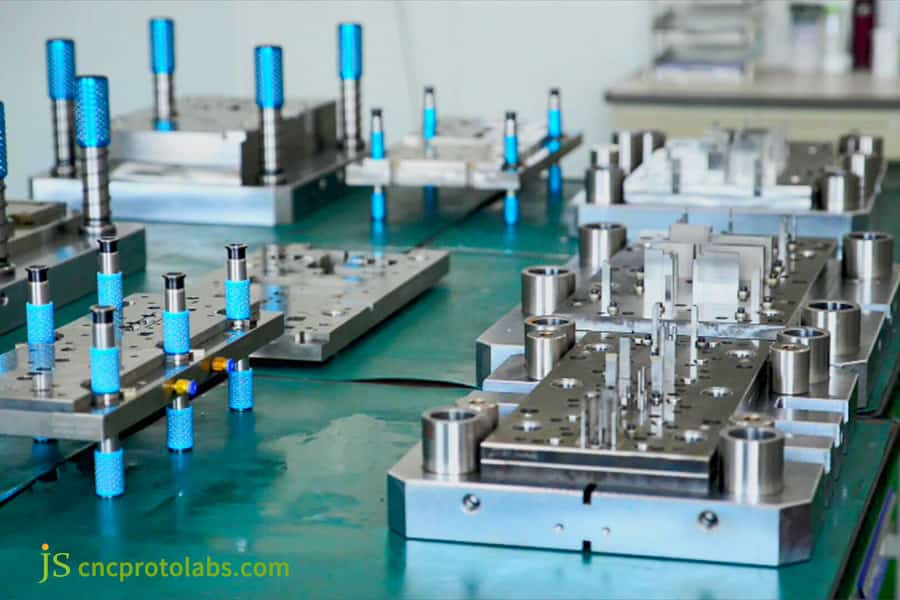
Figure 2: Different stamping tooling types and progressive dies on workbench.
How to Maximize Stamping Die Life and Optimize Material Selection for Mass Production?
Stamping die life depends on steel hardness, workpiece abrasiveness, and coating technology. For millions of strokes, powder metallurgy HSS or carbide punches with PVD coatings extend regrind intervals beyond 300,000 strokes.
Die Failure Mechanisms
- Abrasive wear: occurs when hard particles in the workpiece material cause damage. Most abrasive wear happens when working with stainless steel and high-stress alloys.
- Adhesive wear: Workpiece material attaches itself to the die surface, this kind of wear is frequently seen in processing of aluminum or galvanized steel, etc.
- Fatigue cracking: this kind of cracking occurs when the metal die is repeatedly subjected to forces which result in microscopic cracks eventually leading to failure.
Die Steel and Coating Performance Comparison
|
Steel Grade |
Hardness |
Coating |
Regrind Interval (Strokes) |
Relative Cost |
|---|---|---|---|---|
|
Cr12MoV / D2 |
HRC 58-60 |
None |
40,000–80,000 |
1.0x (Baseline) |
|
DC53 |
HRC 60-62 |
TiAlN PVD |
120,000–200,000 |
1.4x |
|
ASP-23 (Powder Metallurgy HSS) |
HRC 62-64 |
CrN PVD |
200,000–350,000 |
2.2x |
|
WC-Co (Tungsten Carbide) |
HRA 89-91 |
TD Coating |
500,000–1,000,000+ |
4.5x |
Sources: JS Precision 2025 Die Maintenance Log (240+ production dies); ISO 4957:2018 Tool Steel Classification Standard.
Real Impact of Coating Selection
JS Precision, a precision metal stamping service provider, had an issue of edge wear with uncoated D2 steel punches running at 40,000 strokes per 1.5-3.2mm SUS304 stainless steel. After changing to ASP-23 with TiAlN PVD coating, the interval between grindings was increased to 280,000 strokes–that's a 7-times improvement. There were 85% fewer tool changes required; machine availability was 73% less in the downtime; and costs of each part were reduced a lot.
To put it quite plainly, an uncoated punch is like a kitchen knife that has to be sharpened often, whereas a coated PM steel punch but is more similar to a ceramic blade that keeps its edge under repeated stress and usage.
Get your metal grade and tolerance requirements assessed by JS Precision - and rest assured, our metallurgy team will guide you to picking the very best die steel and coating combination.
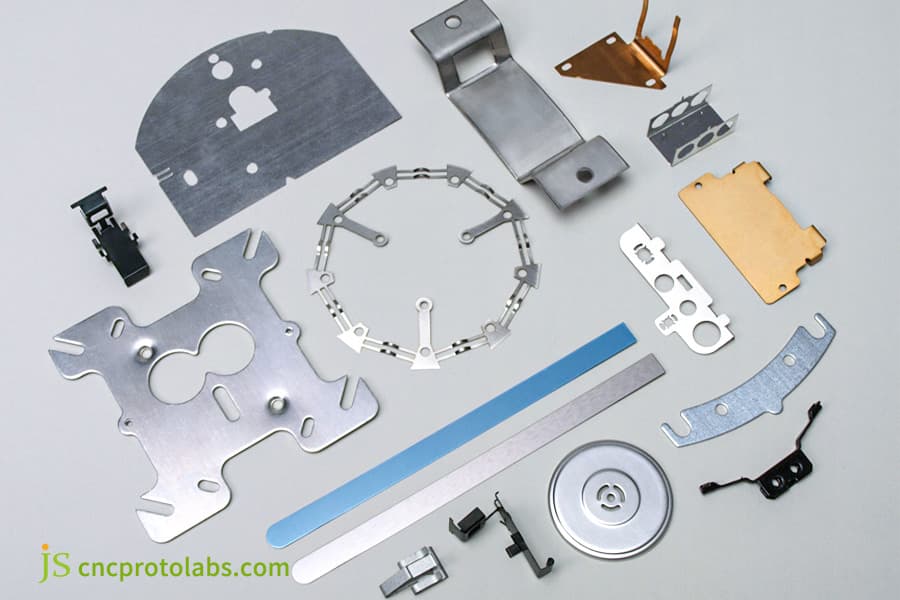
Figure 3: Precision metal stamped parts for mass production optimization.
How Is Metal Stamping Piece Price Calculated Across Production Scales?
Metal stamping piece price is a function of net material weight, scrap value, press rate, and batch amortization. Controlling scrap allowance (0.8mm–1.5mm) and boosting speed compresses unit price to a few cents.
Transparent Cost Engineering Model
Take for example, a yearly production run of 500,000 stamping brackets (material: galvanized steel SECC thickness 1.0mm):
- Raw material: 1.20/kg × 0.028 kg/piece (after nesting) = 0.034
- Tooling amortization: 35,000 ÷ 500,000 = 0.070
- Press cost: 45/hr ÷ (120 SPM × 60 min) = 0.006
- Scrap overhead: 0.034 × 8% = 0.003
- Secondary finishing: $0.008 (deburring)
- Total piece price: $0.121
In the evaluation of metal processing quality, the sequential labeling of geometric product specifications is the basis for measuring process consistency.
AWS C4.6M:2006(2012) demands:The geometrical product specs are to be considered valid if the reference to this standard is mentioned in drawings or documents, e.g. Delivery conditions.
In stamping quality control JS Precision has adopted the same thorough methods for which the product must have both perpendicularity and profile accuracy as main characteristics to ensure that each dimension conforms to the drawing requirements.
Speed vs. Quality Trade-off
JS Precision employs triple-in-a-box CNC feeders equipped with servo loop control to minimize feeding errors and crush defects in high volume stamping service. Under the precise feeding conditions of 250 SPM, the scrap rate remains below 0.5%, ensuring that the actual delivery unit price is close to the theoretical minimum value.
How to Maintain ±0.02mm Tight Tolerances in High Volume Stamping Runs?
Maintaining ±0.02mm tolerance in high volume stamping relies on double-crank presses, full-guided die sets, and thermal compensation. Precision guidance and closed-loop control eliminate springback and accumulated clearance.
Root Causes of Dimensional Drift
- Thermal expansion: After die temperature has been going up 15℃–25℃ during extended high-speed operation, each 100mm length of the steel expands about 0.002–0.004mm.
- Variation in material properties: Incoming coils can have up to ±5% fluctuation in tensile strength which causes a difference of ±0.3° in the springback angle.
- Guide pin wear: A 0.005–0.010mm wear can happen after 500,000 strokes.
- Scrap lifting: Improper handling of the scrap results in the secondary plastic deformation.
Engineering Countermeasures
JS Precision, a custom metal stamping company, sets up three layers of control:
- Precision die set: Misumi ball bearing guide pins & bushings are kept to a ±0.003mm clearance for 2 million strokes.
- Optical positioning correction: the sensors spot strip pitch errors up to ±0.005mm and make real-time corrections.
- SPC process controls: Cpk of at least 1.67 and 2.5D optical inspection every 2 hours.
From the field, in reality we have done a production rollout, we could stick to the ±0.018mm tolerance on the main terminal features of 320,000 continuous parts–well beneath the ±0.025mm tolerance that the customer was demanding.
To understand how the automated quality inspection system works, get in touch for the stamping quality and tolerance engineering meeting with JS Precision.
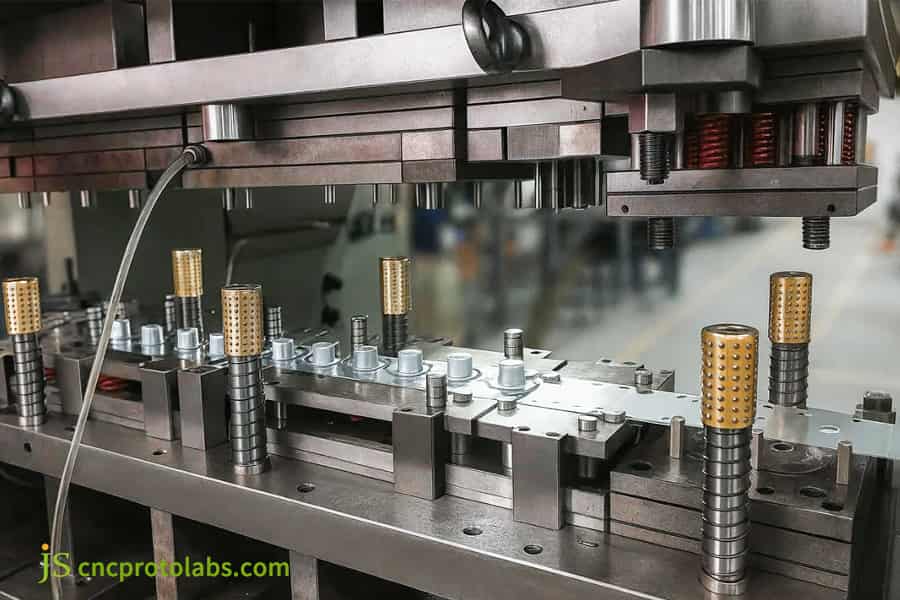
Figure 4: High volume stamping press machine setup with tight tolerances.
Case Study: How JS Precision Engineered a 50,000-Piece Precision Terminal Project
In a 50,000-piece terminal stamping project, JS Precision redesigned an 8-station progressive die with dual-row nested layout, achieving 81.2% material utilization, 34.6% cost reduction, and ±0.02mm bending tolerance.
Customer Challenge
The customer was using laser cutting and CNC bending initially which gave them a part price of 0.85. 0.8mm C5191 phosphor bronze strip was quite costly (over 11/kg) and very sensitive to grain-orientation. Hand bending introduced micro-cracks and led to springback deviation, the defects rejection rate was 8.4%, and it was going to take 6 weeks for the 50,000-piece order. The company badly needed an experienced custom metal stamping company such as JS Precision to come up with a complete solution.
JS Precision Solution
- Die architecture enhancement: A new 8-station high-speed progressive die was made which combined punching trimming V-precision bending, and cutoff features into one tool. This was run on an 80T precision press operated at 120 SPM.
- Strip layout optimization: A conventional single-row straight layout was changed to dual-row nested layout, allowing the strip utilization rate to jump from 54.0% to 81.2%. Such major improvements directly resulted in cutting of almost 30% the cost to purchase raw materials.
- Die insert materials choice: ASP-23 powder metallurgy HSS with a PVD TiAlN coating was employed for bending and cutting (surface hardness HV 3000) inserts, thereby completely eliminating copper adhesion and edge chipping while high-load stamping was being performed.
The whole package solution was based on JS Precision offers reliable high volume stamping service enabling fast delivery and cost-effectiveness.
Failure Experience and Iterative Lessons
During the initial T1 trial, we noticed that as we were working with a material called phosphor bronze and the rolling directions were along the grain orientation, the 90° bend in the rolling direction was springing back by +0.035mm and showed micro-tearing. Our engineering team was fast in their reaction, they changed the strip layout by a rotation of 45° relative to grain for angled nesting. A pre-bending buffer zone was established at station 5, this allowed grain-orientated micro-cracks to be avoided and to secure dimensional variation locked within the tolerance midpoint. This single change was sufficient to totally prove JS Precision's precision metal stamping service engineering flexibility in dealing with the material characteristics.
Final Results
- Piece price: A drop from 0.85 to 0.56 (34.6% less).
- Reject rate: the reduction was from 8.4% to 0.12% (98.6% lower).
- Lead time: the change came from 6 weeks to 4 working days (90% faster).
- Total savings: an amount of $14,700 was saved after 50,000 pieces of the initial order.
The customer's VP of Operations commented: "JS Precision's progressive die redesign cut our terminal cost by 34% while improving scrap rate by 98%."
Check out JS Precision's connectors and terminal stamping case studies - upload your parts for an analysis of cost-saving options specific to your project.
How to Select the Right Custom Metal Stamping Company for Mass Production?
Choosing the right custom metal stamping company requires verifying die design capability, press tonnage range, IATF 16949 certification, and proven case studies to ensure delivery and tolerance consistency.
Supplier Audit Checklist
- Die machining accuracy of machine tools: Check that Sodick wire EDM, CNC machining centers, plus optical grinders are able to perform the positioning accuracy of ±0.002mm.
- Press machine type: Straight side presses with automated feeders, and coil handling systems from 45T to 400T.
- Ability to quality control of processes: CMM, optical vision systems, and SPC online error-rectifying system with minimum Cpk 1.33.
- Inventory control for parts: Raw materials are controlled by price locking and strategic stockpiling for key grade materials.
- Collaborator DFM engineer: give the feedback with manufacturability analysis as well as suggest strip layout optimization within one business day.
Red Flags to Watch For
- No documented die maintenance plan.
- Unable to provide material certification traceability.
- Refuses to share strip utilization data.
- Quotes without reviewing part geometry.
A reliable high volume stamping service provider will transparently share its quality indicators and invite you to conduct on-site audits.
FAQs
Q1: What specific cost items are included in high volume metal stamping tooling quotes?
Tooling quotes usually include CAD/CAE design costs, cost of die steel (DC53/ASP-23/carbide), wire EDM and CNC machining, heat treatment and PVD, assembly and tryout, T1 sample full-dimension inspection reports.
Q2: Between progressive dies and stage dies, which is more cost-effective for 500,000 parts?
Progressive dies are more cost-effective. Even though at the initial stage you have to invest 2–3 times more than what you would invest in a single-station die, higher speeds (100–300 SPM) and full automation reduce labor by 70%. So your production rate per piece gets more than halved.
Q3: How do engineers prevent punch chipping when stamping thin-wall stainless steel?
Use high toughness PM HSS ASP-23, control die clearance at 8%–10%, provide a punch cutting edge with a 0.02mm micro-chamfer, coat it with either TD or TiCN, and use extreme-pressure drawing oil so that frictional heat gets reduced.
Q4: How can procurement teams accurately calculate unit piece price before placing mass orders?
Provide drawings, material grades, and surface finish requirements, and annual buying volumes to the engineers. We will deliver a clear quote with a breakdown of tool utilization, press rate, and SPM within 24 hours.
Q5: How does JS Precision maintain tight ±0.02mm tolerances across large batch production?
JS Precision implements both precision guides and misfeed sensors together with the IATF 16949 system. Statistically process Control keeps an eye on Cpk ≥ 1.33, and every couple of hours 2.5D optical inspection checks that tolerances remain stable even though millions of parts are made.
Q6: What is the typical lead time for high volume stamping tooling manufacturing and sampling?
Tooling for progressive dies takes 25–45 days of working based on the number of stations. First Trial (T1) sampling is usually done within 3 days with a set of 20–50 samples plus a full FAI report to enable assembly validation.
Q7: How does scrap return value impact the overall metal stamping piece price?
With high cost material like phosphorus bronze C5191 and copper C2680, one scrap recovery unit can be enough to help the company save 8%–15% of the cost of raw materials and reduce the cost of each finished part.
Q8: What technical files are required to get an immediate custom metal stamping quote?
Submit 2D Engineering drawings (PDF/DWG) with tolerance notes as well as 3D Models (STEP/IGES) material grade, surface finish, packaging requirements, annual volume and lot schedule. The better the information delivered, the better the quotation.
Summary
For high-volume metal stamping, cost driving factors are also the right die architecture, high-life raw material and better layout. More than 100k, tools dilution makes the piece price more the depended on on material usage and cycle rate, the best decision is find one qualify supplier with in house die making capability and tight in control by IATF 16949 and proved Cpk data, can guaranteed piece price and tolerance ±0.02mm.
Are you prepared to reduce manufacturing cost on your high volume metal stamping project? Send your 2D/3D CAD drawings to the JS Precision engineering team to get an immediate quote. We help you achieve rapid mass production and delivery at a better cost!

Disclaimer
The contents of this page are for informational purposes only. For JS Precision Services, there are no representations or warranties, express or implied, as to the accuracy, completeness, or validity of the information. It is the buyer's responsibility to identify specific technical requirements and request a formal parts quotation. Please contact us for more information.
Resource