English



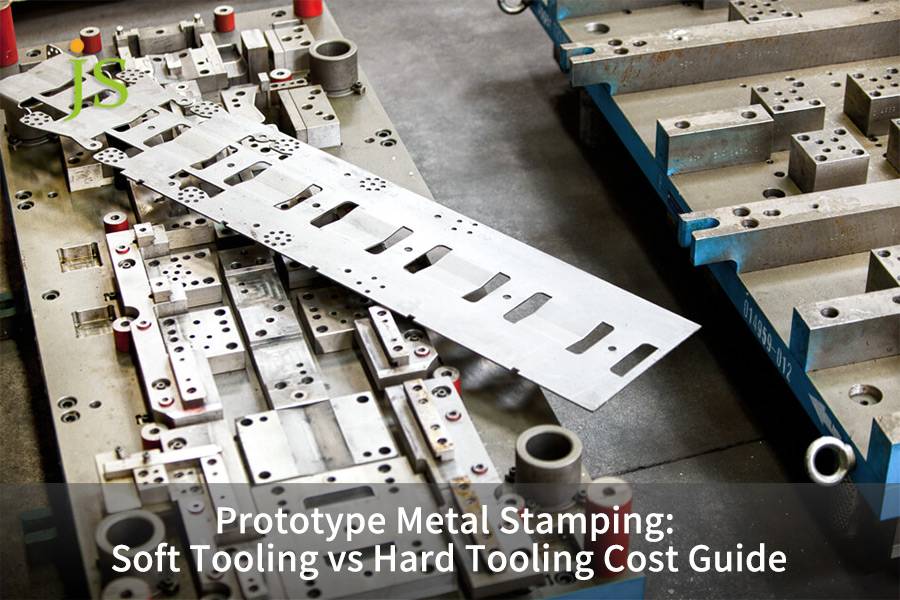

Prototype metal stamping uses soft tooling for low-volume validation (≤5,000 pcs, ±0.05–0.1 mm, 60–70% cheaper upfront) and hard progressive tooling for mass production (≥10,000 pcs, ±0.01–0.02 mm). Switch when per-piece savings offset the higher die cost—use the TCO formula below to find your breakeven.
Prototype Stamping Decision Matrix for Soft vs Hard Tooling Selection
|
Evaluation Dimension |
Soft Tooling Prototype Stamping |
Hard Tooling Mass Production |
Decision Threshold / Selection Rule |
|---|---|---|---|
|
Typical Tooling Cost (USD) |
$2,500 – $8,500 |
$18,000 – $65,000+ |
Budget-sensitive or design-unconfirmed projects – choose soft tooling |
|
Tooling Delivery Lead Time |
7 – 15 working days |
6 – 12 weeks |
Quick functional verification - choose soft |
|
Die Design Life |
1,000 – 10,000 strokes |
500,000 – 1,000,000+ strokes |
Annual demand>10,000 pieces - Hard mold; 5,000-10,000 pieces - TCO calculation based on geometric complexity; <5,000 pieces - Soft mold |
|
Processing Tolerance Capability |
±0.05 mm to ±0.1 mm |
±0.01 mm to ±0.02 mm |
Ultra-precision lead frames - choose hard |
|
Typical Die Material |
7075-T6 aluminum alloy / P20 / 4140 |
SKD11 / D2 / DC53 / Carbide (HRC 58-62) |
High springback/hardness sheet - choose hard steel |
|
Optimal Economic Batch |
1 – 5,000 pcs |
10,000 – 1,000,000+ pcs |
Breakeven point typically at 5,000-8,000 pcs |
If the product has only started the DFM verification phase and the total demand is less than 5,000 units, modular soft tooling is able to bring all-in cost to its minimum and the best cost efficiency.
According to ISO 2768-1:1989, general tolerance classes for linear and angular dimensions provide the baseline for stamped part inspection; JS Precision applies these standards to ensure consistent quality across all prototype and production batches.
How to Compare Stamping Tooling Cost for Soft vs Hard Tooling?
The tooling cost comparison stems from structural complexity and machining hours: soft tooling eliminates progressive feed mechanisms and high‑hardness heat treatment, reducing upfront costs by 65–80% compared to carbide hard dies.
Mold Cost Breakdown
Hard molds cost more because they combine progressive die sets, slow wire-EDM machining, multiple vacuum heat-treatment and quenching cycles (hardness over HRC 60+), and imported nitrogen springs.
Soft molds ($2,500 - 8,500) intended for low volume stamping metal parts mainly utilize single-blanker dies, quick-change die sets with universal type holders, and one-station manual die changer systems to reduce machining time by 60%+. The minimized design of soft molds naturally lowers the prototype stamping investment.
Comparison of hard mold components and soft mold
- Hard molds, being equipped with precision guiding systems, misfeed detection sensors, and high-speed stamping automated feeding units, are quite expensive.
- A soft mold uses the same mold base with replaceable inserts. Usually the mold material is 7075-T6 aluminum alloy or P20 pre-hardened steel, which significantly reduces raw material and processing costs.
|
Tooling Component |
Soft Tooling Cost (USD) |
Hard Tooling Cost (USD) |
Cost Ratio |
|---|---|---|---|
|
Die Base & Guide System |
800 – 1,500 |
4,500 – 12,000 |
1:5.6 |
|
Punch & Die Inserts |
600 – 2,000 |
6,000 – 25,000 |
1:10 |
|
Heat Treatment |
None included |
1,200 – 3,800 |
N/A |
|
Wire‑cut EDM Machining |
300 – 900 |
3,500 – 12,000 |
1:8.5 |
|
Assembly & Tryout |
500 – 1,200 |
2,800 – 7,000 |
1:4.5 |
|
Total Estimated Cost |
2,500 – 8,500 |
18,000 – 65,000+ |
1:7.2 |
According to ISO 286-1:2010, tolerance grades directly impact machining time and cost; JS Precision applies these standards to ensure consistent quality across all tooling types.
Send your 3D CAD drawings to JS Precision now to get a free soft/hard mold cost comparison quote and DFM analysis.
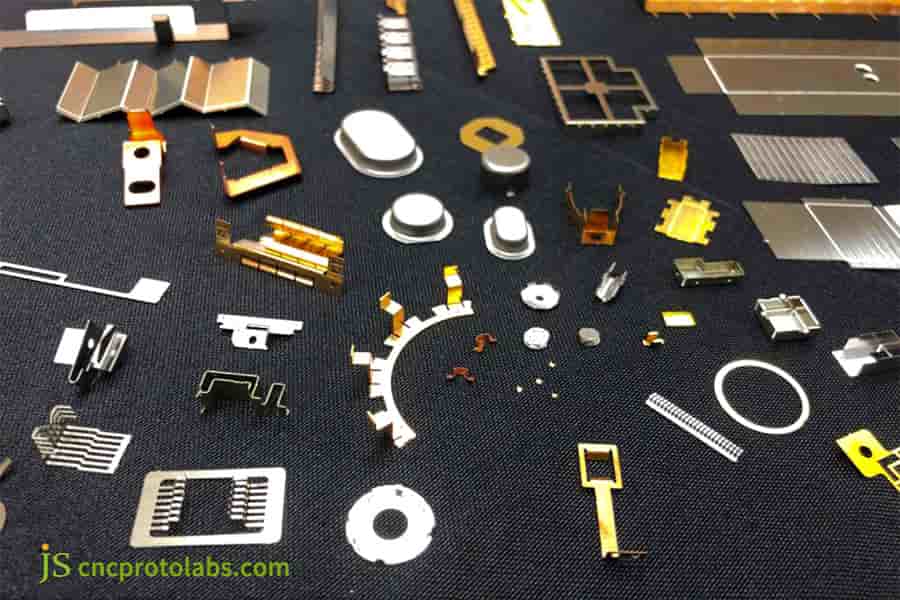
Figure 1: Various precision metal stamping prototype parts.
What Are the Key Benefits of Prototype Metal Stamping with Soft Tooling?
Prototype metal stamping with soft tooling delivers fully functional physical prototypes within 1–2 weeks while minimizing engineering change order (ECO) modification costs during R&D iterations.
Rapid design iteration capability
Restructuring designs often happen as a regular development activity. Once hard tooling is manufactured, altering hole locations and bending angles may usually involve scrapping inserts or even building an entirely new die. Soft tooling prototype stamping uses interchangeable inserts or pre-hardened steel where the changes can be accomplished in 24-48 hours. Simple CNC milling or partial EDM is sufficient to modify soft tooling prototype stamped molds, only costing 10%-15% of the modification costs of hard molds.
Realistic verification of physical properties
- The soft molded parts have metal grain flow direction, work hardening characteristics and bending springback performance identical to those of mass-produced parts.
- 3D printing or CNC machining does not simulate stamping hardening. In contrast, metal stamping prototype can, via soft molding, get real tensile strength data from tests; the performance verification effect is much better than that of alternative procedures.
When to Switch from Low Volume Metal Stamping Service to Hard Tooling?
Low volume metal stamping service transitions to high‑life hard tooling at a breakeven point typically between 5,000 and 8,000 pieces (Soft molds have advantages within 40,000 pieces; If we only compare mold amortization and single piece cost, 5,000-8,000 pieces will enter the decision sensitive area), determined by the tooling amortization curve and geometric tolerance stability.
Total Cost of Ownership Accounting Formula
To calculate the Total Cost of Ownership (TCO) in the workshop, you can use these formula:
Total Cost = Tooling Initial Cost + (Per-Piece Stamping Cost X Production Quantity)
Low-volume stamping processes frequently feature laser cutting combined with simple soft mold forming, which leads to slightly higher labor costs per piece. Hard molds, by contrast, use fully automated continuous progressive stamping at 60–300 SPM, driving very low per-piece cost. The total cost savings for the use of soft molds in typical low volume stamping projects are significant within the first 5,000 pieces.
Break-even point analysis
- At around the 5,000-8,000 piece level, the very low per-piece processing fees related to hard molds can rapidly make up for the higher initial cost of mold opening over the lower-cost soft molds.
- Taking a typical part as an example: the total cost of the soft mold solution = 5,000 + (0.85 × Qty); the total cost of the hard mold solution = 35,000 + (0.12 × Qty). Solving for Q, we find that the costs of the two solutions are equal when Q = 41,096 parts.
|
Production Quantity |
Soft Tooling Total Cost (USD) |
Hard Tooling Total Cost (USD) |
Cost Difference (USD) |
|---|---|---|---|
|
1,000 |
5,850 |
36,700 |
-30,850 |
|
3,000 |
7,550 |
38,580 |
-31,030 |
|
5,000 |
9,250 |
41,060 |
-31,810 |
|
41,096 (Breakeven ) |
39,932 |
39,932 |
0 |
|
10,000 |
13,500 |
49,760 |
-36,260 |
|
50,000 |
47,500 |
107,840 |
-60,340 |
According to ASTM G99-17, wear rates of tool steels under abrasive conditions correlate directly with hardness; JS Precision selects materials based on this standard to maximize die longevity.
Need precise break-even calculations? Contact JS Precision engineers for a free TCO analysis based on your specific part parameters.
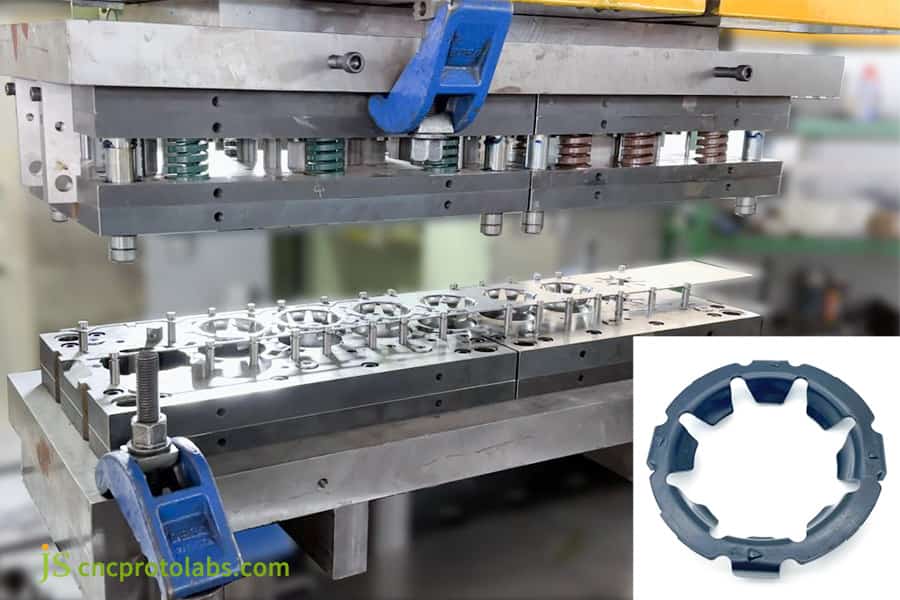
Figure 2: Stamping die machine producing metal ring part.
How Do Material Mechanics and Tool Steel Selection Impact Stamping Die Life?
Stamping die life directly correlates with sheet metal tensile strength and tool steel wear resistance: high‑hardness stamping materials like stainless steel accelerate soft tooling edge chipping and galling, causing rapid life degradation.
Mold steel selection and matching
- Soft dies made of 7075 aluminum alloy, P20 pre-hardened steel, or 4140 alloy steel are most common in practical applications (hardness HRC 28-32). Stamping can be done on materials like 1060 aluminum, brass, and SPCC soft carbon steel with these materials.
- Stamping full-hard 301 stainless steel, or high-strength titanium alloy would produce high shear stress which would microcrack the cutting edge of the soft die and develop severe burrs. This occurs within hundreds of stamping cycles.
- Hard tooling stamping dies (withstanding millions of high-load impacts) must therefore be made of DC53, SKD11, or cemented carbide (WC-Co with a hardness HRC 60-64 and TD coating, or TiCN coating).
Key points for selecting stamping sheet metal and die steel
- Materials suited to soft tooling: 1060 aluminum, brass, and SPCC (5,000–10,000 safe strokes).
- Materials suitable for hard molds: SUS304, titanium alloy, 301 hard stainless steel (safe number of punches: 200,000-500,000+).
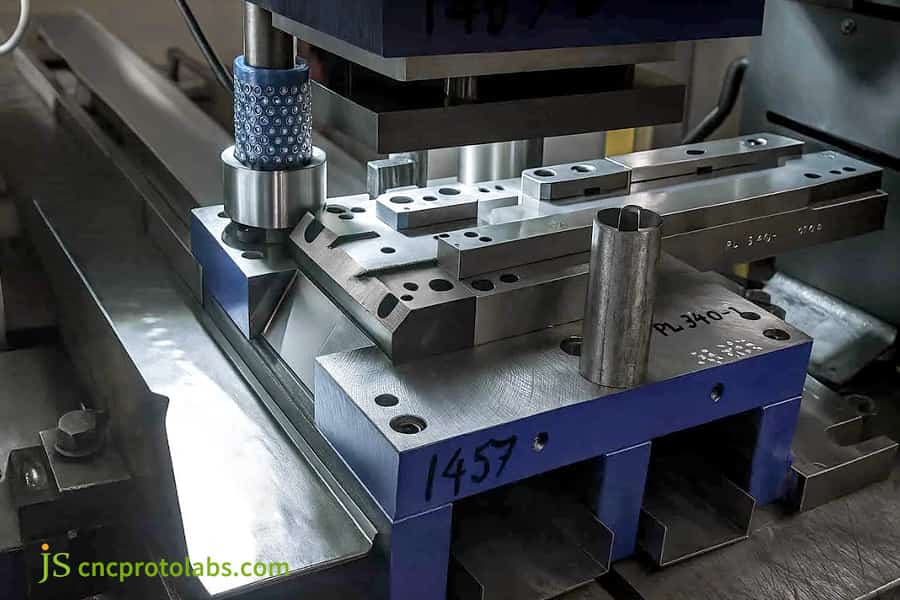
Figure 3: Close-up of stamping die tool steel components.
How Can Hybrid Stamping Reduce Costs in Precision Metal Stamping Service?
Precision metal stamping service benefits from hybrid stamping that combines high‑precision fiber laser cutting with simple forming soft tooling, eliminating expensive profile blanking dies and saving up to 78% in upfront development costs.
Laser cutting plus simplified forming process
Manufacturing complex deep-drawn or bent parts calls for using multi-stage hard molds to machine prototype parts. But this is too expensive if you only need a few prototypes. In the workshop, we use a combination of manufacturing methods to reduce costs: first, using a 12kW high-accuracy fiber laser cutting machine (contour tolerance ±0.03 mm) to directly cut the outer contour and irregular holes, and afterward, we do ribbing, flanging, and bending with a plain single-station soft tooling stamping die.
Quantitative cost reduction
- The hybrid laser cutting and soft tooling method totally frees you from large blanking mold-making expenses since you can alter the flat pattern size as you go while working on your sample.
- JS Precision used this approach on a jet aircraft component bracket fabrication and cut the initial tooling outlay from $22,000 to $4,800 (−78%) and shortened first-article delivery to 9 working days.
|
Cost Category |
Traditional Hard Die Approach (USD) |
Hybrid Laser+Soft Tooling (USD) |
Savings (%) |
|---|---|---|---|
|
Blanking Die Development |
12,000 |
0 (laser cut) |
100% |
|
Forming Tooling |
6,500 |
3,200 |
51% |
|
Piercing/Punching Tools |
3,500 |
1,600 |
54% |
|
Total Tooling Investment |
22,000 |
4,800 |
78% |
|
Lead Time (Working Days) |
42 |
16 |
62% |
According to ISO 21223:2019, standardized terminology for stamping dies, blanking dies, bending dies, and forming dies provides the foundational classification framework; JS Precision applies these definitions to ensure consistent tooling specification across all prototype and production programs.
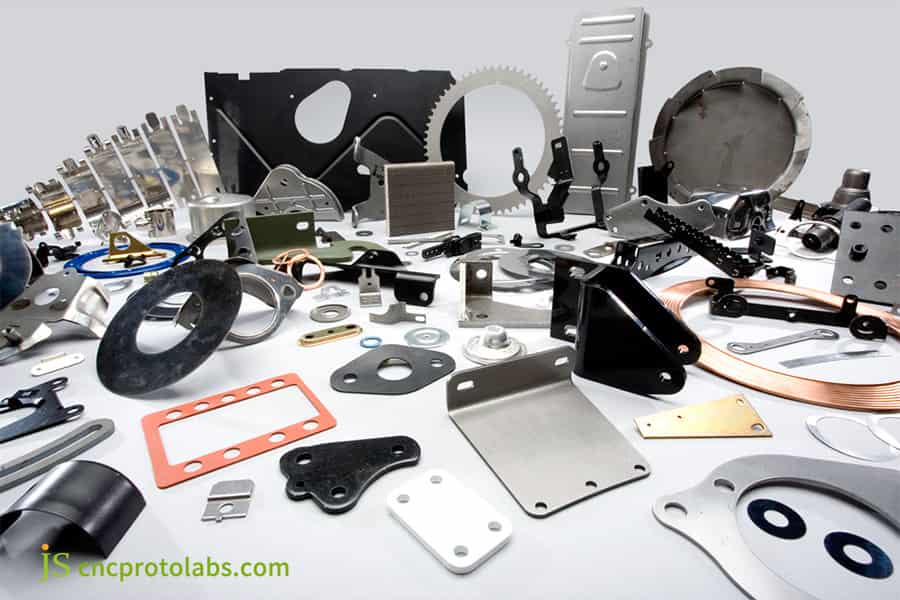
Figure 4: Assorted hybrid metal stamping parts collection.
What Are the Tolerance and Quality Differences in Stamping Tooling?
Stamping tooling differences manifest in achievable tolerances: soft tooling maintains ±0.05 mm to ±0.1 mm due to manual positioning and elastic deformation, while hard tooling consistently achieves ±0.015 mm through precise guide pin alignment and fixed die base.
Analysis of Size Control Mechanism
Soft molds are prone to slight thermal deformation after continuous stamping process cycles, mainly relying on mechanical stoppers for manual positioning, resulting in higher dimensional dispersion (lower Cpk). Hard molds, by contrast, use precision guide pairs, floating top pins, and misfeed detection sensors, resulting in full stamping automation. The material bending springback compensation is already incorporated into the mold cavity during the CNC trial molding stage.
Comparison of quality indicators
- Mass production of hard die progressive stamping is essential if one wants to meet the tight manufacturing requirements for components like automotive connector pins and medical microelectrodes.
- Data from optical imaging reveals that the dimensional deviation of parts produced with hard molds is normally distributed, with Cpk consistently at 1.33 or higher. Though, because of operator related variability, parts produced by soft molds usually have a Cpk value of around 0.8 to 1.1 only.
Need to ensure your parts meet Cpk≥1.33? JS Precision offers free DFM audit and tolerance analysis services to help you succeed the first time.
How JS Precision Scaled an Automotive Stamping Prototype to Production?
Customers face pain points
Tier-1 automotive customer requests a development of a 0.8 mm thick high-voltage shielding made of 5052-H32 aluminum alloy. They need 500 samples for a full-vehicle crash test and the parts should be available within two weeks after the order. But, the manufactured piece includes three bends, which are 30% likely to be changed. The hard-mold quote exceeded $32,000 and required 8 weeks. So, this product option greatly restricts the customer's financial limits and the scheduled delivery.
JS Precision Solution
- DFM (Design for Manufacturability) and Hybrid Process Planning: The engineering team decomposes the stamping feature design and fiber laser cutting was used to profile the flat blank thereby reducing the development time of blanking mold.
- Modular soft mold forming: create a simple 7075-T6 aluminum bending forming mold with quickly interchangeable inserts, keep a 2° compensation gap in the springback sensitive area, the mold cost is only $3,800 instead of the usual.
- Rapid prototyping and mold modification: 500 qualified samples were delivered successfully by the 9th day. After the customer revised a snap-fit hole following testing, the JS Precision team revised the laser-cut drawings and mold limit pins within 12 hours to the customer requirement.
- Seamless transition to hard mold mass production: The engineering team directly imported the springback compensation experience parameters from soft mold trials into the design of the hard mold progressive die (8-stations, DC53 steel, a material very popular due to its high toughness and hardness). This enabled a 98% success rate in the first mold trial.
Lessons learned from failure
At the beginning, while doing the soft-die stamping of trial pieces at production of the 30th piece, because 5052 aluminum tends to gall, fine aluminum shavings accumulated at the die corners and scratched the workpiece surface. We promptly halted the operations, applied hardcoat anodizing and physical polishing on the contact surfaces of the die, besides making fine adjustments to the viscosity level of the stamping lubricant, which led to zero risks of scratches.
Based on JS Precision's experience in this project, the lubricant viscosity for aluminum stamping should be 68–82 cSt; below minimum viscosity will result in adhesive wear while an excess will compromise dimensional stability.
Final mass production results
Using soft mold prototyping the customer managed to reduce the cost of the initial prototyping mold by about 88% and the vehicle certification was finalized 6 weeks ahead of schedule. Then, after adopting JS Precision's automatic progressive stamping production, part dimensional tolerance was stably controlled at ±0.02 mm with a Cpk of 1.48. The purchase cost was reduced for the customer over the whole cycle and the cost saving was greater than $45,000.
Need a similar efficient prototyping to mass production solution? Contact JS Precision engineers for a free DFM review and customized process roadmap.
FAQs
Q1: What is the typical lifespan of soft tooling in prototype metal stamping?
Soft die life spans from approximately 1,000 to 10,000 punches according to the stamping thickness and material type. It's common, for example, to use 7075 aluminum alloy or P20 pre-hardened steel dies to make 5,000-10,000 samples when stamping soft aluminum or low-carbon thin steel sheets.
Q2: Why are hard tooling stamping dies significantly more expensive upfront?
Vacuum heat treatment to HRC 58-62 of wear-resistant mold-steels like D2, SKD11, DC53, and even tungsten carbide cemented carbide are used to produce hard molds. The complex multi-station progressive set-up takes hundreds of CNC hours, and slow wire EDM, and matching the mold up and fine-tuning the production process with expert mold technicians.
Q3: Do soft tooling prototype parts represent the physical properties of final mass production?
Soft-die stamped parts have the same tensile strength, yield strain, and grain flow direction like hard-die mass-produced parts, respectively. If material springback compensation is done precisely in the soft-die stage, and samples can be in line with vehicle testing requirements and structural strength certification.
Q4: How can I get an accurate stamping tooling and part quotation from JS Precision?
Send the 3D CAD drawings (STEP format) and 2D engineering drawings (PDF) to JS Precision, and the engineering team will complete the DFM analysis within 24 hours, providing a horizontal quotation comparison between soft and hard mold solutions.
Q5: What is the standard manufacturing lead time for prototype soft tooling?
Prototyping and production of soft molds at the basic, single-stage level generally calls for 7 to 15 working days. By the inclusion of techniques like fiber laser blanking, prototype delivery for assembly and testing can be as short as 5 working days for very urgent deliveries.
Q6: How are engineering change orders handled for soft tooling vs hard tooling?
A soft mold that consists of replaceable inserts and unhardened steels allows for relatively small alterations like shifting hole position or adjustment of bending which can be accomplished by CNC milling at low cost and within just 1-2 business days. On the contrary, hard mold modifications involve engraving of high-accuracy by EDM or carbide cutters.
Q7: What applications are best suited for low volume metal stamping?
Low-volume stamping is the method of choice for those requiring up to 100-5000 pieces annually. This method suits for making medical device springs, aerospace brackets, copper busbars of prototype new energy vehicles and clinical-phase-testing hardware products, etc.
Q8: What key factors drive the total quotation for precision metal stamping dies?
The mold's price is set from four engineering variables: the part's geometric intricacy and the process steps count, sheet thickness and hardness, dimensional tolerance accuracy level, and the anticipated stroke life.
Summary
In choosing the route of prototype metal stamping processes, soft dies and hard dies are by no means exclusive. Instead, they are complementary tools that can be used through the entire product life cycle. Soft die stamped parts can be used for prototype or limited-run production (under ~5,000 pieces) as the initial validation of R&D and pilot production. The advantage of soft die pressing lies in its minimum capital outlay with a very short delivery time within a few weeks. So from the point of view of development risk, soft die is the best compromise.The cemented carbide progressive dies used in mass production will result in the least manufacturing cost per unit as the production process will be automated, very fast-running and accurate to the micron level.
Need help with launching your metal stamping product? Upload your 3D CAD model and/or 2D technical drawings to JS Precision now for a complimentary DFM manufacturability review and cost/benefit analysis to decide whether to go for soft/hard dies.

Disclaimer
The contents of this page are for informational purposes only. For JS Precision Services, there are no representations or warranties, express or implied, as to the accuracy, completeness, or validity of the information. It is the buyer's responsibility to identify specific technical requirements and request a formal parts quotation. Please contact us for more information.
Resource