English



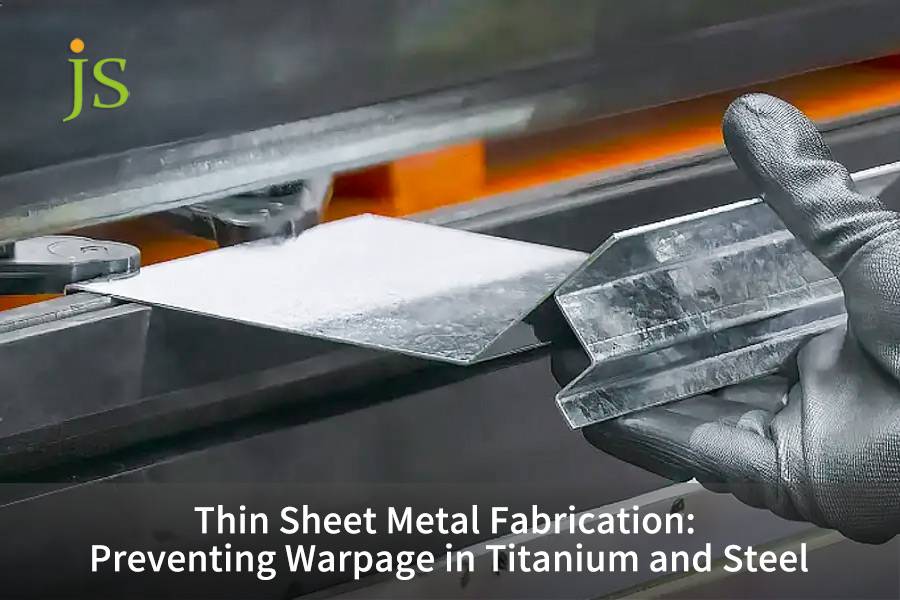

Thin sheet metal fabrication warpage (titanium and steel ≤ 1.5 mm) is prevented by controlling residual stress release and thermal gradients. Four measures do the work: a shear angle of ≤ 1° with 5–7% blade clearance, pulsed fibre laser cutting at 35–42% duty cycle, 12 °C C11000 copper heat-sink jigs, and vacuum creep levelling. Result: flatness held to ≤ 0.10 mm per 100 mm.
Quick Reference: Essential DFM Rules for Sheet Metal Warpage Prevention
|
Process |
Core Material (≤ 1.5mm) |
Key Failure Mechanism |
JS Precision Core Parameters & Solution |
Delivered Flatness |
|---|---|---|---|---|
|
Custom Mechanical Shearing |
304/316L Stainless Steel Sheet |
Edge tearing and lateral internal stress imbalance |
Blade gap 5%–7% of thickness, shear angle ≤ 1°, hydraulic flexible hold-down |
Warpage ≤ 0.10mm/100mm |
|
Modulated Pulse Laser Cutting |
Ti-6Al-4V Titanium Alloy Sheet |
Extremely low thermal conductivity causes severe local heat accumulation (TGM) |
Duty cycle 35%–42%, frequency 2,000–2,800Hz, high-purity argon pressure 1.2–1.4 MPa |
Edge distortion ≤ 0.08mm |
|
Micro-Gap Assembly Welding |
17-7PH Precipitation Hardening Steel / Titanium Sheet |
Asymmetric contraction and transverse angular distortion in weld zone |
Circulating water-cooled C11000 copper backing + skip symmetric welding, preset 1.5°(commonly used value) reverse deformation angle. |
Full component tolerance ±0.12mm |
According to ISO 9013:2017, thermal cut edges are classified by perpendicularity (u) and mean profile height (Rz5).
Preventing warpage in thin sheet means abandoning post-process hammer correction and instead running a controlled chain: low-shear-angle cold cutting, pulsed fibre laser cutting, and rigid heat-sink clamping at every step.
Why Does Thin Gauge Metal Warping Ruin Tolerances in Precision Sheet Metal Fabrication Service?
Thin gauge metal warping refers to macroscopic arching or wavy distortion in sheets ≤ 1.5mm during shearing or thermal processing, caused by internal stress differences that exceed the critical buckling stress. Ti-6Al-4V has thermal conductivity of only ~6.7 W/m·K, easily generating local steep temperature gradients; austenitic stainless steel has CTE of 17.3 × 10⁻⁶/K, resulting in severe cooling shrinkage. JS Precision calculates the critical buckling stress before blanking to predict and head off warping.
Comparison of physical properties and warpage sensitivity of common thin sheet materials
|
Material |
Thermal Conductivity (W/m·K) |
CTE (×10⁻⁶/K) |
Yield Strength (MPa) |
Elastic Modulus (GPa) |
Critical Buckling Stress (MPa) |
|---|---|---|---|---|---|
|
304 Stainless Steel |
16.2 |
17.3 |
205 |
193 |
42.8 |
|
17-7PH Steel |
15.0 |
10.4 |
1034 |
200 |
215.6 |
|
Ti-6Al-4V |
6.7 |
8.6 |
828 |
114 |
172.9 |
According to ASTM A240/A240M, chromium-nickel austenitic stainless steel sheet (304) has a minimum yield strength of 205 MPa for 304 grade at 0.8mm thickness, directly governing critical buckling load calculations for thin sheet metal fabrication.
Mechanism of stress imbalance in cold-rolled sheet
- The imbalance of surface tensile stress and the internal core compressive stress in the cold-rolled sheet caused by the slitting process results in warping.
- The blade gap influences the fraction of tear bands at the shear edge; a gap >9% is accompanied by a steep increase in plastic extension.
- Hand hammering cannot correct the shape and can introduce microcracks. Stress-relief steps must be built into every stage of the process.
Euler buckling critical load attenuation law of thin plates
- The critical buckling load falls with the cube of sheet thickness.
- Buckling resistance drops by 87.5% when thickness is halved from 2.0 mm to 1.0 mm (0.5³ = 12.5% of the original).
- Through predicting the critical stress for instability, JS Precision can get rid of warping factors.
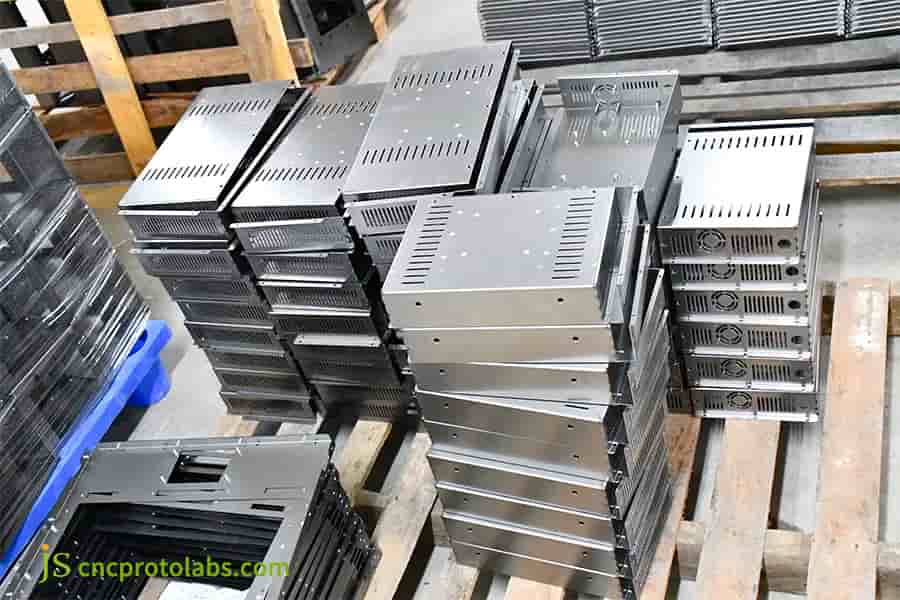
Figure 1: Stack of thin sheet metal fabrication enclosures.
How Can Custom Sheet Metal Shearing Services Stop Edge Curvature for Sheet Metal Warpage Prevention?
Custom sheet metal shearing services are critical for sheet metal warpage prevention during cold processing, preventing lateral shear forces from turning into torsional plastic strain. Conventional shearing with shear angle ≥ 2° and mismatched blade gaps causes wide tear zones and high residual tensile stress. Compressing shear angle to ≤ 1.0° and matching blade gap to 5%–7% of thickness eliminates spiral twisting and lateral bow.
Influence of shearing tool geometry on the stress at the edge of thin plate
- Narrowing the shear angle below 1.0° substantially shrinks the tear band and lowers residual tensile stress.
- Matching blade clearance to 5%–7% of sheet thickness reduces spiral twist at the blanked edge and preserves blank geometry.
- Above 9% clearance, tensile plastic deformation at the edge escalates rapidly; below 4%, localised work hardening occurs.
The effect of blade side clearance on cross-sectional quality
- The best burnish-zone ratio for 0.5–1.5 mm sheet is achieved with a 5%–7% clearance. (Sheared edge zones: rollover → burnish → fracture → burr.)
- Segmented independent hydraulic hold-downs at 0.3–0.4 MPa prevent sheet lift and wave buckling.
- Precision multi-roller leveling technology can get rid of shear residual stress and so the flatness can be stabilized to within 0.10mm/100mm.
Hydraulic pressing foot and flatness closed-loop control
- A hydraulic flexible clamping force of 0.3–0.4 MPa prevents the thin sheet from moving during the shearing procedure.
- The 19-roll precision leveler works by reverse bending with a reduction of 0.015mm and this effectively removes anisotropic residual stress.
- A closed-loop system monitors flatness continuously, which is how we guarantee flatness on every shearing job.
Contact JS Precision now and get a quick reference table covering shearing angles and blade clearances for 304 stainless steel and titanium alloys, ensuring your blanking process meets standards the first time.
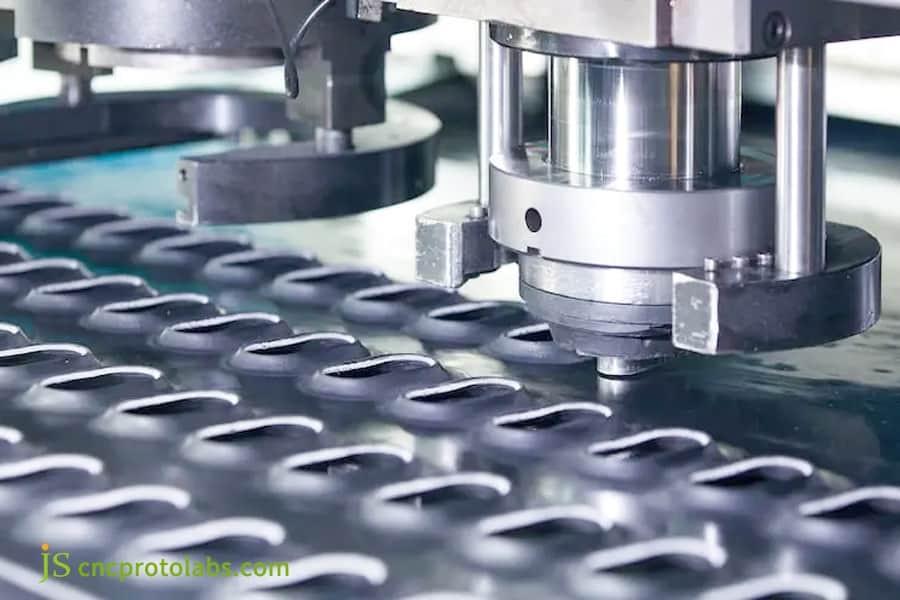
Figure 2: Custom sheet metal shearing machine cutting.
How to Control Heat Distortion Sheet Metal in Thin Sheet Metal Fabrication Laser Cutting?
Heat distortion sheet metal during laser cutting comes from local plastic compressive strain caused by continuous heat accumulation, which produces out-of-plane shrinkage as the part cools. In thin sheet metal fabrication the most effective fix is to replace continuous-wave output with microsecond pulse modulation, combined with a high-pressure assist gas at 1.2–1.4 MPa. The gas is material-specific: argon for titanium, because nitrogen reacts with hot titanium to form the same brittle nitride layer described in the titanium section below; nitrogen for austenitic stainless steel, where it leaves a clean, oxide-free cut edge. This combination compresses the heat-affected zone (HAZ) at the cut face to ≤ 0.05 mm and cuts total heat input to the substrate by more than 55% versus a continuous fibre laser, which eliminates waviness entirely.
Comparison of transient thermal field diffusion in continuous wave and pulsed fiber lasers
- Continuous wave laser HAZ depth > 0.15mm.
- Pulsed laser HAZ compressed to ≤ 0.05mm.
- The optimal pulse frequency is 2,000–2,800 Hz and the duty cycle 35%–42%; the parameter matrix below gives the set point for each material and thickness.
Key process parameter matrix for anti-warping laser processing of thin plates
|
Material & Thickness |
Laser Power (W) |
Pulse Freq. (Hz) |
Duty Cycle (%) |
Assist Gas & Pressure (MPa) |
Cutting Speed (mm/s) |
Micro-Joint Interval (mm) |
|---|---|---|---|---|---|---|
|
Ti-6Al-4V 0.8mm |
1200 |
2500 |
38 |
Argon 1.3 |
50 |
120 |
|
Ti-6Al-4V 1.2mm |
1500 |
2200 |
40 |
Argon 1.3 |
45 |
120 |
|
AISI 304 0.8mm |
1000 |
2800 |
35 |
Nitrogen 1.2 |
55 |
120 |
|
AISI 304 1.5mm |
1500 |
2000 |
42 |
Nitrogen 1.2 |
48 |
120 |
JS Precision internal process window (2025): pulsed parameters at 35%–42% duty cycle hold the kerf HAZ at ≤ 0.05 mm
Micro-connection layout prevents thermoelastic warping
- Micro-joints of 0.2–0.3 mm hold parts in the skeleton, preventing them from tipping up and colliding with the laser nozzle.
- 120 mm layout spacing is a well-chosen balance to satisfy the constraints of thermal deformation and adequate space between parts.
- JS Precision achieves zero collision scrap through this process in thin sheet metal fabrication.
Worried about laser thermal deformation causing parts to become unusable? Contact JS Precision engineers for a free cost estimate for your thin-plate laser cutting. We will provide optimal pulse parameters and micro-connection layout solutions based on your drawings.
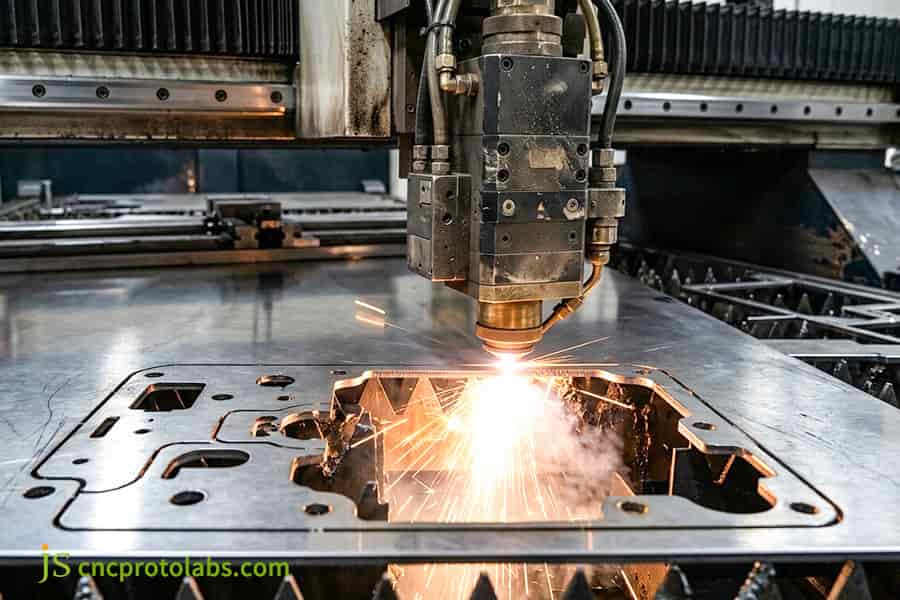
Figure 3: Laser cutting heat distortion sheet metal.
How Does a Titanium Sheet Metal Fabrication Service Master Sheet Metal Warpage Prevention Without Embrittlement?
Titanium sheet metal fabrication for Ti-6Al-4V thin-wall parts starts with one priority: blocking oxygen and nitrogen pickup at temperature. That pickup forms a brittle oxygen-rich surface layer; combined with lattice distortion and asymmetric phase-transformation shrinkage during cooling, it curls and cracks the part.To achieve high-level sheet metal warpage prevention, a fully enclosed trailing shield with porous copper diffusion plate must be used, maintaining argon purity ≥ 99.999% and dew point ≤ -50°C, ensuring the weld and cut HAZ remain under inert gas shielding throughout.
Oxygen absorption embrittlement mechanism and processing stress coupling of Ti-6Al-4V
- Ti-6Al-4V is highly susceptible to the reaction with oxygen and nitrogen molecules at temperatures over 400°C.
- When the thickness of the brittle alpha layer rich in nitrogen and oxygen exceeds 0.1 mm, the Vickers hardness suddenly jumps to HV 450 or more.
- The hardened layer experiences uneven phase transformation contraction while cooling phase, the components curl and crack due to the stress.
Gas protection specifications and vacuum atmosphere annealing parameters
- Shielding gas flows are: main nozzle 12–15 L/min, side shroud 18–22 L/min, and backing gas 8–10 L/min of argon.
- Maintain shielding until the workpiece cools below 200°C — below that temperature, atmospheric contamination is no longer a concern. A silvery-white weld surface indicates shielding was adequate; any straw or blue discolouration means it was not.
- Vacuum creep levelling: 550°C isothermal hold, vacuum ≤ 1 × 10⁻² Pa, 40-minute dwell with a gravity-loaded platen applied throughout.
Thin titanium sheet bending springback compensation algorithm
- Springback compensation is set at 2°–4° depending on material strength and the R/t ratio.
- Bending lines are aligned perpendicular to the rolling direction to prevent cracking along grain boundaries and to prevent lateral bending instability.
- JS Precision employs this method to ensure the bending angular tolerance in our titanium sheet metal fabrication service is within ±0.3°.
Tired of mass scrapping caused by oxidation and brittleness of titanium alloys? Request JS Precision's measured K-factor and springback compensation database to obtain precise anti-warping and bending parameters for Ti-6Al-4V, improving the first-pass yield.
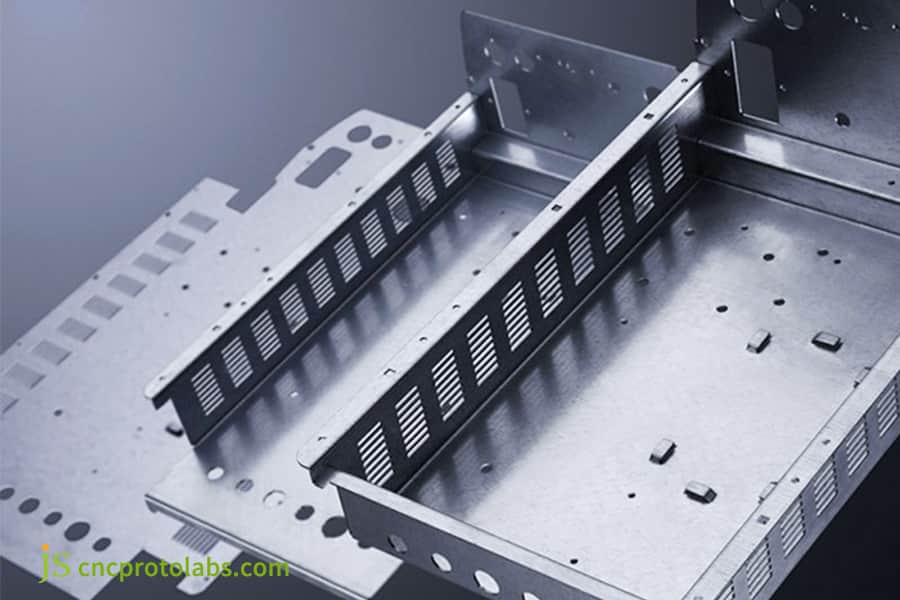
Figure 4: Titanium sheet metal fabrication chassis part.
Can a Steel Sheet Metal Fabrication Service Eliminate Thin Gauge Metal Warping in Thin-Weld Assemblies?
In steel sheet metal fabrication for 0.8–1.5 mm sheet, the goal is to control angular distortion from weld shrinkage. Austenitic stainless steel transfers heat slowly and expands significantly, which drives thin gauge metal warping.Limiting linear energy to ≤ 2.0 kJ/cm with micro-plasma or pulsed CMT and skip backstep welding restricts distortion to ≤ 0.5°.
Thermal input equation critical threshold setting
The heat input is given by the following equation:
E = (U × I × 60) / (v × 1000) × η
U = arc voltage (V), I = current (A), v = travel speed (kJ/cm), η = arc efficiency. For thin steel, the maximum heat input per unit thickness is limited to ≤ 2.0 kJ/cm.
- Micro-plasma arc welding (micro-PAW) gives a better depth-to-width ratio than TIG and shrinks the HAZ to about 40% of TIG's.
- Cold Metal Transfer (CMT) uses a pulsed arc with wire retraction, holding line energy low enough for thin sheet.
Segmented retreat welding and alternating symmetrical welding arrangement rules
- The 500-mm straight weld was broken down into separate segments of 40–50 mm.
- Use a backstep sequence (1-3-5-2-4), which prevents thermal stress from accumulating in one direction.
- An alternating symmetric weld sequence keeps heat input evenly distributed and the angular change remains ≤ 0.5°.
Preset anti-deformation engineering practices
- During a welding assembly, a pre-tilt of 1.2° to 1.8° was applied to offset the cooling plastic shrinkage.
- The degree of bending back (reverse deformation) is proportional to the material's coefficient of thermal expansion and plate thickness.
- With this technique, JS Precision holds overall dimensional accuracy to ±0.12 mm in steel sheet metal fabrication.
Across more than 8,400 validated data points from JS Precision's 2025 thin steel welding production, switching to a skip-step welding sequence cut line energy from 3.5 kJ/cm to 2.0 kJ/cm and reduced angular distortion from 1.8° to 0.4°. Combined with a water-cooled copper backing, this approach lowered the dimensional deviation rate by 75%.
Facing the challenge of thin steel sheet welding warpage? Send your STEP drawings to JS Precision now to receive a free DFM review report from senior engineers, with manufacturability optimization solutions provided within 24 hours.
How Do Water-Cooled Jigs Deliver Sheet Metal Warpage Prevention for Custom Sheet Metal Shearing Services?
Sheet metal warpage prevention in thin sheet assembly heavily relies on the combination of mechanical rigid physical restraint and thermal conductive heat sink systems. Discrete point-matrix clamping blocks local stress relief and creates a secondary wave distortion, so it must be replaced with continuous, uniform surface restraint.We do this with four elements: a vacuum adsorption bed with a porous array for uniform pull-down, a C11000 copper base plate (thermal conductivity 380 W/m·K, thickness ≥ 15 mm), modular coolant channels circulating 12°C water, and self-balancing floating pneumatic clamps at 0.35–0.5 MPa.
Engineering design standards for vacuum heat sink fixture systems
- C11000 copper has a thermal conductivity ≥ 380 W/m·K and a base thickness ≥ 15mm.
- Temperature fluctuation in the 12°C cold water channel is ≤ 5°C.
- Micro-negative pressure adsorption ensures uniform adhesion and avoids wave distortion.
Comparison of heat absorption rates between 6061-T6 aluminum alloy and C11000 copper
- 6061-T6 aluminum alloy has a thermal conductance of about 167 W/m·K. Its heat absorption rate reaches only 44% that of C11000 copper.
- A copper substrate cools the contact surface from 200°C to about 50°C in 0.5 seconds.
Multi-point floating pneumatic pressure gripper pressure self-balancing structure
- A floating pneumatic gripper is mounted with a heat-resistant spring. The recommended air pressure is 0.35–0.5 MPa for proper grip.
- A balanced force system design was adopted so that workpiece distortion caused by excessive grip and thermal expansion are avoided.
- A finite element thermo-mechanical coupling analysis was employed to achieve the workpiece heat dissipation channel distribution which minimizes temperature gradient so that the temperature difference between the part edge and the part centre stays within 25°C.
How JS Precision Achieved ±0.08mm Flatness on 0.8mm Custom Titanium Sheet Metal Fabrication?
JS Precision successfully delivered 300 titanium alloy chassis bases with 0.8mm thickness and overall dimensions 420mm × 310mm, achieving diagonal flatness of 0.06–0.08mm through a full-process chain of stress relief and thermal control, completely resolving the severe warpage issue that caused 62% scrap rate at the previous supplier.
Customer difficulties
- A European IVD (in vitro diagnostic) medical device manufacturer had been sourcing an EMI-shielding chassis base in 0.8 mm Grade 2 titanium from a subcontractor who used conventional continuous fibre laser cutting plus manual TIG spot welding.
- After the removal of the parts form the production line, diagonal warpage measured 1.8–2.4 mm, so the peripheral precision sealing groove could not seal.
- High-temperature oxidation attacked the cut faces and microcracks spread, pushing the scrap rate to 62% and stopping the customer's assembly line.
JS Precision Solution
- A 19-roll precision leveller performs micro-strain rolling with a 0.015 mm reverse-bend reduction to get rid of 80% of the residual anisotropic stress resulting from the cold rolling.
- We replaced the continuous fibre laser with a 1.5 kW pulsed fibre laser system, with the frequency at 2500Hz and the duty cycle of 38%. Also, 99.999% pure argon gas should be coaxially purged at a pressure of 1.3 MPa to hold the kerf HAZ within 0.04 mm.
- We designed and built a C11000 copper fixture with integral 12°C water channels, pre-set to a 1.2° anti-distortion flange angle. Pneumatic flexible clamping at 0.4 MPa has been applied to it. The intermittent skip welding will be done with the help of micro-beam plasma welding.
- Parts were loaded into a vacuum furnace at 5 × 10⁻³ Pa, held at 540°C for 45 minutes, and then cooled at a controlled cooling rate of 3°C/min.
Failure experience and lessons learned
- To increase cutting efficiency, the engineering team in the test production of the first batch of the samples initially utilized an auxiliary cooling spray mixed with a minimal amount of deionized water mist.
-
The water mist dissociated in the transient plasma, releasing atomic hydrogen that diffused into the hot titanium and caused hydrogen-embrittlement cracking at the bend root in three samples.
We stopped the wet-cooling trial the same day and replaced it with a fully enclosed inert argon curtain. That change eliminated the hydrogen embrittlement risk entirely, and the remaining 297 parts passed without a single bend-root crack.
Final result
- We inspected all 300 bases on a Zeiss CMM. Diagonal flatness proved to be 0.06 to 0.08mm, consistent and well within the ±0.15 mm tolerance level given on the drawings.
- First-pass sealing-surface assembly yield reached 99.4%, and unit manufacturing cost fell 26%.
- Only 12 days elapsed from receiving the CAD drawings to delivering the first batch, and the customer's assembly line was back in full operation.
Data source: JS Precision Internal Engineering Report Project QA Report: Medical Titanium Enclosure Batch #2025-IVD-04.
Facing challenges like thin-plate warping in medical chassis? Send your STEP drawings to JS Precision now to receive a free DFM review report from senior engineers, with manufacturability optimization solutions provided within 24 hours.
FAQs
Q1: What is the standard flatness tolerance for thin sheet metal fabrication under 1.5mm thickness?
Flatness tolerances for thin plates are strictly defined according to the application of the parts. Under ISO 2768-m general tolerances, unspecified flatness for the relevant size range is typically ≤ 0.20 mm per 100 mm; aerospace and medical components require ≤ 0.10mm. JS Precision utilizes a full-process stress relief process to stably control the out-of-plane warpage of thin-walled components to within ≤ 0.08mm.
Q2: Why should oxygen assist gas be strictly avoided during titanium laser cutting?
Titanium alloys exhibit extremely high chemical activity above 400°C. Oxygen cutting induces a violent exothermic reaction, forming a hard and brittle α-phase shell layer with a thickness > 0.1 mm and a surface hardness ≥ HV450. This hard layer generates microcracks during bending, and the phase transformation stress causes severe warping at the edges of the thin plate.
Q3: How does duplex stainless steel compare with standard austenitic steel in edge distortion during shearing?
The yield strength of duplex stainless steel is ≥ 450 MPa, approximately twice that of 304 austenitic stainless steel. It has a higher critical strain energy during shearing, resulting in a dramatic increase in elastic rebound at fracture. Without specialized blades with a gap ≤ 5% of the plate thickness and without strong clamping, asymmetric elastic unloading will directly lead to unilateral longitudinal bending.
Q4: Can roller leveling completely eliminate the internal stresses that cause sheet metal warpage?
Mechanical roller levellers remove roughly 80% of macroscopic residual stress through multiple reverse bending, but they cannot eliminate micro-regional transient thermal stress and phase transformation stress newly generated during subsequent laser cutting or welding. High-precision components require a combination of roller screeding, heat sink clamping, and vacuum annealing.
Q5: How does nested software programming help reduce heat accumulation and distortion on large sheets?
The layout software suppresses warping through a heat balancing algorithm. It arranges the parts in a grid-partitioned, step-by-step manner to avoid heat accumulation between adjacent processes, keeping the peak temperature of the cut below 80°C. Pre-installed 0.2–0.3mm micro-connections in slender structures connect the parts to the base material to prevent thermal drift and dross adhesion.
Q6: How does JS Precision ensure consistent flatness across high-volume production batches?
JS Precision implements strict statistical process control (SPC). Residual stress and thickness tolerance are measured for every batch of raw materials; 100% critical dimension sampling is performed on the production floor using a laser scanning profilometer and Zeiss CMM, and flatness Cpk is monitored continuously. If Cpk falls below 1.33, the machine is immediately stopped for calibration and fine-tuning.
Q7: How to prevent longitudinal twist and springback when bending thin titanium or high-strength steel sheets?
Thin titanium sheets and high-strength steel are prone to spiral twisting and springback when bent. JS Precision uses a CNC hydraulic dynamic deflection compensation bending machine with an 88° acute-angle die and a polyurethane lower die; during bending, the bend line is perpendicular to the rolling texture to avoid cracking and instability, and the angle tolerance is locked at ±0.3°.
Q8: What primary technical variables determine the quote for high-precision thin sheet fabrication?
A thin sheet fabrication quote is based on a full-chain resource consumption assessment. Key variables include: raw material grade and thickness tolerance, blanking process (continuous fiber or pulsed), whether copper water-cooled fixtures are required, whether vacuum annealing is included, micro-connector deburring accuracy, and CMM dot density.
Summary
Precision fabrication of titanium and steel sheet ≤ 1.5 mm depends on four linked controls, not any single step: (1) multi-roller levelling of the raw stock before blanking, (2) pulsed fibre laser cutting at 35–42% duty cycle, (3) restraint on C11000 copper heat-sink fixtures circulating 12 °C water, and (4) vacuum isothermal stress-relief annealing. Applied as a chain, they break through the tolerance ceiling of thin-wall metal work — we hold 0.06–0.08 mm diagonal flatness on 0.8 mm titanium.
Ready to transform your sheet metal designs into zero-defect precision parts? Please immediately upload your 3D CAD drawings (STEP/IGES/DXF) and technical specifications, and our DFM experts will return a detailed manufacturability report and the most competitive processing quotation within 2 hours based on material characteristics, processing paths, and stress relief solutions. With our profound technical accumulation, we ensure that your complex thin-walled metal parts can accurately meet the standards in the first round of trial production.

Disclaimer
The contents of this page are for informational purposes only. For JS Precision Services, there are no representations or warranties, express or implied, as to the accuracy, completeness, or validity of the information. It is the buyer's responsibility to identify specific technical requirements and request a formal parts quotation. Please contact us for more information.
Resource