English




The top precision metal laser cutting services for 2026 will vary depending on whether your design includes features of sub-micron sizes, 24/7 turnaround time domestically in flat sheets or large-scale manufacturing through factories.
Precision metal laser cutting is the process of thermal fabrication without contact using fiber or ultraviolet lasers with assist gases of nitrogen or oxygen to melt and vaporize sheet metals along predetermined paths using CAD within ±0.05 mm (±0.002 in). Selecting the right manufacturing partner requires evaluating linear positioning accuracy, laser kerf width compensation, heat-affected zone (HAZ) mitigation, and in-house secondary processing capabilities.
Comparing Specifications from the Top 7 Laser Cutting Service Providers
Key Sourcing Takeaway: For the combination of tight linear tolerances, press brake forming and low-cost scaling, precision manufacturing companies such as JS Precision are the best option. For very quick domestic 2D sheet cutting service, go for SendCutSend. For comprehensive alloy offerings and thick plate material selection, go with Xometry. For sub-millimeter micro-foils, use 3ERP.
|
Provider Name |
Operating Model |
Fastest Turnaround |
Cutting Tolerance |
Max Thickness (Steel / Al) |
Primary Advantage |
|
JS Precision |
In-House Direct Factory |
3 Days |
±0.05 mm |
25 mm / 16 mm |
Direct pricing, DFM support, scalable runs |
|
Xometry |
Digital Marketplace |
3–5 Days |
±0.13 mm |
101.6 mm / 50.8 mm |
Broad alloy catalog, heavy plate processing |
|
SendCutSend |
Online Direct Cutting |
1–2 Days |
±0.13 mm |
12.7 mm / 12.7 mm |
Fast US domestic blanks, zero minimum spend |
|
RapidDirect |
Digital Platform |
3 Days |
±0.10 mm |
25 mm / 15 mm |
Automated quoting, rapid multi-process prototyping |
|
3ERP |
Prototype Machine Shop |
5 Days |
±0.013 mm |
6.35 mm / 4.0 mm |
Micron tolerances, medical and aerospace R&D |
|
JLC (JLCCNC) |
Standardized Factory |
1–2 Days |
±0.15 mm |
6.0 mm / 3.0 mm |
Ultra-low price floor, maker-level prototypes |
|
Fictiv |
Enterprise Orchestration |
2–4 Days |
±0.13 mm |
12.7 mm / 12.7 mm |
Enterprise quality tracking, turnkey assemblies |
Note: Technical specifications reflect verified industrial data as of October 2026. Lead times and costs vary by material grade, part geometry, and secondary finishes.
Which Metal Laser Cutting Companies Lead the Industry in 2026?
The top metal laser cutting companies in 2026 are JS Precision, Xometry, SendCutSend, RapidDirect, 3ERP, JLC, and Fictiv. These companies stand out for their certified optical positioning accuracy, validated kerf width compensation, and specialized equipment configurations. Their technologies range from multi-kilowatt solid-state fiber lasers to specialized ultraviolet ablation systems.
JS Precision – Best for Factory-Direct Precision, DFM and Scaling Manufacturing
JS Precision works as an in-house manufacturing operation based in Dongguan. The company boasts a high power fiber laser cutting facility along with a fleet of more than 100 precision CNC machines. With no involvement of any third-party digital brokers, JS Precision sends out CAD drawings directly to the engineers on the factory floor. This direct engineering link optimizes beam paths, cutting gas pressures, and downstream secondary forming.
- Core Tolerances: Standard cutting tolerance of ±0.05 mm (±0.002 in) conforming to ISO 2768-m standards.
- Cutting Capabilities: 25 mm carbon steel, 20 mm stainless steel, 16 mm aluminum, and 10 mm copper or brass.
- Secondary Operations: CNC press brake bending, robotic laser welding, automatic PEM stud insertion, deburring, and finishing.
- Quality Control: ISO 9001:2015 certified and implementing traceability according to IATF 16949 standards along with complete material test reports and CMM inspection.
- Pros: Direct factory quotes 20% to 35% cheaper than broker sites, senior tooling engineers manually review for DFM, and scalable production from 5 prototype parts to 50,000+ units.
- Cons: Transport via plane to North America and Europe requires 3 to 5 business days, and the service does not have 24-hour pick up within the United States.
Xometry – Best for Massive Material Catalog and Thick Plate Cutting Capabilities
Xometry provides coordination services for a large on-demand digital suppliers network. Xometry sends customer orders to multiple third-party manufacturers throughout North America and Europe. The system allows for the processing of extremely large workpieces and structural plates.
- Max Cutting Thickness: 101.6 mm (4.0 in) for heavy duty structural carbon steel with an approximate kerf tolerance of .020 in.
- Material Range: Extensive range of materials including high temperature Inconel 625/718, Hastelloy, titanium Grades 2/5, spring steel and non-metals.
- Pros: Proprietary instant quote software, ability to cut heavy multi-kilowatt plates, and extensive material range.
- Cons: Fees for brokerage services drive up per unit cost by 25%-40% for large production orders above 50 pieces, while edge finishing and kerf taper fluctuate across distributed supplier partners.
SendCutSend – Best for Super-Fast Domestic US 2D Flat Blanks
SendCutSend is a software-based sheet metal provider that operates in the United States. The company optimizes exclusively for automated 2D nesting, flat laser profiling, and expedited local shipping.
- Core Tolerances: ±0.13mm (±0.005") of standard laser cut part tolerance with computer controlled kerf compensation.
- Turnaround Speed: 1–2 business day dispatch for domestic US shipments on standard raw stock.
- Pros: No minimum order quantity and fast local delivery, plus easy-to-use online ordering system for quick DXF and DWG file uploads.
- Cons: Limited to simple 2D shapes or basic air bends, limited material thicknesses, and no professional design for manufacturability services.
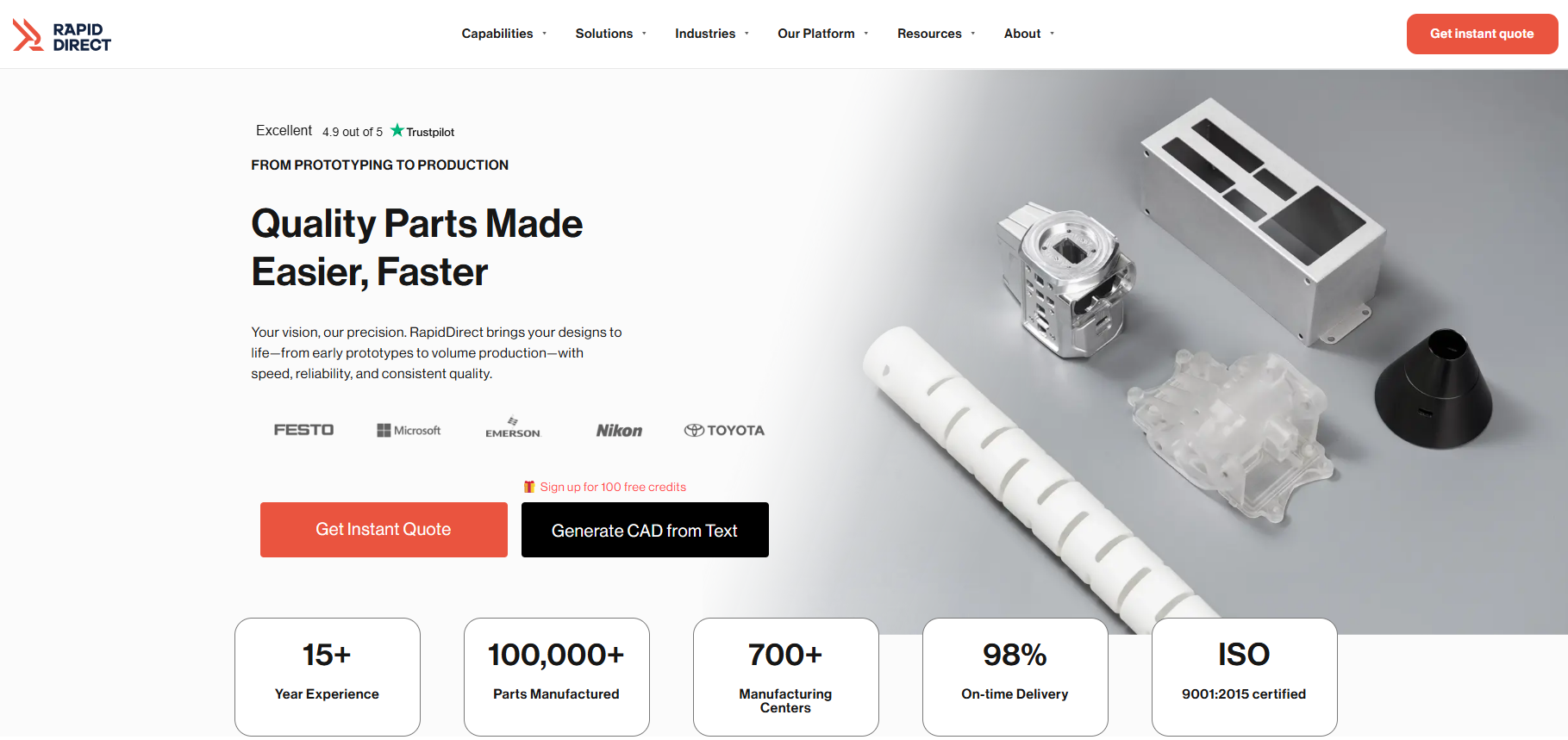
RapidDirect – Best for Rapid Digital Prototypes and AI Quotes
RapidDirect is a digital manufacturing solution that targets exports from China. The company maintains self-run production units in addition to a trusted network of partners located in Southern China.
- Tolerances: Meets ISO 2768-m standards (±0.10 mm).
- Capacities: Carbon Steel (25 mm), Stainless Steel (15 mm), and Aluminum (12 mm).
- Pros: Online quoting tool that includes a geometry check feature, wide array of secondary finishing options, and a 3-day turnaround time for rapid prototypes.
- Cons: Setup fees increase the cost of each prototype, and the automated quotes could misread multi-bends in geometry.
3ERP – Best for Micro-Tolerance Aerospace & Medical R&D Blanks
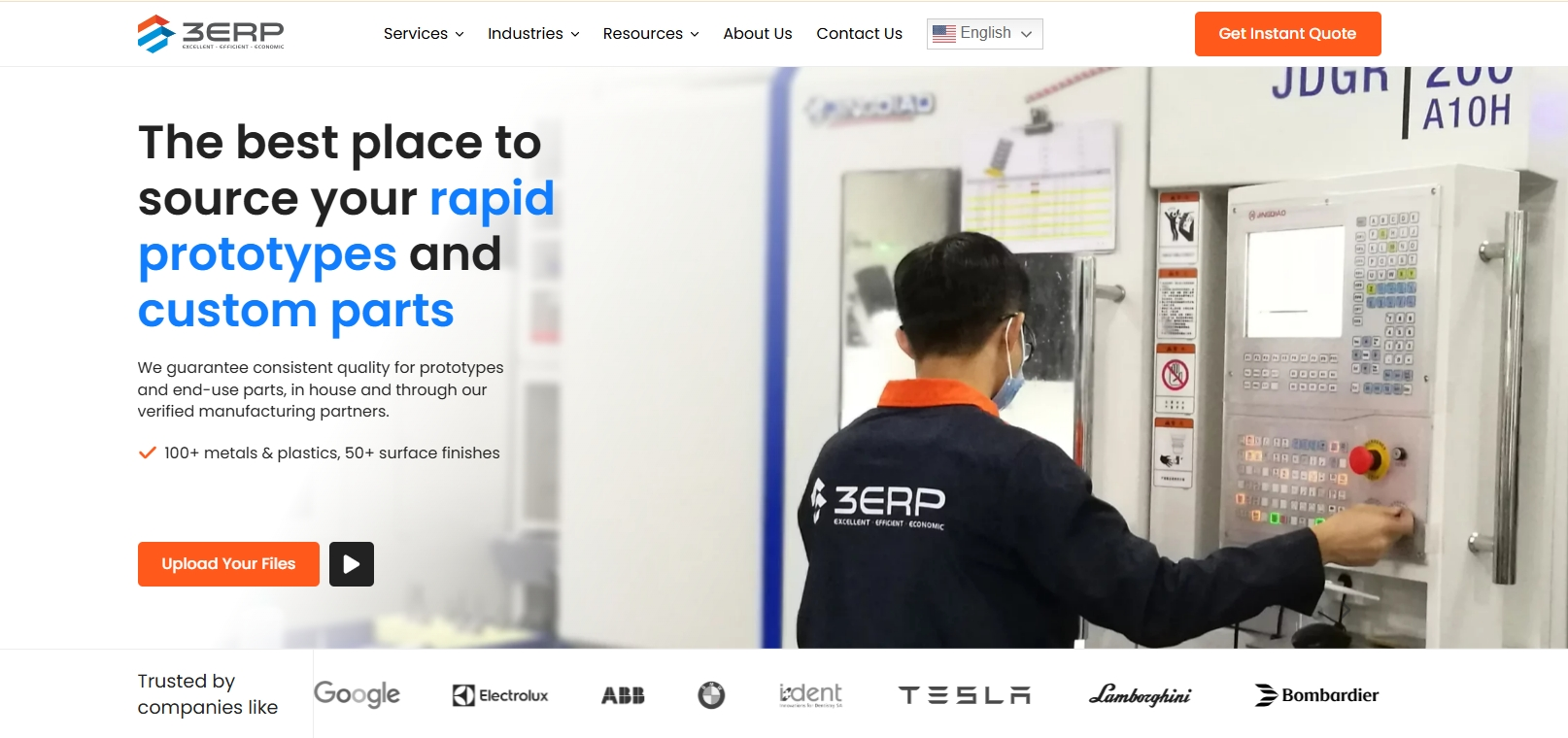
3ERP is a specialist rapid prototype facility located in Zhongshan, China. This facility caters to high precision and low volume hardware applications in the highly precise field of aerospace, scientific instrument, and medical applications.
- Core Tolerances: High-precision UV and fine-fiber laser systems reaching positional tolerances down to ±0.013 mm (±0.0005 in).
- Material Scope: Ultra-thin precision metal sheets, medical grade nitinol, titanium, and 316LVM.
- Pros: Sub-millimeter laser kerf widths, micro-hole drilling, and an entire CMM dimensional inspection report.
- Cons: Costly for R&D prototypes per unit and unable to serve high volume monthly sheet metal production runs.
JLC (JLCCNC) – Best for Budget-Friendly Maker Prototyping & Simple Sheets
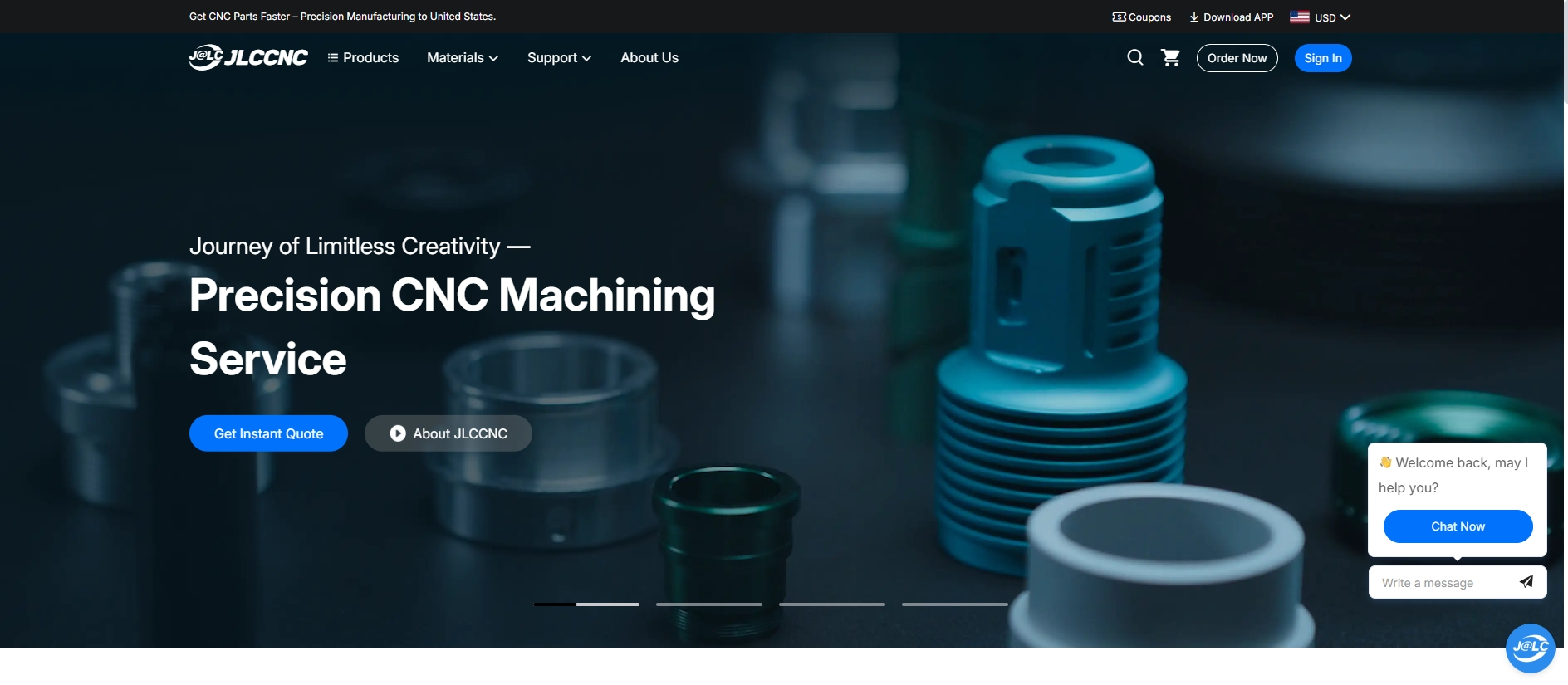
JLC uses a standardized approach towards gang-nest production lines. JLC provides an automated, cost-effective sheet metal cutting process along with their main PCB manufacturing services on a global scale.
- Core Tolerances: Mechanical profile tolerances of ±0.15 mm to ±0.25 mm.
- Materials: Basic commercial gauge sizes of 304 stainless steel, cold rolled carbon steel, and 5052 aluminum up to 6.0 mm.
- Pros: Lowest possible cost for basic prototype sheets, in addition to seamless integration with PCBs and 3D printed parts.
- Cons: No flexibility regarding material gauges, no further deburring processes, and non-configurable machine settings.
Fictiv – Best for Turnkey Mechanical Assemblies & Enterprise Quality Control
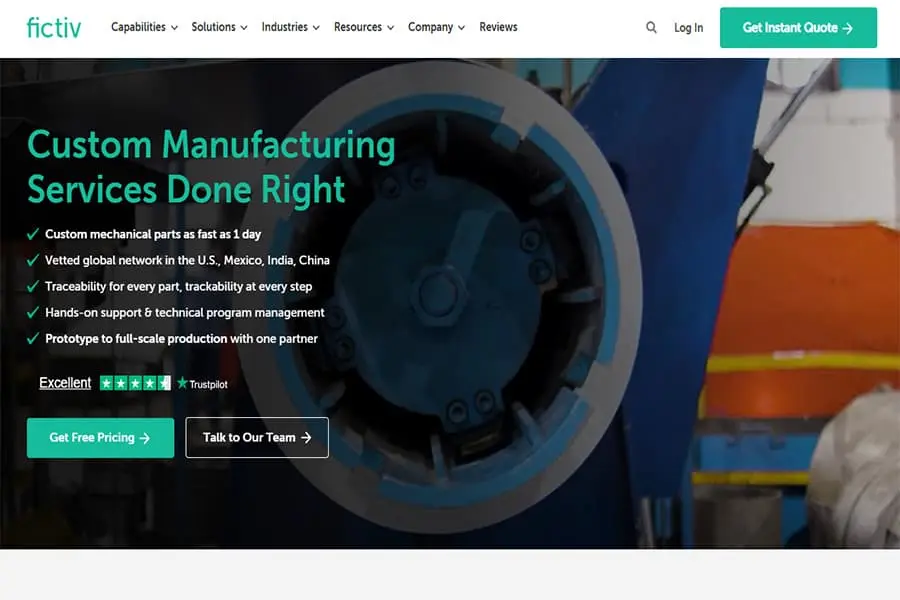
Fictiv runs a digital manufacturing process that has enterprise-level capabilities. It combines precision sheet metal fabrication with quality control of the supply chain for industries with regulations.
- Tolerances: Standard profile tolerances of ±0.13 mm (±0.005 in).
- Verification: Standard First Article Inspection (FAI), material certifications (RoHS, REACH), and traceability logs.
- Pros: Excellent enterprise project management, hardware insertion, and quality documentation.
- Cons: Margin markup on the platform makes it more suitable for prototypes and bridging production rather than large scale up to tens of thousands of units.
Why Choose Direct Factory Xometry Laser Cutting Alternatives for Production?
Direct manufacturing factories outperform digital brokers on scaled production runs by eliminating 20% to 35% in intermediary markups, providing direct engineering-to-toolmaker communication, and maintaining uniform machine calibration. Brokers distribute orders across disconnected sub-tier machine shops, which introduces variances in kerf width, edge taper, and surface roughness across production batches.
Elimination of Intermediary Broker Markups
Additional costs are incurred for the management of digital platforms with margins ranging between 20% to 35% of the base cost of machining. When ordering for quantities greater than 50, one can avoid all the platform fees by purchasing directly from factories such as JS Precision.
In-House Secondary Processing Under One Roof
Laser cutting only creates the 2D flat blank. Industrial hardware components require CNC press brake bending, PEM stud insertion, welding, and surface treatment. In-house manufacturing operations execute these processes under one roof. This prevents transit delays, finish damage, and accountability disputes common to fragmented vendor networks.
Direct Tooling Engineer Collaboration on DFM
Quotation software tools identify basic boundary parameters but fail to account for tool interference and metal deformation factors. Utilizing our in-house manufacturing ensures that engineers communicate with fabricators on the shop floor. These experts calculate specific K-factors, account for springback, and determine optimal bend relief dimensions before any material is cut.
If you build complex sheet metal enclosures or tight multi-bend assemblies, engineer early to avoid potentially costly tooling redesigns. Our hardware teams can view standardized design rules in our Precision Sheet Metal Fabrication and DFM Guide or easily submit production drawings to contact an engineer for a free CAD review to determine tolerances and lower per-unit manufacturing costs.
How Do You Prepare Files for an Instant Laser Cutting Quote?
Engineers have to confirm assist gas chemistry, minimum hole to thickness ratios, kerf allowances, and vector layer integrity before seeking a flash laser cutting quote. Confirming these engineering factors avoids thermal dross buildup, hole taper distortion, and automated quote rejection.
Assist Gas Selection: Nitrogen vs. Oxygen
The laser cutter relies on the high-pressure coaxial gas flow that pushes out the melted metal in the slit:
- Nitrogen Of High Purity (N₂ ≥ 99.999%): Serves as an inert gas for protection at pressure 15 to 25 bar. Cools the cutting zone without oxidation of the edge, providing clean edges on stainless steel and aluminum that can be welded or powder-coated without further pickling.
- Oxygen (O₂): Acts as an active cutting gas in case of thick carbon steel. The exothermic reaction between iron and oxygen provides additional thermal power to cut through thick steel plate. But leaves a micro-layer of iron oxide film that needs abrasive blasting before painting.
Geometric Design Constraints & DFM Rules
- Minimum Diameter of Holes (d_min): Geometrically, holes must have a diameter that is greater than or equal to the sheet thickness (d ≥ 1.0t). If a hole diameter is less than the thickness of the sheet, then heat will be trapped inside the bore, resulting in tapered holes with slag. For d < 1.0t, holes must be drilled undersized and finished using secondary CNC equipment.
- Minimum Web Thickness & Flange Clearance: There needs to be at least 2.0 times the sheet thickness between adjacent cutouts and between a cut slot and the edge of the sheet due to thermal distortion.
- Kerf Width Offset Compensation: Focus spots of laser vary from 0.08 mm to 0.25 mm. The actual width of the cut varies from 0.15 mm to 0.30 mm depending on nozzle diameter. CAM programmers need to offset by half kerf (0.5 × kerf) to achieve nominal dimensions.
File Preparing & Vector File Export Guidelines
- 2D Vector Files (.dxf, .dwg): Export flat patterns in 1:1 scale, with splines exported as arcs and polylines. Eliminate any duplicates, dimension lines, border and title blocks which may pose trouble for CAM nesters.
- 3D Assembly Models (.step, .stp): If formed enclosures involve bending or press tooling, supply a neutral 3D file along with the 2D print in PDF format. The 2D print must show important assembly tolerances and surface finish requirements based on ASME Y14.5 dimensioning.
How Do You Select the Right Custom Laser Cutting Service for Your Parts?
For the hardware team to choose a provider, they need to consider how their order volumes, structure, and tolerance fit into the supplier’s main production process. There is no universal service that is perfect for all stages of the product life cycle.
Project Requirements and Supplier Decision Matrix
|
Project Profile |
Batch Size |
Primary Focus |
Best-Fit Provider |
Alternative Option |
|
Fast 2D Flat Blanks |
1–10 pcs |
US domestic turnaround and zero minimum spend |
SendCutSend |
JLC (JLCCNC) |
|
Heavy Plate & Exotic Alloys |
Any volume |
Plate thickness (>25 mm) and rare nickel alloys |
Xometry |
Fictiv |
|
Sub-Millimeter Micro-Cuts |
1–100 pcs |
Micro-tolerances (<±0.03 mm) and thin foils |
3ERP |
Specialized Labs |
|
Finished Enclosures & Scaled Runs |
10–50,000+ pcs |
Direct unit cost, DFM review, and in-house forming |
JS Precision |
RapidDirect |
Flat Prototypes at Low Volume
When it comes to developing first functional prototypes (1-10 units) where only the 2D contour cut is sufficient and should be delivered within less than 48 hours in the USA, SendCutSend becomes the fastest option.
In a worldwide context, when maker communities need their prototypes and also electronic boards, JLC becomes an economic option to start with.
Thick Plates and Special Metals
When your application requires carbon and stainless steels plates above 25 mm thickness or any type of superalloy including Inconel, you need the services of Xometry, since they have the ability to manufacture thick plate structures and heavy industrial waterjet machines.
Micro-Tolerance R&D and Medical Applications
When dealing with micro-fluidic channels or other aerospace sensor applications or medical devices with tolerances finer than ±0.03 mm, 3ERP gives the option of micro-laser cutting. The metrology lab of 3ERP documents all batches with profilometer surface traces and CMM inspection.
Secondary Processing of Production Enclosures
When your enclosure needs precise tolerances and secondary manufacturing processes like press brake forming and fastening to move into production, you can work with a direct manufacturer like JS Precision.
Conclusion
The project needs determine the optimal laser cutting provider. A web-to-ship portal works well for 2 day flat sheet prototype. High mix enclosure assemblies and scaled up volume builds need direct factory manufacturing in order to get tight linear tolerances, CNC press brake bending and no middleman margins. Direct factory manufacturing reduces cost by 20% to 35% on volume builds and also ensures uniformity of batches with uniform inspection under ISO 9001 and IATF 16949 quality systems.
Upload your 2D and 3D CAD files to JS Precision and get quotes directly from factory with line by line DFM feedback on your file.

FAQ
What CAD formats are required for an instant laser cutting quote?
Provide the CAD drawings in .dxf or .dwg format, which should be of scale 1:1 and have no title block for flat profiling cutting. For bent or hardware insert jobs, you need to submit a neutral CAD file in .step or .stp format, along with a 2D PDF drawing that defines the non-standard dimensional tolerances and finishing information.
What is the typical cutting tolerance for precision metal laser cutting services?
Standard fiber laser cutting conforms to ISO 2768-m, yielding tolerances between ±0.10 mm and ±0.20 mm depending on material thickness. The high precision direct factories have cutting tolerances of ±0.05 mm on thin-to-medium sheet metals due to optimized motion control and optical focus.
Why would teams go for factory-direct solutions rather than on-demand laser cutting platforms?
Factory direct reduces platform brokers’ charges by 20%-35% for volumes above 50 items. Working directly with the factory connects engineers directly with machine operators, guarantees batch-to-batch edge uniformity, and consolidates press-brake bending, welding, and plating without third-party logistics.
What is the minimum hole size for laser cutting precision metal parts?
Minimum hole diameter should be equal to or greater than the thickness of the sheet (d ≥ 1.0t) to ensure absence of thermal taper, melting, and dross formation. If the diameter is less than 1.0t, make undersized holes for secondary CNC drilling or reaming.
How do precision metal laser cutting services minimize the heat-affected zone?
Operators cut with high-pressure nitrogen gas (≥ 99.999% purity at 15–20 bar) to instantly chill kerf boundaries and blow out molten slag. Programmers utilize techniques such as pulse piercing, power ramping in corners and leaps to avoid localized heating of adjacent geometry.
Can custom laser cutting service providers support prototypes through volume production?
Direct factories support both single-piece prototypes and scalable runs up to 50,000+ units using identical machine platforms, tooling setups, and quality documentation. Consumer web portals and brokers rely on fixed standard setups or outside networks, making volume transitions cost-inefficient.
Resource