English



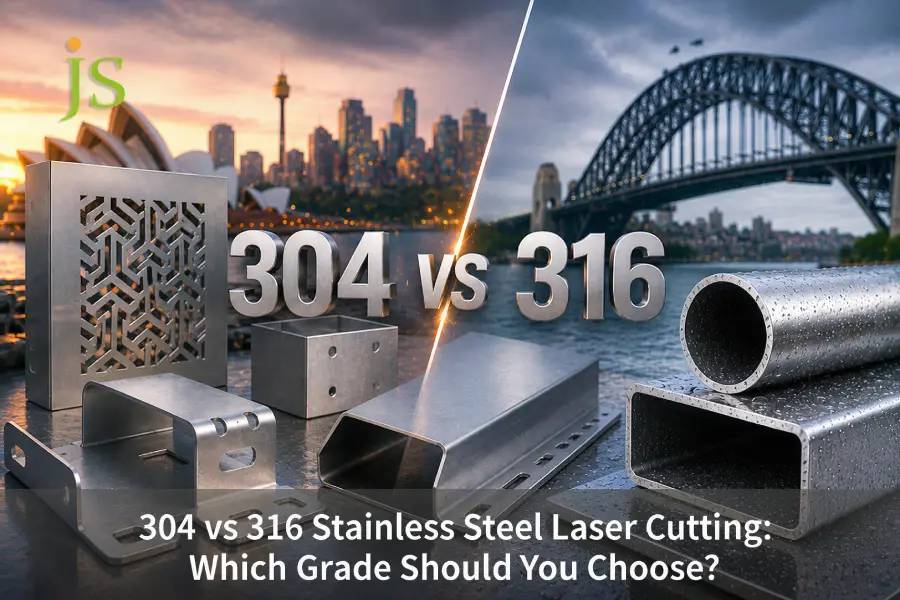

For high-precision stainless steel laser cutting services, choose 304 for cost-effective strength in standard industrial environments, and specify 316 for saltwater, harsh chemicals, or coastal air. 316 contains 2%–3% molybdenum, resulting in a higher molten pool viscosity. Cutting speed needs to be reduced by 5%–12%, and nitrogen pressure increased, to avoid slag buildup and edge discoloration.
Core Takeaways: 304 vs 316 Laser Cutting
|
Decision & Processing Dimension |
304 Laser Cutting |
316 Laser Cutting |
Engineering Selection Advice |
|---|---|---|---|
|
Core Composition Difference |
18% Cr, 8% Ni |
16%–18% Cr, 10%–14% Ni, 2%–3% Mo |
316 relies on molybdenum to prevent pitting and crevice corrosion |
|
Suitable Corrosive Environments |
Indoor, general industrial, fresh water |
Marine, coastal outdoor, strong acid cleaning, chloride environments |
Specify 316 mandatory when exposed to salt spray or chlorides |
|
Laser Cutting Feed Speed |
Baseline speed (100%) |
5%–12% slower than 304 (higher slag flow resistance) |
316 requires fine-tuned speed and higher gas pressure to prevent bottom dross |
|
Recommended Assist Gas |
N₂ (14–18 bar, 99.999% purity) |
N₂ (16–20 bar, 99.999% purity) |
Never use air or oxygen; keep edge silver-bright without secondary grinding |
|
Finished Part Cost |
Baseline cost (1.0x) |
25%–35% higher overall (material + machine time) |
Select 304 for structural parts; 316 for marine, acid, and medical fluid parts |
If the parts do not come into contact with salt or strong acids, using 304 stainless steel can directly save 25%–35% of material and processing costs; if they involve coastal areas or contact with chemical liquids, 316 stainless steel must be selected to avoid rusting and scrapping.
According to ISO 9013:2017, thermal cutting classification defines dimensional and geometric tolerances for laser cut edges, ensuring quality control across 0.5 mm to 25.0 mm stainless steel sheets.
What Are the Core Differences in 304 vs 316 Laser Cutting?
304 vs 316 laser cutting performance differs mainly because of chemical makeup: 316 includes 2% to 3% molybdenum and more nickel, whereas 304 contains 18% chromium and 8% nickel. Molybdenum makes 316 significantly more resistant to chloride pitting, but it also increases the viscosity of the molten metal under the laser beam. Consequently, fiber laser cutting of 316 requires 5% to 12% slower cutting speeds and 10% to 15% higher nitrogen assist gas pressure to blow out the molten slag cleanly, maintaining a burr-free edge roughness of Ra ≤ 1.6 μm.
Differences in fluidity of slag and processing adjustments
In our practice, 316's molybdenum raises molten-metal viscosity by about 8.5% versus 304 at cutting temperatures. As a result, the slag removal resistance is increased. The larger volume of molten slag in the cut kerf makes slag removal more difficult when laser cutting 316.
So, when using a 3 kW to 12 kW fiber laser cutter, the cutting speed for 316 should be lowered by about 5%–12% relative to 304, while also raising the nitrogen pressure by 10%–15%. This setting will not only prevent any slag deposition at the bottom of the cut but also provide a stable edge roughness of Ra ≤ 1.6 μm.
Perforation characteristics and parameter adjustment
When 316 is pierced by a fiber laser, slag spatter and nozzle adherence worsen, especially on plates thicker than 6.0 mm. Piercing time should be increased by 20%–30%, and a segmented torch-lifting sequence with slag blowing prevents slag from solidifying at the nozzle orifice.
Experience shows that moving the piercing focus from the plate surface to −2.0 mm reduces slag-spatter adhesion and keeps the cut stable.
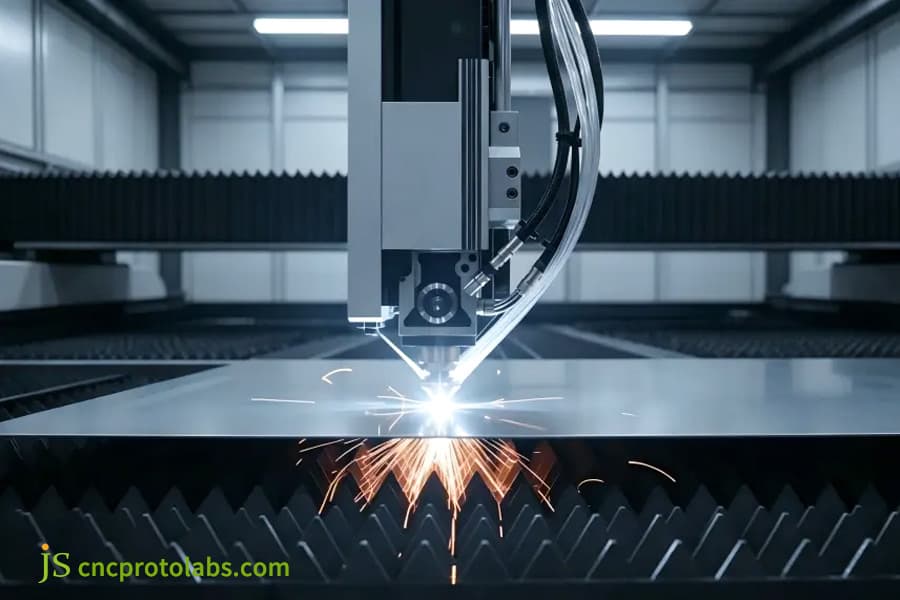
Figure 1: CNC laser cutting stainless steel sheet with sparks.
How Does Fiber Laser Cutting Stainless Steel Control Dross and Oxidation?
Fiber laser cutting stainless steel prevents edge oxidation and dross accumulation by utilizing high-pressure nitrogen (16–20 bar, 99.999% purity) as a non-reactive assist gas instead of oxygen. Nitrogen cools the cut boundary and mechanically blows away molten metal before it solidifies. For both 304 and 316 sheets, positioning the laser focus inside the material (-1.5 mm to -3.0 mm negative focus) widens the kerf base, allowing assist gas to clear slag cleanly and deliver a mirror-like cut edge with Ra 0.8–1.6 μm finish.
Air path configuration and focus control
- Using oxygen or compressed air for the stainless steel cutting process, the cut material surface will become black which is caused by the hard crust formation that harms the anti-rust layer and results in higher costs due to the requirement of grinding.
- But, with high-purity nitrogen which uses merely the physical blowing action to clear out the debris, the process will not produce the usual oxidation reactions.
For plates 1.0–12.0 mm thick, a 1.2–2.0 mm nozzle with a low-power focus setting effectively eliminates slag.
The table below includes the real process parameters applied in practice for a side-by-side evaluation of the cutting performance of 304 and 316 stainless steel.
|
Sheet Thickness (mm) |
Laser Power (kW) |
Nitrogen Pressure (bar) – 304 |
Nitrogen Pressure (bar) – 316 |
Cutting Speed (m/min) – 304 |
Cutting Speed (m/min) – 316 |
Focus Position (mm) |
|---|---|---|---|---|---|---|
|
1.5 |
3–6 |
14 |
16 |
6.0 |
5.5 |
-1.5 |
|
3.0 |
6–8 |
16 |
18 |
3.8 |
3.4 |
-2.0 |
|
6.0 |
8–12 |
18 |
19 |
2.2 |
1.9 |
-2.5 |
|
10.0 |
12 |
20 |
20 |
1.2 |
1.0 |
-3.0 |
Based on JS Precision 2025–2026 production records, the parameter table above reflects verified settings from 600+ laser cutting stainless steel projects across 1.5 mm to 10.0 mm sheet thicknesses.
Key points of anti-slag-hanging process
- After you cut 316, increase nitrogen pressure to 16–20 bar to allow sufficient purging momentum at the bottom of the molten pool.
- A negative focus between -1.5 mm and -3.0 mm is adopted to widen the bottom and it will be easier to remove the molten slag from the side.
- Places with a thickness of about 6.0 mm or more can benefit from the pulse piercing method followed by the use of progressive entry lines to prevent formation of slag at the initiating location.
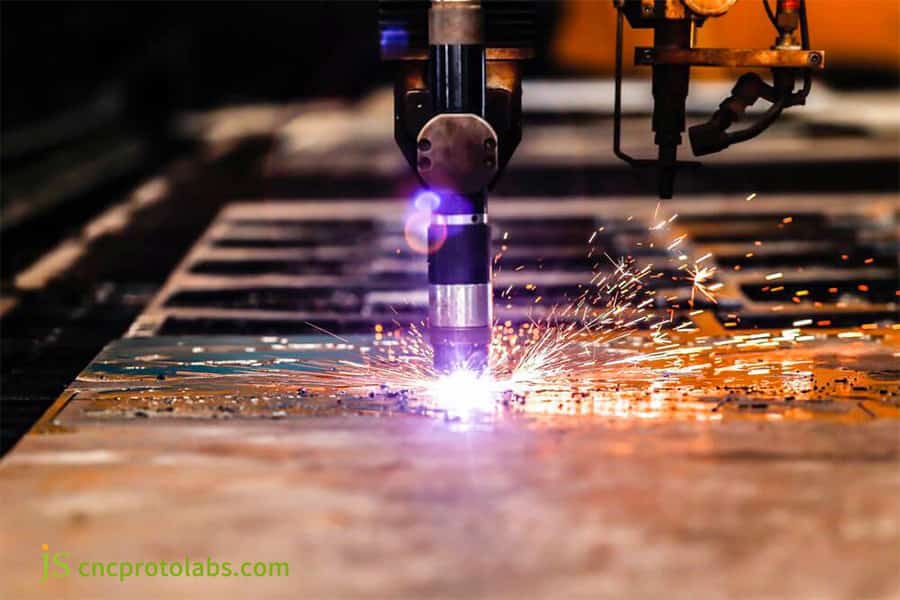
Figure 2: Fiber laser cutting machine processing metal sheet.
How Does Laser Heat Input Impact Corrosion Resistance in 304 vs 316?
Laser cutting of stainless steel can damage edge corrosion resistance if excessive heat exposure stays within the 450°C to 850°C temperature zone too long. When this happens, chromium bonds with carbon at the metal grain edges, leaving less free chromium to form the protective anti-rust oxide layer. While 316 resists this issue better than 304 thanks to molybdenum, professional laser cutting keeps travel speeds fast (> 3.5 m/min on 3 mm sheet) to limit the heat-affected edge width to under 0.1 mm, keeping original corrosion resistance intact.
The Effect of Heat-Affected Zone (HAZ) on Cut-Edge Corrosion Resistance
If the cut edge stays within the 450–850 °C range too long, chromium will bond with carbon along the grain boundaries, depleting the free chromium needed for corrosion protection. That renders the cut edge more vulnerable to corrosion than the base material is.
316 stainless steel holds improved resistance against intergranular corrosion over 304 stainless steel due to the presence of molybdenum, but in each case the correct heating time needs to be controlled.
With a high-power, high-speed fiber laser that heats the laser cutting process cut zone for only about 0.5 seconds, the cut edges of both 304 and 316 retain over 95% of the base material's corrosion resistance.
Millisecond-level thermal control for high-speed cutting
- Fiber lasers with power levels between 3 and 12 kW are able to achieve cut speeds of over 3.5 m/min on 3.0 mm thick plates at millisecond level heating times.
- The heat-discolored band on the cut edge is kept within 0.1 mm to prevent chromium-carbide precipitation.
- Based on JS Precision's actual cutting experience of precision stainless steel, ickling and passivation per ASTM A967 fully restores the cut edge's corrosion resistance.
According to ASTM A262-15, standard practices for detecting susceptibility to intergranular attack in austenitic stainless steels specify acceptance criteria for edge corrosion resistance after thermal processing.
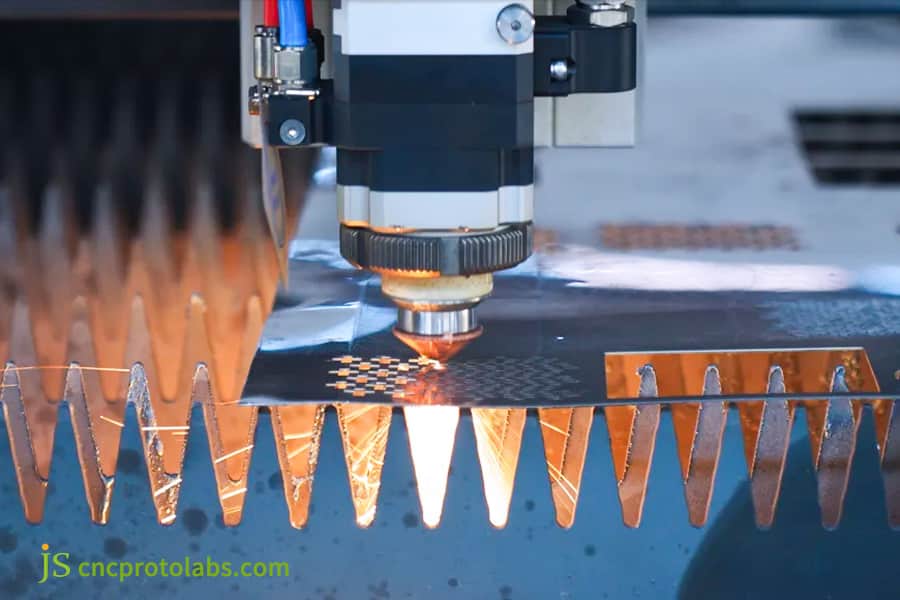
Figure 3: Laser cutting metal parts showing heat sparks.
What Are the Thickness Tolerance Limits for Laser Cutting Stainless Steel Parts?
Laser cutting stainless steel parts delivers tight dimensional tolerances from ±0.03 mm to ±0.15 mm across sheet thicknesses from 0.5 mm to 25.0 mm. For precision 304 sheets under 3.0 mm, modern CNC fiber systems maintain linear tolerances of ±0.05 mm and hole positioning repeatability of ±0.03 mm. On thick 316 plates (10.0 mm to 20.0 mm), heat buildup slightly broadens achievable tolerance to ±0.12 mm, which experienced fabricators manage using optimized lead-in cut lines and dynamic cooling pauses.
Tolerance boundaries for different plate thicknesses
Thin plates of 0.5 mm–3.0 mm that structural design engineers commonly rely on can maintain linear tolerances of ±0.03 mm–±0.05 mm and hole repeatability down to ±0.03 mm. Medium plates (3.0–8.0 mm) achieve tolerances of ±0.05 to ±0.08 mm.
For 10.0–20.0 mm 316 plates, tolerances widen to about ±0.12 mm, mainly due to heat accumulation; though, they are still better than ISO 9013-1 Class 1.
Nesting and Anti-Warping Strategies
Due to localized heat, dense micro-hole patterns on long, narrow plates can warp. Through the use of methods like micro-connections to limit deformation, common-edge cutting, and skip-perforation, the flatness error of a large plate can be held to less than or equal to 0.3 mm/m.
Based on actual case studies of JS Precision in cutting stainless steel structural parts with a laser, diagonal skip-perforation paths prevent heat concentration and limit plate-temperature rise.
Having questions about tolerance design for precision stainless steel laser-cut parts? Contact a JS Precision engineer for a free DFM review. We will provide optimal layout and tolerance recommendations based on your drawings.
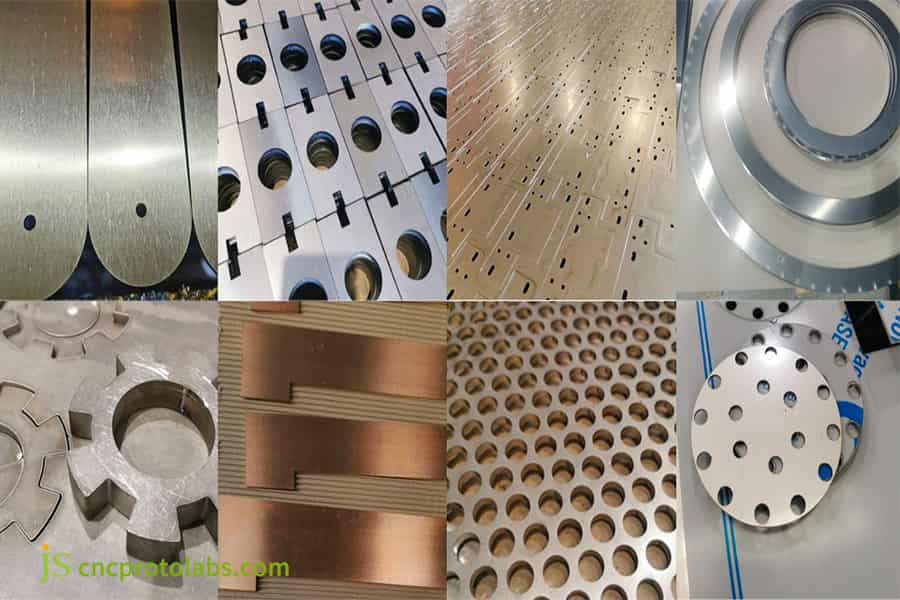
Figure 4: Collage of precision laser cut stainless steel parts.
How to Calculate Total Cost for 304 vs 316 Laser Cutting Service Projects?
Total procurement cost for a laser cutting service project involving stainless steel depends on raw sheet price, nitrogen gas consumption, laser cutting machine hours, and secondary passivation. Raw 316 sheet costs roughly 30% to 45% more than 304 due to nickel and molybdenum alloy surcharges. Combined with 316's slightly slower laser travel speeds and higher assist gas flow, the final part cost for 316 is typically 25% to 35% higher than 304 across production runs.
Unit cost breakdown
By way of illustration, let us consider a 3.0 mm thick sheet and a production quantity of 1,000 pieces. A single piece would cost the sheet material plus the machine labor, the nitrogen, and the pickling-passivation.
The price of 316 raw material is about 30% to 45% higher than that of 304. Slower cutting speeds increase machine hours. All-in, a finished 316 part costs 25%–35% more than an equivalent 304 part.
|
Cost Component |
304 (USD / piece) |
316 (USD / piece) |
Variance |
|---|---|---|---|
|
Raw Sheet Material |
$4.80 |
$6.50 |
+35% |
|
Laser Machine Hours |
$1.20 |
$1.35 |
+12.5% |
|
Nitrogen Consumption |
$0.35 |
$0.42 |
+20% |
|
Passivation Treatment |
$0.25 |
$0.25 |
0% |
|
Total Finished Part Cost |
$6.60 |
$8.52 |
+29% |
Based on JS Precision 2025–2026 project database (1,200+ projects), the cost breakdown above reflects actual quoting data for 3.0 mm sheet, 1000-piece production runs of stainless steel laser cutting services.
Cost reduction solution using a combination of methods as needed
For internal brackets and parts that never contact liquids, 304 provides sufficient strength and corrosion resistance; yet, for external exposed housings and acid-contact pipe sheets, 316 stainless steel must be used.
A hybrid 304/316 material strategy typically cuts total material cost by 15%–20% for your project without sacrificing the corrosion resistance of the critical parts.
Calculating costs for your 304/316 laser cutting project? Contact JS Precision today for a free cost estimate and tiered pricing plan. An engineer will respond within 12 hours.
Which Environments Require 316 Over 304 for Laser Cutting Services?
Selecting between 304 and 316 for stainless steel laser cutting services requires assessing environmental chloride levels, chemical exposure, operating temperatures, and cleaning methods. Grade 304 is the cost-effective standard for indoor architectural brackets, food processing enclosures (non-saline), and electronic chassis. Grade 316 is mandatory for marine hardware, installations within 5 kilometers of the ocean, chemical washdown tanks, and medical devices where chloride exposure exceeds 100 ppm to avoid pitting corrosion.
Typical scenarios for selecting 304
- Used indoors, chassis and cabinets, supports for consumer appliances, material drying equipment hoppers, and general automotive structural parts.
- In normal industrial environments where chloride levels stay below 100 ppm and there is no exposure to acidic cleaners or disinfectants.
- Structures or parts which are not critical, are economical, with an intended service life of 5–8 years.
When 316 Is Mandatory: Environmental Red Lines
- Sensor enclosures exposed to the seaside, dockside areas, and parts of the factory that are frequently submerged or come in contact with seawater or de-icing salt.
- Pharmaceutical equipment pipework and semiconductor wafer cleaning machine components are regularly cleaned using chlorine or aggressive types of acidic disinfectants.
- Basis of engineering knowledge: once the chlorides concentration exceeds 100 ppm or the pH level in an acidic saline spray environment is below 4.5, usage of 304 is absolutely not allowed.
|
Industry Scenario |
Medium Condition |
Recommended Grade |
Failure Risk If Wrong Grade |
|---|---|---|---|
|
Indoor Electronic Enclosure |
Dry air, < 100 ppm Cl⁻ |
304 |
Minimal rust in normal service |
|
Coastal Sensor Housing |
Marine salt spray, > 19,000 ppm Cl⁻ |
316 |
Pitting within 6–12 months |
|
Chemical Washdown Tank |
Acidic detergent, pH < 4.5 |
316 |
Crevice corrosion and leakage |
|
Food Processing Chassis |
Non-saline washdown |
304 |
Surface staining if chloride sanitizers used |
|
Semiconductor Cleaning Parts |
Chlorine-based etchants |
316 |
Rapid pitting and particle contamination |
According to ASTM B117-19, standard practice for operating salt spray apparatus defines test conditions for verifying corrosion resistance of stainless steel laser cutting services in marine environments.
Unsure whether to choose 304 or 316 for your operating conditions? Get a free material selection consultation from JS Precision, where engineers will provide written recommendations based on your media and corrosive environment.
JS Precision Case Study: Custom 316 Laser Cut Marine Sensor Housings
JS Precision delivered an ultra-precision stainless steel laser cutting solution for a marine client requiring 2,500 custom 316 stainless steel oceanographic sensor housings. The project specified 2.5 mm 316 sheet with 320 micro-slits (0.6 mm width) and ±0.04 mm position tolerance, operating in high-salinity seawater (Cl⁻ > 19,000 ppm). Previous manufacturing by another vendor suffered severe thermal edge warping (0.8 mm out-of-flatness) and localized pitting initiation around slit edges due to improper heat accumulation and surface oxidation.
Customer difficulties and technical pain points
- Each 180 × 120 mm housing contains 320 densely packed micro-slits, each 0.6 mm wide.
- The previous supplier's localized overheating warped the sheet by 0.8 mm — eight times the customer's 0.1 mm limit.
- Salt spray test results showed the cut edges turning black and easily rusting, failing to meet protection against marine working condition standards.
JS Precision Solution
- Cut path for anti-deformation: Introducing a diagonal, distributed skip-cut method to relieve the local heat stress and control the board surface's temperature increase not higher than 120°C.
- Machine parameter adjustment: A 12 kW fiber laser with a 1.2 mm nozzle, 19.5 bar nitrogen, and a 25 ms pulsed cutting cycle prevents burn and scale formation.
- Surface re-activation & protection: The cut parts are uniformly pickled and passivated following the ASTM A967 standard to completely restore the edge's rust-proof protection layer.
Lessons learned from failures and parameter iteration
The first 50 pieces were cut left to right without changing direction. After heating, one end extended 0.18 mm, pushing a micro-slit dimension beyond tolerance.
Drawing on experience from a similar project and understanding the issue, the JS Precision team of engineers switched to a cross-jump cutting path and added side cooling fans, completely eliminating the dimensional misalignment.
Final result
- The flatness of the parts is consistently within 0.04 mm, far exceeding the customer requirement of 0.1 mm.
- The cut surface is burr-free, with a roughness of Ra 0.9 μm.
- It passed the rigorous 2,000-hour salt spray test of ASTM B117 without any rust.
- With a batch yield rate of 99.4%, it helps customers reduce the overall manufacturing cost per unit by 21.5%.
Are your 316 precision laser-cut parts also facing warping or micro-seam dimensional deviations? Send your drawings to JS Precision now for a free DFM review and customized cutting process solution.
FAQs
Q1: Do 304 and 316 laser-cut edges look visually different?
Under high-purity nitrogen cutting, the cut surfaces of both materials appear completely identical, exhibiting a bright silver metallic luster. They are indistinguishable to the naked eye. JS Precision rigorously implements material furnace number tracking and spectrometer testing to ensure 100% material authenticity.
Q2: Why must high-purity nitrogen be used for stainless steel laser cutting instead of oxygen?
High-pressure nitrogen removes molten slag through mechanical blowing and does not cause oxidation. If oxygen or compressed air is used, the cut edges will turn black and form a hard crust, damaging the anti-rust layer and increasing the cost of secondary grinding and cleaning.
Q3: What is the maximum sheet thickness for high-precision 304 and 316 laser cutting?
High-power fiber lasers can cut stainless steel plates up to 50 mm thick. For precision work requiring ≤1° edge perpendicularity and no slag, keep sheets within 0.5–25.0 mm.
Q4: Does the laser cutting process reduce the corrosion resistance of 316 parts?
Under proper processing, this will not occur. High-power fiber laser cutting is extremely fast with a very short heating time. After cutting, ASTM A967 pickling and passivation treatment completely restores the original corrosion resistance of the cut edges.
Q5: When should I upgrade an outdoor component from 304 to 316 stainless steel?
For general inland and urban areas, 304 stainless steel is sufficient for rust prevention. However, for areas within 5 km of the coastline, exposed to de-icing salts, or located in areas with heavy industrial acid rain, it is necessary to upgrade to molybdenum-containing 316 stainless steel.
Q6: Can laser-cut stainless components be bent and welded directly without deburring?
Yes. High-purity nitrogen cutting produces smooth, clean edges without slag, allowing for direct welding and CNC bending. When bending 316 stainless steel, an additional 5%–10% tonnage is required to compensate for its slightly higher work hardening characteristics.
Q7: What integrated secondary finishing services does JS Precision offer for laser cut parts?
JS Precision offers a one-stop service for fiber laser blanking, CNC bending, tapping, and surface finishing. Finishing processes include pickling and passivation, electropolishing, sandblasting, and wire drawing, all accompanied by a full-dimensional coordinate measuring machine (CMM) inspection report.
Q8: How can I get an instant manufacturing quote for custom 304/316 laser cutting parts?
Upload your CAD drawings to JS Precision's official inquiry channel, specifying the material, plate thickness, and quantity. An engineer will provide a detailed quotation, including a DFM assessment, within 12 hours.
Summary
Choosing between 304 and 316 comes down to balancing service-environment corrosion risk against total project budget. 304 is suitable for conventional industrial structural components, with outstanding cost-effectiveness; 316 relies on the salt spray resistance and pitting corrosion resistance of molybdenum element, which is the safety bottom line for marine, chemical, and medical fluid components. Combined with high-power fiber laser, high-purity nitrogen assisted gas path, and optimized layout path, bottom-dross and edge-discoloration problems can be eliminated, ensuring tolerances of ±0.03 to ±0.15 mm (from ±0.05 mm on thin sheet to ±0.12 mm on thick plate).
Are you looking for high-quality 304/316 laser cutting parts? JS Precision relies on high-power fiber laser machining centers and an ISO 9001:2015 quality system to provide high-precision customized manufacturing services ranging from 0.5 mm to 25.0 mm. Upload your CAD drawings (.DXF/.STEP), and the engineer will provide an instant quotation plan including DFM analysis and tiered batch pricing within 12 hours.

Disclaimer
The contents of this page are for informational purposes only. For JS Precision Services, there are no representations or warranties, express or implied, as to the accuracy, completeness, or validity of the information. It is the buyer's responsibility to identify specific technical requirements and request a formal parts quotation. Please contact us for more information.
Resource