English



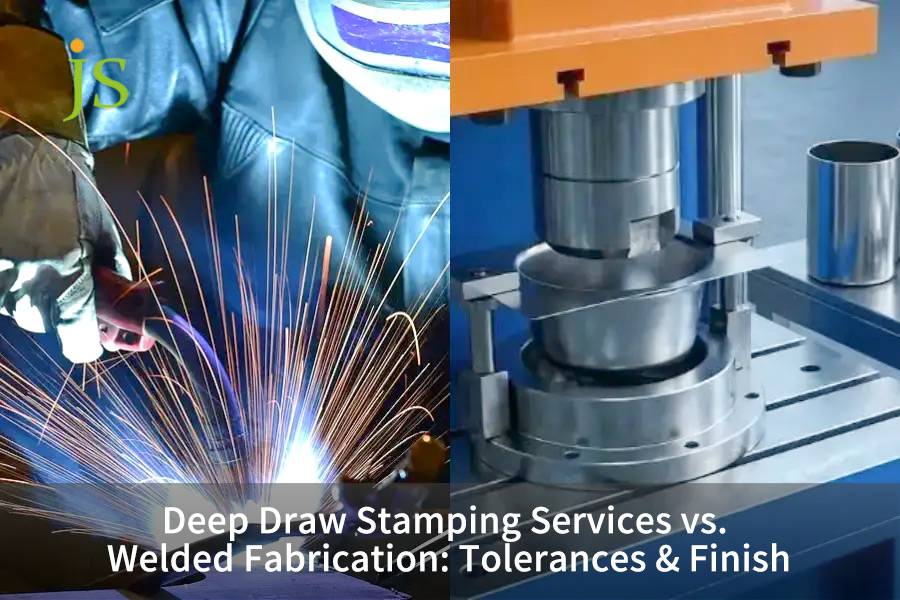

Deep draw stamping services form seamless, cold-formed hollow parts with linear tolerances of ±0.025 mm (±0.001") and surface roughness as low as Ra ≤ 0.4 μm. Welded fabrication, by contrast, accumulates ±0.38 mm (±0.015") of tolerance stack-up and leaves Ra ≥ 3.2 μm weld zones. For volumes above 1,500 units, deep drawing eliminates grinding and polishing, achieves helium leak rates below 10⁻⁹ mbar·L/s, and reduces per-part cost compared with welding.
Quick Comparison: Deep Draw vs Welded Fabrication
|
Comparison Factor |
Deep Draw Stamping |
Welded Fabrication |
JS Precision Advantage |
|---|---|---|---|
|
Linear Tolerance |
±0.025 mm (±0.001") |
±0.38 mm stack-up (±0.015") |
Progressive die consistency |
|
Coaxiality |
≤ 0.05 mm, no thermal distortion |
> 0.25 mm from heat stress |
Eliminates straightening process |
|
Surface Roughness (Ra) |
≤ 0.4 μm (inherited from sheet) |
≥ 3.2 μm (weld bead + spatter) |
No grinding or polishing needed |
|
Structural Integrity |
Seamless, leak rate <10⁻⁹mbar·L/s |
HAZ micro-pores, weld seams |
100% helium mass spectrometer leak test |
|
Per-Part Cycle Time |
< 3 seconds |
Manual welding, minutes per part |
NRE amortizes above 1,500 pieces |
Data source: AWS D1.1/D1.1M-2024 structural welding acceptance criteria.
Key Takeaways
- Shape & Appearance: Deep drawing stamping manufacturing process achieves a flatness tolerance of ±0.025 mm, while at the same time, it leaves surfaces so mirror-like that Ra ≤ 0.4 μm is reached without secondary operations such as welding, polishing, or grinding.
- Seal & Strength: Combinations of leak tightness, and strength are achieved simultaneously through a combination of a single structure and grain flow that can satisfy vacuum leak-tightness of 10⁻⁹ mbar·L/s.
- Cost balance point: When the production scale reaches 1500 pieces or more, the low single piece labor hours of deep drawing can be amortized for mold costs. In the comparison between deep drawing vs welding cost, this is the key threshold that determines the economic viability of the process.
Deep Draw Stamping Services vs. Welded Fabrication: How Much Dimensional Accuracy Can You Gain?
Deep draw stamping services deliver a very high level of forming without seams and a tight dimensional control within ±0.025 mm (±0.001"), just to name a few features. Fabrication processes employing welding only allow limited operations such as cutting, bending, and thermal distortion-induced changes which ultimately cause a total deviation of about ±0.38 mm (±0.015") or even worse, if not monitored properly.
Thermal Stress and Cumulative Tolerance Mechanisms
- Heat Affected Zone: A weld seam is a major source of thermal deformation. Each weld is accompanied by an angular distortion and a localized shrinkage warpage resulting from the linear shrinkage of about 0.05–0.15 mm in one direction.
- Tolerances Out of Control After Welding: According to a 2024 Society of Manufacturing Engineers (SME) technical report, Sheet Metal Fabrication Standards, geometrical tolerances are breached more frequently in welded parts than in separately stamped parts; in fact, the ratio is 3.5. (Source: SME 2024)
- Differences between stamped vs welded part tolerances: Deep draw stamping services have a cold forming process that helps prevent thermal stress; this leads to significant improvements (about tenfold) in coaxiality and perpendicularity.
Authoritative Standards and JS Precision Verification
AWS D1.1/D1.1M-2024 states: Weld reinforcement should not surpass 1/16 inch (1.6 mm); the depth of undercut must remain under 1.6 mm for plates thinner than or equal to 12.7 mm; any surface cracks or internal lack of fusion need removal and rework of 100%.
JS Precision strictly adheres to AWS D1.1/D1.1M standard in the assessment of stamped vs welded part tolerances: a welding example of each batch is selected representing the total inspection work done via coordinate measuring machine. The study by JS Precision reveals that the customer's original welding design, which had a 12% deviation in the coaxiality of the welded parts, with a changeover to stamping services, brought about the minimum reduction of the offset to 0.03 mm and the yield of first assembly jumped from 82% up to 99.4%. The leap in accuracy is a direct reflection of the assembly reliability between deep drawn parts vs welded strength.
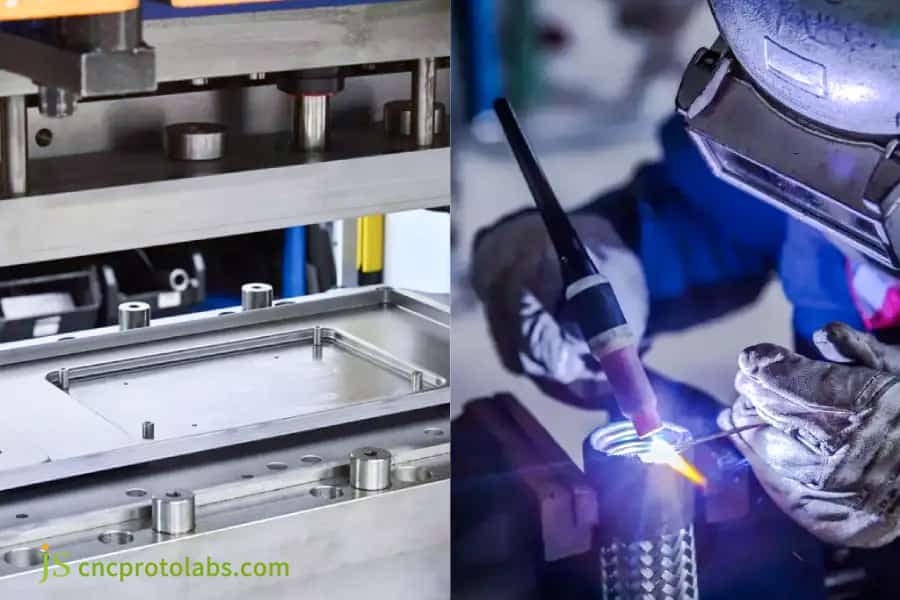
Figure 1: Comparison of deep draw stamping machine and manual welding process.
Metal Stamping vs Welding Finish: What Are the Technical Surface Quality Differences?
The core difference in stamped vs welded surface finish (also referred to as metal stamping vs welding finish) lies in surface continuity and roughness control. Deep-drawn metals have a surface that is a direct copy of the highly polished die surface and has roughness as low as Ra ≤ 0.4 μm; Still, the welded piece shows an initial roughness of at least Ra ≤ 0.4 μm because of weld spatter, heat discoloration, and weld lines.
Comparison of Post-Processing Steps
- Inconvenience for Welded Parts: When using electroplating, anodizing, or painting on top of a part with welds, it is necessary to manually grind, get rid of spatter and pickle/passivate which adds about another 20%–30% to the labor time.
- Deep Drawn Metal Parts Molding Status: Deep drawing relies on high-lubricity film of oil and dies made of ultra-hard alloys that provide a highly polished surface right after the part comes out of the tool without any seams or weld lines.
- Resistance to Corrosion: In reference to ASM International's Surface Finishing Handbook (2023), it was stated that deep-drawn parts last approximately 40% longer than the parts that have been welded followed by grinding during salt spray testing.
Draw Mark Control and Die Technology
- Lubrication and Coatings: Draw mark defects for deep drawn metal parts are controlled by lubricants and hardening of dies (TD or CVD coatings).
- JS Precision Standardization & Surface Finish Control: Die polishing and cleaning are standardized and automated, consistently achieving a measured surface roughness of 0.3–0.4 μm.
Are your parts having issues because of poor weld or ground seam finishes? Get a customized surface finishing solution and a quote from deep drawn metal parts of the JS Precision engineering team.
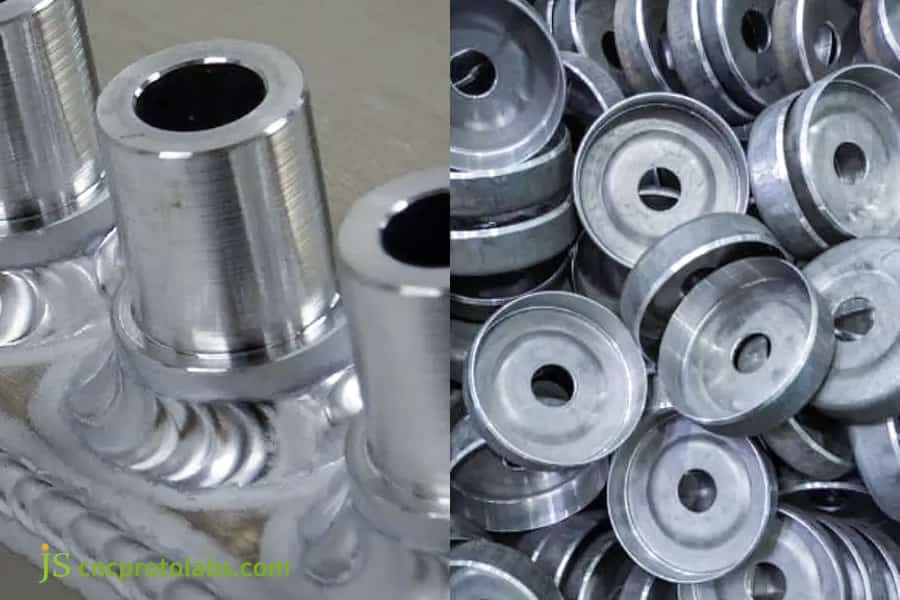
Figure 2: Comparison of smooth deep drawn metal parts and welded metal parts.
Why Does Deep Draw Metal Forming Service Excel in Leak-Tightness and Structural Integrity Over Welding?
Deep draw metal forming service produces seamless parts, guaranteeing helium leak rates below 10⁻⁹ mbar·L/s — impossible with welded seams. By cold-stretching a single metal sheet, it eliminates weld seams and heat-affected zones, maintaining continuous grain flow for superior structural integrity under vacuum or high pressure.
Analysis of Microstructure and Mechanical Properties
- Risks of the Welded HAZ: High temperatures change the base material's microstructure which results in grain coarsening and the formation of the heat-affected zone (HAZ). This makes it susceptible to micro-cracks, porosity, and even incomplete penetration, resulting in possible leak paths.
- Benefits Work Hardening: Through deep draw metal forming service the material's yield strength is raised by 15–25%. The fibrous microstructure remains aligned with the part's contour and thereby the fatigue resistance is increased.
- Sealing Integrity: For leakage testing of those housings needing high airtightness, JS Precision uses helium mass spectrometer leak detectors, and the housings can reliably pass the test of less than 10⁻⁹ mbar·L/s.
ISO 5817:2023 says, Quality level B corresponds to the highest requirement on the finished weld, cracks, lack of fusion, and burn-through are not permitted at any level.
To avoid all major welding defects described in ISO 5817:2023 as non-deletable at any level, JS Precision employs seamless construction throughout its product range. Deep draw metal forming service providers should be well aware that without adequate tensile strength and properly arranged and timed intermediate annealing processes, material failure can occur during deep drawing operations.
Have you problems with air tightness or the structural strength of the parts that are welded? Contact your JS Precision technical engineering team for a feasibility study on replacement by sealed deep-drawn parts.
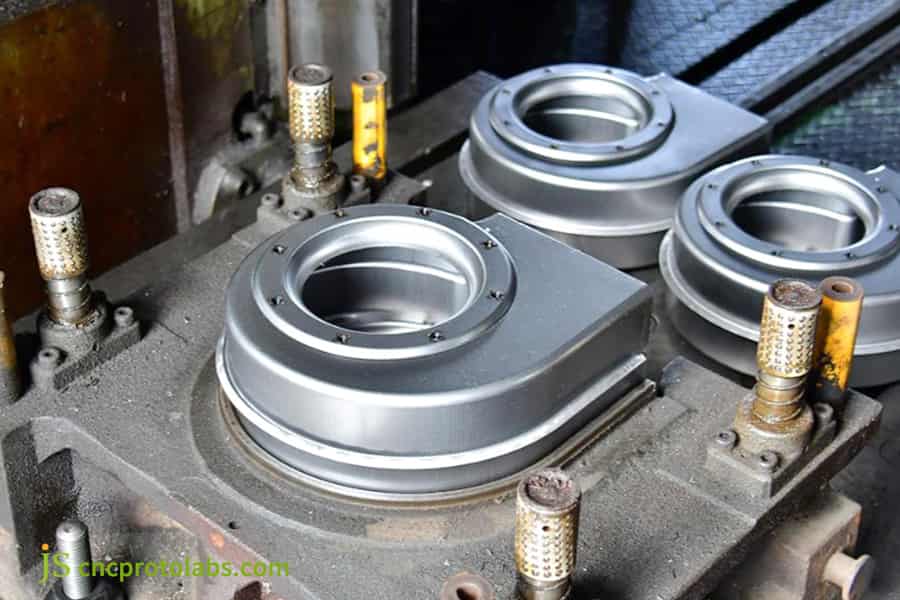
Figure 3: Deep draw metal forming service producing leak tight structural parts.
How to Choose Between Deep Drawing Metal Fabrication Service and Welding Based on Production Volume?
Deciding between deep drawing metal fabrication service and welding is about the Total Cost of Ownership (TCO) breakeven point. As production volume increases beyond 1,500 units, the reduced per-part cycle time and zero costs for secondary grinding of deep drawing allow the NRE tooling investment to be fully recovered.
Quantitative Cost Comparison Model
Low initial tooling costs of welding and versatility as a design method make it good for very small-batch prototyping (less than 100 units) or making oversized, irregularly shaped parts. However, deep drawing uses progressive dies or multi-station transfer dies to cut production time to 1–3 seconds per part, this dramatically reduces the per-unit cost for large-volume productions.
For projects that require long-term stable supply, the process selection of seamless metal housing vs welded directly affects the total cost of ownership.
TCO = NRE + Volume × (Material + Cycle Time × Machine Rate + Secondary Labor)
In short, beyond the breakeven point, the per-unit cost of deep drawing metal fabrication service falls well below welding's cost, as the NRE is amortized to a few cents per unit while welding still pays for expensive labor.
Flexibility of Custom Deep Draw Stamping Services
- Small-Batch Prototyping (< 100 Units): When it comes to custom deep draw stamping service, custom tooling can be done with simple, single-station dies and keep your NRE (initial tooling investment) in the range of $3,000 to $8,000 according to part complexity.
- Medium-to-Large Runs (1,000–50,000 Units): With progressive dies, mass production lowers the unit costs by 22–35% compared to welding.
- Ultra-High Volumes (>100,000 Units): Multi-station transfer dies bring down unit costs a lot (40–55% less) compared to welding.
Upload your CAD files to JS Precision for a detailed quote and tiered pricing, and an ROI. We will help you decide the manufacturing method that suits your business, production volumes, product design, and overall goal.
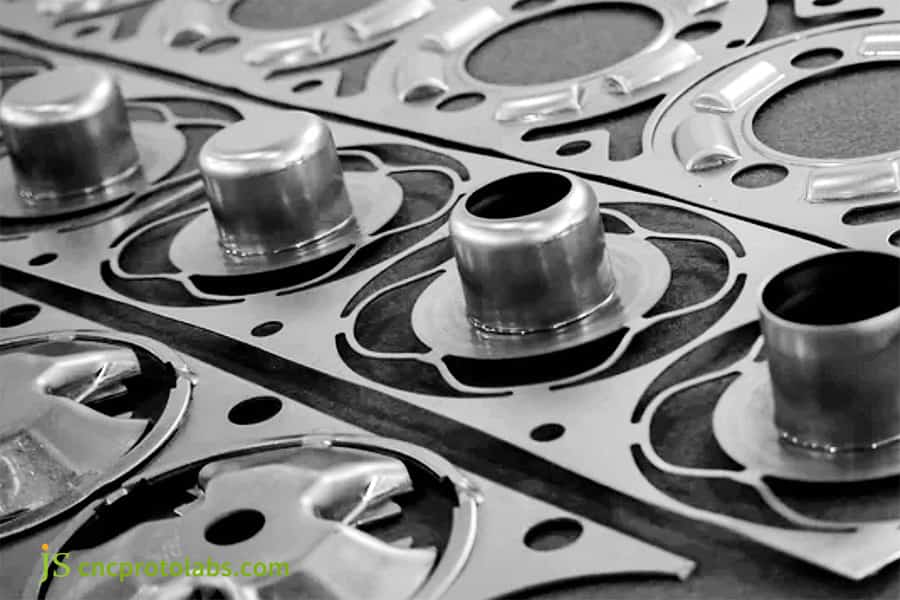
Figure 4: Deep drawing metal fabrication service vs welding production volume.
How to Control Wall Thinning and Work Hardening in Deep Draw Stamping?
Consistency in the ratio of ironing and work hardening should still be maintained to provide for a good structural integrity of the deep drawn metal parts. One possibility is multi-step stamping with carefully adjusted blank holder forces (BHF) to limit wall thinning to approximately 10%–20%, and prevent material rupture or wrinkling.
Material Stress State and Annealing Control
- Blank Holder Force (BHF) Window: Insufficient Blank Hold Force can cause edge wrinkling while excessive Blank Hold Force can cause bottom tearing.
- Finite Element Analysis (FEA) Driven Design: Metal flow simulation and calculation of drawing ratio (K) using FEA is a dominant way. Besides, the stresses developed inside the material can be released by an intermediate step of annealing while at the same time the material is hardened to undergo further softening.
- Measured Thinning Rate: Based on JS Precision's measured data, the sidewall thickness variation of process-optimized deep-cavity parts can be maintained within ±0.02 mm range.
Deep Draw Stamping vs. Welded Fabrication: Wall Thickness and Hardening Comparison
|
Comparison Dimension |
Deep Draw Stamping |
Welded Fabrication |
Impact on Part Quality |
|---|---|---|---|
|
Wall Thickness Control |
±0.02 mm (ironing controlled) |
±0.1 mm (heat distortion) |
Deep draw ensures uniform wall |
|
Work Hardening (HV) |
+15%–25% yield increase |
Local HAZ softening |
Deep draw improves fatigue |
|
Grain Structure |
Continuous flow lines |
Disrupted by weld heat |
Seamless = better crack resistance |
|
Thickness Variation |
< 5% across deep cavity |
8%–15% at weld joints |
Deep draw reduces scrap rate |
|
Post-Forming Stress |
Controlled via annealing |
Residual stress concentration |
Deep draw avoids warpage |
Data source: JS Precision 2025 deep drawing process database; ASM Handbook Vol. 14A (2023) forming standards.
Process Closed-Loop for Deep-Drawn Metal Parts
For its deep draw stamping services, JS Precision not only makes use of Dynaform simulation but also applies mold surface TD coating (TiCN, hardness HV 3000+) so that during multi-stage drawing, the deep drawn metal parts won't tear or undergo significant thinning.
JS Precision Custom Deep Draw Stamping Service Case Study: Seamless Stainless Steel Medical Sensor Enclosure
JS Precision used custom deep draw stamping service to help a major European medical equipment customer replace a high-risk welded sensor casing with a fully sealed, leak-proof deep-drawn structure.
Client Challenges
Initially, the client's design was to cut and roll 316L stainless steel sheet metal and then make a deep-cavity housing (depth-to-diameter ratio of 3.5:1) by hand TIG welding. Thermal deformation due to welding caused 12% of units to have coaxiality issues, even after the weld polishing, the micropore leakage rate stood at 35%. Besides, the overall cost was high.
JS Precision Solution
- 5-stage progressive deep-drawing die: Replaced welding with a deep draw metal forming service.
- Dynaform simulation optimization: Reduced blank holder force and carbide punches were made to improve the smoothness of the metal inner surface.
- Vacuum bright annealing: After the second stage, a vacuum bright annealing process was inserted to bring back the material's ability to ductile deformation.
Lessons Learned
In the first phase (T1), 316L work hardening resulted in microscopic failures of the walls during the third stage of the process. Drawing on our experience with similar cases, we added a vacuum bright annealing step at the end of the second stage, which solved the cracking problem.
Final Results
- Coaxiality: Enhanced from 0.15 mm to 0.03 mm.
- Surface roughness: Ra 0.3 μm achieved.
- Airtightness and cost: 100% first-pass yield in helium mass spectrometry testing, overall unit cost reduced by 42%.
Deformations in welding or leakages at the sealing joints? Let our experienced JS Engineering staff come up with a unique solution. Feel free to discuss the project details for our custom deep draw stamping service with us, we will prepare a manufacturing feasibility assessment and an accurate quote.
What DFM Rules Should Engineers Follow for Custom Deep Draw Stamping Service?
Design for manufacturability (DFM) is key in minimizing the custom deep draw stamping costs. By adhering to the guidelines of bottom radius (R ≥ 2×wall thickness), and refraining from making the depth-to-diameter ratios too large can reduce development of the tools cost by 20% compared to the deep draw and welding methods of making the parts.
Objective DFM Geometric Specifications for Deep Draw Stamping
- Bottom Radius: R ≥ 2×wall thickness, a radius that is too small increases localized tensile stress, potentially causing rupture.
- Draft Angle: An adequate draft angle can help to reduce friction during part ejection and prolong the die's lifespan.
- Depth-to-Diameter Ratio Management: 5:1 maximum per draw stage, ratios above this should be tackled through multistage drawing and combined with intermediate annealing.
- Piercing and Trimming at a Single Stroke: Include these operations on the pressing line to cut down on the requirements for subsequent CNC machining.
DFM Benefits: Deep Draw Stamping vs. Welded Fabrication
|
DFM Rule |
Custom Deep Draw Stamping |
Welded Fabrication |
Cost Impact |
|---|---|---|---|
|
Bottom Radius |
R ≥ 2× wall (prevents tearing) |
Weld fillet ≥ 0.7× plate |
Deep draw saves 20% tooling |
|
Wall Thickness Variation |
±0.02 mm (controlled ironing) |
±0.1 mm (heat distortion) |
Deep draw saves rework |
|
Hole Integration |
In-die piercing, zero setup |
Post-weld drilling + fixture |
Deep draw saves 15% labor |
|
Tolerance Consistency |
CpK ≥ 1.67 across 100k parts |
CpK ≤ 1.0 (heat variation) |
Deep draw saves scrap |
|
Surface Prep Before Plating |
None (Ra ≤ 0.4 μm as-drawn) |
Grinding + pickling required |
Deep draw saves 25% finish |
Data source: JS Precision 2025 DFM guidelines; ISO 8015:2011 GPS fundamental rules.
FAQs
Q1: What is the main structural benefit of Deep Draw Stamping Services over welded parts?
By deep drawing, a part is molded from a single sheet of metal without breaking or thermal welding.Compared to welding, the one-piece structure has no stress points and microporous welds, it shows much higher fatigue and pressure resistance.
Q2: How do Stamped vs Welded Part Tolerances affect downstream automated assembly?
Stamped goods are quite uniform making them well-suited for automated manufacturing. Deep drawing keeps tolerances as strict as ±0.025 mm, but welded parts frequently experience deformation due to uneven heat distribution, which results in a total tolerance of 0.38 mm, which could lead to assembly line jams or frequent machine repairs.
Q3: What surface finish quality can be achieved with Deep Draw Metal Forming Service?
Deep draw metal forming delivers a smooth finish of Ra ≤ 0.4 μm directly from the die. Highly polished dies and advanced lubrication achieve this result, so parts can proceed to electroplating or anodizing without grinding.
Q4: When does deep drawing become more cost-effective than welded fabrication?
Welding has a lower initial tooling cost but involves high labor and secondary grinding cost. Although deep drawing takes a big up-front cost on tooling, a 1–3 second part-to-part cycle time lowers the overall cost per unit greatly. After a 1,500 volume production point, the total cost of ownership (TCO) of deep drawing becomes lower than that of welded fabrication.
Q5: Can JS Precision custom deep draw stainless steel and aluminum alloys?
JS Precision specializes in precision deep drawing of austenitic stainless steels (304, 316L), aluminum alloys (5052, 6061), pure copper, brass, and nickel alloys. Our engineers decide suitable lubricants and annealing operations for different materials according to their properties.
Q6: How does JS Precision verify leak-tightness for custom deep drawn enclosures?
For challenging uses like sensor housings, JS Precision carries out 100% helium mass spectrometry leak testing as well as differential pressure testing. By deep drawing without seams, we can achieve a vacuum leak rate less than 10⁻⁹ mbar·L/s which completely excludes the possibility of microporous leaks which welded components can only introduce.
Q7: What technical information is required to get a custom quote from JS Precision?
To get a personalized quote with the turnaround of 24 hrs, these documents shall be provided: 3D CAD files (STEP/IGES), 2D drawings with the critical dimensions and tolerances, material specs, surface finish description, and annual quantity forecast. A free of charge DFM (Design for Manufacturability) checklist will come with the quote from JS Precision.
Q8: How can I optimize my product design to lower tooling costs with JS Precision?
To reduce the complexity of mold development, it is recommended to reserve a reasonable bottom corner radius (R ≥ 2 × wall thickness) during design, maintain uniform wall thickness, and avoid a single pass depth to diameter ratio that is too large (>5:1). JS Precision provides free DFM consultation.
Summary
Deep draw stamping is the better technical choice for highly precise, deep-cavity parts: the seamless single-piece design delivers ±0.025 mm dimensional precision and Ra ≤ 0.4 μm finish. Welding, however, remains preferable for small-batch prototypes (under ~100 units) thanks to zero tooling investment and greater design flexibility. Problems such as heat-related deformation and air tightness tied to welding will make it less suitable for the production of large quantities of precision parts.
Would you like to know if your parts can benefit from switching to the deep-draw method? JS Precision has all the services you need in order, including DFM for optimization and precision mass production. Just upload your CAD drawings, and the team here will analyze them to prepare a customized quote within 24 hours!

Disclaimer
The contents of this page are for informational purposes only. For JS Precision Services, there are no representations or warranties, express or implied, as to the accuracy, completeness, or validity of the information. It is the buyer's responsibility to identify specific technical requirements and request a formal parts quotation. Please contact us for more information.
Resource