English



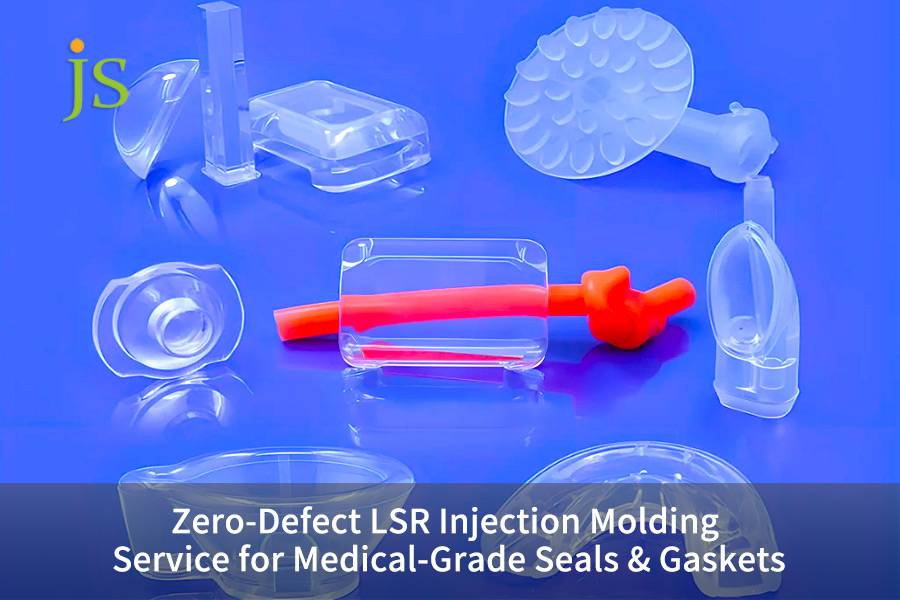

LSR injection molding service delivers no defects products through ISO 13485:2016 certified manufacturing, class 7 cleanroom and mold clamping gap ≤0.002 mm for no flash control. Closed-loop controls servo pressure while mold temperature variation remains within ±1℃.
These measures not only meet USP Class VI and ISO 10993 standards but also ensure ±0.02 mm tolerances on high-risk medical applications. Please find below in detail a series of technical specifications, overmolding with different materials and quality closure system from JS Precision.
Medical-Grade LSR Injection Molding Service Core Parameters Overview
|
Core Specification |
Execution Standard |
|---|---|
|
Certification & Environment |
ISO 13485:2016 certified; ISO Class 7 cleanroom |
|
Tolerance & Flash Control |
≤±0.02 mm dimensional tolerance, micro-flash-free mold design |
|
Material Compliance |
USP Class VI & ISO 10993 certified; platinum-catalyzed LSR |
|
Overmolding Bond Strength |
LSR over PEEK/SUS316L interface shear >5.5 MPa |
Key Conclusions
- The essential component of obtaining zero flash for medical grade LSR seals lies in the fine-tuning of the mold parting surface micron-level clamping strength and needle valve-type cold runner design.
- With heterogeneous overmolding, maintaining substrate preheating temperature at 120℃-130℃ is an effective way of dramatically strengthening chemical bonding at the material interface together with preventing surface delamination.
- As a potential client choosing JS Precision, you get free runner shear heat DFM analysis and a completely visual defect removal solution that is automated at the pre-mass production stage.
Why Trust JS Precision’s LSR Injection Molding Service For Manufacturing Medical-Grade Seals?
With more than a dozen years of hands-on knowledge on medical device liquid silicone rubber (LSR) injection molding from our company team, an LSR injection molding service partner who can actually deliver zero-defect service must be able to demonstrate verifiable proof at three levels: mold flash control, cleanroom environment management, and material compliance traceability, rather than being able to do LSR simply. In fact, it wasn't so much the quality as the mold flash control of endoscope sealing rings, gave us headaches during deployment.
We found out after 6-month of trial production testing that the mold part lines that have the biggest effect on the sealing and the product finish were worn from 0.002 mm gap to 0.008 mm by 5000th batch, which directly results in the excessive flash thickness. This shows that it has nothing to do with probability, simply it's insufficient mold rigidity compensation design.
ISO 13485:2016 specifies that the manufacturing environment for sterile medical devices should be managed in controlled zones, and environmental monitoring data for critical processes should be retained at least throughout the product lifecycle.
To comply with these rules, we require ISO 7 class cleanrooms for all of our medical grade LSR projects, and we include in our shipment reports environmental monitoring data as a batch report including particle count, airborne bacteria, temperature and humidity.
In a particular endoscope seal ring project, we reduced mold flash from a minimum of 0.008 mm to less than 0.l03 mm. Also the tightness test showed zero leakage and cracks after 200 cycles of high-pressure steam sterilization were not present. Through this method we were able to get it integrated with the JS Precision's 86 projects database of medical LSR.
Download Zero Flash LSR Mold Design Specifications to master the key points of parting surface fitting and mold rigidity compensation, helping you evaluate the flash control capabilities of your LSR injection molding service.
What Defines Zero-Defect LSR Injection Molding Service in Flash-Free Manufacturing?
The zero-flash control technology of LSR injection molding service makes use of micron-level parting surface preparation and adaptive clamping force closed-loop, reducing flash thickness of medical grade silicone valve plates and seals below 0.005 mm and completely eliminating the risk of residual human particles.
The underlying causes leading to flash generation:
- Vent holes in excess of 0.002 mm depth: Silicone being a very low viscosity material, it will overflow through any depth excess of 0.002 mm causing formation of flashing. The first key requirement in zero-defect injection molding is to keep the depth of the venting grooves within the range of 0.002 mm.
- Clamping force deviation: Hydraulic presses used in the traditional manufacturing processes experience the reduction of clamping force during the production runs of long durations. JS Precision has made adoption of servo motor clamping system which can be operated to the extent of force compensation during the production drift.
- Lag in valve needle opening of cold runner: A time delay in valve needle closing of less than 0.1 second can cause 0.01 mm level of flashing.
Methods of Elimination
- Adaptive fine drive of cold runner pin valve: After each cycle of injection, valve pin closing position is detected and adjustments are made within milliseconds through changes in drive current.
- Fit of parting surface at the micron level: Utilized by mirror EDM + CNC wire EDM method the resulting fit gap was less than 0.002 mm.
- Clamping force closed-loop: Measured the value of clamping force in each cycle, the automatic compensation was done for any deviation >1%.
In a short word, the fundamental aspect of avoiding flashes is not tightening the mold, but rather ensuring that with the same tightness the mold can be made to remain at the different cycles.
Request the Flash-Free Mold Design Specification, which includes venting groove depth standards and valve pin response time thresholds.
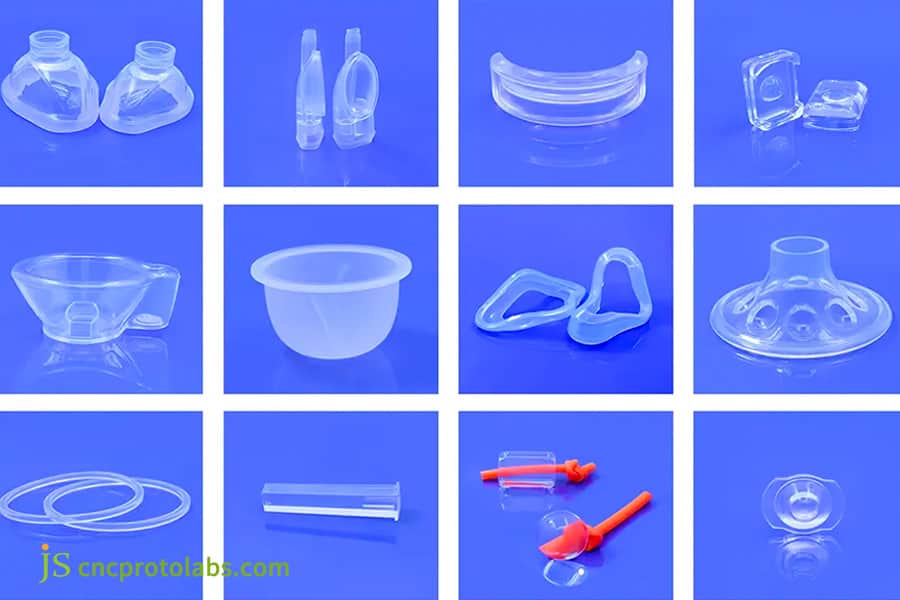
Figure 1: Transparent LSR medical components (bottles, masks, funnels) on blue background.
How Does Medical Injection Molding Service Guarantee Bio-Inertness for Gaskets?
The biocompatibility guarantee of our medical injection molding service is a result of a fully enclosed, fully automated platinum catalytic system, in combination with an ISO Class 7 cleanroom and tight environmental controls to prevent contamination of liquid silicone rubber materials by external particles and volatiles.
Mechanism of Molecular Degradation and Control
- Purity Standards of Platinum Catalytic System: A and B components should be continuously mixed in 1:1 ratio. When there is a deviation in the ratio, this might lead to incomplete cross-linking, and then low-molecular-weight substances left can be precipitated. The metering accuracy of medical grade LSR molding must be controlled within 0.5%.
- Management of Cleanroom Environment: A standard of ISO Class 7 means particle number ≤352,000/m³ that are particles ≥0.5 μm. JS Precision employs a HEPA, high-accuracy filtration system which supplies over 25 fresh air changes per hour.
- Totally Enclosed Feeding System: The whole process fromtank toscrew is sealed to ensure external particles cannot contaminate it.
Medical injection molding service for medical grade LSRs must guarantee precise 1:1 dynamic mixing ratio of the A+B parts in a platinum catalytic system, if there is any deviation, then cross-linking will be incomplete.
ISO 10993-1:2025, Biocompatibility of medical devices says clearly: Biocompatibility evaluation of medical devices shall be risk-based, the tests being selected taking into account existing data and exemptions.
Complying with said regulation, we have required USP Class VI tests for cytotoxicity, sensitization, and irritation to be mandatory material acceptance tests in our medical grade LSR projects. This is the main reason why we demand a completely enclosed 1:1 dynamic mixing system of the platinum catalytic system: if the process is interfered with by an external particulate or volatile contamination, this will cause the biocompatibility test to fail right away.
Steps for Environmental Monitoring
- Count the number of fallouts per shift (sedimentation method).
- Measure the amount of suspensions of bacteria on a weekly basis.
- Check the levels of temperature, relative humidity, and pressure gradient once in a month.
- Hire an independent third-party to run your entire system once in three months.
Submit a material compliance review application to obtain USP Class VI and ISO 10993 certification documents to confirm the material compliance of your medical grade LSR molding project.
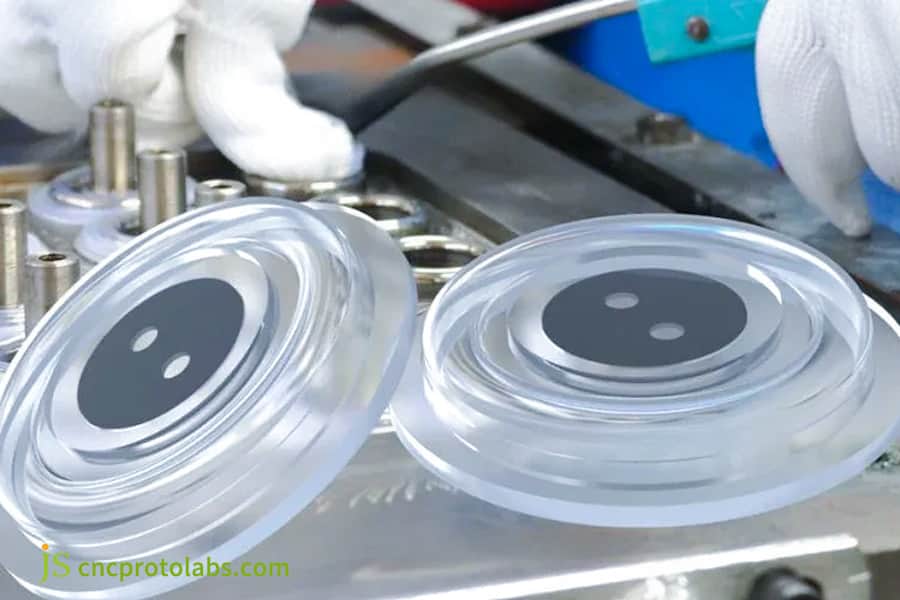
Figure 2: Manufacturing transparent medical gaskets with LSR molding equipment.
Which Process Methods of Custom LSR Injection Molding Service Prevent Delamination in PEEK Overmolding?
It's crucial that in custom LSR injection molding service, the surface of the substrate and the injection shear rate of LSR are controlled precisely, for example the interfacial adhesion between silicone rubber and thermoplastic is greatly enhanced.
Causes of delamination failure:
- TCP (temperature control unit) settings of substrate not adequate (e.g. At PEEK, the interface is only weakly bonded if the PEEK temperature is below 120℃), the correct temperature range is 120℃-130℃ for medical LSR components molding.
- Too low or too high injection shear rate: Too low will lead to higher LSR viscosity, as the result, LSR material cannot be penetrated the microscopic pores on the surface of the substrate.
- Lack of clean interface between substrate and LSR: Any residue of mold release agent or oils on the substrate's surface can cause the adhesion strength between substrates of materials in contact to decline.
Fixes to this Problem
- Properly heat the substrate to a temperature of 125℃±3℃, using infrared heating method and keep it heating for more than 30 seconds.
- Application of micro-spraying self-adhesive primer technology: bonding strength after secondary molding remains at or beyond 5.5 MPa.
- Injection speed optimization divided into sections: slow speed (10-20 mm/s) at contact interface section, moderate speed (50-80 mm/s) in filling section.
Get the Multi-color Heterogeneous Overmolding DFM Feasibility Assessment, including recommended preheating temperature and shear strength prediction.
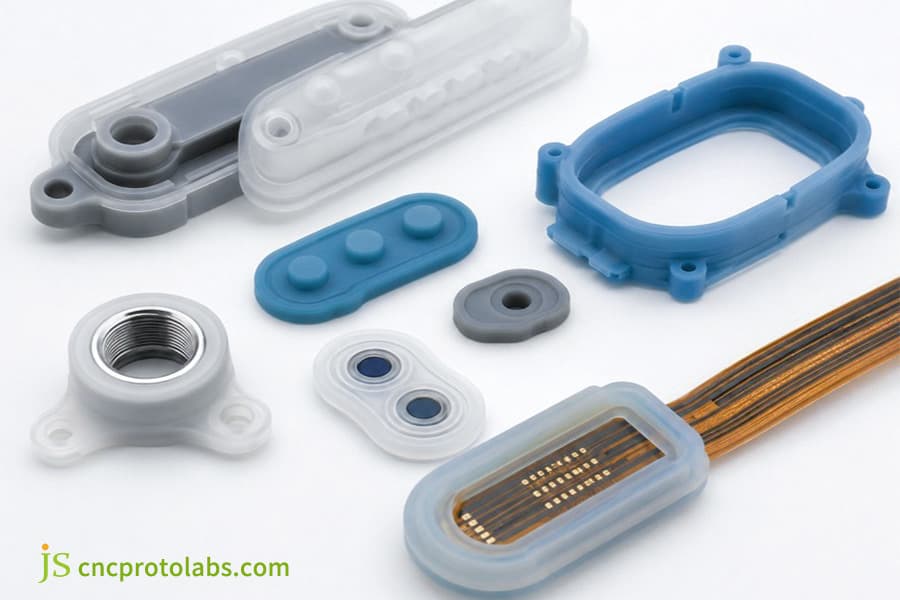
Figure 3: LSR overmolded components (blue, gray, transparent) for medical devices.
Can Medical LSR Components Molding Consistently Achieve Precise ±0.02 mm Tolerances?
The key to obtaining micro-tolerances at the medical LSR components molding is through micro-precision reciprocating injecting screw (diameter 14 mm) together with the minute-level reaction of the hotRunner Needle Valve to close-loop system which reduces the injection volume error per mold cavity to ±0.01 g.
Major Reasons For Dimensional Inaccuracy
- Silicone Hot Expansion: With silicone mold at about 150℃ and cooling to room temperature in the mold, the material will shrink around 2-3%. Mold dimension control in liquid silicone rubber molding service has to include a shrink compensation in the mold design.
- The Shrinkage Rate Fluctuations During Curing: Shrinkage rate difference between different batches of LSR can reach 0.3%, mold compensation values need to be verified and adjusted for each batch.
- Injection Volume Tolerance: The standard accuracy of screw metering is ±0.05 g, whereas for micro-valve cores with capacity <0.1 g, the tolerance is more than 50%.
Accuracy Measuring Control System
- Micro reciprocating injection screw: Diameter ≤14 mm, metrologically capable of 0.001 g.
- Cold runner has several zones with separate temperature controls: Each cavity has its own temperature and the difference will be less than ±1℃ .
- Online weight detection closed-loop system: Weighing done after every molding step, if found that deviation is greater than 0.01 g, injection volume at the next molding step will be corrected automatically.
|
Component Weight |
Target Tolerance |
JS Precision Achieved |
Industry Average |
|---|---|---|---|
|
<0.1 g micro valve |
±0.02 mm |
±0.015 mm |
±0.04 mm |
|
0.1-1.0 g seal ring |
±0.02 mm |
±0.018 mm |
±0.035 mm |
|
1.0-5.0 g gasket |
±0.03 mm |
±0.022 mm |
±0.045 mm |
This means that for micro-medical components, the injection screw diameter and metrological accuracy directly determine the yield ceiling—the finer the screw, the higher the precision.
Why Does Liquid Silicone Rubber Molding Service with Cold Runners Reduce Procurement Costs?
A runner system in the liquid silicone rubber molding service is a cold runner system that prevents the temperature from rising of the liquid silicone rubber in the runner up to its solidification point, resulting in no runner scrap per mold and a raise of the utilization rate of medical grade silicone rubber raw materials up to over 98%.
Cold Runner vs. Hot Runner Cost Comparison
|
Cost Factor |
Cold Runner |
Hot Runner |
|---|---|---|
|
Material waste per cycle |
0% (waste-free) |
20-30% runner waste |
|
Initial tooling cost |
+15-25% |
Baseline |
|
Per-part cost (100k pcs) |
$0.12 |
$0.18 |
|
Maintenance interval |
100k cycles |
50k cycles |
Cold Runner Cost Saving Formula
Total Savings = Material Unit Price × Waste Rate × Annual Production
Taking a medical grade LSR with a unit price of $80/kg, a waste rate of 25%, and an annual production of 100,000 units (5g per unit) as an example: Annual Savings = $80/kg × 2510,000
Multi-Cavity Valve Needle Independent Water-COoled Cold Runner ContOl
- Temperature maintains stable 20℃-25℃ so that no solidification waste happened during injecting at high speed.
- Valve needle for single cavity can be operated separately, even some cavity malfunction, the products of other cavities are not going to be stopped.
Contact our engineers for a free calculation of cold runner cost savings. Enter your production volume to receive an ROI comparison table for liquid silicone rubber molding services.
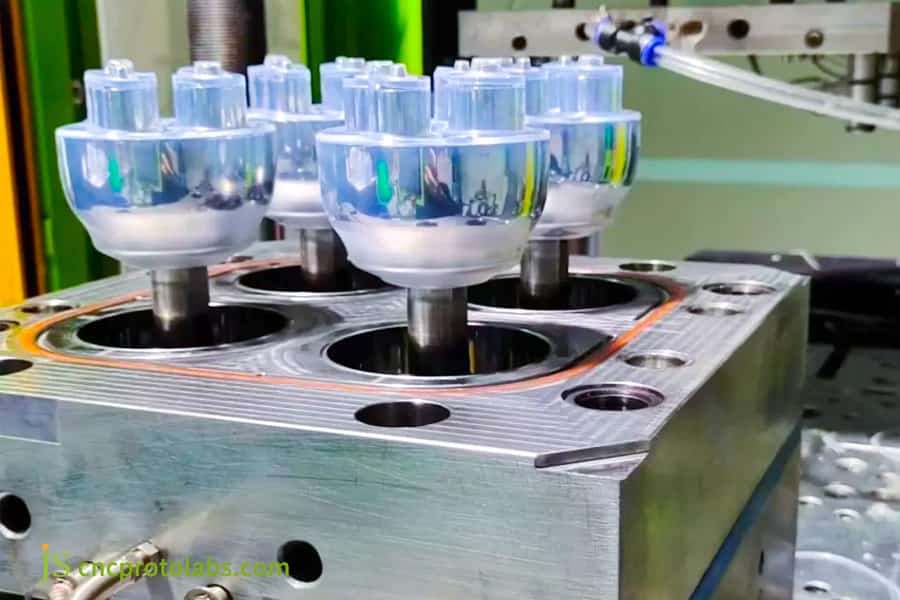
Figure 4: LSR cold runner mold producing transparent multi-cavity components.
How Does Medical Seal & Gasket Molding Optimize Mold Venting to Eliminate Air Voids?
In case of medical seal & gasket molding, the mold venting system design incorporates peripheral micron-level annular stepped venting channels. Plus a vacuum pump, this system reduces the air pressure within the mold cavity to below 10 mbar before the injection process, thereby preventing porosity and scorch defects induced by injection at high speed.
Air Trapping Issues - Main Factors
- The reason the viscosity of silicone is very low causes during fast injection, air is not able to be expelled and pores are formed. The venting design in the medical grade LSR molding should be In particular suited for its very low viscosity properties.
- Uncontrolled Depth of the venting channel: greater than 0.002 mm, overflow occurs while less than 0.001 mm, results in poor venting.
- There is no vacuum assistance, the residual air in the cavity of the mold is compressed into microscopic bubbles when highly pressured.
Forced Vacuum Exhaust Solution
- Peripheral micron-sized annular stepped exhaust grooves: depth from 0.0015 to 0.002 mm, width is 3-5 mm.
- The vacuum pump is used to pre-evacuate: it lowers the pressure of the mold cavity down to below 10 mbar before the material is injected.
- A self-purge exhaust parting surface linkage design: the exhaust grooves are automatically cleaned after every molding cycle to prevent choking.
The vacuum exhaust system has to be highly vacuumed and the pores should be removed to the sealing surface will remain intact, which is something important in successful medical seal & gasket molding.
How Did JS Precision Solve Endoscope Gasket Leakage via Custom LSR Injection Molding Service?
A major international medical device supplier encountered a major difficulty when developing a new line of high-frequency reusable endoscopes. After 100 sterilization cycles, the silicone closing rings had swelled and had surface cracking on different parts to the point that significant gas leakage occurred during 50 kPa airtightness testing.
Customer Challenges and Diagnosis of Basic Problems
- Customer Challenge: Endoscope sealing rings are required to be sterilized with over 100 cycles of 134℃ high-pressure steam sterilization. The supplier's first offer made the rings swell and the parting surface to crack after sterilization so that the leakage rate of 50 kPa airtightness test exceeded 30%.
- Fundamental Problem Determination:In the original mold, the parting surface didn't have any rigid compensation mechanism, so local temperature differentiabilities of at least 3℃ were present and the curing was nonhomogeneous in different areas. The regular platinum-catalyzed LSR was employed, but the crosslinking density was far from being perfect for repeated sterilization.
- Upgrade of the Material: JS Precision supplies high-density platinum-catalyzed, USP Class VI liquid silicone rubber (LSR), which gives about 20% higher crosslinking density and hydrolysis resistance.
Problem-solving and Iteration of Ideas of JS Precision
- Cold Runner Shear Heat Simulation:
Gate location, as previously, was a problem of localization of a high concentration of heating and that of micropores in a product. A shear heat simulation carried out via the custom LSR injection molding service is the first step against over-curing.
- Mold Parting Surface Rigid Compensation Mechanism:
Temperature fluctuations of only ±0.5℃ are made possible. It allows for the pressure - curing balance to shift dynamically.
- Mistaks from the First Try at the Production:
The over-rapid shooting of the material created more shear heat, so the material melted on some spots and micropores were formed. By making the initial slow of the secondary parting slower and extending the water cooling period of the mold, the team finally got rid of micropores entirely.
Results:
- The amount of flash control: Flash at the sealing ring parting surfaces produced per batch is reduced to flash of ≤0.003 mm.
- Sterilization Resistance: After 200 high-pressure steam sterilization cycles, no bonding interface crack is observed.
- Test of sealing: No defects were detected during full inspection with a testing device from Zeiss. Leakage rate of zero is reported.
- The customer's comment: the seal is consistent and works after the equipment is put together, and there is not a single complaint.
Upload sealing ring drawings to receive a free DFM assessment and trial molding report within 24 hours, and customize your custom LSR injection molding service solution.
Why Partner with JS Precision for Custom LSR Injection Molding Service Requirements?
Going with JS Precision gives you an advantage of directly working with a source manufacturer that is not just ISO 13485 certified but also equipped with a fully German Zeiss coordinate measuring machine and fully automated vision inspection production line that together lead to a 30% development cycle time cut and lifetime error-proofing.
Key Advantages
- Certificates and Manufacturing Environment: ISO 13485:2016 certified and ISO Class 7 cleanroom production, with environmental monitoring data going with all batches.
- Mold Capabilities: A cold runner mold prototyping cycle of only 14-18 working days, with parting line mating gap of <0.002 mm.
- Inspection Devices: Coordinate measuring machine of Zeiss brand, fully automated vision inspection system. We also do roundness measurement and roughness measurement work.
- Quality Traceability: Every shipment of batches comes with a biocompatibility material traceability report of a whole set as well as an inspection yield certificate that is complete.
The requirement for LSR injection molding service delivery is to achieve the first trial success rather than anything that can be made is fine.
FAQs
Q1: What is the minimum order quantity (MOQ) and tooling lead time for medical-grade LSR injection molding at JS Precision?
With the MOQ flexibility at JS Precision, they offer clinical production from 100 to millions of pieces. For the standard medical grade silicone seal cold runner molds prototyping they allow 14-18 business days including a full dimensional inspection report for the first samples batch.
Q2: How does JS Precision guarantee flash-free results for critical medical seals and gaskets?
A combination of high rigidity hydraulic clamping press and precision mirror EDM / CNC wire EDM allows the parting line gap of the tool be brought down to less than 0.002 mm. A high-speed electro-hydraulic servo brings the capability to close-loop adjust the pressure.
Q3: What medical-grade liquid silicone rubber materials do you support, and are compliance certifications provided?
We partner with several international top raw material suppliers like Dow, Wacker Chemie, and Shin-Etsu and we maintain long standing relationships. The compliance certificates for biocompatibility - USP Class VI, ISO 10993, and FDA - of the LSRs have been issued by the original manufacturers for the raw materials used.
Q4: Which rigid plastic substrates can be used for multi-shot LSR overmolding?
We are adept in the technique of LSR overmolding on PEEK, PA66, PC and SUS316L material surfaces. Based on substrate type, the right mold temperature preheating allows molecular cross-linking to occur strongly.
Q5: How is bio-burden and particulate contamination controlled during your manufacturing process?
With a separate HEPA high-efficiency air filter system in the cleanroom and 25 air changes per hour, particles will be less of an issue. Suspended bacteria and droplet count are checked by third- party labs regularly. Packaging is done by fully automated, handless peeling and pneumatic vacuum packing at the last stage.
Q6: How should a product designer choose between liquid silicone rubber (LSR) and thermoplastic elastomers (TPE)?
LSR has good creep resistance, very high temperature compression set resistance, and extremely high chemical inertness. TPE is less expensive but lacks sufficient heat resistance and has low tensile strength. If the instrument needs daily high-temperature steam sterilization, LSR is the only approved safety-compliant and industry-recognized product.
Q7: What are the main engineering factors that influence the overall quotation for an LSR injection molding service?
The primary quotation is influenced by the mold cavity count, the complexity of the cold runner configuration, if heterogeneous overmolding is desired or not, and the post-cure time requirements. JS Precision guarantees a full cost breakdown including all hidden or not visible charges.
Q8: How can we initiate a technical manufacturing assessment and request a quote from JS Precision?
Just send the step file (.STP/.STEP) and hardness material information, plus sterilization of the part requirement, to JS Precision email enquiry. An engineering department will send detailed DFM report and tiered price in 24 hrs. As an alternative, you may upload drawings to get a quotation, JS Precision would reply shortly.
Summary
Due to the very high medical device sealing industry quality & regulatory demands, utilizing high-accuracy, zero-flash LSR injection molding service is practically the sole way to make sure that devices do not leak and do not introduce a new biological contamination. The JS Precision company, equipped with an ISO 13485-certified Class 100,000 cleanroom, leading-edge process control systems besides being well-versed internationally, has successfully helped hundreds of medical companies worldwide to bypass the obstacles to the manufacturing of many critical airtight components.
Is de-lamination of silicone seals following multiple sterilizations a real-life problem of yours, or are you worried about whether the flash control of your current suppliers is going to be at par for the precise assembly requirements? Contact JS Precision's technical experts, right away send your technical specifications and design drawings and receive a free flow channel shear heat DFM assessment report and dedicated one-on-one engineering consultation. Collaborate with us to raise the level of your product delivery quality!

Disclaimer
The contents of this page are for informational purposes only. For JS Precision Services, there are no representations or warranties, express or implied, as to the accuracy, completeness, or validity of the information. It is the buyer's responsibility to identify specific technical requirements and request a formal parts quotation. Please contact us for more information.
JS Precision Team
Custom manufacturing solutions. With over 15 years of experience serving more than 1,000 customers, we specialize in high-precision CNC machining, sheet metal fabrication, 3D printing, injection molding, and metal stamping. Having successfully delivered over 300,000 precision parts, we maintain a 99.2% on-time delivery rate across all custom projects.
Our facility is equipped with over 100 state-of-the-art 5-axis machining centers and is ISO 9001:2015 certified. We deliver fast, efficient, and high-quality manufacturing solutions to B2B clients across 150 countries. Whether you require low-volume prototyping or large-scale customization, we support your project with lead times as short as 24 hours. Choose JS Precision for unparalleled efficiency, quality, and professionalism.
To learn more or submit your RFQ, visit our website: www.cncprotolabs.com
Resource