English



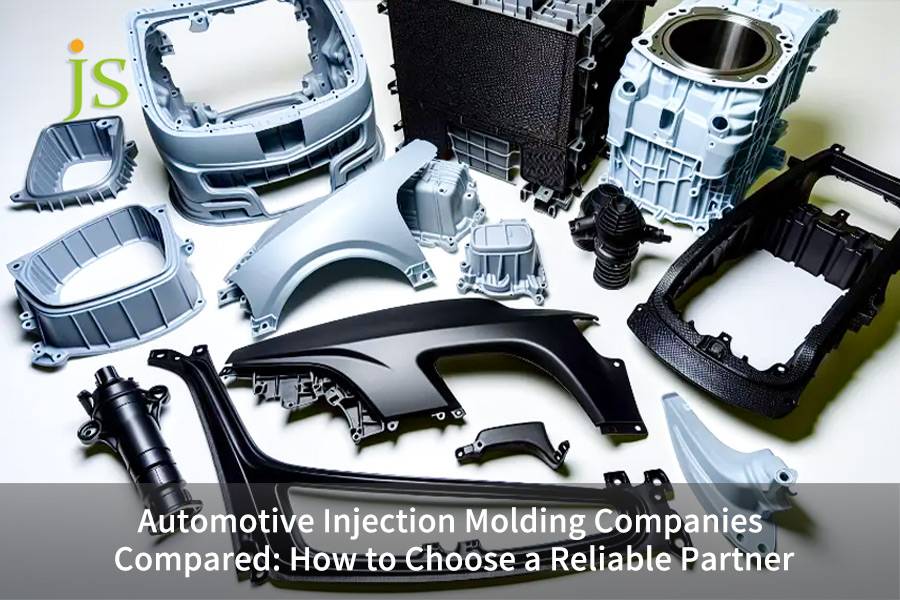

Automotive injection molding plays a fundamental role in accurately shaping automotive components. It is one of the main ways to solve the problems like deformation during mass production, parts going beyond tolerance limits, assembly getting delayed, and supply chain claims.
The fundamental standards of this technique are 0.005mm micrometer-level tolerances and a process capability of Cpk 1.33. It also fundamentally depends on the IATF 16949 system management. This system makes it possible to achieve continuity in batch production and component stability in assembly. Because of this, automotive injection molding is a process that supports the stabilization of the worldwide automotive supply chain.
Sometimes, buyers face problems when their suppliers do not deliver what they have promised on high precision. Also, weld lines and shrinkage deformation occur quite often during mass production, which leads to the halting of production at overseas lines and very big claims.
The article offers standardized selection solutions from three angles: system, process, and engineering.
1.System Access Red Line: Outlines very clearly how vital the completion of IATF 16949 certification is for raw material traceability and zero-defect production.
2.Precision Micro-matrix: Measuring the dimensional stability of a factory based on the Cpk index and SPC control charts, which removes the need for subjective judgment.
3.Top-Level Engineering Collaboration: Getting rid of part warpage and lessening the cost of mold lifetime by combining DFM design and Moldflow analysis.
Criteria for Selecting Automotive Injection Molding Service Partners
Choosing the partners for your automotive injection molding service is a great way to remove subjective judgment from the decision. When you quantify process parameters credentials highlight the manufacturers with the best equipment and most capable workforce, you are also preventing the risk of mass production problems at the source.
|
Evaluation Dimension
|
Industry Average Benchmark
|
JS Precision Excellence Standard
|
Core Procurement Benefit
|
|
Machining Tolerance Accuracy
|
±0.100mm
|
±0.005mm (Automotive Precision Grade)
|
Realize seamless automated assembly and eliminate secondary rework.
|
|
Compliance Certification System
|
ISO 9001:2015
|
IATF 16949 / ISO 13485 Dual Certification
|
Meet the access standards of the automotive supply chain and avoid compliance risks.
|
|
Mold Service Life
|
300,000 Stamping Cycles
|
≥1,000,000 Cycles for High-Hardness Mold Steel
|
Reduce the unit production cost and the loss of production stoppage for mold maintenance.
|
|
Mass Production Defect Control
|
Defect Rate ≤1.5%
|
Cpk≥1.33, Zero Batch Defects of Porosity and Warpage
|
Improve the production line pass rate and reduce overseas claim costs.
|
|
Dimension Inspection Equipment
|
Ordinary Image Measuring Instrument
|
Zeiss Coordinate Measuring Machine + CMM Precision Inspection Equipment
|
Lock the dimension chain and ensure the stability of micron-level precision.
|
Key Takeaways:
- Qualification determines life and death: Automotive injection molding cooperation must be subject to mandatory review of the IATF 16949 system, which is the core bottom line for industry access.
- Data over a sense: Leaving aside generalities like "high precision", we rely on the measured tolerances and Cpk index as the primary criteria for consideration.
- Technology at the foundation level: Moldflow analysis and failure analysis are the essential tools that allow manufacturers to distinguish themselves from the crowd.
- Cost throughout the entire life cycle: The price of one piece alone is only a small part of the overall cost, mold life and defect rate are the main hidden costs.
Why Trust JS Precision's Experience in Automotive Injection Molding Services?
The brand brings extensive experience from years of working in mass production and the capability to carry out international standards to deliver precise corrections of deviations and failures in the precision injection molding process of mass production. This results in stable technical support for the manufacturing of different automotive parts.
By dedicating 20 years to the precision automotive injection molding sector, the team has introduced the SAE J1940 quality control standard and has executed the mass production of over 200 overseas Tier 1 automotive parts.
And proficient skills in the mass production of high-end sensor brackets, clearly most quality issues in small and medium-sized injection molding plants arise due to the absence of standardized control over injection parameters and mold conditions.
Our production system focuses on three major pain points of the industry: deformation of fiber-reinforced plastics, weld lines of large parts and micron-level tolerance drift. We possess proprietary process tuning solutions.
Generally, we are different from automotive injection molding companies that only perform molding processing as our team can customize customers' automotive injection molding project design and optimization at the earliest stages, which is the source of mitigating mass production risks and reducing customers' total procurement costs throughout the entire life cycle.
Our exclusive troubleshooting techniques based on practical experience, for example, burning defects can be characterized during polyamide 66 (PA66) fiber-reinforced injection molding. We have confirmed that the defect can be eliminated by gradually reducing the injection speed by 10-15mm/s. This detail is very rarely discussed in the industry information that is publicly available.
To quickly avoid mass production defects and procurement pitfalls in automotive injection molding, you can receive a free industry process white paper, gaining a one-stop understanding of key avoidance points and precision process standards in offshore procurement.
Why Is It Mandatory To Review IATF 16949 Certification When Choosing An Automotive Injection Molding Supplier?
IATF 16949 is a major differentiator for automotive injection molding parts suppliers as it has a direct impact on first-pass yields of parts and compliance with the supply chain. The automotive industry has very high safety and reliability standards for parts. This credential gives a robust quality control system that serves as the first and stringent hurdle to be allowed into the main automotive supply chain and also a key criterion for recognizing top-notch automotive injection molding suppliers.
Application of Five Core Tools
Batch quality control is the focal point for production. The IATF 16949 system depends on five core tools to provide a seamless quality control chain. These tools collectively guarantee the consistent quality of various injection molded automotive parts during mass production, making them suitable for manufacturing all kinds of injection molding automotive parts.
A highly skilled and compliant custom automotive injection molding manufacturer has comprehensive quality control and large-scale production support capabilities. Here are the five core tools:
1.APQP: Thoroughly plan project quality from start to finish to avoid design errors.
2.PPAP: Present Level 3 certification paperwork to confirm mass production readiness.
3.FMEA: Foresee potential failure areas like mold venting and material forming issues.
4.SPC: Track the consistency of production processes continuously.
5.MSA: Provide precise and reliable testing data to avoid errors in judgment.
Ultimately, by combining these five tools, it becomes possible to manage risks related to parts at every stage from design through mass production and Because of this, prevent batch defects. Standard ISO 9001 manufacturers typically do not have an FMEA risk assessment process and because of this are more susceptible to quality issues like part burning and porosity due to insufficient mold venting.
Customer Benefits from Certification Differences
Traceability of raw materials is the main basis for compliance. Manufacturers who are dual-certified are capable of getting the full traceability of raw material and issuing complete process capability and dimensional inspection reports. JS Precision supplies one full set of Level 3 PPAP documents to reveal potential quality risks at the initial stage of a project.
At the same time, they offer a transparent and reasonable custom automotive injection molding quotation, which guarantees that quality and price are kept under control for customized projects.
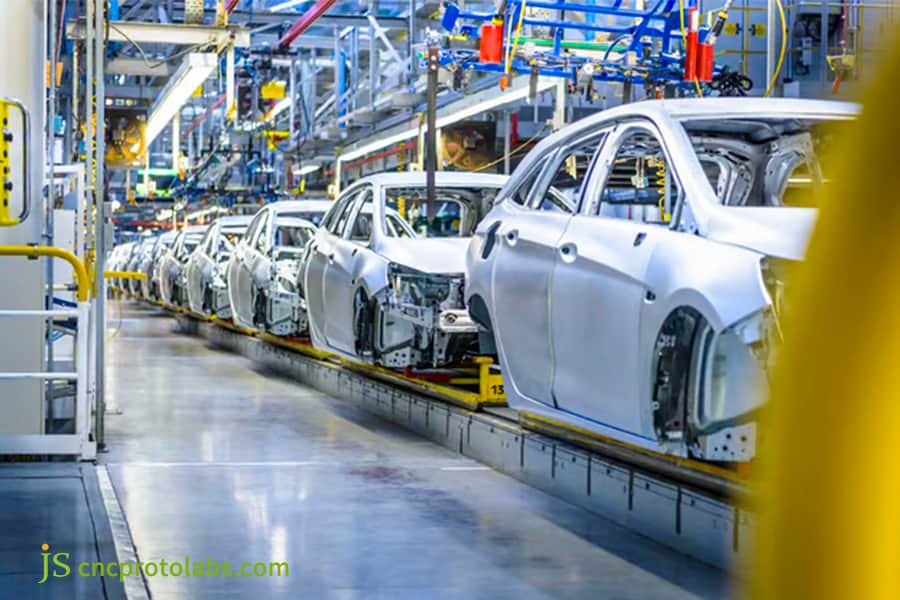
Figure 1: White car bodies on an assembly line in a modern, well-lit automotive factory.
How To Evaluate The Tolerance Control Capability In The Injection Molding Automotive Manufacturing Process?
The tolerance precision of injection molding automotive parts cannot be determined by verbal promises, it needs a quantitative assessment through equipment precision, mold parameters, and SPC data. Micron-level precision relies heavily on very thorough process control.
Core Tolerance Impact Parameter Control
The core of manufacturing is precision dimensional adjustment. Car precision parts require micron-level tolerance control, and core control includes two parameters: 1℃ constant temperature control of the mold and V-P injection pressure switching.
High crystallinity engineering plastics are Really prone to shrinking fluctuations with parameter changes. Careful reining in is the very cornerstone of making high end precision automotive injection molding services.
Capability index calculation formula: Cpk = (USL - ) / (3). The essence of this is that the higher this value, the more reliable dimensional stability in mass production. JS Precision's baseline Cpk is 1.33 and they can reliably deliver products with a precision tolerance of 0.005mm, whereas the industry average is only 1.00.
Precision Inspection Equipment Drives Quality Control
Full-dimensional inspection has to be there as a process step before shipment. Our Zeiss coordinate measuring machines and Keyence imaging measurement systems are capable of thoroughly capturing the dimensional chain of parts, because of this eradicating micro-level deviations. The equipment's 0.002mm repeatability is very well beyond the industry standard.
Besides, it can successfully meet the requirements of high precision automotive injection molding service, and at the same time, it can optimize the high tolerance injection molding components price contributing to a good balance between precision and cost-effectiveness.
Which Equipment Parameters Are Most Critical When Facing The Process Challenges Of Injection Moulding Large Parts?
Main issues when injection moulding large parts are pressure drop, uneven cooling, and unbalanced clamping forces. To tackle these usual defects like deformation and weld lines, high-tonnage machines and smart runner systems are required.
Standards for Parameter Matching of High-tonnage Equipment
The focus of producing large parts is in clamping force matching. Parts of a large size like car bumpers and dashboards need 1200T-3200T precision injection molding machines. Parameter mismatches of production equipment by low-end manufacturers will easily result in shrinkage and water-binding defects and because of this they are incapable of meeting the high-standard mass production requirements of automotive injection molding.
Through the accurate matching of equipment parameters, professional large-scale automotive injection molding factories are able to overcome the issues of large part injection molding.
Exclusive practical judgment logic: When the part wall thickness is >3mm and the flow length ratio is >150, the sequential valve hot runner delay opening time needs to be very accurately regulated within 0.1s to totally remove the pressure attenuation issue of ultra-long runners.
Mold Life and Wall Thickness Stability Control
Wear of molds is a very important factor for stable mass production. Large molds, after a long period of use, tend to cause the guide mechanisms to wear down. We tightly limit the wall thickness variance of large parts to 3% and below, and apply a multi-gate sequential valve system to get rid of weld lines.
The use of modern machinery together with the latest methods gives rise to strong heavy duty injection molding production capability, which is able to support the stable mass production of large parts.
The stable mass production of large automotive injection molded parts is wholly dependent on the very detailed control of core process parameters.Specific control standards are as follows:
|
Process Parameter
|
Industry General Standard
|
JS Precision Control Standard
|
Maximum Allowable Deviation
|
Core Control Purpose
|
|
Clamping Force Matching Coefficient
|
1.1-1.2
|
1.3-1.5
|
≤±0.1
|
Prevent mold expansion and flash defects.
|
|
Mold Temperature Control Accuracy
|
±2°C
|
±1°C
|
≤±0.5°C
|
Ensure uniform cooling and eliminate warpage deformation.
|
|
Sequence Valve Opening Delay Accuracy
|
±0.2s
|
±0.1s
|
≤±0.05s
|
Balance melt filling and eliminate weld lines.
|
|
Injection Pressure Fluctuation Range
|
±5%
|
±2%
|
≤±1%
|
Stabilize melt filling and prevent dimension drift.
|
|
Holding Pressure Switching Accuracy
|
±3%
|
±1%
|
≤±0.5%
|
Accurately compensate for shrinkage and eliminate part shrinkage defects.
|
For those with mass production needs for large automotive injection molded parts, we can provide free customized engineering solutions for large parts, precisely matching equipment and process parameters to eliminate mass production problems such as deformation and weld lines.
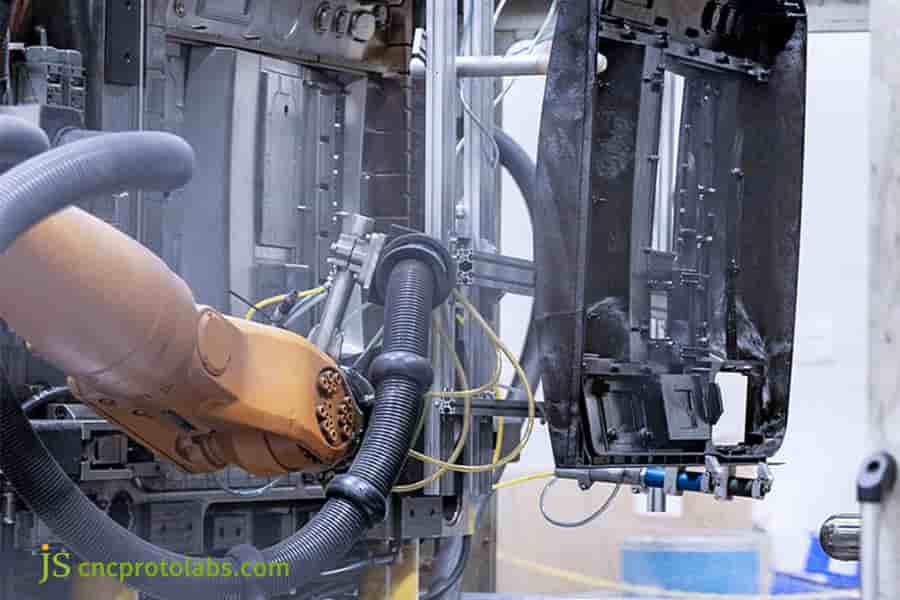
Figure 2: An industrial robot performs injection molding on a large automotive component.
How To Reduce Mold Costs Through DFM When Designing Complex Injection Molding Automotive Parts?
Around 70% of quality issues and mold costs in automotive injection molding are caused by errors made in the design phase. Starting with DFM optimization can not only stop defects in mass production, but it can also reduce mold modification costs and seriously raise the molding pass rate and production efficiency of injection molding automotive parts.
Major Core Design Parameter Optimization Standards
Wall thickness change is a primary vehicle for lowering costs. Lack of proper structure can very easily cause internal stress and distortion. Industry-standard best parameters provide a basis for application in all sorts of custom automotive injection molding designs.
Scientific optimization at an early stage can greatly reduce automotive injection molding tool design cost and motor modifications later on will be minimal.
- Make the thickness of walls as constant as possible to get rid of warping stress that is brought about by local shrinkage differences.
- Fix a certain draft angle and reinforcing rib size to make sure that basic molding defects do not occur.
The main focus of the entire life cycle cost of automotive injection molds is the choice of mold steel. Different types of steel differ dramatically in their characteristics, wear resistance, life span, and scenarios for which they can be used, all of which have a direct impact on the stability of mass production and the amount of investment in cost.
A detailed selection comparison is as follows:
|
Steel Grade
|
As-Delivered Hardness HRC
|
Hardness After Heat Treatment HRC
|
Corrosion Resistance Grade
|
Wear Resistance Grade
|
Mold Service Life (10,000 Cycles)
|
Core Application Scenario
|
|
718H
|
28-32
|
48-52
|
Medium
|
Medium
|
30-50
|
Molds for ordinary automotive interior and exterior parts.
|
|
NAK80
|
38-42
|
50-54
|
Medium
|
Excellent
|
50-80
|
Molds for high-precision automotive functional parts.
|
|
S136
|
24-28
|
48-52
|
Excellent
|
Medium
|
80-100
|
Molds for high-transparency automotive lamp housings and optical parts.
|
|
H13
|
22-26
|
46-50
|
Medium
|
Excellent
|
100-120
|
Molds for large automotive bumpers and instrument panels.
|
|
P20
|
28-32
|
45-48
|
Medium
|
Medium
|
20-30
|
Molds for automotive R&D samples and low-volume production.
|
The Cost Reduction Value of Moldflow Analysis
Runner simulation analysis allows us to foresee the molding risks with high accuracy. On top of that, free mold flow analysis can be used to improve the design beforehand and because of this avoid the losses caused by mold modifications.
Our extensive engineering services with our capability of mass production would enable us to be a professional and trustworthy OEM automotive injection molding components supplier, well suited for different customized automotive parts mass production projects.
To reduce mold modification costs and avoid design defects from the source, upload 3D drawings and receive a free DFM optimization solution and mold flow analysis report within 24 hours.
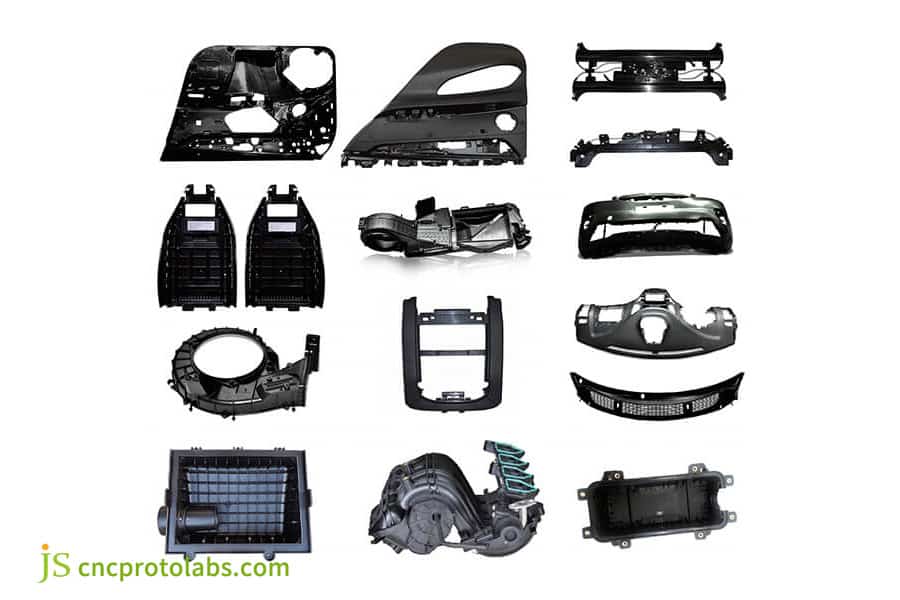
Figure 3: A DFM-focused display of various black plastic automotive parts for injection molding.
Why Does Material Modification Technology Play a Decisive Role In Custom Automotive Injection Molding?
The main function of custom automotive injection molding products lies in how the material is modified. Accurate control of the parameters can make the mechanical characteristics of plastics more stable and at the same time, make the plastics fit for the rigorous working conditions of vehicles.
Process Control of Glass-Fiber Reinforced Materials
The rate of glass fiber retention is a key thing in modification. The fibers in long glass fiber reinforced PP materials are susceptible to breaking and the material's performance may get worse due to the shear force of the screw.
Stable equipment parameters can provide a glass fiber retention rate of 70%, which is the minimum level for keeping the structural rigidity of parts and can also be used in different types of high-end injection molding automotive production. Well-developed processes can offer full custom automotive injection molding solutions.
The performance of car parts produced using the injection molding process relies 100% on the choice of material. Various types of modified engineering plastics have very different mechanical properties and levels of heat resistance, which makes them suitable for different applications in the automotive industry.
A comparison of core material parameters is as follows:
|
Material Name
|
Tensile Strength (MPa)
|
Flexural Strength (MPa)
|
Heat Deflection Temperature (°C)
|
Glass Fiber Retention Rate (%)
|
Core Application Scenario
|
|
PA66+30%GF
|
180-200
|
250-280
|
220-240
|
≥60
|
Engine compartment structural parts and sensor brackets.
|
|
PP+LGF30
|
150-170
|
220-250
|
160-180
|
≥70
|
Automotive bumpers and instrument panel skeletons.
|
|
PC/ABS+10%GF
|
120-140
|
180-200
|
110-130
|
≥65
|
Automotive interior and exterior parts and rearview mirror housings.
|
|
POM+20%GF
|
130-150
|
200-220
|
150-170
|
≥60
|
Automotive buckles and precision transmission parts.
|
|
PA6+15%GF
|
160-180
|
230-260
|
200-220
|
≥60
|
Automotive chassis guards and wire harness fixtures.
|
Special Condition Material Adaptation Solutions
Additions resistant to various weather elements can be adjusted to suit harsh car operating conditions. Specialized transformations can be devised for high temperature and UV aging scenarios, so that the performance shortcomings of normal raw materials can be eliminated. Having a solid understanding of material modifications, we are a reliable high performance plastics injection molding vendor that can also handle various complicated working condition parts customization requirements.
What Is The Real Manufacturing Case Of Chinese Automotive Injection Molding Manufacturer JS Precision?
Through the use of improved procedures and mold optimization strategies, we can fully address issues like deformation and tolerance violations in modified plastic parts, leading to a first-pass yield rate of ultra-high quality mass production. This is a testament to the technical prowess of top-notch automotive injection molding companies and also offers a guide for mass production of different injection molding large parts and precision small parts.
Client's Challenges:
Initially, sensor brackets made by the client's former supplier faced major quality problems:
The parts were designed with an asymmetrical stepped wall thickness of 1.5mm-3.8mm, and the fiber-reinforced high-rigidity material was very prone to stress unevenness, leading to a finished product deformation as high as 0.35mm, which was way beyond the industry standards.
This situation led to automatic assembly line sensor clips not engaging, which decreased the first-pass yield to only 64%, and the client was at a risk of receiving a great number of line stoppage claims.
JS Precision's Solution:
To tackle the problem, our project team implemented a handful of optimization changes:
1.Redesigning the gate layout, converting from a single-point center gate to a two-point sequential valve side gate for the balancing of melt filling speed.
2.Employing 3D printing conformal cooling water channels to tightly monitor the difference in local temperature in the mold to 3℃, thereby completely solving the uneven cooling problem.
3.Implementing a segmented holding pressure parameter system to accurately correspond to the material's shrinkage behavior.
Lessons Learned
When the team was making trial molds for the first time, they actually had a gate shear heat scorching issue due to super fast melt filling. By coming up with an exclusive gradient speed control technique, the injection speed has been changed gradually from a maximum of 85mm/s to a minimum of 45mm/s that effectively fixed the defect completely. The solution has been committed to the company's internal database keeping records of engineering pitfalls and ways to avoid them.
Final Results
Finally mass production results have been heavily enhanced. Besides that part warpage and dimensional tolerances were within standards, the project Cpk was 1.42 and the first-pass yield went up to 99.8% coexisting with the entire mature quality control and optimization system that was re-packaged into a very detailed China precision injection molding factory case study providing a practical reference for similar customized projects.
Client Feedback:
A multinational purchasing director remarked in a 3rd party assessment: "JS Precision's precision engineering and problem-solving skills went beyond our expectations. They are real manufacturing wizards who saved us tens of thousands of dollars in mold modification cycle costs."
For replicating high-precision, high-first-pass yield mass production solutions, consult our engineers to access complete case studies of similar Tier 1 projects to suit your component mass production needs.
Why Choose JS Precision As Your Long-Term Automotive Injection Molding Partner In The Global Supply Chain?
In the worldwide sourcing context, a major value of a top-standard manufacturer is represented by its compliance system, pinpointed processes, and consistent service, which are instrumental in reducing the risk of import from foreign countries. Dependable and stable automotive injection molding companies can provide excellent automotive injection molding service for a long period.
Equipment and System Fundamental Barriers
The high-precision equipment cluster is the main assurance for mass production. Our plant is outfitted with the world's finest precision injection molding machines. Besides, the dual-certification quality system guarantees that mold cycles can exceed one million. Thanks to our competence in stable mass production and quality control, we have become the trusted and reliable B2B automotive injection molding manufacturing partner for overseas clients.
Cross-border Services and Risk Protection
Efficient cross-border project management is the main differentiator. Our skilled engineering team not only makes easier technical communication in English but also implements an effective data confidentiality and rapid response mechanism, thereby lessening the risks tied to cross-border procurement. Taking advantage of our extensive capabilities, we are among the top tier injection molding exporter China and are firmly linked to the overseas supply chain.
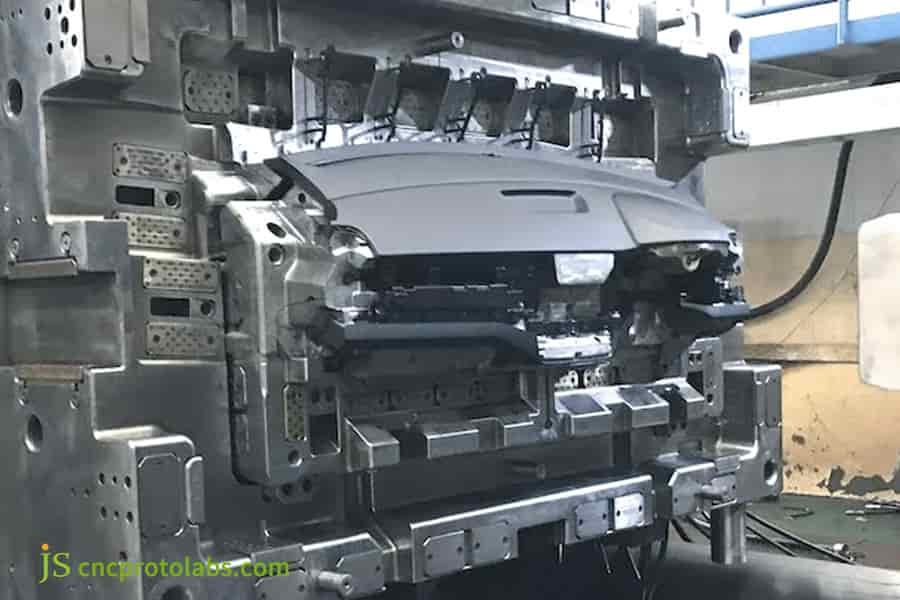
Figure 4: A complex automotive part is shown being ejected from its precision injection mold.
FAQs
Q1:What is the standard time and cost breakdown for automotive injection molds?
Once you provide the 3D drawings and technical parameters, we can prepare a full quote within 24 hours. The major components of mold costs are mainly steel, machine time, hot runner, and trial molding charges. A thorough quotation process without any hidden charges throughout.
Q2:What is the difference in incoming quality control (IQC) between regular injection molding plants and automotive-grade injection molding suppliers?
Basic manufacturers simply check the raw material report. Automotive-grade suppliers will also conduct testing of melt rate, tensile strength, and moisture content, controlling strictly the raw material moisture content to 0.02% to avoid quality problems caused by recycled materials.
Q3:How to address fiber floating and weld lines, the usual problems in the production of fiber-reinforced engineering plastics for injection molding automotive parts?
You can resort to a high-temperature mold temperature processes to encase the surface glass fiber fibers, and at the same time you can increase the holding pressure by 15%-20% at the melt convergence point. This way, the weld lines are broken, the bond line strength is strengthened and Because of this, the defects of fiber floating and weld lines in parts are effectively improved.
Q4:When ordering automotive injection molded parts from abroad, what measures does JS Precision take to assure the intellectual property (IP) security of mold design and product data?
We can agree on an international two-way NDA confidentiality agreement before cooperation. Drawings are kept on a separate encrypted server, and the access for photography and archiving is very strictly controlled. Also, regular data audits are done to fully safeguard our clients' intellectual property and data security.
Q5: Before shipment, what third-party international standard tests are quantitatively specified for automotive injection molded parts?
The end products are subjected to international testing like temperature cycling at both high and low extremes, resistance to impact, abrasion, and UL94 flame retardancy. These must comply with ASTM, ISO, and SAE standards. Every delivery is accompanied by comprehensive test reports and certificates showing the material qualification.
Q6: How long does it generally take for custom automotive injection molding?
Generally, industry standard trial molding duration is 35-45 working days. Though, by exploiting our advanced five-axis equipment, the trial molding period for precision molds (T1) can be reduced to 25-30 working days. Also, after the first round sampling, the dimensional pass rate is typically above 90%.
Q7: What are your minimum order quantities and solutions for low-volume automotive R&D projects?
We do not impose any strict minimum orders. For small-batch automotive R&D projects, we employ the aluminum quick-change mold base solution which drastically cuts down mold investment and can be used for low-cost R&D scenarios like sample verification and road testing.
Q8: If defects are found in mass-produced goods on overseas assembly lines, what is JS Precision's after-sales and claims response mechanism?
First, we offer a 2-hour quick technical response followed by a 24-hour 8D rectification report after-sales service mechanism designed to accurately find the root cause of defects. Then, we will dispatch free-of-charge replacement items and also cover the reworking expenditures to help ease the concerns for overseas procurement.
Summary
In 2026, the core of automotive injection molding procurement will no longer be low-price competition. System management, precision processes, and pre-engineering optimization are key to supply chain stability. Automotive injection molding is a multi-field system engineering project. Relying on a standardized system and pre-analysis, the mass production and procurement risks of custom automotive injection molding and large-part injection molding projects can be effectively avoided.
To mitigate the risks of cross-border procurement and ensure the stability of component mass production, upload your 3D drawings in STEP/IGS/X_T format now and receive free mold flow analysis and precise customized quotes within 24 hours. We use robust process data to safeguard your project's successful implementation.

Disclaimer
The contents of this page are for informational purposes only.JS Precision Services,there are no representations or warranties, express or implied, as to the accuracy, completeness or validity of the information. It should not be inferred that a third-party supplier or manufacturer will provide performance parameters, geometric tolerances, specific design characteristics, material quality and type or workmanship through the JS Precision Network. It's the buyer's responsibility Require parts quotation Identify specific requirements for these sections.Please contact us for more information.
JS Precision Team
JS Precision is an industry-leading company, focus on custom manufacturing solutions. We have over 20 years of experience with over 5,000 customers, and we focus on high precisionCNC machining,Sheet metal manufacturing,3D printing,Injection molding,Metal stamping,and other one-stop manufacturing services.
Our factory is equipped with over 100 state-of-the-art 5-axis machining centers, ISO 9001:2015 certified. We provide fast, efficient and high-quality manufacturing solutions to customers in more than 150 countries around the world. Whether it is small volume production or large-scale customization, we can meet your needs with the fastest delivery within 24 hours. Choose JS Precision this means selection efficiency, quality and professionalism.
To learn more, visit our website:www.cncprotolabs.com
Resource