English



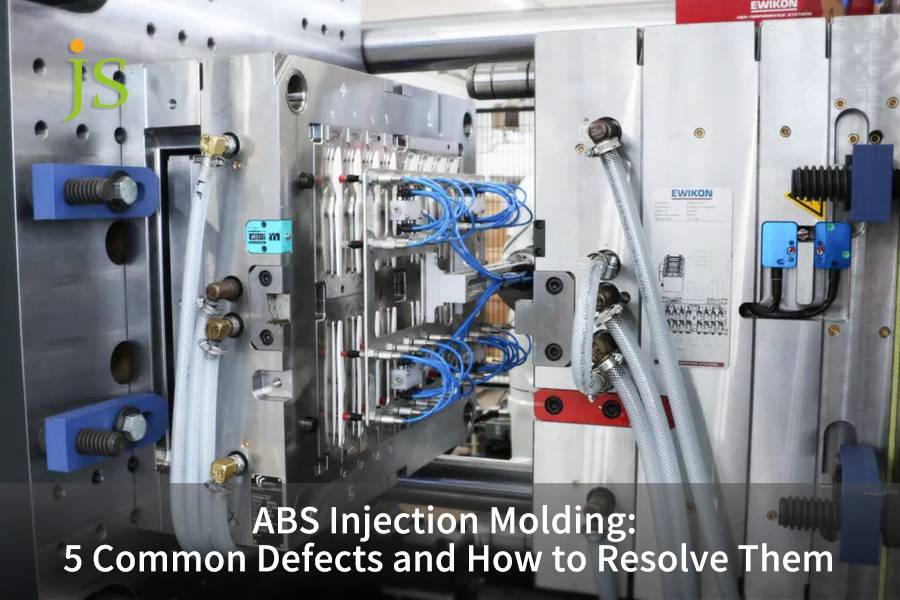

ABS injection molding defects are the primary factor leading to an increase in the scrap rate of ABS injection molded parts - according to statistics, the five common defects can cause a direct scrap rate of 3% -8% on the production line, and combined with downtime and debugging losses, can reach more than 15% of the output value.
This guide illustrates the most common parameter values, vent depth standards, shrinkage measurement data, which are commonly used for ABS injection molding defect troubleshooting. Continue reading to access directly applicable technical parameters for your production line.
Five Major Defects in ABS Injection Molding: A Quick Overview
| Defect Type | Root Cause | Key Resolution Parameter | Prevention Point |
| Splay | Moisture content > 0.1% | Dry at 80-90°C for 2-4h | Dew point monitoring, sealed storage |
| Sink Marks | Insufficient holding pressure / uneven wall | Hold pressure 30→50MPa | Wall ≤ 4mm, gradual transition |
| Warping | Mold temp differential > ±10°C | Balanced mold temp 60-80°C | Symmetrical cooling channel design |
| Burn Marks | Poor venting / melt overheating | Vent depth 0.02-0.03mm | End-of-fill venting, staged injection |
| Short Shots | Insufficient flow / inadequate pressure | Melt temp 216-260°C | Enlarge gate, raise mold temp |
Key Conclusions
- Drying is the first line of defense: To avoid silver streaks and degradation, the moisture content of ABS has to be kept at <0.1% by using a dehumidifying dryer with a dew point of ≤-40℃.
- Balance between holding pressure and cooling: Increasing holding pressure by 10MPa results in the depth of shrinkage marks decreasing by about 0.15mm, warpage is also reduced by 40% when the mold temperature difference is kept within ±10℃.
- The critical line for venting: The standard depth of venting grooves in ABS molds is only 0.02-0.03mm, even a 0.005mm deviation of them will cause scorching or flash. Also, the mold should be cleaned and maintained every 2000-3000 mold cycles.
- Positive correlation between temperature and flow: For a 10℃ rise in melt temperature, the flow length is increased by 8%-12%. In case of short shots, the priority should be given to checking melt temperature and mold temperature.
Why Is JS Precision's Custom ABS Injection Molding Service Trustworthy?
Our team have been deeply involved in ABS injection molding in automotive and medical sectors for 15+ years. Over the years, we have understood that a powerful and effective custom ABS injection molding service addressing ABS injection molding defects should have three important elements: complete control over the moisture content of the material, very precise control of mold venting, and capability of making process parameters quantitatively optimized.
Based on the results from process testing conducted over a period of three months, we figured that in most instances of ABS defects the cause is not a single factor but the systematic disregarding of the three aspects: drying, venting, and heating. This was the primary problem our team encountered during the actual execution.
ISO 294-3:2020 Plastics, Injection molding specimens requirements specify that process conditions in the weld line area and the distance from the gate to the weld line should be considered as controlled parameters.
So, we need Moldflow simulation for each ABS project to make sure the distance from the gate to the insert edge is 3 times the wall thickness.
In an automotive dashboard job, the client had two previous suppliers whose scrap rates were 12% and 9%, respectively. By doing DFM review, we found 3 shrinkage mark risk areas, reduced the reinforcing rib thickness from 4.5mm to 3.2mm, and modified the cooling water circuit so that it had three independent temperature control loops with the temperature difference ≤±3°C. Eventually, the scrap rate was reduced to 1.8%, and overall project costs went down 17%.
Want to assess whether your ABS injection molding project has defect risks? Contact an engineer to obtain the ABS Injection Molding Defect Prevention Self-Inspection Checklist, covering drying parameters, venting standards, and process thresholds.
What Are the Most Common ABS Injection Molding Defects and How Do They Impact Production Quality?
Five most common ABS injection molding defects are streaks, shrinkage marks warpage burn marks, and short shots. These defects result in a 3%-8% scrap rate on the production floor and are the key factors influencing delivery costs and the cycle time.
Three-Dimensional Analysis of Defect Root Causes
- Material Dimension: Streaks and degradation result when moisture content is over 0.1%. Material control can be the key trigger of ABS plastic molding problems.
- Process-related factors: Shrinkage marks result from a lack of holding pressure, short shots are caused by melt temperature/mold temperature variations, scorching occurs if the melt temperature exceeds 270℃.
- Mold-related factors: Warping is a result of temperature changes more than ±10℃, poor venting is the biggest reason for scorching.
Five Major Defect Comparison Table
| Defect | Visual Feature | Primary Root Cause | Scrap Rate Impact |
| Splay | Silver-white radial streaks from gate | Moisture > 0.1% | 1%-2% |
| Sink Marks | Surface depression in thick areas | Insufficient hold pressure | 1%-3% |
| Warping | Bending toward hotter mold side | Temp differential > ±10°C | 1%-2% |
| Burn Marks | Dark brown to black spots at end of fill | Trapped gas diesel effect | 0.5%-1.5% |
| Short Shots | Incomplete fill, missing material | Low melt temp or pressure | 1%-2% |
You should first sort the old defective products in the workshop based on this system, find out what defect types are most common, and then decide how to allocate the resources. In fact, injection molding defect prevention begins with classification.
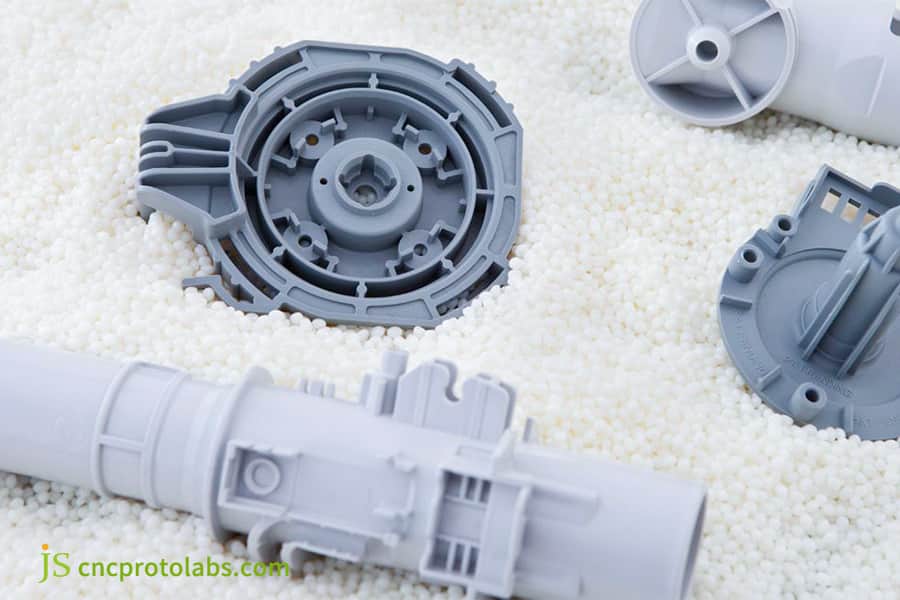
Figure 1: Gray ABS plastic components and pellets on white surface.
Why Does ABS Injection Molding Require Strict Moisture Control to Prevent Splay Defects?
Splay defects are generated when ABS plastic with a moisture level higher than 0.1% is vaporized and expanded inside the barrel. This causes white or light-colored radial streaks to be formed on the surface of the finished article. Drying management in ABS injection molding is the very first step of the prevention chain.
Hydroxyactivity and Drying Standards
- Moisture Absorption Rate: The moisture content of ABS after being exposed to humid air for 24 hours is increased to 0.3%-0.4%. The frequency of splay defects is directly connected to the level of moisture.
- Moisture Content Threshold: At above 0.1%, water vapor explosions cause splay defects and polymer chain hydrolysis is initiated leading to an approximately 40% reduction in impact strength.
- Drying Parameters: For degassing the dryer must be set to a dew point ≤-40℃, the drying temperature should be 80-90℃, and the drying period should be 2-4 hours (4-8 hours in summer, 2-3 hours in winter).
Post-drying Management and Injection Speed Control
- Storage Requirements: Dried materials should be kept in a sealed drying hopper so as not to reabsorb moisture.
- Injection Speed: Very high speed will produce shear heat, it is better to decrease it by 20%-30% and rely on staged injection. The very first step in a ABS molding troubleshooting guide for the silver mark is the measurement of moisture content.
Simply, this explains that about 90% of silver marks are generated by the presence of excessive moisture, measuring moisture content is more efficient than changing process parameters.
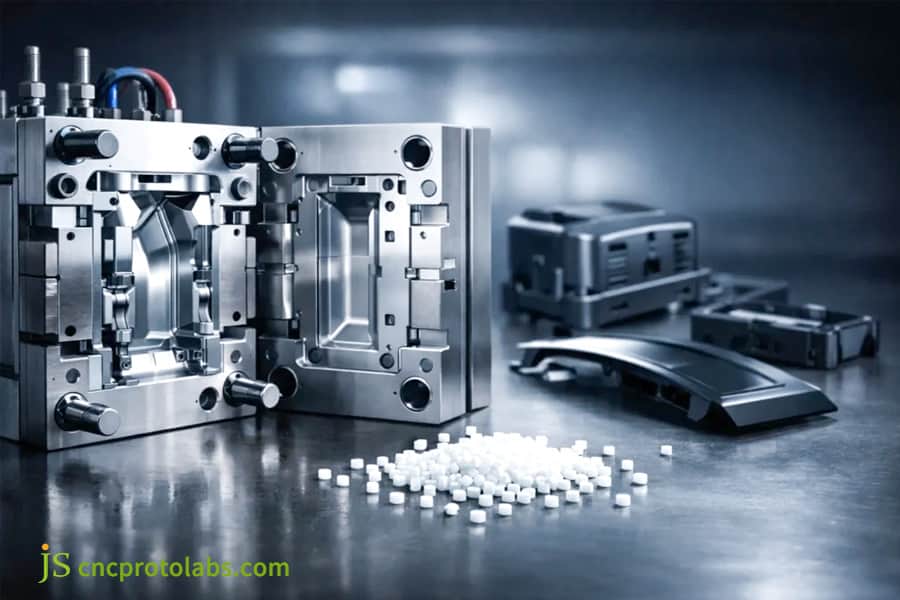
Figure 2: Industrial injection mold with ABS pellets and cooling system.
How Can You Eliminate Sink Marks in ABS Injection Molded Parts Through Process Optimization?
Sink marks are surface depressions due to the shrinkage of volume of 8.822%-10.52%. They occur in the areas with the wall thickness of over 4mm and their depth can be up to 1.146-1.448mm. Sink marks in ABS injection molding defects have three steps solution.
Stage 1: Process Adjustment
- Holding Pressure: Increase from 30MPa to 50MPa, increasing by 5%-10% each time.
- Holding time: If you extend it by 2-5 seconds, it will raise the cooling time by 10%-15%. Keep in mind that each 1-second extension will raise the cycle time by 2%-3%.
- Quantitative effect: Every 10MPa increase in holding pressure leads to about 0.15mm reduction in sink mark depth.
Stage 2: Mold Optimization
- Gate location: Move the gate near the thick-walled area and increase the gate diameter.
- Add overflow channel: Add an overflow channel opposite the sink mark area to absorb excess shrinkage.
Stage 3: DFM Design
- Target wall thickness: 4mm, wall thickness variation 25%.
- Rib thickness: 60% of the main body wall thickness.
- Transition design: Apply a gradual bevel for thickness transitions. Avoid abrupt 90° right angles. DFM reviews in custom ABS injection molding service can identify these risks in advance.
Not sure if your insert retention meets the standard? Contact our engineer to obtain a free retention force design evaluation, simulate tensile forces for your insert and material combination, and provide optimization suggestions.
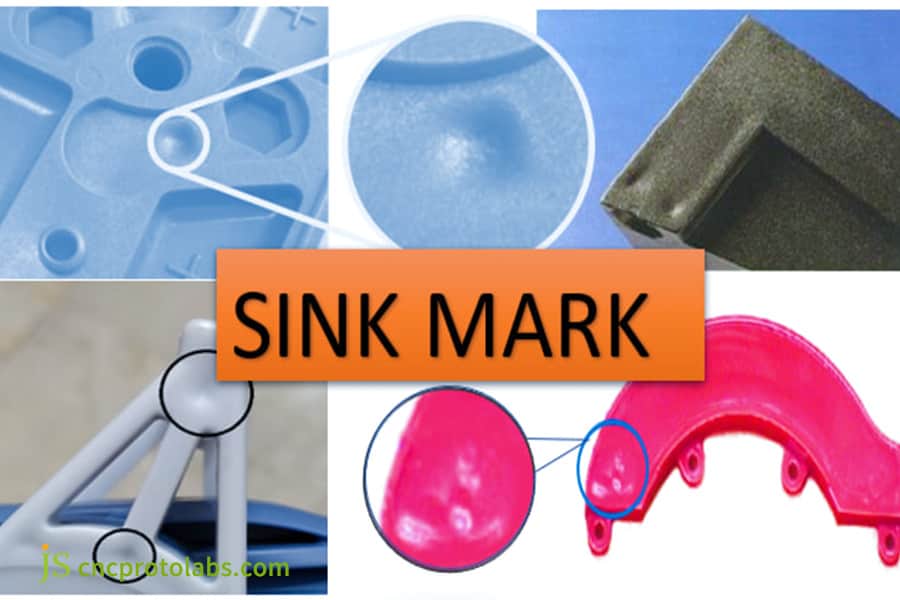
Figure 3: Sink mark diagram showing defects in plastic molded parts.
What Causes Warping in ABS Injection Molding and How Can You Control Mold Temperature Differentials?
Warping is fundamentally the result of too big a difference in temperature between the mold cavity and core surfaces, causing different parts of the product to shrink at different rates. If the temperature difference in the mold is greater than ±10℃, the product will visibly curve towards the hotter side. To control warpage in ABS injection molding the key point is ensuring mold temperature uniformity.
Three Driving Factors and Their Solutions
- Uneven Mold Temperature:
A temperature difference of >10℃ between the cavity and core will lead to warping. The first step in controlling injection molding warpage is designing a symmetrical cooling channel.
A mold temperature controller, which can independently control the temperature, with the target temperature difference being ≤5℃ and a symmetrical cooling channel design, equidistant from the cavity surface at 15-20mm intervals, should be employed. For ABS, a mold temperature of 60-80℃ is recommended, whereas a mold temperature below 40℃ will lead to higher internal stress.
- Uneven Wall Thickness:
Thick-walled parts tend to cool slowly and shrink a lot after cooling, whereas thin walled parts cool quickly and only shrink a little, resulting in internal stress. A DFM optimization in line with the ABS molding troubleshooting guide is strongly recommended to ensure uniform wall thickness, with discrepancies no greater than 25%.
- Insufficient cooling time:
Choosing to eject the part before it has completely cooled down will result in free shrinkage that leads to warping. Increase the cooling time, every additional second prolongs the cycle time by 2%-3%.
Mold Temperature Difference and Warpage Amount Relationship
| Mold Temp Differential | Warpage Amount (100mm part) | Recommendation |
| ±5°C | 0.3mm | Acceptable |
| ±10°C | 0.8mm | Monitor |
| ±15°C | 1.5mm | Correct immediately |
| ±20°C | 2.8mm | Redesign cooling |
Simply put, this means that for every 5°C increase in mold temperature difference, the warpage doubles. Injection molding defect prevention starts with symmetrical cooling channel design.
How Do You Diagnose and Eliminate Burn Marks Caused by the Diesel Effect in ABS Injection Molding?
Burn marks result when air trapped inside is rapidly compressed and its temperature reaches 204-316℃, causing a diesel effect that chars ABS leading to the formation of dark brown or black burns near the flow end. There are two types of burn marks in ABS injection molding defects, with different solutions.
Type 1: Trapped Air Burn (80%)
- Venting Groove Standard: Depth 0.02-0.03mm, Width 3-5mm. 90% of the times burn marks happen due to wrong venting groove depth. For injection pressure 120MPa, decrease depth by 0.005-0.01mm to avoid flash.
ISO 20457:2018 Plastics, Tolerances and acceptance of injection molded parts specifies that: The linear dimensional tolerances of precision injection molded parts shall be coordinated with the limits of the dimensional range, and the acceptance criteria shall include the parting line interference fit.
So, to comply with this standard, we tightly control the venting channel depths to a narrow range of 0.02-0.03mm - even a 0.005mm variation could cause the defects like scorching or flashing, so a schedule of cleaning and maintenance after every 2000-3000 mold cycles should be set in place for mass production.
- Mold Temperature Effect: When the mold temperature is ≥70℃, opt for shallower venting openings, but go for a slightly deeper vent opening when the mold temperature is ≤50℃.
- Cleaning and Maintenance: ABS volatiles can cause clogging in venting channels, so clean them after every 2000-3000 molding cycles. In the ABS molding troubleshooting guide, the problem resolution sequence of molding defect of burn mark is: clean the venting channels first, then adjust the injection molding speed.
- Staged Injection: Lower the injection speed in the final stage to 20%-30% which corresponds to overall injection speed decline by 10%-20%.
- Vacuum Venting: Its insertion in precision molds will boost efficiency by >50%.
Type 2: Material Overheating and Degradation
- Feature: Scorching near the gate.
- Cause: Melt temperature > 270℃ or the material is kept molten for too long.
- Fix: Lower the melt temperature to 230-250℃ and keep the machine clean.
Recommended Vent Depth Reference Table for Different Materials
| Material | Recommended Vent Depth | Notes |
| ABS | 0.020-0.030mm | Standard range |
| PC/ABS | 0.015-0.025mm | Higher viscosity, shallower vent |
| PP | 0.010-0.020mm | Low viscosity, prevent flash |
| PA66 | 0.008-0.015mm | Very low viscosity, tight control |
What Process Parameters Resolve Short Shots in ABS Injection Molding?
When the molten material hardens before the mold cavity is filled, short shots happen and so the product is deficient in material. Short shot problems in ABS injection molding should be solved in the least time possible.
Troubleshooting Steps Based on Priority
- Melt Temperature: The suitable melt temperature for ABS ranges from 216 to 260℃, and the nozzle temperature from 230 to 250℃. Melt temperature is the first thing to instrument when checking back up shots. Increasing the temperature above 270℃ results in the thermal degradation of the polymer. With every 10℃ drop in melt temperature, the flow length is reduced by 8%-12%.
- Injection Pressure and Speed: The injection pressure range is 70-140 MPa. It is preferable to use the higher pressure and slower speed rather than the lower pressure and faster speed. Staged injection: 80%-90% fast filling + 10%-20% slow holding pressure.
- Mold Temperature: When the mold temperature is elevated from 40℃ to 60-80℃, the flow length increases by 5%-8% for every 10℃ rise. In fact, the parameter of mold temperature is quite often overlooked in ABS material processing service.
- Gate and Runner Design: Gate diameter must be at least 70% of the product wall thickness, circular runner diameter 5mm.
If these measures still do not work, then changing to a grade of ABS with a higher melt index should be considered. The ABS molding troubleshooting guide puts each problem-solving up in this order to help one avoid blind adjustments.
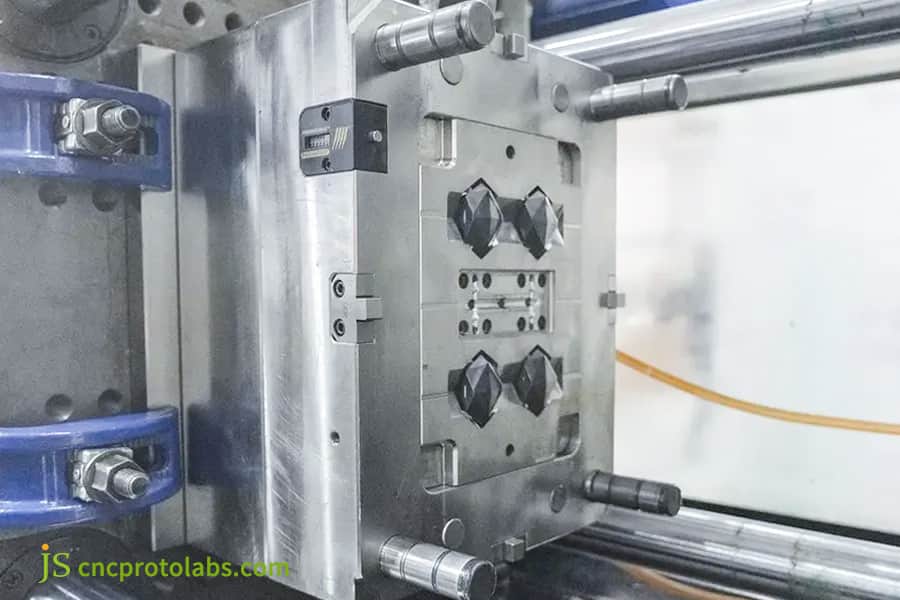
Figure 4: Injection mold with cooling pipes and mechanical components.
How Does JS Precision Solve Complex ABS Injection Molding Challenges Through Custom Manufacturing Solutions?
Through custom ABS injection molding services, JS Precision has handled over 300 ABS injection molding projects that mainly serve the sectors of automotive interiors, medical housings, and consumer electronics. Depth of engineering of the custom ABS injection molding service can be demonstrated through its capability of addressing the issues on a system level.
Client Challenges:
- The product size is 42018065mm, the thinnest point is 1.8mm, and the thickest point is 6.2mm. Surface requirement: Grade A with no visual defects such as shrinkage marks, silver streaks, or burn marks.
- The scrap rates for the client's previous two suppliers were 12% and 9% respectively.
- Required Delivery Time: 4 weeks (including mold manufacturing + trial molding + mass production).
JS Precision Solution
- Phase One: DFM Review (Week 1)
Moldflow revealed 3 areas with shrinkage mark risks (wall thickness over 5mm) and 2 areas with potential air trapping. More than 90% of the potential defects can be identified before mold cutting by doing a injection molding DFM review.
The reinforcing rib thickness was changed from 4.5mm to 3.2mm. The cooling water circuit was altered from a single loop to a three-loop system with independent temperature control, a temperature difference of ≤±3°C was maintained.
- Phase Two: Mold Manufacturing and Trial Molding (Weeks 2-3)
Venting grooves were made 0.025mm (intermediate value of injection pressure 110MPa). Vacuum venting was implemented which increased the efficiency by 50%. Upon the first trial molding, some slight silver streaks were seen near the gate. The moisture content was measured to be 0.12%. Drying time was extended from 3h to 4.5h, which brought down the moisture content to 0.04%.
- Phase Three: Process Improvement (Week 3)
Holding pressure 40MPa→55MPa (incremented in 3 stages, +5MPa each time), melt temperature 240℃, mold temperature 70℃, staged injection 85% fast fill + 15% slow holding pressure.
Lessons Learned from Failures:
The venting channels were partially blocked by the carbon compounds of ABS volatile, resulting in slight scorching at the end of the second trial mold. Cleaning the channels solved the problem. During the mass production of ABS material processing service, the venting channels have to be cleaned every 2000-3000 mold cycles, otherwise, the scorch marks will appear again without any warning.
Final Results:
The scrap rate went down from the customer's previous 12% to 1.8%, the one-piece cycle time was 38 seconds (customer expected 45 seconds), the first batch of 10,000 parts passed PPAP at the first attempt, and the overall project cost was 17% less than the customer's budget (thanks to reducing mold changes through DFM optimization).
The essence of high quality ABS molding service is not just resolving issues once and for all, but creating a reproducible engineering approach.
Your ABS project may also have similar areas for optimization. Upload 3D drawings (STEP/IGS) and receive a free DFM assessment report within 48 hours, including defect risk prediction and process recommendations.
Why Choose JS Precision as Your Partner for High Quality ABS Molding Service?
Picking a premium-quality ABS injection molding service provider is basically choosing a technical partner who can always keep the scrap rate low and can quickly react to production anomalies. The delivery norm for a high quality ABS molding service is a scrap rate of less than 2%.
Main advantages that differentiate JS Precision from the rest in ABS Injection Molding:
- Technical depth: More than 300 ABS projects have been accumulated in the data bank, over 200 records of defect root cause analyses, and a mold flow analysis team working internally (not outsourced). The engineering prowess of our custom ABS injection molding service is based on project experience.
- Process control: A cavity pressure sensor is installed on every injection molding machine with real-time mold temperature monitoring. SPC monitoring of critical dimensions, CPk1.33. Actual moisture content measurement for each batch and incoming material MI inspection.
- Rapid response: Quality issues will be resolved in 2 hours, common defects adjustment plans will be delivered in 24 hours, mold repairs will be completed in 48 hours.
- Quality System: ISO 9001:2015 certified, with raw material batch traceability, process parameters, test data, and shipping records. Quality assurance for ABS material processing service is by way of systematic management.
Simply stated, this means that each stage of your project, from drawings to mass production, is aided by data and engineering guarantees.
Take Action Now: Upload your 3D drawings to receive a free DFM report and a customized ABS injection molding service quote. Make your next ABS project more controllable.
FAQs
Q1: What is the highest moisture level permitted for ABS injection molding?
The moisture content of ABS before injection molding should be <0.1%. For PC/ABS alloy, it's <0.02%. The moisture content can be measured by a moisture analyzer, drying time alone should not be trusted. Too much moisture will result in silver streaks, bubbles, and impact strength will be lowered by about 40%.
Q2: How can I tell splay marks and flow lines apart on ABS pieces?
Splay marks are silvery-white radial bands extending from the gate and are caused by moisture vaporization. Flow lines are wavy or ring-like lines and result from a very low temperature at the melt front or the wrong injection speed. Splay marks can be remedied by better drying whereas flow lines can be fixed by raising the melt temperature, the mold temperature or changing the injection speed.
Q3: Is it possible to eradicate sink marks altogether without modifying the part design?
Sink marks can be greatly diminished, yet cannot be totally eliminated, in particular, when the wall thickness is >5mm. Sink marks have been found reducing to depths below 0.3mm from 1.4mm by increasing holding pressure to 50-60MPa, prolonging holding time, and also enlarging the gate. Homogenizing the wall thickness using DFM is what will solve this problem completely with a target of 4mm.
Q4: What is the perfect vent depth for ABS injection molds and why is it important?
The usual depth for ABS venting channels is 0.02-0.03mm and the width is 3-5mm. If the depth is less than 0.02mm, that will cause scorch marks, if it's more than 0.03mm, flash will be generated. Injection pressure 120MPa lowers the depth by 0.005-0.01mm.
Q5: What should be the melt and mold temperature range for ABS injection molding?
Melt temperature 216-260℃, upper limit 270℃. Mold temperature 60-80℃. Mold temperature <40℃ results in a rise of internal stress and warping, mold temperature >90℃ causes the molding cycle to be longer and also the demolding to be more difficult.
Q6: How does JS Precision maintain quality consistently in high-volume ABS injection molding production?
Three major systems are responsible for quality stability in mass production. The production process is performed with the help of cavity pressure and mold temperature real-time monitoring, dimensional control by SPC request of CPk1.33, raw material moisture content and MI index batch testing, mold cleaning and maintenance intervals. Upload your drawings for customized process solutions, precise quotations, and mass production optimization plans.
Q7: What ranges does custom ABS injection molding pricing usually fall into? What Mainly influences the cost?
Here are the top five factors playing a role in the price:
- Mold charge: basic single-cavity molds can be less than $5 000 while very complex multi-cavity hot runner molds can be above $50,000.
- Material cost: Pure ABS is approx. $2-4 per kg. flame retardant and/or reinforced types will be more expensive.
- Single item cycle affects production capacity and unit cost.
- Secondary operations such as painting or plating.
- Quantity requirement: Unit prices difference between 10,000 and 100,000 quantity can be 30% - 50%.
Q8: Usually how long does it take for custom ABS injection molding job with JS Precision?
Typical production time: Mold making 4-6 weeks, test running + method development 1-2 weeks, initial full production 2-3 weeks. Fast-track jobs finish in 3-4 weeks. A Gantt chart is made available, reporting weekly on proceeding milestones.
Summary
Five defects in ABS injection molding are most commonly seen -silver streaks, shrinkage marks warpage burn marks, and short shots. These can all be traced to only three main things: the moisture content of the material, the settings of the process parameters, and the condition of the mold. If drying parameters are correctly controlled so that the moisture content is reduced to less than 0.1% by weight, holding pressure can be optimized to 50MPa, mold temperature differences can be strictly managed within ±10℃, and venting grooves can be precisely machined to 0.02mm to 0.03mm, the scrap rate can be brought down from industry average of 5% to 10% to below 2%.
Upload 3D drawings (STEP/IGS/X_T format), and JS Precision will send you a free DFM assessment report (defect risk prediction and process suggestions) within 48 hours and a preliminary quote and project timeline within 72 hours. Get your next ABS injection molding project running on a zero-defect track from the design stage.

Disclaimer
The contents of this page are for informational purposes only. For JS Precision Services, there are no representations or warranties, express or implied, as to the accuracy, completeness, or validity of the information. It is the buyer's responsibility to identify specific technical requirements and request a formal parts quotation. Please contact us for more information.
JS Precision Team
Custom manufacturing solutions. With over 15 years of experience serving more than 1,000 customers, we specialize in high-precision CNC machining, sheet metal fabrication, 3D printing, injection molding, and metal stamping. Having successfully delivered over 300,000 precision parts, we maintain a 99.2% on-time delivery rate across all custom projects.
Our facility is equipped with over 100 state-of-the-art 5-axis machining centers and is ISO 9001:2015 certified. We deliver fast, efficient, and high-quality manufacturing solutions to B2B clients across 150 countries. Whether you require low-volume prototyping or large-scale customization, we support your project with lead times as short as 24 hours. Choose JS Precision for unparalleled efficiency, quality, and professionalism.
To learn more or submit your RFQ, visit our website: www.cncprotolabs.com
Resource