English



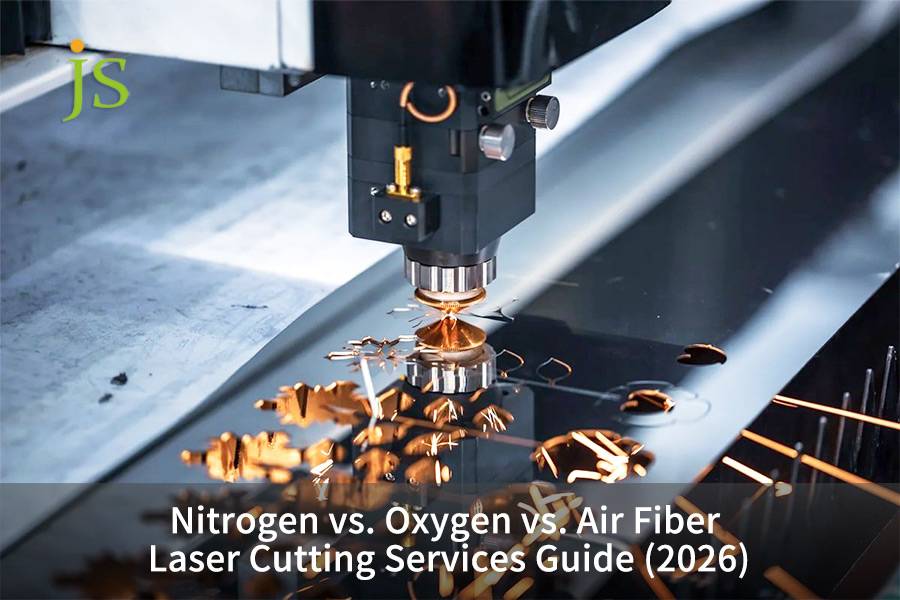

In choosing a fiber laser cutting service essentially you have to get the right assist gas that goes with the material you're cutting, its thickness, and the machining that you want to do after. Having it right prevents additional smoothing, keeps your metal free from corrosion, and may even decrease your unit part cost up to 35%.
This guide will compare the thermochemical properties, edge quality, cutting speed, and total cost of ownership of these three gases.
Quick Overview and Key Conclusions on Auxiliary Gas Selection
|
Gas Type |
Best Materials & Thickness |
Edge Quality & Roughness |
Speed & Efficiency |
Cost Impact & Post‑Processing |
|---|---|---|---|---|
|
Nitrogen (N₂) |
Stainless steel, Al, brass (0.5–12 mm) |
Silver‑bright, no oxide, Ra < 3.2 μm, weld‑ready |
Very high on thin sheets; moderate on thick |
Higher gas cost; eliminates grinding before painting |
|
Oxygen (O₂) |
Mild/carbon steel, thick plate (3–25 mm+) |
Dark oxide layer, smooth kerf, slight taper |
Fast penetration via exothermic reaction |
Low gas cost (<5bar); needs acid pickling or grinding |
|
Compressed Air |
Carbon steel, galvanized (0.5-4 mm) |
Light blue‑brown edge, minor burr |
Very high on thin metals |
Lowest operating cost; requires ISO 8573‑1 Class 1 filtration |
Data sources: JS Precision 2025 process capability database, Linde Gas Handbook 2024.
Key Takeaways
- Cutting metals without oxidation:
Stainless steel and aluminum alloys can be cut successfully using nitrogen only as the cutting medium. Nitrogen-based cutting is ideal since it does not leave an oxidized surface and no grinding is required besides it assures a total coating and welding adhesion.
- Thick carbon plates solution:
When dealing with carbon steel plates over 6mm thick, oxygen can be considered as the primary choice of gas, since it cuts very quickly through the heat released and still remains the cheapest gas option.
- Gas Saving and Productivity:
An ISO 8573-1 Class 1 dryer and filtration can allow a thin metal sheet to be cut with air compressor and potentially save you gas cost by 60%.
- Production Cost Consideration:
Selecting a cutting gas should also take into account the possible other expenditures it may involve e.g. Grinding and pickling. Although pure nitrogen is more costly per unit, it may actually prove cheaper overall for manufacturing the part.
What are the Thermodynamic and Chemical Interactions of Laser Cutting Assisted Gases in Modern Processing?
The laser cutting assist gas serves several purposes. It cools the focusing optics, removes molten slag from the cut area, either gives fuel for a hot reaction (Oxygen) or covers the molten pool with a protective layer to prevent atmospheric contamination (Nitrogen). It will be the cutting gas that will be a direct factor of the surface quality and oxide formation.
Contrast of Different Reaction Types in the Molten Pool
- Oxygen (Active Gas): Reacting exothermically at high temperatures with iron, it releases additional heat that reduces the laser power required, while depositing a thin 10-30 μm hard FeO/Fe₃O₄ layer.
- Nitrogen (Inert Gas): Blows the molten metal away by physical force when the pressure is very high (15-25 bar) at the same time it prevents the surrounding oxygen from contacting the metal and preserves the initial color as well as the corrosion resistance properties of the metal matrix.
- Air Cutting Mechanism: Air cutting uses dry compressed air (about 78% nitrogen, 21% oxygen). The oxygen triggers a mild exothermic reaction that helps remove slag, while the nitrogen limits oxidation — so edges stay relatively clean, without the heavy dross of pure-oxygen cutting or the cost of pure nitrogen.
Process Control and Parameters
High professional fiber laser cutting service companies make use of closed-loop control gas proportional valves with dynamic gas pressure ramping technology for surface roughness control (Ra 1.6-6.3μm), preventing burn-through, and avoiding pore formation.
The ISO 11554:2025 standard puts more focus on the laser processing system needing gas supply with pressure and purity monitoring capabilities to ensure that the product is of consistent quality.
JS Precision's fiber laser cutting services thoroughly meet these standards. The gas pressure and gas purity sensors are set up at each laser cutting work station and fed into a central monitoring system. Through each batch run the surface quality is consistently manageable and stable.
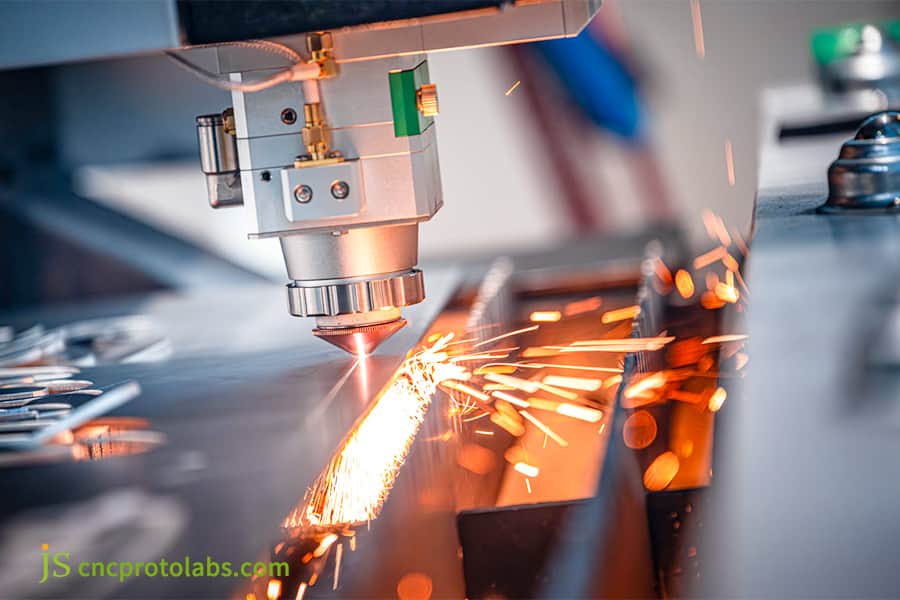
Figure 1: Fiber laser cutting machine processing metal sheet with bright sparks.
When Should You Choose Nitrogen vs Oxygen Laser Cutting for High-Precision Metal Parts?
Decide to use nitrogen vs oxygen laser cutting based on the material's type and thickness: a nitrogen-assisted laser will leave a clean cut with an oxide-free edge that's a great fit for stainless steel and aluminum, an oxygen-assisted laser will provide high speed cutting through thick carbon steel (> 6mm) using exothermic burning.
Material Suitability Classification
- Stainless steel (304/316L), aluminum alloy (6061/5052), copper alloy: Nitrogen should be used to prevent the formation of oxide layers which can degrade the corrosion resistance and welding strength of the final product. This nitrogen passivation mechanism could be the deciding moment in the choice between nitrogen vs oxygen laser cutting.
- Carbon steel (Q235/Q355): Choose as the steel thickness, 1-6mm plates can be cut with nitrogen high-pressure which gives up to 300% speed benefit with absolutely no oxide surface. For instance the final surface can be coated with electroplating, powder paint after cutting. Thick carbon steel of 8-25mm is cut with low-pressure oxygen (0.5-2.5 bar) for speed and cost savings of gas consumption.
Actual Quality Data
JS Precision internal test performed in Q2 2025 showed that after 500 hours of salt spray test, the nitrogen-cut sample showed only a 1.8% peeling rate (good adhesion); however, oxygen-coated edges showed a 14.2% peeling rate, mainly because of the oxide layer formed during cutting.
Want oxide-free edges on parts you are cutting? JS Precision offers a free gas selection evaluation at the request of the customer. Also, we can customize nitrogen vs Oxygen laser cutting solution for you and deliver it to you the very next day.
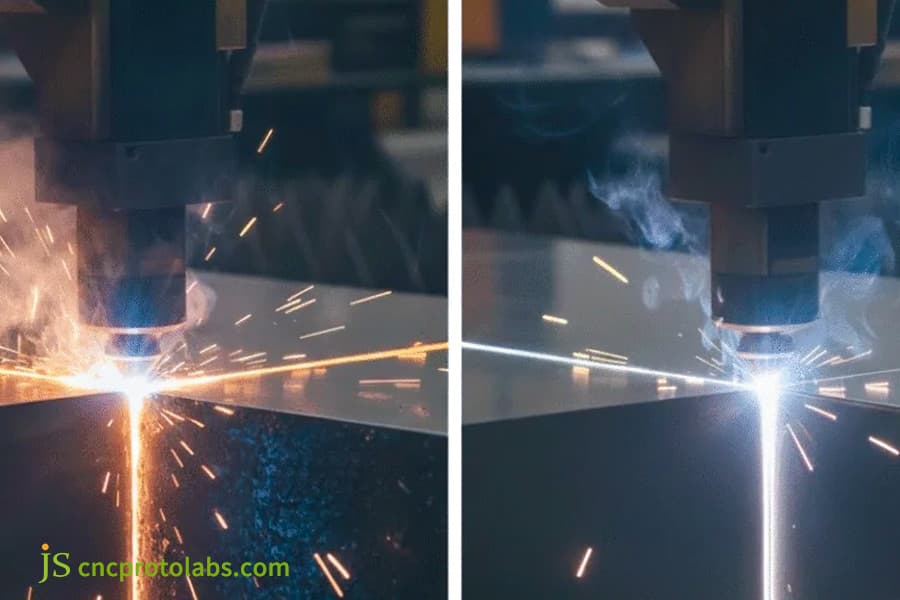
Figure 2: Collage of various high-precision laser cut metal parts and components.
How Does Air Assist Laser Cutting Lower Per-Part Costs Without Sacrificing Edge Quality?
Air assist laser cutting can decrease the cost of running a plant by as much as 70% compared to high-purity nitrogen. It uses filtered and compressed ambient air mostly as the gas source. This gives sufficient pressure for cutting thin carbon and stainless steel sheets, with only a very small amount of burr formed on the edges.
Air-Assisted Processing Advantages
- Cheaper Processing:
78% of the material removal is done by nitrogen and 21% by weakening combustion with oxygen which enables 1.3mm galvanized sheets and carbon steels to be cut 30-50% faster. Besides, air consumption is just 30-50% of high-purity nitrogen usage, which makes air cost approximately 70% cheaper compared to nitrogen one of the reasons for the economic benefit of air assist laser cutting.
- Quality Compressed Air Supply:
Equipment strictly adheres to requirements on the quality of the compressed air source, namely ISO 8573-1 Grade 1:2:1 by having four-high efficiency filters, a refrigerant dryer and a desiccant dryer, all of which control the remaining oil content to less than 0.01 mg/m³ (dry filter only) and the pressure dew point at -40℃. When dew point is too high the result is evaporation at high temperatures and lens shattering (lens replacement costs over $500) and chipping.
Air Cutting Gas Source Quality Parameter Table
The ISO 8573-1 standard stipulates that the total oil content of Class 1 compressed air shall not exceed 0.01 mg/m³, the pressure dew point shall reach -70℃, and the solid particle concentration shall not exceed 400 per cubic meter within the range of 0.5-1 μm.
The air cutting system of JS Precision's sheet metal laser cutting service is designed strictly in accordance with the ISO 8573-1 Class 1:2:1 standard.
|
Parameter |
Minimum Requirement |
JS Precision Standard |
Failure Consequence |
|---|---|---|---|
|
Oil Residue |
< 0.01 mg/m³ |
< 0.005 mg/m³ |
Lens cracking > $500 each |
|
Pressure Dew Point |
≤ -40°C |
≤ -45°C |
Slag adhesion, poor edge |
|
Particulate |
ISO Class 1 |
ISO Class 1 |
Nozzle blockage |
|
Moisture Content |
< 0.1 mg/m³ |
< 0.05 mg/m³ |
Oxide formation |
Data source: ISO 8573-1:2021 compressed air quality standards. JS Precision 2026 air system specifications.
JS Precision Service Implementation
JS Precision's sheet metal laser cutting service is furnished with a 16bar smart high-pressure air supply system that slashes the manufacturing cost per unit. With the support of our experience we found out that, after switching from the nitrogen cutting gas to cutting air for 2mm galvanized steel, the customer's gas cost per unit dropped by about 0.18 dollars and the edge burr height was reduced to below 0.05mm meaning that no secondary processes were required.
Looking to determine if you can air-cut your thin sheet metal parts? Send us your designs, and JS Precision will prepare a free comparison laser cut air-assisted cost report with results ready in two business days.
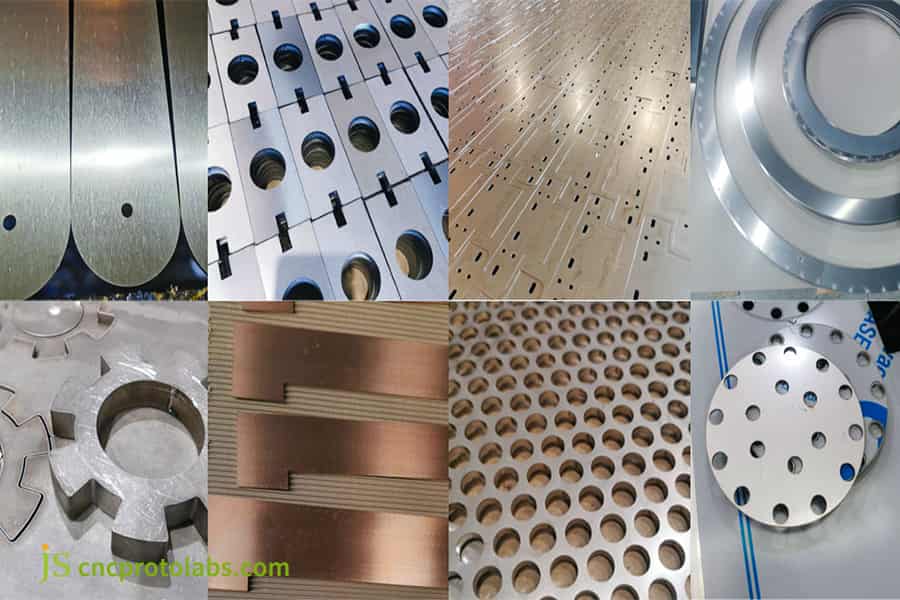
Figure 3: Air assist laser cutting machine processing metal parts to lower costs.
Why Is High-Purity Nitrogen Laser Cutting Stainless Steel Critical for Downstream Processing?
Nitrogen laser cutting stainless steel avoids the burning-off of chromia as well as oxidation of the surface, allowing the passive chromium oxide film (Cr₂O₃) to stay intact. This oxide-free property is essential in the stringent areas of aerospace, medical, and food-grade sanitation.
Purity and Corrosion Mechanism
- Purity Requirements: The purity of nitrogen to be used with stainless steel is 99.999% (5N grade), because a drop in purity to 99.5% would cause the cut surface to turn yellowish-brown by developing oxide spots, leading to damage not only of the chromium passivation film (Cr₂O₃) but also of the resistance to corrosion.
- Energy Dispersive X-ray Spectroscopy (EDS) data: 99.999% high-purity nitrogen cuts 18.2%, but 99.5% nitrogen drops it to the level of 15.1%. Defects of microporosity and incomplete fusion caused by the oxide layer on the cutting surface will double the amount of NDT rework (non-destructive testing).
Quality Assurance:
JS Precision's laser cutting service has a Dewar flask which serves to supply high-pressure liquid nitrogen directly for medical and food-grade parts manufacturing in quality assurance. We observed a major success in the MED-LASER-2026-004 project where the medical equipment customer was able to reduce the welding porosity from 12% to 0% and achieve 100% X-ray inspection pass rate through switching over to nitrogen of a purity grade of 99.999%.
Have your nitrogen laser cutting stainless steel parts suffered any welding issues due to oxidation? See JS Precision's medical-grade case studies to find out how high-quality nitrogen can resolve issues of porosity.
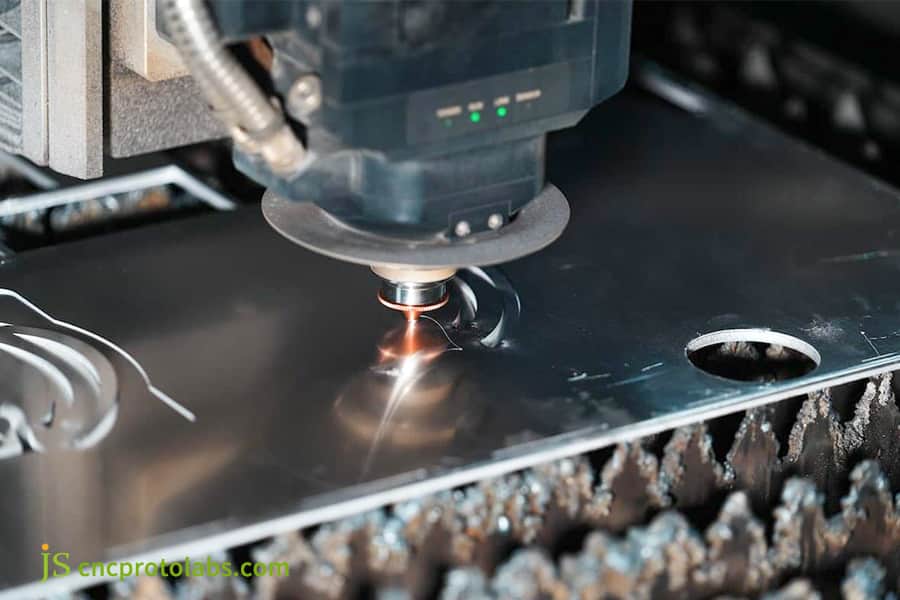
Figure 4: High-purity nitrogen laser cutting stainless steel for downstream processing.
Nitrogen vs. Oxygen vs. Air: What Is the Cut Quality, Speed, and Cost Matrix for Fiber Lasers?
Different laser cutting service gases are selected by matching gas consumption costs with cutting speed and labor involved in post processing. Nitrogen gives the best results for edge finish, Oxygen is the best for thick materials, and air is the most suitable for high-speed thin sheet economy.
Total Cost of Ownership (TCO) Calculation
The cost perspective of laser cutting service is crucial. Weighing up unit prices (oxygen about $0.8/m³, high-purity nitrogen about $2.5/m³, air about $0.15/m³ electricity cost) with processing efficiency, nitrogen is more expensive than oxygen to cut 3mm 304 stainless and 6mm carbon steel with a fiber 10kW laser, but it avoids the need of secondary, manual grinding, chemical pickling and polishing (which may save $1.2-$2.5 in labor costs per piece), and overall manufacturing cost per piece reduces by 18%.
Nitrogen vs. Oxygen vs. Air: Core Performance Comparison Table
|
Comparison Dimension |
Nitrogen (N₂) |
Oxygen (O₂) |
Compressed Air |
|---|---|---|---|
|
Best Material |
Stainless, Al, Cu |
Carbon steel (thick) |
Thin carbon/galvanized |
|
Edge Quality |
Silver bright, no oxide |
Dark oxide layer |
Light blue, slight burr |
|
Pressure Range |
15-25 bar |
0.5-2.5 bar |
12-20 bar |
|
Gas Cost |
Highest |
Lowest |
Near-zero |
|
Post-Processing |
None (weld-ready) |
Grinding/pickling needed |
Minimal deburring |
Data sources: JS Precision 2025 process capability tests. Linde Gas price list 2025.
JS Precision's custom laser cutting service helps customers minimize their project costs with accurate calculations and gas adjustment strategies. In other words, the gas-selection decision can't rely merely on unit price; you also have to consider edge quality, material thickness, and post-processing as a whole.
How Did JS Precision Eliminate Weld Porosity and Cut Costs by 35% on Stainless Steel Enclosures?
JS Precision's custom laser cutting service helped a medical equipment manufacturer overcome their severe weld porosity problem by changing from low-purity shop nitrogen to 99.999% liquid nitrogen, at the same time optimizing nozzle geometry for the best laser cutting result, thereby lowering the total cost of part processing by around a third.
Customer Problems:
Medical equipment customer produced 316L stainless steel control cabinet housings (3mm thick) and the original supplier used 99.5% piped nitrogen with sheet metal laser cutting service for their control cabinet housings but the cut surface slightly oxidized. In their following step they used automated TIG welding which had a weld porosity of 12%, X-ray testing had a rejection rate of 15%, and the powder coating showed flaking at the edges after 60 days.
JS Precision Solution:
- Gas Improvement: The new installation has a 99.999% pure liquid nitrogen direct supply system. The gas is controlled at 22 bar pressure.
- Nozzle & Focus Optimization: The dual-nozzle extrusion flow field was chosen with a width of 2.0mm for the double-nozzle. The laser focus was decreased to -1.5mm to ensure complete slag removal, thereby achieving a surface roughness level down to Ra 1.8μm.
- Gas Blending Scheme: To cut along non-welded contact seams, dry high-pressure air at 18 bar was employed which not only ensured a faster cutting rate but also reduced the time of cutting by 25%.
Lessons Learned:
Initially, when the power was increased from 6kW to 12kW, the heat-affected zone (HAZ) was increased and the thin plate was deformed due to overheating, but it was clarified that the problem was because of gas purity and flow dynamics, which is not a power issue. This outcome is an indication of a warning for any fiber laser cutting service project.
Final Results:
Weld porosity was brought down to 0%, with x-ray inspections having a 100% acceptance, also eliminated were secondary grinding and pickling, due to the entire processing was reduced at the rate of 35% per piece.
Are your fiber laser cutting service projects struggling with issues like weld porosity or cost? Reach out to the JS Precision engineering team for tailored gas optimization solutions and free sample testing, helping sheet metal laser cutting services save you over 30% costs.
Why Partner with JS Precision for Your High-Precision Laser Cutting Service Requirements?
Partnering with JS Precision can get you access to high-power fiber lasers, an ISO 9001:2015 gas purity monitoring system, and specially designed assist gas strategies that cut part costs and maximize edge performance simultaneously.
Equipment and Qualifications:
JS Precision has 12kW-30kW fiber laser-cutting machines. German Precitec cutting heads and closed-loop gas mixing systems, certified through ISO 9001:2015 and IATF 16949, online, real-time gas pressure and purity monitoring (Purity Sensor) — machines are equipped with these features. These hardware factors will be the main ones for a laser cutting service provider selection.
Service Pledge:
When sending JS Precision STEP/IGES drawings, we will deliver DFM (Design for Assembly and Manufacturability) analysis together with a detailed quotation in just 24 hours. We will suggest optimum gas mixtures for following processes (welding electrophoresis painting), and assist you throughout your laser-cutting customization from one-off samples to large scale productions. JS Precision's fiber laser-cutting solutions cover the full material-thickness range while guaranteeing quality and on-time delivery.
FAQs
Q1: What is the main difference between Nitrogen and Oxygen in fiber laser cutting service?
In fiber laser cutting service, using a jet of Oxygen (being a kind of active gas) supports the burning of carbon steel through exothermic reaction, so that we are able to do it faster just at low pressure. But, Nitrogen (an inert gas) removes the debris physically through high pressure without causing any oxidation. Stainless steel gets a good mirror like surface.
Q2: Can compressed air fully replace nitrogen laser cutting stainless steel?
No. There is 21% oxygen in air forming a light blue oxide film on the edge. Only for internal parts or thin steel sheets the use of air is acceptable whereas the use for medical purposes or food industry of stainless steels needs high-grade nitrogen with a purity grade of 99.999% to ensure no oxidation.
Q3: How does JS Precision ensure assist gas purity during bulk production?
JS Precision installs online purity sensors and dew point monitors on all their laser cutting machines. Liquid nitrogen supply line directly to the cutting stations is used to achieve purity ≥99.999%. The air compression system complies with ISO 8573-1 Class 1:2:1 standard, which makes cross-contamination of batches impossible.
Q4: What gas pressure is required for precision air-assisted laser cutting?
The pressure is usually from a span that is 12 to 20 bar given the thickness of the sheet and type of material. High pressure ensures that sufficient amount of kinetic energy is obtained to remove slag, prevent formation of burrs at the bottom edge, and also sustain efficiency of fast cutting when it is thin material.
Q5: How does assist gas selection affect the quote and pricing for a custom laser cutting service?
Oxygen gas is the most affordable, whereas a pure nitrogen will cause the hourly rate to go up by 15%-30% the post-processing steps will be omitted that would normally add to the cost per piece. You can get a quotation if you upload your drawings and JS Precision will provide you a line item list of charges.
Q6: Why does oxygen laser cutting leave a dark oxide edge on carbon steel?
During oxalic reaction in oxygen laser cutting of carbon steel, the cutting temperature rises above 1500℃ resulting in the formation of a black oxide layer of Fe₃O₄/FeO. It is really hard and must be first removed through grinding or pickling in acid before one can do any coating, otherwise, the painting will have peeling problems.
Q7: What thickness range of aluminum alloy is the best choice for high-pressure nitrogen laser cutting?
Aluminum alloys having a thickness of 0.5-12mm are best suited for high-pressure nitrogen laser cutting. From using nitrogen high-temperature oxidation and slag formation can be avoided besides that, the cut surface is very smooth and silvery-white, it also decreases the chance of porosity in TIG/MIG welding.
Q8: Does the laser cutting assist gas influence the sheet metal parts heat-affected zone (HAZ)?
The effect is noticeable. On the one hand, high-pressure nitrogen cooling is so fast that the heat-affected zone (HAZ) is <0.1mm on the other oxygen through exothermic reactions, injects additional heat, expanding HAZ and easily leading to thermal deformation of thin sheets.
Summary
Picking the right assist gas affects not only the quality of the cut but also the total cost of production. For thick carbon steel plates, oxygen is the best option, for stainless steel, nitrogen is ideal since it doesn't leave oxides on the surface and for thin plates, compressed air is most cost-effective. It's crucial that the different steps post-processing work in harmony with each other if one is to achieve the minimum per-piece manufacturing cost.
Worried about optimizing your metalworking processes and getting rid of post-processing issues? Contact JS Precision now for a chat with our team of senior manufacturing engineers about exactly what you require!Just send us your CAD models (any format:STEP IGES DXF), and JS Precision will run DFM analysis, suggest the gases, and give you a proper quotation in just 24 hours. Select JS Precision and you can rest assured of top-quality and timely delivery.

Disclaimer
The contents of this page are for informational purposes only. For JS Precision Services, there are no representations or warranties, express or implied, as to the accuracy, completeness, or validity of the information. It is the buyer's responsibility to identify specific technical requirements and request a formal parts quotation. Please contact us for more information.
Resource