English



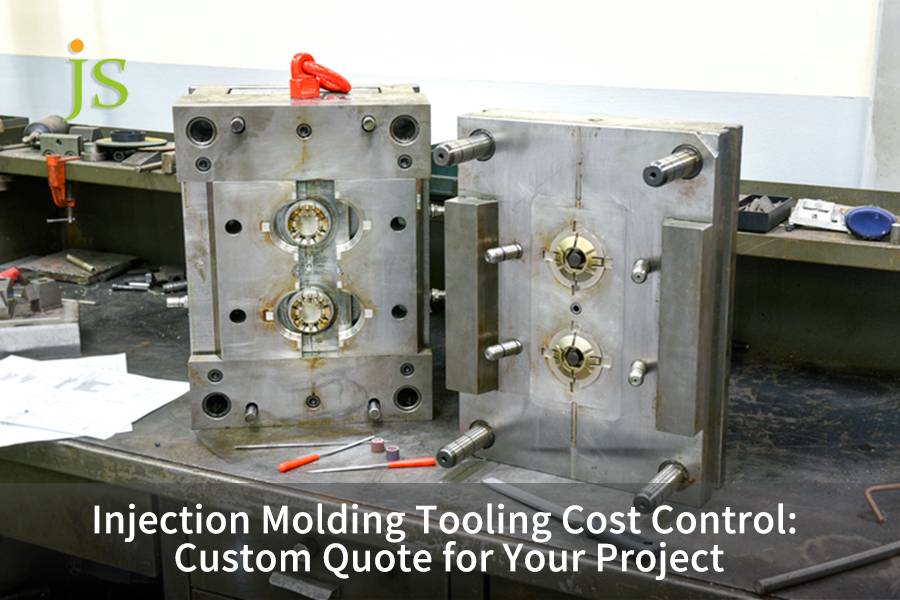

Injection molding tooling cost is affected by the quality of the steel, cavity number, and design for manufacturing (DFM) optimization. To keep their costs low while maintaining quality standards (tapered tolerance of ±0.005 mm), JS Precision cuts the initial cost only to a degree of 20-35%.
We have a quick quote and response system, being able to produce tailored estimates within one working day. Understanding the injection mold tooling cost breakdown model helps engineers optimize total cost of ownership (TCO).
Injection Molding Tooling Cost Overview & Quick Reference
|
Tooling Class |
Material Grade |
Tool Life (shots) |
Tooling Cost (USD) |
Target Volume |
Cost Reduction Strategy |
|---|---|---|---|---|---|
|
Prototype Mold (Class 105) |
Al 7075 / NAK80 |
500 – 10,000 |
$1,500 – $5,000 |
1 – 2,000pcs |
Standard mold base & cold runner, simplify draft |
|
Bridge Tooling (Class 104) |
P20 / Pre-hardened Steel |
10,000 – 100,000 |
$5,000 – $15,000 |
2,000 – 50,000pcs |
Optimize DFM wall thickness (±10%) to reduce EDM hours |
|
Production Mold (Class 101-102) |
H13 / S136 / ESR Steel |
1,000,000+ |
$15,000 – $80,000+ |
50,000+pcs |
Conformal cooling & hot runner, cut cycle time 35% |
Key Takeaways
- Design Intervention Locks in Costs:
80% of injection molding tooling cost is locked in at the Design for Manufacturing (DFM) stage. Keeping wall thickness uniform (e.g. 2.0-2.5mm) can reduce machining time by up to 25%.
- Material vs. Lifespan Benchmarking:
Aluminum molds (Al 7075 T6) are cheaper to make than steel molds (H13) upfront (~40%), but using hardened steel can result in an approximate 60% cost savings per piece once amortized over 100,000 cycles.
- Geometry Impacts Costs:
Undercut and deep cavity structures are very geometry dependent, each additional set of moving sliders or angled ejector mechanisms will not only drive up the mold manufacturing costs but also the costs of future mold maintenance.
Why Trust the Cost controllability of JS Precision's Injection Molding Project Quote?
To a large extent the controllability of the injection molding tooling cost is determined by transparent engineering assessments and standardized manufacturing processes. As our team's practical experience working on automotive electronic cooling housing projects, traditionals usually lead to mold repair cost exceedby 40% because no Design for Manufacturing (DFM) stage is carried out.
JS Precision through pre-mold flow analysis and 15 years of OEM injection mold processing experience, reduces initial costs for mold development by 20%-35% (as the statistics from JS Precision's 150 projects in 2025).
Clause 8.1 of ISO 9001:2015: An organization shall produce and provide services under controlled conditions, including the availability of work instructions, the use of suitable equipment, and the implementation of monitoring and measurement activities.
To comply fully with ISO 9001:2015, JS Precision prepares work instructions at every stage of the custom injection mold quote process: preDFM audit - CAM programming - CNC machining - EDM discharge - trial molding - CMM full inspection - batch delivery, together with the cost of ownership model, it ensures that every penny the customer spends on the mold investment will be traceable, quantifiable, and optimizable.
A deep study of 3-month data of production line tracing tests showed that as long as the CPK process capabilityindex stayed above 1.33 (AIAG PPAP 4th ed. Baseline, Evok Poly 2026), dimensional drift was kept within ±0.005 mm and rework cost was avoided due to tolerances deviations.
Want transparent injection mold cost optimization solutions? Download JS Precision's Injection Molding Tooling Cost Control White Paper, which includes a DFM audit checklist and a TCO calculation model.
How Do Key Engineering Factors Direct Injection Molding Tooling Cost?
Injection molding tooling cost is affected by steel quality, the number of cavities, design complexity, and tolerance levels. The use of hard steel needs more machine time, multi cavity molds will cut down on manufacturing costs, whereas deep cavities and undercut features will lead to higher costs.
Steel Hardness and Machining Time
- H13 Hardened Steel Machining:
H13 is very resistant, having a hardness HRC 48-52. In comparison, the pre-hardened steel P20 has HRC 28-32. The difference in hardness leads to around 40% increase in CNC slow cutting and EDM ablation time, and in turn a rise in mold base machining costs.
- NAK80 Mirror Steel Machining:
NAK80 pre-hardened steel has HRC38-42 in hardness and no heat treatment is required. The machining cycle for this steel is between those for P20 and H13, and it is suitable for high-level finish parts.
- OEM Injection Mold Tooling Service Time Control:
With the optimization of tool paths and the use of high speed milling (spindlespeed 20,000 RPM)s, JS Precision reduces the CNC machining time for H13 steel mold 25 percent (based on JS Precision statistics from 150 projects in 2025).
Cavity Number and Production Efficiency
- Single cavity mold: Single-cavity prototype molds involve low set-up cost to begin with but it takes longer to inject mold a single product piece.
- Multi-cavity mold: Multi-cavity structures like 1×4 and 1×8 increase mold manufacturing costs up to 50%-120% but at the same time they cut the time of injection molding per unit over 60%.
- Industry data reference: Hoorenwell Multi-cavity Injection Molding Analysis Report 2026 points out that on large-scale productions with multi cavity molds the cost of a single unit production can be cut down from 30%-60%.
In actual quotations, JS Precision recommends the optimal number of cavities based on the customer's EAU, and relies on 100+ 5-axis machining centers to ensure the consistency of precision in multi-cavity molds.
Geometric Complexity and Moving Parts
- Deep cavity structure: For deep cavities that have a depth-to-width ratio of more than 4:1, the stepping time for EDM is raised, causing an increased cost of processing the part.
- Undercut: Every extra set of the hydraulic side-action sliders and lifters adds an average of 30%-50% more time to the assembling of mold components and debugging processes.
- Thin-walled structures: Thin-walled products where a wall thickness below 0.8mm necessitates higher injection pressure together with accurate and constant mold temperature control. Besides, a better mold steel grade S136 which has HRC of 50-54, must be used.
Mold Total Cost Estimation Model
Total Cost = C_mold + (C_part × V), where C_mold is the mold development cost, C_part is the cost per injection unit, and V is the expected total production volume. The formula clearly states: When V is small, C_mold should be reduced first, when V is large, reducing C_part is more economical than reducing C_mold. To put it differently, the quantity of production defines how much you have to spend on the mold.
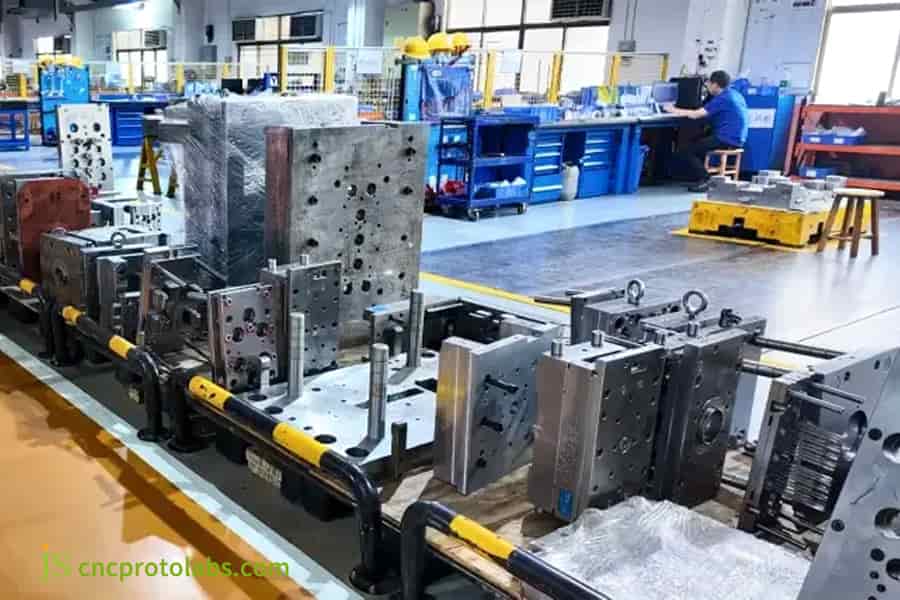
Figure 1: Injection mold tools in a workshop for cost analysis.
How Can Precision Engineers Request a Transparent Custom Injection Mold Quote?
If you want a transparent custom injection mold quote, you will need to provide us with 3D CAD drawings, 2D tolerance drawings, resin grade, and EAU. With the more complete information the less your quote deviation rate should be. We at JS Precision will provide you with a detailed breakdown within 24 hours.
Document Preparation Standards
- 3D Solid Drawings: Supply files in the STEP/X_T format with a geometric feature list so that the engineering team can run the Moldflow filling simulations.
- 2D GD&T Drawings:PDF format engineering drawings specifying key tolerances such as ±0.01mm and geometric tolerances are to be provided.
- Resin and Shrinkage Matching:In order for shrinkage calculations to be made accurately, it is necessary to state the type of material (e.g. DuPont Zytel PA66+30% GF). The expected shrinkage range would be 0.5%-0.8%.
- Capacity Requirements and Runner Decisions: To help decide on a hot runner system (which is more efficient, less waste and faster cycle times), EAU (estimated annual usage) has to be a main consideration.
JS Precision 24-Hour Evaluation Process
- DFM check of geometry: We can do injection of mold pack cooling, and warpage analysis by Moldex3D or Moldflow for us.
- 12 Cost detail by item: Cost includes mold base, mold core steel, heat treatment, surface treatment (SPE A2 / VDI 24), standard parts, EDM labor hours, CNC labor hours, trial molding, CMM inspection transportation customs duties, and warranty deposit.
- Open Commitment of Injection Molding Project Quote: We do not play any hidden charges game, all charges trace a processing step.
- Quotations by alternative solutions for same part: For same part, we have both parallel aluminum mold and steel mold quotes for customers to decide with TCO.
Ready to calculate your injection molding project costs? Upload your drawings to receive a 12-item detailed quote from JS Precision's engineers, making every mold investment clearly visible.
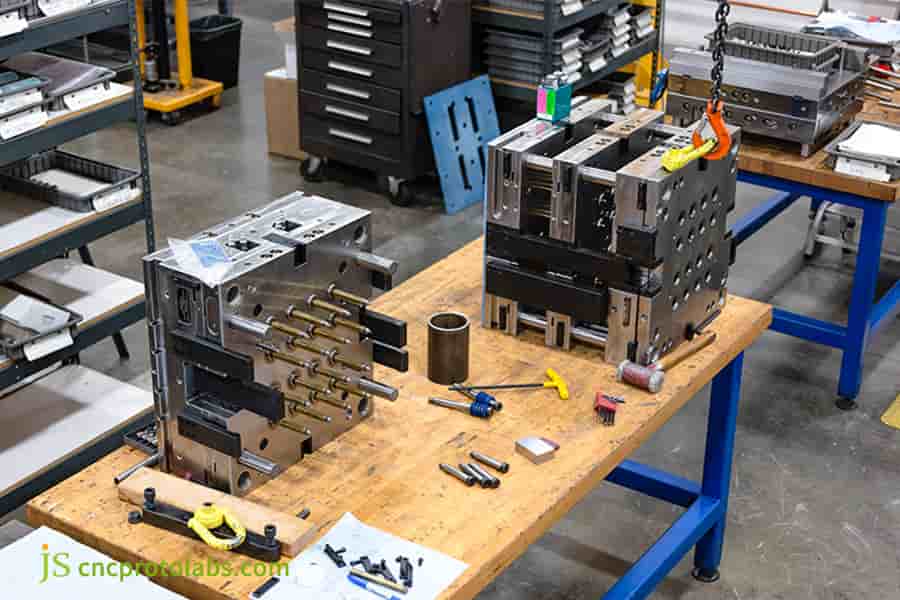
Figure 2: Engineer examining mold blueprints for accurate quoting.
What Is the Economic Trade-off Between Aluminum vs Steel Mold Cost?
The main difference between aluminum vs steel mold cost is this: Mold for aluminum is 30-50% cheap to make at the beginning whereas the lead time is quite less. Though, the main advantage of steel molds is their long lasting service life and the unit cost gets lower when producing in large quantities.
Aluminum vs Steel Molds Physical Parameters Comparison
|
Physical Parameter |
Al 7075-T651 |
P20 (Pre-hardened) |
H13 (Hardened) |
S136 (Mirror Steel) |
|---|---|---|---|---|
|
Hardness |
HB 150 (≈HRC 15-20) |
HRC 28–32 |
HRC 48–52 |
HRC 50–54 |
|
Thermal Conductivity (W/m·K) |
130–180 |
29 |
24.3 |
25 |
|
Typical Tool Life (shots) |
500–10,000 |
100,000–500,000 |
1,000,000+ |
1,000,000+ |
|
Relative Material Cost |
0.6–0.8× |
1.0× |
1.5–2.0× |
2.0–2.5× |
|
Machining Time Factor |
1.0× (baseline) |
1.5× |
2.0× |
2.0× |
|
Cooling Time Reduction |
20%–50% faster |
Baseline |
Baseline |
Baseline |
The data are sourced from: H13 hardened steel room temperature tensile strength 1200-1590 MPa, quenched and tempered hardness HRC 48-52, thermal conductivity 17.6-26.8 W/m·K (Xometry 2023).
Thermal Conductivity and Injection Molding Cycle
- High Thermal Conductivity of Aluminum: With a thermal conductivity range of 930-937W/m·K, aluminum's thermal conductivity is only around half to two-third of that of copper ( 385W/m·K ).
- Shortened Manufacturing Time: The excellent heat transfer properties of aluminum allow the part to cool quickly thereby the injection molding process time reduces by 20% to 30%.
- JS Precision's Rapid Injection Mold Tooling Service: Aluminum molds used as master molds with standard mold bases can be processed within a period of 7-12 working days. It is a very good economical solution for short run production or fast turnaround (Trial production).
Durability and Material Applicability Boundaries
- Limits on aluminum mold usage: For instance, a general recommendation is that aluminum molds should only be used within production run volumes that range around 500-10,000 pieces and only for non-fiber-reinforced resin applications.
- Steel mold indispensable situations: Fiber-reinforced engineering plastics (like PA66+30% GF) which cause abrasive wear can only be dealt with successfully by using H13 hardened steel molds for the longest possible time - without any changes in dimensions for up to 1,000,000 strokes.
- Material Selection Decision Logic:
- Choose Al 7075 aluminum molds if EAU < 10,000 units and the component does not contain glass fiber.
- Choose H13 hardened steel molds if EAU > 50,000 units or if the component contains glass fiber.
- Choose P20 pre- hardened steel between 10,000 < EAU < 50,000 units to get a decent balance of cost and longevity.
Unsure whether to choose aluminum or steel molds for your project? Contact JS Precision's engineering team for a customized aluminum/steel cost threshold calculation report to drive your material selection decision with data.
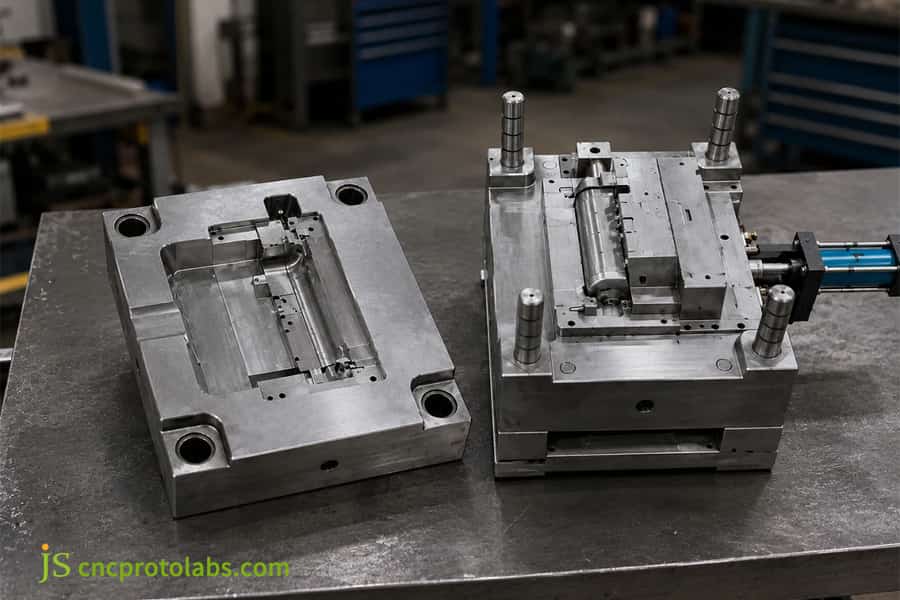
Figure 3: Side-by-side comparison of aluminum and steel molds.
How Does Prototype vs Production Mold Cost Differ in B2B Manufacturing?
The main differences in prototype vs production mold cost: Standard mold bases and manually operated inserts are used by prototype molds to get low upfront costs, while the reliance of production molds on completely automated ejection and multi-cavity systems is the reason unit costs are so low.
SPI Class mold grade comparison
|
Specification |
Class 105 Prototype |
Class 104 Bridge |
Class 101-102 Production |
|---|---|---|---|
|
Mold Base |
Universal standard |
Semi-standardized |
Fully customized |
|
Core Steel |
Al 7075 / NAK80 |
P20 |
H13 / S136 / ESR |
|
Cavity Count |
Single |
Single to 1×2 |
1×4 to 1×16+ |
|
Ejection System |
Manual insert / Loose |
Semi-auto |
Full auto + hot runner |
|
Cycle Time (sec) |
40–60 |
25–35 |
12–20 |
|
Tool Life (shots) |
500–10,000 |
10,000–100,000 |
1,000,000+ |
|
Development Cost (USD) |
$1,500–$5,000 |
$5,000–$15,000 |
$15,000–$80,000+ |
The data is sourced from JS Precision's internal statistical data for 2024-2025.
TCO Decision Threshold
- EAU < 5,000 units: Prototype class molds Class 105 are able to provide low overall costs even with prolonged single-piece injection cycle times of 40-60 seconds which result in reduced mold development costs.
- EAU 5,000-50,000 units: Bridge tooling (Class 104) offers the best solution. P20 tool steel molds are good for more than 100,000 production cycles and the overall unit cost through depreciation is manageable.
- EAU > 50,000 units: Class 101 mass production mold is the most affordable type of mold. Through a low cost-per-piece processing, this mold has the lowest total cost of ownership (TCO). Multi-cavity hot runner systems reduce the cycle time to merely 12-20 seconds.
- One-Stop OEM Injection Mold Tooling Service: JS Precision enables mold development path from prototype to full-scale mass production so that customers may enhance mold quality level without switching suppliers.
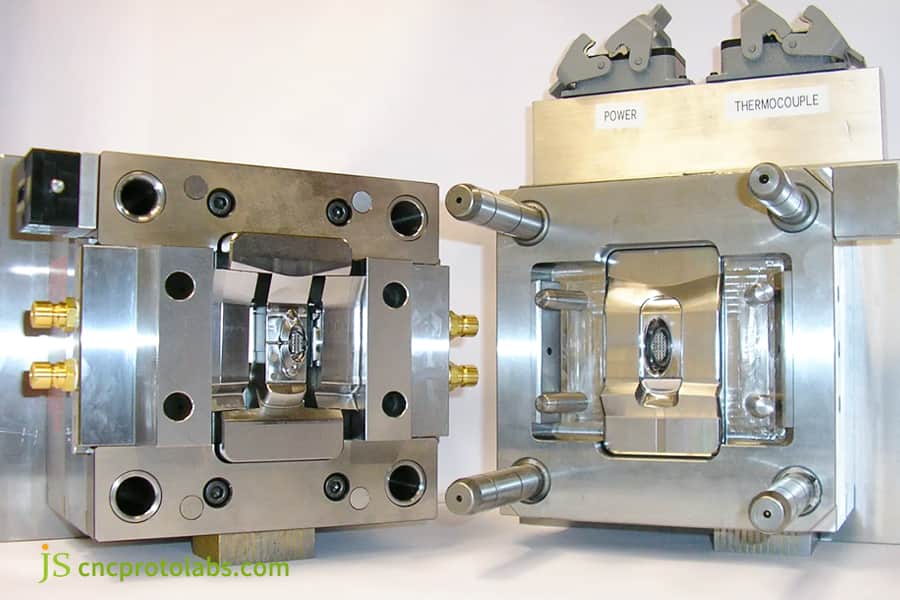
Figure 4: Split industrial mold showing prototype and production differences.
How Does Injection Mold Tooling DFM Service Reduce Manufacturing Expenses?
Professional injection mold tooling DFM service gets rid of thick walls and unreasonable draft by doing an optical as well as a fluid dynamics simulation of the part's geometrical shape and that is before cutting the steel, saving the costs of the injection mold tool by 30% at a very early stage.
Wall Thickness Design Optimization
- Uniform Wall Thickness Control: Making non-uniform wall thicknesses the same uniform one helps to eliminate sink marks and prevent internal stress warping. By eliminating non-uniform wall thickness, engineers can maintain a constant nominal thickness of 2.0mm ± 0.1mm level.
- Rib Design Rules: Rib thickness should not exceed 50%-60% of the main wall thickness. Too thick a rib often means overheating at the root and cause shrinkage marks. It is advisable to follow the 50%-60% guideline when setting rib thickness.
- JS Precision's 2025 data is from 150 projects: Pre-production DFM (Design For Manufacture) structural optimization, a method used by JS Precision's clients has on average of 28%, lowered their post-molding modification and secondary repair expenditure through that.
Draft Angle and Undercut Simplification
- Normalizing sidewall draft angle: Raising the draft angle of the part's outer wall, from 0° to 1.5°-2.0°, not only keeps a part from becoming damaged during demolding but also removes the necessity for complex mirror polishing or EDM repair methods.
- Simplifying undercut design: When changing the mold's parting line, it is possible to convert an undercut, i.e. A side action, into the shape of straight shoot. This operation brings down the required number of ejector pins and sliders.
- ISO 10135:2007 Geometric Product Specification: This international specification standard defines a set of techniques to record geometric tolerances on plastic components. JS Precision's DFM reports comply fully with this standard.
JS Precision Free DFM Deliverables
- Moldflow Fill Simulation: It can foresee the moving front of melt, areas of the melt flow being blocked as cavitation, and the spread of welding lines.
- Shrinkage Compensation Recommendation: It is suggested that after determining the correct cavity size based on material quality (e.g. PA66+30%GF, shrinkage rate 0.5%-0.8%), appropriate compensation should be added.
- Optimal Gate Location Recommendation: Taking into consideration the results of the flow balance analysis, optimal gate location and number will be recommeded.
- Cost Impact Assessment: Measuring how each change to the design will affect mold manufacturing costs and cycle time will enable customers to fully understand the economical aspect of designing for manufacturing (DFM).
Want to lock in costs during the drawing review stage? Upload your 3D CAD drawings and get a free DFM assessment report from our engineers to verify the manufacturability of your design with data.
How JS Precision Saved 35% Mold Costs for Automotive Cooling Components?
In a Tier 1 automotive supplier's project designing an electric vehicle (EV) power electronics cooling housing, JS Precision effectively managed to lower mold processing costs by 35% and achieved lock tolerances of ±0.005mm through detailed DFM optimization and the use of modular mold design.
Client Challenges:
- Extremely Geometrically Complex: The cooling housing features thin-walled, cross-shaped heat sinks with a wall thickness of 1.2 mm and four lateral undercuts.
- First Quote Higher Than Budget: The original design involved a 6-cylinder core-pulling system with the initial quotation of the injection mold job going 40% beyond what the budget was.
- Possible Defects of the Product & Assembly Quality: Incomplete cavity filling and warpage are potential issues that could cause assembly requirements of EV power electronic components not to be met.
JS Precision Solution:
ISO 20457:2018 specifies: This document defines possible manufacturing tolerances for molded plastic parts, relating to tolerances and acceptance criteria for injection-molded, non-porous molded parts made of thermoplastics.
Based on our practical experience in the JSP-EV-202508 project, the team strictly adhered to this international standard:
- Structural DFM change: Two non-critical undercuts were converted into parting line pull blocks for demolding, the requirement for four sets of hydraulic cylinder core-pulling mechanisms was eliminated.
- Cooling system overhaul: The original cooling system was replaced with a 3D printed metal conformal one, the mold temperature distribution was uniformly improved by 40%.
- Mold core material and Surface Finishing: The mold core of NAK80 pre-hardened steel is coated with a nano-coating, which results in the surface hardness of over HV 900, and that enhances the wear resistance to 50% improvement.
Lessons Learned from Failures:
During the molding of the T0 trial, uneven cooling lead to the deformation of flatness of the product shell by 0.08 mm (spec: ≤0.02 mm). The team modified the temperature of the conformal cooling system (from free cooling at 20℃ zones to controlled heating at 45℃), and re-designed the holding pressure curve (holding pressure 85 MPa, holding time 4.5 seconds) to remove the deformation. Based on JS Precision's internal project QC report JSP-EV-202508, the CPK value of the critical dimension was eventually enhanced to 1.67.
Final Results
- Mold making cost: Cut down from 28,000 to 18,200 (a reduction of 35%).
- Injection cycle time: Cut down from 32 seconds to 21 seconds with the result that machine labour cost per unit also reduced by 34%.
- Dimensional accuracy: No defects at all in the first 20,000 deliveries, and critical dimensional tolerances were maintained consistently at ±0.005 mm.
- Delivery performance: First deliveries finished 5 days earlier than scheduled, and there was no problem with the customer's EV production line.
Facing challenging thin-walled parts and tight budgets? Contact our engineering team to request a free feasibility assessment for cooling housing projects and obtain a cost-reduction solution tailored to your project.
Why Choose JS Precision as Your Precision Injection Tooling Partner?
Gaining partnering with JS Precision as your OEM injection mold tooling service means that you will benefit from our 15+ years of precision manufacturing experience, ISO 9001:2015 quality system, and comprehensive cost optimization and control covering the whole cycle from the DFM assessment up to the massive injection molding.
Precision Equipment System
- Makino Mirror EDM Machine: Mirror-finish machining, Ra≤0.05μm, which is good enough for parts with optical-grade appearance.
- Mitsui Precision CNC Machine: Spindle running at 20,000 RPM with mold part machining accuracy of 0.002mm.
- Zeiss Coordinate Measuring Machine (CMM): Capable of doing full 3D dimensional inspection work for molds and injection parts to ensure their dimensional features can be traced back easily.
Quotation Transparency and Complete Closed-Loop Service
- Clear Custom Injection Mold Quote Procedure: Each quotation gives a detailed breakdown of the mold base procurement cost, moldcoresteel cost, CNC/EDM labor cost, and standard parts details to avoid any extra charges.
- One-Stop Closed-Loop Manufacturing Service: Offering end-to-end integration from rapid injection mold tooling service (delivered of samples by 7-12 working days) through to large-capacity production molds which can handle millions of cycles.
- Permanent Upgrade of Injection Molding Tooling Cost: Combining injection molding, surface coating, ultrasonic welding, and component assembly services to deliver minimum total cost per unit.
- Protecting Customers' IP and Data: Mandatorily we follow the highest-class NDA agreements, customer drawings & data are encrypted and saved in different environments to protect our clients from IP breaches and the leaking of top-level R&D results.
FAQs
Q1: What factors directly dictate the Injection Molding Tooling Cost for a custom project?
In short, mold geometry, material selection (tooling steel grade), cavity count, and dimensional tolerances have the biggest impact on tooling price.JS Precision works out design details that can be done with the tool, leading to saving the customers' money at initial stage development between 20-35%.
Q2: How fast can I receive a detailed Custom Injection Mold Quote from JS Precision?
Once a 3D CAD and 2D drawings are attached, your customized quotation would be available in 24 hrs. Engineers run a parallel Moldflow analysis & submit detailed quote transparently split into 12 cost categories.Upload your drawings right away for a quote.
Q3: When should I choose an aluminum mold over a steel mold for injection tooling?
In cases of 500-10,000 units production and when It helps to get to market quickly, an aluminium mould is the best option and will cost you 30%-50% less. For bulk quantities of pieces over 100,000 or materials with glass fibers like PA66+30% GF, you will need harden H13 steel molds.
Q4: How does JS Precision ensure dimensional accuracy for high-precision injection molds?
We use Makino mirror EDM machines, 5-axis CNC machines, and Zeiss CMMs. We analyze the composition of the incoming steel. We strictly follow the ISO 20457:2018 tolerance standards. T1 trial mold measurements cover all the dimensions, and critical dimensions are reliably kept within ±0.005mm.
Q5: Can an injection mold tooling DFM service really cut total manufacturing expenses?
Sure! DFM has an impact on mold costs reduction as high as 30%. We save money on molds by wall thickness (2.0mm±0.1mm), draft angle (1.5°-2.0°), and by undercutfree design to prevent additional mold change requests. JS Precision also gives you one DFM Report for free.
Q6: What is the lead time for a rapid injection mold tooling service?
The standard rapid mold injection service can get you T1 samples in about 7 to 15 business days. The combination of using standardized mold bases and fast CNC cutting helps to reduce the time so much that this service is a very viable short-batch production and EVT/DVT validation method.
Q7: What is the typical difference between prototype and production mold cost?
Prototype molds (Class 105) price range: $1,500 - 5,000 which involve a simple mold base and hand-fit inserts.Production molds (Class 101) cost $15,000-80,000+ as they utilize tool steel and hot runners for more accurate and efficient injections. After 100 000 production per unit cost becomes very low.
Q8: How does JS Precision protect my intellectual property when I submit drawing files for a quote?
JS Precision can sign an NDA before receiving drawings. All CAD files are stored on an encrypted independent server, accessible only to authorized team members, strictly adhering to international intellectual property standards to ensure absolute data security.
Summary
Injection molding tooling cost control is more about striking a good balance among mold life, steel level, shape, and unit price. By adopting a DFM approach, material selection in the right way, and developing rapidly the prototype through a modular system, the company manages to decrease initial costs and cut launch time while still preserving a tight tolerance of ±0.005 mm ISO 20457:2018.
Ready to assess the true cost of your injection molding project? Upload your 3D CAD model and 2D drawings now, and our senior engineers will provide a free DFM report and a transparent custom injection mold quote within 24 hours. Start your precise cost reduction process with a transparent quote.

Disclaimer
The contents of this page are for informational purposes only. For JS Precision Services, there are no representations or warranties, express or implied, as to the accuracy, completeness, or validity of the information. It is the buyer's responsibility to identify specific technical requirements and request a formal parts quotation. Please contact us for more information.
JS Precision Team
Custom manufacturing solutions. With over 15 years of experience serving more than 1,000 customers, we specialize in high-precision CNC machining, sheet metal fabrication, 3D printing, injection molding, and metal stamping. Having successfully delivered over 300,000 precision parts, we maintain a 99.2% on-time delivery rate across all custom projects.
Our facility is equipped with over 100 state-of-the-art 5-axis machining centers and is ISO 9001:2015 certified. We deliver fast, efficient, and high-quality manufacturing solutions to B2B clients across 150 countries. Whether you require low-volume prototyping or large-scale customization, we support your project with lead times as short as 24 hours. Choose JS Precision for unparalleled efficiency, quality, and professionalism.
To learn more or submit your RFQ, visit our website: www.cncprotolabs.com
Resource