English



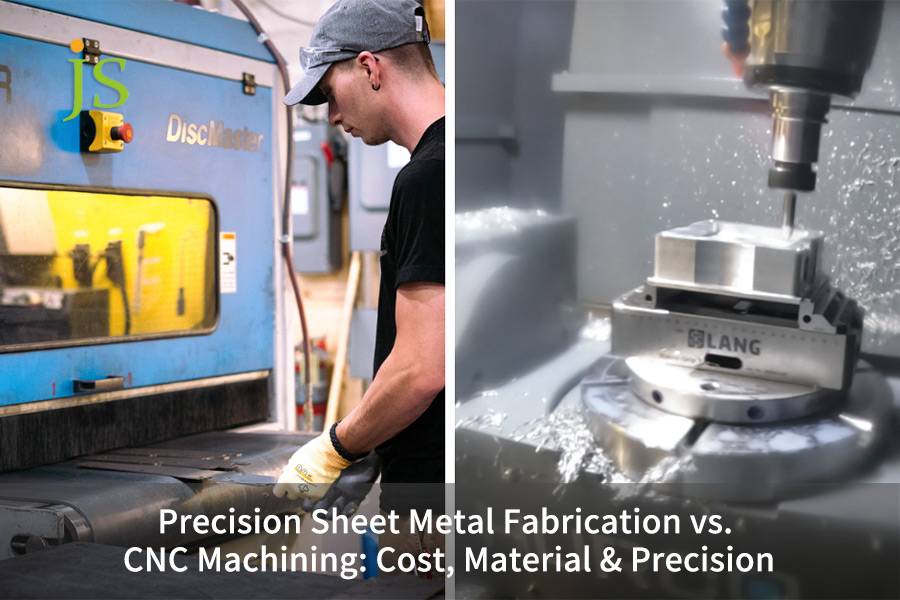

Precision sheet metal fabrication of bending metal into housing can be done with a cost that per unit is relatively low with a standard tolerance of ±0.1mm, the use of computer-controlled machines (CNC) machining removes material from a solid block to create complex 3D parts which have very small tolerances, about ±0.005 mm. The selection between the two methods should be based on the geometric complexity, wall thickness, and annual production figure.
Consult what comes next technical guide to find out manufacturing trade-offs, material utilization parameters, and cost threshold estimates.
Sheet Metal Fabrication vs. CNC Machining: Quick Comparison Table
|
Engineering Metric |
Precision Sheet Metal Fabrication Service |
CNC Machining Service |
|---|---|---|
|
Standard Tolerance Range |
±0.1 mm (bending), ±0.05 mm (laser cutting) |
±0.005 mm to ±0.025mm |
|
Applicable Raw Materials |
Ductile metal sheets (AL 5052, SECC, SUS304) |
Solid bars and blocks (AL 6061/7075, Titanium, Inconel) |
|
Wall Thickness Capability |
0.5mm~6.0mm uniform wall thickness |
Unlimited (>100mm solid section) |
|
Material Utilization Rate |
80%~90% (via automated nesting software) |
15%~40% (significant chip waste) |
|
Optimal Production Volume |
Prototyping to high volume (1 ~ 10,000+pcs) |
Prototyping to medium volume (1 ~ 1,000pcs) |
|
Primary Cost Driver |
Bending fixture setup, welding labor |
Machine hours, cutting tool wear |
Data sources: SME 2025 Technology Report. JS Precision 2025 internal cost database.
Key Conclusions
- Material Cost Efficiency: Sheet metal fabrication for thin-walled housing will utilize up to 85% of material which can save you about one-third of material costs when you compare it to CNC milling from solid aluminum blocks.
- Tolerance: If you need to machine features that require tolerance within ±0.005 mm, the best option will be the CNC machining. But, if the tolerance on your housing-like product can vary from ±1.0 to ±0.5 mm, precision sheet metal fabrication service can still do the required task.
- Hybrid manufacturing: Use laser cutting fabrication of custom sheets as a main structural housing and do secondary machining with a milling CNC locally for sealing groove or threaded hole, an excellent solution between precision and cost saving.
What Is the Core Difference Between Precision Sheet Metal Fabrication and CNC Machining?
Sheet metal fabrication vs CNC machining are totally different processes: sheet metal forming creates hollow objects, such as boxes or containers, from thin plates by cutting, flattening and joining whereas CNC machining cuts out material by using rotating cutting heads to shape 3D figures from solid metal.
Comparison of Physical Forming Mechanisms
According to the JS Precision in-house metrology laboratory test results, high precision sheet metal forming with the least scrap can be achieved by using 12,000W fiber laser and 230-ton CNC press brakes with sheet materials that have been deformed plastically, leading to a material utilization level of 88%. In CNC machining a 5-axis milling center is used to remove excess material from a workpiece and best for the processing of dense materials that are more than a 100 mm thick.
- Material Utilization: The automated sheet metal nest has the advantage to minimize material wastage which can be limited to 12%. As the SME tech report 2025 points out nesting softwares when used properly can maintain sheet metal material waste at around 12% only.
- Limitation of Geometrical Features: Sheet metal enclosure fabrication process limitations include making structures of uniform thickness only for housing, bracket and enclosure. But, CNC machining is capable in making features that include blind holes, deep cavities, curved surfaces and high strength components.
The ISO 9013:2017 standard states: Geometric product specifications and quality tolerances for thermal cutting apply to laser, plasma, and oxy-fuel cutting. The classifications are based on perpendicularity tolerance (u) and mean height profile (Rz5).
JS Precision deburrs critical edges after laser cutting to guarantee a deburred surface with Rz5 ≤ 50μm, ISO 9013 quality Range 2 requirement. Also, the change in manufacturing technique caused a big increase in the usage of material as they have gone from 25% waste (laser cutting) to only 8% (a progressive die layout).
Geometric Feature Limitations and Process Boundaries
- Limitations in metal stamping design: A minimal bend is required to prevent the sheet from splitting: R ≥ 1.0 × T (T for thickness of steel sheet), the edges may develop microcracks otherwise.
- Geometric CNC machining advantages: Capable of manufacturing blind holes up to depth 5 of tool diameter, internal threads M2, M30, as well as complex free-form surfaces.
If you don't know yet which operation is the best suited for your component, a quick upload for free evaluation process possibility, as well as a comparison report precision sheet metal fabrication solutions at high precision will help your decision.
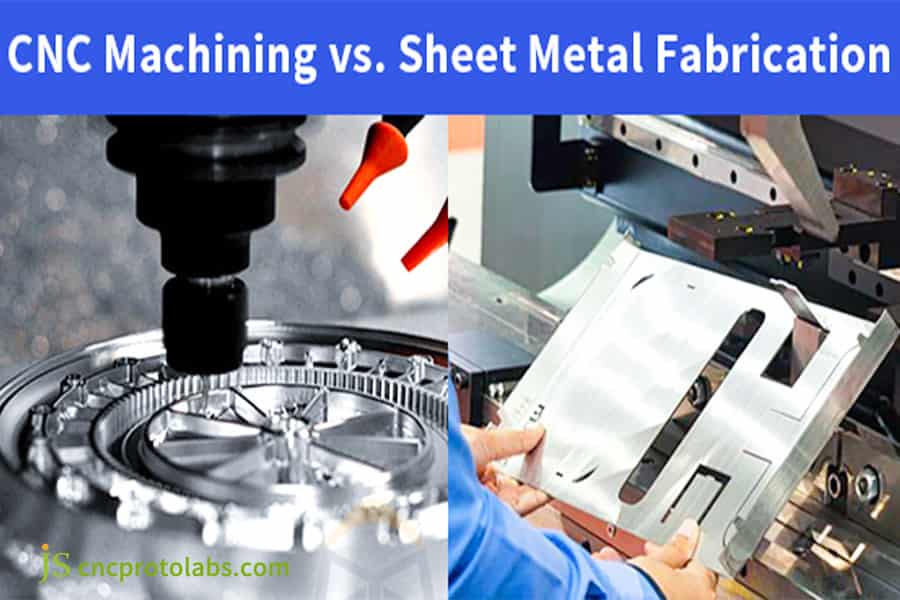
Figure 1: CNC machining versus precision sheet metal fabrication processes.
How Do Precision Sheet Metal Tolerances Compare to CNC Machining Capabilities?
Precision sheet metal tolerances can get to as low as ±0.05mm for laser cutting and ±0.10mm for multi-axis bending, dimensionally close parts are made all the time through CNC machining with tolerances down to ±0.005 mm on mating or contact surfaces of precision assemblies.
Upper Limits and Bottlenecks of Sheet Metal Tolerances
- Effects of springs of metal: A typical K-factor during bending is between 0. 33 and 0. 45 which usually causes bending angle tolerances of ±0.5°. JS Precision has a hydraulic dynamic compensation system (crowning) and a laser angle measurement which enables the company to improve linear bending tolerances to ±0.08 mm.
- Effect of the Heat-Affected Zone (HAZ) on accuracy of edges: In laser cutting, the depth of HAZ is 0. 12 mm, (2 mm AL 6061-T6 material was used for thickness measurement). As a consequence, the hardness of the spot will raise by 15%-20%.
Linear and angular dimensions not otherwise dimensioned by individual tolerance values shall have limit deviations allocated based on tolerance classifications f m c, or v, this is intended for general stamping and bending dimensions is a rule in the ISO 2768-1:1989 standard.
JS Precision follows ISO 2768-1:1989 standard very closely by employing different levels of tolerance when reading drawings: critical mating features are given ISO 2768-fH tolerances while non-critical free ones can be released under ISO 2768-mK (medium) tolerances with ±0.1mm accuracy over almost the same range which has enabled our clients to cut machining costs by up to 30%.
CNC Machining Tolerance Capabilities
- Close-loop linear scaling feedback: CNC machines having been equipped with linear scales for high precision and thermal deformation compensation systems are typically able to meet the requirement for H7 holes (e.g. Φ10H7, plus or minus 15 micrometers) and 5 micrometers of positional accuracy.This is a typical manifestation of the precision sheet metal vs CNC machining tolerance boundary line.
- Combining processes: JS Precision addresses tolerance issues by employing processes such as laser cutting, bending and the use of CNC machines at strategic points for finishing parts that require both housing-type features and fine bearing holes.
In simple terms: If folding metal sheets is anything like folding paper, one can make a decent guess at the shape but to obtain extremely small size differences, precision machining at the end stages using CNC devices will be necessary.
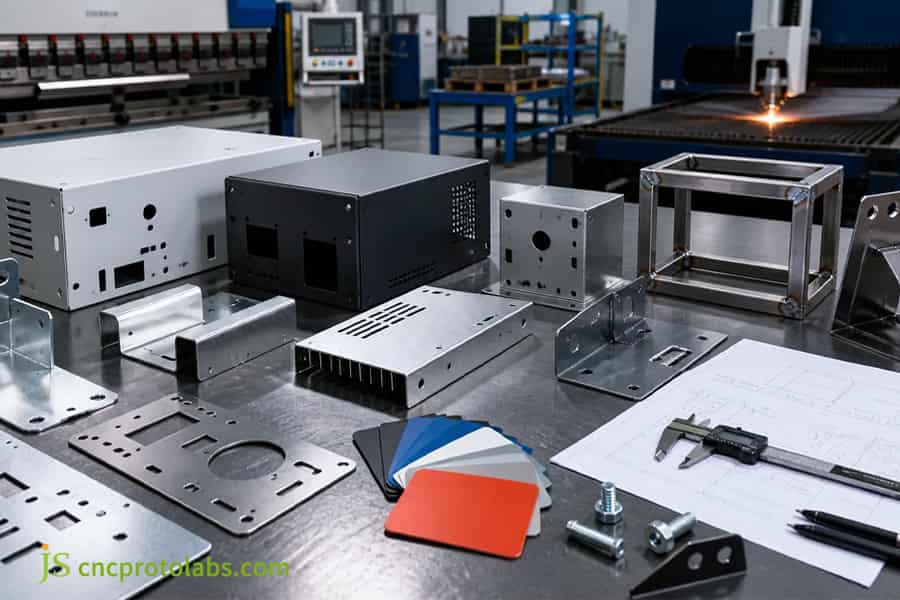
Figure 2: Sheet metal enclosures and CNC machined housings comparison.
Material Selection Criteria and High Utilization Rates for Custom Sheet Metal Fabrication
Custom sheet metal fabrication uses ductile metals like AL 5052, stainless steel (304/316), and copper that results in material yield of nearly 90% while CNC machining, although almost all rigid metals can be machined by it, is a material waste generating process.
Material Ductility and Hardness Standards
- Sheet Metal Material Requirements: Elongation of break ≥ 12% (e.g. AL 5052-H32, SECC), hardened steel (HRC 45+) cannot be bent directly. JS Precision's precision sheet metal fabrication department checks material compatibility to a specific degree in the planning stage so that cracking after bending does not occur.
- CNC Material Compatibility: Capable of machine directly Ti-6Al-4V titanium alloy, Inconel 718, and high-hardness tool steels, not limited by the hardness of the material.
Comparison of Material Nesting and Scrap Rates
For example, for a 1.5 mm SPCC enclosure component with the nesting layout, statistics from JS Precisions 2025 sheet metal mass production database indicates the comparison of material utilization rates between the various operations as follows:
|
Process Type |
Material Utilization Rate |
Scrap Rate |
Edge Waste (per 1000×500mm sheet) |
|---|---|---|---|
|
Manual nesting |
78% |
22% |
1710cm² |
|
Trumpf auto-nesting |
88% |
12% |
930cm² |
|
CNC milling from block |
15% ~ 40% |
60% ~ 85% |
60,000cm³ (block volume) |
|
Hybrid (laser + CNC) |
82% |
18% |
1260cm² + chips |
Data source: JS Precision 2025 sheet metal mass production database statistics.
- Sheet Metal Nesting Efficiency: Through the use of Trumpf automated nesting software, we are able to keep scrap rates on the edges of sheet metal to around 12% on average.
- CNC Material Waste: Manufacturing out of one whole block of aluminum gives machining chips which consume about 70% of the initial material.
To be more specific, selecting your material is just like picking your ingredients, steel sheet metal is excellent for rolling out dough, CNC machining is the best way to work on carving radishes. Using the wrong method results in a material and time wastage.
Looking to maximize your material efficiency? Get in touch with JS Precision to have free material selection counseling and figure out ways to reduce the procurement cost of the raw material by 30%.
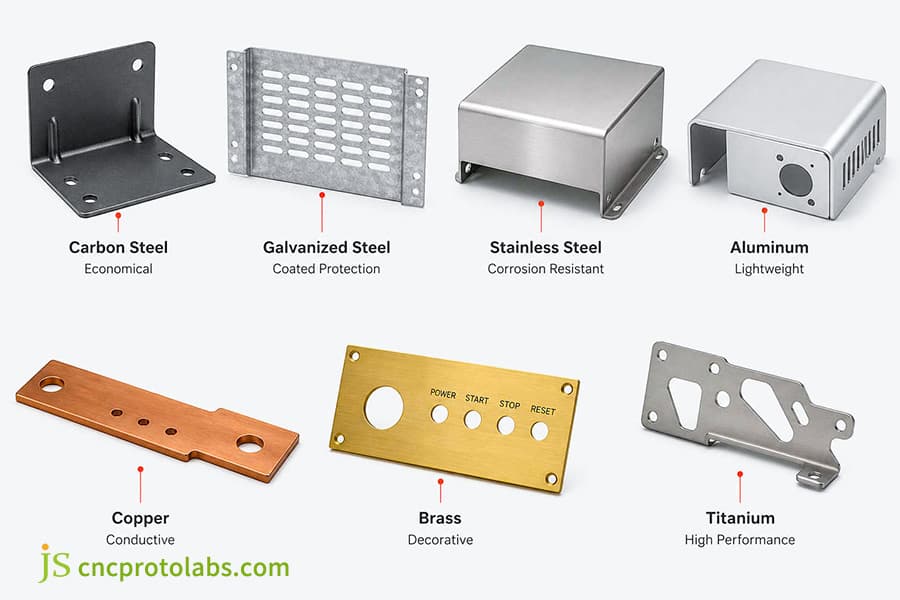
Figure 3: Stainless steel, aluminum, and copper materials for fabrication.
Cost Comparison: When Is Precision Sheet Metal Fabrication Service More Economical Than CNC?
Through precision sheet metal fabrication service, unit production costs can be cut by as much as 50-70% for the manufacture of 100 or more units as cycle times are greatly reduced whereas the cost efficiency of CNC machining is mainly for the solid 3D prototype runs of 1 to 10 items.
Quantitative Cost Model
The formula for calculating the crossover point is as follows:
Total Cost = Fixed Setup Cost + (Material Unit Cost + Labor Hour Rate × Cycle Time) × Volume
Fixed Setup Cost is a one-time tooling investment, and (Material Unit Cost+Labor Hour Rate × Cycle Time) is a variable cost per unit. The larger the volume, the more obvious the dilution of fixed costs.
Cost Comparison During the Prototyping Stage
Using a 1.5mm SPCC steel enclosure and referring to statistical data of sheet metal mass production from JS Precision's 2025, below are the price comparison per unit at different production quantities:
|
Annual Volume (pcs) |
Sheet Metal Unit Cost |
CNC Unit Cost |
Cost Gap (CNC - Sheet Metal) |
|---|---|---|---|
|
1 |
$85.00 (incl. $80 setup) |
$120.00 |
+$35.00 |
|
10 |
$45.00 |
$120.00 |
+$75.00 |
|
100 |
$15.50 |
$115.00 |
+$99.50 |
|
1,000 |
$8.50 |
$110.00 |
+$101.50 |
|
10,000 |
$3.20 |
$105.00 |
+$101.80 |
Data source: JS Precision 2025 sheet metal mass production database statistics.
- Benefits of Sheet Metal Prototyping: At this rapid prototyping stage (1-10 units) it is only the DXF/STEP flat-pattern drawings that need to be modified for sheet metal fabrication since universal bending tools make it possible to get around the problem of extra tooling costs. Laser cutting is a matter of only 10 minutes and a sample can be delivered in about 24 hours. Costs for re-design are lower by 80%. This particular prototype sheet metal fabrication service is most effective during the R&D iteration stage.
- CNC Prototyping Cons: The CNC prototyping process involves reprogramming the CAM toolpaths that take 2-4 hours per unit of programming.
Cost Inflection Point for Mass Production
- Sheet Metal Time per Unit: During mass production (i.e. 100-10,000 units), the time needed to blank a single sheet metal part is merely 30 seconds, making the per-unit processing cost drop by as much as 65%.
- Time Required for CNC Milling per Unit: Machine milling on a CNC same part takes 25 minutes of manual/machine labor, which means there's a massive difference between two processing time costs.
CNC is handy if one wants to make just some prototypes, no tools are necessary. But, when production runs above 100 units, the cost edge of going for sheet metal is a snowballing thing.
Contact JS Precision to request a complimentary consultation. We can provide you with a full-lifecycle comparing quote in one hour, clearly showing the cost boundary between sheet metal fabrication vs CNC machining.
How to Select Between CNC and Sheet Metal Enclosure Fabrication for Electronics Housing?
Sheet metal enclosure fabrication is becoming the most popular option for server racks and power supply covers as they are very light but durable, shielded from the outside, and can be redesigned quickly. Meanwhile, CNC-machined enclosures are mainly utilized for cases which require dustproof and waterproof IP67 ratings.
Electromagnetic Shielding vs. Cost
- EMI Shielding with Sheet Metal: If you create a sealed electromagnetic shielding (EMI) cavity via PEM self-clinching nuts and continuous spot welding you will have the cost only 20% of machining a sheet aluminum block in a CNC. JS Precision's custom sheet metal fabrication solutions are extensively in telecom equipment boxes.
- CNC Sealing of Enclosures Advantages: A single-piece housing from machined material naturally does not have weld seams, which makes it perfectly suited for IP67 protection ratings.
Heat Dissipation and Structural Scalability
- Metal Heat Transfer: Removing heat from a system could be done through louvers extrusions holes or thermally conductive plates fixed externally. Mounting slots can be added anytime later after the first version.
- CNC Heat Transfer: With the use of very small and close-spaced heat transfer features in the shape of pins, thermal efficiency can be much higher than usual if such pins are machined into the part.
Selection Decision Guide
- For outside explosion-proof, submerged, and IP67 dustproof/waterproof products, the best option is a one-piece monolithic CNC machined case.
- Standard 19 inch rack, distribution cabinet, and consumer electronics enclosure: customized with precision sheet metal.
CNC machine is ideal for a hermetic (airtight) enclosure, which does not allow the penetration of water nor dust. But, sheet metal fabrication serves a lightweight, affordable housing that offers shielding against electromagnetic radiation.
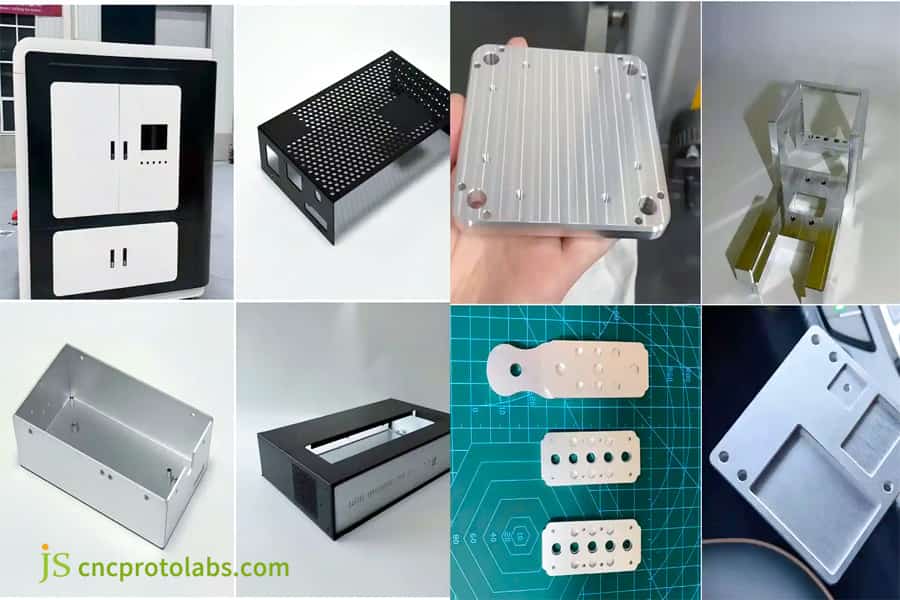
Figure 4: CNC and sheet metal fabrication for electronics housing.
JS Precision Case Study: Optimizing EV Power Control Boxes with Hybrid Sheet Metal and CNC Machining
Customer Challenges
An European EV client was in need of an on-board high-voltage control box. Per the design, the enclosure body was to be extremely light with 1.5 mm thin walls, yet the water-cooling sealing surface at the bottom had to have a flatness of ≤0.03 mm and four bearing mounting holes had to have a tolerance of ±0.01 mm. Pure CNC machining would have resulted in a unit cost of $320 and a 78% material waste rate, whereas pure sheet metal bending could not achieve the flatness requirement (0.3 mm), which led to the project to be stalled.
JS Precision Solution
- Sheet Metal Body Construction: Precision sheet metal fabrication of main enclosure frame using aluminum AL5052-H32 with fiber laser cutting and CNC bending.
- Secondary Finishing with CNC: To fix the bent sheet metal semi-finished parts for machining on a Haas 5-axis CNC machining center fixtures were specially made.
- Micro cutting Control: For sealing surface micro cutting a PCD fly cutter was used with step depth not greater than 0,5mm, resulting into a flatness of 0.02 mm and bearing holes boring to a tolerance of ±0.008 mm.
Lessons Learned
From our hands-on experience, the first set of test pieces had 0.12 mm of warping after CNC machining since the sheet metal welded area had not gone through the process needed to remove thermal stress first. Then, the process team came up with a low-temperature stress relief, so called an annealing step, at 220℃ to get rid of the residual stresses fully.
Final Quantifiable Results
- Unit Cost: Reduced from 320 to 95 (a 70.3% reduction).
- Production Cycle: Shortened by 50%.
- Quality Verification: 100% pass rate for 0.5 MPa airtightness testing.
Does a compromise between precision and cost hinder you? Submit your drawings to our free DFM tool and get your quote at the hybrid manufaturing solution, this way you will be able to see the savings you can achieve.
Key Advantages of Choosing JS Precision as Your Precision Sheet Metal Manufacturing Partner
Working with JS Precision means you can avail yourselves of production lines certified per ISO 9001:2015, which are also integrated state of the art laser cutting, multi-axis bending and in-house CNC machining techniques to produce highly accurate custom sheet metal components right on the schedule.
Manufacturing Facilities and Capacity
- Production capacity: A factory covering an area of 15,000m with a production capability of 12,000W laser cutters, AMADA CNC press brakes, and 5-axis CNC machining centers. The setup allows the delivery at a sheet metal + machining one-stop manner.
- Quality system: 100% product quality control throughout the entire manufacturing process has been adopted, besides this, the facility is also equipped with ZEISS CMMs and spectrometers such that every batch will come with CMM inspection report and a report of First Article Inspection.
Technical Support and Delivery Assurance
- DFM Engineering Support at Individual Level: Skilled and dedicated DFM engineers will communicate straight with you to modify the drawings and design to facilitate manufacturing.
- A Complete Shift Assistance: The service encompasses the whole development path from prototyping to large-scale production (volumes of >10,000 units) with DFM evaluations from Technical Director Gloria Wu's team.
FAQs
Q1: What is the main difference between precision sheet metal fabrication vs CNC machining?
Precision sheet metal fabrication involves the use of thin sheets cut out and curved to make hollow parts. It is suitable when you want to produce housings and enclosures at high volume with low costs. CNC machining, due to its ±0.005 mm level of precision, is perfect for fabricating complex one-piece solid 3D parts.
Q2: What is the standard tolerance achieved in precision sheet metal fabrication service?
Well-established precision sheet metal fabrication will laser cutting of ±0.05mm, bending ±0.1mm and spot-welding ±0.2mm tolerances. Secondary CNC milling can be done for local tolerances as tight as ±0.01mm.
Q3: Is precision sheet metal fabrication cheaper than CNC machining for prototypes?
In case of sheet metal prototyping for flat or simply bent structure products it is more economical to get them through sheet metal prototyping. Still, very small runs (1-5 units) for parts with complex 3D geometries may result in lower prices through CNC machining.
Q4: Can JS Precision combine sheet metal fabrication and CNC machining for one part?
JS Precision, after creating the sheet metal body using laser cutting and bending, can carry out secondary CNC milling at low cost on critical areas to get ±0.008mm precision level.
Q5: How do I obtain an instant quote for custom sheet metal fabrication from JS Precision?
Just upload your 3D CAD models and 2D drawings (with specified tolerances) to the evaluation system at JS Precision. You will have received an all-encompassing quote if your files are accepted and processed within 24 hours.
Q6: What materials are available for custom sheet metal enclosure fabrication?
We can work with aluminum alloys (AL 5052-H32, AL 6061-T6), stainless steel (SUS304, SUS316), cold-rolled steel (SPCC), electro-galvanized steel (SECC), and copper, with material thicknesses of 0.5 mm to 6.0 mm.
Q7: Which process provides better structural strength: sheet metal or CNC machining?
Parts made in the CNC machine have more strength. They fit to use the parts that bear heavy load. Sheet metal parts can also have very high strength-to-weight ratios using stiffening ribs, hems, and welded reinforcement plates.
Q8: How does surface finishing affect final dimensions in precision sheet metal fabrication?
Surface treatments contribute some extra material thickness: 5-25μm on each side for anodizing and about 60-100μm for powder coating. JS Precision designs with the coating material factor included, using a CAD flat pattern. Then assembled dimensions will correspond to the required ones.
Summary
Decision-making between precision sheet metal fabrication and CNC machining involves weighing up several factors like tolerance requirements, the structural geometry, and production volume. Sheet metal fabrication is known for high cost-efficacy and material usage for thin-walled housing and bracket parts. Meanwhile, the primary technology for fabrication of solid components is CNC machining with extreme precision (±0.005 mm). By combining these processes through hybrid manufacturing, you satisfy the toughest technical requirements while minimizing production expenditures.
Need to slash part manufacturing costs and boost engineering performance? Contact the skilled engineering team at JS Precision. Just email your STEP/IGES model drawings and we'll send you a detailed DFM review sheet with an exact quotation within 24 hours.

Disclaimer
The contents of this page are for informational purposes only. For JS Precision Services, there are no representations or warranties, express or implied, as to the accuracy, completeness, or validity of the information. It is the buyer's responsibility to identify specific technical requirements and request a formal parts quotation. Please contact us for more information.
JS Precision Team
Custom manufacturing solutions. With over 15 years of experience serving more than 1,000 customers, we specialize in high-precision CNC machining, sheet metal fabrication, 3D printing, injection molding, and metal stamping. Having successfully delivered over 300,000 precision parts, we maintain a 99.2% on-time delivery rate across all custom projects.
Our facility is equipped with over 100 state-of-the-art 5-axis machining centers and is ISO 9001:2015 certified. We deliver fast, efficient, and high-quality manufacturing solutions to B2B clients across 150 countries. Whether you require low-volume prototyping or large-scale customization, we support your project with lead times as short as 24 hours. Choose JS Precision for unparalleled efficiency, quality, and professionalism.
To learn more or submit your RFQ, visit our website: www.cncprotolabs.com
Resource