English



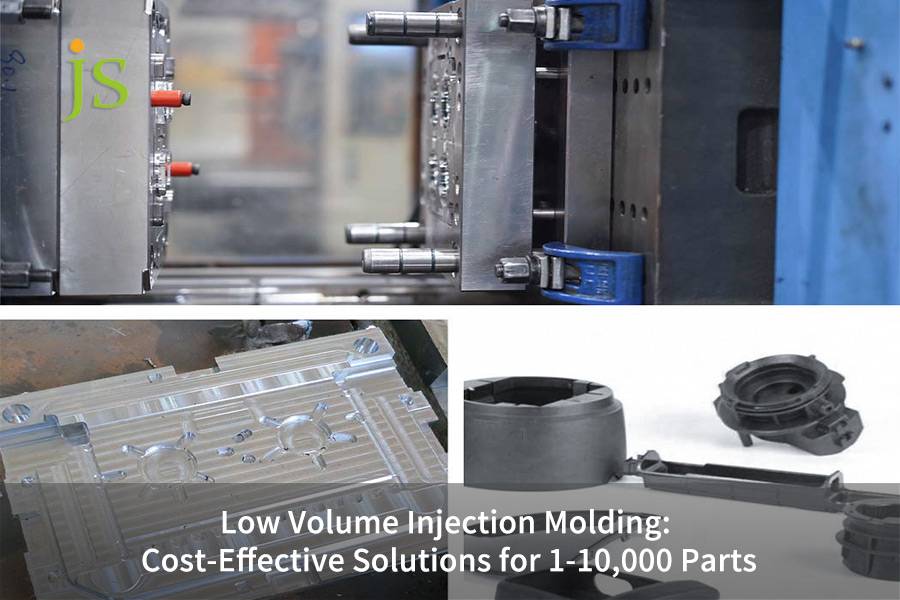

Low volume injection molding is an optimized molding method that finds a good compromise point between the upfront capital, delivery period for producing 1-10,000 plastic parts and product quality. By rapidly building tools with high-strength aluminum alloys (e.g. QC-10) or unhardened soft steels (e.g. P20), the initial mold cost can be cut down from 70% to 90%. Besides, the first delivery (T1) can be sped up in the timeframe of 10, 15 working days, thereby the precision manufacturing capability for B2B is satisfied with cost & time.
Low Volume Injection Molding Service Key Metrics Matrix
|
Core Metrics |
Aluminum Rapid Tooling (7075-T6/QC-10) |
Soft Steel Tooling (P20/1.2311) |
3D Printed Resin Mold (Rigid Resin) |
|---|---|---|---|
|
Economic MOQ |
100 – 5,000 pcs |
1,000 – 10,000 pcs |
1 – 100 pcs |
|
Expected Mold Life |
5,000 – 20,000 shots |
50,000 – 100,000 shots |
< 100 shots |
|
Achievable Tolerance |
±0.05 mm (ISO 20457 TG6) |
±0.03 mm (ISO 20457 TG5) |
±0.15 mm |
|
Surface Finish |
SPI-B1 (Medium Gloss) |
SPI-A2 (Mirror Polish) |
SPI-D3 (Sandblast) |
|
Avg Lead Time |
10 – 12 working days |
14 – 18 working days |
2 – 4 working days |
Key Findings
- Mold material selection:
When producing less than 3,000 units of pure ABS/PC or parts without fiber reinforcement, we mainly use QC-10 aluminum mold, but if the production is above 5,000 units or parts containing glass fiber (e.g.PA66+30%GF), we prefer the P20 soft steel molds.
- Cost reduction on mold base:
The MUD quick mold change system is able to remove the expense of 2,000-5,000 normal mold bases in a direct way and only machining of cores and cavities remains after that.
- Tolerances and Demolding:
For rapid mold tooling, keeping the wall thickness uniform is very important (±1% deviation), besides this, to prevent sticking or tearing, an outer surface should be slightly inclined, a 1 to 2 draft angle.
Why Trust JS Precision's Low-Volume Injection Molding Service?
Through our 15 years of collaboration as an engineering team in low volume injection molding, we've learned that to find a supplier that's truly reliable on the delivery side of low volume injection molding service, such a supplier must have traceable, verified data loops across these three dimensions: fast mold selection, cooling cycle optimization, and defect control.
As an example from one of our medical sensor housing projects, the original client proposal based on an H13 hardened steel mold cost came to 38,000 with 8 week delivery for the mold, resulting in an average cost of 19 per piece. We found a better option combining the use of an aluminum QC-10 mold+MUD mold base so the costs for the mold were 5,800 with lead time of 12 days resulting in mold cost of 2.90 only. The overall unit cost has been lowered from 24.50 to 6.80.
A paragraph from ISO 9001:2015 clearly states: For batch molding processes, the system of keeping records and traceable production parameters should be established and key data and processes must be safeguarded until the end of the product lifecycle.
To comply with it, for every small batch project, we carry out three-stage checks: DFM review trial mold parameter solidification/fixing first article full-dimensional inspection (FAIR), with critical dimensions CPK≥1.33.
This approach has become the knowledge base of 400+ small batch injection molding projects of JS Precision across the full range of scenarios from 100 prototypes only to mid-term mass production of 10,000 pieces and has reduced client TCO on average 35-50%.
Download the Small-Volume Injection Molding Quick Mold Selection and Cost Optimization White Paper now to systematically master the selection logic of QC-10 aluminum molds, P20 soft steel molds, and MUD mold bases, and proactively assess your low-volume injection molding service cost reduction potential.
Why Is Low Volume Injection Molding The Path For Reducing Upfront Costs?
Low volume injection molding not only removes the high-hardness steel (e.g. H13) molds processing costs but also uses easily machinable aluminum alloys or steel, reducing the high mold investment by over 70% making it a better way for rapid product launches up to 10,000 pieces.
Mold Depreciation Cost Calculation Formula
Unit Cost = (Mold Cost ÷ Total Production) + Unit Injection Molding and Material Costs
Comparison of Unit Cost Allocation for Aluminum Molds vs. Steel Molds (Production 2,000 Units):
- Hardened Steel Mold (H13): Mold cost 38,000 units, unit cost allocation 19.00, injection molding + material cost 5.50, total 24.50/unit.
- Aluminum Mold (QC-10): Mold cost 5,800, per-piece cost 2.90, injection molding + material cost 3.90 (aluminum mold cools quickly, shorter cycle time 306.80/piece).
- Savings: 72.2%.
Technical Limits: When to Discontinue Aluminum Molds
- Product quantity exceeds 10,000 pcs: As the typical mold life of aluminum is only 5,000-20,000 operations, changing to a harder mold like P20 or H13 is going to be necessary.
- The part consists of > 15% glass fiber: The presence of glass fiber in the material will greatly increase the rate of wear compared to using steel molds, by 5-8 times more, the cavity dimension accuracy of an aluminum mold after a while will fall off so bad that the parts won't fit any more with the tolerance ±0.05mm.
- Injection pressure>110 MPa: QC-10 yield strength 450 MPa, overpressure may cause plastic deformation of the mold cavity.
This is the underlying logic of low volume injection molding cost - not 'the cheaper the better', but 'selecting the most economical mold life within the production boundary'.
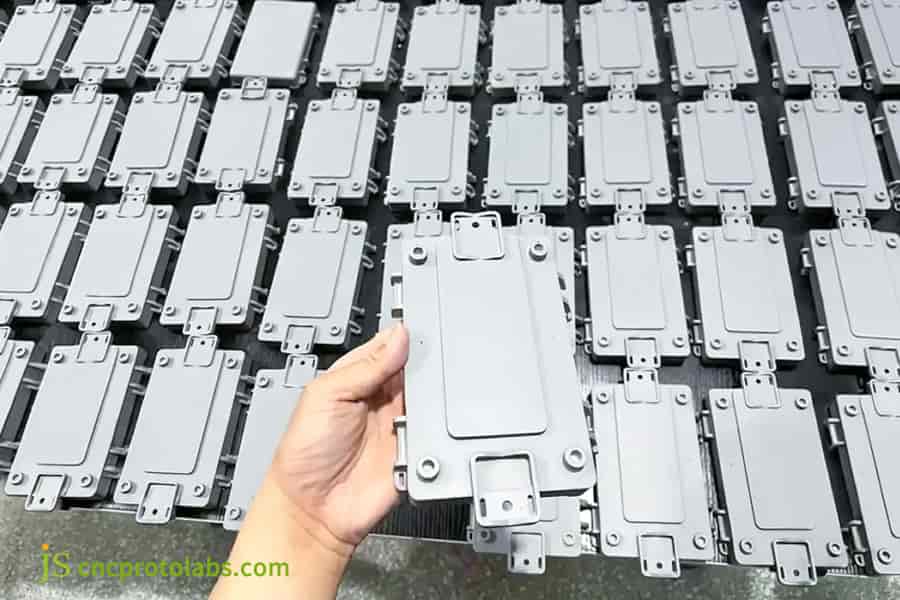
Figure 1: Gray plastic components produced for low volume manufacturing.
How To Balance Precision And Budget Using Aluminum Mold Injection Molding?
Aluminum mold injection molding is the ideal solution for obtaining a surface finish equal to that of steel molds while at the same time saving up to 60% processing time and allowing frequent design changes.
Thermal Conductivity Advantages of Aluminum Molds
Compared to P20 steel which has a thermal conductivity of roughly 35 W/m·K, the QC-10 aluminum alloy has a much higher thermal conductivity of around 145 W/m·K, about four times better. To illustrate, when molding ABS parts of equal 2mm wall thickness:
- Cooling of an aluminum mold takes about 12 seconds (due to the quick heat evacuation)
- Steel molds take about 22 seconds for the heat to leave them (As a result they need more time)
- The time saved on the cycle is about 45%, a great way of decreasing perPiece manufacturing costs.
How Aluminum Molds Fulfill Tight Tolenances
- CNC High-Speed Milling: Aluminum work piece speed can be 2-3 times faster than steel with cavity accuracy ±0.05mm (ISO 20457 TG6).
- Surface Polishing: Attainable SPI-B1 (medium shininess) or even SPI-A2 (mirror surface), Ra 0.2, 0.4μm.
- Modifications: A modification of an aluminum mold has an average cost of $500-1,000 per cycle and takes 3-5 days. A revision of a steel mold ranges from $2,000+ with the time cycle being only 1-2 weeks.
Submit 3D drawings to receive a free feasibility assessment and cost comparison report on aluminum mold injection molding.
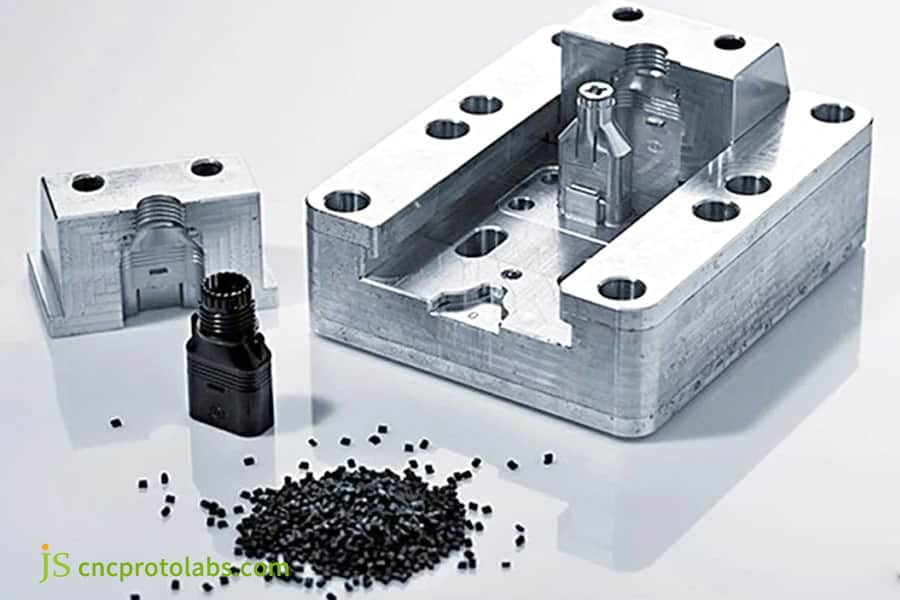
Figure 2: Aluminum mold with black components.
Aluminum Mold Vs Steel Mold: Comparing Properties And Parameters
The difference in cost between aluminum mold vs steel mold stems from the physical limits of the materials. Rapid aluminum alloy molds (QC-10) and traditional quenched steel molds (H13) have clear performance boundaries in terms of yield strength, thermal conductivity, and maximum injection pressure.
Material Parameter Comparison Table
|
Parameter |
QC-10 Aluminum |
P20 Soft Steel |
H13 Quenched Steel |
|---|---|---|---|
|
Yield Strength (MPa) |
450 |
650 |
1,200 |
|
Thermal Conductivity (W/m·K) |
145 |
35 |
28 |
|
Max Injection Pressure (MPa) |
≤110 |
≤150 |
≤200 |
|
Wear Resistance (GF30) |
Poor (<15% GF) |
Good (<30% GF) |
Excellent (any GF%) |
|
Cooling Time (2mm ABS, s) |
12 |
20 |
22 |
Key Parameters Explained
- Thermal Conductivity and Cooling Performance:
QC-10 aluminum mold 145 W/m·K vs H13 steel mold 28 W/m·K.The aluminum mold will only need 12 seconds to cool and steel mold 22 seconds, which results in nearly 45% better cooling efficiency. To put this in perspective, it means that if aluminum molds are used for production of 1,000 parts, 3 hours of machine time will be saved.
- Mechanical Strength and Injection Pressure Limitations:
H13 yield strength is around 1,200 MPa versus only 450 MPa of QC-10. Injection pressure for an aluminum mold cannot be more than 110 MPa. The mold cavity does not get deformed due to the injected pressure.
- Wear resistance difference:
H13 can withstand more than 30% glass fiber, millions of cycles of erosion. Aluminum molds are easily worn with high glass fiber content and are recommended only for unfibered or fibercontaining plastics.
The rapid tooling mold selection is a balancing between cooling speed and pressure life - aluminum molds are faster and cheaper, while steel molds are more durable and strong.
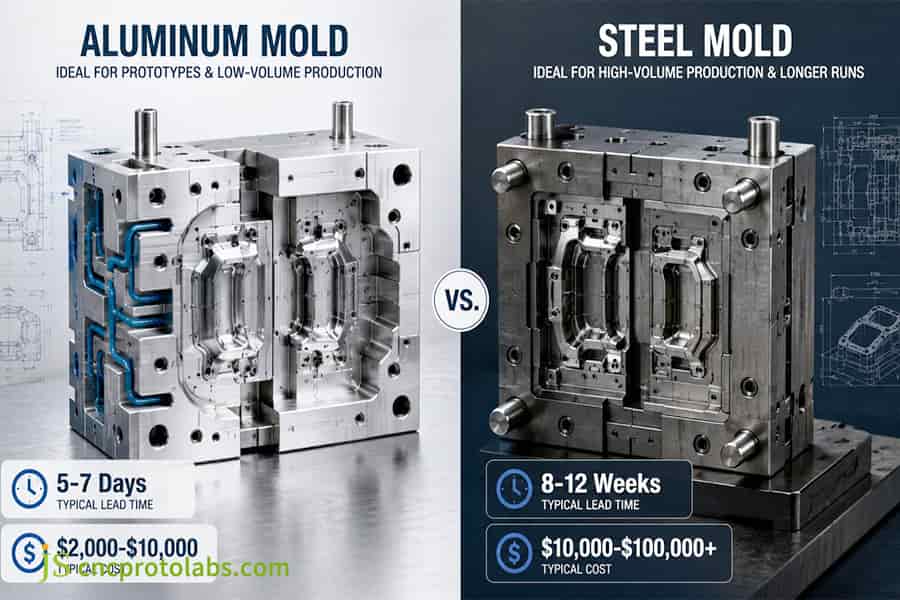
Figure 3: Aluminum vs steel mold properties comparison.
What Are The Structural Differences Between Prototype Injection Molding Service And Custom Low Volume Injection Molding?
Prototyping injection molding service employs manual inserts to ease mold operations for small quantities minimum prototyping purposes, but custom low volume injection molding combines automated ejection and sliding mechanisms to realize large quantities of production, even up to thousands of parts.
Mold Structure Comparison
|
Structural Element |
Prototype Mold |
Low-Volume Mold |
|---|---|---|
|
Side-action mechanism |
Manual inserts |
Hydraulic/pneumatic slides |
|
Ejection system |
Hand-stripped or simple pins |
Auto ejector plate + return pins |
|
Cooling channels |
Straight drilled (basic) |
Conformal cooling (optimized) |
|
Runner type |
Cold runner, manual degating |
Cold runner, auto degating |
|
Mold base |
MUD insert only |
Full frame or MUD |
How to determine which mode is suitable:
- Production volume < 500 pieces and design not finalized: prototype injection molding, manual insert + simple ejection, mold fee 1,500-4,000.
- Production volume 1,000-10,000 pieces and design finalized: small batch injection molding, automatic demolding + slide block, mold fee 5,000-15,000.
- Key DFM questions to check are: Is the wall thickness uniform? Do you have any undercuts? Does the part require side core pulling? These are factors that directly determine whether to use a prototype or a small batch.
Contact an engineer for a free DFM assessment to determine whether your part is more suitable for prototype injection molding service or custom low volume injection molding.
How To Select The Matched Engineering Plastics For Your Low Volume Injection Molding Service And Small Batch Injection Molding Service?
Material selection for low volume injection molding service and small batch injection molding service must comprehensively consider the plastic's flowability (MFR), shrinkage rate, and wear characteristics on the rapid molding die.
Common Material Performance in Rapid Molding
|
Material |
MFR (g/10min) |
Shrinkage (%) |
Mold Wear Risk |
Recommended Tooling |
|---|---|---|---|---|
|
ABS |
15–30 |
0.4–0.7 |
Very Low |
QC-10 Aluminum |
|
PP |
10–25 |
1.0–2.5 |
Very Low |
QC-10 Aluminum |
|
PC |
5–15 |
0.5–0.7 |
Low |
QC-10 / P20 |
|
PA66+GF30 |
5–10 |
0.3–0.8 |
High (abrasive) |
P20 Steel + PVD Coating |
|
PEEK |
2–5 |
1.2–2.5 |
Medium (needs >150°C mold) |
P20 Steel with heater |
Three Hard Rules for Material Selection
- 100% ABS/PP/PC:
MFR>10, excellent flow, practically no damage to aluminum molds from the material itself. It is recommended to use QC10 series of aluminum alloys as these are the lowest cost material of aluminum.
- PA66+GF30:
Glass fibers in the material lead to around 5-8 times greater wear of the cavity of the aluminum mold compared to a steel mold. P20 soft steel molds with PVD coatings (e.g. TiN) are required. The mold costs go up around 20-30%, but the mold life is also longer by about 5 times compared to the usual molds for such resins.
- PEEK/PPSU:
Mold temperature needs to be >150℃. Heat conductivity of aluminum mold is much higher than the capability of heat preserving by PEEK and PPSU. P20 steel with external oil temperature controllers is necessary, and in designing cavity shrinkage, it is better to make 1.5-2.5% compensation reserve.
How To Optimize Part Design To Minimize Rapid Tooling Injection Molding Costs?
Rapid tooling injection molding, a DFM principle, allows a mold processing time to be cut by 90% by completely getting rid of the need for complex machining on those areas. Three important quantitative rules below directly help cut mold costs.
Draft Angle
- Outer Surface: It is advised to have a minimal 1°. Still, if your object has a texture, you should consider adding more draft angle, about 1°-1.5° for every 0.02mm of texture depth to avoid tearing.
- Inner Surface (including ribs): per surface - 0.5°-1° if it is relatively shallow (e.g. Less than 50mm), if it is very deep (i.e. Deeper than 50mm) you will need a larger 2°-3°.
- Cost: For every 1 less draft angle, ejection force would go up an average of 20%, and the rate of torn scrap materials could go up by as much as 3-8%.
Avoid Deep Ribs
- Rib Depth: Should not go more than 3 times the base wall thickness.
- Rib Width: Has to be around 0.5, 0.7 times the base wall thickness.
- Processing Impact: Very deep and narrow grooves can only be finished by EDM corner clearing, which will add an additional 200-500 labor costs per area.
Eliminating Undercuts
- Shut-offs Design: A through-hole is used to remove external undercuts and no angled ejector or slider mechanism is needed anymore.
- Slider cost: 1,500-3,500. DFM optimization can replace the four undercuts with shuttles, saving over $6,000.
- A case study: Original design of a sensor housing had four external clips four sliders cost (12,000). Then redesigned for DFM by using internal shuttles + direct ejection saving $8,000 and cycle time shortened by 7 days.
Contact JS Precision engineers now for a free 2-hour DFM assessment to optimize your rapid tooling injection molding design.
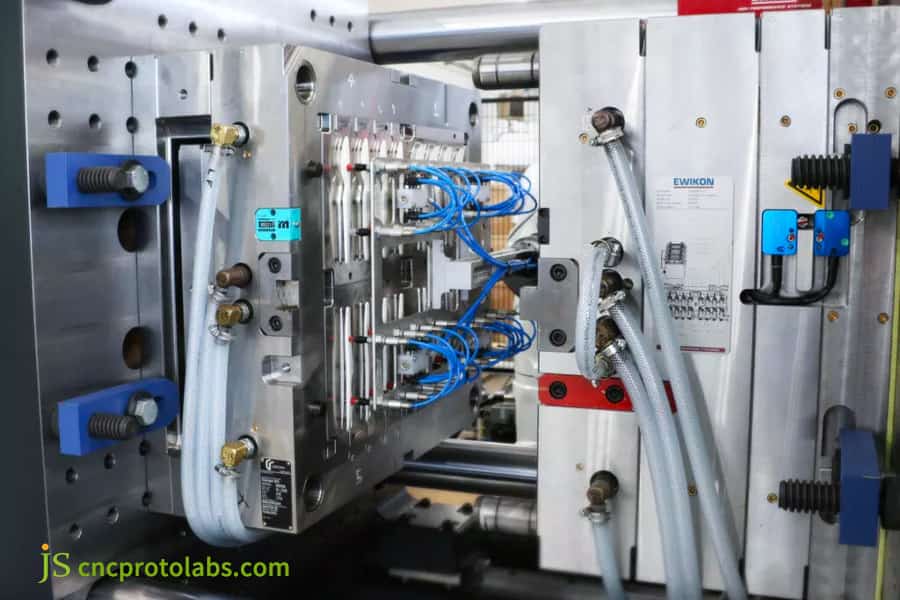
Figure 4: Aluminum prototype mold and machined parts.
How Does Custom Low Volume Injection Molding Control Defects To Ensure Batch Consistency?
Custom low volume injection molding must overcome the shortcomings of rapid molds in terms of thermal balance and exhaust performance through precise process optimization to ensure batch consistency of parts.
Dieseling Effect:
Usually, the rapid molding does not fully ventilate the venting groove which leads to the air being trapped. This will cause the part to get scorching at the ends. To prevent this occurrence, JS Precision recommends the use of:
- Sintered metal vent plugs: Embedded in spots where entrapment is most common, with a hole diameter 0.005-0.020 mm that allows air to escape if ventilation is obstructed.
- Parting surface venting groove: Grooves 0.015-0.025 mm in depth and 3-5 mm wide, ending in a vent opening to the atmosphere.
- Vacuum assistance: For complex thin-walled parts, when the mold is ready, the pressure inside the mold is first evacuated down to approximately 10 mbar before proceeding with actual injection to prevent any scorching completely.
Sink Marks Control:
- Injection pressure: The limit pressure of the aluminum mold is ≤ 110 MPa, and the P20 steel mold can be used up to 150 MPa. The shrinking area needs to be compressed and replenished.
- Holding time: With the freezing of the gate as the endpoint, empirical formula: Holding time ≈ wall thickness (mm) × 2.5 (seconds). 2mm wall thickness → hold pressure for 5 seconds.
- Temperature compensation: The aluminum mold is a good conductor of heat,thick wall areas need localized heating rods to prevent excessive cooling, which might cause shrinkage.
From our case of working on a car connector, originally the designer provided a venting groove of 0.030 mm depth (way too deep) causing silicone to go under into the groove and make flash and scrap rate of 4.2%. After changing into vent depth 0.020mm + sintered plug, flash was eliminated completely and the Cpk of the batch increased from 0.85 to 1.41.
Case Study: How JS Precision Optimized a Dual-Shot LSR Mold For Rapid Delivery Of 3,000 Sensor Seals?
In this real-life case, JS Precision solved the problem of inconsistent thermal expansion rates by optimizing the dual injection rapid injection molding process of liquid silicone (LSR) and PA66, and delivered 3000 precision industrial grade sensor sealing covers within 15 days.
Customer Challenges:
The sensors seals were supposed to be manufactured via a two-stage injection. One stage would have bonded PA66 of the base together with the LSR of elastomer. As the quantity of the pieces was quite small (3,000), investment of an expensive two-color injection mold turned to be not profitable. These two components were very different. The melting and shrinkage were quite different - PA66 roughly 1.5%, and LSR roughly 2.5%, 3.5% that made them liable to overflow and delamination very easily.
JS Precision Solutions
- Split-type rapid molding: The low-cost is obtained by manually inserting PA66 inserts into the silicone mold cavity (Insert Molding). Such a method does not require a two-color mold turntable mechanism and cuts the mold costs down from 45,000 to 8,500.
- High thermal conductivity QC-10 aluminum mold: Such the mold makes heating of the 160℃ high-temperature mold area that is needed for the silicone curing rapid and uniform and with LSR cross-linking done within only 8 seconds.
- Offline infrared preheating: The PA66 insert is kept at 80℃ constant before it is brought into the silicone mold by that way the temperature differences between the two contact surfaces are not there.
Lessons learned and failures:
During the T0 test, when the PA66 insert was transferred to the manual silicone mold, its temperature went from high to ambient level (25℃), leading to LSR shrinkage and under cured areas localized at the contact surface. Immediately adding an external infrared pre-heater kept the insert at a constant 80℃ temperature before installation, and as a result, micro-bubbles were entirely eliminated at the contact surface.
ISO 20457:2018 specifies: The dimensional tolerances of precision molded parts should be marked in segments according to functional requirements, and the compensation for shrinkage in the area of sudden wall thickness changes should be calculated separately.
In our case to meet tight tolerance requirement, we reduced the sealing lip tolerance to ±0.03mm (DIN 16742 fine) to make sure there were no air leaks in the assembled product.
Final Results
- Mold Delivery: 12 days (industry average 4–6 weeks)
- Finished Product Delivery: 15 days, all 3,000 pieces completed
- Airtightness Test: 100% qualified (0.3 bar air pressure, leakage rate <0.1cc/min)
- Unit Cost: $3.20 (originally estimated at $9.80/piece for the two-color mold solution)
- Mold Investment Savings: $36,500 ($45,000 → $8,500)
View details of the successful revival of the sealing cap for a similar dual-injection LSR sensor to understand how a custom injection molding manufacturer can solve complex dual-material molding problems using a small-batch approach.
Why Choose JS Precision As Your Long-Term Supplier For Low Volume Plastic Parts Manufacturing?
Choosing JS Precision for your low volume plastic parts manufacturing means benefiting from the finest design-for-manufacturing (DFM) design services, strict quality control based on the highest quality management system (ISO 9001), and many options without any restrictions on minimum order quantity (MOQ).
Fast DFM Feedback
- 24-Hour DFM Report: As soon as drawings have been uploaded, the team of engineers will deliver you the full manufacturability report, including all details from draft angle to wall thickness, gate position, and shrinkage deformation.
- Material Quality Assured by Third Parties: Offers material certificates and test reports from independent labs of a kind SGS or UL certifications, completely rules out materials that are not genuine and fake ones.
Customized Supply Chain Solution
- No MOQ (Minimum Order Quantity) Required: It will perfectly work whether you need just 10 samples or go right up to thousands of units in the middle term mass production.
- Ready MUD Mold Based on Stock: Customers are saved from the time needed in getting the MUD mold base because it is already in stock. For the customers, they just have to pay the fees of cavity and core processes.
- Flexible modification: The aluminum mold/P20 soft steel has excellent cutting performance, and the mold modification cost is $500-1000, which can be completed within 3 working days.
The true value of a low cost injection molding supplier lies not in being cheap, but in spending every penny on the cutting edge with engineering data - the difference of JS Precision lies in this.
FAQs
Q1: What is the major cost difference between aluminum and steel molds in low volume injection molding?
Aluminum molds (7075-T6/QC-10) are priced at about $1,500-$10 000 are delivered in 10-12 days, and can produce 100-10,000 parts. Hardened steel molds (H13) can go beyond $30 000 require a lead time of 6-8 weeks, have high yield strength and are the only ones that can be used with glass.
Q2: How does JS Precision keep the dimensional accuracy of the parts during rapid tooling injection molding?
JS Precision achieves the accuracy of parts through precision CNC machining with CMM inspection while also using the Moldflow mold shrinkage simulation. Even for materials such as PEEK and PC which are characterized by high shrinkage, JS Precision can maintain a ±0.05 mm (DIN 16742 TG6) tolerance continuously.
Q3: How long does it generally take to receive the first samples (T1 samples) of custom low-volume injection molding?
If JS Precision uses a standard MUD mold base and high-speed CNC direct machining of QC-10 aluminum mold cavities the lead time for T1 samples is typically 10-14 working days which is over 60% less compared to traditional custom steel molds.
Q4: Is it possible to use high-performance engineering plastics like PEEK or PPSU for your low-volume injection molding service?
Yes. JS Precision uses precision heating channels within either aluminum or P20 soft steel mold cavities which function in cooperation with an outside high-boiling-point oil temperature controller to keep the mold at a temperature that will enable a complete crystallization of PEEK or PPSU, i.e, above 150℃.
Q5: Is there a minimum order quantity (MOQ) for prototype injection molding service?
Our company JS Precision has no minimum order quantity requirement for prototype injection molding. Through resin 3D printed molds or quick turnaround aluminum inserts, up to 50 prototypes can be made for functional testing at low cost.
Q6: How much can I save by using MUD system for low-volume plastics?
A mold-changing system based on Master Unit Die (MUD) can reduce mold making costs to as little as 40 - 60% upfront. If injection molding machines use standard mold bases then cavity and core machining fees are your only cost, up to $3,000 is saved at each project level.
Q7: How does JS Precision carry out product design changes during limited-run production?
Since Aluminum QC-10 is easy to work with and also so is P20 mild steel, making changes to molds is a very efficient job. If you need to add ejector angles or remove angles from a part that has been cleared it will most probably cost around $500 - $1000. In almost all cases, mold modifications are finished within 3 working days.
Q8: How can I ask for a quote for injection molding service, and what files are needed?
Please send us your 3D CAD drawings (STEP/STP/IGS) and 2D blueprints including tolerance information (PDF). Within less than 1 day our engineers will give you an offer together with a breakdown of expenses and a DFM analysis report for each mold.
Summary
Low volume injection molding breaks down the financial and technological barriers between prototyping and mass production. By using rapid aluminum molds and MUD mold bases, companies can validate true mechanical properties and achieve final product-grade surface finishes with lower upfront budgets. Mastering draft angles, wall thickness consistency, and proper material flow design are key to the successful implementation of this process.
No longer be hindered by the high financial threshold of traditional steel molds. Contact the JS Precision Application Engineering team today for: a free professional DFM analysis and assessment within 24 hours, material selection and shrinkage control technology advice tailored to your product, and an instant, transparent injection molding cost quote based on your actual production cycle. Upload your CAD drawings and start your rapid injection molding project.

Disclaimer
The contents of this page are for informational purposes only. For JS Precision Services, there are no representations or warranties, express or implied, as to the accuracy, completeness, or validity of the information. It is the buyer's responsibility to identify specific technical requirements and request a formal parts quotation. Please contact us for more information.
JS Precision Team
Custom manufacturing solutions. With over 15 years of experience serving more than 1,000 customers, we specialize in high-precision CNC machining, sheet metal fabrication, 3D printing, injection molding, and metal stamping. Having successfully delivered over 300,000 precision parts, we maintain a 99.2% on-time delivery rate across all custom projects.
Our facility is equipped with over 100 state-of-the-art 5-axis machining centers and is ISO 9001:2015 certified. We deliver fast, efficient, and high-quality manufacturing solutions to B2B clients across 150 countries. Whether you require low-volume prototyping or large-scale customization, we support your project with lead times as short as 24 hours. Choose JS Precision for unparalleled efficiency, quality, and professionalism.
To learn more or submit your RFQ, visit our website: www.cncprotolabs.com
Resource