English




Precision sheet metal fabrication manufacturers selection in 2026 is increasingly determined not just by the amount of floor space or machine count but by their digital DFM turnaround time, their ability to oversee material spring back, and the consistency of the tolerances on small batch, complex components.
What comes next list evaluates each facility under these three categories.
2026 Top Precision Sheet Metal Providers Overview
|
Manufacturer |
Core Strengths |
Min Tolerance |
Low-Volume Support |
Certifications |
|---|---|---|---|---|
|
JS Precision |
Ultra-precision low-volume customization, complex structures, rapid DFM |
±0.005mm |
No MOQ, 1–500 pcs fast turnaround |
ISO 9001:2015, IATF 16949 |
|
MEC (Mayville Engineering) |
Largest US contractor, agriculture & heavy equipment high-volume |
±0.10mm |
Medium-high volume (> 1,000 pcs) |
ISO 9001, Defense Compliant |
|
Cadrex Manufacturing |
Telecom & data center server rack high-volume integration |
±0.05mm |
Sample development to mass production |
ISO 9001, ISO 14001 |
|
RapidDirect |
Cost-effective Asia supply chain, rapid prototyping & mid-low volume |
±0.08mm |
3-day rapid prototyping, small batch friendly |
ISO 13485, IATF 16949 |
|
Fictiv |
Smart cloud manufacturing network, digital visualization & distributed delivery |
±0.10mm |
Platform-based 1-piece order prototyping |
ISO 9001, AS9100D |
|
BTD Manufacturing |
Automated high-tonnage stamping, robotic welding & tube-plate integration |
±0.10mm |
Suitable for scaled production assemblies |
ISO 9001, AWS Certified |
|
Momentum Manufacturing |
Multi-site integrated processing, aerospace & industrial equipment assembly |
±0.05mm |
Mid-low to high volume transition |
ISO 9001, AS9100D |
|
O'Neal Manufacturing (OMS) |
Heavy steel plate cutting, large structural weldments |
±0.20mm |
Medium-high volume heavy industrial parts |
ISO 9001 |
|
Protolabs |
Fully automated cloud prototyping, extremely fast simple part delivery |
±0.10mm |
1–100 pcs automated rapid prototyping |
ISO 9001, AS9100D |
|
Xometry |
AI-driven global distributed marketplace matching network |
±0.10mm |
1-piece order, depends on matched network shops |
Relies on secondary supplier certification network |
Data source: Thomasnet & The Fabricator, Supplier Directory 2026.
Key Takeaways
- Finding three supplier types (large contractor producer, Web-based distribution channel and accurate fabrication shop) and matching them with manufacturing volume and dimensional accuracy requirements.
- Small quantity production would be best handled by laser cutting and CNC bending (no tooling at all) to avoid the large cost of producing the stamping die set-up.
- In cases of high sensitivities (±0.005 mm), then material property correction, stress-relief heat treatments should be considered in the DFM at an early stage to prevent dimensioning problems not happening during the final stage of manufacturing.
Who Are the Top 10 Precision Sheet Metal Fabrication Manufacturers in 2026?
Today, in 2026, precision sheet metal fabrication manufacturers have evolved into 3 tiers: High volumes giants, a cloud-based digital platform, high precision low volume specialist manufacturers.
In-depth Breakdown of the Three Tiers
- Heavy-duty & large-scale Mass Production Level:
In such fields like defense, data center enclosure, heavy industry etc. MEC Cadrex BTD Manufacturing, Momentum Manufacturing, and O'Neal Manufacturing (OMS) would have heavy-duty manufacturing capacity and large-scale (mass production quantity production (> 1,000 sets).
- Cloud digital network level:
Fictiv, Xometry and Protolabs adopt digital manufacturing platform by using algorithms and distributed network to supply high speed prototyping of simple parts and flexible capacity. Based on work experience on the Xometry platform, their AI matching algorithm can fulfill simple parts with satisfactory deviation but tends to overshoot complex parts with multiple bends above the tolerances for design drawings.
- High precision & Low-volume Customization Level:
JS Precision and RapidDirect have technical strengths from real manufacturing operations, and they specialize in low-volume production, intricate structures, and very narrow tolerances (±0.005 mm). The categorization of 2026 sheet metal fabrication companies among these levels determines what service applications would be suitable for them.
Matching Tiers to Requirements
The first thing to do when seeking quality precision sheet metal fabrication manufacturers is to define the production volume and tolerance grade of your project.
- For mass production of standard parts select MEC or Cadrex first.
- For quick and cheap prototypes go for Protolabs or Xometry.
- For highly intricate components that demand tight tolerances (0.005 mm), for example, and a high number of bends, you should contact and work with a manufacturer like JS Precision that is equipped with in-house production capabilities and holds thorough process control systems.
Want to gain in-depth insight into the selection criteria for the three tiers of suppliers? Download the 2026 Precision Sheet Metal Supplier Selection White Paper to access a comprehensive evaluation framework and 12 industry case studies.
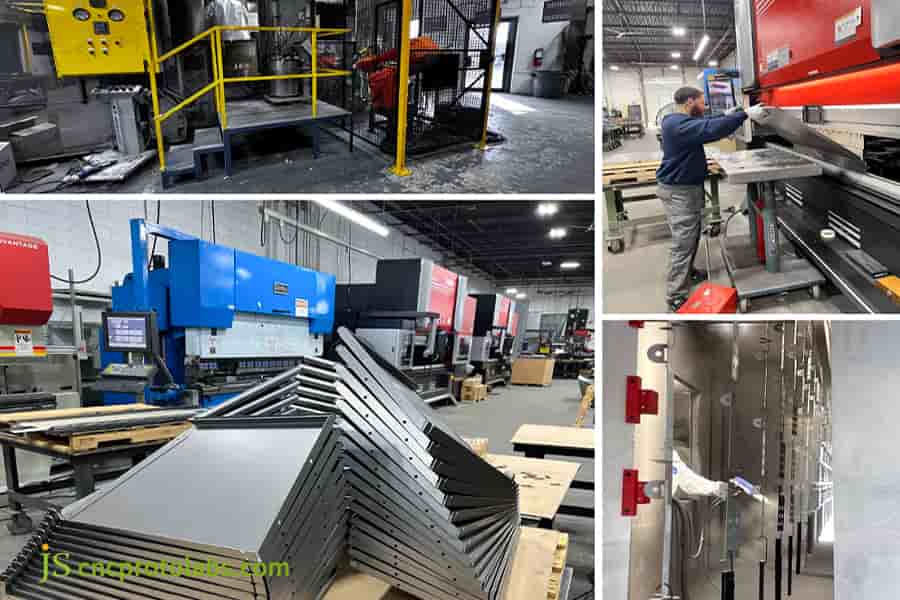
Figure 1: Modern precision sheet metal fabrication factory interior with advanced machinery.
How to Evaluate Precision Sheet Metal Fabrication Manufacturers in 2026?
Precision sheet metal fabrication manufacturers are usually assessed from three perspectives: equipment configuration, process control, and quality assurance chain.
Equipment Configuration Dimension
- Laser Cutting Precision: By benchmarking a 12kW fiber laser cutting machine with a conventional plasma cutting method, we see that while the laser achieves a perpendicularity cut edge ±0.05 mm, with HAZ width less than 0.1 mm, the plasma cutting typically produces a greater than 0.5 mm HAZ.
- CNC Bending Compensation Capability: High tech precision metal sheetmakers expected to be top in 2026 will need to have high precision CNC bending machines coupled with real-time angle measuring systems that will automatically rectify any springback-induced cumulative errors during 0.5-3.0 mm stainless steel and aluminum alloy bending operations.
Process Control Dimension
- Springback Compensation Algorithms: High performance CNC bending machines can take materials of different hardness levels into account and will adjust the ram depth through preloaded K-Factor databases.
- Tooling Management: Universal V-die set-ups can be used to bend angles from 90° down to 175° meaning that custom tools for each specific angle are no longer necessary.
ISO 2768-1 stipulates: Under the medium (m) tolerance class, the general tolerance for angular dimensions with a short leg length of 50–120 mm is ±0°20′.
JS Precision sets the angular tolerances of its CNC bending machines to the upper limit of ISO 2768-mK for medium class tolerances at the machine shop and applies laser feedback systems to keep actual machining tolerances within ±0.2°.
Quality Control Dimension
The use of dimensional inspection techniques involving CMM (Coordinate Measuring Machines) and optical scanning work as an important method for assessing quality suppliers. JS Precision offers detailed reports on dimensional inspection through CMM as well as Material Test Reports (MTR) for each product batch from the supplier.
Which 2026 Top Precision Sheet Metal Providers Offer Low Volume Fabrication Services?
2026 top precision sheet metal providers deliver low volume sheet metal fabrication service based on tool-less laser cutting and CNC multi-axis bending. Through these techniques, they have been able to reduce their tooling cost to none with fast deliveries.
Cost-effectiveness comparison: Low-volume production vs. traditional stamping
|
Cost Factor |
Traditional Stamping (Die Required) |
Low-Volume Flexible Manufacturing |
|---|---|---|
|
Tooling Cost |
$3,000–$10,000 |
$0 (tool-less) |
|
Lead Time |
3–4 weeks |
3–5 days |
|
Minimum Order Quantity |
Typically > 1,000 pcs |
1–500 pcs |
|
Design Change Cost |
High (die modification) |
Low (program update only) |
Data source: McKinsey Industry Insights & Grand View Research, Manufacturing Cost Trends 2026.
Strategic differences among three low-volume service providers
- JS Precision: The company combines 3D unfolding algorithms with a set of universal bending tools to resolve the issues of the assembly clearance and hole-flanging for AL 6061-T6 and SUS302 in low volume sheet metal fabrication service. Their core business is about tool-less, flexible manufacturing.
- RapidDirect: A firm that offers 3-day very fast prototyping, great for rapid design concept checking.
- Protolabs: Gives a full-featured automated platform on the cloud, which allows for fast delivery of basic parts in quantities from 1 to 100.
Recommended process workflow
For small-batch production of 1–500 units, the recommended workflow is: Laser Cutting → CNC Bending → Minimal Manual Grinding → Surface Treatment. There is no way to make money out of tools in this method of production because it's a method which totally avoids the use of tools that require molds.
ISO 9013:2017 specifies that thermally cut parts shall be classified according to the perpendicularity or angularity tolerance u and the mean roughness Rz5.
During the laser cutting process, JS Precision maintains cutting quality within ISO 9013 Range 2 limits (u ≤ 0.15 + 0.007×t, Rz5 ≤ 40 + 0.8×t).
Simply provide drawings and batch specifications, and JS Precision engineers will immediately generate a cost comparison report for low volume sheet metal fabrication service.
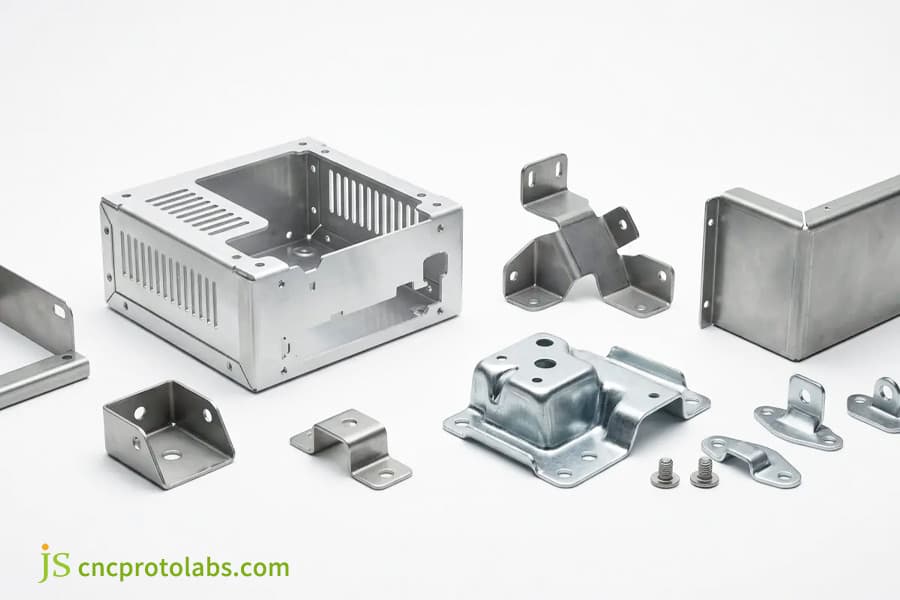
Figure 2: Finished sheet metal enclosure and bracket showcasing low volume fabrication capability.
What Determines Precision Sheet Metal Fabrication Costs and How to Optimize Them?
The main precision sheet metal fabrication costs drivers are the rate of material usage, hours spent on laser-cutting work, how many bends are required, welding length, and surface treatment type.
Cost Breakdown Formula
Overall Cost = Materials Cost + Laser Cutting Cost + Bending Labor Cost + Post-processing Cost + Quality Inspection Cost.
Among them, the material cost includes a waste rate of 15% -20%, the laser cutting cost is determined by the cutting width and thickness coefficient, and the bending labor cost includes tool replacement and trial bending costs.
Four Engineering Optimization Strategies
- Standardize internal bending radii: By minimizing the number of tool changes you can reduce the bending labor costs. Choosing either 1x, or 1.5x of the sheet thickness as an internal radius can decrease the bending setup time by about 20%.
- Optimize the distances from the bend line to holes: To prevent the holes from the bending deformation keep a hole-bend line gap of ≥2t + R (t - sheet thickness, R - bend radius). This will save you from the major portion of rework (almost 90%) caused due to the deformation of holes.
- Pre-positioning with snap-fit: Replace the complicated and time-consuming welding fixtures with snap-fit design features and cut the welding labor time by about 30%-50%.
- Choose suitable materials: The efficiency of the material can reach over 85% if nesting software is being used for precision sheet metal components.
Cost Differences: Digital Platforms vs. Physical Factories
Digital marketplaces (e.g. Xometry) generally add an extra 15%-30% over time due to a dynamic price factor, whereas offline manufacturing facilities (e.g. JS Precision) will probably present more clear and open direct-supply price models. For parts that are very intricate having different bends along the way, physical manufacturing plants DFM optimizing can bring another 10%-15% cost saving on the part of precision sheet metal fabrication costs.
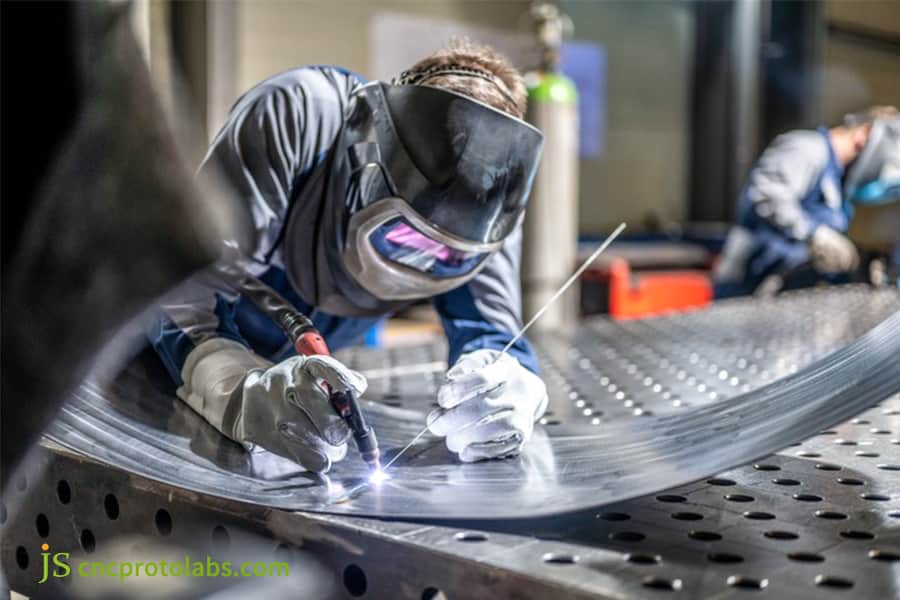
Figure 3: Stacked sheet metal parts in a fabrication facility related to cost optimization.
How Does Sheet Metal Fabrication for Automotive Meet Complex Design Standards?
The requirements for compliance with IATF 16949 for the sheet metal fabrication for automotive are very strict. Tolerancess must be within ±0.05 mm for complex car parts and welding strength shall be above 450 MPa.
Automotive-Grade Certification and the Performance of Different Suppliers
- IATF 16949 Certification: This covers battery pack housings, motor control boxes, and vehicle structural parts, dimensional tolerances of ±0.05 mm and weld strength > 450 MPa are required.
- Processing High Strength Steel and Aluminum Alloy: DP780 high strength steel and AA5754 aluminum alloy are very likely to crack and spring back when subject to complex 3D bending and deep drawing, which makes it a highly challenging process. Supplier that has automotive-grade certifications like IMS Companies, RapidDirect, and JS Precision can manage the process parameters in totally different ways.
Welding and Airtightness Testing
- Continuous Spot Welding and Laser Autogenous Welding: These methods are crucial for maintaining the sealing of EV battery pack housings.
- Airtightness Testing Standards: The most common methods are underwater bubble testing or leak detection using helium mass spectrometry, the leak rate should be < 110 mbarl/s.
Material Springback Control
AA5754 aluminum alloy bends 90 and springs back by 2-3, the over-bend technique is the only way to get that perfect angle. JS Precision's CNC benders are equipped with live-angle-measurement systems to springback deviation to control to ±0.1°.
Facing challenges regarding automotive-grade sealing and structural strength? Contact JS Precision engineers today to receive a tailored process assessment and sample test report for sheet metal fabrication for automotive.
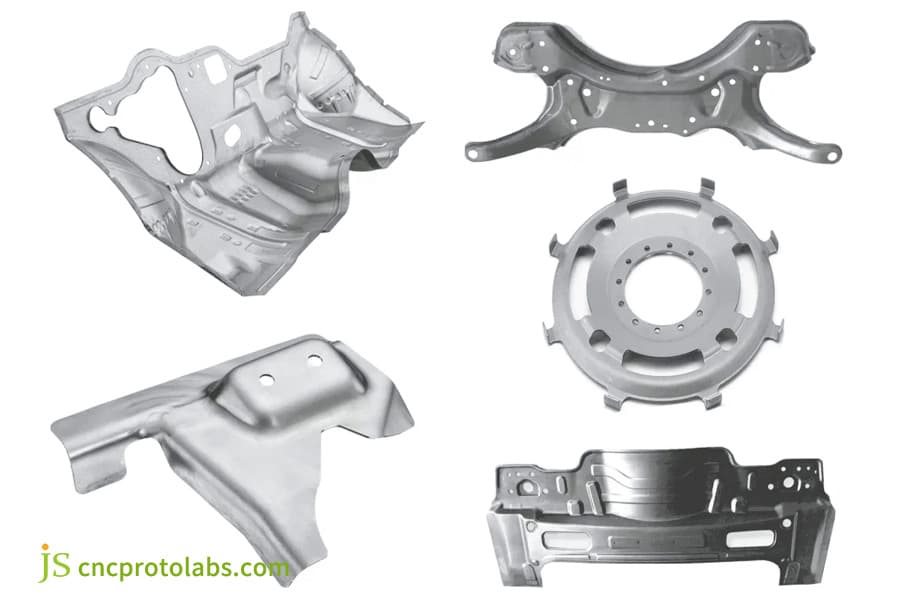
Figure 4: Various high precision automotive sheet metal parts meeting complex design standards.
How Do Manufacturers Prevent Warpage in Complex Sheet Metal Parts Fabrication?
Complex sheet metal parts supplier prevents warping due to laser segmented energy control, TIG/MIG pulse welding, and anti-deformation fixturing in combination with CAD material springback pre-compensation algorithms.
Deformation Control for Multi-Stage Bending
- FEA Stress Distribution Simulation: Fine detail precision sheet metal components are very vulnerable to overall warpage (1-3 mm) mainly resulting from residual stresses after multi-stage bending and welding. JS Precision uses finite element analysis (FEA) to simulate bending stress distribution of a component and to determine the unfolding compensation values before laser cutting is done.
- Fiber Laser Welding vs. Traditional TIG Welding: Heat input is reduced by 60%, when the part is subjected to water cooled fixtures the flatness shall remain within 0.1 mm/m.
Fixturing Solutions for Welding Deformation
- Anti-deformation Modular Fixtures: By using symmetrical weld layouts and mechanical restraint fixtures, welding is kept inside design tolerances.
- Post-Weld Stress-Relief Annealing: Post-Weld Heat Treatment (PWHT) is given at approximately 600℃ - 650℃ with two hours soaking period, removing 85% above of residual stresses internally.
Comparison of Typical Deformation Data
|
Parameter |
Before Optimization |
After Optimization |
Improvement |
|---|---|---|---|
|
Overall Warpage |
1–3 mm |
< 0.2 mm |
85%–93% reduction |
|
Heat Input (TIG vs Fiber Laser) |
2.0 kJ/mm |
0.8 kJ/mm |
60% reduction |
|
Flatness per Meter |
0.5 mm/m |
0.1 mm/m |
5× improvement |
|
Residual Stress Level |
280 MPa |
< 48 MPa |
83% reduction |
Data source: ASM International Handbook & MatWeb Material Property Database.
JS Precision Case Study: Achieving ±0.005 mm Tolerance for Medical Equipment Sheet Metal Assemblies
Precision sheet metal fabrication manufacturers are at their best when they are making medical equipment, where JS Precision provided the customer ±0.005 mm tolerance assemblies via high precision CNC bending, offset grinding, and full CMM monitoring.
Customer Challenges
The medical imaging equipment client asked several manufacturers for ultra precision optical light shields made of 316L stainless steel. They specified a tolerance of ±0.005 mm in the critical hole spacing and a bending angle tolerance to be ≤ ±0.05°. In fact, the pass rate for traditional sheet metal shops averaged under 15%.
JS Precision Solutions
- High Accuracy Laser Cut: The use of a 1500W fiber laser machine that is equipped with a high precision linear motor to obtain the cut-edge roughness of Ra 1.6.
- Bending with Dynamic Angle Compensation: A CNC bending machine was used that dynamically measured and optically compensated the angle to deal with differences in the material spring-back due to hardness variations among 316L material lots.
- Precision Reaming of Secondary Pin Holes: A second precision reaming process was introduced for the holes that contain pins since only this technique guarantees a deviation of hole diameter of ±0.005mm.
Lessons Learned from Failures
From our firsthand knowledge, the first trial batch showed dimensional deviation of 0.012 mm after workpiece surface passivation, which happened because workpiece stress-relieving annealing had been accidentally skipped by the staff. The manufacturing department quickly altered the process flow by including a stress-relieving heat treatment at 220℃ after cold forming of the component and completely eliminated the problem of dimensional drift.
Quantifiable Results
- Very impressive quality: The yield of the first passes (complying to the tolerances) in the run on production of 500 assemblies increased from 15% to 99.2%.
- Faster Delivery: The turnaround time reduced to 8 days which was down from 21 days, a 62% saving.
Are you a precision sheet metal components manufacturer whose products don't pass quality inspections very often? Please share your 3D model files with us at JS Precision to get a customised quote, and also enjoy our free DFM service.
Why Choose JS Precision as Your Precision Sheet Metal Fabrication Partner in 2026?
Precision sheet metal fabrication manufacturers like JS Precision have their doors open every step, from 1-piece rapid prototyping all the way up to mass production. We give clear, cost-related information as well as strict technical limitations of ±0.005 mm.
- Advanced Hardware & Processes: Installed with high strength laser cutting, CNC bending and automated welding facilities. As a low volume manufacturer, designed for single piece orders with no minimum order requirements (Moq).
- Engineering Cost Optimization: Free DFM assessment makes easier cost optimization during the design phase. Cost reduction opportunities are identified and achieved by integrating standard internal bend radii, optimizing holes to edge distance and similar design activities, resulting in reduction of 15%-30% in total cost.
- Quality assurance: With ISO9001 certification, each batch of material or product has CMM inspection report and MTR as well.
- Unique Positioning: Direct control of manufacturing in our own physical factory (not cloud based website like Xometry) and better flexibility in to do small volume and more customized projects than huge contract manufacturing companies (e.g., MEC)
FAQs
Q1: What is the minimum tolerance achievable in precision sheet metal fabrication?
We are able to produce very tightly-toleranced parts by drilling holes with pin reamers and using bending machines with dynamic optical compensation to control hole-to-hole tolerances within ±0.005 mm. While conventional sheet metal fabrication tolerances range from ±0.1 mm to ±0.2 mm, we do manage to go beyond such standard precision.
Q2: What is the typical lead time for low-volume sheet metal fabrication services?
The normal turnaround period for low-volume orders (1-100 pc) is 3 to 5 working days. A production run needing complicated post-treatment and if no tools are needed, lead time is normally 7 to 10 working days.
Q3: What key factors affect precision sheet metal fabrication costs, and how to get a quote?
Costing is dependent on material type, sheet thickness, laser cutting paths, number of bends, welding complexities, and type(s) of surface treatment needed. By transmitting 3D STEP/IGES files and 2D PDF drawings with us, you should get a full breakdown with cost calculation ready within 24 hours.
Q4: What sheet metal materials can JS Precision process for precision components?
We machine various materials from 0.5 mm up to 20 mm including aluminum, stainless steel, cold-rolled steel, galvanized steel, copper, and copper based alloys. Our Material Test Reports (MTR) will be issued per batch of material, showing grades such as AL 6061-T6, SUS304 and 316L among others.
Q5: How to prevent bending cracks and hole deformation in sheet metal design?
To avoid cracking make the bend radius r not less than the sheet thickness t and the bend lines should be normal to the rolling grain.Distance from hole edge to bend line would be more than 2t + R. It can be optimised at DFM review stage to avoid 90% rework risk.
Q6: What surface treatments are available for custom precision sheet metal parts?
Recommened finishes are powder coating anodizing zinc/nickel plating and passivization. Choosing a suitable surface finish for the working environment will maximize the working time of the component and improve the appearance.
Q7: What is the difference between sheet metal prototyping and mass production?
All prototyping processes are tool-less laser cut and CNC bending this allows quick iteration of cost-effective design changes.Mass production uses dedicated progressive stamping dies, and an automated welding fixture lowering unit labor time and cost.
Q8: Why is Design for Manufacturability (DFM) review critical before metal fabrication?
Definition for Manufacturing (DFM) review meets with shop if necessary, receives Manufacturing Release, and discusses and identifies QC and non-GC out of tolerance interference, bend flanges too short to clamp in equipped punches, and suggested tooling zone access.Once part is optimized and flat plan design is optimized it can be produced with no need for rework and delivered on time.
Summary
By 2026, the proliferation of enhanced capabilities in the precision sheet metal fabrication industry will enable the rapid, low-cost delivery of intricately shaped structural parts and components at precise tolerances. When selecting a precision sheet metal fabricator, attention should be paid to their digital DFM response speed, material rebound control capability, and tolerance retention rate for low batch complex parts. Defining engineering specifications, choosing the right manufacturing process and working with a manufacturer that has a high technical base are all vital elements for both project success and cost minimizing.
Seeking a sheet metal manufacturer for tight tolerances, complicated design, and quick turnaround? Just send your 3D/2D CAD drawings to JS Precision today for a free DFM evaluation and a quote within 24 hours. Work with a supplier that you know will deliver the quality and service you need.

Disclaimer
The contents of this page are for informational purposes only. For JS Precision Services, there are no representations or warranties, express or implied, as to the accuracy, completeness, or validity of the information. It is the buyer's responsibility to identify specific technical requirements and request a formal parts quotation. Please contact us for more information.
JS Precision Team
Custom manufacturing solutions. With over 15 years of experience serving more than 1,000 customers, we specialize in high-precision CNC machining, sheet metal fabrication, 3D printing, injection molding, and metal stamping. Having successfully delivered over 300,000 precision parts, we maintain a 99.2% on-time delivery rate across all custom projects.
Our facility is equipped with over 100 state-of-the-art 5-axis machining centers and is ISO 9001:2015 certified. We deliver fast, efficient, and high-quality manufacturing solutions to B2B clients across 150 countries. Whether you require low-volume prototyping or large-scale customization, we support your project with lead times as short as 24 hours. Choose JS Precision for unparalleled efficiency, quality, and professionalism.
To learn more or submit your RFQ, visit our website: www.cncprotolabs.com
Resource