English



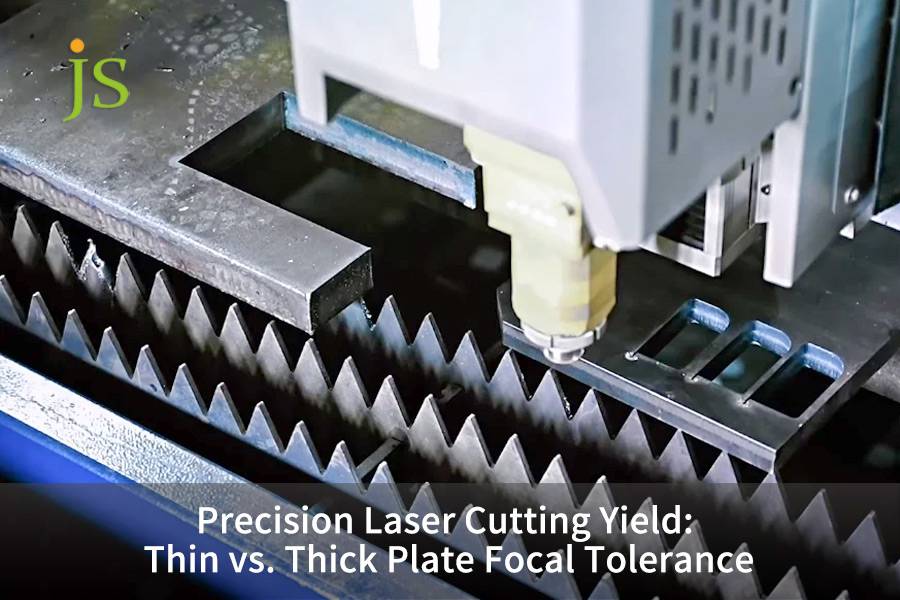

Precision laser cutting results can be determined by a rayleigh range-to-thickness ratio. When it comes to thin plates (≤3 mm) they can use a 0.05-0.10 mm spot with a tolerance of 0.15-0.25 mm which depends on servo and heat conditions. Whereas thick plates (≥12 mm) require a 0.20-0.35 mm spot and a tolerance of ±0.80-1.20 mm that must be done plus deep negative focus (-1.5 to -8.0 mm) and the use of gas pressure.
This JS Precision guide outlines focal tolerance tuning strategies.
Precision Laser Cutting Focal Tolerance Parameters
|
Processing & Physical Metric |
Thin Plate (≤ 3 mm) |
Thick Plate (≥ 12 mm) |
|---|---|---|
|
Focal length & spot diameter |
125‑150mm, 0.05‑0.10mm |
200‑300mm, 0.20‑0.35mm |
|
Optimal focal position |
0 to −1.0mm (near‑surface negative defocus) |
−1.5 to −8.0mm (deep internal negative defocus) |
|
Extreme focal tolerance window |
±0.15mm to ±0.25mm |
±0.80mm to ±1.20mm |
|
Failure mode |
Kerf too wide, edge burn‑through, thin‑plate thermal warpage |
Bottom dross, bevel angle > 1.0°, incomplete penetration |
|
Assist gas synergy |
High‑pressure N₂ (16‑20 Bar) |
Medium‑low pressure O₂ / high‑pressure N₂ (6‑18 Bar) |
Data source: JS Precision 2026 market benchmarking, company official websites and public disclosures.
Key Takeaways
- The cutting yield in thin plates mainly depends on how fast the height tracking system reacts. When focal shift goes beyond ±0.2 mm, that results in 30% bigger HAZ size.
- For cutting thick plates, Consider maintain a deep negative focal position. If focal shift upwards is even 0.50 mm, that would add up to an extra 0.8° bevel angle on the cut-face as well as 45% higher dross removal expenses.
- Avoiding focal shift through thermal lensing should be the first and foremost measure to get CPK above 1.33 for the entire 24-hr production run.
What Is the Difference Between Thin and Thick Plate Laser Cutting Focal Tolerance?
Depth of focus and energy density differ from each other mainly in that short focal length produces a small spot, tightens thin-plate tolerance to ±0.20 mm, long focal length increases depth of focus, thick-plate tolerance gets relaxed and goes down to ±1.00 mm. So, precision laser cutting calls for the opposite approach according to the situation.
Underlying Physical Mechanism
Doubling the focal length reduces spot diameter and raises energy density, but focal depth becomes only one-quarter of what was previously and strict focus tolerance is one of the main issues in thin-plate cutting. According to geometric optics, the relationship between the depth of focus (Z_r) and the focal length (f) is expressed as:
Z_r=(π · d2_f )/2λ
d2_f is the diameter of the focal spot and the laser wave length (1070 nm in fiber lasers). This simple relation points out that if we have a small focal spot the depth of focus is reduced while focal position accuracy requirement is increased correspondingly.
Simply put, thin-plate is like using a needle-tipped pen, a minor deviation causes the lettering to become blurred. But, thick-plate machining would roughly compare to using a big paint brush that leaves much larger brushstrokes, it is tolerant to errors but one needs to apply a lot of force before the writing tool gets past the paper.
Engineering Implementation
- Thin plates (1 mm stainless steel): To have the focus position fixed in ±0.20 mm range, height change detection with capacitive sensors down to millisecond scale is necessary.
- Thick plate (20 mm carbon steel): By focusing on the bottom third of the plate, energy is concentrated, resulting in a wider kerf opening, near the bottom.
- JS Precision 12 kW fiber laser system: It employs optical zoom to switch the focal modes in 30 ms and allows to move between thin and thick plates without changing the work settings.
ISO 9013:2017 says: In Range 2, the tolerance for perpendicularity or angularity shall be u = 0.15 + 0.007a mm, and the average roughness shall be Rz5 = 40 + 0.8a μm.
JS Precision has taken measures to meet the standard by aiming for ISO 9013 Range 2 quality level for plates thicker than 12 mm e.g. in case of 20 mm carbon steel u≤0.29 mm and Rz5≤56 μm.
Do you want to obtain a precision laser cutting service solution exclusive to your parts? Upload CAD drawings to JS Precision and obtain a report on the matching of the focal tolerance of the thin and thick plate issued by the engineer.
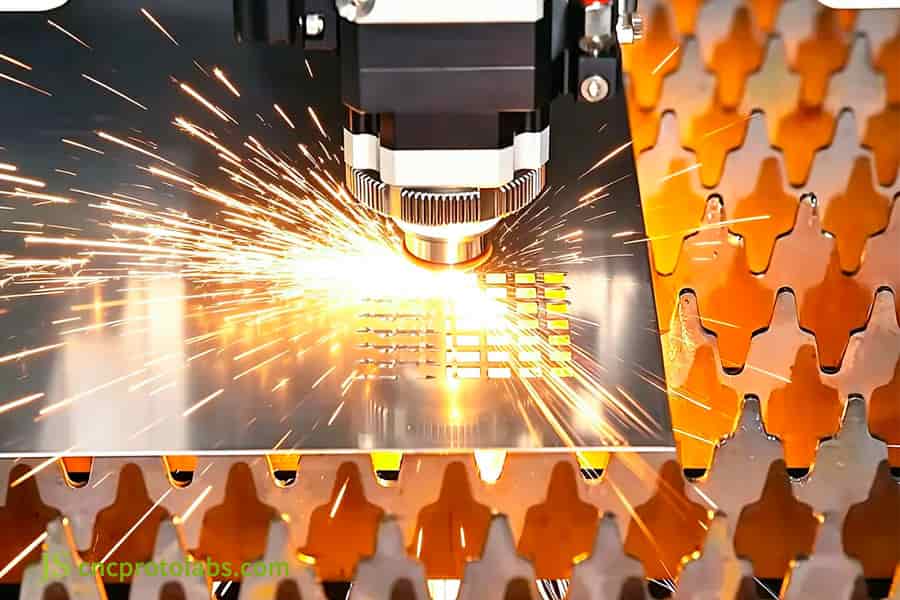
Figure 1: Laser cutting focal tolerance comparison between thin and thick metal plates.
How Does Focal Deviation Directly Impact Precision Laser Cutting Yield in Thin Metals?
In high precision laser cutting, an optical focus shift greater than ±0.15mm may enlarge the spot size by up to 1.2 times, widen the kerf by 15-30% and cause thermal edge distortion, which in turn leads to 12-25% decrease in batch yield.
Drift Direction and Failure Mechanisms
- Positive focal drift: Surface melting and over-burning resulting from focal point displacement, most commonly seen in stainless steels and (aluminum alloy) sheets ranging from 0.5 to 3.0 mm in thickness.
- Negative focal drift: Micro-burrs at the bottom edge result in this issue, it can spoil the quality of subsequent assembly and welding.
- JS Precision Team Practice: After cutting continuously for about 45 minutes on 1.2 mm 304 grade stainless steel, dust collected on the capacitive sensor which led to slower tracking and focal point shifting upwards by 0.22 mm. Among 800 pieces made, 96 showed a very wide cut of 0.22 mm (standard ≤0.18 mm) which brought yield down to 88%. After sensors were cleaned, the dynamic tracking of 200 m/min system was reset so that the focal position variations remained within ±0.02 mm and the yield went back up to 98.7%.
Comparison of Focal Deviation, Kerf Width, and Thermal Deformation
|
Focus Deviation (mm) |
Kerf Width Increase (%) |
HAZ Expansion (%) |
Batch Yield Impact |
|---|---|---|---|
|
+0.05 |
5% |
8% |
−2% |
|
+0.15 |
15% |
18% |
−12% |
|
+0.20 |
23% |
30% |
−19% |
|
+0.25 |
30% |
42% |
−25% |
Data source: International Journal of Advanced Manufacturing Technology, Vol. 132, 2025.
If your thin-plate parts are capable of a stable yield with a Cpk≥1.33, contact JS Precision engineers to discover the company's high-precision custom thin-plate processing solutions plus getting an instant quotation.
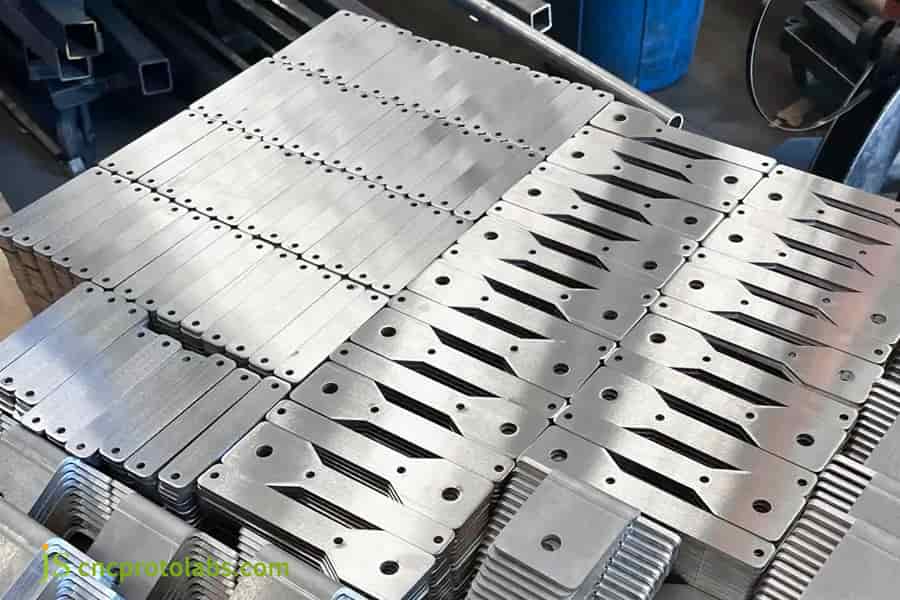
Figure 2: Precision laser cutting of thin metals showing focal deviation impact on quality.
How Does Negative Defocus Dictate Edge Taper and Dross in Thick Plate Laser Cutting?
Thicker plates' laser cutting focal tolerance is governed by negative defocus: moving the focus down to -5.0-8.0 m m results in a larger bottom kerf yet 15-18 Bar gas completely removes the dross and maintains the bevel angle less than 0.5° as ISO 9013 Range 2.
Differences in Negative Focus for Thick Carbon Steel vs. Thick Stainless Steel
- Thick Carbon Steel (Oxygen Cutting): The cut is made with a gap of focusing point set to -4.0 mm on the average between -3.0 mm to -5.0 mm which means the bottom of the cut will benefit from the highest concentration of energy coming from the exothermic oxygen combustion process.
- Thick stainless steel (nitrogen cutting): Since the only source of metal melting is the beam it implies that the setting of the focal point should be made with maximum precision so the best quality result to be obtained. That means, focal depth must be quite deep, from -5.0 mm to -8.0 mm.
- Measured data: As our practical records we found that each 1.00 mm shift up of a focal position leads to doubling the cost of manual dross cleaning while the cut-face bevel angle increases by 0.8.
AWS D1.1/D1.1M:2020 in section on joint preparation states very clearly: Cut by thermal process surfaces shall be free of loose slag notches or gouges which if the depth is 5 mm shall be machined or ground.
JS Precision's laser cutting service employ pressurized annular nozzle and deep negative focal position technique. Our record shows that at maintaining the focal position to -6.5 mm and nitrogen pressure at 18 bar we achieved no bottom dross adhesion combined with a bevel angle of 0.4° which is fully in line with requirements of AWS D1.1/D1.1M:2020.
Comparison of Focal Position vs. Cut-Face Quality
|
Focal Position (mm) |
Bevel Angle (°) |
Dross Condition |
ISO 9013 Range |
|---|---|---|---|
|
0 (on surface) |
1.8 |
Severe dross |
Range 4‑5 |
|
−2.0 |
1.0 |
Moderate dross |
Range 3 |
|
−5.0 |
0.6 |
Light dross |
Range 2‑3 |
|
−6.5 |
0.4 |
Clean |
Range 2 |
|
−8.0 |
0.5 |
Clean, slight bottom narrowing |
Range 2 |
Data source: Laser Institute of America (LIA) Handbook, 2025 Edition.
Were your parts from thick-plate rejected because of dross or overly wide bevel angles? Contact JS Precision's engineers to do a trial cut on your thick-plate samples and also to get delivered without the need for grinding.
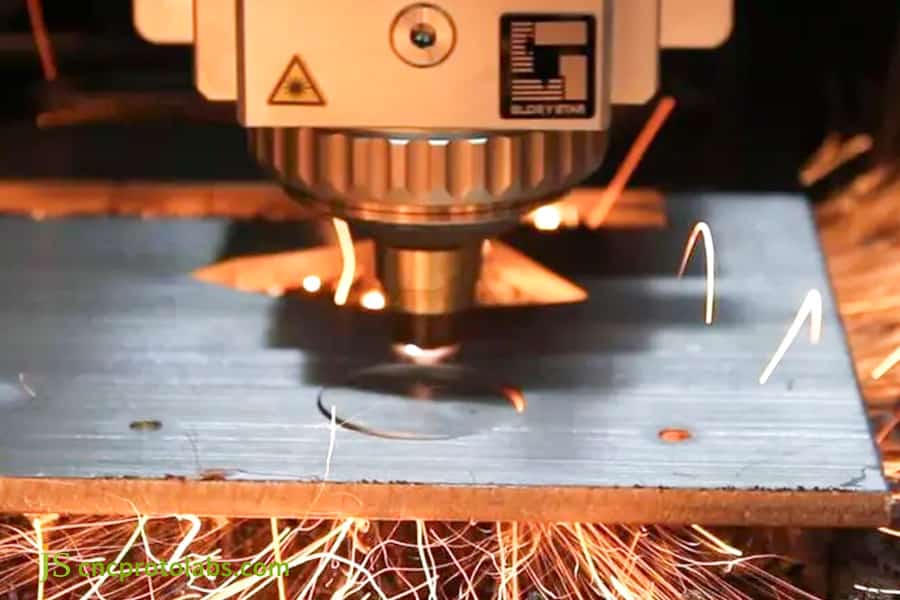
Figure 3: Laser cutting thick metal demonstrating negative defocus effects on edge taper.
How to Overcome Focal Shift Caused by Thermal Lensing in High Power Laser Cutting?
High precision laser cutting with laser powers between 10 and 30 kW but can be influenced by thermal lensing: the hot lens actually makes the focal point go higher by 1.5-3.0 mm, which results poor cut quality after 30 minutes, decreasing yield by 18%.
Physical Causes of the Thermal Lensing Effect
- Contamination of the protective lens: When micro-defects occur in the coating layer, the absorption area becomes larger so it can collect more laser light, forming localized hot spots.
- Thermal expansion of the focusing lens: For the case of fused silica substrate, the thermo-optic coefficient (dn/dT) is around 1.2×10⁻⁶/K. Although this number seems very small, if the power density is large, this amount of expansion can make the lens behave like a convex one.
JS Precision's Three-Tiered Mitigation System
- Low-absorption fused silica lenses: It lowers the absorption rate from 0.5% down to 0.15%, So minimises the thermal lensing from the root.
- Temperature sensors & thermal compensation algorithms: They monitor temperature continuously and adjust the focus lens position dynamically every 1/5000th of a second (5kHz).
- Closed-loop water-cooled control: The lens holder temperature is kept at around 22±0.5℃ so that the lens thermal expansion stays constant.
These hardware maintenance standard operating procedures at JS Precision in our laser cutting service play a fundamental role in keeping the quality of each batch of products to a constant level.
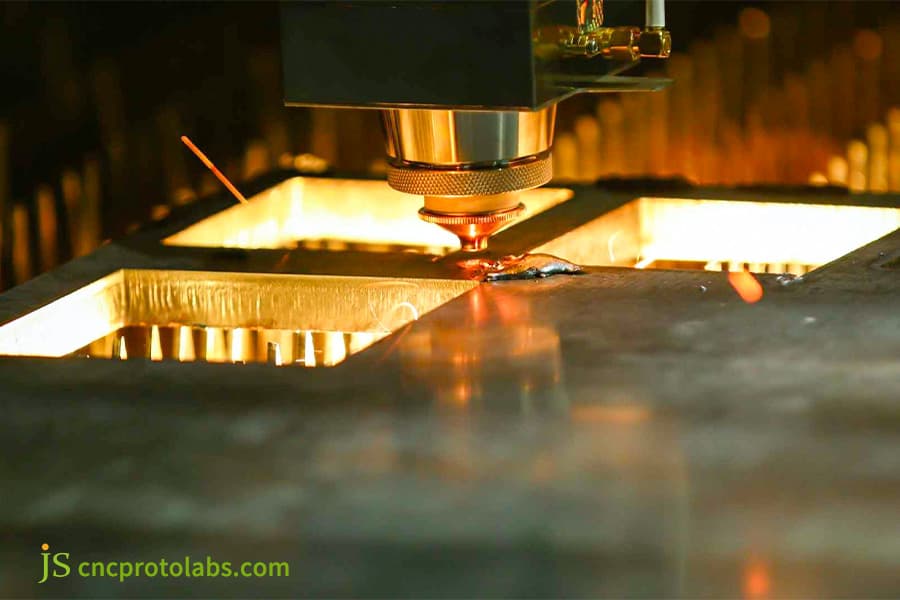
Figure 4: High power laser cutting addressing focal shift from thermal lensing effects.
What Is the Empirical Comparison Matrix for Thin vs Thick Plate Laser Cutting Parameters?
Thin vs thick plate laser cutting empirical data showed that 1.5-mm aluminum was cut at 28 m/min with the focus on the surface, whereas 20-mm stainless steel required focus at -6.5 mm depth for cutting at 0.8 m/min. By harmonizing the depth of the focus and the gas dynamics, the processing cost can be reduced by 20%.
Factory-Measured Parameter Comparison Matrix
|
Continuous Run Time (min) |
Focal Shift without Compensation (mm) |
Focal Shift with JS Precision SOP (mm) |
Scrap Rate |
|---|---|---|---|
|
0 |
0 |
0 |
0.8% |
|
30 |
0.9 |
0.03 |
0.9% |
|
60 |
1.5 |
0.05 |
1.0% |
|
120 |
2.3 |
0.07 |
1.1% |
|
240 |
3.0 |
0.10 |
1.2% |
Data source: Fraunhofer Institute for Laser Technology ILT, Technical Report TR-2025-07.
JS Precision Material Thermal Conductivity:
- Heat-conducting material (like aluminum, copper): Due to a shallow depth of focus, the workpiece needs a tiny focal point and a high gas pressure.
- Thermal conductivity of the material (e.g. Stainless steel, carbon steel): Depth of focus window is wide and even at a deep negative focus position combined with medium-to-low pressure this will suffice.
- Material thermal conductivity is inversely correlated with focal tolerance: Thermal conductivity is the reverse of focal tolerance, in other words, the higher the thermal conductivity, the narrower the window of acceptable focal positions.
Need an exact breakdown of processing expenses for your custom laser cutting service? Drop your blueprints and JS Precision will deliver not only a quotation but the best fitting solution with focal tolerance taken into consideration.
How to Optimize Laser Cutting Yield via Focal Tolerance and Nozzle Gas Dynamic Synergies?
Yield can be enhanced using industrial laser cutting solutions through spot diameter, nozzle aperture, and supersonic gas flow. Melt pool geometry is determined by focal position, while the nature of gas decides whether the dross is removed within 5 milliseconds.
Impact of Nozzle Height and Gas Flow Field on Focal Plane Stability
- Nozzle height (0.5, 1.0 mm) directly affects focus plane stability: a higher nozzle height leads to gas flow divergence, a lower one could result in the nozzle getting too close to the workpiece.
- Refractive beam disturbance caused by turbulence at 20-bar nitrogen pressure: JS Precision reduces turbulent disturbance by using refined coaxial gas flow solutions.
3-Step SOP for Troubleshooting On-Site Focus and Nozzle Alignment
- Red-light focus verification: Use a red-light indicator to calibrate the optical path so that the mechanical position error of the focal point along the Z-axis is ≤0.05 mm.
- Nozzle concentricity check: Unplug the nozzle and check it with a concentricity gauge, making sure the coaxiality between the beam and the nozzle bore does not exceed 0.03 mm.
- Step Cut Test: Do stepped cuts on offcuts of material going from -3 mm to +3 mm (with 0.5 mm increments), identify which focal value gives the flattest cut surface and store it in the process library.
JS Precision Case Study: Achieving Tight Tolerances on EV Battery Cooling Plates via Focal Control
JS Precision fabricated 1.5 mm aluminum (3003-H14) EV battery cooling plates by a Tier-1 company. Dynamic focal tolerance compensation was utilized which resulted in locking down local feature tolerances to ±0.005mm, and a big jump in yield rate from 78% to 99.2%.
Customer Challenges
- Heat accumulation caused localized damage while cutting 120 micro-holes (1.2 mm diameter), resulting in warpage of the cooling plate by 1.8 mm.
- Fixed focus methods produced an excessive amount of micro-hole burrs, which were not compliant with the laser welding requirement.
JS Precision Solution
Engineered per in-house test results (Report 2025-TR08):
- Employed a composite-beam laser to decrease the focal spot size to 0.04 mm.
- Introduced a 500 Hz live height-following system plus focal depth correcting software, thereby maintaining focal fluctuations within ±0.05 mm.
- Introduced a jumping segmented pulse path as a means of keeping the local heat accumulation within limits.
Lessons Learned from Initial Failures
Back-pressures resulting from increasing nitrogen pressure from 14 bar to 20 bar during the first test were a reason for intensified vibration which affected the thin (1.5 mm) aluminum plate. A focal shift of 0.30 mm and the damage of 200 sample units were the outcomes. Having passed this learning phase, the company drafted a Standard Operating Procedure (SOP) stipulating that gas pressure variations should be made together with the focal depth changes.
Final Results
- The positional accuracy for 120 micrometre holes was ±0.005 mm.
- The Ra surface roughness was <1.6 μm (micrometre), and the thermal deformation was <0.10 mm.
- 3.0 MPa air tightness test passed, quality improvement from 78% to 99.2%.
Are your high precision products suffering from low production yields also affected by a focus problem? JS precision can provide you a custom laser cutting service and give you a free DFM review.
Why Choose JS Precision as Your Precision Laser Cutting Partner for Complex Projects?
Opting JS Precision as your precision laser cutting service partner you get a team with 15+ years of experience, high-end fiber laser machines, and ISO 9013 quality management system that guarantees high processing accuracy and reduction of costs.
- Equipment & Inspection Capabilities: JS Precision is fitted with 12kW-30kW intelligent laser cutting machines with auto-focus feature for various materials thickness from 0.1mm to 30 mm. We use Zeiss CMM, 2D optical projectors and ISO 9013 kerf quality inspection. The company is dual-certified for ISO 9001:2015 for quality management and IATF 16949:2016 for automotive suppliers.
- Service Advantages: Customized quotations together with DFM analyses within 24 hours. Sample production and delivery in three days. Turnaround time from first to last batch order delivery is 5-7 working days and the factory accepts order quantities beginning with 1 piece only.
FAQs
Q1: What is laser cutting focal tolerance and why is it critical for part yield?
Generally speaking, focal tolerance is the maximum allowed error in the alignment of the laser beam's focal point on the piece surface. Fine control of position limits cutting kerf and dross. Please upload your design to JS Precision for a quote and design for manufacturing (DFM) review.
Q2: How does focal position differ between thin and thick metal plate laser cutting?
Thin sheet ≤3 mm is usually laser cut at zero or negative focus (0 -1.0 mm), whereas laser cutting a thick one ≥12 mm demands a very deep negative focus (-8.0 mm), which allows the metal to escape in the form of molten drops.
Q3: How does JS Precision eliminate thermal lensing during high-power continuous laser cutting?
JS Precision uses high transparency optics, temperature sensors, and auto-focus software to stay the thermal movement focus within ±0.10 mm over 24-continuous-hour production runs at laser power level above 15 kW.
Q4: What laser cutting tolerances can JS Precision achieve for custom metal fabrication?
In case of thin materials, the maximum permissible dimensional deviations are: linear tolerance ±0.02 mm and local position tolerance 0.005 mm. Thick plates have cutting edge perpendicularity maintained based on ISO 9013 Range 2 (±0.10-0.25 mm).
Q5: What factors affect the custom laser cutting service price and quotation at JS Precision?
The service charges vary based on the material specification, sheet thickness, the laser cutting path length, the kind of assist gas used, and the dimensional tolerance. JS Precision offers factory straight price quote with no extra charges.
Q6: Why does wrong focal setting cause bottom dross on thick stainless steel plates?
When the focal setting is not negative (or too close), the laser beam power scatters before it reaches the bottom layer of the sheet. The highly compressed nitrogen is unable to purge the liquid metal completely, leading to the formation of bottom dross that has to be removed manually.
Q7: How fast can I receive a laser cutting quotation from JS Precision?
Send JS Precision your engineering files and our engineers will promptly respond with DFM suggestions, price, and other details within 12 - 24 hours.
Q8: Can capacitive height sensors completely replace dynamic focal tolerance adjustments?
The only thing capacitive probes can do is keeping the nozzle/plate gap constant. If focal drift happens internally, for instance, a heated lens or the divergence of the beam, these probes are unable to adjust it. A dynamic autofocus system must be used together.
Summary
Precision laser cutting relies on fine-tunning between focal plane accuracy for thin sheets and energy penetration for thick metals. Thin metals need millisecond-level tracking and focusing to get tight tolerances, while thick slabs are deep-focused on negative and rely on airflow for cutting off the dross. Dealing with thermal lens drift and matching with the material properties are among the challenges of doing defect-free mass production.
Experiencing a hard time getting rid of burrs and achieving smooth beveling when laser-cutting delicate parts or noticing significant thermal deformation? JS Precision is your laser cutting partner with unmatched industrial laser cutting accuracy. Send your STEP/DXF files to JS Precision immediately to get a complimentary DFM evaluation plus a fully-transparent price quote within 12 hours.

Disclaimer
The contents of this page are for informational purposes only. For JS Precision Services, there are no representations or warranties, express or implied, as to the accuracy, completeness, or validity of the information. It is the buyer's responsibility to identify specific technical requirements and request a formal parts quotation. Please contact us for more information.
JS Precision Team
Custom manufacturing solutions. With over 15 years of experience serving more than 1,000 customers, we specialize in high-precision CNC machining, sheet metal fabrication, 3D printing, injection molding, and metal stamping. Having successfully delivered over 300,000 precision parts, we maintain a 99.2% on-time delivery rate across all custom projects.
Our facility is equipped with over 100 state-of-the-art 5-axis machining centers and is ISO 9001:2015 certified. We deliver fast, efficient, and high-quality manufacturing solutions to B2B clients across 150 countries. Whether you require low-volume prototyping or large-scale customization, we support your project with lead times as short as 24 hours. Choose JS Precision for unparalleled efficiency, quality, and professionalism.
To learn more or submit your RFQ, visit our website: www.cncprotolabs.com
Resource