English



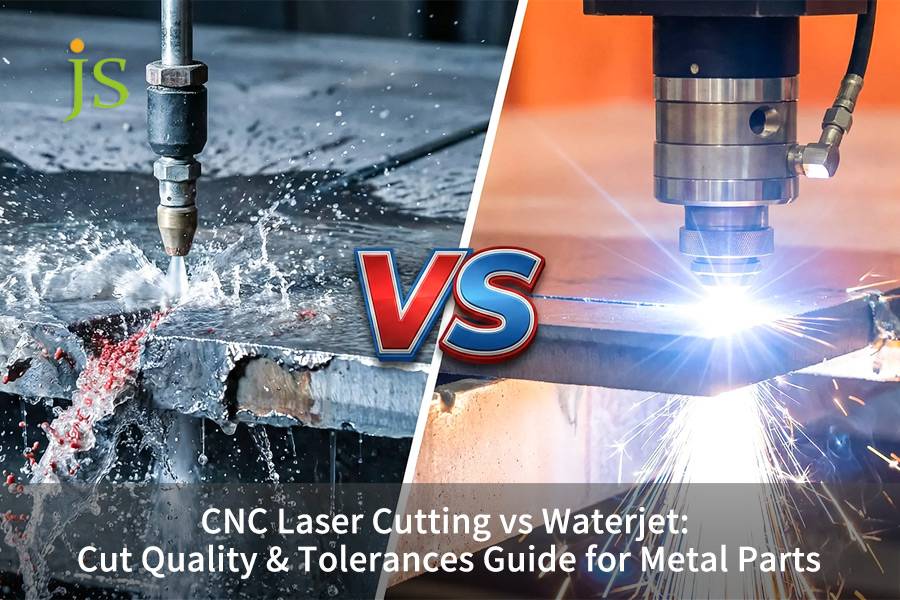

CNC laser cutting service achieves tighter tolerances (±0.05-±0.10 mm) and produces smooth cuts (Ra 3.2μm) on metal plates up to 25 mm. Waterjet cutting leaves no heat-affected zone (HAZ) as it's a coolant-free process and maintains ±0.08 mm tolerance on plates up to 150 mm. Selecting a suitable process depends on such factors as part tolerance, thermal sensitivity, and surface roughness requirements.
This paper reviews cut quality and tolerances for both laser and waterjet cutting technologies for manufacturing precision metal parts.
CNC Laser Cutting Service vs Waterjet: Core Performance Matrix
|
Cut Quality & Tolerance Dimension |
CNC Fiber Laser Cutting |
High-Pressure Waterjet Cutting |
|---|---|---|
|
Typical Dimensional Tolerances |
±0.05mm ~ ±0.10mm (thin/medium plate) |
±0.08mm ~ ±0.20mm (thick plate / 5-axis compensation) |
|
Edge Surface Roughness |
Ra 3.2μm ~ 6.3μm (nitrogen-assisted cut) |
Ra 1.6μm ~ 12.5μm (depends on mesh garnet) |
|
Heat Affected Zone (HAZ) Depth |
0.05mm ~ 0.30mm (localized micro-hardened layer) |
0mm (fully cold-state machining, zero metallographic change) |
|
Edge Taper |
0.5° ~ 1.5° (inverted taper on thick plate) |
0° (5-axis dynamic compensation) / 1° ~ 3° (conventional 3-axis) |
|
Micro Dross / Burr at Lower Edge |
No dross with nitrogen, minor dross on thick carbon steel with oxygen |
No thermal dross; only minimal water-erosion burr at bottom |
|
Recommended Precision Scenarios |
Dense micro-holes, high positional tolerance thin-sheet parts |
Thick-plate precision parts, thermally sensitive parts where HAZ is strictly forbidden |
Data sources: ISO 9013:2017 quality class parameters. JS Precision 2025 process capability database.
Key Takeaways
- Laser cutting allows for very tight dimensional variation (±0.05 mm) and offers even kerf width (cut) for metal material of up to 10 mm thickness. That means, it is suitable for thin plate work where the parts have to be accurately positioned with each other.
- Waterjet cutting removes both the heat stress from material and heat affected zone (HAZ), so it's most suitable method of cutting for parts undergoing tapping after cutting, for parts where edge cracking is forbidden, and for plates more than 25 mm thick.
- Per JS Precision internal database the use of 5-axis dynamic compensation watercut technology reduces taper error by 85% cutting aluminum alloy 50 mm thick plates.
How Do Laser Cutting And Waterjet Compare In Edge Roughness And Surface Quality?
Laser cut edge quality on thin metals gets the highest polishing by using nitrogen assist, mirror-like Ra3.2μm finish. Waterjet leaves across the piece one uniform sandy mat surface.
Fiber Laser Micro-topography and Roughness Data
- Nitrogen cutting at high pressure:
We use nitrogen with a pressure of 1.8-2.2 MPa for removing molten material. By comparison, the cut edges made with oxygen on carbon steel show much deeper striations that are a result of the exothermic reaction. Due to that reaction, the surface roughness reaches as high as Ra 12.5μm.
- Bench marking the industrial comparison:
In the 2025 SME standards edition, the fiber laser cutting of the stainless steel less than 6 mm thickness generally results in the surface average roughness of Ra 3.2μm. JS Precision CNC laser cutting service uses shaped light technique to reach Ra 2.4μm for the same cut.
- Waterjet Micro-topography:
The recast layer is entirely absent on the cut surface if the metal is eroded using an 80 mesh garnet and a water flow of 413 MPa. The Ra 1.6-3.2μm roughness is achievable if the Low Speed Quality 5 mode is selected, Yet longer cutting time is necessary for processing if the cutting speed is lower.
Bottom-Edge Lag and Assembly Feasibility
- Waterjet Stream Lag:
One of the factors in waterjet cutting is stream lag, a result of the energy loss of the water jet. As a consequence, the surface roughness at the bottom of the thick plate is about 40% higher than at the top. Whereas in laser cutting, stream lag is not a problem, some degree of dross accumulation at the bottom of thick plates can be found.
- Direct Assembly Feasibility:
Due to the laser cut edge quality, in particular, laser cuts supported by nitrogen offer no oxidative layers and can be welded right away. But, waterjet cuts require the elimination of the remaining garnet abrasive particles before further assembly.
ISO 9013:2017 states that the product should have the appropriate geometrical and quality tolerances specification about the classification of thermal cuts in the materials applicable for oxyfuel flame, plasma and laser cutting.
After laser cutting JS Precision deburs critical edges to conform with this standard. We ensure that edges have an Rz5 ≤ 50 μm and are of ISO 9013 Range 2 quality. Besides, the scrap rate decreases from 25% (laser cutting) to 8% (progressive die blanking).
To sum up: Laser cutting is like cutting butter with a red-hot knife-the edge is clean, but will have some burnt areas heat marks, water jet cutting is like using a super pressure water gun to blast away sand. The surface is a bit rough-looking but has no heat marks.
Download the document from JS Precision on cutting methods to find the full chart of roughness of 12 different metal materials across various cutting technologies and get the precise data.
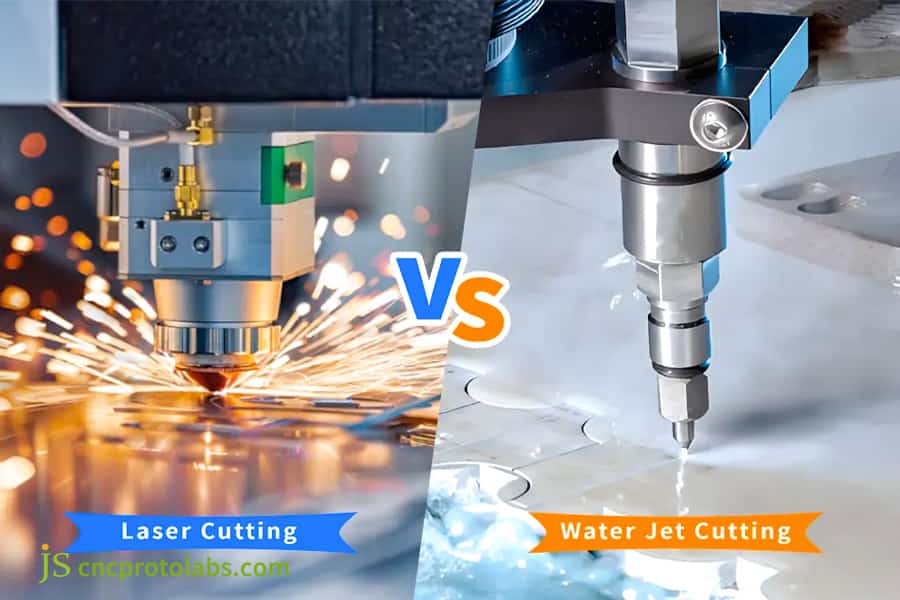
Figure 1: CNC laser cutting with bright sparks versus waterjet cutting with high-pressure water flow.
What Precision Tolerances Can Be Achieved With Waterjet Vs Laser Cutting Metal?
There is a noticeable difference in the tolerance of waterjet vs laser cutting metal: laser cutting can maintain ±0.05mm on thin material sheets while 5-axis waterjet with dynamic taper compensation can achieve ±0.08 mm on thick plates.
Laser Cutting Tolerance Capabilities
- Benefits for Thin kerf: In the comparison between waterjet vs laser cutting metal, the laser achieves a repeatability accuracy of ± 0.02 mm and an overall tolerance of ± 0.05 mm when processing complex contours and dense hole systems (with aperture smaller than plate thickness) with a 0.15 mm extremely narrow kerf width.
- ISO 9013:2017 mapping of tolerance classes: The laser corresponds to a high precision machining ISO 9013 Tolerance Class 1, while waterjet cutting is able to provide the dimensional accuracy and repeatability of almost the same level when thick plates are cut.
Waterjet Taper Control and 5-Axis Dynamic Compensation
- Limitations of conventional 3-axis waterjet: Water jet dispersion causes 0.1-0.3 mm beveled edge (taper) along the cut
- JS Precision 5-axis Tilt-A-Jet system: For customers in need of precision laser cut components, the 5-axis Tilt-A-Jet system tilts the nozzle in real time to eliminate the taper, and the system can control the tolerances up to ±0.08 mm for a 50 mm thick plate.
Tolerance vs. Material Thickness Data Table
|
Material Thickness |
Laser Cutting Tolerance |
Waterjet Cutting Tolerance |
Optimal Process |
|---|---|---|---|
|
1 – 3 mm |
±0.05 mm |
±0.08 mm |
Laser |
|
6 – 10 mm |
±0.08 mm |
±0.08 mm |
Both viable |
|
12 – 25 mm |
±0.15 mm |
±0.08 mm |
Waterjet preferred |
|
35 – 80 mm |
Not recommended |
±0.12 mm |
Waterjet |
|
85 – 150 mm |
Not feasible |
±0.20 mm |
Waterjet only |
Data source: JS Precision 2025 process capability database, statistics based on 120 delivered projects.
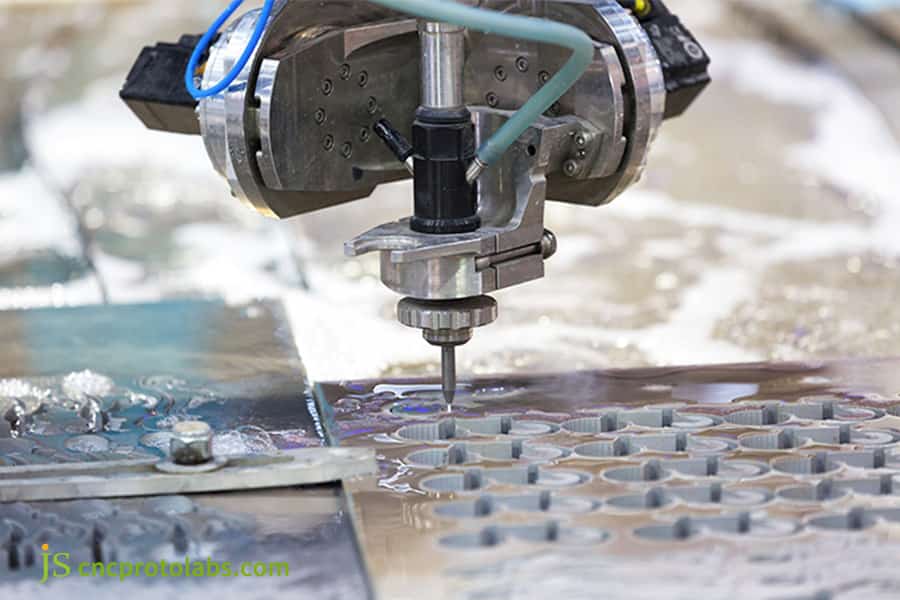
Figure 2: Close-up of intricate waterjet cutting versus high-precision CNC laser cutting heads.
How Does The Laser Cutting Heat Affected Zone Impact Metallurgical Edge Quality?
Laser cutting heat affected zone produces local hardening with microstructure modifications, which is the reason of micro-cracks. But, the cold cutting waterjet method has no thermal deformation (0 mm) and no metallurgical alteration.
HAZ Formation Mechanism and Hardness Changes
- High-temperature phase transition: A laser cutting heat affected zone (HAZ) originates where the local temperature rise caused by the focal point laser power reaches above 1500℃. The HAZ width is about 0.05-0.30 mm at laser cut edge.
- Micro-hardness increase: Thermal cycling during the laser cutting of 304/316L stainless steel and 6061-T6 aluminum alloy results in the transformation from austerity to martensite on microscale locally and the Vickers hardness on the metal cut edge increases by 30%-50%.
Detrimental Impact on Downstream Processes
- Risk of cracking during bending: The hardening of the heat-affected zone (HZ) creates the part vulnerable to fracture along the cut edge during subsequent bending operations with small radius.
- Tapping tool chipping: Leads to chipping and wear on tapers during a second tapping operation. The thermal expansion and contraction effect at the edges of small holes can cause the hole becoming non-circular, exceeding the plus-minus ±0.10 mm roundness tolerance limit.
- Cold Cutting (No HAZ): For the HAZ problem that is difficult to avoid in custom laser cutting service, the waterjet is completely cold processed at a temperature not exceeding 60 ℃, completely retaining the original metallographic structure and ductility of the base metal, without secondary hardening of the threaded hole, and increasing the life of the tapping tool by three times.
ISO 18286:2008 states: Tolerances on flatness are given in Tables 6 for normal tolerances (class N) and in Table 7 for special tolerances (class S).
To meet flatness standards JS Precision checks the Depth of HAZ by Tier 2 metallographic cross-section analysis as well as Tier 3 Vickers micro-hardness gradient mapping. This verification procedure guarantees the HAZ of 316L parts 0.05 mm and their flatness stays within ISO 18286 Class N specifications while maintaining edge integrity standards necessary for aerospace application, medical devices, and implants alike.
In other words, an HAZ is basically a rigid, brittle structure which is welded to the material edge. It seems perfect but the material is vulnerable to cracking along this microscopic line when stressed.
Contact JS Precision and get your cold-process custom machining jobs done that completely remove HAZ, and get your recommendations for the production of heat-sensitive alloys.
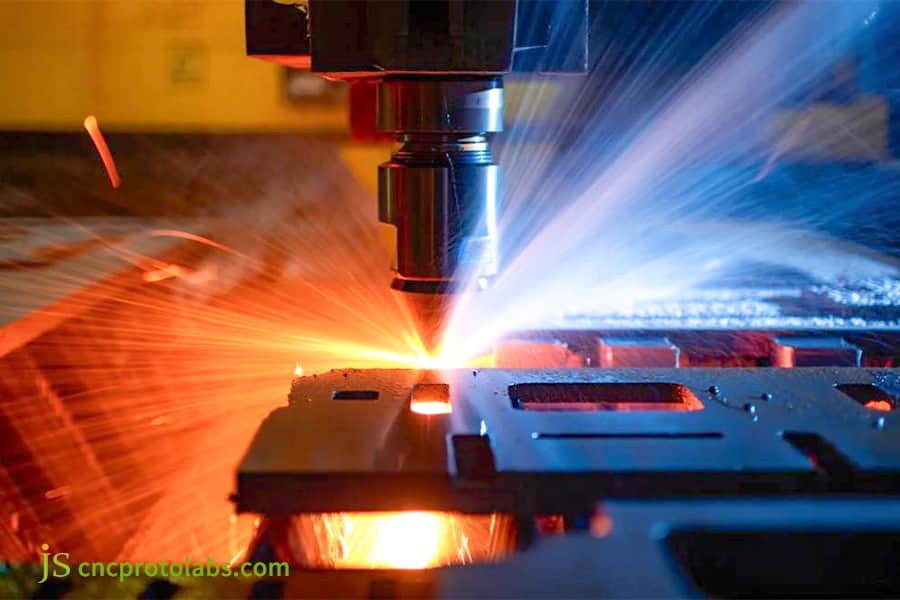
Figure 3: Laser cutting head focusing intense light and heat on a metal sheet surface.
Why Select a High Speed Laser Cutting Service For High-Precision Volume Sheet Metal?
High speed laser cutting service can be the fastest and accurate thin sheet processing method, it enables to cut sheet materials with the speed of approximately 10 faster than waterjet but at the same time it guarantees 0. 05 mm dimensional stability.
Quantitative Comparison of Processing Speeds
- A powerful laser cutting tool: As a representative for high speed laser cutting service, 12 kW-20 kW fiber lasers are able to cut stainless steel of 2 mm in thickness at speeds as high as 35 m/min.
- Accuracy waterjet cutting: Precision waterjet cutting at the same thickness level works only at 1.5 m/min, a speed difference of up to 23-fold.
Algorithmic Control and Precision Assurance
- Fly-cutting Algorithm: By fly-cutting algorithms and pulse frequency modulation the laser can even avoid accumulating heat at high speed movement so that it delivers positional accuracy of ±0.05 mm for micro- holes of 2 mm diameters.
- Batch Consistency: During the new energy vehicle battery trays project in 2025 JS Precision's CNC laser cutting service made 5,000 continuous parts from 1.5 mm AL 6061 sheet metal maintaining the stable tolerance of ±0.05mm throughout the operation.
Cost Comparison Model
- Cost Inflection Point: Despite higher electricity and high-purity nitrogen expense in laser cutting, the huge 90% decrease in processing time makes comprehensive cost per unit 55% lower than that of waterjet cutting when the order exceeds 1,000 units of sheet metal ranging from 1 to 5 mm in thickness.
- Business Value: In effect, for the production volume of 1,000 units or more sheets that are quite thin, choosing JS Precision's CNC laser cutting service will enable not only lowering your unit costs by half but also reducing lead times by 40%.
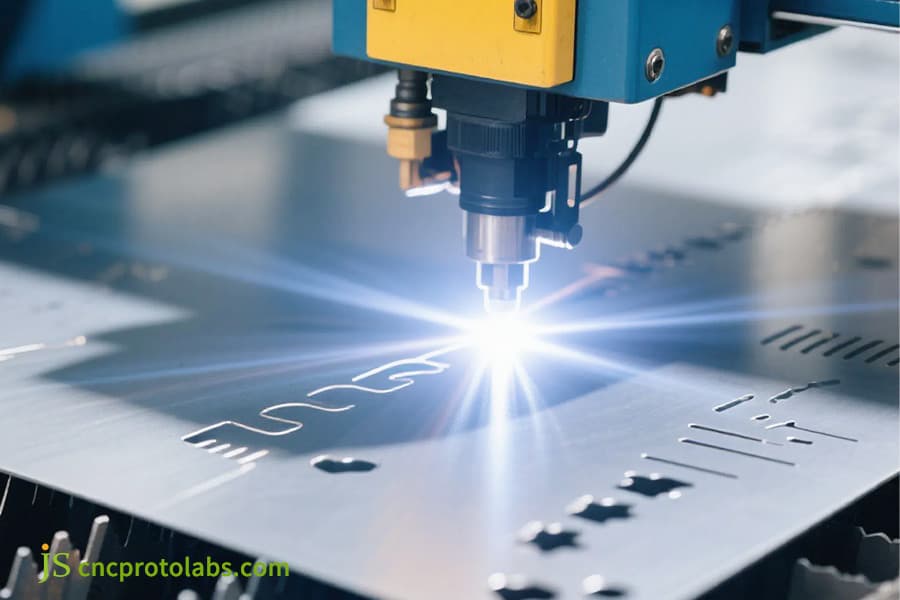
Figure 4: High precision CNC laser cutting machine operating with intense focused light beam.
How Do Edge Taper And Accuracy Degrade When Waterjet Vs Laser Cutting Metal Plates?
Laser cutting vs waterjet cutting, is it better on thick and reflective materials: the laser's ability for deep cutting and staying focused on highly-reflective metals drop, but waterjet cutting has normal smooth edges with 150 mm material thickness.
Challenges in Processing Highly Reflective Materials
- Reflection problems with Copper and Brass:
Copper (C11000) and Brass (H59) reflect the laser beam which can be then reflected back on the lenses and pose safety hazards. Also with the fast thermal conductivity of Copper thicker plate (>10mm thickness), the work piece dissipate the laser energy, and produces excessive dross at the bottom edge and more than 1.5° is severe edge taper.
- Correcting Industry Misconceptions:
In the actual comparison between waterjet vs laser cutting metal, many suppliers tell us laser can cut copper plates of all thickness, but in house test at JS Precision (2025) was already found that laser cutting of pure copper plate over than 15mm thickness has 78% dross rate which was not good enough for delivery condition.
Tolerance Degradation in Ultra-Thick Metal
- Limitations of Laser Cutting Thick Plates: The laser beam piercing and blowing out is more likely to increase the rate of defects, and the edge of the carbon steel cut would become wider at top but narrower at the bottom.
- Advantages of Waterjet Cutting Thick Plates: Common laser cutting methods can not meet the required standards when cutting materials and thicknesses in this way. With waterjet cutting, super-thick plates are literally cut like a knife going through butter without any reflection even happening in the stage of reflection from the surface. Taper can be adjusted by 0.1° if 5-axis compensation is applied during waterjet cutting of 50-150 mm thick titanium alloys (TC4) and nickel-based alloys.
Thickness Tolerance & Process Comparison Table
|
Plate Thickness & Material |
Laser Cutting Tolerance |
Waterjet Tolerance |
JS Precision Recommendation |
|---|---|---|---|
|
5 mm Copper (C11000) |
±0.08 mm |
±0.08 mm |
Either viable; laser faster |
|
20 mm Titanium (TC4) |
Not recommended / severe dross |
±0.10 mm |
Waterjet only |
|
80 mm Carbon Steel |
Cannot penetrate |
±0.15 mm |
Waterjet only |
|
100 mm Inconel 718 |
Not feasible |
±0.18 mm |
Waterjet with 5-axis |
Data source: JS Precision 2025 internal process capability testing, statistics based on 120 projects.
Send your drawings with ultra-thick platters or super reflective metals to JS Precision to get a tailored process solution and save yourself from the possibility of an erroneous process choice leading to mass rejects.
How To Prevent Thermal Warping And Edge Taper In Custom Laser Cutting Projects?
Custom laser cutting service is able to avoid thermal distortion by employing the methods of controlling pulse frequency, dynamic spot shape and path optimizing for controlling localized heat build-up.
Deformation Control for Thin Sheets (How-to)
- Segemented Frog-Leap Cutting Path: This particular cutting path breaks down the continuous heat supply, this solution keeps large, elongated steel sheet items of 1.5 mm thickness with a flatness within 0.5 mm/m even with combined water-mist cooling system.
- Nesting Path Optimization: It has been revealed from the exclusive 2025 JS Precision test carried out by LS Manufacturing that optimizing nesting paths leads to a decrease in heat accumulation in a specific spot by 32% thereby making an ideal choice in the manufacturing of precision laser cut components.
Taper Control for Medium-to-Thick Plates (How-to)
- Zoom Cutting Head: When cutting 10-20 mm plates our custom laser cutting service employs Dynamic Zoom Heads and beam shaping devices, which increases the bottom kerf thereby removing reverse taper.
- Perpendicularity improvement: the deviation of cut perpendicularity is limited within 0.3 which is 40% less than that of traditional fixed-focus cutting, not requiring secondary mechanical edge milling.
Quantitative Process Comparison
- Enhancement in Perpendicularity: The deviation from perpendicularity decreases from 0.5° (conventional fixed-focus cutting) to 0.3° (zoom head cutting).
- Savings in Additional Processing: Post-processing time per part is reduced by 40% when minimizing the secondary mechanical edge milling.
How JS Precision Eliminated Edge Micro-Cracking and Held ±0.05 mm Tolerances for 316L Stainless Steel Parts
Precision laser cut components are frequently found with HAZ micro-cracking issues. JS Precision introduced an advanced process combining laser with waterjet cut techniques which effectively prevents HAZ micro-cracking in robot 16 mm 316L stainless steel brackets, all while still maintaining ±0.05 mm dimensional accuracy limits.
Customer Challenges
A certain industrial robot customer requires batch processing of 16mm thick 316L stainless steel key load-bearing components at precision laser cut components level. The reaming tolerance had to be ±0.05 mm and the components had to be able to operate under high frequency dynamic stress. Laser cutting produced a 0.20 mm hardened HAZ layer on the hole walls, secondary tapping frequently lead to tap breakage, and the reamed circumference fractured during fatigue testing. Pure waterjet machining produced too long a lead time and exceeded the cost by 35%.
JS Precision Solution
- Fast laser cutting on all outside contours: For the fast laser cutting 1.0 mm allowance at the edges was left for finishing. The operation was carried out by a custom laser cutting service with a 15 kw fiber laser.
- 5-Axis Cold Precision Waterjet for reamed holes and pre-threaded holes: A 5-axis dynamic waterjet is used for cold precision cutting, which prevents the HAZ, delivering a tolerance of ±0.05mm directly.
- High-purity Nitrogen Assistance: The assist gas is changed to N2 (99.999%) to removal of the oxidation layer of the cutting surface.
- Stress relieving fixtures: Heating thick plates tends to cause flatness warping after cutting. Custom designed stress-relieving fixtures are applied to eliminate the problems.
Lessons Learned
Based on practical experience from the JS Precision JSP-316L-2025-017 project, excessive laser piercing power caused localized blowouts during initial prototype testing. We modified the parameters and then used the Ramped Piercing technology which worked well and eliminated problems of metal waste deposit on metal surface at the pierce location. The same has been documented as part of JS Precision's Guide to Avoiding Pitfalls in Thick-Plate Laser Cutting Parameters and is used in all 316L projects where cutting thickness is over 10mm.
Final Quantitative Results
- Quality Test: All products passed a very thorough high-frequency fatigue test that involved 2 million cycles of stress, the machine's tool wearing was brought down to zero.
- Delivery & Cost: The time taken for production was reduced by 30%. Also, the combined expenses per product dropped by a quarter.
Get a special DFM process optimization plan from JS Precision by uploading your complex metal part drawings, and at the same time you will get the benefits of precision improvement and cost-savings from hybrid manufacturing processes.
Why Choose JS Precision As Your High-Precision Custom Laser And Waterjet Vendor?
CNC laser cutting service offered by JS Precision combines state-of-the-art laser technology and 5-axis waterjet, providing metal parts certified to ISO standards that have excellent cut quality and close tolerances guaranteed.
Equipment and Capacity
- Advanced Equipment Matrix: We offer CNC laser cutting with 20 kW fiber laser cuttors and dynamic 5-axie waterjet systems, providing precision cutting from metal sheets of any thickness to different materials.
- Production Capacity: We have a capacity for monthly precision laser cut components of 500 thousand, allowing the process from prototyping to the production line to be very smooth.
Quality Inspection Capabilities
- Sophisticated and Precise: State-of-the-art machines such as coordinate measuring machines (CMM), Hexagon vision measuring machine, and surface roughness testers have been set up for inspection.
- Outstanding Quality Inspection: We inspect 100% of the outgoing parts that have to adhere to tight tolerances with the attached Material Test Reports (MTR) for each shipment.
Secondary Processing & One-Stop Integration
- Total Manufacturing Solution: We provide complete manufacturing in-house, from cutting to detailed CNC machining tapping forming, and finishing (anodizing/powder coating) to help our customers save time and money through the reduced reliance on suppliers.
- ISO 9001:2015 Certification: JS Precision's manufacturing system has been ISO 9001:2015 certified and a CpK ≥ 1.33 was achieved even though we only focused on the key processes.
Rapid Response
- Fast DFM Feedback: We offer factory-direct quotes together with our engineering team's DFM reports very quickly, within 24 hours.
- Close Technical Interaction: DFM engineers will work privately with you and communicate directly to refine blueprints and make the product design easier to manufacture.
FAQs
Q1:How do I choose between CNC laser cutting and waterjet cutting for precision metal parts?
The decision is based on material thickness, heat sensibility and tolerance needed. Opt for CNC laser cutting if working with thickness of less than 25 mm and tolerances of ±0.05mm. Use waterjet cutting for plates having a thickness of more than 25 mm or for heat sensitive components which need to be free from a Heat affected zone (HAZ).
Q2: What is the cut edge roughness difference between laser cutting and waterjet cutting?
High-pressure nitrogen laser cutting gives a smooth overall finish (Ra 3.2μm to 6.3μm) for thin metals.Waterjet cutting with 80mesh garnet produces an even matte fine-grained finish (Ra 1.6μm to 12.5μm) which varies in roughness with cutting speed parameter.
Q3: Can fiber laser cutting achieve tight tolerances on thick copper and brass plates?
Fiber lasers with anti-reflective optics are capable of cutting copper and brass up to 12 mm thick with a tolerance of ±0.10 mm. For pure copper plates thicker than 15 mm, pure water jet cutting is advised to protect from back-reflection, heat build-up and damage to laser source.
Q4: Why is the Heat-Affected Zone (HAZ) critical when specifying cut metal parts?
Laser cut parts (with the HAZ) will experience localized thermal hardening (brittle edges) which can mean micro-cracking when small radius bending is performed and may also cause faster tap wear when the second step tap is used.Waterjet induced cut parts will have a 0 HAZ and will retain material ductility (original properties).
Q5: How does JS Precision control edge taper during waterjet cutting of thick metals?
JS Precision applies a 5-axis dynamic waterjet cutting head (Tilt-A-Jet), capable of real-time tilting based on plate thickness and speed. The machine corrects for the waterjet's natural V-shaped taper and allows us to keep a flat 0° vertical cut on thick plates with a tolerance of 0.08 mm locked.
Q6: How do I obtain a custom laser cutting service quote from JS Precision?
Send your 2D/3D CAD drawings (STEP, DXF, or DWG files) to the JS Precision system online, specifying the metal grade, sheet thickness, tolerance requirements, and amount. The JS Precision engineering team will prepare and deliver a quote and a Detailed Manufacturing Analysis (Design for Manufacturing) report within 24 hours.
Q7: Is laser cutting more cost-effective than waterjet cutting for volume production?
Definitely. Laser cutting, relatively thin to medium metal sheets (less than 10 mm), is up to 10 times faster than waterjet cutting, thereby lowering the cost per piece by 55% for orders more than 1000 pieces, whereas waterjet is more cost-effective for very thick plates or small-series prototypes that need zero thermal stress.
Q8: What secondary finishing operations does JS Precision offer after cutting?
JS Precision gives you the benefit of complete, single-source manufacturing. From a basic cutting process, we go on to many steps including CNC precise milling tapping bending deburring heat treatment, anodizing, or powder coating to finish the job for you.
Summary
Select between CNC laser cutting versus water jet cutting should be based on the required part thickness, heat-sensitivity, edge quality and budget. Laser cutting in fiber laser can run faster and with place tolerance of ±0.05 mm for sheet thickness under 25mm while water jet is stress free cold process with no Heat-affected Zone (HAZ) fluctuation for thick plate and heat sensitive material alloy.
Prepared to resolve your issues with part tolerances and edge quality? Upload your CAD drawings and technical document pack to JS Precision now and let our engineering specialists analyze your design, determine the lowest-cost cutting procedure, and send you a clear, factory-direct quote within 24 hours. Contact JS Precision for custom machining you can trust.

Disclaimer
The contents of this page are for informational purposes only. For JS Precision Services, there are no representations or warranties, express or implied, as to the accuracy, completeness, or validity of the information. It is the buyer's responsibility to identify specific technical requirements and request a formal parts quotation. Please contact us for more information.
JS Precision Team
Custom manufacturing solutions. With over 15 years of experience serving more than 1,000 customers, we specialize in high-precision CNC machining, sheet metal fabrication, 3D printing, injection molding, and metal stamping. Having successfully delivered over 300,000 precision parts, we maintain a 99.2% on-time delivery rate across all custom projects.
Our facility is equipped with over 100 state-of-the-art 5-axis machining centers and is ISO 9001:2015 certified. We deliver fast, efficient, and high-quality manufacturing solutions to B2B clients across 150 countries. Whether you require low-volume prototyping or large-scale customization, we support your project with lead times as short as 24 hours. Choose JS Precision for unparalleled efficiency, quality, and professionalism.
To learn more or submit your RFQ, visit our website: www.cncprotolabs.com
Resource