English



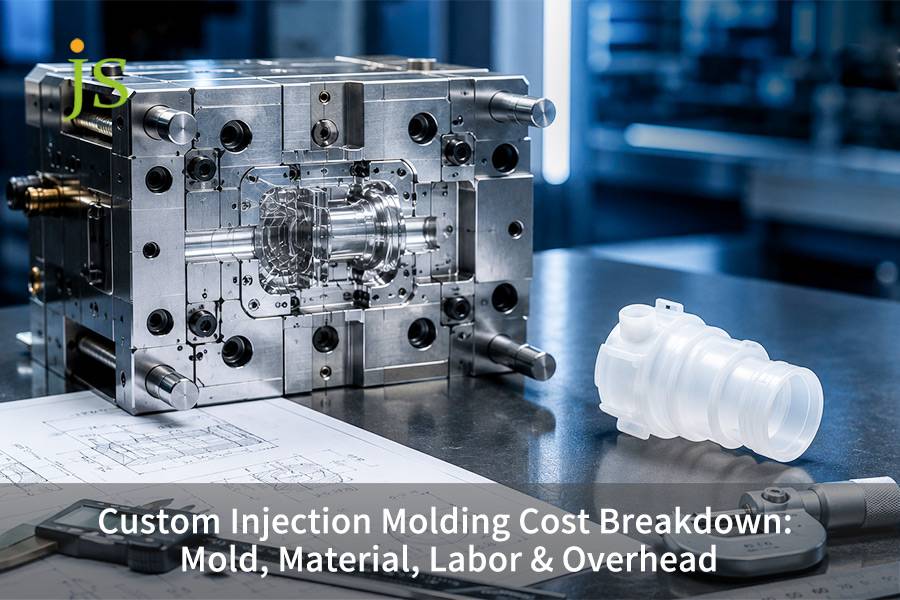

Injection molding cost breakdown is determined by a baseline formula: Total Project Cost = Tooling Fee + (Material Cost + Machine Rate + Labor + Overhead) × Volume. Custom injection molding part costs generally span $0.30 to $8.50 per unit, while mold tooling ranges from $1,500 for rapid prototype aluminum molds up to $85,000+ for Class 101 high-cavitation steel production tools.
Key variables directly driving these price thresholds include resin selection, clamping force, mold complexity, and tolerance strictness. Read this comprehensive cost analysis to master exact estimation models and actionable DFM cost-reduction tactics for your custom molding projects.
Custom Injection Molding Service Cost Drivers & Benchmarks: Quick Overview
|
Cost Component |
Industry Average Share |
Typical Price Range |
Key Cost Drivers |
Optimization Focus |
|---|---|---|---|---|
|
Tooling |
15%–40% (first order) |
$1,500 – $85,000+ |
Cavity count, SPI class, sliders/lifters |
Standard mold base, DFM simplification |
|
Material |
30%–55% (production) |
$2.50 – $85.00/kg |
Resin grade, filler, regrind ratio |
Commodity substitution, hot runner |
|
Machine & Labor |
15%–30% |
$35 – $160/hr |
Clamp tonnage, cycle time |
Wall thickness reduction, automation |
|
Overhead & Post-processing |
10%–20% |
Varies |
CMM inspection, welding, packaging |
Integrated processes, relaxed tolerances |
Key Findings:
- Mold amortization is positively correlated with batch size: Small batches (<5,000) usually get aluminum molds or single cavity P20 molds, batches >100K are best served with H13 multi-cavity hot runner molds to keep unit cost as low as possible.
- Wall thickness design directly impacts the processing cycle time: A wall thickness increase of 0.5mm generally results in 30%-40% longer injection cooling time and So higher machine rental labor costs.
- Keep tolerances to a minimum: Tolerances relaxation on non-critical dimensions, i.e. ±0.02mm to ±0.1mm, will cut mold processing and QC inspection costs in the range of about 25%.
- Hot runner systems are a good way to save: For engineering plastic high-priced projects, hot runners may cut resin wastage by 15%-30%.
Why Trust JS Precision For Injection Molding Manufacturing Costs?
Based on our 15-year long experience in the field of injection molding cost estimation, only those suppliers who use closed-loop data systems in 3 areas: mold steel selection, cycle optimization and tolerance grading, are able to accurately break down the manufacturing of plastic parts into costs.
In a certain automotive sensor project, the customer's original plan was to use H13 steel mold with 4 cavities, with a mold cost of 68,000 and an annual demand of only 8,000 pieces. The amortization of a single mold is 8.50. We changed things to a P20 single-cavity die casting machine which would be only 5.800 and we got down the mold amortization to 0.73. The overall unit cost was cut from 12.30 to only 4.65.
ISO 9001:2015 clause says: Organizations must identify and control the processes of production and service delivery, including verification and validation activities.
Our three-step cost audit aligns production to the standard. We carry out DFM review mold flow analysis T0 trial molding cost verification in each project, the quoted price of the item will not differ from the actual cost by the value greater than 5%.
JS Precision's costing database for mold flow analysis contains the data from over 500 injection molding design and analysis projects which range from 100 prototypes to millions of units being produced.
Download the Injection Molding Cost Breakdown and DFM Cost Reduction Practical Handbook now to master aluminum vs. steel mold selection, wall thickness optimization, and hot runner ROI calculation models, and proactively assess your injection molding cost breakdown optimization potential.
How Does Mold Tooling Impact Custom Injection Molding Cost Breakdown?
The mold cost in the injection molding cost breakdown is mainly determined by the selection of steel, the number of mold holes, the complexity of the structure, and the processing time. High-performance steel combined with several-cavity mold will require more investment but soon can really cut down the total cost per unit by producing large quantities.
SPI mold grade and cost comparison table
|
SPI Class |
Steel Type |
Hardness (HRC) |
Mold Life (shots) |
Typical Cost |
Application |
|---|---|---|---|---|---|
|
101 |
H13 hardened |
48–52 |
>1,000,000 |
$50,000–$85,000+ |
High-volume automotive, medical |
|
102 |
P20 pre-hard |
30–32 |
500,000–1,000,000 |
$20,000–$50,000 |
Mid-volume consumer goods |
|
103 |
P20/NAK80 |
30–37 |
100,000–500,000 |
$10,000–$25,000 |
Low-to-mid volume |
|
104 |
7075 Al alloy |
~20 |
5,000–20,000 |
$1,500–$5,000 |
Prototyping, <10k parts |
|
105 |
Soft steel |
28–30 |
500–5,000 |
$800–$2,500 |
Very low volume, R&D |
The principal expenses on molds are the steel materials, number of cavities, the structure of the mold, and time spent on machining. In the field of custom injection molding service, although high-precision steel materials and a multi-cavity mold design will require greater investment at startup, these solutions will bring a major drop in unit cost per produced item in large-scale mass production.
Amortization of Molds Formula:
Unit Mold Cost = Total Mold Price / Total Production Quantity
To make a wise decision for a customizing of mold solution one should understand the amortization behavior of injection molding mold cost first of all, then select the best economical mold solution per annual demand(EAU):
- EAU < 5,000 pcs: Either the 7075 aluminum mold or single-cavity P20 mold is recommended, with a cost range of 1,500-5,000 and very controllable amortization.
- EAU between 5,000 - 50,000 units: P20 multi-cavity mold is suggested, a mold price of $10,000 - $25,000 to be balanced against both the initial investment and unit costs.
- EAU > 50,000 pcs: H13 multi-cavity hot runner mold is the choice, price is more than $50,000 but unit amortization is extremely low.
Impact of Complex Mechanisms on Cost
From the overall injection molding cost breakdown, reducing each slider can save approximately $2,000.
- Slider: Each slider adds $1,500-3,500, suitable for side undercuts.
- Lifter: Each lifter adds $800-2,000, suitable for internal undercuts.
- Threaded ejector: Adds $2,000-5,000, requires a rotating mechanism.
If you want to accurately calculate your mold development budget, please send your drawings to JS Precision to receive a free DFM analysis and a customized quote.
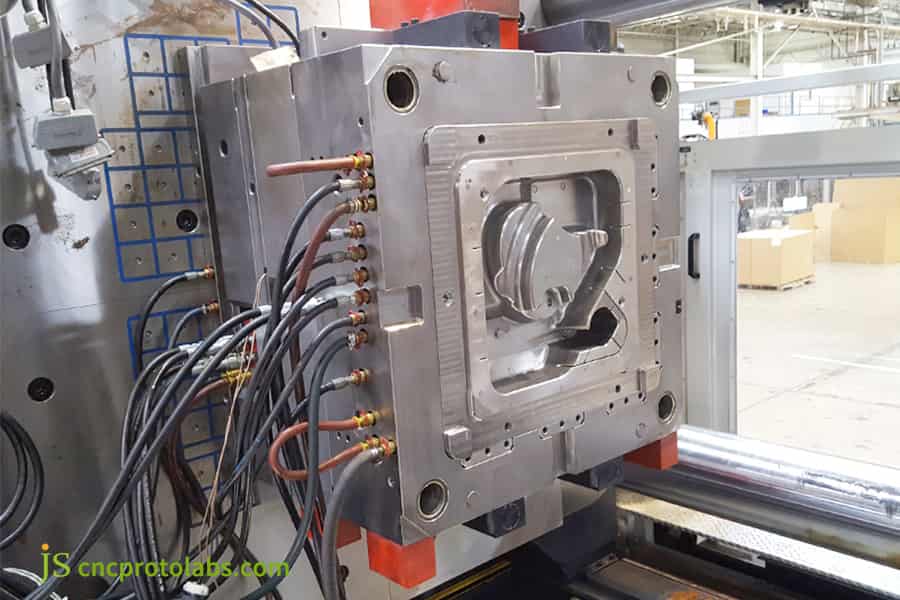
Figure 1: Industrial injection mold with cooling pipes in a factory setting.
How Does Material Selection Shape Precision Custom Injection Molding Quote?
The cost of resin materials in injection molding quote is directly affected by the grade of polymer, modification additives, and material utilization rate. Making suitable resin choices and optimizing runner designs are major aspects in saving material costs.
Resin Price Tiers and Cost Comparison Table
|
Resin Category |
Example Grades |
Price ($/kg) |
Typical Shrinkage (%) |
Common Applications |
|---|---|---|---|---|
|
Commodity |
PP, ABS |
$2.0–$3.5 |
0.5–2.0 |
Enclosures, toys, household |
|
Engineering |
PC, PA66 |
$4.5–$9.0 |
0.3–1.5 |
Automotive, electrical |
|
High-performance |
PEEK, PEI |
$70–$150 |
0.2–0.8 |
Medical, aerospace |
Selecting suitable alternative resins and designing optimal runner systems are mainly ways to lower the expenses linked to raw materials. In custom injection molding service, raw material costs are among major factors determining the final price offered to the customer.
Cold Runner versus Hot Runner Material Usage:
By optimizing the flow channel design to achieve injection molding cost optimization, the waste rate can be reduced from 30% to 2%.
- Cold Runner: Material losses are around 15%-30%. Manual removal of gates needs to be done manually, which adds to the time required for secondary processing.
- Hot Runner: <2% scrap rate, automatic cut-off, no need for trimming, but the costs of the mold go up by $3,000-$10,000.
- Recycled Material Usage: Mixing 10%-15% recycled material into non-critical structural parts can help lower the costs by 8%-12% while not affecting the tensile strength.
High-Cost-Efficient Material Replacement Schemes:
- Instead of PEEK, use PC: When the heat resistance requirement is ≤130℃, PC (5 g/ kg) that can be used instead of PEEK (80 g/kg), thereby saving 94% on the cost.
- Use PA66 instead of PPSU: In case of chemical resistance not being the first priority, PA66 (6/ kg) can take place of PPSU (30/ kg) and save 80%.
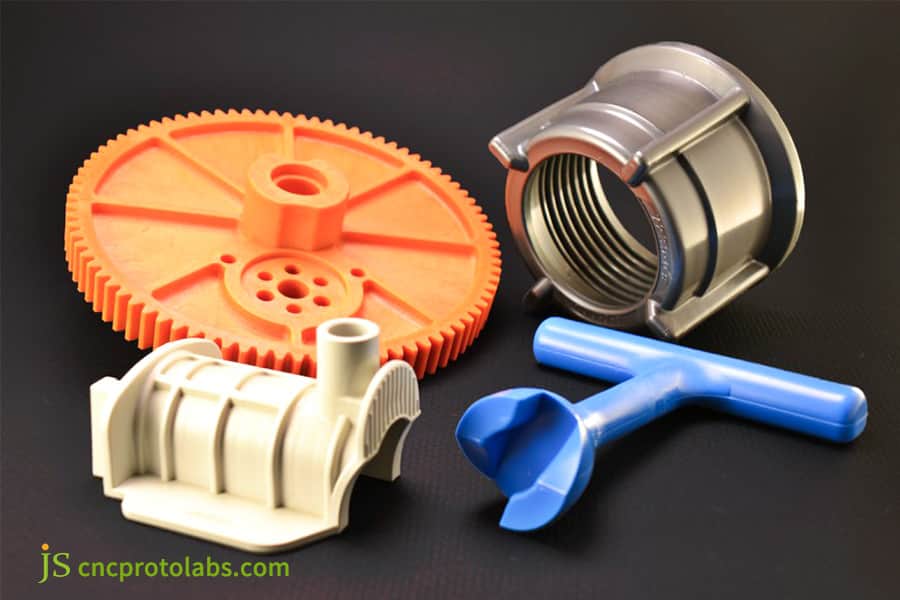
Figure 2: Various plastic molded products including gears scoops and housings.
How Are Machine Hourly Rates Calculated In OEM Injection Molding Service?
Machine and labor costs in an OEM injection molding service vary based on the tonnage of the injection mold machine, the duration of the molding cycle, and the level of automation. Cooling time minimization via engineering DFM is essentially the best means of dropping machine hourly costs.
Clamping Force Selection Logic
Clamping Force (Ton) = Average Cavity Pressure (bar) × Projected Area (cm²) / 1000
For example: Projected area 200 cm², average pressure 600 bar → Clamping Force = 600 × 200 / 1000 = 120 Ton.
Hourly Rates for Machines of Different Tonnages
|
Clamp Force (Ton) |
Hourly Rate ($/hr) |
Typical Part Size |
Energy Consumption (kW) |
|---|---|---|---|
|
50–150 |
$35–$60 |
Small (e.g., connectors) |
15–30 |
|
200–400 |
$60–$100 |
Medium (e.g., housings) |
30–60 |
|
500–1000+ |
$100–$160 |
Large (e.g., bumpers) |
60–120 |
Molding Cycle Breakdown (With 2 mm Wall Thick ABS as a Model)
In injection molding production service, about 60%-70% of the total cycle time is devoted to cooling, and this is the major target for cost cutting.
- Injection time: 5%-10% (about 1-2 seconds)
- Pressure holding time: 10%-15% (about 2-4 seconds)
- Cooling time: 60%-70% (about 12-18 seconds)
- Opening and closing the mold+ejecting: accounting for 15% -20% (about 3-5 seconds)
Every 0.5mm decrease in wall thickness reduces the cooling time by 30%-40%. A change from wall thickness 2.5 mm to 2.0 mm can reduce the cycle time from 30 seconds to only 22 seconds. And that results in as much as 27% of the machine cost saving.
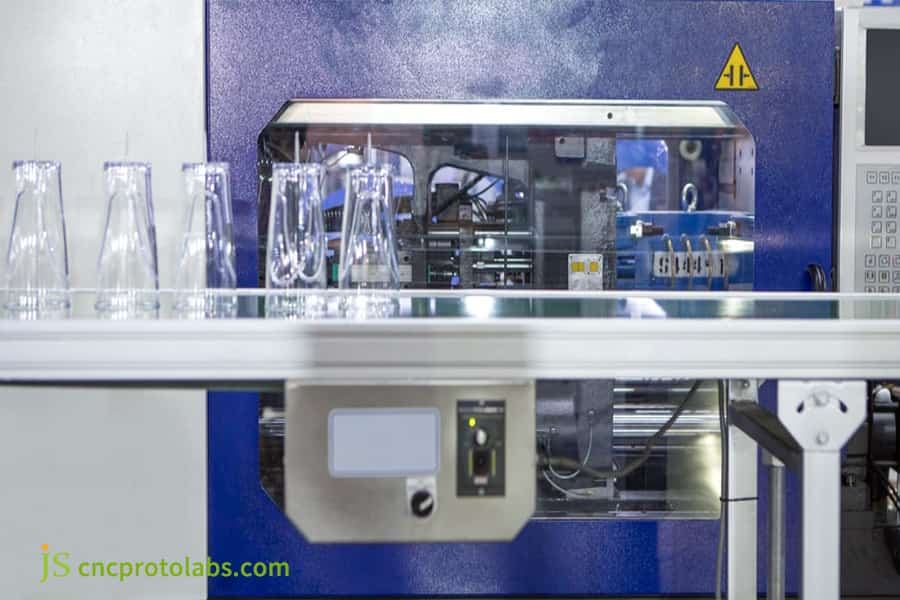
Figure 3: Automated plastic bottle manufacturing production line conveyor.
How To Identify And Reduce Injection Molding Hidden Costs In Production?
Injection molding hidden costs can be due to secondary post- processing, expensive quality inspection requirements, packaging and handling, and mold adjustments. By discovering and understanding those hidden costs at a very early stage before production the final project budget would not be affected so much.
Six Hidden Costs and Optimization Strategies
- Secondary Processing (Welding, Painting): For example, using two-color injection molding instead of painting can save 0~2.00 USD per piece.
- CMM 100% Inspection at Very Low Tolerances: Non-mating surfaces could be toleranced to ±0.1mm to cut inspection times by 80%.
- Level 3 PPAP Documentation Fee: Typically around 2,000-5,000 for automotive and medical products, make sure with the client beforehand which level of documentation is necessary.
- Experimental Molding Material and Labour: The molding of T0/T1 will require around 20-50 kilogram of the material and will cost up to 400. This is very time and expensive. So, it is advisable to test these using less expensive alternative materials.
- Protective Packaging and Handling: Usually 5~15 per carton is spent on customized/anti-static packing. The use of ordinary boxes with spacers can result in 50% saving.
- Taxes, Custom Clearance, and Transport: Sea freight plus import duties cost about 8%-15% of the total value. It is better to use bonded warehouse shipping to avoid these problems.
Case Study: Hidden Cost Identification and Reduction
Our previous work with a casing project showed us that in the client's original solution all dimensions needed to be within 0.02mm. This led to very high CMM inspection fee - up to $3,800 per batch. We found injection molding cost optimization and we changed only non-mating surfaces tolerance from ±0.02mm to ±0.1mm and the inspection fee has been dropped down to 700 per batch, which is 82% less that what it used to be.
- Identification Process: Finding out which tolerances from drawings belong to non-functional ones (i.e. Which ones don't need tight tolerances).
- Optimization Steps: Non-functional surfaces tolerance change from ±0.02mm to ±0.01mm, which would reduce CMM inspection points up to 80%.
- Cost Saving: Single-batch inspection fees dropped from $3,800 to $700, which would result in total savings of 15,500 USD/year, (assuming 5 batches/year).
How Can Smart DFM Optimization Reduce Injection Molding Mold Cost?
Injection molding mold cost can be greatly cut down by Design for Manufacturing (DFM) product structure optimization without compromising functionality, reducing mold complexity and processing cycle time.
Four DFM Rules for Significant Cost Reduction
Increase the injection molding cost efficiency to the maximum by clever DFM optimization.
- Uniform Wall Thickness: Difference in wall thickness should be kept within 10%, which will avoid shrinkage and warpage while improving cooling efficiency by 20%. For example, the cycle time can be shorten by 30% when wall thickness decreases from 3mm to 2.5mm.
- Draft Angle 1°-2°: Outer surface ≥1°, inner surface ≥0.5°, decreasing ejection resistance and mold wear, increasing mold life.
- Side core pulling simplified: By the use of a shut-off the undercut can be eliminated, this is a way of saving money (i.e. $2,000-$5,000 on slider replacement).
- Rib thickness: 50%-60% of the main wall thickness, height not more than 3 times wall thickness to avoid shrinkage.
Apart from providing custom injection molding service, it is the core business of the company as well to do early DFM work. By using this rules, about 15%-25% cost can be taken off the mold without changing its function.
Cost Comparison Before and After DFM Optimization:
Using a car bracket as an example, the original design has 2 sliders, unequal wall thickness (2.0-3.5mm), and no draft angle. After the modification:
- Number of sliders: 2→0 (replaced with a shut-off structure), saving $4,000 in mold costs.
- Wall thickness is made uniform: set to 2.5mm, cooling time decreased from 22 seconds to 15 seconds, saving 32% of the cycle time.
- Draft angle increased by 1°: ejection resistance cut by 40%, mold wear minimized, and the life of the mold lengthened by 20%.
Simply submit your 3D CAD drawings and JS Precision will get you a no charge and professional DFM report on cost savings.
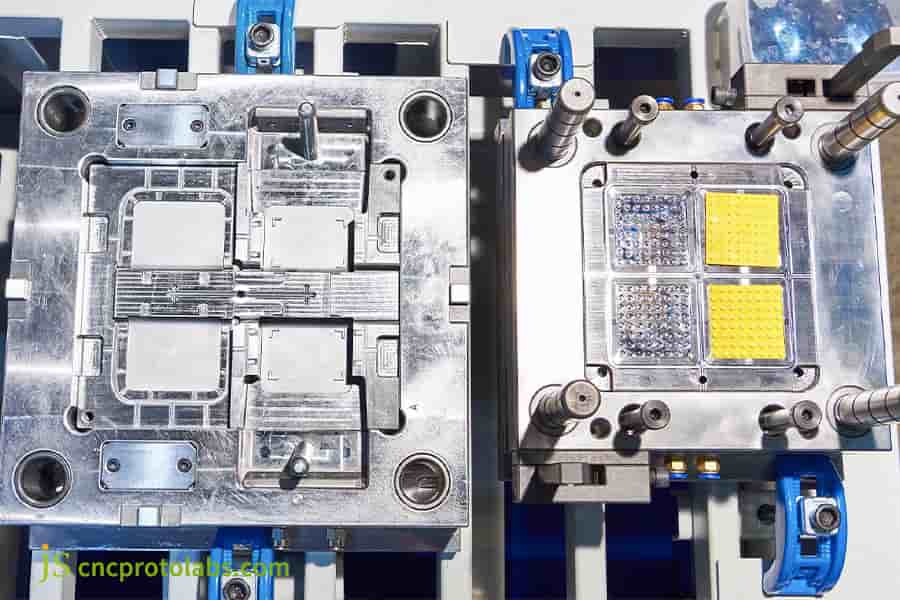
Figure 4: Complex multi-cavity injection mold with hot runner system.
How Does Cavitation Affect Unit Cost In Injection Molding Production Service?
The selection of mold cavity number in injection molding production service needs to strike a balance between early mold investment and later single piece production cost. Figging out the right number of cavities as EAU (Estimated Annual Unit Volume) helps in getting a bigger portion of return out of your investment.
Comparison of Mold Solutions for Different Production Scales
|
Annual Volume |
Recommended Cavitation |
Tooling Cost |
Per-Part Cost (est.) |
Payback Period |
|---|---|---|---|---|
|
1,000 pcs |
Single cavity |
$3,000 |
$8.50 |
Immediate |
|
50,000 pcs |
4 cavities |
$18,000 |
$1.20 |
6 months |
|
500,000 pcs |
8 cavities + hot runner |
$65,000 |
$0.45 |
12 months |
Looking at the injection molding cost breakdown, multi-cavity molds have the major advantage when you need to produce high volume. By the way, in one example, the cost per piece is merely $1.20 for 50,000 pieces which is 86% less than $8.50 in a single cavity.
Risks and Scenarios Applicable to Family Molds
- Advantages: Only one mold is needed to make several different parts reducing mold cost by 30%-50%.
- Risks: Variations in shrinkage from one part to another might result in different dimensions, which in turn, would require a careful runner balance design.
- Suitable for: Parts that use the same material, have similar wall thickness, and a medium quantity produced (10,000-50,000).
How Did JS Precision Deliver Cost Optimization For Automotive OEM Component?
JS Precision realized injection molding cost optimization in a client project with a Tier 2 European automotive supplier with redesigning the mold design and optimizing the manufacturing process.
During the project
A European second tier automotive supplier is facing cost overruns while seeking OEM injection molding service. The customer needs to customize a high-temperature resistant PA66-GF30 sensor housing, which originally included 4 lateral core pulling sliders. The single piece quotation exceeded the budget by 35%, and the required tolerance is ± 0.03mm, with a strict cycle.
JS Precision's Solution
We have achieved injection molding cost optimization through DFM refactoring.
- DFMe Structural Reconstruction: Two side undercuts were replaced with through-hole sealing structures, decreasing the mold slider count to two from four. Mold cost reduction directly amounting to $4200.
- Mold Flow Analysis and Cooling Optimization: A newly designed conformal cooling water system was installed which shortened the molding cycle time from 42 to 31 seconds, and also resulted in the processing costs being lessened by a factor of 0.26.
- Tolerance Classification and Control: Non-mating surfaces tolerance was loosened to ±0.1mm, but the mating ones retained to be ±0.03mm, so CMM time was cut down.
Lessons Learned from Failures:
Moisture absorption and dimensional swelling of PA66-GF30 were overlooked at the first trial of molding (T0) which caused an undersized positioning hole by 0.02mm. The problem was quickly solved with proper control of drying parameters (120, 4h), and by the injection molding holding pressure adjustment.
ISO 2768-1:1989 states: Linear dimensions without tolerance dimensions are classified into four levels of tolerance: f, m, c, and v.
We use C-grade (± 0.1mm) for non mating surfaces and F-grade (± 0.03mm) for mating surfaces in this project, which not only meets functional requirements but also reduces costs.
Final Results
- Mold costs reduced: 22%.
- Unit production cost reduced: 32%.
- PPAP Level 3 certification: Passed on the first try, on-time delivery.
Click now to submit your product customization requirements and view more real-world engineering case studies of JS Precision's OEM injection molding service.
Why Choose JS Precision For Your Custom Injection Molding Quote And Production?
JS Precision, with more than 15 years of experience, have become the leading supplier of precision mold making and manufacturing. By partnering with them, clients not only shorten their time to market but also achieve significant cost reductions by benefiting from top-to-bottom engineering services.
Manufacturing Advantages
- Machine Inventory: We offer precision injection molding machines of capacities ranging from 50 to 1200 tons which are quality certified per the requirements of ISO 9001:2015 plus the ability to conduct full-sized inspection via coordinate measuring machine (CMM).
- Quick Reaction: We send out the complete injection molding quote, showing both parts quantity and cost breakdown, the same day.
- Specialized Engineers: Each customer is equipped with a project engineer who provides free DFM and mold flow analysis. In custom injection molding service, early-stage engineering support can save 15% -25% of total costs.
- Mold Warranty For Life: Regular maintenance for free ensures that your production remains efficient for years. Besides, as a trustworthy partner, we are committed to providing lifetime maintenance.
Custom injection molding service isn't about finding the cheapest mold factory, but about using engineering data to make every penny count—that's the difference with JS Precision.
FAQs
Q1: What is the average cost of an injection mold?
The cost of an injection mold ranges from $1,500 for simple single-cavity aluminum prototype tooling to $85,000+ for complex multi-cavity hardened steel production molds. Key cost drivers include mold size, material grade (e.g., P20 vs. H13), surface finishing, and internal mechanical features like sliders or lifters.
Q2: How can engineers reduce the cost of custom injection molding?
Engineers can effectively cut molding costs via standardized DFM optimization. Maintaining uniform wall thickness, adding reasonable draft angles and removing redundant mold structures help. Loosening non-critical tolerances and selecting affordable resins also delivers stable cost reduction.
Q3: What is the difference between cold runner and hot runner mold costs?
Cold runner molds have a lower upfront tooling cost but generate higher material waste (15% - 30%), increasing part costs for high-volume runs. Hot runner molds cost $3,000 to $10,000+ more initially but eliminate sprue waste, significantly reducing long-term resin costs for engineering plastics.
Q4: How quickly can I receive an injection molding quote from JS Precision?
JS Precision provides a comprehensive, itemized injection molding quote within 24 hours after you submit your 3D CAD files (STEP/STP/IGES). Our engineering team simultaneously conducts a preliminary DFM analysis to highlight immediate cost-saving opportunities.
Q5: What machine parameters drive hourly injection molding rates?
Hourly press rates are primarily determined by clamping force tonnage and machine technology. Small presses (50 Ton - 150 Ton) cost around $35 - $60/hr, while large machines (500 Ton - 1000+ Ton) cost $100 - $160+/hr due to higher energy consumption and facility footprint.
Q6: How does production volume impact the per-part cost breakdown?
In low-volume production (<5,000 units), the fixed mold tooling cost dominates the per-part expense. In high-volume manufacturing (>100,000 units), fixed tooling amortizes to pennies per part, making raw material and cycle time the primary cost drivers.
Q7: Are there hidden fees when working with overseas OEM injection molding suppliers?
Potential hidden fees include customs duties, international freight, CMM inspection documentation, specialized packaging, and mold modification charges after design updates. Working with transparent suppliers like JS Precision ensures all-inclusive pricing upfront.
Q8: Why is steel choice critical for long-term injection molding ROI?
Selecting the right mold steel ensures the tool withstands required production cycles without failure. P20 steel (HRC 30-32) costs less upfront for up to 50,000 shots, whereas H13 steel (HRC 48-52) lasts over 1,000,000 shots, delivering superior ROI for large-scale production.
Summary
Understanding the full custom injection molding cost breakdown requires evaluating the interplay between tooling investment, resin selection, machine cycle times, and secondary operations. By applying strategic DFM principles—such as optimizing wall thickness and eliminating unnecessary mold mechanisms—engineering teams can achieve substantial savings without sacrificing part functionality or mechanical performance.
Ready to optimize your custom plastic parts for cost-effective manufacturing? Contact JS Precision today to discuss your project requirements with our senior engineers. Submit your 3D CAD files now to receive a transparent, itemized quote alongside a complimentary DFM moldability feedback report within 24 hours!

Disclaimer
The contents of this page are for informational purposes only. For JS Precision Services, there are no representations or warranties, express or implied, as to the accuracy, completeness, or validity of the information. It is the buyer's responsibility to identify specific technical requirements and request a formal parts quotation. Please contact us for more information.
JS Precision Team
Custom manufacturing solutions. With over 15 years of experience serving more than 1,000 customers, we specialize in high-precision CNC machining, sheet metal fabrication, 3D printing, injection molding, and metal stamping. Having successfully delivered over 300,000 precision parts, we maintain a 99.2% on-time delivery rate across all custom projects.
Our facility is equipped with over 100 state-of-the-art 5-axis machining centers and is ISO 9001:2015 certified. We deliver fast, efficient, and high-quality manufacturing solutions to B2B clients across 150 countries. Whether you require low-volume prototyping or large-scale customization, we support your project with lead times as short as 24 hours. Choose JS Precision for unparalleled efficiency, quality, and professionalism.
To learn more or submit your RFQ, visit our website: www.cncprotolabs.com
Resource