English



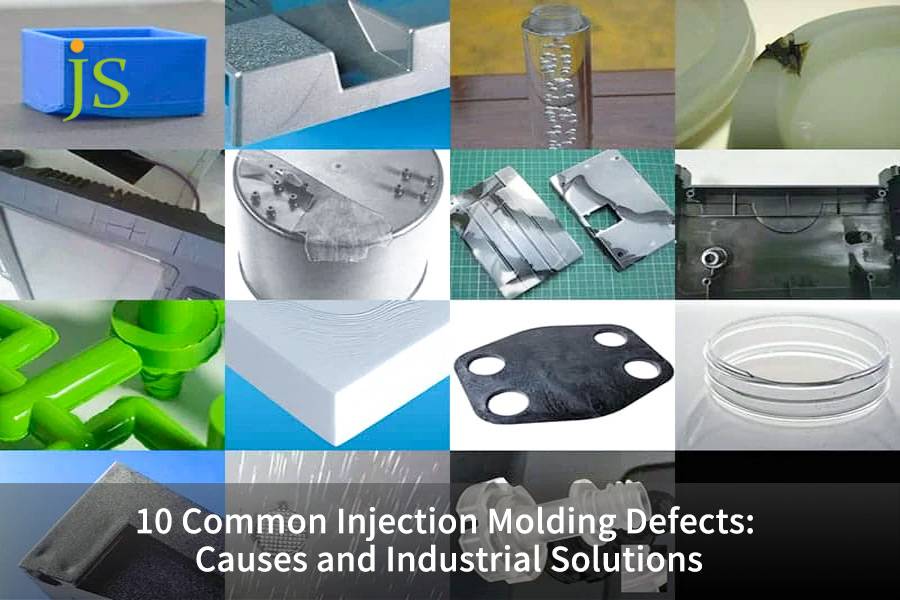

Injection molding defects lead to the failure of a part, instability of its dimensions, and a surge in scrap rate. Yet over 85% of production defects could be totally removed by carefully setting melt temperature, evenly distributing the cavity pressures, and perfectly cooling the mold design.
JS Precision, working as a precise manufacturing solution for molds, joins its strong capability in large-tonnage mold-making systems with DFM analysis to result in ≤0.15% rate of scrap throughout the whole production of engineering plastics.
Custom Injection Molding Service Defect Troubleshooting Matrix
|
Defect Type |
Root Cause Category |
Key Processing Parameter Fix |
DFM & Tooling Redesign Strategy |
|---|---|---|---|
|
Short Shot |
Flow Resistance & Melt Freeze |
Boost injection speed by 20–35%, raise melt temp by 10–15℃ |
Expand gate cross-section area by 15–25%, clear vent channels to 0.02mm depth |
|
Flash |
Excessive Pressure / Clamp Gap |
Lower holding pressure by 15–20%, increase clamp tonnage |
Re-grind mold parting line, restore platen parallelism within 0.015mm |
|
Sink Marks |
Thermal Contraction |
Increase packing pressure to 80–110MPa, extend pack time by 3–5s |
Maintain wall thickness uniformity, redesign ribs to 50–60% of main wall thickness |
|
Warpage |
Differential Thermal Shrinkage |
Equalize core/cavity coolant temp to within ±2℃ |
Implement conformal cooling channels, balance fiber orientation via sub-gates |
|
Weld Lines |
Cold Flow Front Convergence |
Increase flow velocity, elevate barrel front zone temp by 10–20℃ |
Relocate gates to non-structural areas, add overflow tabs for venting |
Key Takeaways
- Root Cause Controlling: Uneven cooling and incorrect holding pressure settings cause most of the dimensional defects which have been found to be almost 60 percent.
- Mold Accuracy: The size of the gate and the depth of the venting (0.015-0.025 mm) are critical factors that affect the product yield and at the same time eradicate the trapped air problem.
- DFM Alignment: Identifying wall thickness changes before cutting the steel may help reduce warping and shrink marks by approximately 90 percent.
Why Trust JS Precision’s Solutions For 10 Types Of Injection Molding Defects?
The real difficulty with injection molding defects is not the defects themselves but anticipating risks through DFM and mold flow analysis before any mold steel is cut.
Taking our real-world experience from the European medical PEEK fluid valve body project as the example: the client's original supplier's parts suffered 28% reject rate due to sink marks and vacuum voids problems that were even more evident at the time, and those parts could not satisfy the 15 MPa pressure resistance test.
JS Precision made a complete reversal by changing the dual-point thermal needle valve hot runner system, placing beryllium-copper inserts in thick-walls parts, making use of 0.018 mm porous steel venting, and changing the V/P (velocity-to-pressure) switchover point from 93% to 96%. By these means, the reject rate became only 0.3%, and the pressure resistance limit became 22 MPa.
ISO 9001:2015 clearly states: The organization shall establish, implement, maintain, and continually improve a quality management system to ensure product and service consistency and compliance with customer and regulatory requirements.
Strictly per this standard, JS Precision sets up a complete quality control closed-loop system for injection molding troubleshooting: starting with DFM pre-check and mold cavity machining (precision ±0.005 mm) to final CMM inspection during mold trial and mass production PPAP Level 3 document deliveries. Together with the process capability verification (CpK≥1.67), this guarantees that dimensional and appearance defects can be controlled and traced in every single production lot.
Want to get a defect diagnosis and cost assessment for your injection molded parts? Download the JS Precision Injection Molding Defect Troubleshooting White Paper, which includes process parameter matrices and DFM checklists for 10 types of defects.
How to Resolve Short Shots via Process Parameters and Custom Injection Molding Service Tooling Optimization?
Fixing short shots in custom injection molding service is mainly done by increasing the injection speed by 15-30%, raising the melt temperature by 10-15℃, and changing the venting depth to 0.015-0.02 mm to get full cavity filling 100%.
Changes in Process Parameters
If injecting molding defects appear, it mainly happens through troubleshooting, with high-viscosity materials like PC/ABS and PEEK or thin-wall structures:
- Raise Injection Speed: Get your viscosity down by reducing your flow resistance if you go with shear thinning and get the most out of it. To do that first ramp up the speed of injection.
- Lock V/P Switchover Point: To prevent pressure switching that would result in under-filled parts at the extremities of the cavity, the point of velocity-to-pressure (V/P) conversion must be set precisely at a cavity fill of 95-98%.
- Melt Temperature Gradient: The lowest resistance flow is achieved by increasing the front zone of the barrel temperature by 10-15℃ and reducing its temperature difference to the previous zones (the ones before the front zone).
Mold Structure Modifications
To ensure complete filling during injection molding troubleshooting, JS Precision employs the following mold modifications:
- Enlarge Gate Cross-Section: You can enlarge the gate cross-section by 15-20% by using CNC EDM that will help in reducing runner system's pressure losses.
- Add Venting Channels: At the final filling sites, you should cut out venting channels 0.02 mm in depth, to avoid air entrapment that could create defects.
- Flow Balance Checking: You need to run Moldflow simulation for filling to get an indication of the filling time and to make pressure drop at the last cavity ≤15 MPa.
Facing high scrap rates due to short shots? Upload your 3D CAD drawings to JS Precision to receive a free DFM diagnostic report covering V/P switchover points and gate optimization.
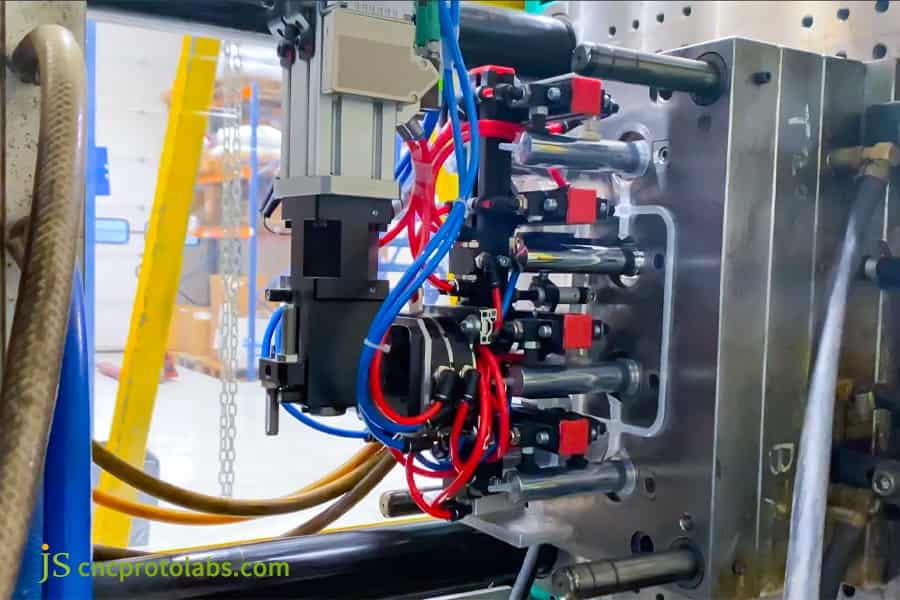
Figure 1: Injection molding machine with hot runner system.
How Can Molding Defect Solutions Effectively Eliminate Sink Marks in Thick-Walled Components?
The key to eliminating sink marks in molding defect solutions is to effectively compensate for volume shrinkage and eliminate surface collapse by increasing the holding pressure to 80-110 MPa and extending the holding time by 3-5 seconds.
Formation Mechanism of Sink Marks
Shrinkage marks often occur at the joints between reinforcing ribs, columns, and thick walls, and are a key measure for plastic part defect prevention. The polymer surface layer tends to solidify first, while the core layer which is a thicker part is taking quite a while to get cooled off and is undergoing volumetric shrinkage which makes the surface skin layer collapse inward. On analogy, a thick-walled area is like a hollow fruit which the skin of it collapses inward when internal shrinkage creates a kind of vacuum like effect.
Stepped Packing Strategy
In injection molding process optimization, JS Precision employs a three-stage packing strategy:
- First Stage (Replenishment): Polymer chains are rapidly packed within the thick-walled regions by compressing the material with 100 bar pressure.
- Second Stage (Maintenance): Thermal shrinkage is compensated by reducing pressure to 85 bar.
- Third Stage (Pressure Release): The pressure is decreased to 60 bar so that the residual stresses get relaxed and the gate is fully frozen down (Gate Freeze).
Control Parameters for Sink Marks Based on Wall Thickness
|
Wall Thickness (mm) |
Packing Pressure (MPa) |
Pack Time (s) |
Rib Ratio |
Cooling Rate Boost |
|---|---|---|---|---|
|
2–4 |
80 |
3 |
50% |
30% |
|
4–6 |
95 |
4 |
55% |
35% |
|
6–8 |
110 |
5 |
60% |
40% |
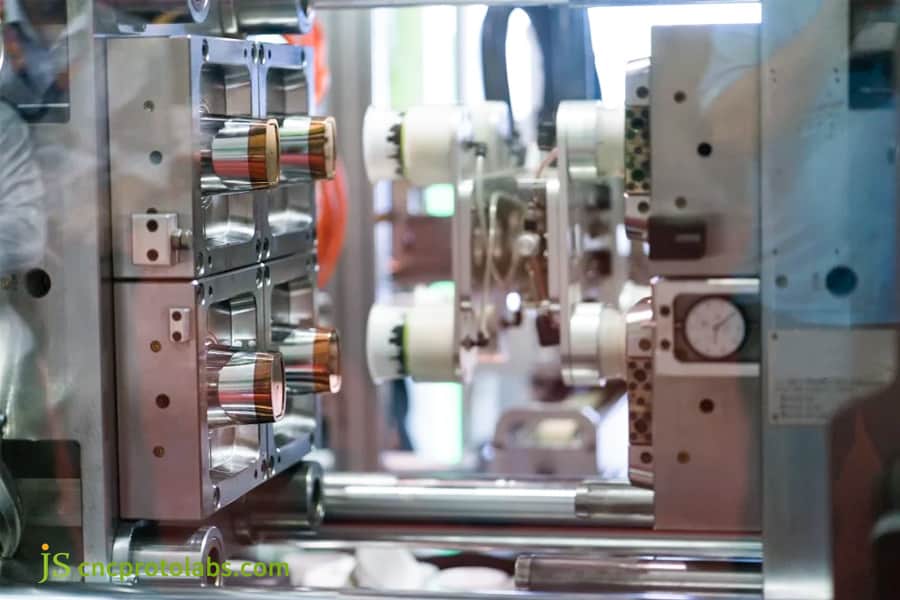
Figure 2: Molded plastic parts with sink marks.
How to Prevent Mold Flash Issues Using Advanced Industrial Molding Service Technologies?
The primary method to avert the creation of flash through an industrial molding service is to add approximately a tenth to a fifteenth more clamping force and keep a flatness level difference of less than 0.01 mm between the two parts that the mold is made to close to ensure the elimination of flash.
Clamping Force Requirement Formula
Fc > Ap × Pavg
Where Ap is the projected area of the plastic part on the parting surface (in cm²) and Pavg is the average cavity pressure (typically 30-50 MPa). When using low-viscosity resins such as PA66, material leakage (flash) occurs if the mating clearance exceeds 0.01 mm.
JS Precision's Three-Step Solution for Flash
In its plastic injection molding service, JS Precision's engineering team employs the following three-step approach:
- Checking and Fixing Parting Line: They used red lead paste to test the parting line fit. If the line didn't fit well we did high accuracy grinding on 5 axis CNC machine to fix the parting line such that the contact area is at least 90%.
- Injection Speed Optimization: Injection is slowed down by 30% when the mold is about to finish getting filled at 92% filled level. This results in the peak impact pressure which occurs when the melt hits the parting line edges being minimized.
- Equipment Parallelism Calibration: Digital sensors detect the tie-bar stress to guarantee parallelism tolerance of the platen is kept under 0.015 mm.
Facing persistent flash issues that are stalling production? Contact JS Precision for a quote on professional injection molding troubleshooting and high-precision mold correction services.
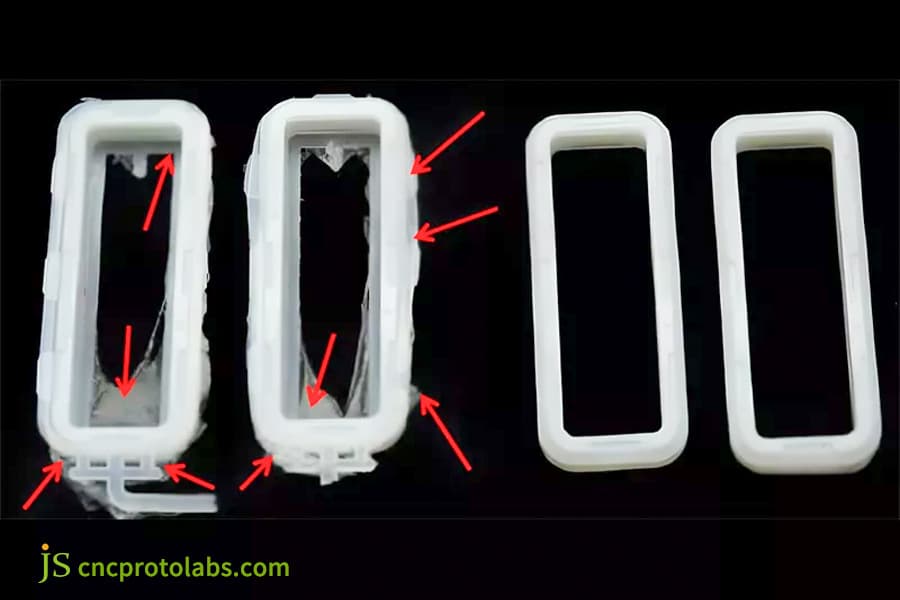
Figure 3: Plastic parts with mold flash defects.
How Can Plastic Injection Molding Service Eliminate Part Warpage through Thermal Management?
How to eliminate warpage in plastic injection molding service: A very effective method against warpage in plastic injection molding is controlling the temperature difference between the moving and fixed mold halves to within ±2℃ and using conformal cooling channels, this kind of measure can lower warpage by more than 70%.
Root Causes of Warpage
Warpage is one of the causes of dimensional instability of the precision injection molded parts. When it comes to glass fiber-reinforced materials (e.g. PA66+30%GF), the difference in shrinkage rates between the flow direction and the transverse direction exceeds threefold. In fact, the plastic part behaves as if the wooden board is drying one side more than the other, naturally, it curls towards the side that is shrinking faster.
JS Precision's Integrated Thermal Management Strategy
During injection molding process optimization:
- 3D Conformal Cooling Channels: With the help of metal 3D printing, conformal cooling channels are produced, which consistently have a spacing of only 3-5 mm to the cavity surface. It is possible to keep temperature differences between different locations on complex curved objects within ±1.5℃, thermal stress is completely prevented.
- Holding Pressure & Annealing: Holding time is further increased until the core of the part is completely solidified, after parting, the workpiece is annealed at a constant 80℃ for 2h to completely remove internal residual stresses.
- Fibre orientation balancing: To balance glass fibre orientations and minimize warpage, multi-point sub-gates are used.
As a provider of high-quality plastic injection molding service, JS Precision offers comprehensive molding defect solutions.
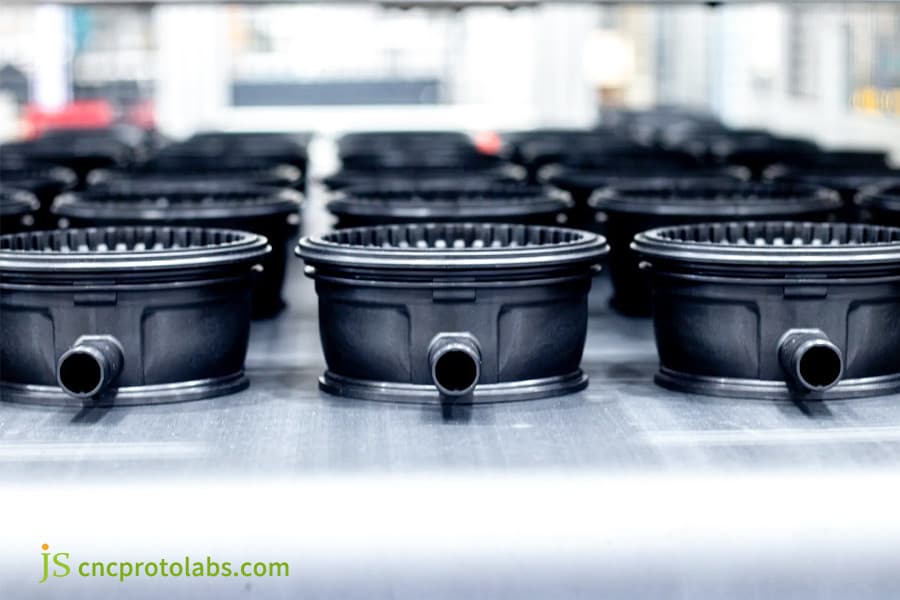
Figure 4: Warpage-free black plastic components.
How to Improve Weld Line Integrity and Surface Aesthetics in Complex Moldings?
The key to solving weld lines in plastic part defect prevention is to increase the melt temperature by 10-20℃ and increase the injection speed in the fusion zone, which can improve the weld line strength by 40%.
Weld Line Formation Mechanism
On top of degrading the appearance, weld lines make components susceptible to failure under stress, being a major issue of plastic part defect prevention. When the melt front temperature is too low, the molecular chains won't diffuse and interlink across the interface. For instance, the two melt streams are like cold water drops splattering on a tabletop: the surface solidifies without the drops merging together.
JS Precision's Dynamic Mold Temperature Control (RHCM)
In its custom injection molding service, JS Precision employs dynamic mold temperature control technology:
- Immediate Heating: In the middle of the filling part, the mold surface temperature is instantly brought to a level higher than the glass transition temperature (Tg) of the material, e.g. Heating up ABS to 110℃ to create the fusion of molecular chains and get rid of the phase boundary.
- Veryfast Cooling: The system immediately uses cold water cooling to fix the bonded boundary after filling.
- Gate Changing: DFM (Design for Manufacturability) is implemented to change gate locations by moving convergence points to the non-load-bearing areas and by putting overflow wells at the cavity end to remove the cold material.
How to Solve Voids and Burn Marks through Advanced Venting and Pressure Controls?
The core of injection molding troubleshooting to solve burn marks is to reduce the final injection speed, adjust the exhaust groove depth to 0.015-0.025 mm, and completely eliminate burn marks.
Mechanisms of Burn Marks and Vacuum Bubbles
Burning and vacuum bubbles belong to the typical category of injection molding troubleshooting. At the end of the filling stage when compressed gas is adiabatically compressed, it creates localized temperatures as high as 600-800℃, burning and blackening the plastic material.
JS Precision Technical Solutions
For its industrial molding service, JS Precision employs the following technical measures:
- Vacuum-Assisted Injection Molding:
Before starting the injection process, a vacuum extraction system is turned on to extract more than 95% of the gas remaining inside the mold cavity. This practically eliminates the problem of venting enclosed cavities.
- Deceleration at the Final Stage and Multi-Point Venting:
When the mold is 90% filled, the injection speed is decreased by 40% so that the gas removal is done smoothly, at the same time, venting channels are cut in the mating surfaces of ejector pins and inserts which have depths precisely measured between 0.015 mm and 0.025 mm.
These measures establish a comprehensive system for plastic part defects prevention. Facing challenging issues like burn marks? Contact JS Precision for a technical consultation to obtain low-scrap-rate solutions and manufacturing quotes.
Medical OEM Case Study: How JS Precision Reduced PEEK Fluidic Manifold Defect Rates from 28% to 0.3%
This study showcases a successful collaboration with JS Precision on addressing sink marks and vacuum voids in PEEK medical fluid blocks through an innovative use of our custom injection molding service. By thoroughly analysing and then DFM (Design for Manufacturability) and hot runner system, we ultimately managed to cut the scrap rate down to 0.3%.
Issues Experienced by the Client
The client from Europe, producing medical fluid valve blocks in PEEK (polyether ether ketone), faced wall thickness variations between 1.5 mm and 8.5 mm. They had very severe injection molding defects, like internal vacuum voids and weld line cracking. The parts could not pass the 15 MPa pressure resistance test with the scrap rate from original supplier reaching as high as 28%.
JS Precision Solution
In injection molding process optimization, JS Precision implemented the following:
- DFM Optimization: Abandoned single point side gate in favor of dual point hot valve gate system to circumvent thermal degradation resulting from shear heat.
- Process Optimization: Maintained the barrel temperature at 365℃ to 385℃ and increased the mold temperature to 175℃.
- Mold Upgrades: Embed beryllium copper inserts in the thick walled area and equip with 0.018mm porous steel exhaust.
Lessons Learned
The first attempt (T1) caused surface jetting because the switchover from velocity control to pressure (V/P switchover) happened too slowly. Then the technical department moved the V/P switchover time to 96% from 93% and lowered the start injection speed by 25%, which successfully erased the surface jetting signs.
ISO 294-1:2017 explains: This document specifies the general principles to be followed when injection moulding test specimens of thermoplastic materials and provides a basis for establishing reproducible moulding conditions.
In keeping with this directive literally, JS Precision set up an absolutely reproducible Process Window for the manufacturing of PEEK medical fluid valve block, mainly regulating and setting such factors as barrel temperature, mold temperature, and injection speed consistently. The flow character of PEEK melt during manufacturing can be maintained from batch to batch, it practically removes the chances of sink marks and air bubbles arising randomly due to production variation.
Final Results
|
Parameter |
Before JS Precision |
After JS Precision |
|---|---|---|
|
Defect rate |
28% |
0.3% |
|
Pressure resistance |
15 MPa (failed) |
22 MPa (passed) |
|
Cycle time |
85 s |
62 s |
|
V/P switchover point |
93% |
96% |
Facing similar challenges with high scrap rates in precision injection molding? Contact JS Precision for the same defect diagnosis solution, and receive a free process optimization plan and a quick quote.
Why Choose JS Precision as Your Precision Custom Injection Molding Service Partner?
JS Precision, as your company, provides zero defect custom injection molding service to global customers with ISO 9001 certified factories, fully automated CMM testing, and engineering grade DFM services.
JS Precision Core Advantages
Driven by both industrial molding and plastic injection molding capabilities, JS Precision's core advantages include:
- ±0.005 mm mold machining precision: Slow feeding wire-cut EDM and high speed CNC machines are used to ensure that molds not only fit perfectly but also allow for minimum clearance.
- Comprehensive quality control: Zeiss CMM (Coordinate Measuring Machine) equipment is used on each batch and PPAP Level 3 is fully documented and delivered.
- Molding Defect Solutions: Through a systematic approach 100% of the times 3D mold flow analysis is done before we cut a single piece of steel which enables the root cause of over 95% of filling and warpage defects to be identified and prevented.
Customer Benefits
If you select JS precision, you will receive with your project: mass production scrap rate within 0.15%, promise process Cp K1.67, comprehensive FAI report and CMM dimensional inspection data for each batch. Compared with so-called platform based intermediary model which may be involved in dispute and argument of communication flow response performance, after-sales counterclaim, our direct operated factory offer a special professional engineering service team and straightforward responsibility chain.
FAQs
Q1: What is the single most common cause of injection molding defects in engineering plastics?
Inadequate drying of resin & uneven cooling of mold.The presence of moisture causes delamination and silver streaks and the variations in temperature lead to thermal stress and warpage. Defects could be reduced by 70% if dehumidifying drying and balanced cooling channels are used.
Q2: How does proper mold venting prevent burn marks and short shots?
Venting channels with 0.015-0.025mm depth allow the escape of gases. If the venting is insufficient then the gases within the cavity are compressed adiabatically- filling the cavity with gas, and potentially heating it to 800℃ top burn plastic or to increase air resistance and produce short shots.
Q3: How can DFM flow analysis reduce long-term tooling cost and part defects?
Mold flow analysis premanufacturing is conducted to compare shear rates and assess cooling uniformity. It also minimizes wall thickness and gate placement as well as eliminate mold rework resulting in savings of 3 to 5 weeks in the duration of the project.
Q4: How does JS Precision ensure defect-free quality control across high-volume production runs?
By combining sensor-equipped molds with the ISO 9001 system, every batch undergoes cavity pressure monitoring, optical sorting, and Zeiss CMM inspection, keeping the defect rate below 0.15%.
Q5: What processing parameters should be adjusted first when troubleshooting sink marks?
The first step in problem-solving sink marks is to raise the holding pressure by 10-20% and keep the holding time going until the gate is completely frozen. Lower the melt and mold temperatures to get less shrinkage if it's still not resolved.
Q6: How do gate size and location influence the occurrence of jetting and weld lines?
A very small gate results in higher shear with subsequent material breakdown, whereas inappropriate positioning of the gate brings about jetting. Channeling the melted flow to the cavity wall ensures a stable flow and improves weld lines.
Q7: How are custom injection molding service prices calculated for defect-free complex components?
Fees are based on the cost of mold steel (NAK80/S136), resin, and cycles. DFM optimization reduces cycle time and scrap rate. You can send drawings to get an estimate.
Q8: How quickly can JS Precision analyze CAD drawings and provide a mold quotation?
We usually get the mold quotation and a comprehensive DFM report within 24 hours after we get the 3D CAD design files and check wall thickness, draft angles, and gating strategies to work out the mass production plan.
Summary
Injection molding defect types like short shot warpage sinkmarking and welding line are basically the manifestations of physical imbalances at injection molding process due to uneven pressure distribution, incorrect temperature control and non-ideal mold geometry. If engineering team thoroughly identifies defect causes, fine-tunes parameters and leverages forecasting DFM & mold flow analysis tools, then they would be able to transform their mode of working from trial-and-error correction to the level of preventive zero-defect control.
Choose JS Precision's professional custom injection molding services to eliminate product defects at the source and enhance quality. Contact JS Precision or submit your 3D CAD drawings today to receive a free, comprehensive DFM assessment report and a precise, factory-direct quote within 24 hours!

Disclaimer
The contents of this page are for informational purposes only. For JS Precision Services, there are no representations or warranties, express or implied, as to the accuracy, completeness, or validity of the information. It is the buyer's responsibility to identify specific technical requirements and request a formal parts quotation. Please contact us for more information.
JS Precision Team
Custom manufacturing solutions. With over 15 years of experience serving more than 1,000 customers, we specialize in high-precision CNC machining, sheet metal fabrication, 3D printing, injection molding, and metal stamping. Having successfully delivered over 300,000 precision parts, we maintain a 99.2% on-time delivery rate across all custom projects.
Our facility is equipped with over 100 state-of-the-art 5-axis machining centers and is ISO 9001:2015 certified. We deliver fast, efficient, and high-quality manufacturing solutions to B2B clients across 150 countries. Whether you require low-volume prototyping or large-scale customization, we support your project with lead times as short as 24 hours. Choose JS Precision for unparalleled efficiency, quality, and professionalism.
To learn more or submit your RFQ, visit our website: www.cncprotolabs.com
Resource