English



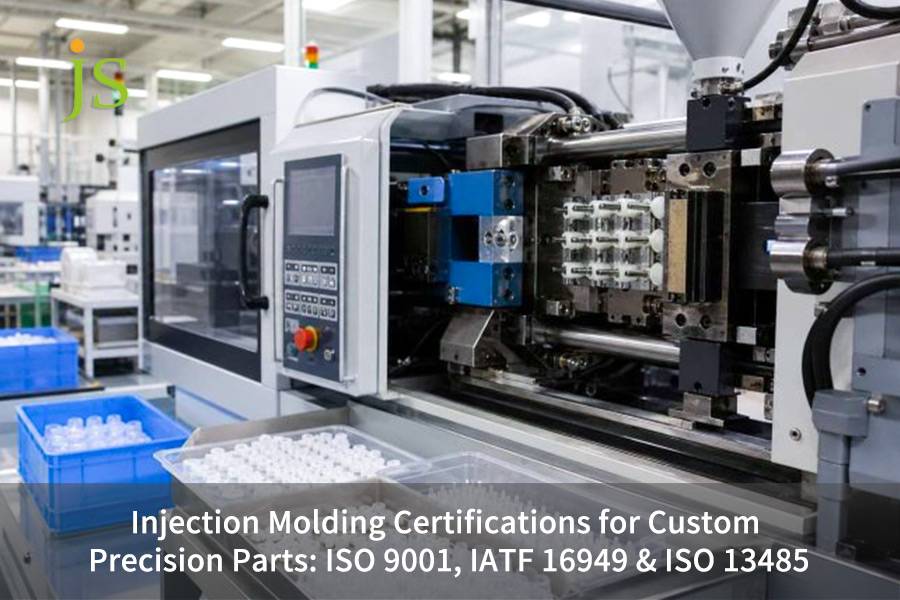

ISO 13485 injection molding service provides regulatory compliance, zero defect and total traceability of the precise custom part. Of the three major certification systems, IATF 16949 certification demands PPAP level 1 to 5 and Cpk≥1.67 whereas ISO 13485 certification calls for ISO class 7/8 clean room and 3Q validation for medical device and ISO 9001 is the basic quality certification with a tolerance of ±0.05mm for industrial parts. As per the AIAG 2025 supply chain report, IATF 16949 certified suppliers have 76% fewer lot defects than non-certified suppliers.
Injection Molding Certifications Compliance & Technical Capability Matrix
|
Certification Standard |
Core Positioning & Application |
Key Quality Deliverables |
Dimensional & Process Control |
Traceability Depth & Risk Control |
|---|---|---|---|---|
|
ISO 9001 |
General Industry & Basic Processing |
First Article Inspection (FAI), Standard Certificate of Analysis (CoA) |
Standard tolerance ±0.05mm, basic SPC control |
Batch-level resin raw material traceability |
|
IATF 16949 |
Automotive Supply Chain Parts Manufacturing |
PPAP Level 1-5, APQP, FMEA, Control Plan |
Tight tolerance ±0.005 mm, Cpk ≥1.67, Gauge R&R <10% |
Full traceability from resin batch to individual serialized part |
|
ISO 13485 |
Medical Devices & Biocompatible Parts |
3Q Validation (IQ/OQ/PQ), Cleanroom (ISO Class 7/8), ISO 10993 |
High-precision tolerance ±0.01mm, bioburden control |
Full traceability including resin, regrind ratio, and operator shift |
Data sourced from AIAG 2025 Supply Chain Report, ISO 9001:2015 and ISO 13485:2016 standards, and JS Precision's internal statistics from 180 delivered projects in 2025.
Key Takeaways
- Match certification to project needs: ISO 9001 is suitable for general industrial parts, the automotive and medical industries have to provide proof and process validation documents under IATF 16949 or ISO 13485.
- A strict degree of control will increase product cost: IATF 16949 is zero defect oriented and PPAP audit focused. ISO 13485 is clean room compliance and IQ/OQ/PQ risk management focused.
- Conduct engineering audits: Visit or monitor supplier sites with the permission of suppliers to check their Cpk real-time monitoring facilities, equipment calibration records etc.
How Do Injection Molding Certifications Impact Custom Precision Parts Quality?
Having injection molding certifications is one of the main prerequisites that define engineering control and machine repeatability for manufacturing precision custom parts. By doing so, it transforms average manufacturing processes into verifiable, very reproducible services.
Control Differences Between Certified and Uncertified Factories
In 2025, JS Precision participated in a German new energy vehicle sensor housing project. They noticed that a supplier who was not IATF 16949 certified was only able to get to Cpk of 1.02 and have a 4.7% defect rate. After JS Precision took over the project and started to use APQP (Advanced Product Quality Planning), Cpk improved to 1.82 while defect rate was cut down to 0.02%. Below are typical control differences:
|
Control Dimension |
Uncertified Factory (Open Loop) |
ISO Certified Factory (Closed Loop) |
|---|---|---|
|
Mold Temperature Control |
Fluctuation > ±5°C |
Accurate to ±1°C |
|
Injection Pressure Monitoring |
No cavity pressure sensor |
In-cavity pressure sensor real-time feedback |
|
Drive System |
Hydraulic, repeatability ±0.02 mm |
All-electric servo, repeatability ±0.005 mm |
|
Data Recording |
Manual sampling, paper records |
100% online SPC data collection |
|
Defect Rate (Typical) |
2%–5% |
<0.05% |
Data source: JS Precision internal tracking of 180 projects in 2025 showed that comparison was made of test productions with the same mold and resin by 12 ISO certified and 8 non-certified subcontractors.
Eliminating the Molding Defects from their Root Cause
- Control of Uneven Shrinkage: Moldflow analysis could locate shrinkage spots, which could assist in holding pressure curves segmentation and controlling the warpage below 0.01mm. The process was very systematic, hence it could actually be regarded as the exact needed in injection molding certifications.
- Wall Thickness Variation Compensation: Sequential valve-gated hot runners could be adjusted to work with 2.0-3.5mm wall thickness variation zones to remove hesitation marks and sink marks.
- Stress Relaxation: Using mold temperature control with accuracy of ±0.5 degrees could help in reducing infringement stress to below 10 nm and eliminate cracks formed during the assembling process.
JS Precision's Precision Control Capabilities
By using a large number of all-electric, real-time injection molding machines JS Precision is constantly able to hold the dimensional tolerances for precision custom molded components down to ±0.005mm.
- All-electric machines: 50-650 ton all-electric machines with excellent injection repeatability of ±0.005mm, consuming 40% less energy than the hydraulic presses.
- Pressure Monitoring: Sensors are placed at every cavity to monitor and give real time feedback on filling balance. Gauge R&R <8%.
- Thermal stability: Mold temperature control system accuracy of ±0. 5 enables you to avoid dimensional changes resulting from thermal expansion. Through this method, JS Precision offers the most reliable and precision injection molding service in the world.
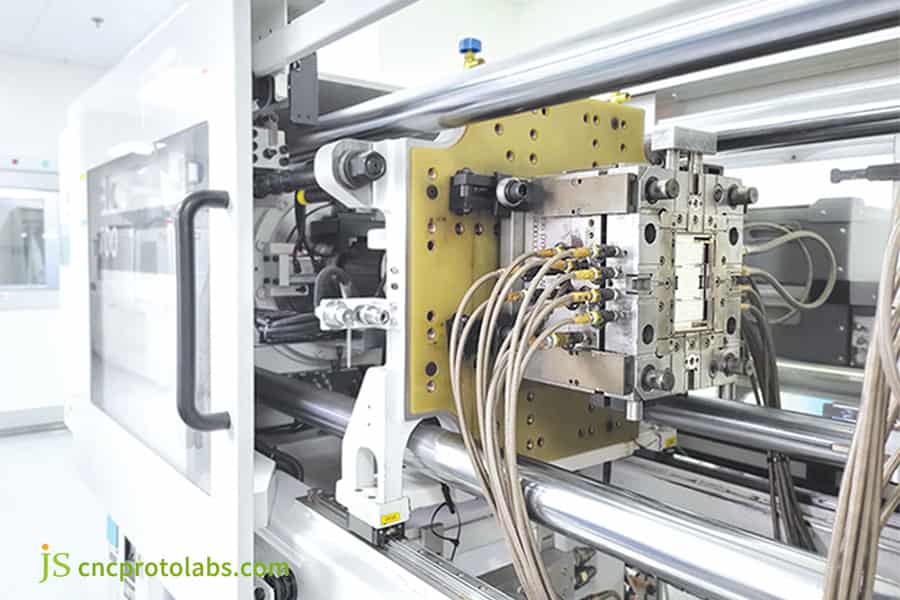
Figure 1: Industrial injection molding machine with robot arm in a cleanroom for medical manufacturing.
ISO 9001 Injection Molding Service Ensures Baseline Quality for Industrial Parts
ISO 9001 injection molding service offers a basis for quality management, standardizing the process which also results in the contractility and traceability features being ensured with very minimal incremental cost.
Shop Floor Implementation of ISO 9001
The organization shall carry out production and service provision under controlled conditions. —ISO 9001:2015 Clause 8.5.1
JS Precision has established documented process control from DFM review up to CMM final inspection to comply with the standards strictly. Our 2025 data reveals that 92% of projects were able to reach first-piece Cpk above 1.33 through a production range which spans from 100 prototypes to millions of units.
- Documented control: Starting of from work instructions (SOPs) and ending of at equipment calibration records, there is archiving of all these documents at least for 3 years.
- SOPs for process inspection: The time (frequency) and criteria (what is the level of acceptance) for First Article Inspection (FAI), In-Process Quality Control (IPQC), and Outgoing Quality Control (OQC) have been clearly defined.
- Material compliance: Every resin batch has a Certificate of Analysis (CoA) to ensure RoHS/REACH compliance. This is the basic requirement of ISO 9001 injection molding service.
Three Gates of Standard Inspection SOP
The quality of custom precision parts molding can be ensured through the following three inspection SOPs:
- First Article Inspection (FAI): Each of the first 5 pieces per batch is 100% dimensionally checked, CMM full dimensionality report is filed and dimensional tolerance is regulated between ±0.02mm to ±0.05mm.
- In-Process Quality Control (IPQC): every 2 hours 10 pieces are picked out for the checking of key dimensions, in the SPC control chart Cpk is being tracked live, and the production line is going to be stopped automatically in case the Cpk gets below 1.33.
- Outgoing Quality Control (OQC): Final examination on appearance and functionality is carried out per AQL 2.5 sampling standard, CoC(Certificate of Conformance) is also being made available.
Cost-Effectiveness for Industrial Parts
ISO 9001 is the standard certification that ensures the most cost-effective mass production and keeps a certain level of product quality for industrial parts like non-vehicular non-medical casings, consumer electronics chassis and various mechanical parts:
- Cost of molds: 3,000-15,000 for aluminum molds 12,000-100,000 for steel molds.
- Optimization of cost per part: JS Precision as ISO 9001 standard, designs and arranges runners and cooling channels optimally to save 28% on cycle time and reduce your unit purchase price.
- Utilization of materials: Regrind blending as a scientific approach ( 15%) helps recycle 22% less resin.
Submit your requirements to JS Precision for a quick injection molding quotation within 24 hours, and let our engineering team calculate a cost-effective solution under the ISO 9001 framework.
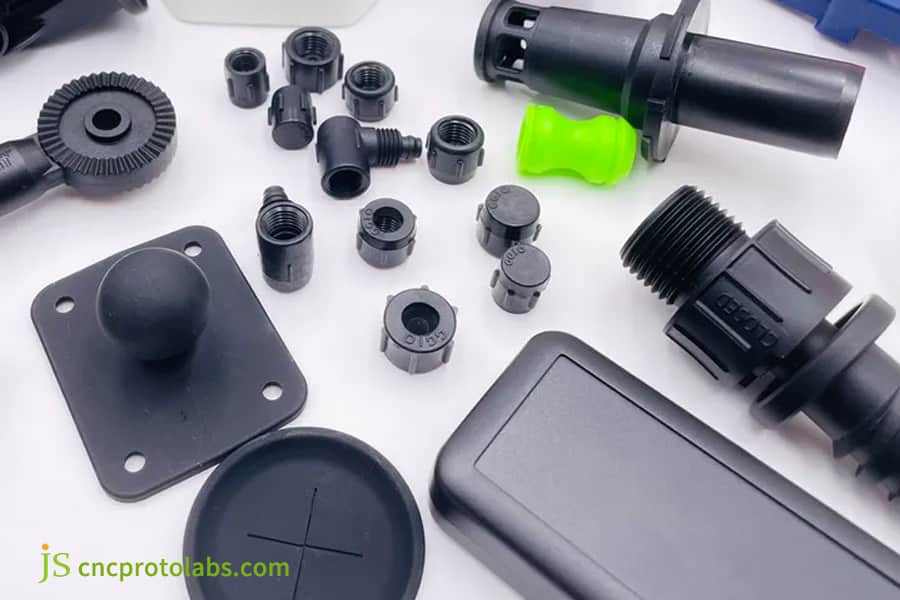
Figure 2: Precision custom molded components including gears and connectors.
IATF 16949 Injection Molding Delivers Zero-Defect Manufacturing for Automotive Parts
IATF 16949 injection molding is about enforcing very strict zero-defect strategy and risk prevention to assure that the high quantity custom parts can consistently meet the automotive supply chain dimensional tolerances and safety performance targets.
Physical Implementation of Five Core Tools
- APQP: The Advanced Product Quality Planning. The process starts by planning 6 months before the project launch and will eventually deliver 18 standard documents with clear milestones per phase.
- PFMEA (Failure Mode And Effects Analysis) identifies a total of 127 potential failure modes, sets up preventive actions for flash sink short shot, etc. And reduces RPN (Risk Priority Number) below 50.
- MSA (Measurement System Analysis): For the implementation of MSA the requirement of Gauge R&R < 10% shall be met. This means that the variation of a measurement system will be smaller than a part tolerance.
- SPC (Statistical Process Control): The key dimension Cpk≥1.67, control limits are set at 4. It is the main hard requirement of IATF 16949 injection molding.
- PPAP: The Production Part Approval Process. This stage involves the submission of the complete set of documentation which comprises of process flow diagram PFMEA control plan with tolerances, dimensional reports with tolerance callout and MSA analysis.
Hard Execution Standards for Process Parameters
- Cpk≥1.67: This will produce fewer than 0.6 defects per million units, the theoretical limit equivalent to zero defect level.
- Gauge R&R< 10%: Measurement system varies by less than 10% of the tolerance band and brings dependable inspection results.
- Pressure swing in injection <±2 MPa: All-electric machines operating with closed-loop control deliver the same fill quantity within each cycle. These parameters make sure the production run of precision custom molded components is a perfect one.
PPAP Document Delivery and Hardware Assurance
JS Precision delivers products with zero defects by relying on automated optical inspection and using coordinate measuring machines (CMM):
- Automated optical inspection enables the 100% surface scanning with the automatic rejection of flaws as minor as ±0.01mm.
- CMM full dimensional inspection covers the 100% checking of critical dimensions with accuracy 0.001mm as well as the instant uploading of the data to QMS.
- We maintain complete PPAP Level 1-5 documentation at our facilities for 18 months and have it at the ready for the audit of our Tier 1/Tier 2 customers anytime.
Automotive parts procurement managers, please contact the JS Precision team with your PPAP audit requirements, and we will assign a senior quality engineer to assist.
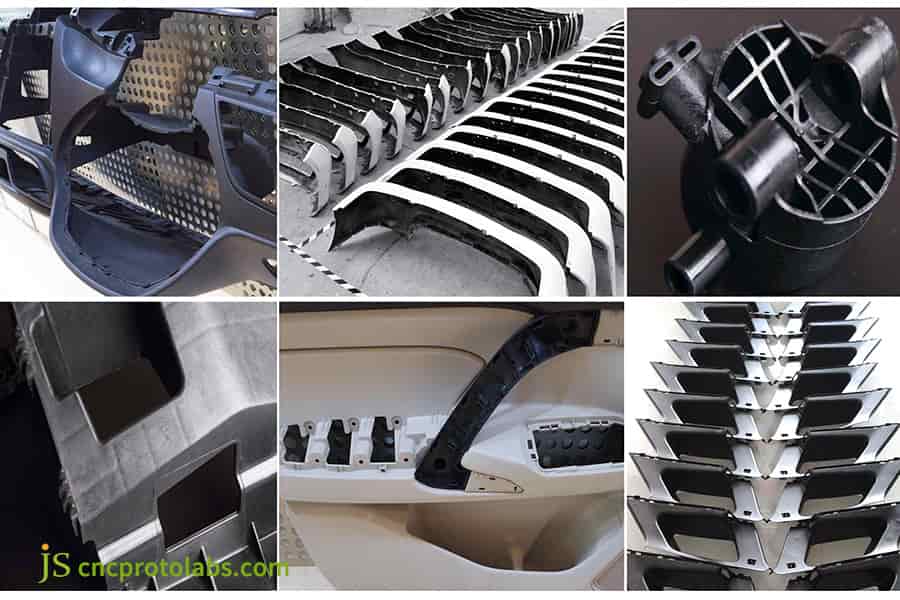
Figure 3: Stacked automotive interior and exterior plastic trim components on industrial floor.
ISO 13485 Injection Molding Service Enables Medical Compliance and Traceability
Our ISO 13485 injection molding service combines the cleanliness of the controlled environment, risk evaluation, and thorough traceability of individual batches to guarantee custom precision parts fully meet medical device biocompatibility and regulatory safety standards.
Cleanroom Environment and Equipment Control
- ISO Class 7 and Class 8 cleanrooms: Particle concentration is limited to ISO Class 7 (≤352,000 particles/m³ @ 0.5μm) or Class 8 (≤3,520,000 particles/m³ @ 0.5μm), air pressure is positive +15 Pa. The room temperature is 22±2℃, relative humidity 45±5% RH.
- Personnel and material control: Staff wear coveralls in a cleanroom environment and materials are passed through an air shower chamber to avoid the risk of cross-contamination between them.
- Continuous environmental monitoring: Particle counters and temperature/humidity monitors upload data to the Quality Management System, which is the environmental basis of ISO 13485 injection molding service.
3Q Validation and Full Batch Traceability
ISO 13485:2016 Clause 7.5.1 states: The organization shall establish and maintain records for each batch of medical devices to provide traceability of scope and extent, and indicate quantity manufactured and quantity approved for release.
To comply with this standard fully, JS Precision implemented a comprehensive chain to trace medical injection projects starting from the resin lot number and drying temperature up to the operator shift. Every batch has a record that leads directly to an identification of the particular raw material lot, machine number, process parameters, and operator identity.
- IQ (Installation Qualification): To assure that the installation of the device and mold is based on the design specifications, 47 items were checked and the results were recorded.
- OQ (Operational Qualification): It's used to confirm that the process is stable and the extreme process limits, like temperature variation ±10℃, or pressure variance ±15%, result in acceptable quality level. That is also to define the legal ranges within which the process will operate.
- PQ (Performance Qualification): It consisted of 100% inspection of 3 consecutively produced batches of 300 pieces each, with minimum Cpk of 1.67. This test was conducted to prove the reliability of the process for mass production.
Biocompatibility and Lifecycle Traceability
- Medical-grade material compliance: PEEK and PC fulfill ISO 10993 and FDA Class VI standards biologically while every batch is supplied with a declaration of biocompatibility.
- Reground materials control: Medical-grade products strictly allow regrind blending ratio at max of 5% and the blended batch source for each regrind blending is recorded. In this way, custom precision parts molding under medical standards is assured.
- Operator traceability by shift: Molded part is tied to operator ID, shift number, and timestamp to provide 10-year retrievability.
Medical device engineers, please contact JS Precision for project compliance assessment. Our regulatory affairs team will assist you through the entire process from 3Q validation to FDA audit preparation.
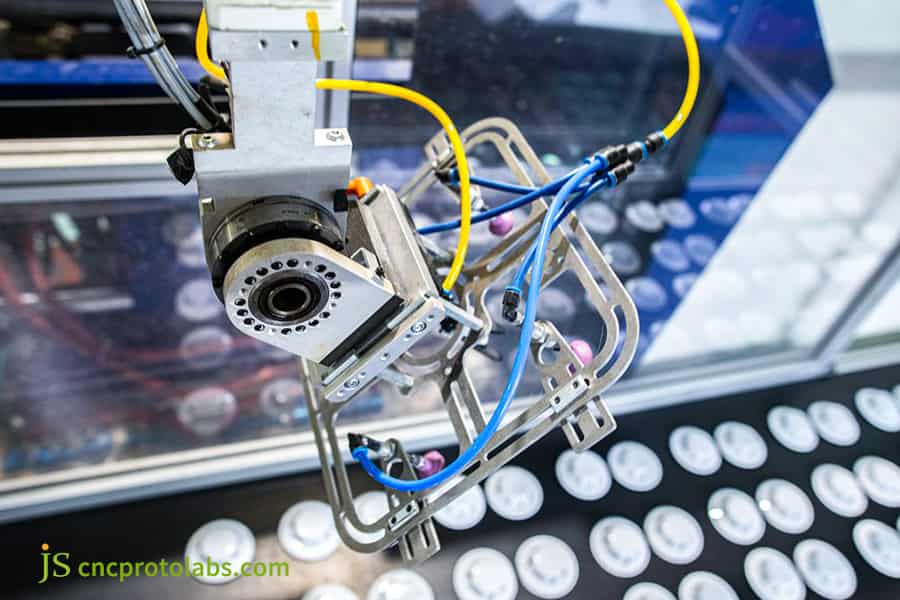
Figure 4: Precision pneumatic gripper handling medical-grade plastic components in cleanroom.
ISO 9001 vs IATF 16949 vs ISO 13485: Which Injection Molding Standard Do You Need?
Comparing ISO 9001 vs IATF 16949 vs ISO 13485 in terms of control depth and audit cost helps select the precision injection molding service that best matches your project requirements.
Four-Dimension Quantitative Comparison
|
Comparison Dimension |
ISO 9001 |
IATF 16949 |
ISO 13485 |
|---|---|---|---|
|
Quality Management Focus |
Continual Improvement |
Zero Defect & Defect Prevention |
Patient Safety & Compliance |
|
Traceability Granularity |
Batch-level |
Serialization / Unit-level |
Resin / Environment / Operator Full Record |
|
Annual Certification Maintenance Fee (USD) |
$8,000–$15,000 |
$25,000–$50,000 |
$20,000–$45,000 |
|
New Project Documentation Lead Time |
2–4 weeks |
8–12 weeks |
10–16 weeks |
Data source: JS Precision internal statistics from 180 delivered projects in 2025, combined with AIAG 2025 Supply Chain Report.
Decision Logic by Application Scenario
- Industrial processing and exporting parts: If you want to ensure a good standard at a reasonable price with the lowest per-unit amortization, consider ISO 9001. This is also the case where most injection molding certifications selection will be based entirely on the price/quantity ratio.
- Automotive parts (Tier 1/Tier 2): A certificate per IATF 16949 is required, and only those complying with Cpk≥1.67 and PPAP are admitted.
- Medical components (invasive/implantable): Mandatory ISO 13485, cleanroom+3Q validation+full traceability chain are indispensable.
- Medical components (non-invasive): Although a certification based on ISO 13485 is not mandatory, it is strongly recommended to reduce the risk of recalling product by compliance issue. At this stage, certification of precision injection molding service should reflect the risk level related to the given product.
JS Precision offers multi-system compatible flexible manufacturing with three independent production lines serving general industry, automotive, and medical customers.
JS Precision Standardized Precision Automotive Cooler Housing Case Study
The case study presents a success story of JS Precision where they employed high precision injection molding to overcome problems of dimensional deformation and high-pressure sealing leakage in customized precision parts for automobile cooling systems.
Customer Challenge
In a precision injection-molded housing for a cooling system used in a European automotive customer Tier 1 new energy battery radiator, the sealing surface flatness was exceeding the specification (required ≤0.015mm, actual 0.06mm) because of deformation in standard injection mold that led to an 8% leak-rate at high-pressure burst testing.
JS Precision Solution
- APQP & PFMEA implementation: Through identifying and resolving 23 possible failure modes, we were able to bring down the average RPN from 180 to below 45 In fact.
- Moldflow simulations: After modifying the filling patterns and adopting multi-point sequential valve-gated hot runners, the injection pressure was kept at 120 MPa. This reflects the system engineering capability of precision injection molding service.
- Equipment modernization: A 100-ton all-electric high precision injection molding machine that allows accurate control of mold temperature ±0.5℃ was introduced.
- 100% machine-vision CMM dimensional inspection: Main dimensions are checked directly on the molding machine with the results being reported to the QMS automatically without any manual intervention. All the dimensional measurement data have already been uploaded to the QMS in real-time.
Lessons Learned
Our practical insights from the JSP-AUTO-2025-031 project revealed that initial test runs focused excessively on minimizing flash mainly through decreasing injection speed which led to secondary thermal warpages due to unequal crystallinity. The engineers turned to high-speed, high-pressure injection coupled with exact packing transition which completely prevented the build-up of internal stress. From this change the flatness of the component was improved from 0.045mm to even 0.008mm. Such expert comprehension of precision custom molded components was essential in achieving project objectives.
Final Quantified Results
- Flatness control: The flatness control has remained at 0.008mm constantly (requirement was 0.015mm.
- Dimensional Cpk: Dimensional Cpk has even exceeded the Cpk of AIAG requirement i.e. 1.67. It now measures 1.82.
- Shipping yield: Shipping yield was increased to 99.98%.
- PPAP sign-off: Customer PPAP Level 3 was successfully passed and a transition to mass production has been made.
- Leak rate: From 8% the leak rates were further lowered to below 0.01%.
Facing similar precision part injection molding challenges? Send CAD drawings to the JS Precision engineering team immediately for a free mold flow analysis and DFM proposal.
Choosing JS Precision for Custom Precision Injection Molding Services
Coupling of top-quality system with complete certification security and compliance implementation make selecting JS Precision your partner the best bet at getting a precision injection molding service at the top of the game.
- Capacity and technical base: Over 30 servo/all-electric machines (50–650 tons), CMM (±0.001mm), spectrometers, and optical imager. Tool room with 5-axis CNC (core insert ±0.002mm, 24,000 RPM) enables rapid mold production. This hardware supports custom precision parts molding.
- Guarantee and timely shipments: ISO systems deliver 98.7% on-time delivery across 180 projects in 2025. Three independent lines (ISO 9001, IATF 16949, ISO 13485) prevent cross-contamination. Real-time SPC with Cpk on customer portal. Injection molding certifications cover industrial to medical.
- Total engineering support: Precision injection molding service includes DFM, rapid tooling (aluminum 7–15 days, steel 4–8 weeks), and seamless scale-up from 100 to 1,000,000 units.
FAQs
Q1: What is the main difference between ISO 9001 and IATF 16949 for injection molding?
ISO 9001 offers the quality management in general. IATF 16949, it is required APQP, PFMEA & PPAP for automotive supply chain, quality emphasis on defect prevention and Cpk≥1.67.
Q2: Why is ISO 13485 certification critical when molding medical device parts?
ISO 13485 compliance mandated ISO Class 7/8 cleanrooms and 3Q validation including raw material traceability and biocompatibility safety to avoid cross contamination and satisfy audits.
Q3: How does JS Precision ensure quality compliance across different injection molding certifications?
JS Precision is implementing ISO system directly on shop floor with all-electric machines with in-cavity pressure sensors and optical CMM inspection, with resin traceability and FAI SOPs.
Q4: What factors determine the quotation and cost of custom precision injection molding service?
Quotation is based on selected resin, components complexity, number of cavities, surface quality, and certification requirements. IATF 16949 or ISO 13485 incurs validation documentation and SPC monitoring expenses.
Q5: Can JS Precision provide PPAP documentation for custom automotive molded parts?
Yes, JS Precision gives full PPAP Level 1-5 packages with process flow diagrams PFMEA control plans, comprehensive dimensional report and MSA analysis specific to a part.
Q6: What tolerances can be consistently maintained in precision custom plastic injection molding?
The traditional custom injection molding has a standard tolerance of ±0.05mm. While in its more specialized version for engineering plastics and the ones like PEEK and PPS and in an environmentally controlled environment, the critical dimensions are held by the development company to ±0.005mm, so much more precise.
Q7. How do I get an accurate price quote for my injection molding project from JS Precision?
Upload your 3D CAD file (STEP/IGES/x_t) with estimated volume, material specification and certification needs. 3D Cation our engineering team will provide you with a unique quotation withDFMin24 hours.
Q8. Is an ISO 13485 certified molder required if my injection molded part is non-invasive?
Medical parts which are not sterile do not need to be made in cleanroom.Just by using an ISO 13485 approved supplier will attain a high batch traceability, pristine materials and a risk control process to limit recall exposure.
Summary
Selecting the correct injection molding qualification (ISO 9001, IATF 16949, or ISO 13485) is one of the crucial decisions based on part manufacturing cost, regulation compliance, and the accuracy of dimensions. Getting certified injection molded by the injection molding partner ensures the full traceability of the product, a highly repeatable process, standardization, and so on, from material selection, mold design, and shop floor execution. Carrying out a thorough DFM evaluation during the initial stage of the design is a great way of cutting processing costs.
Interested in higher quality parts and streamlining? Don't hesitate to reach out to the team of skilled manufacturing specialists at JS Precision. Upload your 3D CAD file and you will receive a completely free DFM manufacturability evaluation, mold layout design suggestion, and detailed injection molding quote all at no cost and in just one day!

Disclaimer
The contents of this page are for informational purposes only. For JS Precision Services, there are no representations or warranties, express or implied, as to the accuracy, completeness, or validity of the information. It is the buyer's responsibility to identify specific technical requirements and request a formal parts quotation. Please contact us for more information.
JS Precision Team
Custom manufacturing solutions. With over 15 years of experience serving more than 1,000 customers, we specialize in high-precision CNC machining, sheet metal fabrication, 3D printing, injection molding, and metal stamping. Having successfully delivered over 300,000 precision parts, we maintain a 99.2% on-time delivery rate across all custom projects.
Our facility is equipped with over 100 state-of-the-art 5-axis machining centers and is ISO 9001:2015 certified. We deliver fast, efficient, and high-quality manufacturing solutions to B2B clients across 150 countries. Whether you require low-volume prototyping or large-scale customization, we support your project with lead times as short as 24 hours. Choose JS Precision for unparalleled efficiency, quality, and professionalism.
To learn more or submit your RFQ, visit our website: www.cncprotolabs.com
Resource