English



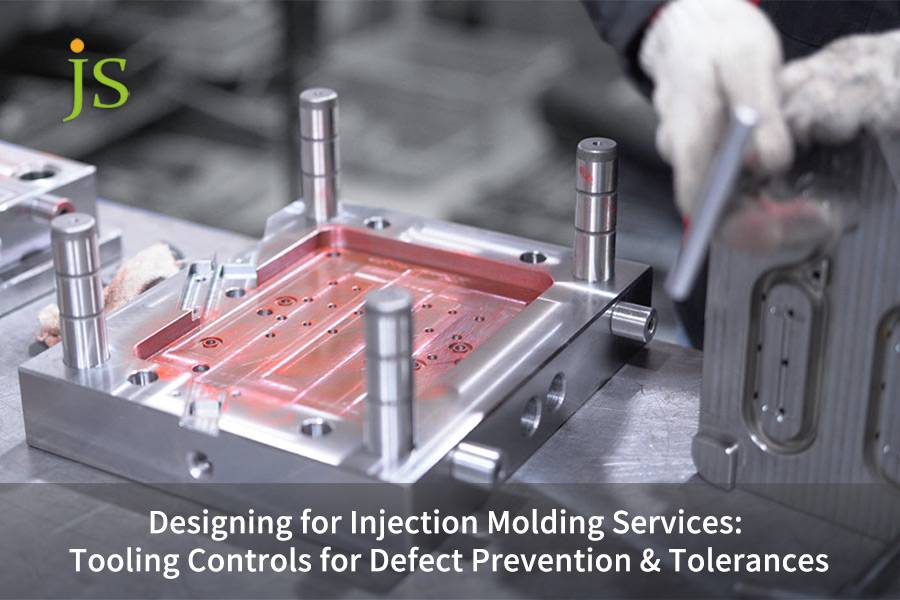

Injection mold tooling design is an important factor that decides if high-precision plastic parts production can be scaled up successfully. In the manufacturing industry, design engineers may frequently get so absorbed in preparing the geometric 3D models on the CAD software, that they turn a blind eye to the intricate thermodynamic behavior of the plastic melt inside the mold cavity, which eventually results in the delay of mold delivery or mold repair occasions. In this post, we will analyze in detail how to map usage specifications to mold-level controlling actions, thereby firmly holding tight tolerances and unveiling hidden costs of mass production.
Following are the key points that we will explore:
1. The physical occurrences underlying the relationship of shear stress and nonlinear shrinkage in achieving high-precision tolerance control.
2. Mold venting and the design of gate geometry for the prevention and control of surface defects.
3. Ways of getting precision mold manufacturing solutions that offer high Cpk return on investment at the purchase stage.
Thereafter, we attempt to analyze these technical issues that conventional automated DFM software is not capable of deriving from the viewpoint of a factory-level chief engineer.
Injection Mold Tooling Solutions Core Value Overview
|
CAD Design Challenge
|
Injection Mold Tooling Solution
|
Yield & Tolerance Performance
|
Long-term Cost Benefit
|
|
Stress concentration in thin-wall deep-groove structures
|
Optimize gate position and balance runner shear stress.
|
Control deformation and lock tolerance at ±0.005mm.
|
Reduce secondary processing costs.
|
|
Gas burns at melt flow ends
|
Precision mill 0.015mm venting slots on side walls.
|
Eliminate surface gas burns completely.
|
Reduce parting line erosion and repeated mold repair costs.
|
|
Dimensional inconsistency in multi-cavity molds
|
Adopt micron-level cavity machining technology.
|
Ensure high cavity consistency with Cpk ≥ 1.33.
|
Extend mold life to 500,000 shots with lower amortization cost.
|
|
Shrinkage and warpage from uneven wall thickness
|
Deploy conformal cooling water channel layout.
|
Reduce shrinkage deviation by 78%.
|
Shorten single mold cycle time by 4s.
|
Key Takeaways
- Design and Mold Integration: Streamlining designing for injection molding services and securing core process parameters before mold opening is the main prerequisite for starting the development of defect free products.
- Locking in Precision Tolerances: Dimensional tolerances can be consistently maintained at 0.005mm during mass production by using precision mold controlling and processing methods.
- Controlling Mass Production Costs: Proper scientific mold structure design not only makes the yield better but also greatly cuts down long-term mold amortization costs and hidden expenses caused by repeated mold repairs.
Why Trust JS Precision’s Expertise In Defect-Prevention Design For Custom Injection Mold Tooling?
The quality of design of custom injection mold tooling will directly impact the defect rate and overall cost in the mass production stage. Selecting a manufacturing partner with practical experience can help lessen the risks of large-scale mass production right from the start.
From our real-world experience with a 48-pin automotive high-density connector project, molds that were only evaluated using automated DFM software had, on average, a mass production scrap rate that was more than 11% higher than those human expert-designed molds.
Our engineering team members have, on average, more than 10 years of experience in precision mold development and are familiar with the molding characteristics of special materials like PEEK and PPS. Also, they can predict hidden risks that software cannot identify. We have an end-to-end production system that is ISO 9001:2015 certified, and all our projects comply with standardized development and quality inspection processes.
We have made more than 500 sets of high-precision injection molds for various fields, including automotive, medical, and aerospace. Instead of given the standardized software outputs, we first optimize designs by integrating trial molding and mass production data from the factory floor, thereby making sure that solutions have practical mass production value.
Experienced mold design can help you avoid over 90% of mass production defect risks in advance. You can contact our senior engineers for a one-on-one feasibility assessment of your custom injection tooling service to identify potential design flaws early.
How Do designing for injection molding services Leverage Tooling Controls to Lock In Micron-Level Tolerances?
When it comes to designing for injection molding services, it's not just about changing wall thickness here and there, it is about regulating the nonlinear thermal shrinkage and the molding stress distribution of the mold. This way, it is possible to achieve ultra-tight tolerances with the lock in at 0.005mm level.
Nonlinear Shrinkage Control of Crystalline Materials
To produce high-precision parts, traditional DFM software gives only static tolerance guidelines. Still, precision mold manufacturing has to take into account the spatial shrinkage variations of crystalline materials (like PEEK and PPS) at different temperatures of the mold. Designing injection mold services professionally takes this thermodynamic property as one of the fundamental design inputs.
We illustrate the use of anisotropic shrinkage compensation factors related to the material properties, precisely aligning with the design specifications of injection mold tooling tolerance. Shrinkage compensation is actually done early in the mold processing stage, this way dimensions deviations after molding at the solid level are counterbalanced.
The idea is very much like giving the cloth a shrinkage allowance so that the size is just perfect after washing. In the same way, pre-compensating for shrinkage in the mold ensures that the part comes out of cooling at the target size.
Running Optimization of Shear Stress Distribution at the Mold End
Melt flowing through the parts of the mold where there are sudden changes in wall thickness generates local shear stress. This is the primal reason of part warping and deformation, it is also a main process variable that tooling for high tolerance parts has to control. We carry out the balanced distribution of shear stress by optimizing the runner system and injection mold tooling gating:
- Move the gate position to direct the melt to flow easily from thick-walled areas to thin-walled areas.
- Use a gradient runner design to avoid stress concentration resulting from sudden changes in melt flow rate.
- Set up a dynamic temperature-controlled water channel layout to alter mold temperature in various areas and equalize cooling rates at different locations.
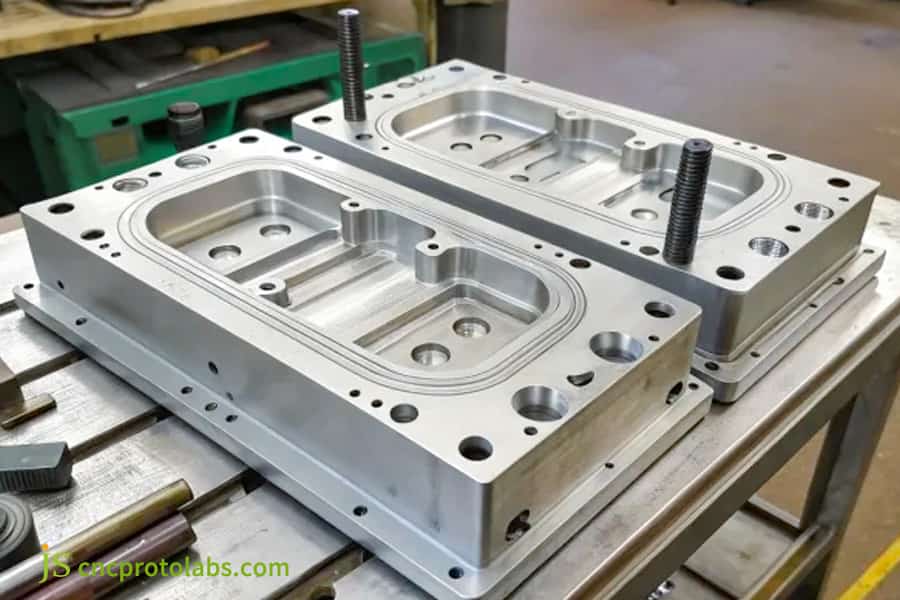
Figure 1: Precision CNC machining of aluminum mold cores ensuring micron-level tolerances for complex tooling.
How to Optimize Injection Mold Tooling Design to Completely Eliminate Gas Burns and Venting Defects?
If gas burning defects are present on the surface of the part, it is mainly due to improper venting system in the injection mold tooling design, which should be the first factor considered. Micron level venting slots are to be accurately fabricated at parting surfaces as well as the flow end of the molds.
Trapped Air Generation during High-speed Injection Molding
During the fast and high-pressure injection molding process, the air that fills the mold cavity can be compressed to a temperature of several hundred degrees Celsius if it does not get expelled timely. This causes part charring or even shortage of the part. The reflective design of the injection mold tooling system should be capable of finding the airborne regions and the accumulation of gases upon which the venting structure can be further optimized. Materials that generate fumes at a fast flow rate (e.g. POM and PA66 + 30% GF) need higher venting capability which is beyond normal parting line gap.
In other words, it is as if water is rapidly injected with a syringe and air inside, which is not able to escape, is compressed and heated. This would be the case of burning parts in the mold because of trapped air.
Micron-level Venting Grooves Precision Machining Solution
Based on different materials, we accurately choose the location and the depth of vent grooves and then precisely accomplish micro-meter level venting by high precision injection mold tooling machining. It guarantees unobstructed air venting while not causing flash. A reliable custom injection tooling service also offers a full venting check sequence. The main figures are recorded in the table below:
|
Material Type
|
Recommended Venting Slot Depth (mm)
|
Recommended Venting Slot Width (mm)
|
Preferred Position
|
Flash Risk Level
|
|
POM
|
0.015
|
5-8
|
Melt flow ends
|
Low
|
|
PA66+30%GF
|
0.018
|
6-10
|
Parting lines / blind holes
|
Medium
|
|
PEEK
|
0.02
|
8-12
|
Thin-wall edges
|
Medium
|
|
ABS
|
0.025
|
5-8
|
Opposite side of gate
|
Low
|
The vent design should follow these 3 major points:
1. To avoid any potential flash generation, the vent depth needs to be accurately limited to the approved range for that particular material.
2. Vent holes are generally created at the flow end where the melt is last to be filled or at the bottom of blind holes.
3. Vents need to be evenly spaced along the parting surface to prevent very high local pressure.
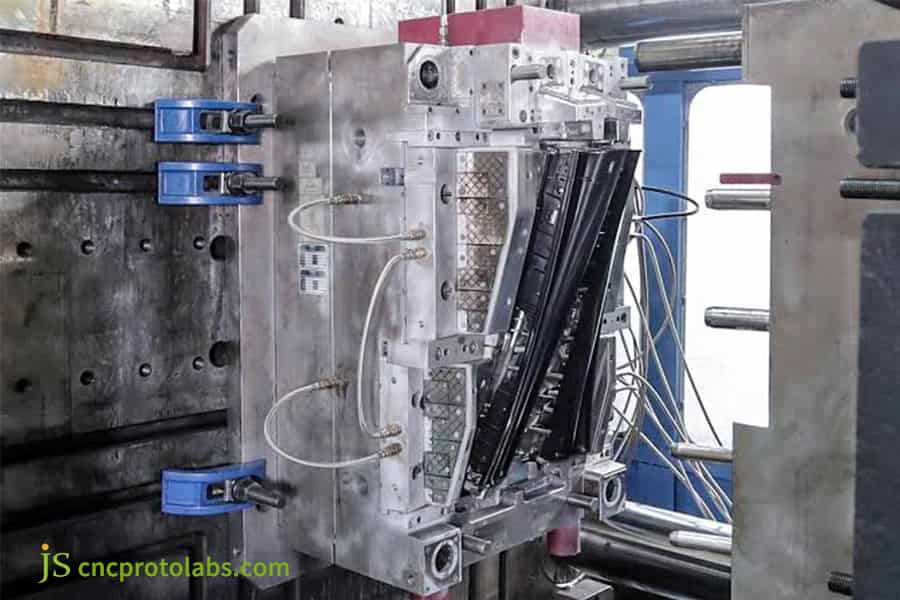
Figure 2: Close-up of injection molding machine producing high-precision black plastic gears.
How Does Custom Injection Mold Tooling Balance Upfront Capital Costs with Long-Term Production Yields?
The essence of cost control in custom injection mold tooling is scientifically adjusting the steel grade, number of cavities, and runner system per the order size in such a way that the initial cost and future benefits are well balanced.
Steel Selection Logic Based on EAU
When purchasing managers only focus on getting low-priced molds, they do not realize that a lot of their products will be scrapped and that they will have to deal with downtimes due to the use of inferior molds in the production of large quantities. The selection of a good custom injection mold tooling system needs to be made with the steel grade that is suitable for the production volume. We can suggest appropriate injection mold tooling steel types based on the customer's Estimated Annual Usage (EAU).
Below is a table showing different steels and their uses:
|
Mold Steel Grade
|
Hardness After Heat Treatment (HRC)
|
Applicable Production Volume (Shots)
|
Wear Resistance Grade
|
Unit Amortization Cost Ratio
|
|
P20
|
28-32
|
≤100,000
|
Average
|
High
|
|
2344
|
48-52
|
300,000 - 500,000
|
Excellent
|
Medium
|
|
S136
|
48-52
|
500,000+
|
Outstanding
|
Low
|
|
7075 Aluminum Mold
|
-
|
≤10,000
|
Weak
|
Extremely high
|
In case of small-batch prototyping, aluminum molds or P20 steel perhaps will suffice. As for the projects of mass production where the number of mold cycles will exceed 500 000 the use of top-quality steels such as 2344 or S136, heat-treated to HRC 48-52, is the requirement to make sure that the mold life and dimensional stability are met.
Full Life Cycle Cost Accounting Way
It is impossible to scientifically estimate the cost of a mold by only looking at the cost of the initial investment, one has to take into account the comprehensive cost of the mold over the entire life cycle. High-end injection molding tooling solutions rely on full life cycle ROI as the principal evaluation criterion.
The key formula is: Total Cost = Tooling Fee + (Unit Part Price Production Volume). This analysis will have to take into consideration the three main costs:
- One-time mold manufacturing and trial molding costs.
- Unit product processing costs during mass production.
- Hidden costs associated with mold repair, maintenance, and downtime related to the injection mold tooling lifecycle during the production cycle.
Appropriate mold selection can save you more than 20% in comprehensive costs over the entire life cycle. You can submit your projected production volume and product requirements to obtain a customized full life cycle cost accounting plan for injection molding tooling solutions, accurately assessing your return on investment.
How Do High-Quality Injection Molding Tooling Solutions Resolve Cracking Failures in Metal Insert Molding?
One of the fundamental values injection molding tooling solutions is made up of is figuring out a way to put an end to the issue of cracking around the metal inserts that is caused by the difference in the coefficients of linear expansion (CTE) of the two materials via precise mold preheating and runner optimization.
Stress Principle of CTE Difference between Two Materials
With injection molding metal inserts with stainless steel or copper sliders, the difference in the CTE of the plastic and the metal is quite large. As the plastic cools around the metal, internal stresses will arise due to the difference in shrinkage, which can eventually cause cracking. Specialized injection molding tooling solutions will consider this physical property as a major design limitation and implement injection mold tooling preheating solutions Because of this.
In a nutshell, the different thermal expansion and contraction rates of plastic and metal are two ropes tied together, but as they are being stretched at different speeds they can break when cooled. Preheating the metal and decreasing the cooling rate can avert the problem of cracking.
Crack Prevention and Control Measures at the Mold End
We consider the crack issue of inserts from both the mold structure and process control angles. A one-stop precision tooling service is at the customer's disposal from preheating to injection mold tooling cooling. Methods include:
1. Using a local induction heating system to make sure the insert heats up to the right preheating temperature before closing the mold to limit the temperature difference with the melt.
2. Changing gate design to reduce the melt shear rate near the insert area, because of this lowering the occurrence of stress concentration.
3. Modifying the cooling profile to reduce the cooling rate in the insert region, so that the plastic and metal shrink together.
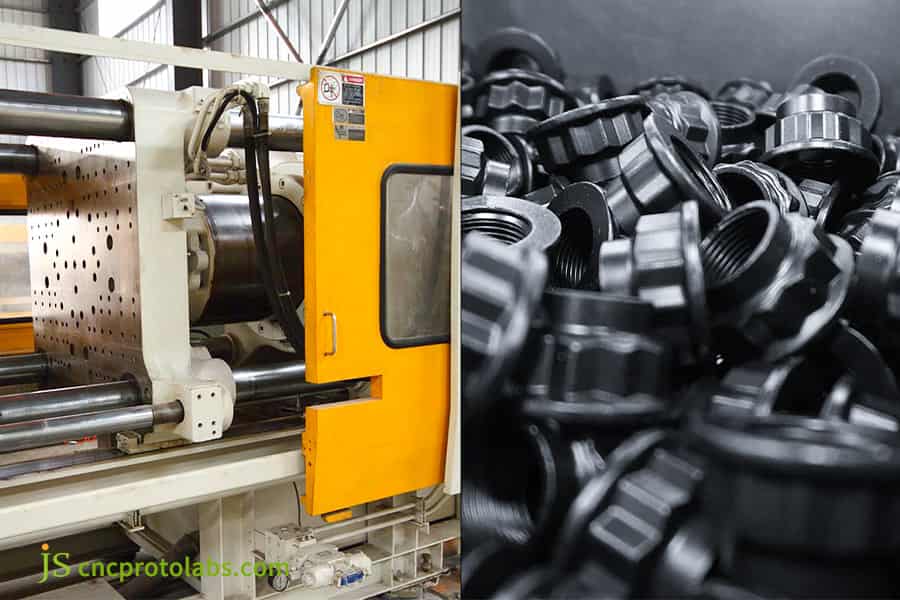
Figure 3: Split view of large injection molding machine and finished black plastic gears in mass production.
Why Choosing a Precision Tooling Service Drastically Improves Dimensions Consistency Across Multi-Cavity Molds?
The primary benefit of precision tooling service is that with the help of ultra-precision machining and testing equipment, the machining error of a single cavity in a multi-cavity mold is limited to 0.002mm, So all the other cavities will be dimensionally consistent with it.
Primary Sources of Dimensional Non-Conformance in Multi-Cavity Molds
In multi-cavity production, for instance with one outflow of eight or sixteen cavities runner imbalance, pressure and minor changes in tool geometry might cause the product to be dimensionally changeable to such an extent that even the Cpk values can be less than 1.0, because of this the products are below the quality standards for high-end manufacturing. Expert precision tooling service remove differences in the dimensions of injection mold tooling cavities from both machining and flow channel design sides.
Below are the differences of precision assurance capabilities of various machining equipment shown in what comes next table:
|
Machining Equipment Type
|
Single Cavity Machining Tolerance (mm)
|
Cavity Consistency Deviation (mm)
|
Maximum Cavity Count
|
Stable Cpk Level
|
|
Standard CNC
|
±0.01
|
±0.02
|
≤4
|
<1.0
|
|
3-axis Precision CNC
|
±0.005
|
±0.008
|
≤8
|
1.0-1.33
|
|
5-axis CNC + WEDM
|
±0.002
|
±0.003
|
≤16
|
≥1.33
|
Fully Equalized Flow Channel and High-Accuracy Machining Solutions
Ensuring multi-cavity match from both machining and designing angles. An experienced custom injection tooling service follows stringent cavity-by-cavity inspection standards to sustain the precision of injection mold tooling performance. Here are specific directions:
- Five axis CNC machining center and Swiss ultra-precision wire EDM equipment are used to ensure the geometric accuracy of each cavity is absolutely reproduced without any deviation.
- Fully balanced runner design is done so that basically the melt will simultaneously enter all the cavities at the same pressure and temperature.
- Zeiss coordinate measuring machine is used to measure each cavity (per ISO 10360-2 metrology standard) so that all cavities' dimensional deviations are within the allowed limits.
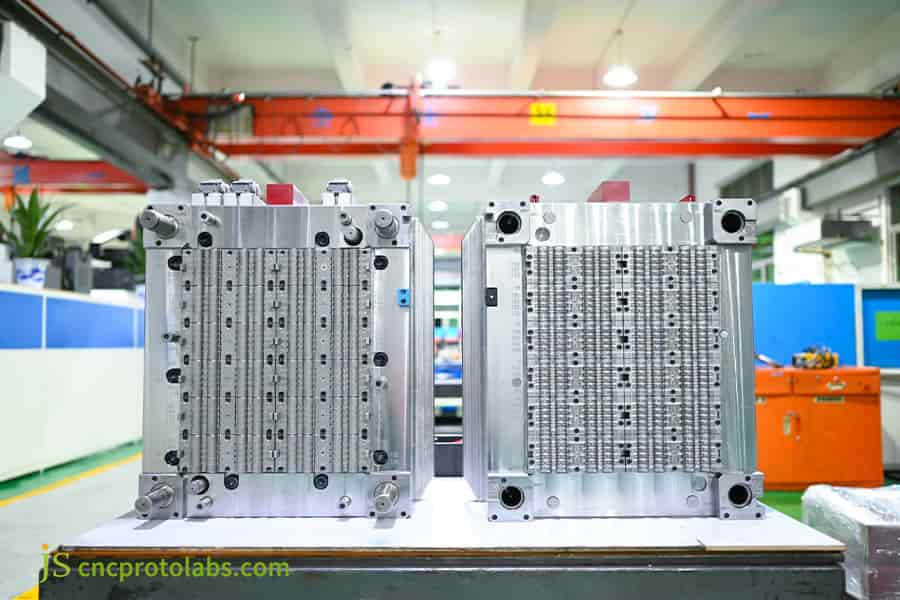
Figure 4: Two large multi-cavity injection molds displayed in a modern manufacturing facility.
How to Secure a Transparent and Clear Injection Mold Tooling Quote Free of Hidden Fees Before Manufacturing?
It is essential for an injection mold tooling quote to be completely clear and transparent, breaking down the pricing even the mold base grade, steel type, heat treatment procedure, and DFM changeover cycle to ensure no hidden charges are laid out later on.
Common Hidden Fee Traps in the Industry
There are many unqualified manufacturing plants that lure customers with very low initial quotes only to charge hugely high fees after the product is ready, claiming reasons like design changes, leather texture changes, injection mold tooling changes, or trial molding and sampling. Delivery of the final cost may even be more than 30% higher than the original quote. A loosely written injection mold tooling quote can often be the reason for the disagreement on costs later on.
Exclusive Troubleshooting Tip: Want to avoid falling into a price-increase trap later? Then when you get a quote that is way below the industry standard, be sure to check exactly which items are included in the quote.
Core Standards of Transparent Pricing
We employ a one-stop transparent pricing system. Every quote offers a complete itemized breakdown of costs, and we never impose hidden fees. A standard custom injection mold tooling quote should outline the entire cost structure, including related injection mold tooling and testing services. Key details are:
1. The brand and model number of the standard mold base, e.g. LKM mold bases.
2. The grade, source, and heat treatment hardness standard of the cavity steel.
3. The brand and details of components like hot runners, for example, Yudo hot runners.
4. Free trial production and related services for T0/T1 sample delivery.
A transparent quote helps you completely avoid hidden costs. You can send your 3D drawings now and receive a detailed custom injection mold tooling quote with no hidden fees within 24 hours, making your purchasing decisions more worry-free.
How JS Precision Engineered Custom Injection Mold Tooling to Slashing Scrap Rates for a Tier-1 Automotive Connector Client?
Custom injection mold tooling design optimization can directly address the mass production yield problem of high precision parts. We have assisted automotive Tier 1 customers in much lowering the waste rate of their connector products.
Customer Pain Points
During the mass production of a 48-pin, high-density, precision electronic connector by a global Tier 1 automotive parts supplier, the custom injection mold tooling provided by the original supplier had troubles like poor venting and uneven temperature control.
The fundamental reason was the lack of process control during the injection mold tooling fabrication that led to frequent occurrence of micro-shrinkage around the pinholes and out-of-specification contact positioning. The mass production wastage rate had risen to 14.5% and the Cpk was only 0.88 which could not meet the automotive-grade IATF 16949 dimensional certification thereby, placing the whole production line at a risk of being shut down.
JS Precision Solution
Our technical team performed a comprehensive mold optimization from 3 different dimensions like this:
- Flow Balance and Shear Control: After performing a detailed fluid dynamics simulation using the Moldflow software, the original side gate was changed to a multi-point fan-shaped submarine gate which balanced the injection pressure and quite a bit minimized the shear stress distribution of the melt.
- Micron-Level Venting Groove Machining: Vacuum venting channels measuring 0.015mm deep were carefully etched at the connector pinholes' ends and blind holes' roots to efficiently remove the gas resistance.
- Conformal Cooling Channels: Conformal cooling channels were configured to follow the part contour perfectly by utilizing 3D printing injection mold tooling insert technology. This resulted in achieving uniform localized heat dissipation and reducing deformation caused by nonlinear cooling thermal stress by 78%.
Lessons Learned from Failures
At the T0 trial molding phase, the group thoughtlessly increased the cooling rate to shortening the cycle time. But, it resulted in the connector shell's crystallinity being insufficient and the emergence of secondary aging deformation. This is a classical case to show that validation of injection mold tooling before mass production is very important.
Changes to the process were made immediately by reprogramming the oil temperature feedback control and holding pressure time of the mold temperature controller while the principal practical takeaway was also formulated that the holding pressure cooling curve should not be blindly compressed during precision crystalline plastic injection molding.
Final Results
Following the final phase of optimization, the scrap rate for the mass production of this connector was 0.3% whereas the critical dimension Cpk was stable above 1.45. So, the whole optimization value of tooling for high tolerance parts and the increase of injection mold tooling performance were entirely proven by this result. Single mold cycle time reduced by 4 seconds and the client successfully passed IATF 16949 certification. Supply chain quality director of the client lauded the solution that it was a multi-million dollar supply chain saving effectively.
Mature mold optimization solutions can quickly solve mass production yield problems and help you recover huge losses. You can view more industry success stories to understand the actual implementation effects of our custom injection tooling service in different fields.
Why Choose JS Precision as Your Strategic Partner for High-Precision Injection Mold Tooling Services?
The delivery quality of tooling for high tolerance parts highly relies on the manufacturer's physical processing capabilities and engineering experience. JS Precision can provide you with precision manufacturing support throughout the entire process.
Complete Engineering Capabilities
You don't need a middleman who will just forward your drawing, nor a quickly put together platform entirely relying on fully automated software, but a real physical manufacturing company that largely knows engineering, manages to control rigorously the tolerance, and is a local and professional one. We introduce a message of "designing for injection molding services" with the whole project development, and we offer three core stage end-to-end services:
1. Before mold making: Carrying out thorough DFM optimization audits to highlight design risks at the earliest stage.
2. During the manufacturing: Employing ultra-precision machining equipment and full-process quality control.
3. After mass production: Offering dimensional Cpk monitoring and injection mold tooling maintenance support.
We incorporate the knowledge and expertise gained from years of machining into each and every project, delivering a comprehensive one-stop, closed-loop service.
Project Delivery System That Is Transparent and Easy to Control
The factory where we work is registered with the ISO 9001 quality management system certification, and automotive projects are produced as the IATF 16949 standards. Standardized precision tooling service work instructions help ensure smooth delivery throughout.
Apart from the strict control of injection mold tooling quality, all projects are accompanied with traceable material certificates and dimensional inspection reports. Together with extremely competitive factory prices, we protect your high-end projects. By teaming up with us, you will have the direct contact with frontline engineering teams, so you won't have to bear intermediary communication costs.
FAQs
Q1: What are the main differences between professional injection mold tooling design and automated DFM software analysis?
Automated DFM software only detects surface geometry like wall thickness. Our professional review goes even deeper, at the thermodynamic level, where we precisely measure nonlinear shrinkage of crystalline plastics, gate shear stress, and glass fiber orientation. And, we exclude the mold structure deformation based on the production of Cpk 1.33 in mass.
Q2: What techniques does JS Precision employ to deliver the most critical tolerance needs for custom injection mold tooling projects?
Our strategy is to use best-of-breed machines and strict metrology. We perform five-axis CNC and Swiss slow wire EDM to keep the cavity machining tolerance within 0.002mm, we mitigate thermal stresses using conformal cooling and runner balancing and also use a Zeiss coordinate measuring machine to verify that product dimensions are within 0.005mm.
Q3: What are the details of your clear injection mold tooling quote?
Our price estimate features a comprehensive list of materials and no hidden charges. Among the items are Longji mold base quality, cavity steel (e.g. Uddeholm S136 hardened to HRC 48-52), Liudao hot runner details, mold life, texture requests, and T0/T1 trial molding and dimensional report costs. After submitting your drawings, the quote can be delivered, all costs are fully disclosed upfront.
Q4: What role does professional custom injection tooling play in fixing gas burning defects?
The removal of burn marks calls for venting design at the micron level. At the point of flow end, the high-pressure melt can easily gather gas and cause burning. Based on the fluid simulation, we very accurately carve venting grooves from 0.015mm to 0.02mm at the parting surface, including blind holes, to let the high-pressure gas out and Because of this, avert flash.
Q5: Does availing a high-end precision tooling service help to decrease long-term mold amortization costs?
Sure. The molds of poor quality become worn and broken quickly and the production stops due to problems and repairs of molds from the flash and dimensional errors. Our imported steel, as well as vacuum heat treatment, leads to a mold lifetime of over 500,000 cycles which quite a bit cuts down the hidden amortization costs and the maintenance expenses for each piece.
Q6: What is the wall thickness transition structure optimization criterion for designers when preparing injection molding services?
To prevent warping or stress cracking in the later stages of product development, an abrupt change of wall thickness should be avoided because it causes the highest stress concentration from the inside and the different rates of shrinkage. So, a gradual transition zone of at least 3:1 must be incorporated to make the melt filling the cavity easily, reducing the local differences of shear rate.
Q7: What is the minimum order quantity for JS Precision's high-precision tooling for high-tolerance parts project?
As a very flexible B2B manufacturer, we are able to support small-batch precision verification. When it comes to very fine steel mold production, we offer transitory production MOQs down to 500 to 1000 pcs with very short delivery time, helping our medical and automotive customers in their mass production runs without any hiccups.
Q8: What impact does the gate location in custom injection mold tooling have on the mechanical characteristics of structural parts?
Gate location determines the weld line location and molecular orientation. Sometimes, if the gate is wrong, the weld line may be right in the load-bearing area of the structure, leading to a strength drop of 40%. By using Moldflow mold flow analysis, we locate the weld line away from the critical area and Because of this keep the impact resistance of the part.
Summary
Good injection molding design based on 3D drawings is not enough. It should be an integral part of Design for Manufacturability (DFM) optimization implemented in a tangible mold-end control manner even before the molds are made. Through the accurate regulation of runner shear stress, the fine tuning of the venting groove structure at micron level, and the use of advanced five-axis CNC machining, companies can preemptively resolve the causes of common defects including shrinkage, burning, and warpage, so securing high precision dimensional consistency even after tens of thousands of mold runs. This way, selecting low-priced molds randomly or relying excessively on automated pricing software could result in unbearable hidden costs and high scrap rates during mass production.
Do not risk turning minor slip-ups on the drawings into huge costs during mass production! At JS Precision we have a senior engineering team and top-tier ultra-precision machining and quality inspection equipment. You are invited to submit your 3D CAD drawings (STEP/IGS format supported), and we shall have our senior chief engineer return a free DFM feasibility assessment report to you within 24 hours, including runner pressure simulation, gate positioning, and venting advice, as well as a fully transparent mold manufacturing and mass production quotation with no hidden charges.

Disclaimer
The contents of this page are for informational purposes only.JS Precision Services,there are no representations or warranties, express or implied, as to the accuracy, completeness or validity of the information. It should not be inferred that a third-party supplier or manufacturer will provide performance parameters, geometric tolerances, specific design characteristics, material quality and type or workmanship through the JS Precision Network. It's the buyer's responsibility Require parts quotation Identify specific requirements for these sections.Please contact us for more information.
JS Precision Team
JS Precision is an industry-leading company, focus on custom manufacturing solutions. We have over 20 years of experience with over 5,000 customers, and we focus on high precisionCNC machining,Sheet metal manufacturing,3D printing,Injection molding,Metal stamping,and other one-stop manufacturing services.
Our factory is equipped with over 100 state-of-the-art 5-axis machining centers, ISO 9001:2015 certified. We provide fast, efficient and high-quality manufacturing solutions to customers in more than 150 countries around the world. Whether it is small volume production or large-scale customization, we can meet your needs with the fastest delivery within 24 hours. Choose JS Precision this means selection efficiency, quality and professionalism.
To learn more, visit our website:www.cncprotolabs.com
Resource