English



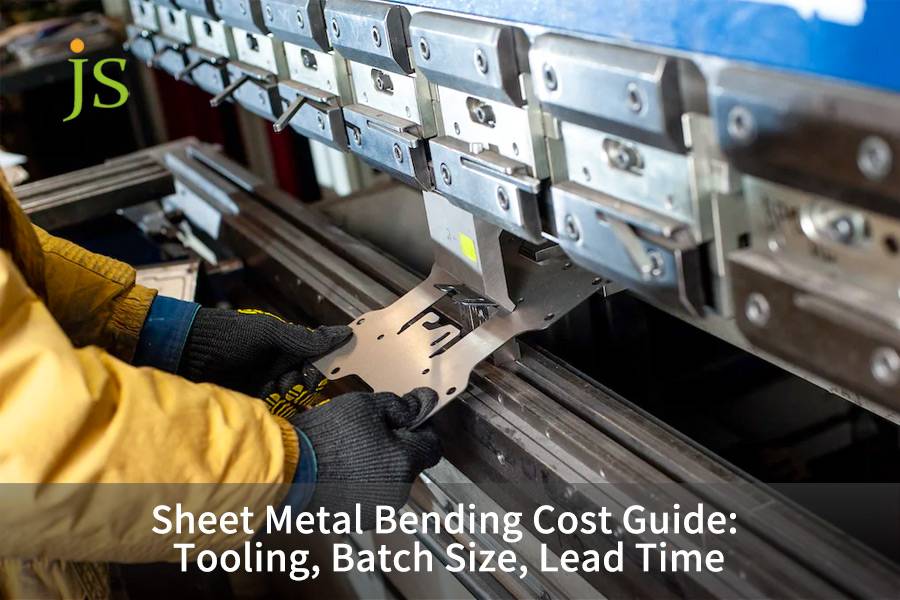

Metal bending service price ranges from 40 cents to $3.50 per bend for standard CNC air bending with dedicated tooling costing around $800 to $3,500. Sheet metal bending is a cold-forming process that shapes flat sheets into parts with a straight line by pressing the material using pairs of matching punches and dies. The total price would mainly be affected by the gauge (thickness) of the metal used, the bend radii, the K factor tolerances you allow, and the volume of the manufacturing batch.
Sheet metal bending is a cold-forming process that shapes flat metal sheets into angled parts using matched punch-and-die sets on a CNC press brake. Standard air bending costs $0.40–$3.50 per bend, while dedicated tooling ranges from $800 to $3,500 and is often avoidable through DFM standardization.
Core Answer Summary Table: Sheet, Metal Bending, Service, Cost, Breakdown
|
Cost Dimension |
Typical Range |
Key Variables |
Optimization Lever |
|---|---|---|---|
|
Bending Tooling Cost |
$0 (standard); $800–$3,500 (custom) |
Inner bend radius (R), hemming, offset structures |
Unify inner R to match standard V-die (6t–8t) |
|
Low Volume Bending Cost |
$45–$85/hour (high setup amortization) |
First-piece debugging time (30–60min), trial-bend scrap |
Submit 3D STEP with K-factor + flat DXF |
|
Batch Production Cost |
$0.25–$1.20/bend (500+ pcs) |
Automatic backgauge speed, bends per stroke |
Optimize bend sequence to reduce flipping |
|
Bending Lead Time |
Standard 5–7 days; Expedited 2–3 days (+30% surcharge) |
Raw material stock, CAD flattening review time |
Select standard thickness & grade (e.g., AL 5052, SPCC) |
Data source: ISO 2768-1:1989 General Tolerances — Part 1, published by the International Organization for Standardization (ISO), confirmed current in 2022.
Key Takeaways
- Eliminate tooling costs: by making the inner bend radius at 1× to 1.5× material thickness, the fabrication shop's standard V-die and punch inventory can be directly utilized. This is a clever way to avoid additional tooling cost for the method.
- Prototype unit cost optimization: For small production lots, maintaining bend directions and radius so that die changes happen very occasionally will save roughly 35% of the cost and time for initial setup.
- Faster time to market: Supplying flat pattern drawings with bend allowances will shorten the engineering verification from two-days to an hour so that this step can be quickly done.
What Are the Fundamental Cost Components of a Sheet Metal Bending Service?
Sheet metal bending service cost consists of machine setup time, per-bend cycle time, tooling amortization, and material consumption, with typical machine-hour rates between 45 and 90.
Machine-Hour Rate Breakdown
- Machine depreciation & energy: A 400kN–2500kN CNC press brake will vary from 25–50 running/hour based on tonnage, drive type and number of axes. Correctly the setup time for a CNC press brake will yield a more precise quote.
- Engineering preparation: each new part number takes 1–3 hours for CAD flat-pattern validation, bend deduction calculation and offline programming and adds 45–270 hours for non-recurring engineering cost.
- Technician setup: laser alignment, trial bends, angle compensation adjustments, etc take 30–60 minutes per job and correspond to 22–90 hours of direct labor.
Per-Bend Cycle Time Formula
Total processing time of a multibend workpiece is:
Total Time = (Setup Time ÷ Batch Size) + (Sum of Individual Bend Times) + Handling Time
Total time required for a single-bend includes ram stroke (0.5–2 seconds, equivalent to 60–120 SPM) plus backgauge repositioning (1–3 seconds per move). Let's take a four-bend 1.5mm SGCC galvanized steel part as an example:
- At 50 pcs: Setup amortization is the biggest factor, 0.68/bend; total per-part bending cost amounts to 3.20.
- At 5,000 pcs: Setup amortization is only 0.007/bend; total per-part bending cost decreases to 0.41.
By examining the time components, it becomes evident that combining production runs is the biggest opportunity for reducing the sheet metal bending cost.
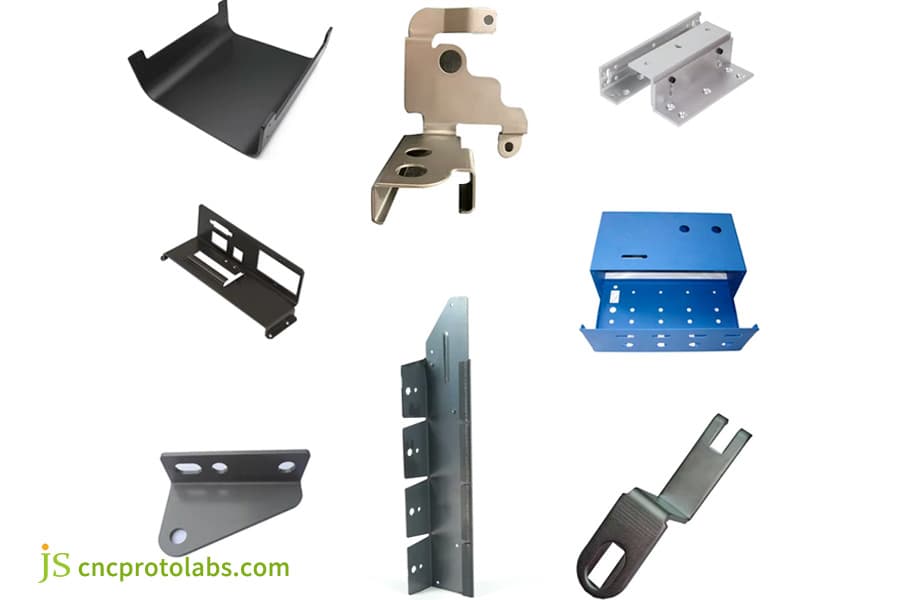
Figure 1: Various custom sheet metal bent brackets and components.
When Does Bending Tooling Cost Occur and How to Eliminate It?
Bending tooling cost arises when the design requires custom punches or dies beyond standard V-die openings, adding $800 – $3,500 in tooling expense and 7–15 days in lead time.
Standard vs. Custom Tooling Comparison
|
Dimension |
Standard Punch & Die |
Custom Tooling |
|---|---|---|
|
Cost |
$0 (existing inventory) |
$800 – $3,500 |
|
Lead Time |
Immediately available |
7 – 15 working days |
|
Common Applications |
88°/90° straight punch, gooseneck punch, 8t/12t/16t V-die |
Closed hemming, large-radius bends, compound offset dies |
|
Design Requirements |
Unified inner R = 1t – 1.5t |
Non-standard R, special edge profiles |
|
Die Change Time |
5 – 10 minutes |
15 – 30 minutes |
Data source: ASTM E290-22 Standard Test Methods for Bend Testing of Material for Ductility, published by ASTM International (2022).
Three DFM Rules to Avoid Custom Tooling
- Merge all inner R values into a single part. Only one R reduces inter-part punch change times by 60% and prevents bending tooling cost.
- Provide a minimum flange height ≥ 4× material thickness. Flanges that are below this level won't be formed by using standard V-dies and will need custom narrow-slot tooling.
- Air bending is better than bottoming. It allows you to make various angles by simply differentiating the depth of punch penetration and does away with the requirement of the angle-specific tooling.
When it comes to punch tip radius, the inner bend radius should be compared with the punch's dimensions to avoid extra custom tooling. Connection between the V-die opening and the material thickness: V = 6t to 8t, where t = material thickness. Minimum bend flange length is roughly L_min = V/2 + 2mm.
ISO 9013:2017 specifies: Classification and tolerances for thermally cut surfaces and describes the associated measurement methods.
JS Precision applies ISO 9013:2017 to verify laser-cut edge quality before bending, preventing burr-induced angle deviation and scrap that inflate bending tooling cost in small-batch runs.
Upload your 2D drawing here to do a DFM check for free, we will find out the features that require special tooling, and suggest ways to change them so that the cost of bending tooling remains zero.
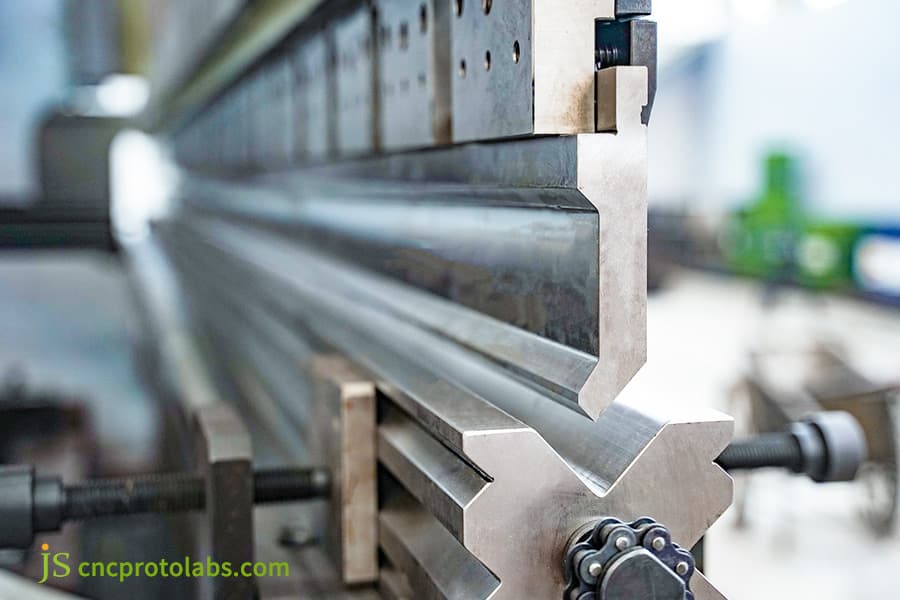
Figure 2: Close up of press brake bending tooling dies and molds.
How Does Low Volume Bending Cost Compare with High-Volume Production Runs?
Low volume bending cost runs $8 – $25 per piece in 1–50 piece batches, while 1,000+ piece mass production orders reduce per-piece bending cost to $0.30 – $1.20 through setup amortization.
Batch Size vs. Per-Piece Bending Cost Breakdown
|
Batch |
Setup Amortization/Pc |
Direct Labor/Bend |
Scrap Loss |
Total Bending Cost/Pc |
|---|---|---|---|---|
|
10 pcs |
$4.50 |
$3.20 |
$1.80 |
$9.50 |
|
100 pcs |
$0.95 |
$2.10 |
$0.45 |
$3.50 |
|
1,000 pcs |
$0.12 |
$0.85 |
$0.08 |
$1.05 |
|
10,000 pcs |
$0.02 |
$0.72 |
$0.04 |
$0.78 |
Data source: Fabricators & Manufacturers Association (FMA) Financial Ratios & Operational Benchmarking Survey, cross-validated by Tangle Research 2026 Metal Fabrication Industry Benchmarks.
Why Small Batches Are Expensive
- Establish dominance: A 45-minute die change costs 60–70% of batch total for orders below 50 pieces.
According to the Fabricators & Manufacturers Association (FMA, 2025), press brake setup accounts for up to 40% of total bending cost on orders under 500 pieces—consistent with the 60–70% setup share shown in this guide's 10-piece scenario.
- Learning curve waste: first 3-5 pieces are for angle verification and compensation. In a 10-piece run, this means 30%-50% scrap.
- No bulk material discount: Materials for small orders come from the spot-market, which causes a 15%-25% price hike. Batch consolidation takes advantage of one tooling and one backgauge program across many workpieces with amortizing fixed setup time over maximum number of parts.
ISO 2768-1:1989 prescribes: When selecting the tolerance class, the respective customary workshop accuracy has to be taken into consideration. If smaller tolerances are required or larger tolerances are permissible and more economical for any individual feature, such tolerances should be indicated adjacent to the relevant nominal dimension(s).
JS Precision unifies tolerances via ISO 2768-1 standard, enabling order consolidation for steepest cost savings. Evaluate production batch pricing including setup amortization.
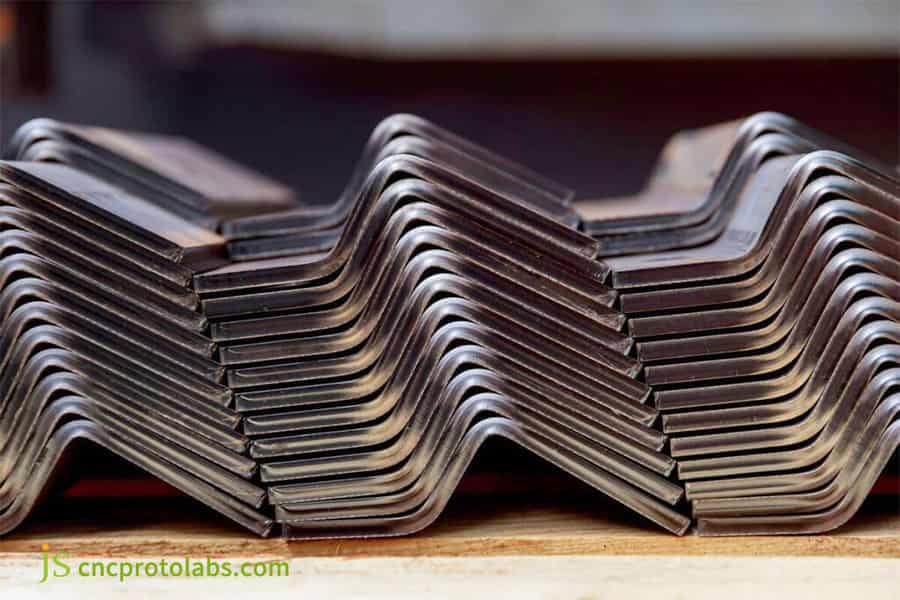
Figure 3: Stack of high volume bent metal parts batch production.
What Controls Bending Lead Time and How Can Expedited Delivery Be Achieved?
Bending lead time runs 5–10 working days as standard, driven primarily by CAD flat-pattern validation, raw material allocation, and machine scheduling queues.
Full Order Timeline Breakdown
- Flat-pattern engineering & DFM verification (1–2 days): One thing you definitely need to calculate in this stage is K factor, bend reduction, and collision clearance when converting a 3D STEP file to a flattensable 2D DXF. This stage can get 2 days if there are non-standard R bends or complex parts with multiple bends.
- Laser cutting& blanking (1–2 days): laser cutting time depends on the part complexity, sheet usage efficiency, nesting, and cutting sequence.
- CNC bending (1–3 days): initially the bend jobs are divided into categories using common tooling. Parts that share the same punch and die sets are grouped together to reduce tool setup times.
- Debarring& finishing treatments (2–4 days): Corner cleaning, debarring by a vibratory polisher and application of a protective surface layer are steps requiring a considerable time. In general, these treatments require much more time with parts that have to look perfect.
How to Accelerate Delivery
- Supply standard 3D STEP files with bend centerlines indicated. This saves about 24–48 hours of engineering reverse-modeling and on an average the overall lead time is decreased by 35%.
- Do not specify non-standard surface coatings. Such coatings as Powder coating, anodizing or electroplating usually add 2–4 days to the manufacturing process. If we choose mill finish the production line remains undisturbed.
- Go for hydraulic quick-clamp systems. New press brakes having hydraulic clamping make changing tools faster and reduce tool changing time at least 5 times (from 15 mins to fewer than 3 minutes) without interrupting the work flow allowing for queue of small lots.
On time-critical projects we have a quick-turn metal fabrication service that prioritizes orders made from standard materials and calls for only simple finishes.
How Do Material Grades and Thickness Influence the Metal Bending Cost Guide?
Metal bending cost guide directly impacts bending cost by determining required machine tonnage, tool wear rate, and springback compensation magnitude across different alloys.
Tonnage Calculation and Material Behavior
The formula for required bending force is:
P = (1.42 × σb × S² × L) / V
Where P = required tonnage (kN), σb = tensile strength (MPa), S = material thickness (mm), L = bend length (mm), V = V-die opening width (mm).
- Cold-rolled carbon steel (SPCC, σb ≈ 370 MPa): Lowest pressure requirement, least springback (0.5°–1° compensation by overbend)
- Austenitic stainless steel (SUS304, σb ≈ 520 MPa): needs 40% more pressure if thickness is the same, springback 2°–5°, tool wear gets faster 3×.
- High-strength aluminum alloy (AL 5052-H32 / 6061-T6): 5052-H32 is well formed if R ≥ 1t; 6061-T6 splits at R < 1.5t. Both types of aluminum must have polyurethane protective film, this will consume 0.05–0.12 material cost per bend as consumable.
- Copper alloy (C1100 / C2680): High ductility lowers the risk of cracks, though the lubricant will consume twice as much as steel.
At the stage of designing a custom metal bending service unit, you must always define the precise material bend allowance to produce an exact flat pattern development.
Practical Impact on Cost
Thicker materials demand bigger presses plus larger V-dies. A 3mm stainless steel component would need a 200-ton press (200-ton/85pcs/hour), whereas a 1mm SPCC part can be made on a 60-ton press (60-ton/40pcs/hour). The 89% difference rate directly affects pricing per bend. In metal bending cost guide the choice of material is the second most important factor affecting the price after the production batch size.
Get material-specific cost comparisons from JS Precision. Simply tell us your desired grade and thickness, and you'll get side-to-side quotes from our application team for three alternatives of material choices you have made.
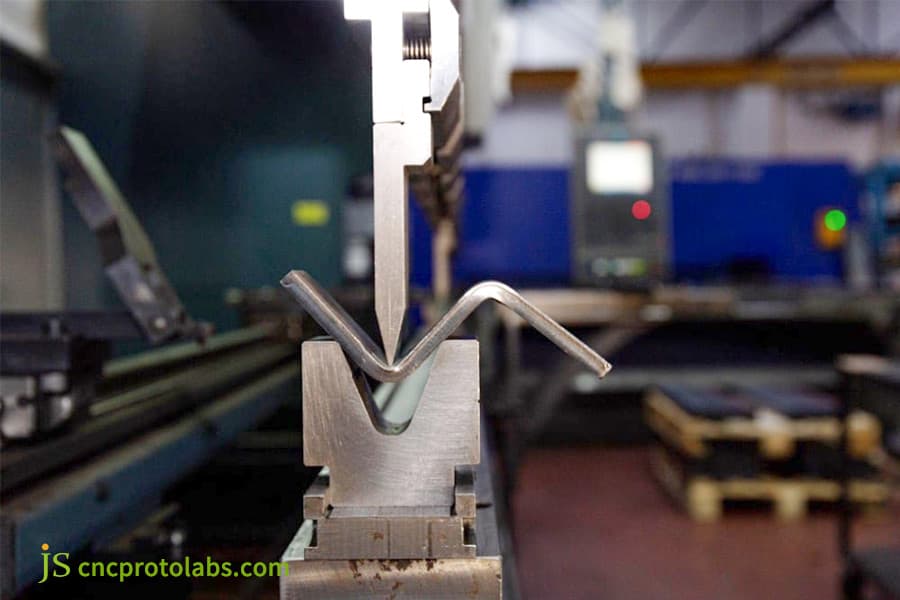
Figure 4: Precision metal bending process using press brake machine.
How to Optimize Part Geometry to Lower Quotations from Bending Services Suppliers?
Bending services suppliers' quotes can be reduced by up to 30% through standardized flange dimensions, proper hole-to-bend distances, and unified bend directions.
Five Core Cost-Reduction Design Rules
- Maintain inner R values uniform in separate sections. A single R needs only one punching setup, thereby avoiding 5–10 minutes of punch change for every bend.
- Hole's edge to nearest bend line (distance ≥ 2t + R). Holes close to bending line may be distorted; repairing could be more expensive than the initial bending work.
- Allow the backgauge locating surface at least 10mm of margin. Manual setting due to unusual shapes increases the per-bend cycle time at least twice.
- Make relief cuts at crossing bend lines. A 3mm diameter relief cut at T-junction will prevent all tearing completely.
- Verify how the press brake interferes. When there are very tall flanges or very deep U-sections, they might hit the upper beam, and either rotating the part or splitting it may eliminate the need for custom gooseneck tooling.
The implementation of DFM sheet metal bending during the design phase much minimizes the problems in manufacturing processes after design.
JS Precision offers a free DFM optimization report, just submit your current design and find out through our suggestions what geometry changes could achieve significant cost-saving, usually suppliers' bending service quotation gets reduced by 20%–30%.
Case Study: How JS Precision Reduced Bending Costs by 28% for an Industrial Enclosure Project?
JS Precision eliminated custom tooling and cut cycle time by 28% for an industrial automation enclosure by standardizing bend radii and reordering CNC forming sequences.
Customer Challenge
A European customer manufacturing industry control components wanted an 2.0mm AL 5052-H32 enclosure that had three inner R values (R1.0, R2.5, R4.0) and a U-bend having a closed, deep cavity. The original supplier had proposed a price tag of $2,200 to provide the two custom gooseneck dies, giving the only 91.5% first-piece yield and expecting 18 days for lead time for the prototype. Naturally, the customer was looking for a reliable custom metal bending service provider delivering a turn-key solution.
JS Precision Solution
Our engineering team executed a three-step optimization:
- DFM standardization: we standardized all three R values within the ISO 2768-1:1989 tolerance as R2.0mm, thereby complying with the current standard tooling setup. Tooling cost decreased from $2,200 to 0.
- Simulation & sequence reordering: after conducting 3D collision simulation and reorganizing bending sequence using the offline programming software, two of the bends caused deep-cavity interference which was resolved. Workpiece flipping was reduced only twice unlike five times.
- Laser positioning & mark-free forming: pneumatic quick-clamp systems together with polyurethane lower dies were the perfect solution to prevent surface impressions, so no longer requiring polishing as a second process.
Lessons Learned
In the initial bending operation, micro-cracks showed up on the outer surface of a bend in the direction parallel to the aluminum rolling direction. To fix the problem our team repositioned the blanking layout so that all bend axes were laid perpendicular to the rolling direction which completely eliminated the problem. X-rays of the next 312 produced parts gave us the good news - no subsurface defects at all.
Final Results
- Tooling cost: 2,200 → 0
- Per-piece bending time: 165 sec → 92 sec (44% reduction)
- Per-piece processing cost: 28.4% reduction
- First-pass yield: 91.5% → 99.7%
- Batch lead time (300 sets): 15 days → 6 working days
The project illustrates the great results that come when sheet metal manufacturing experience is merged with smart DFM principles resulting in real-world savings. From one-off prototype bends to the production runs, our team is there to back you up in making sure everything is done to a high standard yet quickly.
The customer's sourcing manager reported a 28.4% per-part cost reduction and first-pass yield improvement from 91.5% to 99.7% on 300-unit batches.
Check out JS Precision's bending optimization success stories to learn how standardized geometry and our own tooling library reduce costs for different clients such as those in the fields of industrial automation.
FAQs
Q1: What is the average hourly shop rate for CNC sheet metal bending services?
CNC sheet metal bending shop charges vary from $45–$90 per hour mostly given the press brake tonnage, number of backgauge axes, and the degree of automation involved.
Q2: How does bending radius (R) affect the final quotation from bending services suppliers?
The tooling cost is zero only if the inner bend radius of the workpiece matches the supplier's standard tooling set. For non-standard R, one has to make custom punches or do multi-step micro-bending which can cost extra $800–$3,500.
Q3: Why do low-volume sheet metal bending orders have a high unit cost?
Small-batch orders have to allocate and spread completely the fixed engineering and setup costs. For example, in case of proto-otyping orders of 5 pieces and below, the 45-minute setup fee can amount to 70% of the total production cost.
Q4: How can CAD file preparation minimize lead time in metal bending projects?
If one offers the 3D STEP model with bent parts and the 2D flat DXF drawing with bend lines indicated, the engineering drawing review time can be saved roughly by 24–48 hours, which allows the work directly to be programmed and scheduled.
Q5: What is the typical lead time for custom sheet metal bending, and can it be expedited?
Standard lead time is about 5–10 working days. With the normal materials you can get 2–3 days if you pay the 25%–50% scheduling surplus.
Q6: What tolerance standards should buyers expect from precision sheet metal bending?
Bending of industrial-grade material usually performs per ISO 2768-1:1989 standard (by ISO), the linear tolerances (grade class m) are up to a maximum of 0.4mm (a minimum of 0.1mm) while the angular deviations are within the 0.17" (30') - 6.25" (1) range.
Q7: How do bending service suppliers keep pricing competitive?
By maintaining a large standard tooling library (eliminating custom die costs), standardizing bend radii to 1t–1.5t, and grouping jobs by tool class—measures that reduce setup time by 35% on average. Upload the drawings to obtain a quotation.
Q8: What specific technical information is required to receive an accurate bending cost quote?
Kindly forward a 3D STEP file format, a 2D engineering drawing showing how tight the product is to be, material grade and temper, sheet thickness, target quantity/order and surface treatment instructions. The more detailed your specifications, the higher the accuracy of the quotation.
Summary
Controlling the cost of sheet metal bending mainly relates to finding the right balance among tooling compatibility, production batch size, material properties, and DFM compliance. It's important to unify inner R and match the standard V-dies through the design phase to avoid costly custom tooling; making parts in batches saves the setup time; supplying the standardized 3D STEP and 2D flat drawings reduces the engineering preparation cycles.
If you are looking to maximize the efficiency of your sheet metal bending part cost, contact JS Precision senior engineering team now - upload your 3D CAD drawing and get a free DFM manufacturability analysis and a clear itemized quote, this way getting your prototyping or mass production project going without a hitch.

Disclaimer
The contents of this page are for informational purposes only. For JS Precision Services, there are no representations or warranties, express or implied, as to the accuracy, completeness, or validity of the information. It is the buyer's responsibility to identify specific technical requirements and request a formal parts quotation. Please contact us for more information.
Resource