English



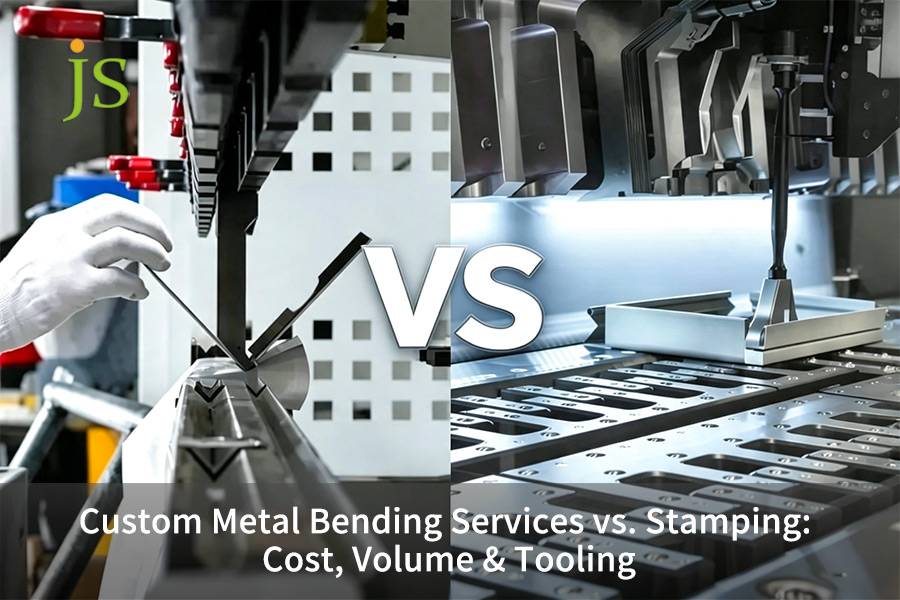

Metal Bending vs Stamping selection plays a big role in tooling risk and unit cost. For runs under 3,000 pieces, custom metal bending services deliver with no tooling investment and 2-5 days' prototyping. With over 5,000 pieces, metal stamping is the least expensive total cost option through the fastest possible cycle time. The crossover point is around the 3,000-5,000 piece ballpark.
Getting a handle on this threshold as well as understanding the tolerance limit and learning about DFM rules, will help the engineering team pick the very best process for each manufacturing phase.
Custom Metal Bending Services vs Stamping Core Decision Matrix
|
Decision Metric |
Custom Metal Bending Services |
Metal Stamping |
Key Decision Takeaway |
|---|---|---|---|
|
Tooling Cost |
$0 – $500 (standard V-die) |
$3,000 – $30,000+ (hardened steel die) |
< 3,000pcs - bending > 5,000pcs - stamping |
|
Economic Volume |
1 – 3,000 pcs |
5,000+pcs |
Prototyping & frequent revision - bending |
|
Lead Time |
2 – 5 days (CAD to part) |
4 – 8 weeks (die design to T1) |
Urgent time-to-market - bending |
|
Tolerances |
±0.1 mm to ±0.3 mm |
±0.02mm to ±0.05mm |
Critical true position - stamping |
|
Design Change |
Extremely flexible (CNC program only) |
Very low (die rework 2‑3weeks) |
R&D phase - low volume metal bending service |
Data source: JS Precision 2025 quoting database, industry benchmark compiled by AVT Sheet Metal 2026.
Summary of core conclusions:
Customized bending can achieve zero mold input and fast sample production for orders below 3,000 pieces. When stamping exceeds 5,000 pieces, the lowest total cost can be achieved through extremely low single piece labor costs, and the two can be seamlessly switched through DFM.
How Do Metal Bending and Stamping Differ in Core Processing Principles?
Difference between metal bending vs stamping at a level of deformation mechanics is that bending is based on applying a force only in a limited area along a linear axis with the standard V-dies. Stamping is using a closed die under heavy tonnage to form an entire part with one stroke only.
Mechanical Principles and Application Limits of Bending
- Force Application: The CNC press brake exerts force along a straight line, the sheet thickness only undergoes a small thinning and basically stays the same.
- Geometric Constraints: Bends on long parts only are feasible whereas for 3D curved surfaces stamping is necessary.
- Springback Control: JS Precision employs a 5 axis backgauge and laser measurement system to reach a precision of 0.5° for springback compensation.
Springback compensation is an essential step in the custom metal bending services that contributes to achieving a high first-article pass rate.
Forming Mechanisms and Material Rheology in Stamping
- Extrusion and Rheology: One of the benefits that stamping brings is that in closed molds, stamping can punch blanking bending, or even deep drawing can be done at one time.
- Accurate Sources: The highest die accuracy wire-cut EDM is ±0.002 mm, the die accuracy of the press is ±0.01 mm.
- Process Possibilities: Only pressing can perform deep drawing and precision blanking, this is the main distinguishing feature between sheet metal bending vs stamping.
Comparison of Stress Distribution and Sheet Thickness Variation
|
Deformation Parameter |
Custom Metal Bending |
Metal Stamping |
Implication for Your Part |
|---|---|---|---|
|
Material stress mode |
Localized bending moment |
Overall extrusion flow |
Stamping suits 3D contours |
|
Thickness variation |
Outer fiber thinning 5‑8% |
Uniform flow, ±2% |
Bending weakens sharp radii |
|
Min. bend radius (1.5mm SPCC) |
1.5 × T (R=2.25mm) |
0.5 × T (R=0.75mm) |
Stamping enables tighter geometry |
|
Springback angle (304 SS) |
±0.5° to ±2° |
Near zero (die‑locked) |
Stamping wins on repeatability |
|
Max. forming depth |
N/A (linear only) |
Up to 6 × T (deep draw) |
Complex shells require stamping |
Data source: JS Precision 2025 process capability matrix. ISO 7438:2020 metallic materials bend test standard.
Share 3D CAD designs with JS Precision for metal forming process comparison report recommendations as bending or stamping.
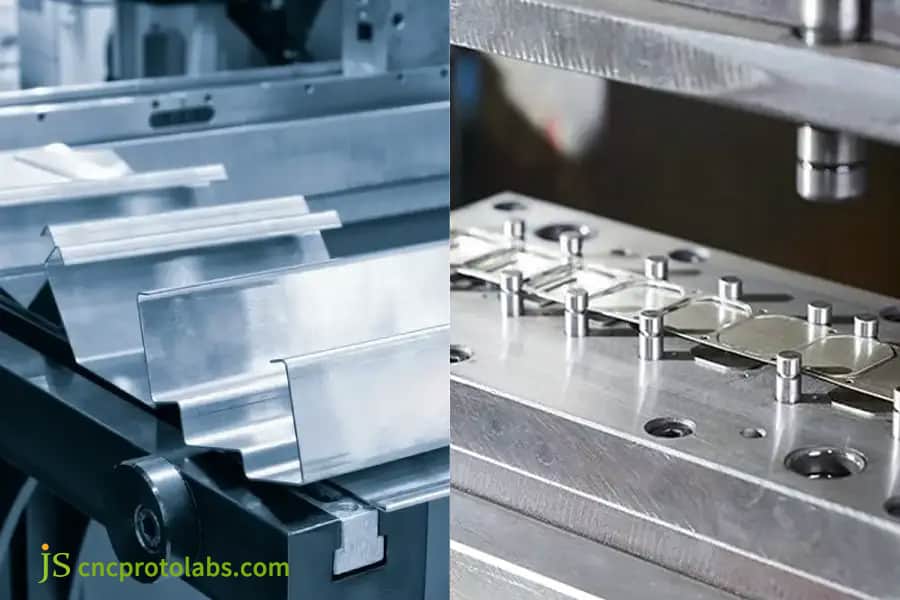
Figure 1: Close-up of metal bending and stamping dies showing core processing principle differences.
How Do Tooling Costs Compare Between Custom Metal Bending Services and Stamping?
Universal bending dies are standard in custom metal bending services. So, dedicated tooling is nearly nonexistent (0-500 setup), metal stamping, on the other, calls for customized hardened steel dies of a minimum cost of $3,000-$50,000.
Low-Cost Bending Structure Breakdown
- Standard V-die stock: JS Precision has 12 standard bottom dies in stock that can cover sheet materials of 0.5-6 mm thick and achieve 95% universality.
- Custom internal radii top radius dies: A very limited number of different radii of this kind of die are required. Each unit costs about 200-500, respectively.
- Equipment setup: The main bending tooling cost is CNC programming and first piece debugging, which takes 15-30 minutes and costs about $50.
High Investment Structure for Stamping Dies
- Material costs: SKD11, DC53, and cemented carbide make up the most materials accounting for about 30%-50%. SKD11 is ranging from $50 to $80/kg, DC53 is from $60 to $90/kg, and cemented carbide is more than $200/kg.
- All processing cost: CNC milling costs range from $80 to $150/hour, while slower-feeding wire-cut EDM is even higher, at $120 to $200/hour, but with a finer tolerance of ±0.002 mm.
- Heat treatment and trial runs: After quenching to HRC 58-62, the mold is repeatedly tested, and the cost of a single set of progressive molds is 3,000-50,000+.
Based on our experience, 18-station progressive die needs 41 days to go from the DFM stage to the first product run and takes the use of slow-feeding wire-cut EDM for 156 hours. Metal forming process comparison reveals that bending operation has lower upfront costs.
The ASTM A681 standard defines: D2 cold-work die steel when quenched and tempered to hardness of at least HRC 58. Carbide uniformity must be on grade 8 or finer, based on ASTM E112 grain size.
JS Precision ensures hardness spot tests and metallographic examinations are conducted with all stamping die steels before storage. By doing this, JS Precision is confident that the life of dies will be stable beyond 2 million strokes, and it can be guaranteed that the variation in dimension of the stamped parts will be no more than 0.05 mm.
Unit Cost Allocation Equation
Part Cost = Unit Labor/Material Cost + (Total Tooling Cost / Total Production Volume)
This function helps mathematically determine the more economical option between bending tooling cost or stamping investment.
|
Cost Component |
Custom Metal Bending |
Metal Stamping (Progressive Die) |
|---|---|---|
|
Dedicated tooling |
$0 – $500 |
$5,000 – $30,000+ |
|
Die steel grade |
Standard V‑die |
SKD11/D2, HRC 58‑62 |
|
NRE programming |
$50 (15‑30 min) |
$1,500 – $5,000 |
|
Tooling lead time |
0 – 2 days |
4 – 8 weeks |
|
Amortization threshold |
None |
3,000 – 5,000 pcs |
Data source: ASTM A681, JS Precision 2025 cost accounting database.
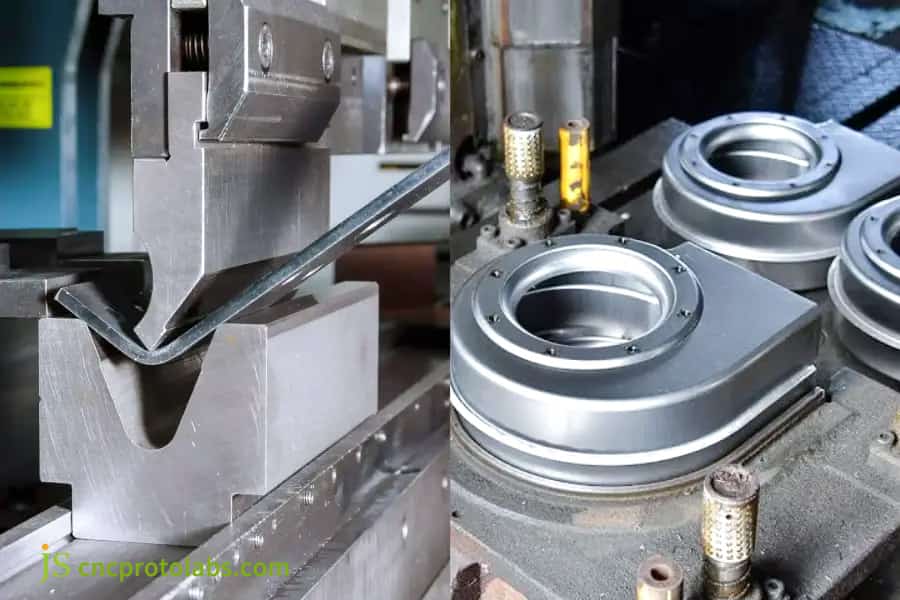
Figure 2: Industrial punch and die setup for metal stamping and custom bending services.
How to Determine the Optimal Production Volume from Bending to Stamping?
Low volume metal bending service typically reaches breakeven with stamping between 3,000 and 5,000 pieces. Before 3,000 bending is more profitable, after 5,000 stamping is more effective.
Real-world Example: 1.5 mm 304 Stainless Steel Control Cabinet Liner
Bending:
- Tooling cost $0
- Unit price $8.50
- Total cost for 1,000 units: $8,500.
Stamping:
- Tooling cost $12,000
- Unit price $1.20
- Total cost for 1,000 units: $13,200, bending wins the race.
The benefit of bending over small quantities in this precision metal bending service case study is illustrated.
Break-even Calculation Formula
Break-even Volume = Total Tooling Cost / (Unit Bending Cost - Unit Stamping Cost)
Calculation: 12,000 ÷ ($8.50 - $1.20) = 3,529 units, this falls within the 3,000–5,000 unit range.
Three Key Engineering Variables Affecting the Break-even Point
- Material Thickness: Raising sheet thickness from 1.5 mm to 3.0 mm increases labor time of bending by 40%, breaking even point is shifted down by about 800 units.
- Bending Operations: Each additional bend raises the cost of bending by 15% - 20%, whereas stamping stays cost constant, so break-even comes earlier for parts with more bends.
- Hole Density: After every 10 precision holes, cumulative bending error gets to ±0.3mm while stamping punches all holes at once with 0.05mm accuracy, stamping will be preferred for high-density hole patterns.
Considering sheet metal bending vs stamping, these variables are among the main factors that directly affect the decision of a manufacturing process.
Upload your CAD drawings to JS Precision for a tailored break-even analysis report so that no guessing is necessary when converting from low volume metal bending service to stamping.
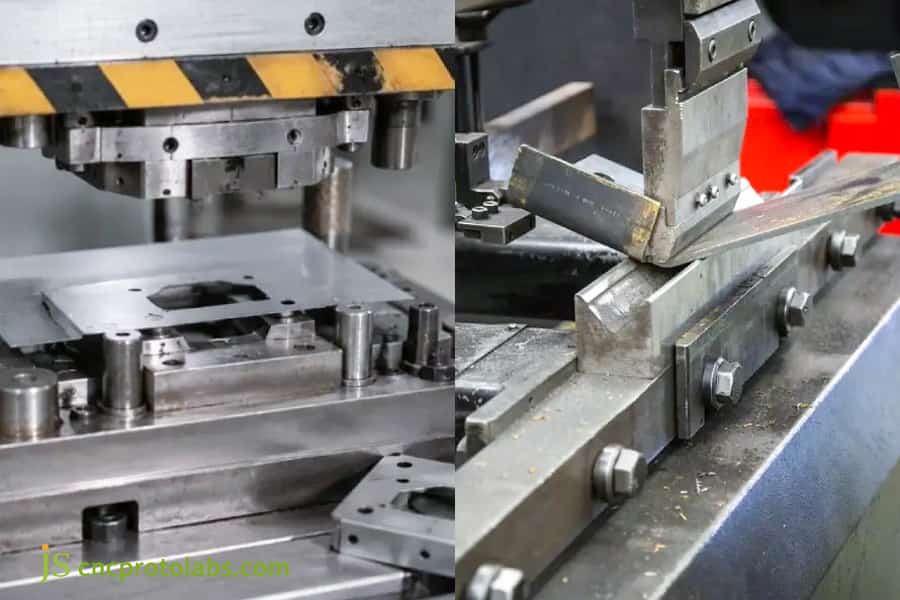
Figure 3: Metal forming process comparison showing bending and stamping techniques.
What Are the Tolerance and Quality Differences in Sheet Metal Bending vs Stamping?
Accuracy difference between sheet metal bending vs stamping: stamping held by hardened steel tooling can achieve ±0.02-0.05 mm, whereas, precision bending metal service offers ±0.1-0.3 mm.
Three major limiting factors of bending accuracy
- Sheet Thickness Variance: Part tolerance ±0.08 mm of a raw material is exactly the same as that part's tolerance.
- Springback: Since the elastic module from batch to batch differs, springback deviations of ±0.5° can be caused. JS Precision's CNC bending machines are only capable of keeping springback fluctuation in ±0.1mm range through electro-hydraulic servo systems and laser measurement.
- Tolerance Propagation: Accuracy drift of ±0.3 mm can happen after three bending processes.
A decision to switch to bending instead of stamping should have been based on full awareness that a limitation in accuracy is part of that process.
As ISO 2768-1: The 'fine' (f) tolerance level is applicable if the linear dimension is between 0.5, 3.0 mm, it is 0.05 mm. If parts are machined from 'medium' (m) class material, the dimension tolerance is ±0.1 mm.
JS Precision precision manufacturing is carried out under the ISO 2768-f guideline (0.05 mm), which is twice stricter than the standard 'm' class of the industry.
Advantages in controlling stamping accuracy
- Die wire-cutting accuracy: ±0.002 mm. Material fluctuation hardly affects the cavity dimensions.
- Die bottom press point repeatability: ±0.01 mm. Press shut height remains constant through every stroke.
- True Position: Accuracy requirements for densely-packed connector boards are ±0.05 mm and are only consistently achievable by stamping.
Get a free DFM analysis by JS Precision to check if your part specification can be fulfilled with 0.1 mm with sheet metal bending or it is recommended to go for stamping at a higher level.
How Does a Metal Stamping Alternative Service Accelerate Small-Batch Lead Times?
The metal stamping alternative service offers a fast and efficient way to replicate stamped parts without tooling by combining fiber laser cutting with CNC bending. Sample lead time reduces from 6 weeks to 3 days only.
Process Specifications of the Laser-Bending Combination Technique:
- Fiber Laser 2 kW: cutting speed of 20 m/min (steel type: 304 stainless steel, 1.5mm) with the precision reaching ±0.05 mm.
- CNC Press Brake 230-ton: a 5 axis back gauge, the repeat accuracy is ±0.01mm.
- Quick Changeover: drawing to first article takes 2-3 days only, traditional stamping takes 4-8 weeks for making dies.
Between metal bending vs stamping, alternative metalworking techniques show the best performance on the race to get things done.
Process Techniques to Achieve Structural Strength Comparable to Stamped Parts
- Relief Cuts: To ensure tearing is prevented at all costs, the depth of the relief slots close to the bend lines should be ≥ 1.5 × T (material thickness).
- Grain Direction Control: To avoid any cracking, it is imperative to orient the bend lines at a right angle to the rolling direction.
- Springback Compensation: An over-bending preset of 0.3°-0.8° through CNC, makes sure the final part will be angular error less than 0.1°.
Being able to access custom metal bending services gives the engineers a competitive edge by providing flexibility in rapid design iterations.
From our own experience, a vehicle charging station enclosure manufactured by an metal stamping alternative service delivered 500 samples in 48 hours, 37 days before the die production required.
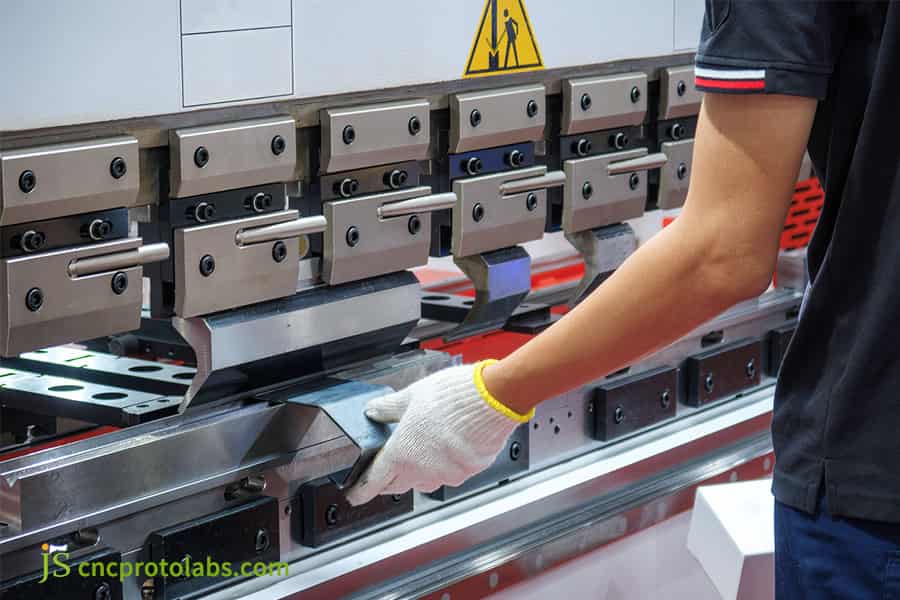
Figure 4: Stamping alternative service for low volume metal bending production.
How to Optimize DFM When Transitioning from Bending Prototypes to Stamping?
Switching smoothly between metal bending vs stamping methods First and foremost depends on Design for Manufacturing (DFM) in early stages. Standardize bend radii, employ relief cuts, grain direction control, and merge multiple-part assemblies.
Straightening Inner Bend Radii
- Uniform Bend Radius (R): Benders usually set their bend radii at R = T, whereas stampers have the advantage of working with smaller radii through their stamping, the prototype stage is the perfect time for a standardization to minimize later die changes.
- Do Not Have Very Tight Corners: The minimum R for bending is 1.5×T, the minimum for stamping is 0.5×T, so, you should go with the stamping requirement as your reference.
It's also advisable for saving costs on retooling stamping die in mass production if you standardize the bend radii in custom metal bending services at the prototype stage.
Bend Relief and Hole-to-Bend Distance Control
- Bend Relief: To avoid the tearing problem, the relief slot depth must be ≥ 1.5 × T.
- Hole-to-Bend Distance: For a hole not to cause stretching deformation due to the bend in the material, the hole-to-bend line distance must be ≥2T + R.
- Component Consolidation: The redesign of three weldings into one stamped part will lead to 40% savings in assembly labor hours. Based on JS Precision results, DFM optimization brought in 35% reduction in overall costs.
It is beneficial to consider the component consolidation at the earliest, even at the low volume metal bending service stage, as it can dramatically minimize the costs of the mass production.
Grain Direction and Material Utilization
- Grain Direction: Drawing annotation of bending line ⊥ rolling direction.
- Nesting: By planning the layout very carefully you are able to go from a 75% utilization of the material (bending) to an 88% (stamping). This can cause a cost savings of 10-20%.
DFM is the first step toward a scalable future for stamping. In our practice, early DFM is able to reduce transition costs of manufacturing processes by 60%.
Try a free DFM check from JS Precision metal parts manufacturer and discover how custom bending can open doors to mass production stamping.
Case Study: How JS Precision Reduced Costs by 35% Using Hybrid Sheet Metal Solutions?
Custom metal bending services combined with low volume metal bending services brought down tooling upfront by 60% and total cost by 35% for an EV charging station customer.
Client Problems
A customer from North America was looking for 1,500 charging station parts. Stamping was going to be the main method. But, the supplier initially estimated that the tooling costs alone would be $42,000 without counting the design changes that were expected to happen several times over the three-month span.
JS Precision Solution
- Process Diversification: Moved from manufacturing large-format housings/enclosures (1200×600mm) to custom metal bending services, which avoided tooling costs.
- Small-batch optimization: A single die compound stamping was used for 15,000 L-brackets, the tooling investment was a mere $2,500.
- Springback control: The laser-based angle compensation resulted in a very tight ±0.15 mm tolerancing, allowing perfect fitting of the stamped part.
- DFM-optimization: A 2 mm recess was incorporated at the corner to prevent cracks.
Lessons Learned
When the initial prototype run was executed, it turned out that forming 6061-T6 aluminum alloy in the direction of the rolling resulted in 12% corner cracking rate. It was fully fixed when the drawing for the blank was redesigned so that the line of the bend running perpendicular to the direction of the grain.
Final Results
- Tooling cost: $42,000 to $2,500 (94% saving).
- Whole cost: Reduced 35%.
- Delivery: 1,500 units delivered within 12 days, 18 days earlier than the original plan.
Running into problems with mold costs, mold changes, and tight time frames? Contact JS Precision to get a hybrid sheet metal solution where low volume metal bending service are combined with stamping to bring cost savings above 35%.
FAQs
Q1: What is the primary technical difference between metal bending and metal stamping?
In metal bending, the metal is deformed along a single linear bending axis using a CNC press brake and a universal tooling. But, metal stamping is a process that is performed on a press using dedicated stamps to execute several operations in one go: punching, blanking, bending and deep drawing.
Q2: When should I choose custom metal bending services over stamping for my project?
Opt for custom metal bending when your project will only call for 3,000 or fewer parts, when fast turnaround is required (3-5 days delivery), or your design is still going through changes, saving you the cost of custom made molds.
Q3: How much can I expect to spend on bending tooling cost vs. stamping dies?
A bending setup can cost you nearly $0-$500 because the machine comes preloaded with universal molds as a kit. By contrast, the customized stamping molds are expensive. They start at $3000 and can go well beyond that.
Q4: Can JS Precision manufacture sheet metal prototypes before I commit to high-volume stamping?
Definitely. JS Precision does small-scale metal forming prototypes with a 3-day turnaround and offers Design for Manufacturability consultation at no cost to you before your mold investment.
Q5: How does JS Precision ensure high precision and consistent tolerances in metal bending?
We rely on electro-hydraulic servo CNC bending machines that come with the laser angle measurement in real-time and automatic springback compensation so the tolerances stay stable down to ±0.1 mm.
Q6: What is the typical crossover production volume to switch from bending to stamping?
It would generally be around 3,000-5,000 pieces. Beyond 5,000 units, the stamping's lower unit processing cost can outweigh the tooling investment.
Q7: How does JS Precision calculate quotes for custom sheet metal bending and stamping services?
We calculate our quotes fairly based on the raw material price, laser cutting time, number of bends, post-processing, and quantity, you will get an instant quote after you have uploaded your designs.
Q8: Is it possible to modify a sheet metal part design after production has started?
For bespoke bending, design changes typically only require altering a CNC programme costing a mere pittance. Though stamping changes would involve either expensive tool redesign or the development of totally new tooling.
Summary
Deciding on either custom metal bending or metal stamping is a balancing act between tooling cost, quantity output, and the ability to make design variations. For metal bending, there is no tooling risk as long as you're making less than 3,000 units. But, metal stamping becomes more economical as the volume increases beyond 5,000 units. The key to optimal efficiency is figuring out the breakeven point and DFM recommendations.
Ready to cut out tooling costs? JS Precision takes care of everything from bending prototypes to large quantity stamping. Our engineers will do a DFM review for you free of charge, plus send you a fast quote within two hours. Just upload your 3D CAD model files, and the production phase of your components can begin faster!

Disclaimer
The contents of this page are for informational purposes only. For JS Precision Services, there are no representations or warranties, express or implied, as to the accuracy, completeness, or validity of the information. It is the buyer's responsibility to identify specific technical requirements and request a formal parts quotation. Please contact us for more information.
Resource