English



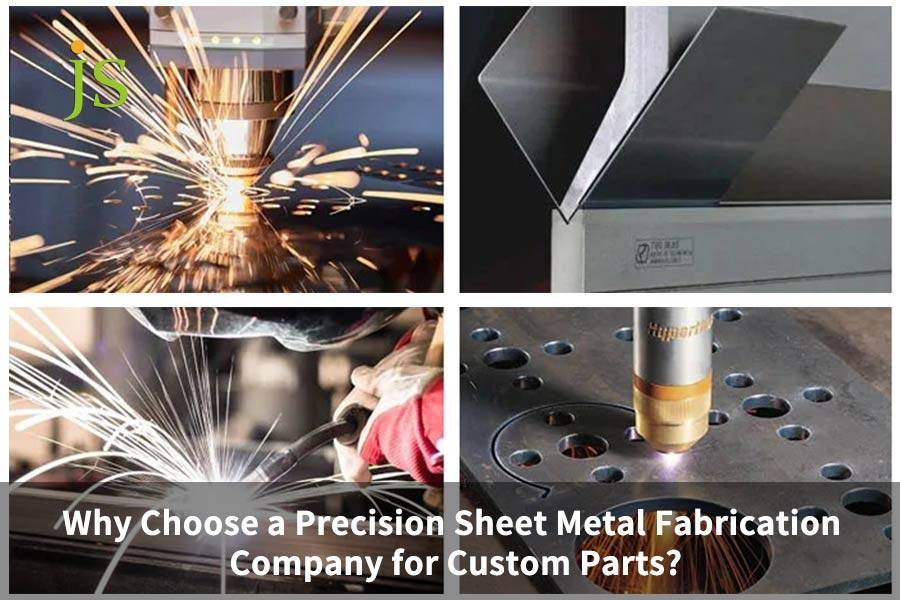

Precision sheet metal fabrication company provides specialized manufacturing to eliminate assembly interferences, weld warpage, and dimensional stacking in custom sheet metal parts through CNC fiber lasers, multi-axis servo press brakes, and upfront DFM simulation that maintains tolerances within ±0.05mm. Ordinary sheet metal factories rely on manual bending and loose tolerances, often leading to chassis misalignment and assembly failures. Choosing a certified factory like JS Precision ensures the integrity of bending radii and ISO 9001:2015 full-process quality control, enabling smooth scalability from prototyping to mass production.
Precision Sheet Metal Fabrication Company vs. Standard Fabricators
|
Manufacturing Evaluation Dimension |
Standard Fabricators |
JS Precision Precision Standard |
|---|---|---|
|
Machining Tolerance Capability |
ISO 2768-m/c (±0.2–±1.0 mm depending on size) |
ISO 2768-f, Laser cutting ±0.05mm, Bending angle ±0.3° |
|
Core Processing & Compensation |
Low-power cutting, manual bending without crowning |
12kW fiber laser, 8-axis CNC servo press brake with real-time dynamic compensation |
|
Engineering DFM & Tolerance Stack-up |
Passive processing as per drawing, no interference verification |
3D unfolding pre-review, K-factor calibration, bend die anti-interference optimization |
|
Secondary Operations & QC |
Outsourced processes, manual spot check with calipers |
In-house PEM, pulsed laser welding, powder coating, CMM full inspection |
According to ISO 2768-1:1989, general tolerances for linear dimensions in class f specify limits of ±0.05mm for sizes up to 10mm, ensuring micron-level precision for custom sheet metal parts.
Why Does a Precision Sheet Metal Fabrication Company Achieve Micron-Level Tolerances?
A precision sheet metal fabrication company achieves stable micron-level tolerances by combining high-brightness CNC fiber lasers, multi-axis electro-hydraulic servo press brakes, and automated optical measurement systems. Unlike conventional workshops relying on mechanical stops, precision fabrication facilities such as JS Precision apply real-time angular compensation to maintain linear tolerances within ±0.05mm and hole position deviations within ±0.02mm. This sub-millimeter precision directly resolves thermal distortion during high-speed cutting and offsets batch-to-batch sheet thickness variations during continuous forming operations.
Beam Quality and Heat Affected Zone Control
Precision sheet metal fabrication service is equipped with high-brightness fiber lasers (BPP < 0.5 mm·mrad) and 99.999% high-purity nitrogen assist gas cutting. The heat-affected zone is limited to less than 0.08mm. Making of a kerf compensation algorithm to offset effects of thermal deformation at high-speed cutting, the deviation of openings made in the medical device sheet metal parts custom-made by JS Precision can be controlled stably within ±0.02 mm. JS Precision's manufacturing data on 3.0 mm 5052 aluminum alloy sheet have verified this outcome.
Dynamic Compensation and Process Capability Index
- Dynamic crowning systems of multi-axis electro-hydraulic servo press brakes are used to offset machine deflection besides preserving bend angle tolerance within ±0.3°.
- JS Precision's 2025–2026 production records show that On 1.5 mm 304 stainless steel parts, the hole-to-hole process capability index (CPK) reaches at least 1.67.
- A closed-loop angular compensation system holds micron-level precision on complex custom parts.
Do you need to keep the tolerance stable within ± 0.05mm? Contact JS Precision immediately for a free DFM assessment.
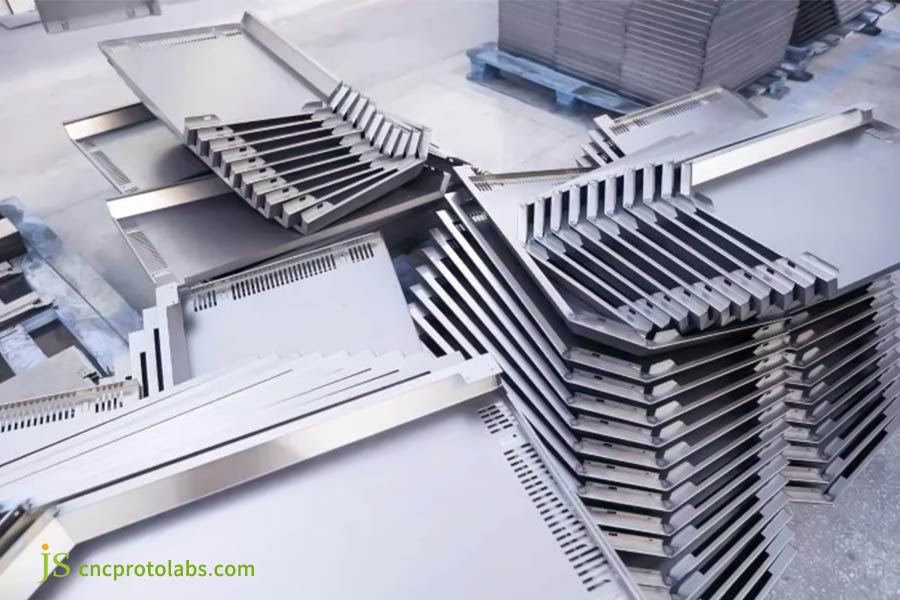
Figure 1: Stacks of precision sheet metal fabrication parts.
How Does a Precision Sheet Metal Fabrication Service Optimize DFM for Custom Parts?
A precision sheet metal fabrication service optimizes DFM (Design for Manufacturability) and material yield by evaluating bend radius ratios, hole-to-edge clearances, and automated dynamic nesting algorithms during the CAD review phase. By ensuring minimum bend relief notches (depth ≥ sheet thickness + 0.5mm) and preventing deformation near bend lines, engineering teams at facilities like JS Precision prevent tooling collisions and reduce raw material scrap rates to under 8%. The process guarantees that complex custom sheet metal parts transition seamlessly from digital design to zero-defect physical production.
Bending mechanics ratio and critical value of hole edge distance
- Custom sheet metal parts must comply strictly with the R/T ≥ 1.0 anti-tearing rule, in which the bend inner radius (R) has to be no less than the material thickness (T).
- To avoid deformation near the bent lines, the minimum hole-to-edge distance has to be ≥ 2T + R.
- These rules let structural engineers produce accurate sheet metal manufacturing instructions based on the design rules for complex enclosures made of metal.
Layout optimization and structural lightweighting
- Automated nesting software increases the material yield of automated cutting and laser cutting from 65% to 88% at stainless steel and aerospace aluminium production.
- At JS Precision the engineering team adds reinforcing ribs to 3D models of components which results in a 40% increase of load resistance with simultaneous reduction in weight and elimination of extra operations.
- Upfront DFM optimization ensures a smooth transition from digital design to physical production.
According to ASTM A568/A568M-22, standard specification for steel sheet ensures material consistency for DFM optimization in sheet metal fabrication.
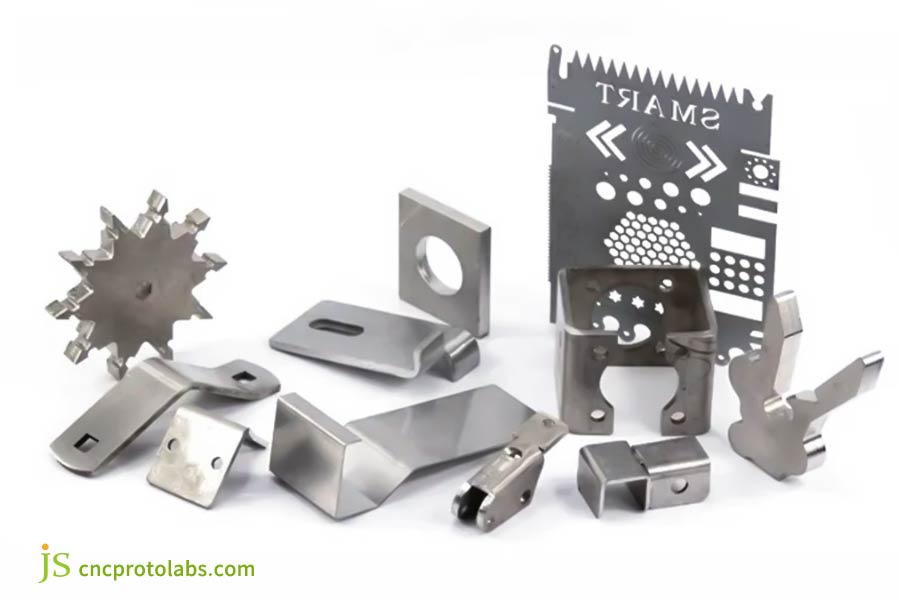
Figure 2: Various custom sheet metal parts on white background.
What Core Capabilities Should You Look for in a Sheet Metal Parts Manufacturer?
A professional sheet metal parts manufacturer must possess end-to-end sheet metal fabrication capabilities spanning CNC cutting, multi-axis bending, robotic welding, hardware insertion, and automated surface finishing. Operating within an integrated facility such as JS Precision ensures dimensional tolerances within ±0.05mm and prevents inter-process damage common to multi-vendor outsourcing. This comprehensive capability matrix streamlines procurement workflows, reduces overall manufacturing lead times by 35%, and guarantees full traceability across the entire fabrication lifecycle from raw coils to finished sub-assemblies.
High precision cold cutting and forming
- JS Precision employs fiber lasers of 12kW and CNC turret punches to create cut-outs and louvers swiftly, keeping lineal dimensional accuracy to ±0.05mm.
- The press brakes used range from 100T to 250T, and crowning compensation is applied to control bending radius, so flanges are kept uniform in height.
- Our specialized sheet metal fabrication, for industrial parts, does away with tolerance accumulations seen in outsourced production.
Hardware assembly and precision connection
JS Precision is equipped with PEM riveting equipment and conducts torque tests with a minimum of ≥ 8.5 N·m to assess the hold on the fasteners. Robotic welding is performed through Cold Metal Transfer and pulsed laser welding procedures that greatly reduce the amount of heat input. Surface treatments include sandblasting to a level of Ra 1.6–3.2 μm, anodizing to a depth of 10–25 μm, and powder coating to a film of 50–80 μm which are all made within one factory making it much easier to track each process stage.
|
Process Category |
Equipment / Parameter |
Tolerance / Specification |
Capability Index |
|---|---|---|---|
|
CNC Cutting |
12kW Fiber Laser |
±0.05mm |
CPK ≥ 1.67 |
|
Bending |
8-axis Servo Press Brake |
±0.3° |
Crowning Dynamic |
|
Welding |
CMT / Pulse Laser |
Heat Input ↓45% |
Distortion ≤0.25° |
|
Surface Finish |
Powder Coating |
50–80μm |
ASTM D3359 5B |
According to ISO 9013:2017, thermal cutting classification defines dimensional and geometric tolerances for laser cut edges, ensuring cut quality meets precision sheet metal requirements.
Worried about cutting tolerances and flatness not meeting standards? Send the drawings to JS Precision to obtain a free layout anti deformation solution and tolerance capability evaluation report.
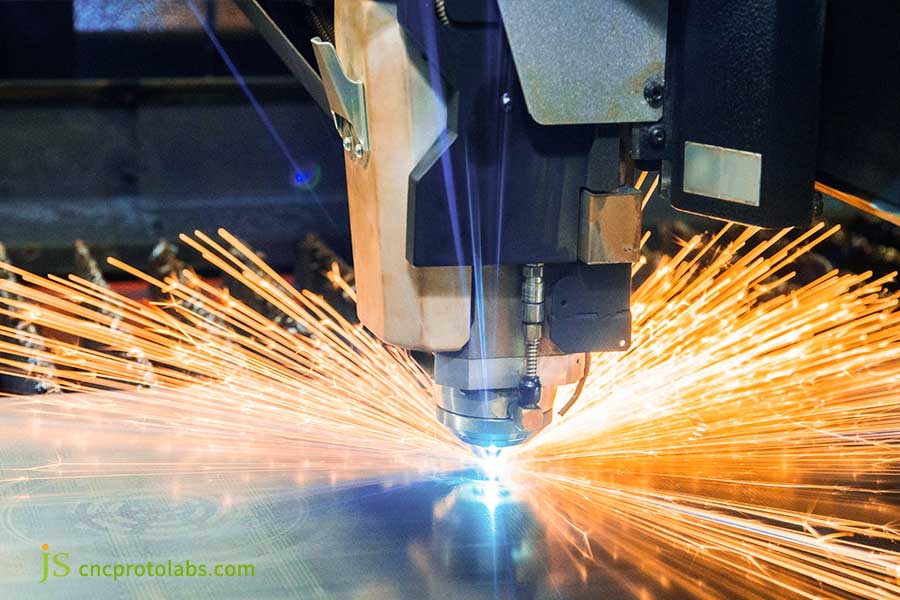
Figure 3: CNC laser cutting machine processing metal sheet.
How Does a Custom Sheet Metal Fabrication Service Prevent Assembly Interference and Weld Warpage?
A custom sheet metal fabrication service prevents assembly interference and weld warpage through dynamic 3D stack-up tolerance analysis, custom laser-cut modular fixtures, and low-heat welding technologies. By utilizing pulse laser welding and Cold Metal Transfer (CMT) setups in operations like those at JS Precision, localized heat input is reduced by 45% with CMT compared to conventional arc welding, keeping angular distortion within ±0.25°. This rigorous thermal and geometric control guarantees that multi-panel electronic enclosures and chassis fit securely during final integration without secondary manual hammering or rework.
Control of Heat Affected Zone and Fixtures
- Pulse laser welding and CMT enable the manufacturing of custom sheet metal parts with lower localized heat input, reducing it by 45% compared to conventional arc welding.
- Interlocking tab-and-slot and pneumatic clamping fixtures are capable of locking diagonal tolerances within ±0.5mm.
- Our experience shows that electronics-enclosure work demands precise heat-input control of heat input to avoid any secondary work.
Weld Inspection and Stress Relief
Post-weld stress-relief annealing is carried out at 220°C for 2 hours to prevent the emergence of microcracks; thereafter, penetrant testing is done to reveal surface defects 0.15mm or more, safeguarding the reliability of the structure even when it is vibrating. Such steps make it highly likely that multi-panel electronic enclosures will be integrated without needing any manual hammering or rework.
According to AWS D1.3/D1.3M:2018, structural welding code for sheet steel specifies acceptance criteria for welds, ensuring distortion control within ±0.25° for sheet metal fabrications.
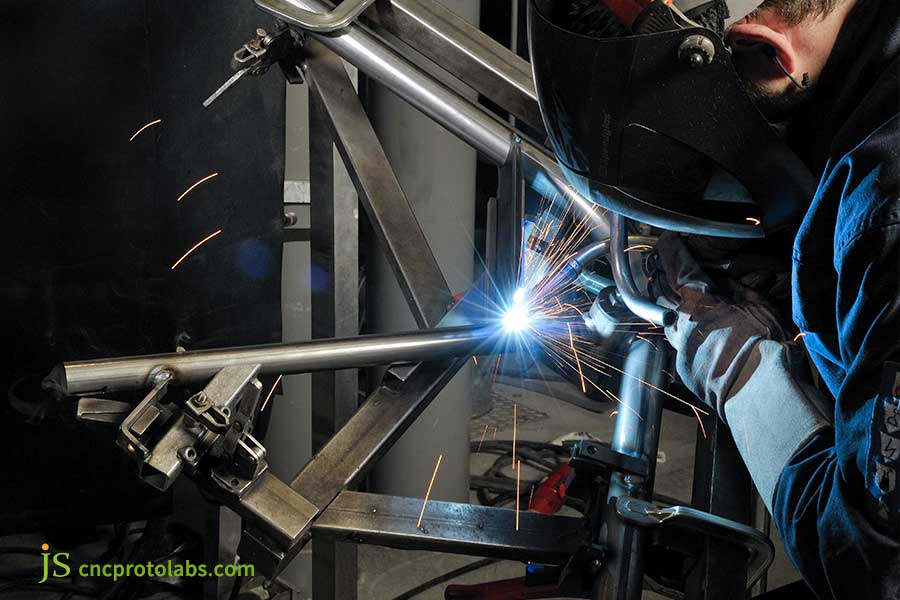
Figure 4: Worker welding custom sheet metal frame parts.
How Do Precision Sheet Metal Fabrication Companies Balance Prototype vs. Production Costs?
Precision sheet metal fabrication companies balance production economics by selecting rapid soft tooling and CNC laser-brake workflows for low-volume prototypes, transitioning to dedicated progressive hard tooling for high-volume runs. Agile manufacturing facilities including JS Precision achieve 3-day turnaround times for 1–50 prototype custom sheet metal parts without upfront NRE tooling expenses, while reducing unit costs by up to 60% when quantities exceed 5,000 units. The flexibility enables hardware engineering teams to validate physical fit before committing significant capital to high-volume tooling.
Cost Cross Balance Point and Ladder Model
The soft-tooling vs. hard-tooling break-even typically falls between 2,500 and 5,000 units. Quick mold change (QMC) systems cut setup time from 45 minutes to under 8 minutes, lowering unit costs for 50–500 piece runs. This flexibility lets hardware teams validate fit before committing to high-volume tooling.
Our flexible manufacturing lets hardware teams validate fit before making the decision to go for expensive high-volume, precision sheet metal fabrication for low volume production.
|
Tooling Type |
NRE Cost |
Lead Time |
Design Flexibility |
Volume Range |
|---|---|---|---|---|
|
Soft Tooling / CNC |
$0 |
3–5 days |
High |
1–2,500 pcs |
|
Progressive Hard Tooling |
$5,000+ |
15–25 days |
Low |
≥5,000 pcs |
Based on JS Precision 2025–2026 project database (1,200+ projects), soft tooling workflows achieve 3-day turnaround for 1–50 prototype custom sheet metal parts without upfront NRE expenses.
Need a flexible procurement solution for small-batch, multi-variety bending projects? Contact JS Precision for a free DFM review and transparent quote, and experience the engineering depth and cost advantages of a directly operated factory.
What Finishing Standards Must a Precision Sheet Metal Fabrication Company Meet?
A precision sheet metal fabrication company must deliver certified surface treatments that comply with ASTM corrosion resistance and environmental durability standards. Industrial fabrication lines operated by companies like JS Precision involve automated chemical pre-treatment, conversion coating, and robotic application of anodizing (MIL-A-8625), powder coating (Qualicoat Class 1/2), or passivation with film thickness controls between 15μm and 75μm. These controlled secondary processes ensure custom sheet metal parts withstand 500 to 1,000 hours of neutral salt spray testing without surface pitting, flaking, or electrical conductivity failure.
Salt Spray Testing and Film Thickness Control
- ASTM B117 neutrality test with salt spray after 500–1,000 hours means the metal will show no signs of corrosion by pitting or peeling.
- Anodized 5052 aluminum meets breakdown voltage compliance as a dielectric material.
- Powder coating meets ASTM D3359 5B cross-cut adhesion requirements making the metal product durable for precision sheet metal fabrication used for outdoor enclosures.
Surface Tolerances and Mechanical Fit Coordination
Variations of film thickness are kept within 10 microns to prevent affecting the dimensions during assembly of mating surfaces; robotic spraying guarantees constant distribution of coatings to the surface areas of complicated shapes which is very essential for IP protected enclosures. JS Precision adopts masking fixtures in the areas of threaded holes so that coating would not enter the mating parts.
According to ASTM B117-19, standard practice for operating salt spray apparatus defines conditions for evaluating corrosion resistance of coatings on sheet metal parts.
Source: JS Precision internal production database, 2025–2026
How JS Precision Eliminated Assembly Fit Failures for a Medical Robotics Sheet Metal Chassis?
Customer difficulties and technical pain points
A European medical-robotics manufacturer's 2.5 mm 5052-H32 aluminum motor casing, previously produced by another supplier, contained 18 consecutive bends and 42 press-in nuts.
The total tolerance deviation was about ±1.2mm, the flatness deviation of the weld surface was 2.8mm and the pass rate of the assembled product was only 48%.
JS Precision Solution
- Development of DFM and K-factor Calibration: we recalibrated the K-factor from 0.42 to 0.385 to account for the anisotropic behavior of 5052 under deep bending and stretching.
- Self-locking and splitting error prevention: by incorporating a precision snap-lock pre-positioning split base, we used 12kW laser cutting to produce the self-positioning tenon, removing bending interference.
- Precision 8-axis electro-hydraulic closed-loop metal folding and low heat cold welding: the single-pass bending angle tolerance is set and locked at ±0.2°. Spot welding by pulsed laser is utilized instead of TIG welding. The heat input is decreased by 60% with pulsed laser. We correct the important contact surfaces by five-axis CNC micro-milling after welding (flatness ≤ 0.03 mm).
Lessons learned from failures and parameter iteration
- The first trial production was made using post-weld hydraulic backpressure straightening and it led to localized cold work hardening together with development of one small micro-crack 0.15mm in depth.
- After the first trial, we abandoned cold straightening method and went for a combination of pneumatic rigid fixture constraint + 220°C stress relief annealing for 2 hours + secondary precision milling as a new method.
Final result
- 300 units were delivered with key mounting-hole positions held to ±0.04 mm and the chassis flatness to 0.15mm.
- The first-time pass rate for final assembly is 99.8%, the structural weight is reduced by 12%, and the cost per unit is reduced by 22%.
Are your precision bent parts facing similar interference or surface quality issues? Send your drawings to JS Precision now for a free DFM review and customized tooling solutions.
FAQs
Q1: What is the standard tolerance range a precision sheet metal fabrication company can achieve?
Our professional precision sheet metal factory offers laser cutting tolerances of ±0.05mm to ±0.1mm and bending angles of ±0.3° to ±0.5°. For special fit features, secondary machining after welding can achieve tolerances within ±0.02mm, meeting high-precision assembly requirements.
Q2: How does JS Precision ensure quality consistency across low-volume and high-volume Custom Sheet Metal Parts?
JS Precision implements the ISO 9001:2015 system, deploys laser inspection equipment and coordinate measuring machines, conducts first-piece inspection for each batch and implements SPC to ensure that the capability index CpK of critical dimension processes is ≥1.33, thus guaranteeing batch consistency.
Q3: What factors determine the quote and pricing for Custom Sheet Metal Fabrication Service?
The sheet metal parts quote depends on the material thickness, total cutting path length, number of bends, number of riveting operations, welding type, and post-processing requirements. Increasing batch size significantly reduces unit cost by improving material utilization and distributing setup time.
Q4: Which metals are most commonly used by a Sheet Metal Parts Manufacturer for industrial enclosures?
Commonly used materials include 5052-H32 aluminum alloy (lightweight and corrosion resistant), SPCC cold-rolled sheet (high-strength cabinet), 304/316 stainless steel (medical and highly corrosive environments), and SECC galvanized steel sheet (outdoor housing), covering various industrial scenarios.
Q5: What CAD file formats should I provide to get an accurate quote for custom sheet metal parts?
Please provide a 3D solid model in STEP or IGES format for unfolding and interference assessment, along with 2D engineering drawings (PDF or DXF format) that indicate key tolerances, thread specifications, and surface treatments, for accurate pricing.
Q6: What is the typical lead time for custom precision sheet metal prototypes versus mass production?
Rapid prototyping takes 3 to 5 business days; for batches of 500 to 10,000 pieces, the standard lead time is 10 to 15 business days, depending on the complexity of surface treatment and assembly.
Q7: Can custom sheet metal enclosures achieve IP65 or NEMA 4 waterproof ratings?
Yes. By using continuous robotic welding to fully seal the joints, combined with polyurethane foam sealing strips and controlling the flatness of the door panel to ≤0.3mm, the IP65 dustproof and waterproof rating requirements can be fully met.
Q8: Why is CNC fiber laser cutting preferred over mechanical stamping for custom low-volume fabrication?
Fiber laser cutting eliminates the need for expensive molds and weeks of mold-making cycles, supports rapid programming and production in minutes, produces extremely fine kerfs and has no mechanical stamping burrs on the edges, making it particularly suitable for small-batch customization.
Summary
Choosing a professional precision sheet metal processing plant can accurately transform 3D digital models into customized parts that meet stringent dimensional standards, eliminating the risks of assembly interference, welding thermal deformation, and uncontrolled tolerances accumulated over multiple processes. Leveraging high-power fiber laser cutting, multi-axis closed-loop servo bending, and integrated secondary surface treatment capabilities, professional manufacturers can ensure that chassis, racks, and complex structural components consistently achieve ±0.05mm linear tolerances and meet ISO 9001:2015 quality certification requirements in both prototyping and mass production.
If your custom sheet metal parts are facing assembly interference, post-weld warping, or batch dimensional inconsistencies, please contact the JS Precision engineering team for a Design for Manufacturing (DFM) assessment. Upload your 3D CAD drawings now, and we will provide a detailed manufacturability analysis report and a detailed quotation within 24 hours.

Disclaimer
The contents of this page are for informational purposes only. For JS Precision Services, there are no representations or warranties, express or implied, as to the accuracy, completeness, or validity of the information. It is the buyer's responsibility to identify specific technical requirements and request a formal parts quotation. Please contact us for more information.
Resource