English



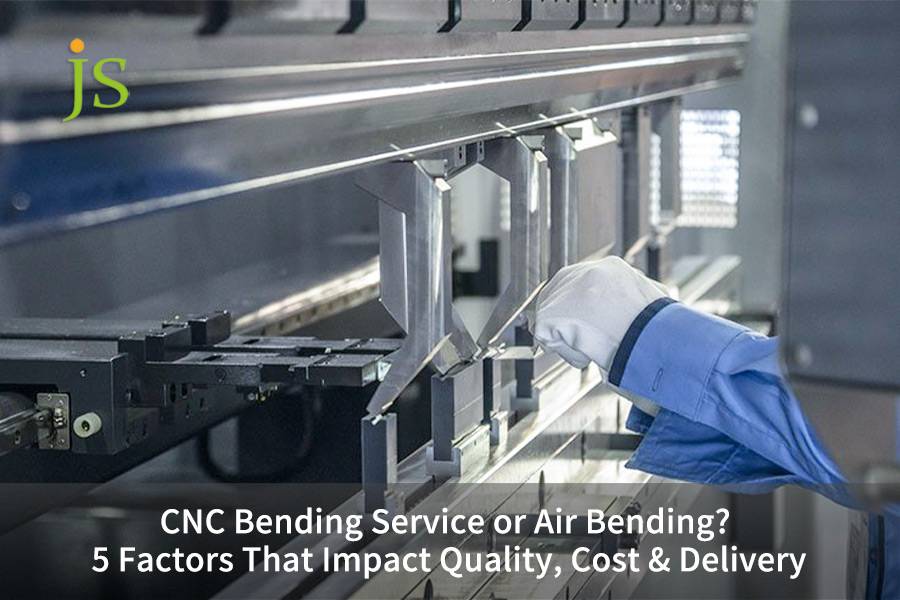

CNC bending vs air bending are not two mutually exclusive independent machining services, air bending is the key deformation type executed on modern multi-axis CNC press brakes. If CNC automatic bending equipped with real time laser angle feedback and dynamic crowning compensation is chosen, the angle tolerance can be locked at ±0.2° and springback variations due to material batches will be completely eliminated.
Five major engineering dimensions, angle tolerance, tooling budget, springback control, delivery lead, material adaptability, the most critical of them have been closely evaluated below.
Precision Metal Bending Service: Performance & Cost Overview
|
Engineering Metrics |
CNC Bending Service |
Traditional Air Bending |
|---|---|---|
|
Angle Tolerance Range |
±0.2° – ±0.5° (laser closed-loop feedback) |
±1.0° – ±2.0° (manual sampling adjustment) |
|
Tooling Investment |
Zero or minimal (universal 88°/85° V-die) |
Zero (standard V-die, no adaptive compensation) |
|
Springback Compensation |
Auto K-Factor calculation, real-time crowning |
Manual trial bending, operator experience-dependent |
|
First Article Lead Time |
24–48 hours (CAD/CAM direct transfer) |
3–5 days (manual setup and gauging) |
|
Best Fit Volume |
Prototype (1–10 pcs) to high volume (10,000+ pcs) |
Simple low-precision parts, low-budget small runs |
Data source: JS Precision 2025 internal process benchmark; Metalli Industrial bending guide 2025.
Key Takeaways
- Air Bending: Angle can be determined by how deep the punch is pressed into the V-die, the sheet not reaching the bottom of the die is of high versatility and no tooling costs are involved.
- CNC Bending Services: It has multi-axis CNC back-gauges together with dynamic compensation to achieve angle tolerances of 0.2.
- When it comes to SUS304 and AL 6061-T6 materials, the CNC system continuously regulates the pressing depth so that angle variations resulting from batch to batch differences in yield strength are minimized.
- Opt for JS Precision: The use of DFM 3D simulation and the option of doing CAM programming offline helps you cut first-article setup time and lead time by 60%.
CNC Bending vs Air Bending: What Is The Fundamental Technical Difference?
CNC bending vs air bending differ fundamentally: CNC bending service would involve multiple axes operated automatically whereas air bending would be a kind of deformation of three points relying solely on the punch and die shoulders. Today's mainstream CNC operators mostly practice air bending to facilitate different angles using one type of V-die.
Differences in Physical Mechanism
- Three-Point Bending Principle: Air bending is basically a three-point bending technique, the angle made depends on how deep you push the punch into the die (along the Y1/Y2 axis).
- Difference from Conventional Processes: The main point of traditional air bending is manual dexterity while JS Precision's precision metal bending service is supported by 4- to 8-axis CNC electro-hydraulic servo systems that have closed-loop linear scales that offer 0.001 mm resolution so they can regulate the pressing stroke at micrometer level.
Flexible Multi-Angle Processing
- No Change of Tools Needed: The CNC system changes the stroke depth only in the pressing operation through which the task can be finished if the workpiece is very angular and complicated.
- Accuracy and Flexibility Combined: The machine has tolerance for accuracy and repeatability of ±0.2°. The CNC press brake can bend every corner identically, but the manual air press bend will depend very much on how well the operator does.
ISO 2768-1 specifies a general angular tolerance of ±0°20 for short-side lengths of 50–120 mm under the medium tolerance class (m).
JS Precision sets the angular tolerance for its CNC bending machines to the upper limit of the ISO 2768-mK medium class, furthermore, by utilizing a laser feedback system, we maintains actual machining tolerances within ±0.2°.
If you want to discover more about the technical aspects of these two methods, get the CNC Bending vs Air Bending Technology White Paper which will help you learn the main differences and use cases in no time at all.
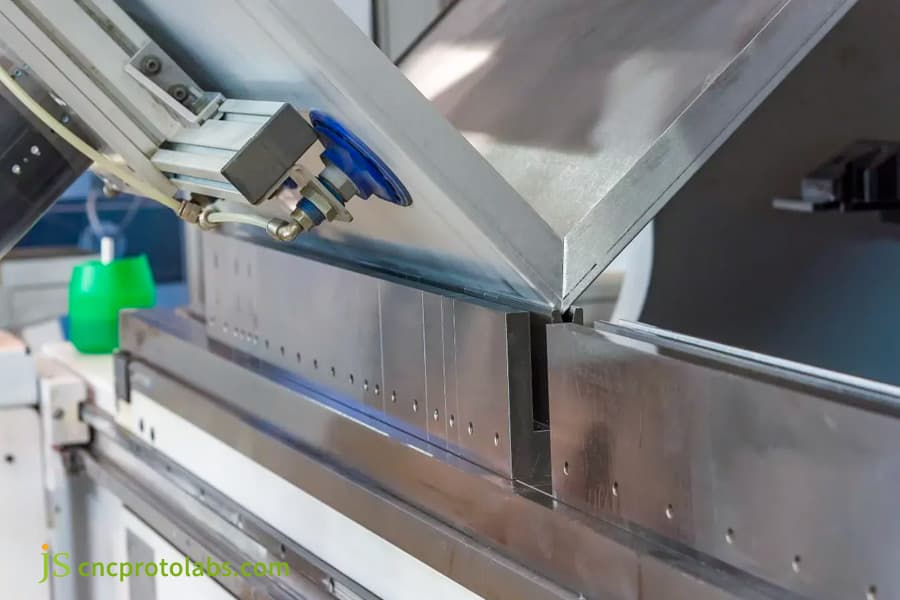
Figure 1: CNC press brake and air bending dies showing the fundamental technical difference.
How Does Precision Metal Bending Service Control Material Springback and Tolerances?
Precision metal bending service manages springback with laser angle measurements and dynamic crowning compensation. These technologies are able to accurately determine variations in yield strength and adjust the penetration depth instantly so that the tolerances remain locked within ±0.2°.
Springback Mechanism and Material Mechanics
- The Characteristics of Elastic Recovery: During bending, sheet metal is plastically as well as elastically deformed; after being unloaded, elastic deformation recovers or rebounds, resulting in a bending angle less than the punch set angle. The degree of springback (Δθ) is a function of yield strength (Re), Young's modulus (E), and the relative bending radius (r/t).
- Limitations of conventional Air Bending: If the variation in material thickness tolerance goes beyond ±0.15 mm or change in tensile strength exceeds 50 MPa, deviation in springback can be up to 1°–3°. In this case, the operator has to do multiple test bending and each adjustment takes up between 5-10 minutes.
JS Precision's Springback Control Technology
- Real-time Laser-Angle Measurement System (LAMS): Each bend angle is measured by the laser beam 100 times per second and the K-factor is instantly calculated, corrected and the over-bend angle is adjusted by the CNC control so that variations between production runs can be excluded.
- CNC Metal Bending Automatic Crowning: The lower die bed's contour is continuously adjusted given the overall bending force. This makes angle uniformity of ±0.2° achievable from one end to the other of the 3-meter sheet.
Customer Benefits
- Quality Stability: Even with changes in the material from each batch, angle remains the same. That is one reason, why precision metal bending service is so valued.
- Lower Rework: Under the conventional techniques one would expect to have 2, 3 trial bends for the parameterization, while CNC systems are able to come up with the standard parts from the very first par, it saves 60% of the setup time.
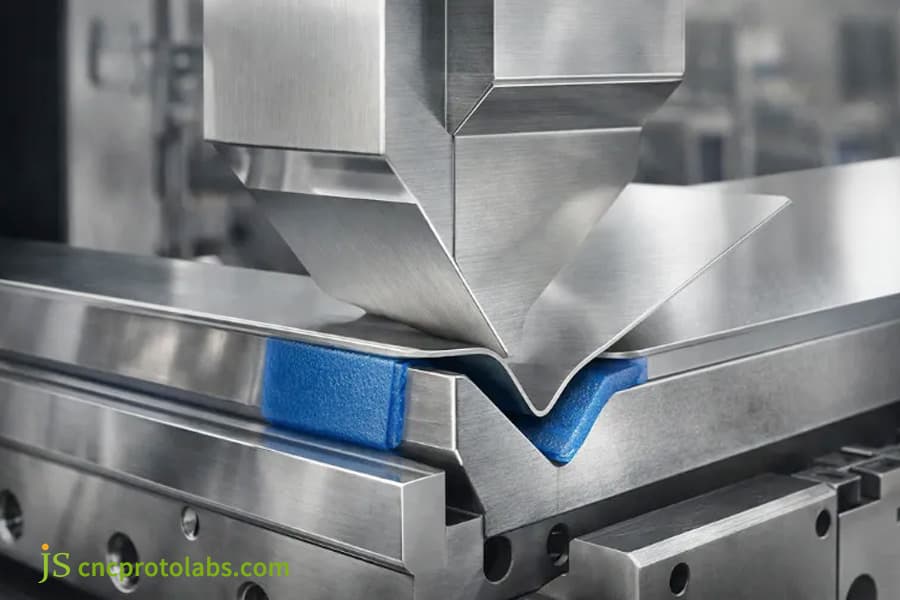
Figure 2: CNC press brake performing precision metal bending to control springback.
How to Optimize Tooling and Production Costs via Bending Process Selection?
Bending process selection optimization is a matching game features get matched with the right tools. It costs less to make air bends on the press brake using the standard tools than to make custom bottom dies for bottoming.
Comparison of Tooling Investment Costs
- Bottom Bending and Coining: For these processes, we use customer-specific dies with one set of dies ranging between $1,500 to $3,500. When there is a change in bend angle, we have to make new dies.
- Advantages of air bending tooling: JS Precision can use a set of standard 88° universal quick-change tools to achieve all the bend angles from 90° to 175°; the tooling costs are low and the tool changeover time has been reduced from 45 minutes to merely 5 minutes.The right bending process selection influences the overall cost of the process.
Differences in equipment tonnage and energy consumption
- Bottoming: Needs an incredibly high tonnage (100+ tons/m) which leads to a large capital investment and heavy power usage.
- Air bending: Cuts the required downward force by over 60% which reduces the degree of wears and power usage of the machine. A market research by Metalli Industrial in 2025 showed that air bending energy consumption per unit is only 35% of bottoming ones.
Actual data on metal bending cost comparison
|
Cost Dimension |
Air Bending (CNC) |
Bottoming Bending |
Savings |
|---|---|---|---|
|
Single Tooling Cost |
$0–$200 (universal die) |
$1,500–$3,500 |
95%–100% |
|
Die Change Setup Time |
5 min (quick-clamp) |
45 min |
89% |
|
Machine Tonnage Required |
40–80 tons/m |
100+ tons/m |
60% reduction |
|
Per-Piece Cost (10,000 pcs) |
$0.85 |
$1.45 |
41% savings |
Data sources: JS Precision 2025 cost accounting. Metalli Industrial bending economics report 2025.
Customer benefits
- The lowest possible initial outlay: There will be no requirement to acquire special dies for each type of bending, instead a single universal tooling kit will be sufficient to handle about most of the job.
- Economy of scale benefit: Air bending per unit is 41% cheaper than bottoming for batches of over 10,000 products, which translates into yearly saving of hundreds of thousand dollars. As a detailled metal bending cost comparison, the bigger the product run the more air bending advantages will stand out.
If you are curious to know for sure if your project would save money then please get a free cost analysis. You only need to enter the most essential information and JS Precision engineers will instantly produce for you a full metal bending cost comparison report.
How Can Manufacturers Minimize Metal Bending Lead Time for Complex Parts?
Metal bending lead time minimization involves 3D CAD/CAM offline programming and multi-axis automated backgauges that digital workflow cuts out the need for trial bending and reduces the time between prototype and delivery by compression to less than 24 hours.
Traditional Process vs. Digital Workflow
- Traditional Trial Bending Process:
The operators are forced to perform a manual trial run and measure the formed angles multiple times. Then they change the backgauges and repeat the whole thing. The first run verification takes on an average of 2-3 hours. Such time-consuming and inefficient method means that a new part must be fully processed before the operator can even get started. The long metal bending lead time is the main bottleneck that restricts the speed of product launch.
- JS Precision's Digital Workflow:
Our custom metal bending service product line uses offline 3D CAM simulation to automatically calculate flat layouts, determine the best bending sequences, and do collision detection. The programs are transmitted through a LAN to 6-axis CNC bending machines. Servo-driven backgauges on the pressing machines get their positioning done in a few seconds at the speed of 500 mm/s.
First-Article Success Rate and Delivery Data
|
Process Stage |
Traditional Manual Bending |
JS Precision CNC Bending |
Time Saved |
|---|---|---|---|
|
Drawing Processing & Programming |
2–3 hours (manual calculation) |
15 minutes (auto CAM) |
91% |
|
First Article Trial & Adjustment |
2–3 hours |
5 minutes (first-pass success) |
97% |
|
Batch Production (100 pcs) |
8–10 hours |
2.5–3 hours |
68% |
|
Total Delivery Lead Time |
3–5 days |
24 hours |
80% |
Data source: JS Precision 2025 production log based on 120 complex bending projects.
It takes just one day to go from drawing submission to receiving the first article. Looking for very fast and 24-hour prototype service? Give JS Precision engineers a call to get a custom delivery analysis and an expedited manufacturing schedule.
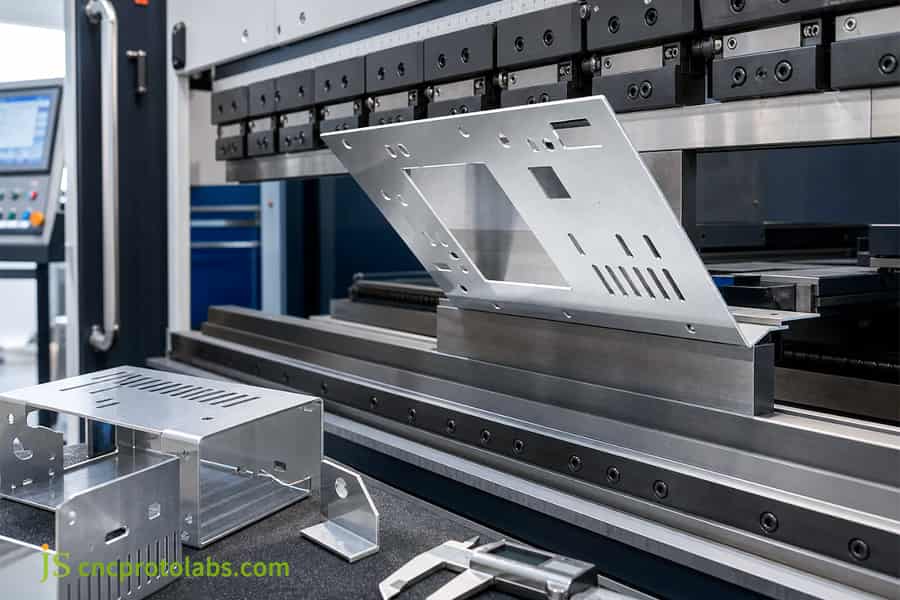
Figure 3: CNC press brake operator performing metal bending to minimize manufacturing lead time.
Which Metal Materials and Thicknesses Are Best Suited for CNC Metal Bending?
CNC metal bending is a technique of forming aluminum, stainless, and carbon steels from thicknesses of 0.5 mm up to 12 mm. The multi-axis CNC systems automatically regulate the tonnage as well as the ram speed to minimize the possibility of crack and eradicate the surface marks.
Thin Sheets and Materials Requiring High Surface Quality (0.5 mm–3.0 mm)
- Typical materials: AL 5052-H32, brushed SUS304.
- Processing characteristics: CNC machines equipped with soft-touch control ram feature polymer non-contact bending films (urethane) to completely avoid surface impressions of the die. This is a big problem in traditional bending. Surface finish can be as smooth as Ra 0.8, So grinding is not necessary anymore. For very thin sheets the soft touch control of CNC metal bending is the only reliable solution for ensuring the quality of the surface.
ISO 9013:2017 specifies that thermally cut parts be classified according to perpendicularity or angularity tolerance (u) and mean roughness (Rz5).
JS Precision maintains cutting quality within ISO 9013 Range 2 (u ≤ 0.15 + 0.007×t; Rz5 ≤ 40 + 0.8×t) during the laser blanking process.
Crack-Prone Materials (High-Strength Aluminum Alloys)
- Typical material: AL 6061-T6.
- Processing characteristics: This content is not very ductile and cracks mainly happen at the boundaries between different grains of the material. The CNC system selects the right die entry radius (usually about 1.5t-2t) and ram speed (50-80mm/s) which are both suitable for preventing the appearance of tiny cracks on the outside part of the bends. Using the settings based on our experience has helped us bring down the cracking rate to less than 0.5% from a high of 18%.
Medium-to-Thick Plates and High-Strength Steel (4.0 mm–12 mm)
- Typical materials: SUS316, S355 carbon steel.
- Processing characteristics: The CNC system can deliver 220 tonnes of downward force simultaneously with the changeable multi-V-groove under die to preserve more than 98 percent of the metal's original strength after cold working. For plates exceeding 8 mm thickness, a V-groove size of 12-16t is a suitable choice. JS Precision can bend sheets from the thinnest up to very thick plates using its CNC bending services.
How to Choose a Custom Metal Bending Service for Complex Geometries?
Accurate custom metal bending service for complex shapes require equipment such as a 6-axis backgauge, segmented goose neck tooling, and a 3D simulation for collision avoidance.
Challenges of Bending Complex Geometries
- Interference with multiple bends: Inaccurate positioning of edges with an angled side, stepped faces, or punched holes is impossible with standard single or dual-axis bending machines since they are restricted to certain positions by backgauge fingers degrees of freedom.
- Box fabrication with deep channels: In the process of making closed boxes and other complex channel-type parts, the punch and workpiece often collide, causing tool breakages or scrapped parts. Selecting the wrong company providing the custom metal bending service often means significant financial losses with scrapped materials.
JS Precision's Solutions
- 6 axis backgauge system: JS Precision's CNC bending machines have a backgauge system with an independently controllable 6 axis (X1,X2,R1,R2,Z1,Z2) which lets any asymmetrical, sloped or unevenly shaped sheet metal part be freely positioned in the 3D space.
- Unique tooling collection: JS Precision has in its inventory a wide variety of gooseneck punch dies in order tooling interference problems could be minimized when fabricating deep-channel boxes with its bending machines. The company carries the smallest segment widths combined up to 10 mm which makes the fabrication possible.
- Simulation in 3D mode online: The incorporation of the online 3D simulation enables the elimination of the risk of a punch hitting the workpiece before the actual processing, thereby ensuring the accurate forming of custom parts through one-shot operations, resulting in less waste from scrapped materials and saving money.
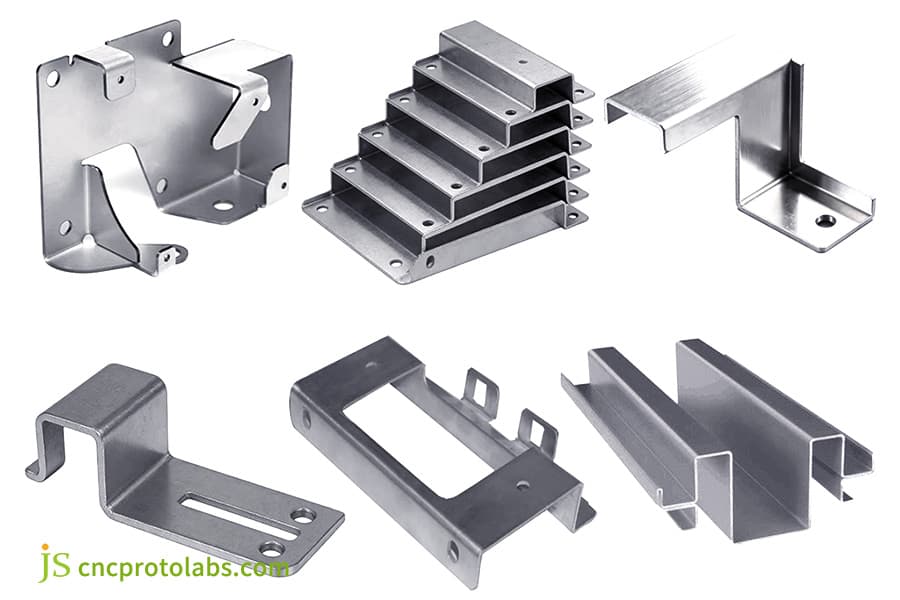
Figure 4: Various custom metal brackets and components produced by CNC bending service.
How JS Precision Achieved ±0.15 mm Dimension Accuracy for Complex Telecom Chassis?
Here is the case of a telecom server chassis that shows how precision sheet metal bend service together with the real-time feedback controlled can manage the challenges of super tight tolerance for the 18 bends parts.
Cutomer problems
It is for a 3U enclosed server chassis for one of the largest North American telecommunication equipment producers, built out of 1.5 mm SUS304 stainless steel and needing 18 bends. The original supplier was not doing very well, most of all about the variation in the material tensile strength (520, 610 MPa) and the accumulation of tolerance errors, so a diagonal dimension variation of 1.2 mm, difficult slot sliding, micro-crack at corners 22% scrap rate resulted
JS Precision Solution
- Step 1 (DFM Optimization): The engineers took the STEP file, recalculted the specific K-Factor of SUS304 (fixed at 0.42), made the necessary adjustment to the Bend Allowance (BA), and re-arranged the 18 bending steps in the 3D CAM software so that early bends would not interfere with the positioning datums required for later bends.
- Step 2 (Tooling & Equipment Matching): The machine chosen is an 8-axis CNC electro-hydraulic servo press brake fitted with 85° goose neck sectional punches and variable bottom dies, a 0.5 mm thick high-polymer protective film that is resistant to compression was laid on the die's surface to prevent surface scratches.
- Step 3 (Real-time Closed-loop Control): Using laser angle measurement and hydraulic crowning (deflection compensation), the system automatically recorded the springback coefficient the moment that the first bend took place and adjusted the Y-axis depth continuously for the rest of the 17 bends. This CNC metal bending closed-loop system was the primary technical protection.
Lessons Learned from Failure
According to the practical work experience gained in the JS Precision TEL-2025-011 project, our engineering team did not consider the physical effects caused by the direction of the material grain relative to the bend line. That is why micro-cracks appeared on the outer surface of two test pieces when they were 90 bent. From this mistake, the team quickly got lessons to require orienting all highly stressed and critical bend lines in either a direction perpendicular to or at 45 angle with the grain direction of the material. Such a minor change completely made micro-cracking problems disappear in following runs.
Final Quantitative Results
- Assembly Tolerances: Through careful monitoring and adjustments, the diagonal measurement of the chassis was consistently maintained within 0.15 mm. The angular variation did not exceed ±0.2°, and the surface was kept scratch-free.
- Quality Improvement: The production batch quality increased from 78% to 99.8%, while the scrap percentage decreased by 22 times.
- Efficiency Gains: The time to manufacture one unit decreased from 12 minutes to 4.5 minutes, which resulted in an 167% increase in the throughput of the facility.
JS Precision is capable of delivering first-off compliance and batch consistency even for the manufacture of complicated enclosures that require 18 bends. Get a quote today, upload your CAD drawings, and JS Precision engineers will provide a cost-transparent offer and a free DFM assessment within 24 hours.
Why Partner with JS Precision for Your Precision Metal Bending Services?
JS Precision is a precision metal bending service provider that combines multi-axis computer numerical control(CNC) equipment with ISO 9001 certification, factory-direct pricing, and rapid delivery capabilities.
- A 2,000+ m² facility housing high-precision CNC press brakes, laser cutting machines and CMM inspection systems. We deal in material thicknesses range from 0.5mm to 12mm. Everything, from prototyping to mass production, is handled.
- Full digital operation from a DFM assessment, production to finish surface, making lead times predictable and giving complete quality traceability. Every job is subjected to the same strict quality standards as aerospace and medical industries.
- A team of engineers with vast experience on ISO 2768-mK and IATF 16949 who offer professional DFM assessments.
- All pricing is transparent, as we only deal with our factory without middlemen. A single supplier providing everything from custom metal bending to surface coating without MOQ limitations, and with global shipping.
FAQs
Q1: What is the key difference between air bending and bottom bending?
Air bending is a three-point contact method that shapes the sheet without touching the bottom part of the V-die, which means one same toolset of the machine can be used for the production of many kinds of angles. While a coining or bottom bending is a single-point contact method, where the sheet metal is fully pressed into the bottom of the die.
Q2: Can air bending achieve high precision on CNC press brakes?
Absolutely. By employing contemporary high-axis CNC press brakes with dynamic crowning (deflection compensation) and real-time laser angle measurement, air bending will reliably maintain the angle tolerance range from ±0.2° to ±0.5°, which is acceptable level for the extreme specifications of the aerospace and the medical industries.
Q3: Why is CNC bending preferred over manual bending for custom parts?
CNC bends have automated backgauges and computers accurately controlled depth settings to human errors. It is ideal for highly repetitive precision of custom parts with complex multiple bends, tooling change time is greatly reduced besides lower unit costs.
Q4: How does JS Precision guarantee quality in precision metal bending services?
JS Precision is operating within an ISO 9001:2015 certified quality management system. Through state-of-the-art CNC press brakes with dynamic spring-back compensation, optical CMM inspection, and thorough pre-production DFMs (Design for manufacturability) we ensure that each component produced through bending conforms fully to drawing requirements.
Q5: What factors determine the quote for a custom metal bending service?
The material type and thickness, the quantity ordered, the geometric complexity (number of bends), the machine setup and the CAD/CAM programming time, the specified tolerance grades, as well as the requirements for any post-processing surface finishes like powder coating or anodizing will be considered when making the quote.
Q6: How can I get an accurate pricing quote from JS Precision for my bending project?
Send us your 3D CAD models and 2D drawings (with all the tolerances and material specifications) through JS Precision online quotation system, and our team of engineers will review the work order and issue you a swift, honest, and factory-to-customer quotation.
Q7: How does sheet metal thickness affect the choice of bending process?
Thin sheets from 0.5 mm to 3.0 mm are ideal for low-tonnage precision air-bending; plates of medium to thick, above 8.0 mm would need large die openings and high tonnage CNC presses to manage stresses caused during bending and to avoid cracking at the outside curve of a bend.
Q8: What minimum bend radius can be achieved with CNC metal bending?
The minimum bend radius is dictated by ductility and material thickness. Aluminium and mild steel recommend that the minimum inner bend radius should be equal to the sheet thickness (1t) to prevent micro-cracking resulting from stress concentration during air bending with the CNC.
Summary
The decision about selecting a sheet metal forming method must take into consideration aspects like part geometry, production tolerances, and available capital for tools. Though air bending is a versatile and economic technique, its combination with multi-axis CNC bending brings the right balance of speed and accuracy. Through springback compensation, 3D CAM simulation, and laser measurement, engineering teams can eliminate tolerance deviations at both the prototype and the production stages, guaranteeing that high-precision bent parts are supplied consistently.
High precision parts with minimal defects do not have to be expensive. JS Precision, your reliable international B2B provider for custom sheet metal bending, is here to prove it. Submit your CAD drawings and technical requirements immediately, and JS Precision's senior engineering team will provide you with a fast and transparent detailed quotation and free DFM manufacturability evaluation.

Disclaimer
The contents of this page are for informational purposes only. For JS Precision Services, there are no representations or warranties, express or implied, as to the accuracy, completeness, or validity of the information. It is the buyer's responsibility to identify specific technical requirements and request a formal parts quotation. Please contact us for more information.
JS Precision Team
Custom manufacturing solutions. With over 15 years of experience serving more than 1,000 customers, we specialize in high-precision CNC machining, sheet metal fabrication, 3D printing, injection molding, and metal stamping. Having successfully delivered over 300,000 precision parts, we maintain a 99.2% on-time delivery rate across all custom projects.
Our facility is equipped with over 100 state-of-the-art 5-axis machining centers and is ISO 9001:2015 certified. We deliver fast, efficient, and high-quality manufacturing solutions to B2B clients across 150 countries. Whether you require low-volume prototyping or large-scale customization, we support your project with lead times as short as 24 hours. Choose JS Precision for unparalleled efficiency, quality, and professionalism.
To learn more or submit your RFQ, visit our website: www.cncprotolabs.com
Resource