English



/01
Quality Assurance
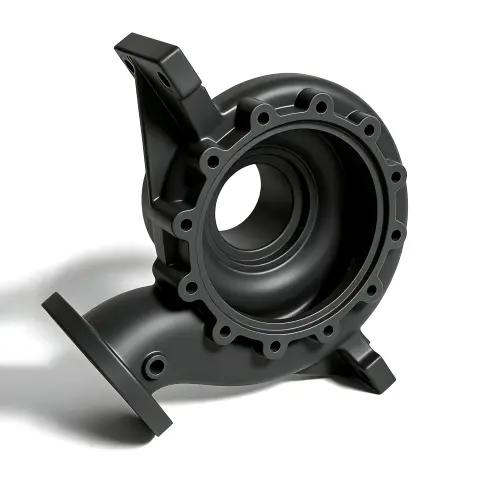
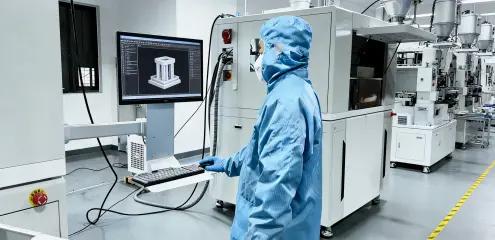
ISO 9001 certified standardized production processes and professional quality inspection ensure stable product quality at a competitive cost, suitable for all scenarios of R&D and small-batch production.
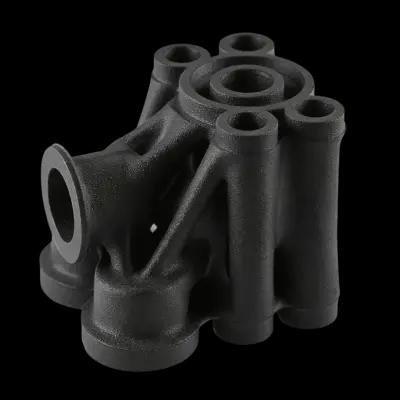
Cost-effective Selective Laser Sintering for functional, wear-resistant parts. Stable laser sintering ensures consistent quality across low-volume production and rapid iteration, reducing costs by up to 35% versus traditional methods.
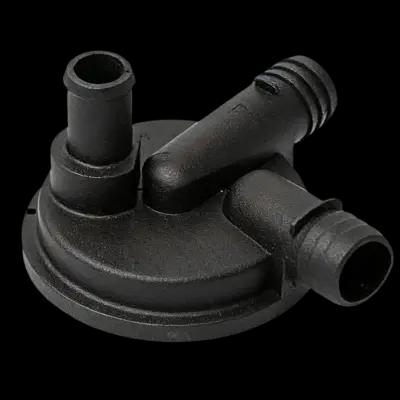
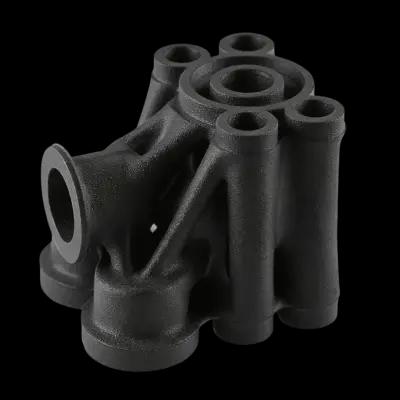
Upload Your Design & Get an Instant Quote Now!
Get instant pricing, project lead times, and DFM feedback
STEP | STP | STL | OBJ | IGS | 3MF | SLDPRT files
File size: 15MB
Trusted by Engineers and Purchasing Leaders at the World's Most Successful Companies







JS Precision delivers 0.3% dimensional accuracy across 18,000+ projects, backed by 15+ years of expertise, ISO 9001:2015 certification, and 99.8% on-time delivery.
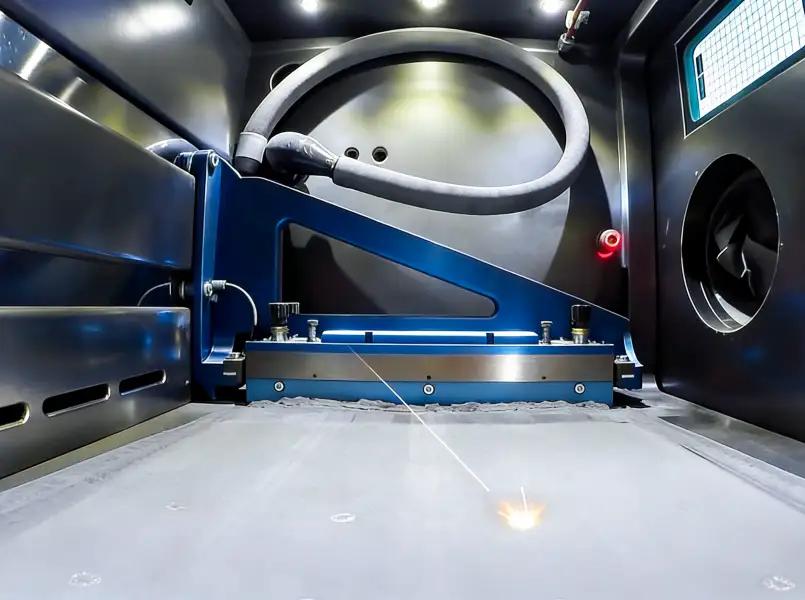
Standardized production processes deliver low-volume orders in 4-6 business days, reducing lead times by 45% compared to traditional manufacturing.
Offers cost-effective materials such as nylon and glass fiber-reinforced nylon, balancing performance and cost for most industrial scenarios.
Supports 1-80 piece low-volume customization without mold opening, meeting multi-variety iteration needs.
Provides common post-processing such as depowdering, sandblasting, and dyeing to quickly enhance part practicality and appearance.
SLS (Selective Laser Sintering) is a 3D printing technology that sinters powder materials with lasers, rapidly producing nylon parts with uniform surfaces and stable mechanical performance.
Capable of forming complex structures without supports, it is ideal for low-volume functional part production and design verification, making it an efficient and cost-effective manufacturing solution.
| Description | Tolerance Notes |
|---|---|
| General Tolerances | SLS Nylon 12 and variants are ±0.015", or ±0.002" per inch, whichever is greater. |
| SLS Nylon 11 and variants are ±0.020", or ±0.003" per inch, whichever is greater. | |
| Results are typical, suitable for low-to-medium volume production. | |
| Build Area | Build area up to 13"×13"×20". Glass filled materials can extend up to 26"×15"×23". |
| Minimum Feature Size | 0.030" or greater. |
| Standard Layer Thickness | 0.12 mm / 0.047" |
This table provides a general tolerance reference for selective laser sintering. Build stresses and geometry (e.g., thick walls, flat parts) may lead to deviations or warpage. For tighter tolerances, submit your design for manual review. General tolerances apply before secondary post-processing unless agreed otherwise.Contact us for more information on tolerances per process.
Contact us for more detailsA versatile material with high toughness and heat resistance, suitable for low-to-medium volume production of dynamically loaded moving parts. It offers excellent flexibility while maintaining tensile strength, making it a practical choice for functional validation.
| Material | Color | Tensile Strength | Tensile Modulus | Elongation |
|---|---|---|---|---|
| PA 11 Black (PA 850) | Black | 7.54 ksi | 261 ksi | 30% |
| PA12 Black | Dyed Black | 6.7 ksi | 276 ksi | 13% |
| PA 12 White (PA 650) | White | 7.25 ksi | 290 ksi | 11% |
| PA12 Value | Off White | 6.7 ksi | 276 ksi | 13% |
| PA 12 Mineral-Filled (Duraform HST) | Light Gray | 5.51 ksi | 450 ksi | 3% |
| PA 12 40% Glass-Filled (PA 614-GS) | White | 7.25 ksi | 522 ksi | 5% |
| Polypropylene Natural | Natural | 2.61 ksi | 123 ksi | 15% |
| TPU 70-A | White | 580 psi | 210% |
Color
Black
Tensile Strength
7.54 ksi
Tensile Modulus
261 ksi
Elongation
30%
Color
Dyed Black
Tensile Strength
6.7 ksi
Tensile Modulus
276 ksi
Elongation
13%
Color
White
Tensile Strength
7.25 ksi
Tensile Modulus
290 ksi
Elongation
11%
Color
Off White
Tensile Strength
6.7 ksi
Tensile Modulus
276 ksi
Elongation
13%
Color
Light Gray
Tensile Strength
5.51 ksi
Tensile Modulus
450 ksi
Elongation
3%
Color
White
Tensile Strength
7.25 ksi
Tensile Modulus
522 ksi
Elongation
5%
Color
Natural
Tensile Strength
2.61 ksi
Tensile Modulus
123 ksi
Elongation
15%
Color
White
Tensile Strength
580 psi
Tensile Modulus
Elongation
210%
Performance values in this table are approximate reference figures, influenced by equipment and process parameters, suitable for low-to-medium volume production and R&D validation, for reference only. For projects with strict performance requirements, targeted testing is recommended.
Process Description: Standardized sandblasting + manual powder removal for efficient residual powder elimination; internal holes can be reamed as needed.
Surface Effect: Uniform matte finish (fine sugar cube texture)
Key Benefits: Cost-effective, suitable for low-to-medium volume baseline surface needs
Process Description: Offers practical color options including black, blue, green, red, and yellow. Black has the best batch stability, with dye penetration depth of ~0.010". Optimized for minimal color variation.
Surface Effect: Uniform coloration with stable hue
Key Benefits: High cost-performance ratio, ideal for R&D validation and low-volume production appearance needs
Process Description: Uses AMT PostPro3D automated vapor post-processing to quickly upgrade surface from matte to semi-gloss, sealing pores and enhancing impact resistance.
Surface Effect: Semi-gloss sealed surface
Key Benefits: High efficiency, supports secondary dyeing, suitable for scenarios balancing appearance and performance
Process Description: Adds abrasive media tumbling after standard finishing to efficiently eliminate print layer lines and soften sharp edges, resulting in a uniform eggshell texture.
Surface Effect: No visible layer lines with softened edges
Key Benefits: Low cost, suitable for surface optimization of low-to-medium volume parts
Process Description: "Copper undercoat + nickel topcoat" electroplating with thickness of 0.004"–0.006". Features a functional rough nickel layer.
Surface Effect: Matte rough nickel finish
Key Benefits: Significantly improves durability and wear resistance, a cost-effective performance enhancement solution
Process Description: Customized processes such as polishing and simple coating available for R&D and low-volume production needs.
Key Benefits: Flexible response, suitable for personalized R&D requirements
We utilize AMT PostPro3D automated vapor smoothing technology, enabling rapid surface upgrading of SLS parts through batch processing to achieve a uniform semi-gloss sealed finish. This allows parts to replace injection-molded components in appearance and basic functionality, ideal for low-to-medium volume production and R&D validation.
The process enhances surface texture and optimizes mechanical performance (improving tensile strength and elongation at break by ~10%). Treated parts support secondary dyeing, are compatible with mainstream processes and materials, and provide a cost-effective surface optimization solution for low-to-medium volume parts.
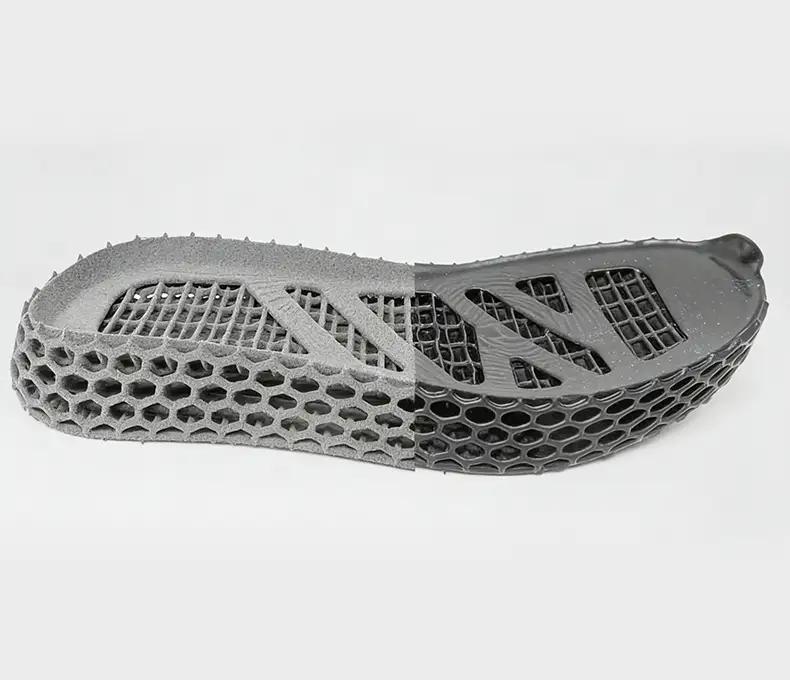
Your R&D and low-to-medium volume production needs require efficient, stable quality support. Our SLS 3D printing services deliver precise parts quickly, balancing efficiency and cost, ideal for prototype validation and small-batch production.
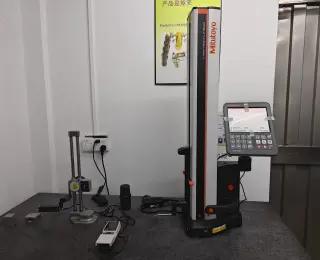
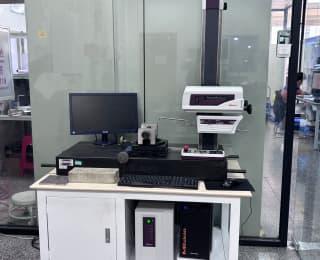
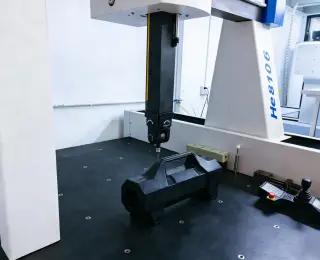
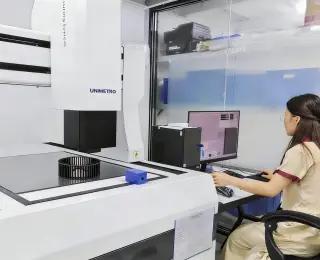
Our production processes are ISO 9001 certified, following standardized quality control systems to provide a solid quality foundation for low-to-medium volume production.
Backed by an experienced technical team and standardized equipment, combined with precision inspection tools, we ensure dimensional accuracy and performance consistency for every batch of parts.
From order confirmation to final delivery, key milestones are synchronized in real time. Complete inspection records and rapid response mechanisms allow you to monitor production progress and deliver with confidence.
With JS Precision's SLS 3D printing services, you get cost-effective quality assurance, predictable lead times, and agile customization support for low-to-medium volume production and R&D projects.
ISO 9001 certified standardized production processes and professional quality inspection ensure stable product quality at a competitive cost, suitable for all scenarios of R&D and small-batch production.
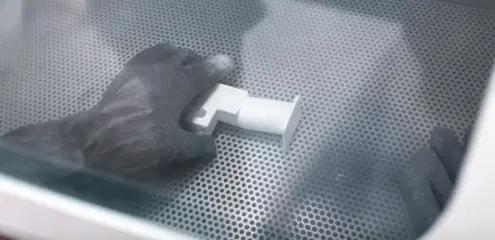
Automated post-processing technology and optimized capacity planning enable most projects to be delivered within 5-7 business days, helping to advance your R&D progress steadily.
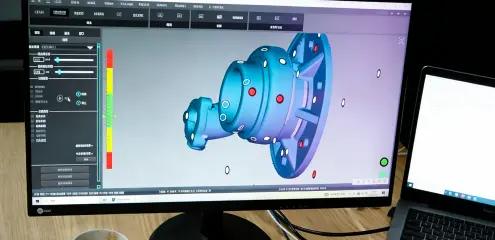
Our agile engineering team provides on-demand DFM feedback, material selection guidance and rapid design iterations to transform your creative concepts into cost-effective customized solutions.
SLS 3D printing offers a cost-effective set of benefits tailored for low-to-medium volume production and R&D, combining speed, flexibility, and reliable performance.
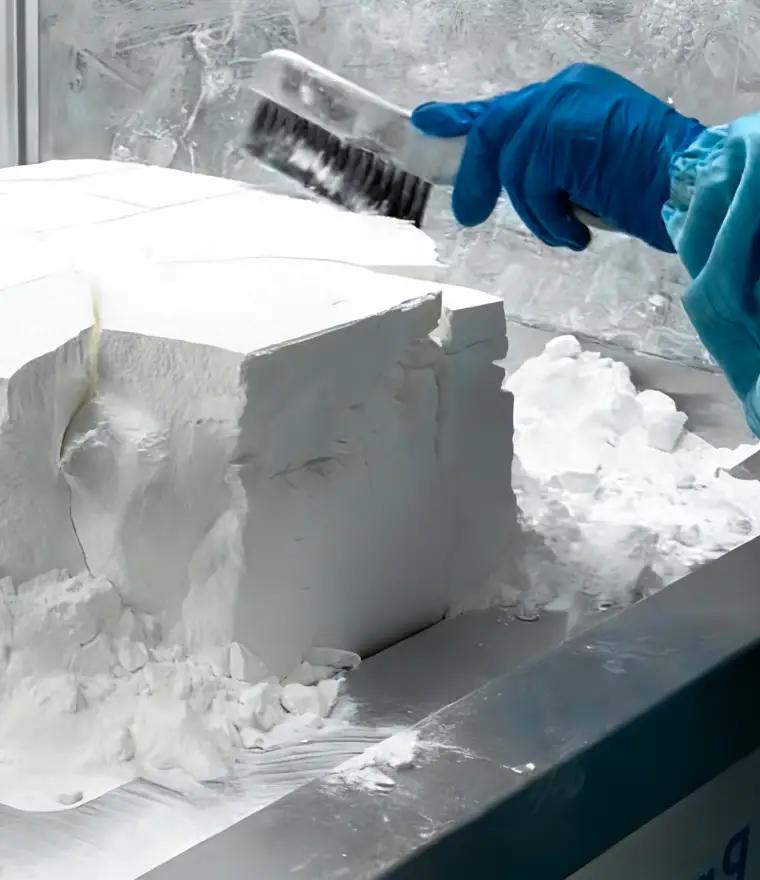
Durable & Versatile Materials
Nylon-based materials provide solid impact strength, moderate flexibility, and good environmental resistance, making them suitable for a wide range of R&D and functional prototype applications.
Fast Turnaround for R&D Agility
Most parts are shipped within 3–4 business days, enabling rapid design iterations and accelerating the pace of R&D projects.
On-Demand End-Use Part Production
SLS enables on-demand production of functional end-use parts, reducing inventory costs and increasing throughput for low-to-medium volume requirements.
Complex Geometry at No Extra Cost
3D printing allows complex designs, including undercuts and intricate features, to be produced without the added cost of tooling or specialized setup.
Scalable From Prototypes to Small Batches
SLS easily scales from single prototypes to small production runs, providing consistent quality without the overhead of traditional manufacturing.
Reliable Precision for R&D
Using advanced SLS technology, we maintain tolerances of ±0.010" or ±0.002" per inch, ensuring dimensional accuracy for prototype and small-batch production.
SLS 3D printing offers agile, cost-effective solutions for R&D teams and low-to-medium volume production, enabling fast iteration and on-demand manufacturing of functional parts.
Create quick physical snapshots of new designs to validate early-stage concepts, reducing the time and cost of design reviews for consumer and industrial R&D projects.
Produce fully functional prototypes with balanced durability and flexibility, including snap-fit assemblies and moving parts, to test performance before full-scale production.
Manufacture end-use parts on demand for small production runs, eliminating the need for expensive tooling and reducing inventory risk for consumer products and automotive components.
Design and produce custom jigs, fixtures, and alignment tools with complex geometries, improving efficiency in assembly and testing processes for small-batch manufacturing.
Develop lightweight, durable prototypes for automotive interior components, brackets, and sensor housings, accelerating vehicle development cycles.
Create functional prototypes for consumer electronics, wearables, and household goods, enabling rapid user testing and design refinement before market launch.
Stay informed with the latest updates and announcements from JS Precision. Learn about our most recent projects.
We offer a cost-effective range including standard nylon, glass-filled nylon for added strength, and flexible TPU, tailored for R&D and small-batch production.
Yes, our agile engineering team provides free DFM (Design for Manufacturability) feedback to improve printability, reduce waste, and enhance part performance.
We provide dyeing services in black, blue, green, red, and yellow, with consistent color results for small to medium production batches.
We offer practical post-processing including standard sandblasting, media tumbling for smooth edges, and vapor smoothing for enhanced surface finish.
Yes, our SLS parts deliver reliable mechanical performance, making them suitable for low-to-medium volume end-use applications.
We work closely with R&D teams to accommodate quick design adjustments, ensuring your prototype evolves efficiently with your project needs.
We use standardized workflows, in-process inspection, and material batch testing to maintain consistent quality across all production runs.
Yes, we provide end-to-end support including design review, material selection, printing, post-processing, and quality validation to streamline your project.
Absolutely. SLS technology enables the production of fully functional prototypes with integrated hinges, gears, and snap-fit assemblies.