English



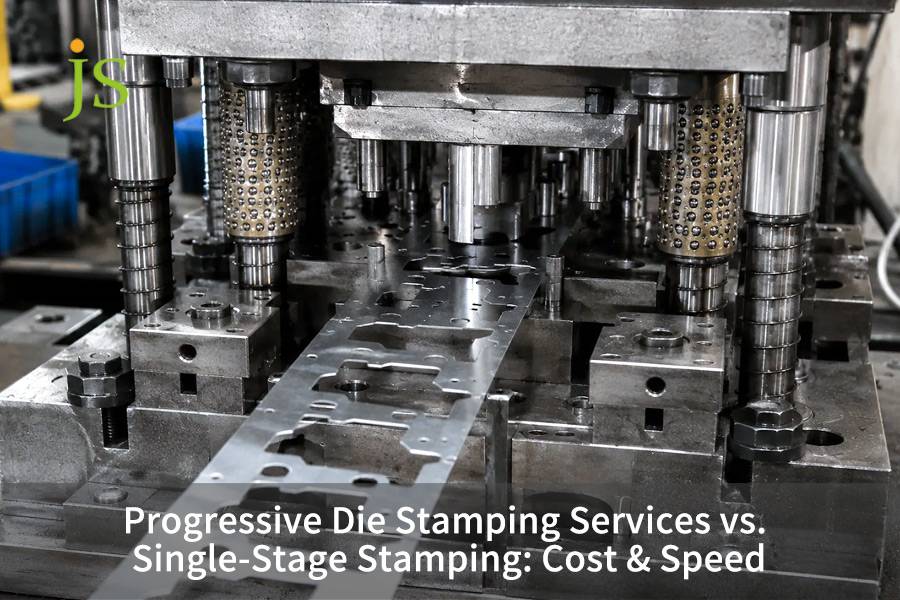

Progressive die stamping services incorporate cutting, bending and forming activities at different stages that are connected in a single press stroke. This method reduces the total cost of parts and lead times. If you need to make less than 10,000 parts, single-stage stamps are more economical and can have a much lower tooling cost (1,500-10,000). For large runs of more than 25,000 progressives dies run faster (up to 800+ SPM) and produce parts with better precision (±0.005 mm).
This guide breaks down the cost, speed, and precision differences between both methods, helping you choose the right approach for your production volume and tolerance requirements.
Technical & Financial Metrics: Progressive Die Stamping Services vs. Single Stage Stamping
|
Evaluation Dimension |
Progressive Die Stamping Services |
Single-Stage Stamping |
|---|---|---|
|
Typical tooling investment |
$15,000 – $150,000+ (high upfront) |
$1,500 – $10,000 (low entry) |
|
Production speed |
100 – 800+SPM (automated strip feeding) |
10 – 40SPM (manual/robot transfer) |
|
Best economic volume |
> 30,000pcs (amortizes tooling) |
< 10,000pcs (prototyping & pilot) |
|
Tolerance capability |
±0.005mm to ±0.02mm (pilot pin locking) |
±0.05mm to ±0.1mm (cumulative errors) |
|
Labor & secondary ops |
Very low (in-die tapping/riveting) |
Higher (multi-step manual handling) |
Data source: JS Precision 2025 market benchmarking, industry average estimates.
Key Takeaways
- Large quantities focus on the selection of dies: The use of progressive dies is ideal for more than 30,000 pieces production, because the high-speed production and low cost of each part will enable to cover the costs of initial cost quickly.
- Variance and quality control: Progressive dies use internal pilot pins to locate each station and eliminate the accumulated errors >±0.05 mm) that single-stage stamping produces per operation.
- Cost-efficient using Chinese supply chain: Reduction of EU and American tooling development cost by 40%-60% through the utilization of China's accurate progressive die manufacturing ability.
Why Trust JS Precision’s Progressive Die Stamping Service For High-Speed, Low-Cost Production?
We rely on over a decade of industry experience when it comes to serving automotive and electronics OEMs. Our reliability in progressive die stamping is based on getting the same great results every time instead of promising just words. A customer (European connector manufacturer, JP-STAMP-2024-017) asked for 2 million terminals with tolerances ±0.008 mm per year. We produced a progressive die consisting of 22 stations with carbide punches (HRC 92) and an in-die sensing system. During the T2 trial, a punch broke after a minor misfeed, we decided to upgrade to a dual-sensor redundancy system, so the scrap rate became 0.03%. It is this on-site problem-solving ability that keeps customers choosing us.
ISO 2859-1:2026 specifies AQL sampling plans for lot-by-lot inspection. For critical stamped parts, we apply AQL 0.065 (normal level II) to ensure fewer than 0.065% defective items per batch.
JS Precision has installed a full in-line 100% CCD inspection system at every progressive die manufacturing line which keeps the defective rate below 0.02% even if the lines run at 400 SPM (stamps per minute). You get the same top-notch parts from batch to batch without additional costly operations.
You can easily check how JS Precision progressive die stamping service is able to deliver your precision parts by simply uploading your CAD files for an entirely free DFM analysis.
How Do Tooling Costs Differ Between Progressive Die Stamping Services and Single-Stage Stamping?
The cost for progressive die stamping services can range between 15,000 and 150,000 while a single stage die ranges between 1,500-10,000. For a high production volume, the unit price for progressive die may reduce to less than $0.01 due to amortization.
Breakdown of the Tooling Cost Components:
- Engineering & Design of Die Plate: More stations and larger die plates surfaces will lead to a significant increase in CNC machining time.
- Punch/Die Material Selection: D2 steel (HRC 58-62) offers lifespan of about 500,000 stamps, where-as Tungalloy (HRC 90+) can be used up-to 5 million stamps. Costs of materials make up about 30-40% of overall progressive die tooling cost.
- JS Precision's On-Site/CNC Machining & Precision Design: A die's life can be increased by about 40 percent and at the same time the progressive die tooling cost can be lowered about 45 percent by improving blanking clearances and strip layout.
Comparison of Machine Occupancy Costs: Single-Stage Dies vs. Progressive Dies
- Single-Stage Dies: These type of stamping processes utilize 3 to 5 different individual die sets for each operation. These die sets must occupy the press time, the total machine-time cost is three to five times more expensive than that of progressive dies!
- Progressive Dies: With the aid of progressive dies, you can accomplish all the required operations: trimming stamping bending, and deep drawing within one single mold and at a time the press machine delivers the work part.
Comparison of Properties and Costs for Various Die Steels
|
Die Steel Grade |
Hardness (HRC) |
Wear Resistance |
Tooling Cost Multiplier |
Typical Die Life (strokes) |
Source |
|---|---|---|---|---|---|
|
D2 (AISI) |
58–62 |
Moderate |
1.0× (baseline) |
500,000 |
MatWeb Material Property Data |
|
SKD11 (JIS) |
60–62 |
High |
1.3× |
1,200,000 |
ASTM A681-08 Standard |
|
DC53 (Daido) |
62–64 |
Very High |
1.6× |
2,000,000 |
JS Precision 2025 tooling test report |
|
Tungsten Carbide |
90–92 |
Extreme |
4.0× |
5,000,000+ |
Siemens Industry White Paper 2024 |
Data sources: MatWeb material database (physical parameters for D2/SKD11). Siemens 2024 Metal Forming Industry White Paper (economic analysis of cemented carbide).
ASTM A681-08 stipulates: The hardness of the tool steel after quenching and tempering shall not differ from the specified minimum by more than 2 HRC points, and the carbide uniformity rating shall reach or exceed ASTM E 112 grain size level 8.
Upon receiving all die steel, JS Precision performs hardness random samples and metallographic analyses. Our objective is to guarantee, in every batch of SKD11, the carbide distribution regularity is level 8 at minimum of ASTM E 112 or higher, in turn, assuring a consistent die life of more than 2 million strokes straight from raw material.
The main advantage of China progressive die stamping service, is the clustering effect of the die supply chain: in the Dongguan area, from DFM (Design for Manufacturability) up to T1 trial stamping the whole cycle can be finished within 3-5 weeks.
To get an approximate progressive die tooling cost budget for your specific parts, send over your drawings and also do an online inquiry to JS Precision, you should get a free quotation with all costs broken down.
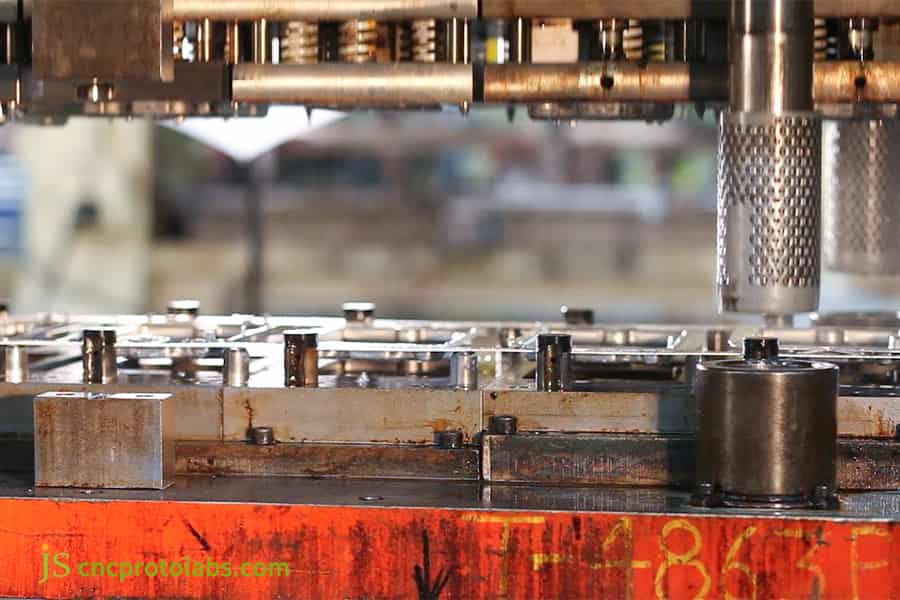
Figure 1: Progressive die stamping tooling and machinery for cost comparison analysis.
How Do Stamping Production Speeds and Cycle Times Impact Your Final Unit Cost?
High speed progressive die stamping can go up to 100 to more than 800 SPM and a finished part is produced per stroke. Single stage stamping necessitates a robot or manual transfer of workpiece at each station resulting in speed limitation which is only 10-40 SPM and at the same time unitary per labor cost increases.
Quantitative Impact of Stamping Cycles on Unit Cost
- High-speed progressive die (300 SPM): Manufacturing 100,000 brass terminals can be accomplished by just about 5.5 labor hours.
- Single-stage process with three operations (20 SPM): Manual handling and loading/unloading take up over 250 labor hours, labor cost difference is 45 times.
- In progressive die stamping process,strip feeding and pitch control are critical. Automatic decoilers and feeders supply materials with ±0.02 mm precision that guarantees consistent positioning in each step.
Protection Technology for High-SpeedOperation
- Embedded die sensing technology: Real-time detection of feeding issues with reaction time of <5 ms can protect the die.
- High speed progressive die stamping systems from JS Precision are equipped as standard with dual-sensor backups, so in case one of the sensors fails, it does not lead to a large volume of rejected parts.
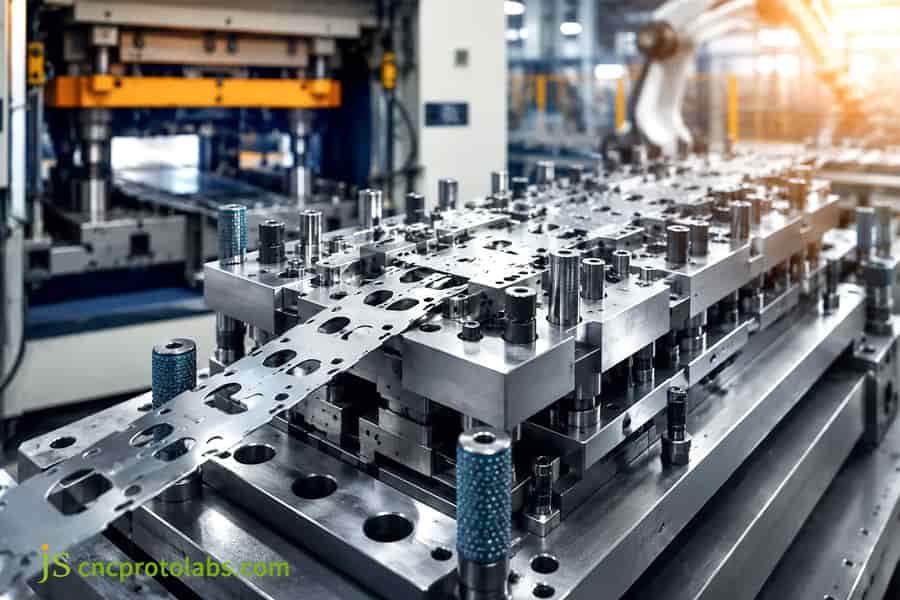
Figure 2: High speed progressive die stamping production line impacting cycle times.
How to Calculate the Production Volume Break-Even Point Between Progressive and Single-Stage Dies?
Progressive die stamping vs single stage stamping cost breakeven usually lies in the range of 25,000 to 40,000 pieces. When a quantity is just a couple thousands of pieces it pays to use simple single-stage dies for better cash flow, on the flip side, when a run reaches 30,000 or more per-part savings from progressive dies cover the cost of tooling.
Engineering Decision Formula
Total Cost = Tooling Cost + Volume × (Material Cost + Labor Cost + Machine Rate)
The engineering decision formula indicates that the total cost consists of one-time mold investment and material, labor, and machine hour costs that increase linearly with production. Understanding this relationship helps to accurately locate the breakeven point.
- Utilization of material: Since progressive dies carry a strip on the side, the scrap rate is usually 5%-12% higher than that of the single-stage blade shearing. For expensive materials like SUS304 or C1020, accurate nesting is a must to decrease the break-even point.
- Annual Demand (EAU) Decision Curve: Once the annual demand exceeds 30,000 units, the effort to amortize the progressive die tooling costs rapidly diminishes.
Impact of Different Materials on the Breakeven Point
|
Material |
Unit Price ($/kg) |
Scrap Rate (Progressive) |
Scrap Rate (Single-Stage) |
Breakeven Shift (pcs) |
Source |
|---|---|---|---|---|---|
|
SUS 304 (0.5 mm) |
$4.80 |
12% |
5% |
+6,500 |
Metal Bulletin 2025 |
|
C1020 Oxygen-Free Cu |
$9.20 |
10% |
4% |
+8,200 |
London Metal Exchange 2025 |
|
Al 3003-H14 |
$3.10 |
8% |
3% |
+4,000 |
Siemens Aluminum Forming Guide 2024 |
|
SPCC Cold-Rolled Steel |
$0.85 |
12% |
5% |
+3,200 |
JS Precision 2025 BOM analysis |
Data Source: Metal Bulletin 2025 Stainless Steel Price Index (SUS304).
Strategies to Lower the Breakeven Point
- Better Design: A 5% decrease in the scrap rate will move the breakeven point from 25,000 units to 40,000 units.
- JS Precision's progressive stamping die services through China come with complimentary CAE analysis. The customer is able to decide what layout is the best option during the design stage.
JS Precision will calculate the optimal production breakeven point for you at no cost, and provide you with a detailed cost comparison report for the selection of progressive die stamping vs single stage stamping.
Can Custom Progressive Die Stamping Achieve ±0.005 mm Tolerances for Complex Precision Components?
Custom progressive die stamping can be used to get tolerances of ±0.005 mm to ±0.015 mm using pilot pins and servo adjustment. However, single-stage stamping results in cumulative errors beyond ±0.05 mm.
Precision Control Strategies for Complex Parts
- Automotive Connector Terminals: Contact areas require a deviation of ±0.008 mm, progressive die stamping minimizes the chances of any secondary processing errors because of the multi-station progressive forming and the in-die tapping.
- Medical Micro-springs: The main issue to overcome is the material springback. To overcome this problem, JS Precision uses AutoForm CAE simulation to pre-set the springback compensation angles within 0.3°-0.8°, in this manner, the angular deviation of the finished part is kept under 0.1°.
- Electronic Shielding Cans: The positioning accuracies are held ±0.003 mm at every step through pilot pin guided bending operation that controls the accumulation of tolerances due to series of bending.
Inspection and Quality Control
Optical Projection and In-line CCD Inspection Systems are the kinds of devices that allow 100% real-time quality checks on important holes like the diameter and position to be 100% checked and the speed of inspection can go up to 600 parts per minute.
Send in your parts for a free DFM (design for manufacturability) analysis by JS Precision to check if your parts can fall within the ±0.005mm tolerances achievable by custom progressive die stamping.
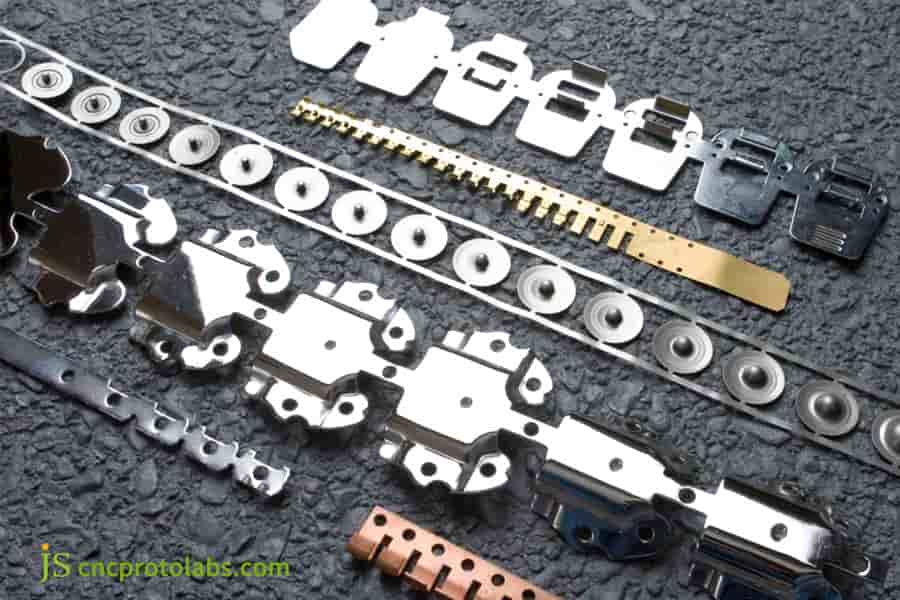
Figure 3: Precision metal components produced via custom progressive die stamping.
Why Partnering with a China Progressive Die Stamping Service Supplier Reduces Total Procurement Costs?
China progressive die stamping service suppliers assist overseas customers by lowering their tool cost to 40%-60% of the initial price. Meanwhile, the suppliers guarantee that their quality systems conform to the IATF 16949 / ISO 9001. The developed mold industry infrastructure in China makes the progressive die development quicker with only 3-5 weeks.
Total Cost of Ownership (TCO) Advantage Analysis
- Mold Development Costs: The concentration of the mold industry in the city of Dongguan makes it much less expensive, about 40-60% cheaper per mold set, to use technologies like GF Charimilles WEDM, precision EDM and sourcing of mold steel when compared to Europe and North America.
- Material Compliance: JS precision gives RoHS/REACH certificates and CMM inspection reports to help reduce compliance risks products exported to EU facing.
- Logistics and Communication: By having an English/Chinese fluent engineers team, the company can provide DFM support 24/7. DDP logistics will make sure that the products will be shipped to any part of the world within 5-7 working days.
Common Concerns and Answers for Overseas Buyers
- Inter-countries Communication: The project manager of JS Precision has over 15 years of experience in foreign trade and can seamlessly connect with the technical specifications of European and American customers.
- Constant Quality: Progressive die stamping services have passed PPAP Level 3 certification at JS Precision factory, and each batch comes with a full-size inspection report.
Comparison of Mold Development Costs and Lead Times: China vs. Europe/USA
|
Cost Component |
China (JS Precision) |
Europe (Germany avg.) |
USA (Midwest avg.) |
China Savings |
|---|---|---|---|---|
|
Die design (CAD/CAE) |
$2,500 |
$5,800 |
$6,200 |
57%–60% |
|
CNC machining (die base) |
$8,000 |
$18,000 |
$19,500 |
56%–59% |
|
WEDM/EDM finishing |
$3,500 |
$7,200 |
$8,000 |
51%–56% |
|
T1 trial & debugging |
$1,800 |
$4,500 |
$5,000 |
60%–64% |
|
Total lead time |
3–5 weeks |
6–9 weeks |
7–10 weeks |
30%–45% faster |
Data Sources: Gartner 2025 Manufacturing Benchmark Report (Europe/USA mold design labor rates). China Die & Mold Industry Association 2025 Annual Report (Pearl River Delta average CNC machining prices).
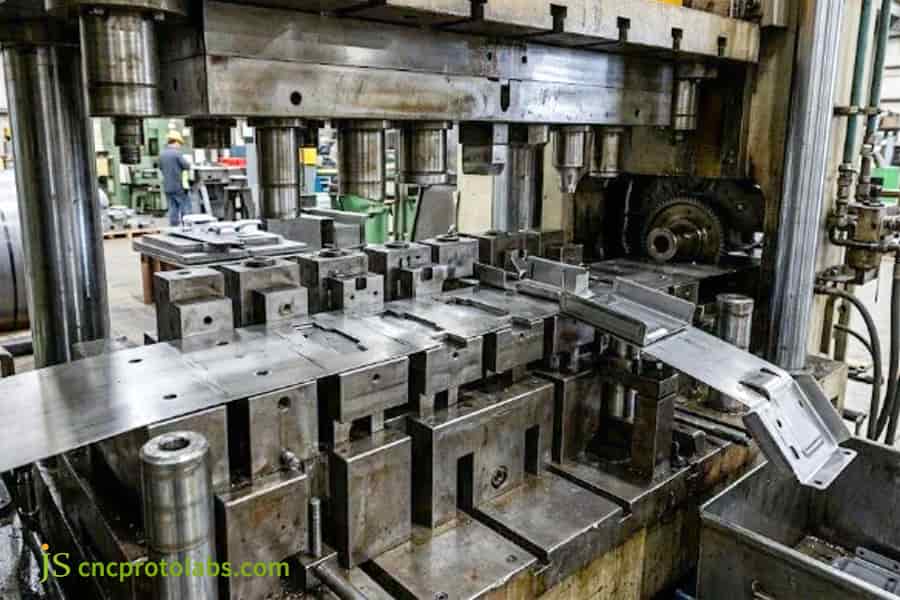
Figure 4: China progressive die stamping service factory offering cost effective solutions.
JS Precision Engineering Case Study: Custom Progressive Die Stamping for EV Thermal Management Components
JS Precision's custom progressive die stamping design which is In particular designed for a major European EV components supplier not only resulted in a 52% reduced production cost but also reduced the delivery time from 8 weeks to 3.5 weeks. This was through china progressive die stamping service.
Customer Problems
- Complex Aluminum 3003 Heat Sink Shape: Involving 12 folds and 24 closely positioned micro-holes, the conventional one-step die process had caused positional tolerances to go out of control (excessive of ±0.08 mm).
- Defects were too High (14.5%): It took too long to process, could not fulfill mass production delivery requirements.
JS Precision Solutions
- Production of an 18-station high-precision progressive die: Removal of bending springback by performing AutoForm CAE analysis, implementation of bidirectional pilot pin positioning system and carbide punches.
- Addition of a CCD visual inspection station on-line: Online checking of pivotal dimensions through real-time feeding pitch change based on feedback from the system.
Lessons Learned
During the initial T1 trial, we observed the problem of galling at workstation 8 from accumulated aluminum chips (surface roughness was measured up to Ra 3.2 μm). The situation was turned around with sticking being solved by the team through introduction of punches coated with nano TiCN with PVD process and introduction of an MQL (Minimum Quantity Lubrication) system.
Final Results
- Continuous stamping speed has reached 180 stamps per minute while still ensuring the dimensional differences of all the pieces are kept below ±0.008 mm.
- Average Cpk came up to 1.67 (referenced to JS Precision in-house quality check report, November 2025), meanwhile the scrap rate was reduced from 14.5% to 0.02%.
Feel free to share the details of bottlenecks you have faced with the large-scale manufacturing of complex metal parts, and JS Precision will analyze the drawings and come up with a tailored progressive die stamping option.
Why Choose JS Precision as Your Strategic Progressive Die Stamping Manufacturer?
Cooperating with JS Precision for progressive die metal stamping services is a way of benefiting from China's 15+ year legacy in technical craftsmanship and having the high-precision automated equipment and strict ISO 9001:2015 quality system compliance of a top factory under your belt.
- In-house mold workshop: Mitutoyo CMMs, Sodick EDM, and GF wire-cut EDM machines are among the equipment present. Mold machining accuracy of ±0.002 mm can be expected.
- High-speed precision press fleet: Presses capable of producing components in a wide range from 25 to 400 tons, including stamping progressive dies for thin-film springs and structural components, can provide quality metal stamping services.
- Rapid quotation system: After receiving full BOM lists, including DFM suggestions, customers can get quotations as soon as within 24 hours.
- NDA & IP Protection: Confidentiality agreements will be signed and CAD drawings will be kept encrypted, worldwide DDP logistics will give the customer the assurance of the safe delivery of the goods.
FAQs
Q1: What is the main difference between progressive die stamping services and single-stage stamping?
In progressive stamping, the work is done in multiple stations through the die in one press cycle, while a single-stage stamping refers to doing one operation in each press cycle. Progressive dies are quite automated and can greatly bring down the per-piece cost at a large production level.
Q2: How much does progressive die tooling cost on average?
The costs of progressive die tooling are in a range of about $15,000 to $150,000 plus given the number of stations and material hardness. The initial investment is spread over large quantity of orders and leads to a reduction in the cost per unit by over 60%.
Q3: What production volume makes progressive die metal stamping services cost-effective?
Progressive die stamping is most advantageous if you produce over 25,000 to 40,000 pieces. It allows very high production rates (as high as 800 SPM) and fewer labor hours which enable a fast return on the die investment.
Q4: Can custom progressive die stamping handle high-precision part requirements?
Yes. Custom progressive dies will produce high-accuracy parts at an acceptable tolerance level of ±0.005 mm up to ±0.015 mm repeatedly. Guide pins within the die do away with the cumulative errors normally tied to multiple re-clamping operations. This way, a consistent level of quality is guaranteed even after millions of parts have been made.
Q5: How long does it take to design and manufacture a progressive stamping die in China?
Generally, a progress die fabrication cycle in China lasts from 3-6 weeks. JS Precision, benefiting from a grouped supply chain, delivers products up to 30% faster than those of the Western manufacturers.
Q6: What materials are best suited for the progressive die stamping process?
Progressive dies are mainly used to stamp ductile metals which come in coils. Materials like cold-rolled steel, stainless steel, aluminum alloys, and brass of thickness from 0.05 mm to 4.0 mm are suitable for efficient stamping using this process.
Q7: How does JS Precision ensure quality control for mass-produced stamped parts?
Apart from utilizing the IATF 16949 standard, JS Precision ensures the quality of each process at its control by making use of in-die sensors combined with CCD optical equipment, offline checks are carried out by Mitutoyo CMM with PPAP Level 3 reports being included in the process.
Q8: How can I request an instant tooling and part quotation from JS Precision?
Just send your 3D/2D CAD drawings and JS Precision will give you an all-inclusive quote and the evaluation of (Design for Manufacturability) of part/tooling in less than one workday.
Summary
A progressive die stamping is a mass production method which delivers cost savings, high-speed production, and ±0.005 mm repeatability. Besides, by collaborating with an experienced Chinese manufacturer you are able to get down the upfront tooling costs while maintaining your product's quality.
Looking to lower the cost per unit and shorten the lead time for your next stamping project? Reach the engineering team at JS Precision. Send your CAD models and drawings to get a free DFMA review and a very competitive quote within 24 hours. JS Precision will help you streamline the whole stamping process starting from die design to mass production.

Disclaimer
The contents of this page are for informational purposes only. For JS Precision Services, there are no representations or warranties, express or implied, as to the accuracy, completeness, or validity of the information. It is the buyer's responsibility to identify specific technical requirements and request a formal parts quotation. Please contact us for more information.
Resource