English



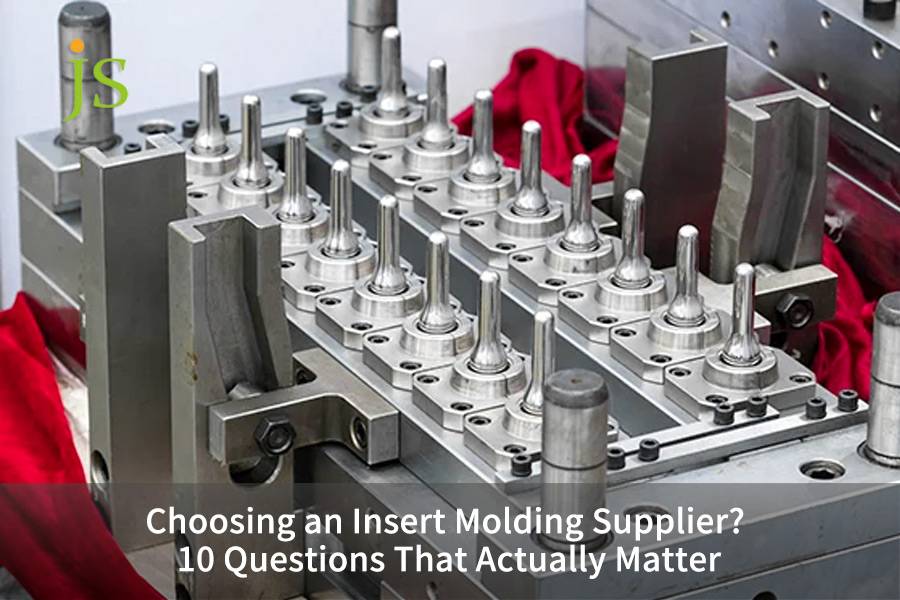

Insert molding service is a very precise manufacturing process that combines metal inserts and engineering plastics. It mainly addresses the issues of insufficient bonding strength between different materials, poor assembly accuracy, and weak sealing performance. The best technology can even realize the positioning of the inserted parts within the mold cavity to be ≤±0.01 mm. Being a precision manufacturing plant that is regularly audited by multinational corporations from all over the world, JS Precision is well aware of the main concerns engineers have when choosing custom insert molding service suppliers.
From time to time, quite a few R&D and procurement people get drawn to the freezer prices of mold opening or are tricked by the fuzzy quality promises only to be faced with such problems as insert displacement, joint surface cracking, seam overflow in mass production, which cause downtime of the entire project, etc. This paper doesn't get into basic scientific principles but takes the engineering side of things, giving a few quantifiable technical indices for insert injection molding audits that come up just in time for your project to go smoothly from drawings to mass production.
You will discover:
1. Proof that the hardware can maintain precise mechanical positioning within the mold cavity (≤±0.01 mm).
2. How to identify and prevent thermal stress microcracks in the transition of dissimilar materials.
3. Process locking and IATF 16949 audit checklist.
4. In-depth analysis of the dissimilar terminal leak-proof customized medical-grade case from our portfolio.
Please take advantage of this purely technical review list when you check out your next injection molding supplier.
Insert Molding Service Core Audit Indicators Overview
|
Audit Checklist Core Questions
|
Elite Vendor Hardcore Benchmarks
|
JS Precision Technical Solutions
|
|
insert molding service positioning tolerance
|
Mechanical positioning accuracy in cavity ≤ ±0.01 mm
|
Rigid interference limit pins + hydraulic secondary clamping mechanism
|
|
insert molding quality control closed loop
|
100% online dynamic infrared vision & pressure monitoring
|
Integrated RJG in-mold pressure sensors + CCD automatic sorting
|
|
insert molding supplier audit standards
|
IATF 16949 system + central closed feeding system
|
MES full-process traceability + parameter barcode freezing
|
|
Dissimilar material joint flash control
|
Joint flash ≤ 0.02 mm
|
Adjustable floating insert + elastic resin sealing structure
|
Key Takeaways
- You should check if the supplier can position in-mold inserts to a tolerance of ≤±0.01 mm and if they have infrared preheating temperature control technology.
- Do not consider suppliers who do not have in-mold pressure sensor monitoring and who are not certified to IATF 16949 Automotive/ Healthcare System Factories.
- At least in the beginning, a DFM (Digital Factors Analysis) cracking failure report matching the thermal expansion coefficient of the dissimilar materials is a requirement.
Why Trust JS Precision's Insert Molding Service?
JS Precision has been deeply involved in precision insert injection molding mass production for over a decade. We have a strong capability to verify all processes in our factory, which can help clients to effectively minimize quality risk during mass production.
From medical monitor terminal projects, we understood that the biggest reason for suppliers to face mass production failures is the difference between theoretical certifications and actual implementation capabilities. In fact, this is why many suppliers fail in mass production. Also, all automotive-grade production lines in our factory are IATF 16949:2016 compliant.
You will be collaborating with a manufacturing team that has been technically audited by leading global multinational corporations for years and has intimate knowledge of the tough entry standards of various industries. Our engineering team, with 8+ years experience, can not only handle DFM optimization internally but also interact directly with client R&D departments. The entire procedure is based on measurable technical parameters, rather than fuzzy quality promises.
We do not turn to external resources for any key operations, mold-making, insert-readiness, and injection-molding are all done in-house, which brings about the possibility of total-chain control. Robust system accreditation, coupled with first-hand operational experience is the biggest reason behind consistent aquisition of projects.
You can contact our senior application engineers to obtain a complete white paper on insert molding service manufacturing capabilities as a technical reference benchmark for your supplier selection.
Can Your Vendor Control Insert Molding Service Positioning Tolerances Within Plus or Minus 0.01 mm Sustainably?
Exactly controlling the positioning of metal pins or contacts inside the mold cavity within 0.01 mm is a must for a professional insert molding service. If the vendor's capability is only to achieve the industry norm of 0.05 mm, then high-pressure melt erosion will not just cause lateral displacement but also warping of the pins.
How shear force of the melt results in the displacement of an insert
With the custom insert molding service, the plastic melt, during the high-pressure injection molding cycle, hits the metal insert at a high speed, thereby causing the lateral shear force. With a melt flow velocity greater than 300 mm/s, inserts that are loosely fastened will not only move but the movement will be in proportion to the number of cavities ones.
The hardware credentials for rigid positioning mechanisms
These are the physical core dimensions of hardware that are the requirements of qualified OEM insert molding partner. At the site, the verification can be based on these priorities:
1. Sturdy interference limit pins and accurately stepped holes should be utilized inside the mold to physically hold the lateral displacement of the insert to a minimum.
2. A secondary hydraulic clamping mechanism should be considered for mitigating local offsets that are a result of uneven pressure in the flow channels of multi-cavity molds.
3. A dynamic infrared detection system must be arranged within the mold cavity to filter out offset defective products on-line through closed-loop error prevention mechanism.
Comparison of Tolerance Performance of Different Insert Positioning Schemes
|
Positioning Solution
|
Single-cavity Positioning Tolerance
|
16-cavity Mass Production Tolerance
|
Applicable Insert Type
|
Mass Production Stability
|
|
Manual placement + groove limit
|
±0.05 mm
|
±0.12 mm
|
Large-size inserts
|
Poor
|
|
Ordinary mechanical limit
|
±0.03 mm
|
±0.07 mm
|
Medium-size inserts
|
Average
|
|
Rigid pin + hydraulic clamping
|
±0.01 mm
|
±0.015 mm
|
Precision small inserts
|
Excellent
|
|
Full-surround clamping sleeve
|
±0.005 mm
|
±0.008 mm
|
Micro terminal inserts
|
Outstanding
|
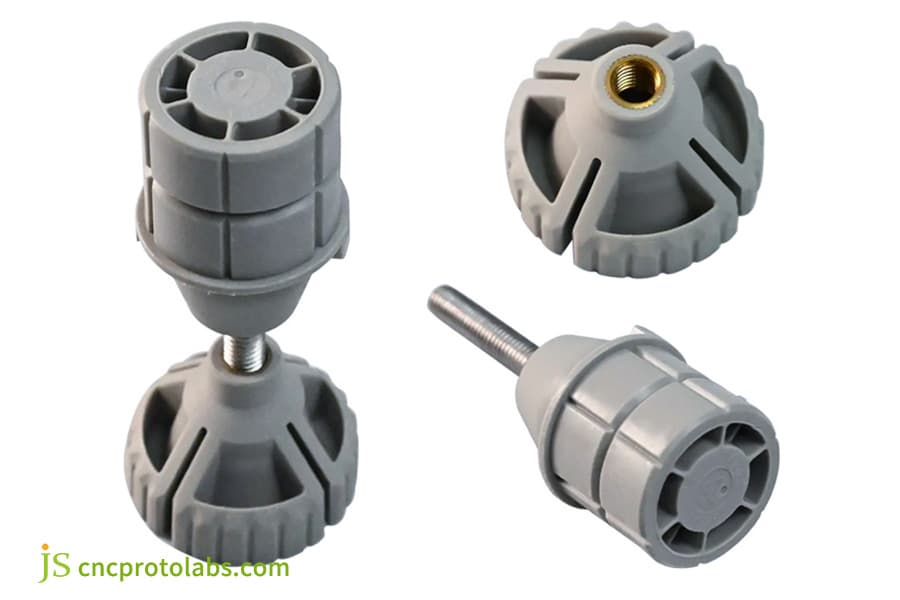
Figure 1: Gray plastic knobs with integrated brass threaded inserts showcasing precision insert molding.
Does Your Insert Molding Supplier Selection Process Include Thermal Stress Cracking Failure Analysis for Dissimilar Materials?
The hard core insert molding supplier selection must review the supplier's ability to control the imbalance of metal and plastic thermal shrinkage rates. Only top-notch insert molding suppliers can eliminate the microcracks caused by stress concentration in the injection molded part after determining the difference between the linear expansion coefficients of the materials.
The Cracking Principle of Thermal Expansion Mismatch in Dissimilar Materials
The linear expansion coefficients of metals and engineering plastics are vastly different. Different cooling and shrinkage rates will lead to the generation of internal stresses at the interface. If the stress is greater than the bonding strength, microcracks will be initiated. This is a potential problem that should be addressed during the insert molding supplier selection process.
Comparison of Linear Expansion Coefficients of Common Inserts and Plastic Materials
|
Material Type
|
Specific Material
|
Coefficient of Linear Expansion (10^-6 /°C)
|
Applicable Operating Temperature Range
|
Common Application Scenarios
|
|
Metal insert
|
Brass H59
|
20.6
|
-40°C~120°C
|
General electronic terminals
|
|
Metal insert
|
Stainless steel SUS316
|
16.0
|
-40°C~200°C
|
Medical & food-grade parts
|
|
Engineering plastic
|
PBT+30%GF
|
25.0
|
-40°C~140°C
|
General electronic structural parts
|
|
Engineering plastic
|
PPS
|
12.0
|
-40°C~220°C
|
High-temperature oil-resistant parts
|
Core Engineering Methods for Relieving Thermal Stress
Mass production implementation requires the following three core measures:
- Pre-heat metal inserts to 120℃-150℃ before injection molding, achieving precise temperature control. 1. Decrease the temperature difference with the melt by ±3℃.
- Using knurling and micro-under-cut grooves processing on metal surface to increase the bonding area and also release some internal stress.
- Change the thickness of the wall of the transition adhesive area and its stress concentration by making a smooth arc transition.
The thermal stress control of heterogeneous materials directly determines the long-term service life of insert molding service products. You can submit your material combination plan, and our material engineers will provide you with a customized thermal shock resistance benchmark and crack risk assessment report.
How Does an Elite Custom Insert Molding Service Eliminate Joint Flash via Elastic Tooling Sealing Structures?
High-quality custom insert molding service providers usually set flash control at the metal-plastic interface to ≤0.02 mm at the mold designing phase. Conventional molds that employ rigid sealing are susceptible to harm the metal parts or producing substantial burrs because of ineffective sealing.
The Problem of Metal Springback for Sealing Structures
Due to their nature, stamped metal parts have a springback allowance of ±0.03 mm, which rigid sealing structures are unable to handle. Overly tight sealing can break the metal plating, and an eventual loose fit might lead to overflow and burrs. With proper design, these issues can be eliminated during the early steps of DFM insert molding service.
Floating Insert Sealing Design Thinking
The appropriateness of the sealing plan a lot determines the rate of burr defects in later insert molding quality control. One has to choose the sealing system based on the actual circumstances. The primary decision-making rule is:
1. In the case that the springback of the metal component is > 0.02 mm, a floating insert sealing structure with adjustment capability must be employed to linearly counteract the dimensional variations through elasticity.
2. For a melt comprising a flowing nature (e.g. PA66), the venting groove depth should be regulated to within 0.015 mm to equilibrate venting and preventing overflow.
3. For the insert surface having a soft plating, an elastic resin sealing blind block should be employed so as not to harm the plating.
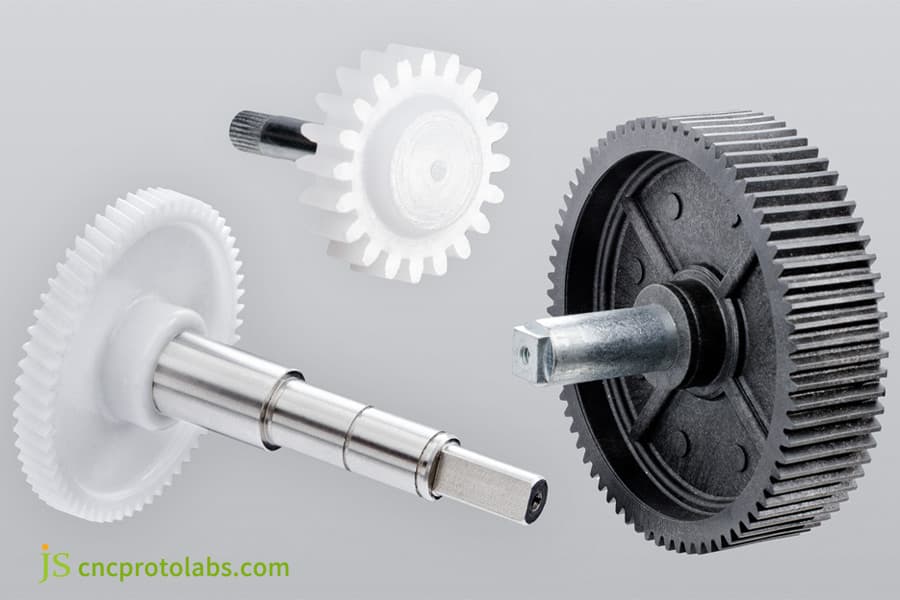
Figure 2: White plastic gears with metal shafts produced via custom insert molding for industrial applications.
Does the Factory Insert Molding Quality Control System Integrate In-Mold Pressure Sensors and 100% Automated Vision Inspection?
Manual sampling is out of the question when it comes to true insert molding quality control. Professional B2B manufacturing partners have to be outfitted with in-mold pressure sensors and 100% online CCD vision inspection systems to detect defects of 100 PPM (parts per mille) in real time, reversed polarity and missing inserts being just the examples.
The Process Value of In-Mold Pressure Monitoring
The in-mold pressure curve at the holding pressure stage is an accurate marker of the filling condition inside the cavity. With the use of RJG in-mold pressure sensors to get data in real time, a deviation can be spotted within 0.1 seconds and defective products can automatically be segregated, this way fulfilling the condition that the critical dimension CPK 1.33, which is a major verification parameter during insert molding supplier audit.
Standards for Automated Visual Inspection
Having an online quality control system at a high-end custom insert molding service is a must and the system must comply with these requirements:
- The inspection system needs to be a part of the end effector of the part-picking robot and the complete dimensional inspection of a single part should be done within 0.5 seconds.
- The inspection dimensions must encompass the main defects that are, pin coplanarity, positional accuracy, missing inserts, and reverse polarity.
- Inspection data must be automatically uploaded to the MES system to realize the full-process traceability and root cause analysis of defective products.
Comparison of Capabilities of Mainstream Quality Control Solutions
|
Quality Control Solution
|
Defect Detection Rate
|
Single-piece Inspection Duration
|
Traceability
|
Applicable Mass Production Scale
|
|
Manual visual inspection
|
60%~70%
|
3~5 s
|
None
|
Small batch, low requirement
|
|
Ordinary offline CCD
|
85%~90%
|
1~2 s
|
Weak
|
Small & medium batch
|
|
Online CCD + in-mold pressure sensor
|
Above 99.9%
|
Within 0.5 s
|
Full closed loop
|
Large batch, high precision
|
|
Online CCD + pressure + thermal imaging
|
Above 99.99%
|
Within 0.8 s
|
Full-dimensional traceability
|
Medical / automotive grade
|
A well-established closed-loop quality control system is the core guarantee for zero defects in mass production.You can contact us to access automated inspection videos and third-party Zeiss CMM measurement reports related to insert molding quality control, providing direct verification of our process control capabilities.
Will You Live-Verify Central Feed Systems and Process Parameter Locking During an Insert Molding Supplier Audit?
During an insert molding supplier audit, it is very necessary to not only check the implementation of the IATF 16949 system but also review the locking mechanisms of key process parameters and the operation of a fully automated centralized feeding system (e.g. electronic locking mechanisms for key process parameters and the actual operation of the fully automated centralized feeding system). In other words, not just checking paper certificates.
Main Focus Areas for On-Site Verification of the Central Feeding System
Besides potentially avoiding water absorption secondary by raw materials, a fully enclosed central vacuum feeding system can be used to completely eliminate such problems. With a drying system, moisture content for nylon and other hygroscopic materials can be controlled below 0.02%, thereby eliminating part defects due to hydrolysis and silver streaking.
Standards for Process Parameter Locking System Implementation
Locking of process parameters is the key prerequisite for insert molding quality control. On-site audits should emit these items for verification:
1. Core process parameters of the injection molding machine must be electronically locked such that the general worker does not have rights to change them.
2. Any parameter changes must be preceded with an Engineering Change Notice (ECN) and the document must be complete at all times.
3. All productive data must synchronize to the MES system to enable traceability of the whole chain from the raw materials to the finished products.
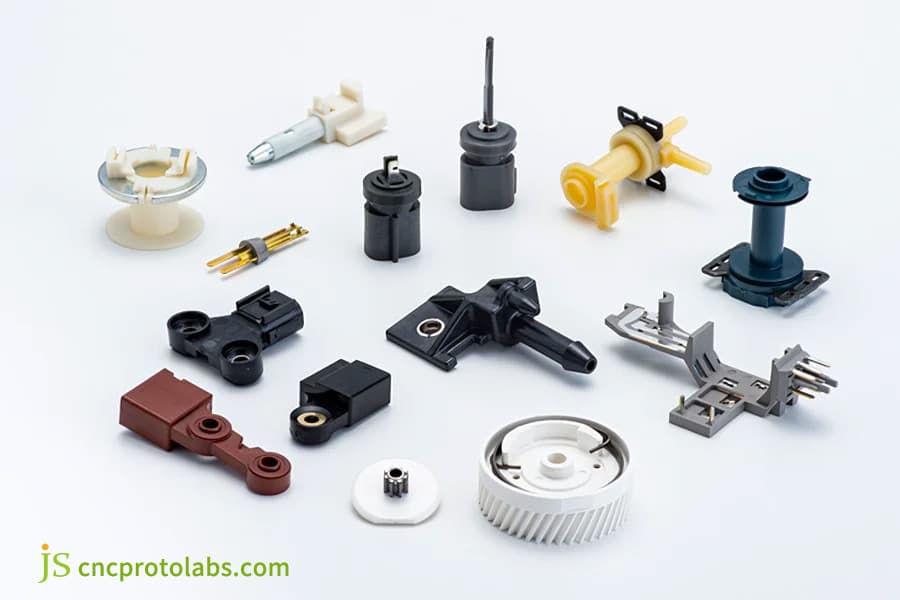
Figure 3: Assorted electronic plastic components with metal inserts highlighting insert molding complexity.
Can Your OEM Insert Molding Partner Leverage Pre-Moldflow Analysis to Eliminate Weld Lines and Voids Prior to Tooling?
An experienced OEM insert molding partner will ensure the molding quality from the start, even before the mold is opened. Through extensive use of specialized mold flow analysis software, the production of internal pores and the formation of weld lines at the metal insert by the plastic melt can be spot on predicted and avoided at the design phase.
The Fluid Dynamics of Weld Line Formation
When the plastic melt meets the metal insert in the mold cavity of the metal insert molding service, it will be divided, and the two fluids will meet on the side of the insert that is sheltered from the wind. Weld lines will form if the temperature difference between the two fluids exceeds 10℃ or if the pressure during the holding phase is not sufficient for fusion. Such weld lines often means a 50% reduction in mechanical strength of that area.
Optimization Methods for Pre-Mold Flow Analysis
With what comes next methods, engineers can get rid of or move the weld lines:
- Change the location and number of injection gates to artificially direct the weld lines to the areas of the part that are not under stress.
- Optimize the speed curves for multi-segment injection to raise the temperature and the fusion strength at the point of melt fusion.
- Place overflow wells at the root of the insert to allow the cold material to be discharged, resulting in the complete removal of weld lines.
Can a High-Quality DFM Insert Molding Service Optimize Plastic Wall Thickness Around Inserts to Prevent Warpage Defect?
Well-designed DFM insert molding service can help customers to drastically reduce their potential mold modification expenses by 30% at the drawing stage. The main engineering duty of DFM insert molding is to help R&D team members to effectively change the transition wall thickness of the plastic around the metal insert in such a way that the melt cooling shrinkage rate is perfectly balanced.
The Physical Logic of Warpage Caused by Uneven Wall Thickness
When the difference of wall thickness between the plastic and the metal insert is too large, the side with the thicker wall will have a higher volume shrinkage during cooling. This tensile stress can result in permanent warpage, which is one of the main reasons for failure in custom insert molding service. When the wall thickness difference is more than double, the rate of warpage defect goes above 20%.
Guidelines for the Use of Uniform Thickness Design
Experienced DFM insert molding service base their work on this three uniform thickness design principles:
1. Make use of rounded, smooth transitions around the insert to prevent the stress concentration that occurs when the change of wall thickness is abrupt.
2. Incorporate localized hollowing and rib reinforcements in thick-walled areas so that the wall thickness and rigidity are both maintained.
3. Come up with the design of conformal cooling water channels. In the thick-walled areas where it is possible, this technique can be used to cut down on differences in cooling rates at different locations as much as possible.
Pre-installation DFM optimization can significantly reduce later mold modification costs and mass production risks. You can upload your 3D CAD drawings to receive a free wall thickness optimization and warpage risk assessment report from our DFM insert molding service team, with feedback within 24 hours.
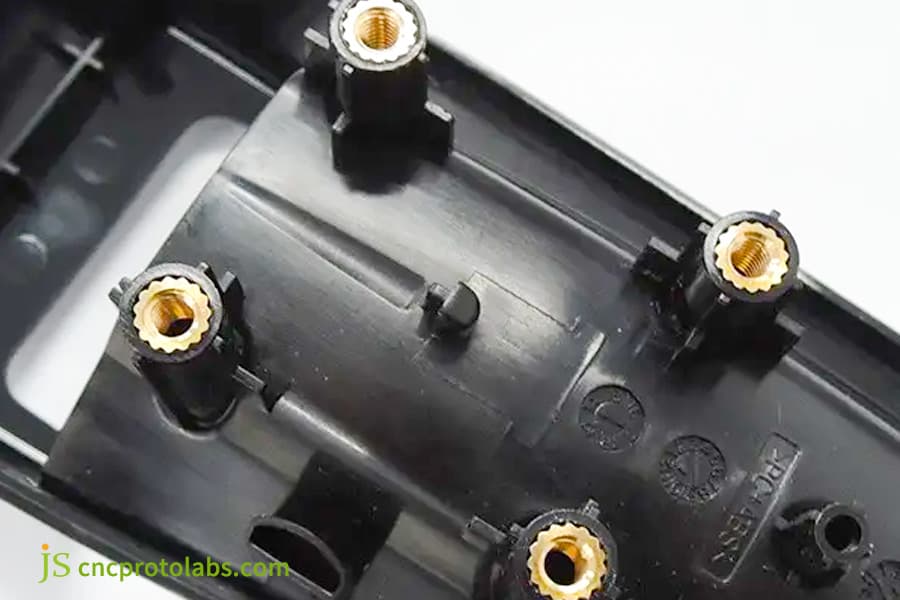
Figure 4: Black plastic housing with brass inserts demonstrating insert molding design optimization.
What Vertically-Focused Production Equipment Should a Vendor Possess for Complex Multi-Station Metal Insert Molding Service?
Completing complex multi-station metal insert molding service involves use of dedicated vertical molding equipment only. A supplier's equipment configuration needs to be extremely well aligned with the product shape, insert slippage risk, and the level of automation.
Disadvantages of Horizontal Injection Molding Machines for Insert Molding
Conventional horizontal injection molding machines have horizontally opening and closing molds. Due to gravity, inserts can move and slip before the mold closes. That's why these machines are only suitable for large size, low precision insert products. Also, multi-cavity mass production stability is poor - which is a main issue during insert molding supplier audit.
Benefits of Vertical Injection Molding Machines in Mass Production
Vertical injection molding machines offer this main benefits:
- With vertical clamping and injection, inserts can be placed securely in the lower mold, thereby physically preventing slippage or displacement.
- Dual-station rotary vertical machines can perform molding and loading/unloading operations simultaneously resulting in a 40% reduction in the cycle time of one part.
- Single-slide vertical machines provide a good compromise between flexibility and high-volume production capability for moderately complex products.
Why Partner with JS Precision for Your Long-Term Strategic Manufacturing Needs to Guarantee High ROI and Rapid Lead Times?
Partnering with JS Precision as a manufacturing partner helps partner minimize technological risks and supply chain vulnerabilities, optimize the total cost of ownership, and improve return on investment. So, this is one more reason why, as a partner, you can rely on JS Precision for inserts molding supplier selection.
JS Precision, the leading manufacturer located in Humen Town, Dongguan City China has no plans to outsource its mold-making process in the future. It features vertical and horizontal injection molding workshops, which are helped by a top-level precision CNC machining workshop where five axis precision machining is done with the highest quality tolerances that are better than the ones of externally sourced metal parts.
Annual project expenditure can be computed by the equation: Total Cost = T + (U V), where T refers to the fixed capability investment cost price of the mold (in USD), U is the unit price of the product (in USD), V is the purchase quantity. By implementing long-term mold design, an extremely low defect rate of 100 PPM, and a quick T1 trial molding cycle of 18-21 days, we're able to assist clients in optimizing their total cost of ownership and increasing their return on investment.
Case Study: JS Precision's Custom Insert Molding Solution for Medical Monitor Precision Heterogeneous Metal Terminals
Client Pain Points
A foreign Tier 1 medical device client was looking for a solution for their multi-pin socket terminals development for civil high-frequency medical monitors. The terminals needed the embedding of 12 micro gold-plated copper pins simultaneously in the plastic matrix PBT+30% GF.
The finished product from the previous supplier had two major issues:
- Pin misalignment under high-pressure impact led to coplanarity exceeding the standard by 0.12 mm, so the pins could not be inserted seamlessly into the motherboard slot.
- There were gaps at the interface which caused the capillary leakage during alcohol disinfection and as a result short circuits and damage of the internal circuitry, which temporarily stopped the project.
JS Precision Solution
Immediately after the project was handed over, JS Precision set up a specialized task force headed by the Precision Mold Director. The team initiated the implementation of three fundamental optimization steps:
1. Remodeling of the mold locating structure: Gone was the original hard-sealing structure, replaced by the nitrogen spring (highly sensitive) driven double-stage precision limiting sleeve. The 12 pins are completely clamped during mold closing in a full-encirclement manner, so the mechanical clearance is locked within 0.005 mm.
2. Sealing and bonding structure improvement: In the pin sealing section, three 0.05 mm deep V-shaped anti-leakage circumferential microgrooves were created. These increase the labyrinthine contact path at the melt bonding point much enhancing the interface sealing and shear strength.
3. Accurate Thermal Balance Control: An entirely automated high-frequency infrared induction preheating system is brought in, which heats the pins to 135℃±2℃ in 2 s. This effectively reduces the temperature difference with the high-temperature melt and removes micro-cracks resulted from thermal stress during plastic layer cooling.
Lessons Learned from Failures
During the first trial molding (T1) stage, the team experimented with batch preheating in a traditional oven. Even so, variation in the operator's handling time (3-8 seconds) caused the metal's temperature to be uneven which led to a cracking rate of 8% in the samples in a certain area. We promptly gave up on the manual intervention method and fully converted to an online closed-loop infrared preheating system that was in sync with the vertical molding machine's robotic arm. This very much confirmed the process parameters that are well within the ISO 13485:2016 medical standards.
Final Results
The core performance comparison of the two solutions is as follows:
|
Comparison Dimension
|
T1 Trial (Oven Batch Offline Preheating)
|
Mass Production Stage (Online Closed-loop Infrared Preheating)
|
|
Preheating execution method
|
Manual offline batch preheating
|
Online automatic preheating synchronized with manipulator
|
|
Temperature stability
|
3-8s pick-and-place fluctuation, uneven metal surface temperature
|
Process parameters fixed, temperature stable and controllable throughout
|
|
Local cracking rate
|
8%
|
0
|
|
Pin coplanarity tolerance
|
Deviation exists, not meeting medical grade standard
|
≤ ±0.015 mm
|
|
High-low temperature cycle sealing performance
|
Leakage risk exists
|
1000h -40℃~85℃ alternating cycle, zero void & zero leakage
|
|
Process capability index CPK
|
Not up to standard
|
1.42
|
Customer Feedback
The customer's Chief Quality Officer remarked that, JS Precision had proven their professional capability through solid test data and innovative mold design, and they have decided to designate us as their sole supplier for all future custom insert molding service projects.
This medical-grade case fully validates our robust engineering capabilities in custom insert molding services. If you have similar high-difficulty custom projects, please submit your detailed requirements and drawings to receive a customized solution and accurate quote.

FAQs
Q1: In precision insert injection molding, irregularly shaped bent metal inserts are very likely to slip and move when hit by molten metal. What kind of mold structures does JS Precision use to obtain firm physical restraint?
JS Precision relies on a hydraulically linked lateral slider plus micro-step clamping pins that are custom-made. Before mold closing, the insert is sucked by negative pressure inside the mold, and the slider offers an additional rigid locking, forcibly keeping the slippage in a range of 0.01 mm.
Q2: When it comes to the mass production of inserts, how can we make sure that the microscopic plating of metal terminals won't get scratched due to high injection pressure and mold steel, maintaining both appearance and performance?
JS Precision resorts to beryllium copper soft inserts for the sealing and clamping areas, and the contact surfaces undergo a super-mirror finishing with a roughness of Ra≤0.05μm. Lessening the holding pressure shear rate, it performs wear-free damage of the gold and silver plating.
Q3: If insert injection molded parts need to be able to tolerate frequent thermal cycling and mechanical fatigue, to what extent can your laboratory provide specific life test data for the parts as a reference?
At the JS Precision laboratory, the thermal shock of the dynamic type is carried out for the samples ranged from -40℃ up to 125℃ for a duration of 500 hours. Post re-examination with an acoustic microscope, it was realized that there were no peeling pores found at the interface, and the airtightness was 10^-5 mbarl/s.
Q4: During the mold-making phase of insert injection molding projects, does JS Precision include all rights and usage of the mold assets in the formal quotation?
We will make the outline of rights and responsibilities very clear. Once the customer completes the full payment of the mold price, the issuance of a certificate of ownership takes place, stating that the customer has 100% ownership rights of the mold assets. Besides that, we offer a lifetime mold maintenance service and consumable parts replacement free of charge.
Q5: Taking the same precision insert injection molding project, why will it cost you less to choose JS Precision in China rather than factories located in Europe and America?
We have the capacity of full-chain support. We have a high-precision machining workshop in-house that allows the elimination of outsourcing metal inserts. Our five axis CNC machining is synchronized, so you may decrease your total investment by more than 30%. Feel free to contact us for a quotation.
Q6: For medical-grade or new energy vehicle-grade insert injection molding products, what measures should be taken to guarantee full traceability of material and processing technology data throughout the entire process?
At JS Precision, the Manufacturing Execution System (MES) produces one-of-a-kind barcodes for each batch of products, which are linked in real-time to data such as injection pressure, preheating temperature curves, and CPK reports prepared by Zeiss CMM, so achieving a closed-loop traceability from raw materials to finished products.
Q7: When plastic is molding large-volume metal parts, shrinkage cavities usually appear because of the high shrinkage rate of plastic. How to prevent it at DFM stage?
Among other things, our DFM insert molding service carries out the pre-mold flow simulation and because of this designs conformal cooling water channels in thick-walled areas, which helps in reducing crystallization cooling differences by 40%. You can submit your drawings for a customized optimization solution.
Q8: If a product is found to have a puncture due to insufficient filler thickness after assembly, how fast can JS Precision carry out mold repair/modification?
Based on our in-plant GF precision EDM and ultra-high-speed machining matrix, we can make minor mold modifications within 48-72 hours. To shorten the lead time by 70%, our technical team collects data on-site for processing rather than outsourcing.
Summary
Basically, choosing the proper insert injection molding supplier should never be "Market-oriented slogans"or "Low-price trap" being the consideration. A really professional supplier enables solving the solution of most of the major engineering problems, such as accurate positioning of inserts in multi-cavity molds, avoiding of cracks brought by thermal stress, fully automatic on-line quality monitor etc. The factory audit checklist here is the technical basis for stable implementation of the project from design to volume production.
JS Precision has a group of vertical and rotary precision injection machines, the most advanced CNC conformal mold processing equipment, and an IATF 16949 system certification closed-loop quality control process. We can produce your design sketches to high quality, cost-effectiveness, and low production defect in volume. Call our senior application engineers now for free DFM feasibility analysis and a highly competitive manufacturing quotation!
Disclaimer
The contents of this page are for informational purposes only. For JS Precision Services, there are no representations or warranties, express or implied, as to the accuracy, completeness, or validity of the information. It is the buyer's responsibility to identify specific technical requirements and request a formal parts quotation. Please contact us for more information.
JS Precision Team
ustom manufacturing solutions. With over 15 years of experience serving more than 1,000 customers, we specialize in high-precision CNC machining, sheet metal fabrication, 3D printing, injection molding, and metal stamping. Having successfully delivered over 300,000 precision parts, we maintain a 99.2% on-time delivery rate across all custom projects.
Our facility is equipped with over 100 state-of-the-art 5-axis machining centers and is ISO 9001:2015 certified. We deliver fast, efficient, and high-quality manufacturing solutions to B2B clients across 150 countries. Whether you require low-volume prototyping or large-scale customization, we support your project with lead times as short as 24 hours. Choose JS Precision for unparalleled efficiency, quality, and professionalism.
To learn more or submit your RFQ, visit our website: www.cncprotolabs.com
Resource