English



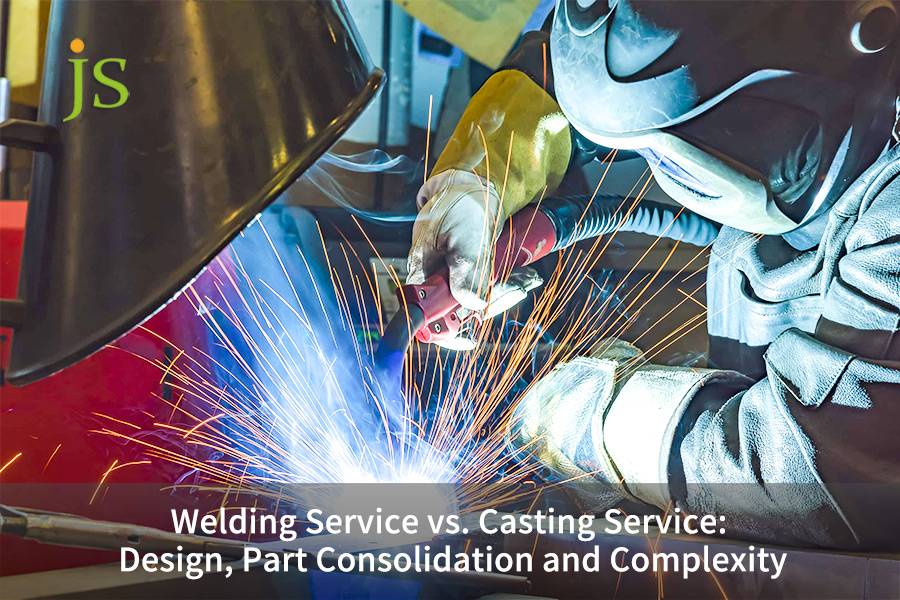

Welding alternative to casting eliminate up to tens of thousands of dollars worth of tooling by not casting but welding instead with the benefit of weeks of lead time saved, providing even denser, stronger parts that have absolutely no internal porosity for the production of small-to-medium batches of products.
Comparison of Performance and Economy of Welding Alternative to Casting Core Process
|
Comparison Dimension |
Custom Welding Fabrication |
Metal Casting Service |
|---|---|---|
|
Design Freedom & Wall Thickness Limit |
Supports 0.8 mm thin-wall structures and dissimilar metal joints |
Wall thickness typically > 3mm, with ≥ 1.5° draft angle required |
|
Part Consolidation |
Rely on structural assembly welding, zero tooling cost investment |
Integral molding, no external weld seams but internal defect risks exist |
|
Structural Strength & Defect Control |
HAZ treated by PWHT, 100% NDT controllable |
Seamless overall, but risks of internal shrinkage cavities and uneven grain exist |
|
Economic Break-even Point |
Small batch (1–200pcs) reduces total cost by 35%–50% |
Large batch (>1,000pcs) sees lower per-piece cost after tooling amortization |
Data source: JS Precision 2025 internal benchmark. Modern Machine Shop 2024 Top Shops Survey.
Key Takeaways
- With the help of a custom weld for the prototype and low volume production (<200 Pax), the cost savings could reach a maximum of the total saving of cost by completely removal of tooling costs and reducing the Lead Time by up to 60%.
- By 100% UT/RT inspection and welding of parts subjected to high dynamic loads, internal casting porosity risks are totally eliminated.
- During DFM, by changing multi component castings to assemblies and realizing laser cutting, CNC machining and welding, for moderate complexity components the cost could be over 30% saving.
Why Choose Custom Welding Service as a Practical Welding Alternative to Casting?
Getting a custom welding service is actually a money-saver because you avoid tooling expenses and long casting lead times. For one thing, a custom welded part gets you higher material density and reduces the time between orders.
Comparison of Upfront Investment: Casting vs. Welding
- Secretly expensive part of casting: The duration for making molds suited for medium-sized castings is about six to 10 weeks. The initial cost accounts for more than 45 percent of the total expenses involved when it takes to manufacture the product in low volume runs.
- Quick Custom Welding: If the parts are simply being made together using precision laser cutting and CNC bending it only takes a few days, 5 to 7, to make a single piece.
- Stronger Material Benefits: Everyone knows that Forged or Rolled Plates offer higher tensile strength and denser materials without having internal defects such as cracks, porosity, or internal voids that usually affect castings. For example, an A148 cast steel vs. A336 rolled steel plate material.
JS Precision's One-Stop Capabilities
JS Precision gives end-to-end services from DFM analysis of drawings to multi-axis TIG/MIG welding. With our know how we help engineering teams to avoid mold creation problems during R&D and low production. No tooling fees, plus a 40% reduction in capital outlay upfront for our customers.
ISO 3834-2 standard states: Manufacturers shall have a full quality capability to cover welding technical review, qualified welders, equipment control, post-weld heat treatment (PWHT), and inspection and testing.
To fully comply with ISO 3834-2 JS Precision's custom welding service have been specially designed to satisfy the very high quality level as specified in ISO 3834-2 and guarantee that any customized welded component is made under proper industrial safety conditions. As this safety issue is resolved through molds that are made during R&D and low volume manufacturing it allows that kind of team to be relieved from a huge financial burden, as their capital expenditures at the beginning stage will be reduced by about 40%.
You probably need to know the pros and cons with costs of welding vs. Casting. Get a Welding vs. Casting Decision-Making White Paper by downloading a complete cost-calculation model and industry case studies from the 12 selected ones.
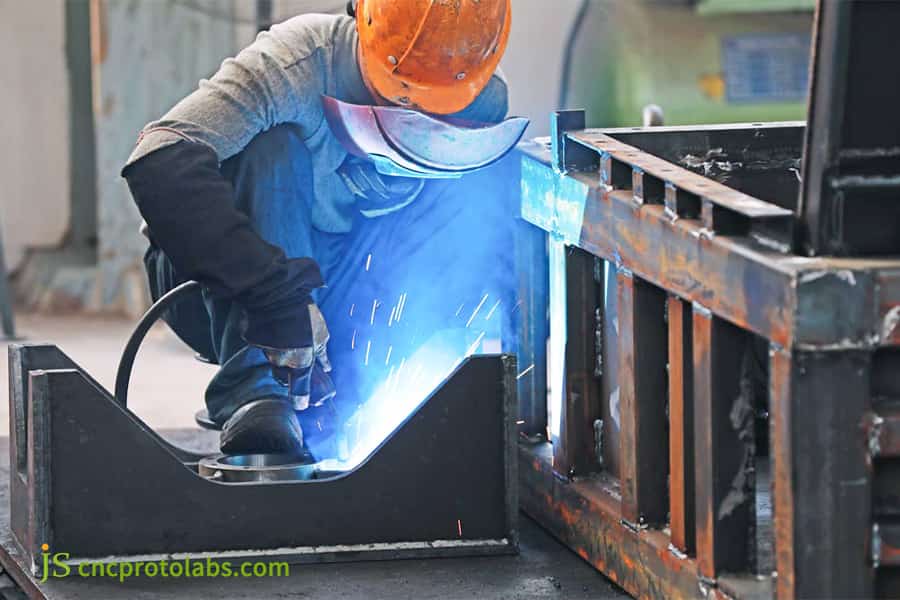
Figure 1: Welder fabricating a metal component as a practical alternative to casting.
How Do Design for Welding vs Casting Differ in Complex Metal Component Manufacturing?
Design for welding vs casting is essentially the opposite, casting is ideal for making solid parts with complex internal cavities and 3D naturally occurring surfaces, whereas design for welding is a method where even very complicated shapes are divided into common plates and pipes using very accurately made cut joints.
Geometric Limitations of Casting
- Draft Angle: Casting usually needs a draft angle of over 1.5°, without it, the release of the casting from the mold is hard.
- Uniform Wall Thickness: By eliminating thermal hotspots that lead to shrinkage cavities, the variation of wall thickness is restricted so as the design freedom is also limited.
- Use of Sand Cores in Complex Casting: Casting internal cavities needs the placement of sand cores, which makes the casting process very complicated and increases the production costs. Complex metal component welding was born to break these limitations.
Geometric Breakthroughs in Welding Design
- Combining different metals and thicknesses with ease: Welding makes it possible to merge different thicknesses exactly (e.g. Attaching 1.5mm sheet metal to 25 mm structural steel) and dissimilar materials like stainless steel and carbon steel.
- Possibility of different shapes and sizes: The main difference is that the flow rate of the material being cast determines the shape and size, which is rather restrictive and complex metal component welding makes it possible to build up.
Design Strategies for Post-Weld Thermal Deformation
To control thermal deformations in complicated structures JS Precision uses anti-deformation properties, for example: interlocking tabs, symmetrical welds and mechanical restraint fixtures while designing.
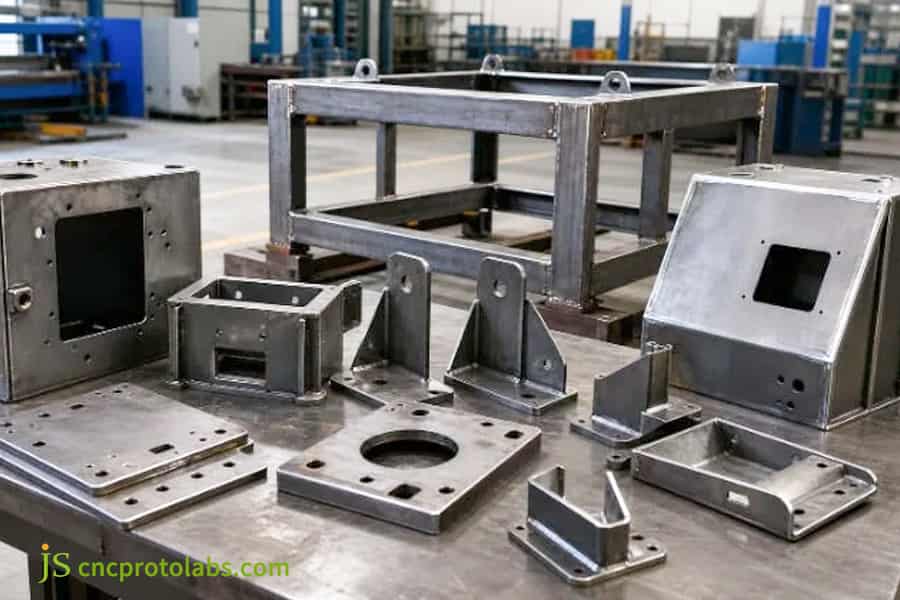
Figure 2: Comparing design for welding versus casting in complex metal manufacturing.
Can Part Consolidation Welding Service Reduce Assembly Costs and Lead Times?
Part consolidation welding service uses high-quality fixturing and positioning of components to join tens of separate stamping parts, CNC machine parts, and pipes into a single structure, completely removing the bolt loosening hazards and cumulative deviations.
Self-aligning structural design
- Tongue-groove alignment: 3D laser cutting machine is employed to machine tongue and groove structures on the mating edges, ensuring the joint tolerance for the assembly of 15 components stays ±0.1 mm.
- Increased rigidity: Custom welding fabrication use tab-and-slot structures for pre-positioning, the finished welded product is more rigid than a bolted solution.
BOM simplification and cost reduction
- Simplified BOM Line Items: Welding of complex parts leads to a simplification of the parts list of the final piece (BOM) such that overhead related to managing a long BOM is reduced by as much as 60%.
- Labour Saving: Part consolidation welding service would have been separate pieces if not for being made by welding, there is a major saving in manually putting together bolts.
Weld quality assurance
To avoid stress concentration resulting from the potential of the weld joints, JS Precision uses full-penetration weld technique, stress relaying through ultrasonic impact treatment, and post-weld CNC finishing on vital surfaces. The welded component is checked for stress and it is confirmed that the strength of the assembled component is up to or beyond the dynamic fatigue limit (10⁷ cycles) of a monolithic casting.
Need to know your potential savings if you combine the parts? Free cost analysis: give us your bill of material and JS Precision engineers will instantly prepare a cost-savings evaluation of the part consolidation welding service.
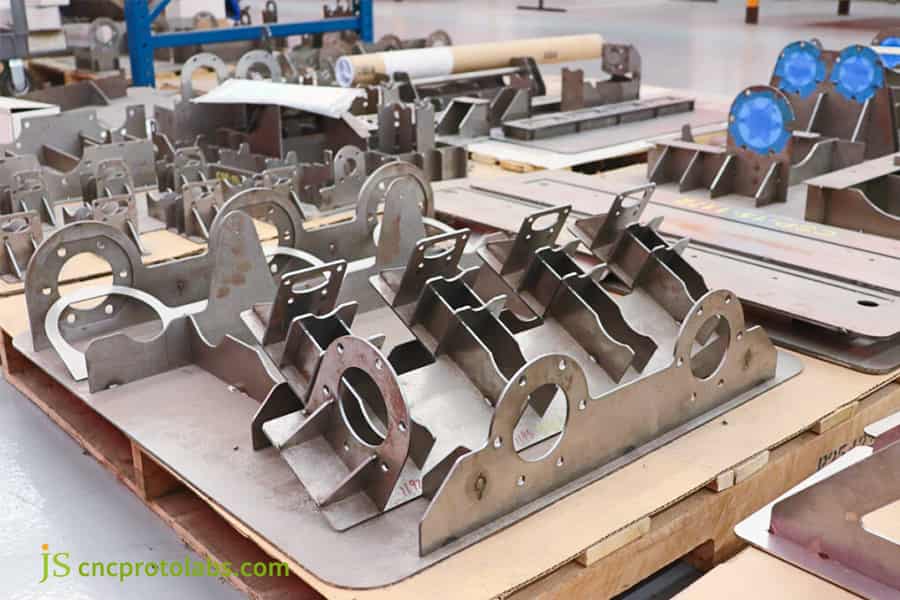
Figure 3: Assembled welded frames and parts showcasing part consolidation benefits.
When to Choose Welding over Casting Service for Industrial Projects?
When to choose welding is clear: during prototyping, when annual volume demand is less than 500 pcs and quick turn-around is needed or when the part takes high impact toughness and has zero internal porosity, the engineering team should use weld fabrication.
Low-volume and highly customized scenarios
- The production scale of 1-500 parts: This is a great condition, for custom welding fabrication, as it sidesteps the problem of inefficient spreading of the casting mold expenses.
- Fast Alterations in Design: If changes to the drawings require the redesign of the welded parts, then a simple change is made to the CNC cutter program, while the castings will have to be either changed or scrapped.
Large-Scale and High-Load Scenarios
- Extra-Large Components: Making large parts by casting necessitates the use of enormous sand molds and also results in many transportation expenses. But, modular welding, in this case, will have a clear advantage.
- High Dynamic Impact Loads: The internal voids in castings cause them to be weak and prone to the growth of minute cracks on repeated impacts. But, welded structures made of steel sheets rolled exhibit a better ability to resist cracks at breaking point.
Material Toughness Comparison Data
|
Material Type |
Charpy V-Notch Impact Energy (-20°C) |
Internal Defect Risk |
Typical Wall Thickness |
|---|---|---|---|
|
S355 Rolled Steel Plate |
≥ 27 J |
Zero porosity |
1.5–25 mm |
|
A148 Cast Steel |
~ 20 J |
Shrinkage cavity risk |
> 3 mm |
|
316L Forged Stainless |
≥ 60 J |
Zero porosity |
0.8–20 mm |
|
A216 Cast Carbon Steel |
~ 18 J |
Porosity & sand inclusion |
> 3 mm |
|
Q355 Rolled Steel |
≥ 34 J |
Zero porosity |
1.5–30 mm |
Data source: JS Precision 2025 material property database, based on ISO 148-1 impact test standards.
If you're wondering about the possible risks of casting porosity affecting your parts under heavy loads, give JS Precision engineers a call. Let them help you make an intelligent decision about when to choose welding.
How Does Custom Welding Service Control Thermal Distortion and Precise Tolerances?
Custom welding service offers custom welding and controls the precision through a closed-loop system workflow: pre-weld FEA simulation + modular fixturing + post-weld PWHT + CNC precision post-machining. The service reduces the residual stress to the minimum level and ensures the dimensional accuracy within ±0.01 mm.
Pre-weld Numerical Simulation
- SYSWELD Thermo-mechanical Coupling Analysis: A thermo-mechanical coupled finite element analysis (FEA) of the weld shrinkage with pre-compensation for its post-weld distortion (reverse deformation) was carried out using SYSWELD software.
- Distortion Prediction: The Finite Element Analysis-based (FA-based) prediction can keep the difference between real post-weld distortion measurement and simulation within 0.05 mm.
Precise Control of Heat Input
Welding heat input is a critical parameter determining weld quality, it is calculated using the formula:
Q = η·V·I / v
In the formula,η represents the heat factor (approx. 0.6 for TIG, 0.8 for MIG/MAG), V is arc voltage measured in volts (V), I is welding current in amperes (A), and v is the speed of welding in mm/s. JS Precision welds are characterized by a precisely managed and limited heat input within 0. 8-1. 2 kJ/mm range.
ISO 5817:2023 clearly describes: Quality level B represents the maximum requirement for the end weld, cracks and lack of fusion are not allowed at any level.
JS Precision conducts weld inspection of safety-critical welds to meet the ISO 5817:2023 Level B criteria, thereby excluding planar defects like cracks, lack of fusion and reaching a safety Class 1 standard for weld quality in the industry.
Internal Stress Relief and Secondary Precision Machining
- Post-weld heat treatment (PWHT) for Stress Relief: At 600℃ - 650℃ the metal is kept this hot for 2 hours for stress relief after welding, resulting in removal of more than 85% of internal residual stress.
- 5-Axis CNC Final Finishing: The welded assembly is clamped into a large-scale 5-axis CNC machining center for final finishing of critical features, like bearing bores and sealing surfaces.
|
Process Stage |
Before PWHT + 5-axis CNC |
After PWHT + 5-axis CNC |
Improvement |
|---|---|---|---|
|
Key Geometric Tolerance Out-of-spec Rate |
14.5% |
< 0.2% |
98.6% reduction |
|
Bearing Hole Position Tolerance |
±0.15 mm |
±0.005 mm |
30× tighter |
|
Sealing Surface Flatness |
0.08 mm |
0.01 mm |
8× improvement |
|
Residual Stress Level |
320 MPa |
< 48 MPa |
85% reduction |
|
Surface Roughness Ra |
3.2 μm |
0.8 μm |
4× finer |
|
Dimensional Stability (after aging) |
±0.1 mm drift |
±0.005 mm drift |
20× stable |
Data source: JS Precision 2025 statistics based on 120 delivered complex welding projects.
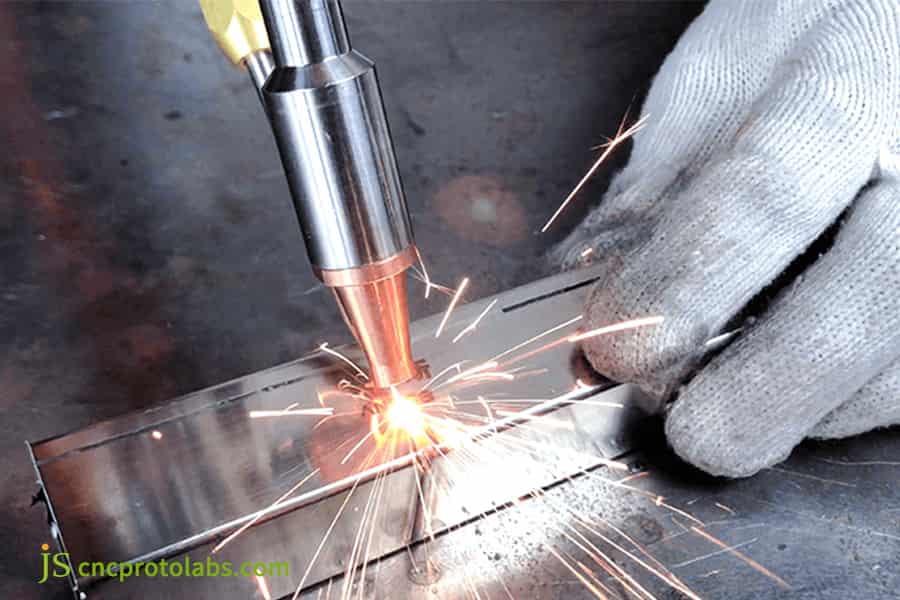
Figure 4: Controlling thermal distortion and precise tolerances in custom welding service.
JS Precision Custom Welding Fabrication Case Study: Converting Heavy Castings to Weldments
With custom welding fabrication, JS Precision solved the problem of high rejection rate cast pump bodies for a client by turning the product into a rolled stainless steel plate joined by 5-axis CNC and TIG robotic welding. This approach not only totally got rid of porosity leakage defects, but also cut the production lead time by 65%.
Client Challenges
A European pump manufacturer's cast steel pump body (material: ZG230-450) was rejecting a 22% leakage test after a 15 MPa hydrostatic testing. Also, the 12-week lead time of the casting supplier was causing a major delay to the production line.
JS Precision Solution
- Structural Redesign and DFM: Based on the welding alternative to casting concept, the monolithic casting was completely restructured to be composed of four 316L forgings and two thick plates.
- Precision Blanking and Beveling: Firstly, blanking was done on a 20 kW fiber laser cutting machine and then J-bevels of ultra precision were machined on a CNC machine.
- Automated Robotic TIG Welding: Combining pulsed TIG welding (GTAW) with high-purity argon back-purging ensures 100% weld penetration and the elimination of oxidation defects.
- Stress Relief and Secondary Finishing: Internal flange faces and threaded holes are machined in one setup on a 5-axis CNC machine after a Post-Weld Heat Treatment (PWHT) annealing that is a stress relief.
Lessons Learned
In our hands-on work, we noticed that the initial test models had developed microscopic oxidation on its internal weld seams and had slight leaks while subjected to hydrostatic tests. We concluded that the high-purity argon had not been used in the back-purging so that was one of the primary reasons. We quickly modified the workflow by introducing internally argon purging system resulting in a complete solution of oxidation problem.
Final Quantifiable Results
- Quality Achievement: Hydrostatic test pass rate was improved so that almost 78% became 100%. As a result, the overall weight of the pump body was reduced by 15%.
- Cost and Lead Time: The overall production cost per unit was lowered by 32%, and the lead time to deliver a product was shortened from 12 weeks to just 21 days.
Are quality control and rejection issues costing you your profit? Upload drawing for assessment today at JS Precision, you'll get a custom welding fabrication solution together with a free DFM assessment.
Why Partner with JS Precision for Custom Welding Service and Complex Metal Fabrication?
JS Precision's custom welding service combines 5-axis CNC and computer-controlled welding equipment with a thorough ISO/EN QC system as well as an inspection capability that covers the entire non-destructive testing.
- Hardware Capabilities & Full-Chain Integration: Complete production facilities include 20 kW laser cutting machines, large-scale bending, robotic TIG/MIG welding spots, 5-axis CNC machining centers, etc. Allowing one single process of blanking welding heat treatment and finish machining, i.e. End-to-end production.
- Quality Assurance & NDT: Workforce of CWI (Certified Welding Inspectors) who are certified & use standard equipment of Ultrasonic Testing (UT), Radiographic Testing (RT), and X-ray fluorescence (XRF) spectrometers to perform weld inspection following Class 1 industrial safety standards.
- Flexible Manufacturing & Supply Chain: No Requirement of Minimum Order Quantity (MOQ). Gives quick 24-hour quotation and DFM (Design for Manufacturability) Optimization Report for your convenience.
- Standards Compliance: Our custom welding fabrication procedures comply with ISO 3834-2 and EN 1090 standards, and our part consolidation welding service ensures that the fatigue performance of the final assemblies is satisfactory.
FAQs
Q1: How do I obtain an accurate cost quotation for custom welding fabrication services from JS Precision?
Just upload your drawings and receive a quotation. Upload your 3D STEP/IGS data and 2D engineering drawings to the JS Precision online portal, our engineering team will perform the DFM review and supply a comprehensive project specific quote within 24 hours.
Q2: What are the main cost factors when choosing a Custom Welding Service over casting?
Important cost elements involve raw materials, laser cutting and edge beveling labor hours and post weld NDT and CNC machining. Welding avoids the high mold tooling costs.
Q3: Can JS Precision ensure leak-tight welds for pressure vessel components that traditionally use castings?
Absolutely. The manufacturing process at JS Precision involves 100% full-penetration pulsed TIG welding in high purity argon back-purging. PT (Liquid Penetrant Testing) and hydrostatic strength testing up to 20 MPa are performed before dispatch to guarantee zero porosity and hermetic nature.
Q4: Is welding strong enough to replace monolithic cast iron or cast steel parts?
Sure.The yield strength, as well as the percentage of gain strength of rolled/forged plates will be higher than castings, which when used plus a low stress PWHT operation can have a dynamic fatigue strength of welded assemblies equal to or better than a cohesive mono block casting of the same material.
Q5: What non-destructive testing (NDT) methods does JS Precision use for Complex Metal Component Welding?
JS Precision works with four different ways of NDT which are VT,PT,UT and RT. All NDT works and defect evaluations are conducted per the ISO 5817 standard which guarantees that complex welded components satisfy safety requirements for heavy machinery and industrial equipment.
Q6: How does JS Precision handle post-weld machining to maintain tight dimensions?
JS Precision first applies Post-Weld Heat Treatment (PWHT) at 600℃-650℃ which removes over 85% of thermal stress, and then performs precision secondary machining of critical features on multi-axis CNC machining centers, maintaining critical dimensional tolerances within ±0.005 mm.
Q7: What production volume makes a Casting Service more economical than a Welding Service?
Casting procedures can become more cost-effective once production runs reach 1,000 to 5,000 pieces. As for the production below 500 units per annum, custom welding is the better decision from the total-cost point of view and the necessary capital-outlay point of view.
Q8: What materials can be welded in JS Precision's Part Consolidation Welding Service?
These mainly are Q235/Q355 carbon steel, 304/316L/17-4PH stainless steel, 6061-T6/7075 aluminum alloy, and high-strength alloy steel. In addition, JS Precision also has well-established processes for joining different metals such as stainless steel to carbon steel.
Summary
Deciding between welding and casting services really comes down to finding a compromise between the upfront cast mold cost vs. Geometry intricacy, material thickness, and time to market. Casting still holds the edge for large quantities, single-piece forming but a combination of custom welded fabrication with CNC machining is a much better choice for medium to small batches (~50 to 1,000 units) and dynamic loads applications where a defectfree product is a must.
DFM (Design for Manufacturing) and part consolidation by design can help engineering teams speed up time-to-market by 60% and more. Want to get rid of high casting mold costs and long lead times? Get a DFM report and receive an accurate quote in 24 hours, email us STEP or IGS files.

Disclaimer
The contents of this page are for informational purposes only. For JS Precision Services, there are no representations or warranties, express or implied, as to the accuracy, completeness, or validity of the information. It is the buyer's responsibility to identify specific technical requirements and request a formal parts quotation. Please contact us for more information.
JS Precision Team
Custom manufacturing solutions. With over 15 years of experience serving more than 1,000 customers, we specialize in high-precision CNC machining, sheet metal fabrication, 3D printing, injection molding, and metal stamping. Having successfully delivered over 300,000 precision parts, we maintain a 99.2% on-time delivery rate across all custom projects.
Our facility is equipped with over 100 state-of-the-art 5-axis machining centers and is ISO 9001:2015 certified. We deliver fast, efficient, and high-quality manufacturing solutions to B2B clients across 150 countries. Whether you require low-volume prototyping or large-scale customization, we support your project with lead times as short as 24 hours. Choose JS Precision for unparalleled efficiency, quality, and professionalism.
To learn more or submit your RFQ, visit our website: www.cncprotolabs.com
Resource