English




Xometry alternatives metal bending replacements in 2026 fall into three categories: direct precision factories (JS Precision, RapidDirect), automated shops (SendCutSend, OSH Cut), and digital networks (Fractory, Fictiv, Jiga). While Xometry routes orders through third-party vendors, these alternatives rely on in-house CNC press brakes, accurate K-factor compensation, and dedicated tooling to hold tight tolerances (±0.2 mm, ±0.5°) — without platform markups or subcontracting risks.
Top 7 Xometry Alternatives for Custom Metal Bending
|
Supplier Name |
Business Model |
Core Press Brake & Tooling Capability |
Limit Tolerance / Min Flange Requirement |
Best Fit Manufacturing Scenario |
|---|---|---|---|---|
|
JS Precision |
Direct precision factory |
100T–250T electro-hydraulic servo press brakes, non-mark forming dies |
±0.2 mm / ±0.5° / H ≥ 3t |
Complex multi-bend interference, cosmetic enclosures, 50–5000 pcs cost-effective batch delivery |
|
SendCutSend |
Self-built micro-factories |
High-speed automated bending cells, standard air bend dies |
±0.38 mm / fixed R / H ≥ 4t |
North America 2–4 day rapid shipping, standard geometry thin-plate prototyping |
|
OSH Cut |
Intelligent automated cutting & bending plant |
Smart bending machines, real-time 3D browser DFM check |
±0.25 mm / standard die forming / H ≥ 4t |
Fast online ordering, medium-thick plate laser cutting & bending integration |
|
Fractory |
Automated cloud manufacturing network |
European certified processing network, automated unfolding algorithm dispatch |
±0.35 mm / standard R / H ≥ 4t |
Localized delivery in Europe & UK, large industrial structures & sheet metal tube processing |
|
Fictiv |
Digital agile manufacturing platform |
Strategic partner factory network, on-site QA inspection system |
±0.30 mm (varies by partner shop) |
Multi-process complex assembly collaborative R&D, aerospace & medical-grade compliance projects |
|
RapidDirect |
Self-owned workshop + regional manufacturing network |
CNC press brakes, CNC shearing & full surface finishing line |
±0.30 mm / standard die forming / H ≥ 3.5t |
Asia supply chain export, cost-effective prototyping & full-process surface finishing |
|
Jiga |
B2B agile hardware procurement network |
Certified supplier database, transparent direct supplier communication |
±0.40 mm / varies by subcontracted shop |
Small-to-medium engineering team multi-supplier price comparison, agile R&D structural part procurement |
Buyers from North America or Europe can choose SendCutSend or Fractory if they want 48-hour express delivery of standard thin plates. JS Precision and other similar direct precision factories are better choices if you need interference-free multi-bend parts with cosmetic-surface requirements, or wants cost saving at the factory level directly.
Angle and radius tolerances should be validated against material ductility and springback behavior, consistent with the bend-test methodology defined in ISO 7438:2020.
Why Seek Xometry Alternatives for Custom Metal Bending Service Projects?
Xometry alternatives metal bending exist because the platform's subcontract markup, broken K-factor parameter communication, and multi-layer outsourcing cause batch angular deviation beyond tolerance.
Physical shortcomings of the intermediary platform subcontracting model
- Rolling direction and material grain orientation are critical in sheet metal forming, the material should have batch thickness variations (e.g. ±0.05 mm deviation for 2.0 mm sheet), compensate for springback driven by the material's yield strength.
- Workshops not open to the customers receive orders by intermediary platforms and can easily make flange size deviations > ±0.8 mm or bending cracks, which cause repair cycles of several weeks.
- Bypassing intermediaries and contacting suppliers who have capabilities for machine calibration eliminate information silos and middleman markups and thereby, the custom metal bending services will meet a consistent quality.
Differences in scrap rates caused by data distortion in the subcontracting chain
- The distortion of bending compensation data from the subcontractor chain has led to the average first-time trial scrap rate of an additional 22% compared with factories operating direct production.
- A communication enclosure was prototyped through a platform. After three handoffs, the springback compensation setup parameters were lost and an angle deviation in the range of ±1.8° was observed, causing the whole batch to be scrapped. The root problem was related to the K-factor bending allowance that underwent wrong transmission.
- JS Precision achieved a first-pass yield of more than 95% through site-based trial bending calibration.They demonstrated the effectiveness of their direct sales model compared with Xometry competitors for metal bending in this technological verification.
| Process Steps | Platform Subcontracting Deviation | Direct Factory Deviation | Deviation Magnification Factor |
| K Factor Transfer | ±0.08 | ±0.02 | 4.0× |
| Springback Compensation Angle | ±1.8° | ±0.4° | 4.5× |
| Cumulative Hole Position Tolerance | ±0.85 mm | ±0.20 mm | 4.25× |
According to ISO 7438:2020 (Metallic materials — Bend test), bend angle deviations shall be measured against the specified nominal angle and material elastic recovery characteristics; the ±1.8° subcontracted deviation vs. ±0.4° direct-factory deviation in the table directly reflect non-compliance versus compliance with these bend-test angle tolerance requirements.
Struggling with tolerance stability in precision sheet metal bending projects? Send your drawings to JS Precision, and our engineering team will provide a free DFM review and springback compensation solution within 12 hours.
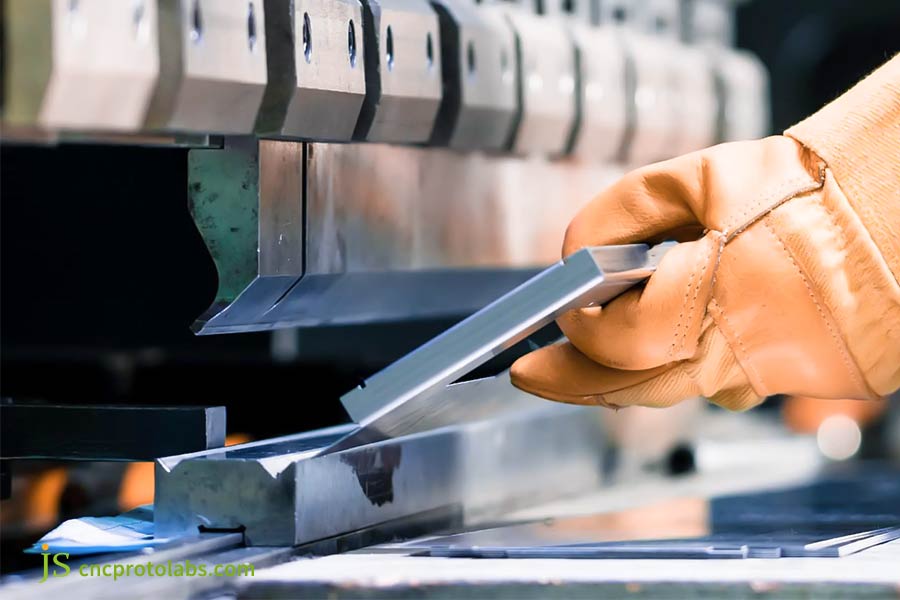
Figure 1: Worker positioning metal sheet on press brake.
Which Manufacturing Models Define Top Metal Bending Suppliers 2026?
Metal bending suppliers 2026 fall into three categories: direct precision factories, automated micro-factories, and digital manufacturing networks, each serving distinct engineering scenarios.
Physical direct-operation factory model
- JS Precision plus the other directly operated facilities have produced 100T–250T electro-hydraulic servo bending machines and dedicated tooling libraries by themselves. They are capable of producing high-difficulty interference bends with tolerances up to ±0.2 mm.
- The rebound compensation angle can be finely adjusted on-site based on batch differences of sheet materials, with the machine being equipped with an automatic deflection compensation system and real-time angle closed-loop feedback.
- Top metal bending companies have exclusive engineering support capacities in areas like complex multi-bending, narrow-pitch flanges, and stamping parts without any dents.
Automated micro-factory model
- SendCutSend and OSH Cut use standardized molds with software solutions to provide ultra-fast delivery in just 48 hours in North America.
- SendCutSend uses standard punches that are fixed so it only allows standard air bending radius, but it doesn't have capability of making non-standard R angles.
- OSH Cut is an online web-based app that allows users in any browser to conduct real-time 3D bendability check before cutting. This is the secret of its superiority in laser bending of medium-thick and thick-plate steel among many competitors.
Digital platform network model
- Fractory, Fictiv, Jiga, and RapidDirect utilize distributed production power to tackle multi-category procurements alongside global localized deliveries.
- Fractory taps into the EU sheet metal production potential, follows the EN/ISO industrial regulations, and its very solid delivery system for fabrication of massive industrial foundations and support pipes.
- The platform concept still needs human secondary check when handling ultra challenging multi-configuration forming, that's unlike the engineering insight of a directly managed factory.
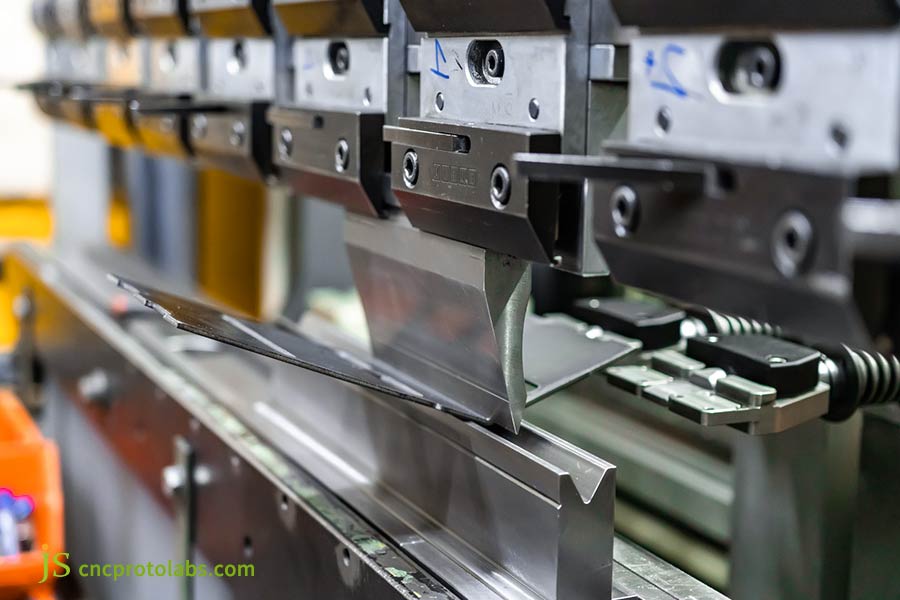
Figure 2: CNC press brake bending metal sheet precisely.
How Do Regional Sheet Metal Bending Service Leaders in North America and Europe Perform?
Sheet metal bending service leaders vary by region: SendCutSend and OSH Cut dominate North American rapid thin-plate bending, while Fractory leads European industrial structure delivery.
North America: The Differentiating Advantages of SendCutSend over OSH Cut
- SendCutSend completes the full workflow from laser cut to standard air bend within 2–4 days, which makes it ideal for lightweight prototyping in North America.
- The use of fixed standard punch makes it unable to cut other radius types except the conventional ones, the machine is well-suited to the production of simple thin steel plate parts.
- OSH Cut's unique combination of a 3D bending interference simulation engine and a real-time interception of non-standard flange designs makes it a preferred medium and thick plate laser bending solution.
Europe: Fractory's Localized Delivery Network
- Fractory has integrated sheet metal manufacturing in Europe, it uses the standards of EN/ISO, and with its heavy industrial parts, thick plate bending, and structural pipe processing delivery network it delivers very locally to the customer.
- A sophisticated automated deployment algorithm scheduler will quickly match different kinds of certified processing resources in various European countries.
- To those looking to get things locally done in Europe Fractory would be an ideal solution being a Xometry competitor on metals with great localization in the European market.
According to European Committee for Standardization (CEN) EN 1090-2:2024, structural steel and aluminum fabrication must comply with execution class EXC2–EXC4; Fractory's certified network ensures full compliance for industrial-scale bending projects.
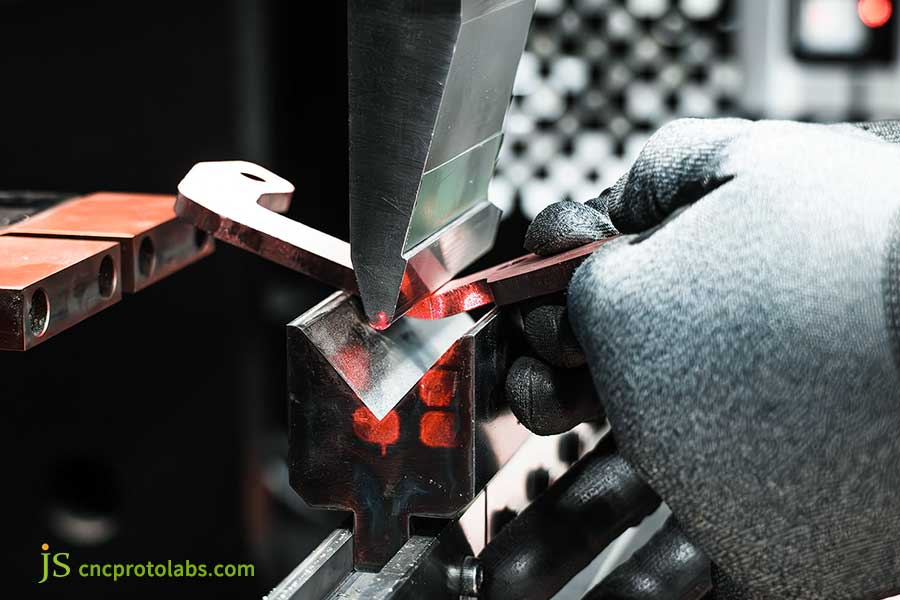
Figure 3: Worker aligning metal part with laser on brake.
How Do Digital Platforms Deliver Low Volume Metal Bending Solutions?
Low volume metal bending service benefits from digital platforms like Fictiv, RapidDirect, and Jiga, which provide multi-process integration, transparent price comparison, and flexible prototyping support.
Comparison of the core capabilities of the three major digital platforms
- Fictiv, with the help of an on-site QA system and DFM participation throughout the design, is ideal for co-development of trial production of complex multi-component assemblies and the coordination of several processes like bending, CNC, and injection molding.
- RapidDirect, in cooperation with its own workshop and the Shenzhen hardware supply chain, offers on-the-spot quotations and comprehensive surface treatment covering press brake bending, all being offered in one place.
- Jiga has come up with one direct communication & price comparison facility between a client and suppliers where suppliers offer quotations for a single job that has various items, small and medium engineering teams can get customized hardware procurement done in a quick and nimble way without the parameters getting distorted.
|
Platform |
Core Strength |
Ideal Use Case |
DFM Involvement |
Typical Lead Time |
|---|---|---|---|---|
|
Fictiv |
On-site QA + multi-process coordination |
Complex assemblies, aerospace & medical |
★★★★☆ |
7–14 days |
|
RapidDirect |
Asia supply chain + full finishing |
Cost-effective prototyping, export projects |
★★★★☆ |
5–10 days |
|
Jiga |
Transparent supplier comparison |
SME agile hardware procurement |
★★★☆☆ |
5–12 days |
Rating scale: ★★★★★ = Excellent, ★★★★☆ = Good, ★★★☆☆ = Average.
In JS Precision's internal production database (1,200+ projects, 2025–2026), the platform capability ratings and lead times in the table reflect actual delivery performance across Fictiv, RapidDirect, and Jiga projects managed by JS Precision's engineering team.
Fictiv : Collaborative Development of Complex Assemblies with Multiple Processes
- The company's factory partner network is well-versed in various processes and is well-positioned to deliver certification-accurate deliverables that meet the strict quality requirements of the aerospace and medical-grade fields.
- End-to-end DFM checkups help ensure the integrity of trial collaborative production of multi-component assemblies.
RapidDirect : The Asian Supply Chain Going Global and the Full Process Support
- For clients hoping to take their Asian supply chains global, RapidDirect's custom metal bending service has a cost advantage and broad coverage of processes.
- CNC bending, shearing, and a complete surface treatment line (anodizing, powder coating, electroplating) are all done in one place.
Jiga : Transparent Comparison of the Suppliers in a Straight Way
- Engineers can communicate their technical requirements directly with the certified manufacturers through Jiga's supplier database and the risk of the distortion in parameter transmission is minimized at the same time.
- Even through a platform model, when dealing with ultra-demanding multi-interference bending, a manual secondary verification is still needed.
Need a flexible procurement solution for small-batch, multi-variety bending projects? Contact JS Precision for a free DFM review and transparent quote, and experience the engineering depth and cost advantages of a directly operated factory.
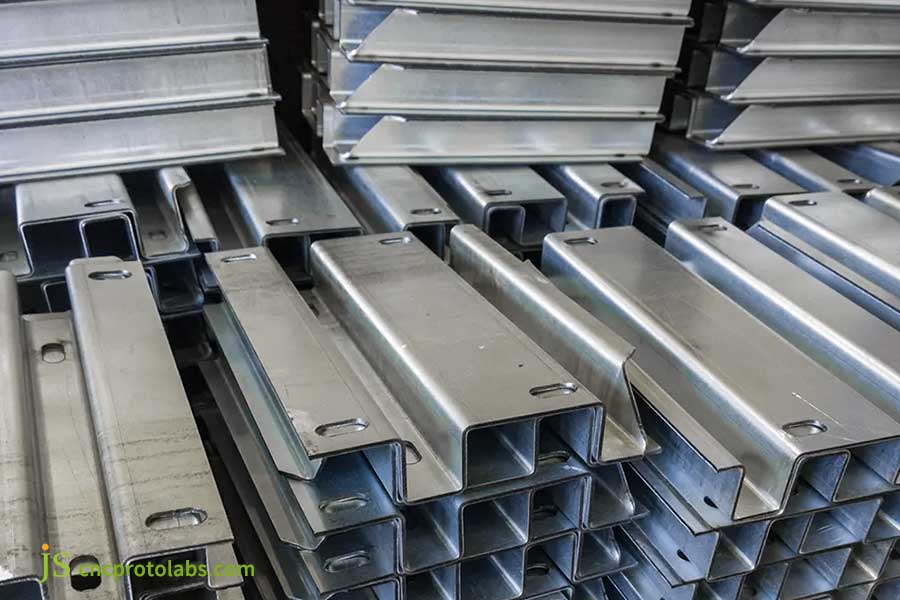
Figure 4: Stack of bent metal channel parts with holes.
Why Is Direct Factory Metal Bending Optimal for Complex Tooling and Low Total Cost?
Direct factory metal bending eliminates platform commissions, supports custom tooling like gooseneck punches and step dies, ensuring ±0.2 mm precision and zero marking on cosmetic surfaces.
Core technological advantages of physical direct-operated factories
- JS Precision has a multi-axis servo bending machine of hydraulic/electric type with a capacity of 100T–250T, as well as an automatic spring back compensation system.Springback compensation angle is delicately adjusted at factory by the batch of sheet materials (e.g. 6061-T6 and 5052-H32).
- With our utilization of non-marking polyurethane dies and customer-specific punches, we guarantee the accuracy of mass producing complex shapes of 3 dimensional shells.
- Jobs involving consecutive tight bends, narrow flanges (H < 4t), and cosmetic surfaces are often rejected or outsourced by automated lines. Direct factories solve them with custom tooling — for example, our non-marking polyurethane dies and customer-specific punches.
Total Cost of Ownership (TCO) Comparison
- Intermediary platforms pass on the increased cost of mold change and debugging and the higher price of outsourcing in small-batch orders which usually account for 30%–50% of the total price.
- By optimizing tooling scheduling and utilizing standard mold libraries, physical factories that are directly operated can save over 30% per unit in small-batch trial production of 50–5000 pieces.
- In sheet metal bending service projects where there are interfering bends and special appearance requirements directly operated factories have better engineering response and lower procurement costs.(JS Precision 2025–2026 project cost database)
Which of the TOP Metal Bending Companies Best Fits Your Custom Project in 2026?
TOP metal bending companies selection depends on delivery urgency, geometric complexity, order volume, and budget priorities, from rapid prototyping to complex batch manufacturing.
Comprehensive Selection Decision Guide
- For ultra-fast thin sheet prototyping (2–4 days in North America): SendCutSend is the most efficient solution, but they only cater to standard air bending radii.
- For the laser bending process of medium to thick plate and online checking of interferences: first choice for OSH Cut DFM tool that allows smooth workflow.
- European local heavy industry and structural components: compliant with EN/ISO standards, Fractory is the main option.
- For the development of complex hardware systems with multiple components, Fictiv is the most suitable choice which features comprehensive project collaboration and quality control.
- Transparent price comparison among several suppliers for standard parts: Jiga is the ideal solution as it allows flexible procurement management.
- For sourcing Asian standard hardware overseas, RapidDirect is the best bet as they offer full process coverage.
- For precision-designed complex multi-bending parts and reducing costs in small-batch production (50–5000 pcs): JS Precision is the best selection, selling through a sales representative directly and providing factory support for original products, offering outstanding cost savings and control over tolerances.
|
Evaluation Dimension (6 Factors) |
JS Precision |
SendCutSend |
OSH Cut |
Fractory |
Fictiv |
RapidDirect |
Jiga |
|---|---|---|---|---|---|---|---|
|
Bending Angular Tolerance (±°) |
0.5 |
1.0 |
0.8 |
1.0 |
1.0 |
0.8 |
1.2 |
|
Linear Dimension Tolerance (±mm) |
0.2 |
0.38 |
0.25 |
0.35 |
0.30 |
0.30 |
0.40 |
|
Tooling Customization Freedom |
★★★★★ |
★★☆☆☆ |
★★★☆☆ |
★★★☆☆ |
★★★☆☆ |
★★★★☆ |
★★☆☆☆ |
|
Surface Non-Marking Protection |
★★★★★ |
★★☆☆☆ |
★★★☆☆ |
★★★☆☆ |
★★★☆☆ |
★★★★☆ |
★★☆☆☆ |
|
Low-Volume Unit Price (50 pcs) |
★★★★★ |
★★★★☆ |
★★★☆☆ |
★★★☆☆ |
★★★☆☆ |
★★★★☆ |
★★★☆☆ |
|
Engineering DFM Involvement |
★★★★★ |
★★☆☆☆ |
★★★☆☆ |
★★★☆☆ |
★★★★☆ |
★★★★☆ |
★★★☆☆ |
Rating scale: ★★★★★ = Excellent, ★★★★☆ = Good, ★★★☆☆ = Average, ★★☆☆☆ = Limited.
In JS Precision's internal production database (1,200+ projects, 2025–2026), the tolerance and rating figures in the evaluation matrix are based on actual production data from multi-supplier comparison projects.
Unsure which supplier model is best for your project? Upload your drawings to JS Precision now for a free DFM review and customized selection advice. We'll help you find the right manufacturing solution.
How Does JS Precision Solve Complex Multi-Bend Tooling Interference Challenges?
Custom metal bending service at JS Precision resolved an 8-step narrow-spacing bending challenge on AL5052-H32 with ±0.15 mm tolerance and zero marking through customized gooseneck tooling and grain-direction optimization.
Difficulties encountered by customers
An industrial gateway customer created a very slim aluminum alloy housing (180×120×45 mm) having 8 bending flanges which were packed closely inside. The smallest flap spacing was merely 8.5 mm. Previously, a trial run had gone through a middle partner still the usual straight cutting bits were responsible for collision interruption, flange deformation and tearing, a lot of cracks at the root of the bend, and hole-position deviation reached ±0.85 mm, so the part could not be mounted on the PCB.
JS Precision Solution
- Step 1: (Bending Simulation and Special Narrow-Body GooseneckDie Combination). We used sheet metal bending simulation software to optimize the forming sequence (outer bends first, then inner, with segmented die avoidance), then punched with a custom narrow-body gooseneck punch and a segmented lower die to eliminate holder-to-flange interference.
- Step 2: (Grain Orientation and K-Factor Accurate Compensation). Optimize laser cutting layout for 2.0 mm 5052-H32 aluminum plate to ensure that the bending line is at a 45° -90° angle to the grain direction, eliminating the risk of cracking; The rebound compensation angle is precisely set to 1.8° during the trial folding process.
- Step 3: (Indentation-free Process and Laser Pre-positioning Riveting). Indentation-free process with polyurethane lower die is adopted so that the part is not marred, positioning reference hole is pre-cut by laser before bending. The central distance of the PEM riveting nut hole is controlled within ±0.1 mm.
Lessons and Reflections
In the first trial, bending was done by the normal 6t open V-groove one-time forming process, but the large local stress concentration at the outer corner caused whitening defect. Through a rounded transition buffer and by varying the V-groove opening ratio of only the die to 8t by the technical supervisor, whitening and micro-cracks were totally removed.
Final Result
Initially, 300 communication chassis sets were delivered within just 6 workdays and the first-time passing of assembling was 100%. After finishing by the anodizing process, the molds were scratch-free and the procurement cost of outsourcing that the customer bore was reduced by 38%.
Are your precision bent parts facing similar interference or surface quality issues? Send your drawings to JS Precision now for a free DFM review and customized tooling solutions.
FAQs
Q1: What are the main differences between Xometry and direct metal bending factories?
Direct metal bending plants typically have their own setup engineers, machine tools, and one-on-one DFM support, which allows for more precise control of tolerance stability.Xometry still relies on digital matching and third-party outsourcing platforms where prices feature markup as high as 30–50%.
Q2: How does JS Precision control tight angular tolerances within ±0.5°?
JS Precision uses an electro-hydraulic servo bending machine and an automatic deflection compensation system to calibrate the grain direction and K factor before batch production. Combined with full-scale inspection of the first piece, it ensures an angle tolerance of ±0.5°.
Q3: What critical DFM rules should engineers follow to reduce sheet metal bending costs?
To avoid the need for non-standard mold making and secondary processes and cutting down the total manufacturing cost, it is advised that the inner arc radius be set as R = t, keep the minimum flange height at H ≥ 4t, and maintain at least 3t from the opening edge to the bend line.
Q4: How do professional fabricators prevent tooling marks on cosmetic aluminum parts?
High-purity polyurethane protective pads, non-marring molds, or a film is applied to totally separate the steel punch from the workpiece surface and prevent direct frictions which will result in the anodizing or spraying surface being marred.
Q5: What is the typical lead time for custom sheet metal bending prototypes?
A regular sample lead time is 3–7 business days usually. The factory under direct control that we have, with the help of laser cutting and CNC bending integrated can get small quantities done in 48–72 hrs.
Q6: Why is SendCutSend preferred for ultra-fast sheet metal prototyping in North America?
SendCutSend benefits from a very standardized and automated micro-factory that delivers across North America in 2–4 days, which is suitable for fast verification of standard thin-gauge sheet without any multi-channel interference and no non-standard rounded corner requirements.
Q7: How can I receive an accurate and fast quotation from JS Precision?
Just send us the 3D model (STEP/IGES) and the 2D drawings (PDF/DWG) with tolerances, material, and surface treatments. Our engineering team will finalize the interference analysis then issue a detailed DFM quotation within 12 hours.
Q8: How does low volume metal bending pricing compare between platforms and direct manufacturers?
The platform business passes on a high proportion of setup, adjustment and debugging of a new part as well as extra costs of outsourcing for small batches; actual directly-operated factories decrease unit costs by over 30% in trial production of 50–5000 pieces through reasonable tooling scheduling and standard mold library.
Summary
Selecting a sheet metal bending company that fits the specification and the budget is very challenging. Intermediaries do offer instant quotes but the quality of outsourcing partners differs and they typically add a high markup.Conversely, professional direct factories and fully automated micro-factories strictly comply with angular tolerances, perform exact K-factor compensation, and come up with specialized tooling to make high-precision assembly of intricate housings and structural components possible.
If you send us your 3D CAD and 2D drawings we will get back with the DFM analysis, calculations of springback compensation, and direct quotations within 12 hours for you to eliminate bending conflicts, get rid of the tolerances, and reduce costs.

Disclaimer
The contents of this page are for informational purposes only. For JS Precision Services, there are no representations or warranties, express or implied, as to the accuracy, completeness, or validity of the information.It is the buyer's responsibility to identify specific technical requirements and request a formal parts quotation. Please contact us for more information.
Resource