English



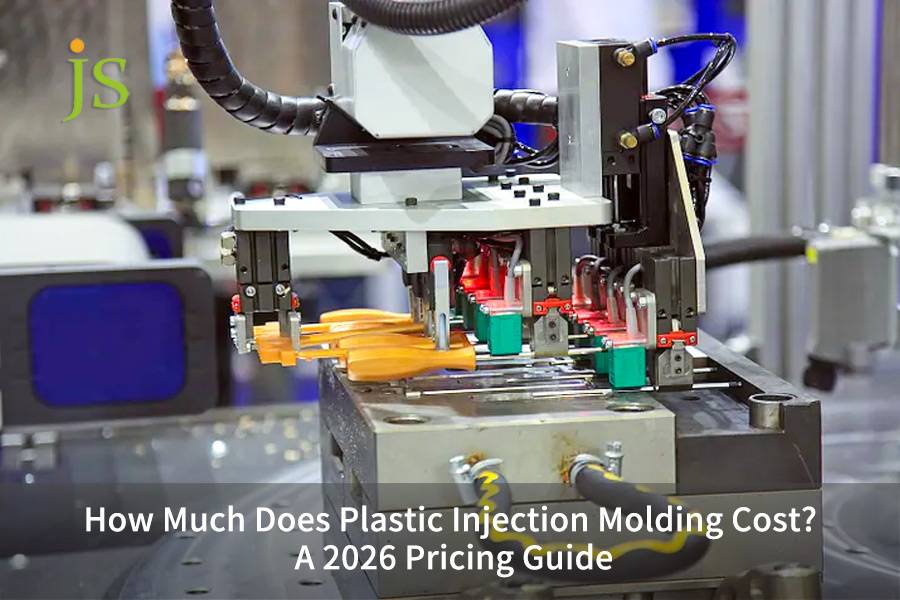

How much does plastic injection molding cost? You get two different injection molding quotes where the mold prices differ by $8,000 but you don't know which one to go for.
If you pick the cheaper one, you're afraid there might be quality issues, if you pick the more expensive one, you are worried about being ripped off. By 2026, plastic injection molding costs will not be just the addition of mold price and unit price but rather a complicated system requiring accurate calculations.
This post will analyze every factor that has an impact on the cost of plastic injection molding. It combines industry data as well as JS Precision's expert knowledge in helping you buy right.
Core Answer Table
| Cost Dimension | Key Influencing Factors | Price Range in 2026 |
| Mold Cost | Steel, Number of Cavities, Complexity | $3,000-$100,000+ |
| Unit Cost | Materials, Cycle Time, Annual Production | $0.05-$15.00/unit |
| Breakpoint | Mold Investment vs. Unit Price | Typical 3,000-6,000 units |
Key Takeaways
- Molds are not something you pay for, but rather an investment:
Cheap molds might end up causing higher production costs in the long run.
- Total Cost of Ownership matters more than price:
Even a mere 2-second change in cycle time causes an increase in cost by $20,000+ if 500,000 units are produced.
- The design decides the maximum cost:
Design for Manufacturing (DFM) enhancements can lead to a 20% - 30% decrease in mold prices.
- Manufacturing in China has some pretty glaring advantages:
If you want the same quality, JS Precision can offer you much more competitive prices.
Why Trust This Guide? JS Precision's Detailed Analysis Of Plastic Injection Molding Costs
"How much does plastic injection molding cost" be the core question for purchasers in the injection molding industry.
As a professional company that is very familiar with injection molding, JS Precision has completed over a thousand high performance industrial injection molding projects, which involve multiple industries including automotive, electronics, and medical.
With our industrial experience, we are able to accurately analyze the cost components and optimization logic of plastic injection molding process.
The core of our cost analysis system is derived from actual mass production data rather than theoretical models. Depending on the production volume, material, and product design, we provide practical cost control measures that have helped more than 500 overseas clients achieve at least 15%-30% reduction of their total cost of ownership (TCO) for injection molding.
In the pursuit of balancing mold life and cost, our method involves the use of the international standard ISO 20457:2018 for injection mold quality and precision control. We also make sure our cost calculations and molding solutions comply with the requirements of global industrial productions.
As proof of our cost optimization capabilities, for instance, in the case of a connector project for a European electronics customer, by optimizing the number of cavities and steel selection, we managed to bring down the mold costs by $12,000 while not compromising the mold life of 500,000 cycles, and the unit cost was also reduced by $0.35 at the same time.
Our engineering team is offering end to end solutions, from designing to mass production, for high end clients who are worried about balancing precision, delivery time, and cost. We will help avoid extra costs due to ineffective solutions.
If you are struggling with the cost of plastic injection molding and would like a professional analysis tailored to your project, contact JS Precision engineers immediately for a one-on-one project cost diagnosis to identify the core cost points and optimization directions for your injection molding project.
How Much Does Plastic Injection Molding Cost In Total?
The overall cost of plastic injection molding includes one time mold investment (NRE) and recurring production costs (PPU). In 2026, the total investment for a complete injection molding project will be from around $10,000 to $150,000 depending on the annual production volume and product design.
One Time Costs (NRE)
- Costs of mold design, manufacturing, and trial molding: $5,000-$80 000 are influenced by the mold steel and the number of cavities.
- Pre-production Design Factor (DFM) analysis cost: $800-$2,500. This is a worthwhile investment as it can potentially be used to avert design flaws and reduce the cost of mold modifications.
Recurring Costs (PPU)
- Material costs, machine time costs, and labor costs: $0.20-$10.00 per piece, constitute the major aspects of plastic injection molding price.
- Quality inspection and packaging costs: $0.05-$0.50 per piece. They change depending on product precision and packaging requirements.
The Balance Between NRE and PPU
One has to figure out the break even point by adding mold investment and unit cost together. If production goes beyond the break even point, a combination of a higher mold investment and a lower unit cost turns out to be more cost effective.
Case Study: Industrial sensor housing project. Aluminum mold ($5,000) + $2.80 per piece, Steel mold ($28,000) + $0.95. The steel mold turns out to be more cost effective for a yearly production volume of 8,000 pieces.
Want to quickly calculate your project's break even point and determine the suitable mold and production plan? Use JS Precision's plastic injection molding cost calculator. Enter your basic project information for free and get the cost calculation results instantly.
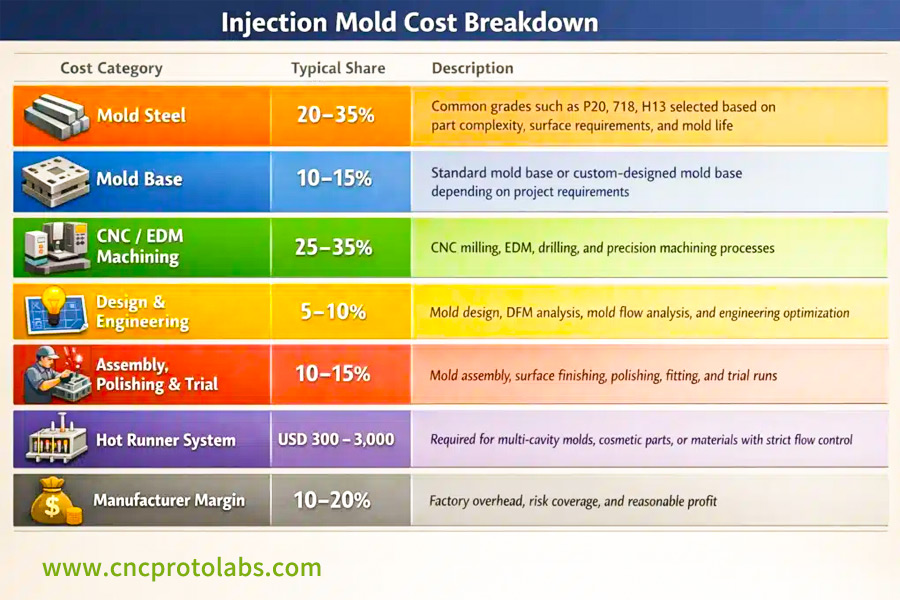
Figure 1: A bar chart detailing the cost components of an injection mold, such as steel, machining, and design, with their typical percentage ranges.
How Much Does a Plastic Injection Mold Cost?
"How much does a plastic injection mold cost" be the cost core? In 2026, the mold price will be $3000- $100000+, and the mainstream price for industrial products will be $15000- $45000. The cost depends largely on the type of steel, the number of cavities, and the level of precision.
What role does the base price for mold steel play in cost?
- P20 Pre-hardened Steel: Costs from $8,000 to $15,000 with a durability of up to 100,000 units, mostly used for limited productions.
- H13 Hardened Steel: Prices ranging $20,000-$40,000 with a life of over 1 million cycles, mostly used for medium to large productions.
- Stainless Steel: 30%-50% more expensive than base steel, mainly used for medical and food components.
Pricing According to Cavity Number and Mold Complexity
- Single Cavity Mold: Minimum $5 000 basic design, appropriate for limited productions or large sized parts.
- Cavity Mold: $18,000-$35 000 unit cost reduced by 60% relative to single cavity molds.
- 8+ Cavity Mold: $50,000+, very high complexity, perfect for high volume electronic components.
Cost Tiers Based on Tolerance and Surface Finish Precision
| Surface Finish/Tolerance Grade | Cost Variation | Applicable Scenarios |
| SPI-C (Textured Surface) | Base Price | General Industrial Parts |
| SPI-B (Semi Glossy Surface) | +15%-20% | Consumer electronics casings |
| SPI-A type (mirror polished) | +40%-60% | Optical grade components, high end home appliances |
| Tolerance ±0.05mm vs ±0.1mm | +25% Processing cost | Precision mechanical parts |
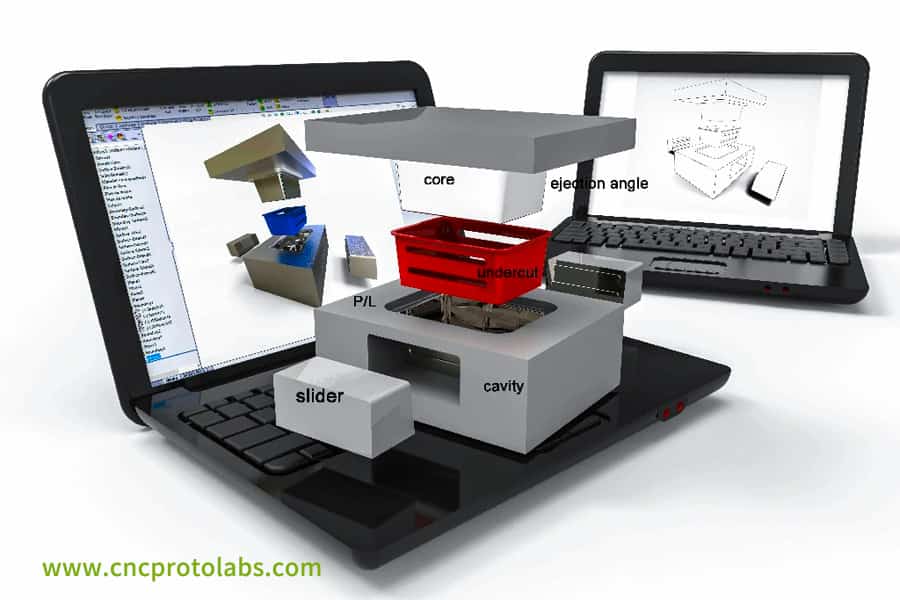
Figure 2: A bar chart detailing the cost components of an injection mold, such as steel, machining, and design, with their typical percentage ranges.
How Does Material Selection Affect Plastic Injection Molding Cost?
Material cost comprises 30%-60% of the injection molding price. It satisfies the requirements of ASTM D1238:2022 standard. In 2026, general purpose plastics will cost $1-3 per kilogram, engineering plastics $4-15 per kilogram, and special additives will incur an additional 10%-30% charge.
*General Plastics vs. Engineering Plastics: Prices and Application Scenarios
| Plastic Type | Price Range (kg) | Applicable Products |
| PP/PE | $1.2-2.5 | Industrial pallets, general housings |
| ABS/PC | $2.8-4.5 | Consumer electronics housings, small structural parts |
| PA66/PC+ABS | $4.5-8.0 | Industrial gears, small automotive structural parts |
| PEEK/LCP | $50-120 | Aerospace, high end medical precision components |
Hidden Price Increases For Additives And Masterbatches
- 30% Glass Fiber Reinforcement: Cost of material +20%-35%, it is a way of folding strength and temperature resistance capability.
- Flame Retardant UL94 V-0: Cost of raw material +25%-40%, it is a requirement of a fire protection.
- Custom Masterbatches: $500-1,500 color matching fee + $0.20-0.50/kg premium.
Scrap Rate and Material Utilization
- Cold Runner Molds: Scrap rate 15%-25%, low mold cost but high waste.
- Hot Runner Systems: Scrap rate <5%, requires an additional $4,000-12,000 in mold costs.
Case Study: A hot runner in the automotive wiring harness brackets made materials saving up to $18,000 per year. High production volume allows the additional investment to be rapidly recovered.
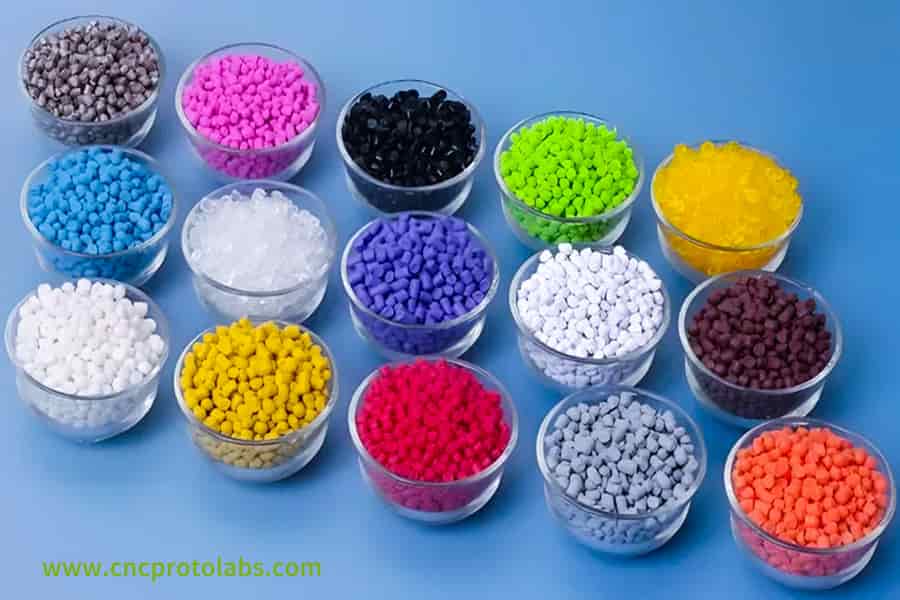
Figure 3: Small glass bowls filled with plastic pellets in a variety of colors like pink, green, and yellow, arranged on a blue surface.
How Do Process Parameters Impact The Cost Of Plastic Injection Molding?
Injection molding process parameters have direct impact on costs. A 1-second reduction in cycle time, for instance, saves $2,000-3,500 per 100,000 units, the wrong choice of machine tonnage leads to 30%-50% higher energy consumption, whereas process optimization can bring cost reduction in the 10%-20% range.
The price of mass production of 100,000 units depends greatly on the conjunction of injection molding process parameters.
The following is a summary of practical industry data from 2026, which clearly demonstrates the impact of parameters on cost:
| Injection Cycle (seconds) | Machine Tonnage (tons) | Yield (%) | Machine Labor Cost ($/hour) | Total Labor Cost for 100,000 Units ($) | Scrap Loss ($) |
| 25 | 100 | 98.5 | 55 | 3888.89 | 1650 |
| 30 | 100 | 98.5 | 55 | 4666.67 | 1650 |
| 30 | 300 | 98.5 | 100 | 8333.33 | 1650 |
| 30 | 300 | 95 | 100 | 8333.33 | 5000 |
| 35 | 500 | 95 | 170 | 16944.44 | 5000 |
| 40 | 500 | 92 | 170 | 18888.89 | 8500 |
Cycle Time: An Invisible Drain on Your Profits
- Since cooling time covers 50%-80% of the entire cycle time, it naturally becomes one of the main areas where you should focus on optimization.
- Example: By making the cooling water path more efficient for the industrial fan blades, the cycle time was cut down from 45 s to 38 s, bringing in an annual saving of $22,000.
Injection Molding Machine Tonnage and Energy Costs
Machines of different tonnage levels have very varied hourly rates and this again influences the price per unit directly:
- 100-ton machine: $45-65 hourly rate, best for small parts.
- 300-ton machine: $85-120 hourly rate, good for medium sized structural parts.
- 500-ton machine: $140-200 hourly rate, mainly for large injection molded parts.
Reworking product designs so that they need less machine tonnage can help keep the cost per unit low.
Yield Rate: Difference of 1% Means 10,000 Units
- Relative to a 95% yield rate, a 98% yield rate means 3,000 more scrapped units per 100,000 units, thereby not only material but also labor waste.
- A statistical process control (SPC) system can be introduced for $5,000-$15,000, and it might help to cut down the scrap rate by 2-4 percentage points.
How Does Annual Volume Affect The Cost Of Plastic Injection Molding?
Annual production volume guides the choice of mold design. Figures for 2026: If the production is less than 1,000 pieces,3D printing or aluminum molds are used, if the production is more than 100,000 pieces, multi cavity hardened steel molds areused.
One can use a plastic injection molding cost calculator for getting a more precise figure.
Economies of Scale
Unit cost is primarily influenced by the amortization of the mold. Here is some case data:
- For 1,000 units: Mold amortization $15/unit + production $5/unit, total unit cost $20.
- For 50,000 units: Mold amortization $0.30/unit + production $1.20/unit, total unit cost $1.50.
Pricing Logic of Minimum Order Quantity (MOQ)
- Aluminum mold MOQ: 1,000-5,000 units, perfect for trial production and small batch deployment.
- Steel mold MOQ: 10,000 units and above, perfect for mass production of mature products.
- Bridging strategy: First, trial production with aluminum molds, then after verification and upgrade to steel molds, thereby mitigating risk.
Tiered Pricing Strategy
The injection molding industry uses tiered pricing based on production volume. For example, for an electronic casing:
- 10,000-10,000 units: $2.85/unit
- 10,000-50,000 units: $1.92/unit
- 5,000-200,000 units: $1.28/unit
Recommendation: Lock in total demand and negotiate at the highest tier price, placing orders in batches to balance capital and costs.
Want to develop the optimal procurement and production strategy based on your product's annual output? Review JS Precision's injection molding volume pricing case studies to find a cost control solution tailored to your needs.
How Does Design Affect Final Plastic Injection Molding Cost?
Product design accounts for 70% of injection molding costs. For example, reducing the wall thickness of ABS/PC products by 0.5mm results in 12%-18% cost savings. Cost calculators can be employed to estimate costs.
Design for Manufacturing and Assembly (DFM)
- DFM analysis charge: $800-2,500, can find production defects at an early stage.
- Typical issues: lack of draft angle, irregular wall thickness, very thick ribs for reinforcement.
- Example: Following DFM modification of a motor enclosure, mold expenses dropped to $33,500, and cycle time was decreased by 8 seconds.
Wall Thickness, Ribs, and Draft Angle Design Specifications
- Ideal wall thickness for ABS/PC material: 1.5-3.5mm, after each 0.5mm, the cooling time increases by 30%.
- To prevent shrinkage marks, rib thickness is kept at 50%-60% of the nominal wall thickness.
- Changing the draft angle by 1 results in a 15% decrease in the ejection force, therefore, it lowers the chance of ejection whitening.
Economics of Part Integration
Integrating parts can be cost effective: Control panels for industrial use were made from 12 parts into 4, and total costs were reduced by 28%.
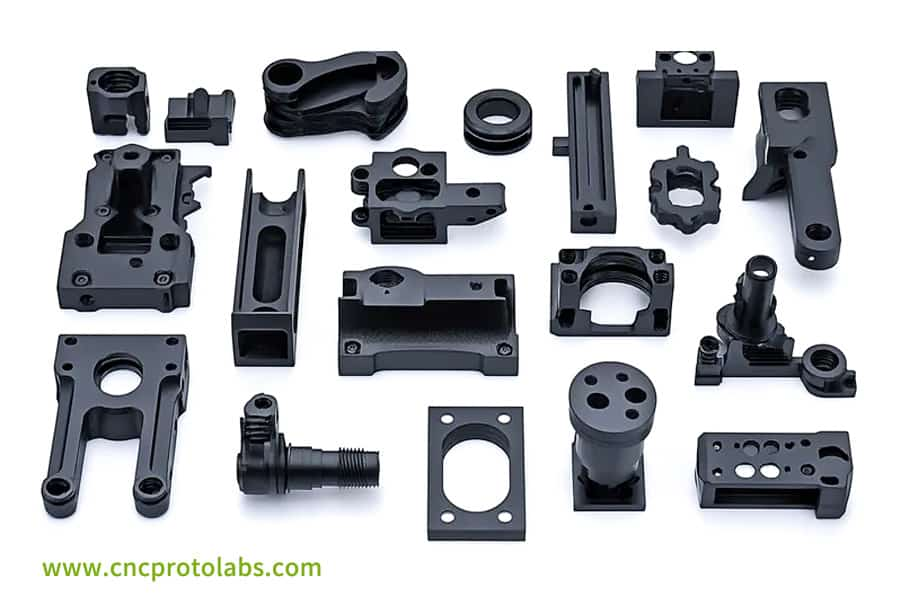
Figure 4: A collection of precisely machined black metal parts with various holes, slots, and contours, arranged on a white background.
How Much Do Secondary Operations Add To Plastic Injection Molding Price?
Secondary processing may raise the overall cost by 20%-80%. Spray painting can be as cheap as $0.30 or as high as $1.50 per piece, a piece of ultrasonic welding can cost from $0.15 to $0.60, while automation can bring the costs down by 30%.
Actual Cost of Surface Treatment
- Single color spray painting: $0.40-1.20/piece + jig fee $800-2,000.
- Screen printing/pad printing: $0.15-0.45/piece + screen fee $150-400/color.
- Laser marking: $0.08-0.25/piece, no jig fee but slow.
Assembly Process Cost
- Ultrasonic welding: Equipment $6,000-15,000, $0.10-0.30 per piece.
- Manual assembly: $0.50-1.50/piece, suitable for small batches and complex assembly.
- Automated assembly: Equipment $30,000-80,000 more economical for 50,000 pieces or more.
The final stage of packaging and logistics
- Standard packaging: $0.05-0.20/piece, suitable for general industrial parts.
- Special packaging: $0.30-0.80/piece, suitable for precision electronic components.
- Logistics: The difference between sea freight costs and air freight costs is 5-10 times, and it should be considered as part of the total cost.
What Hidden Costs Are Often Overlooked In Plastic Injection Molding?
Hidden costs are very easy to miss and can increase your total costs by 15%-25% without you realizing it. Some of these costs are mold maintenance fees, design changes fees, certification testing fees, etc.
Mold Maintenance Long Term Budget
Since molds are working implements, they need regular upkeep, and here are the details of the probable expenses:
- Every 100,000-200,000 cycles: Polishing maintenance $500-$1,500.
- Slider/ejector replacement: $800-$2,500/piece.
- Suggestion: Keep aside 8% of the first mold cost every year as a maintenance fund.
The Real Costs of Design Modifications
If the mold design is changed then the mold will have to be changed as well. The cost depends on the magnitude of change:
- Simple 3D data modification only: $300-$800/time, no opening involved.
- Cavity welding/remachining: $1,500-$4,000/location.
- Complete mold remake: 40%-70% of the new mold price.
Costs for Certification and Compliance
The certification requirements of different regions vary. The main test expenses are:
- UL Certification: $3,000-8,000 (for the North American market).
- FDA Testing: $2,500-6,000 (for food contact applications).
- RoHS/REACH Report: $800-1,800 per material (for the EU).
- PPAP Documentation Package: $1,500-4,000 (standard requirement for industrial mass production).
To anticipate hidden costs and develop a comprehensive budget, download the JS Precision Injection Molding Project Cost White Paper for a complete understanding of cost structure and budgeting techniques.
JS Precision Case Study: How Automotive Sensor Shells Can Reduce Total Costs By 27%
A certain automotive parts supplier was looking for annual production of 80,000 pressure sensor housings. First, the client got estimates from three different companies. Due to price concerns, the client finally went for a partnership with JS Precision and managed to drastically cut costs by optimizing the whole process.
Initial Difficulties of the Project
Three key quotes were given to the customer:
- Quote A (Lowest Local Price): Mold $31,000, $2. 15 per piece.
- Quote B (Initial JS Precision Quote): Mold $42,000, $1. 62 per piece.
- Quote C (Europe/America): Mold $58,000, $1. 45 per piece.
The client liked Quote A most but was worried about quality issues and the mass production cycle. JS Precision engineering team, along with client, discovered through design review, three major cost barriers in the original design:
- Unequal wall thickness (1. 2mm-3. 8mm) causing uneven cooling and leading to a cycle time of over 45 seconds.
- Four snap fit locations which need eight sliders, so the mold is extremely complex.
- Very tight tolerance (0. 03mm), though functionality actually only needs 0. 08mm.
Customized Solution
The JS Precision engineering team first suggested a three step optimization plan to solve the issue:
1. Design Correction:
The wall thickness was locked to 2.3mm±0.2mm, and the number of sliders was lowered from eight to two by employing the side core pulling method, which also led to simplifying the mold structure.
2. Mold Design:
In order to keep the balance between the mold cost and the lifespan, a 1-outlet, 2-cavity P20 steel mold with local heat treatment was chosen.
3. Process Optimization:
A combination of hot runner and sequential valve control was used to enhance material utilization and production efficiency which resulted in an estimated cycle time of 28 seconds and 98.5% yield rate. The client agreed to the solution and made a payment of $2,800 for the mold feasibility analysis and data modification.
Final Project Results
The real figures at the time of mass production even surpassed the forecast:
- The finished mold price was $36 800 which is 12% less than the initial B quote.
- The real injection molding cycle time was 26.5 seconds, even better than the solution's hope.
- The unit production cost was $1.48 (annual production of 80,000 units).
Total expenditure for the first year of the project: $36,800 plus $1.48 times 80,000 units, equaling to $155,200. On the other hand, the estimated total cost of the original proposed plan A was $203,000. The JS Precision option therefore saves the client $47,800 and reduces the total cost of ownership by 23.5%.
If your injection molding project also faces issues such as high costs or unreasonable design, you can submit your product requirements and drawings to JS Precision, and we will customize a cost reduction plan for you to achieve optimal control of plastic injection molding cost.
FAQs
Q1. How much does plastic injection molding cost per part?
The typical unit price of plastic injection molding varies from $0.05 to $15.00, depending on the material, size, and yearly production volume. For production of more than 100,000 units, the unit price can be as low as $0.15-$1.50.
Q2. What is the typical mold cost for a plastic part?
Plastic part molds can cost anywhere between $3,000 and $100,000+ whereas molds for mainstream industrial parts typically range from $15,000 to $45,000. Steel molds of higher quality can endure 500,000-1 000 000 cycles.
Q3. How can I reduce plastic injection molding costs?
Q4. What is the minimum order quantity for injection molding?
Typically, the minimum order quantity (MOQ) for aluminum injection molding molds is 1,000-5,000 pieces, and for steel molds, it starts at 10,000 pieces. JS Precision can comfortably work with mixed orders to distribute the MOQ, which lessens the burden of small batch production.
Q5. How much does it cost to make an injection mold in China?
The cost of injection molds in China is only 30%-50% of that in Europe and America. Industrial metal molds of medium complexity price $18,000-35 000 offering a good balance of precision and durability.
Q6. Is injection molding expensive for small runs?
The cost per unit is high for small batch (<5,000 pieces) injection molding. It is advisable to use aluminum molds or 3D printing bridging. JS Precision provides quick small batch production options.
Q7. How does part complexity affect mold cost?
The complexity of a product is a significant factor in increasing mold costs. For instance, an additional slider or lift can lead to a rise in mold costs by $3,000-8,000.
Q8. How much does material cost affect part price?
Material cost forms about 30%-60% of the price of a single injection molded part. The cost of engineering plastics is 2-5 times that of general purpose plastics.
Summary
How much does a plastic injection molding cost? Well, this question only makes sense when you take into account mold design, production volume, etc. The essence is a long term total cost of ownership control, and selecting the appropriate solution is vital for managing cost of plastic injection molding.
Are you ready to start your next injection molding project? Send your 3D drawings to JS Precision company, and our engineers will provide a DFM analysis report and detailed cost breakdown quotation within 24 hours - not only telling you how much it costs, but also where the money is spent and where it can be optimized.
Make JS Precision a reliable partner for Chinese manufacturing and help you win market competition.

Disclaimer
The contents of this page are for informational purposes only.JS Precision Services,there are no representations or warranties, express or implied, as to the accuracy, completeness or validity of the information. It should not be inferred that a third-party supplier or manufacturer will provide performance parameters, geometric tolerances, specific design characteristics, material quality and type or workmanship through the JS Precision Network. It's the buyer's responsibility Require parts quotation Identify specific requirements for these sections.Please contact us for more information.
JS Precision Team
JS Precision is an industry-leading company, focus on custom manufacturing solutions. We have over 20 years of experience with over 5,000 customers, and we focus on high precisionCNC machining,Sheet metal manufacturing,3D printing,Injection molding,Metal stamping,and other one-stop manufacturing services.
Our factory is equipped with over 100 state-of-the-art 5-axis machining centers, ISO 9001:2015 certified. We provide fast, efficient and high-quality manufacturing solutions to customers in more than 150 countries around the world. Whether it is small volume production or large-scale customization, we can meet your needs with the fastest delivery within 24 hours. Choose JS Precision this means selection efficiency, quality and professionalism.
To learn more, visit our website:www.cncprotolabs.com
Resource