English



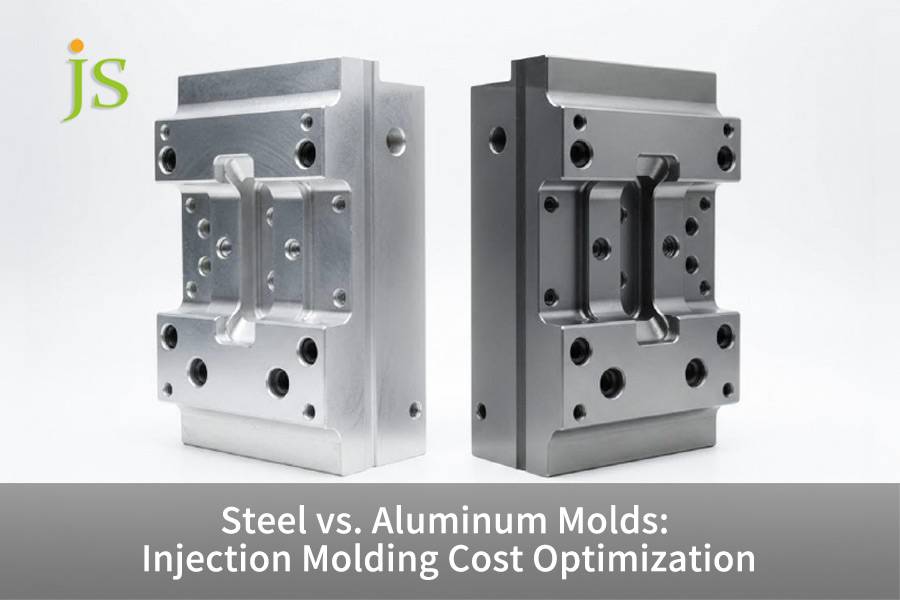

Steel vs aluminum injection molds selection affects both your initial capital outlay and per-part production cost. Aluminum tooling can reduce starting mold costs by as much as 75% and turn them around in only 15 working days which is best for production volumes up to 50,000 units.
But, hardened steel molds are 3-4 times more expensive initially but they can be used for 1,000,000 shots without any changes in dimension (tolerance remains ±0.01 mm). The molds are best suited for abrasive resins and delivering lowest per-part costs in mass production. In this article, a TCO model is presented so that will help you decide about the molding material you will use.
Steel vs Aluminum Injection Molds Decision Matrix
|
Technical Dimension |
Rapid Aluminum Tooling |
Semi-Hardened Steel |
Hardened Steel Tooling |
|---|---|---|---|
|
Typical Material Grade |
Al7075-T6 / QC-10 |
P20 / NAK80 |
H13 / S7 / 420 Stainless |
|
Initial Mold Cost (CapEx) |
Baseline (50-75% lower) |
1.8x - 2.5x baseline |
3.0x - 4.5x baseline |
|
Rated Tool Life (Cycles) |
10,000 - 100,000 |
100,000 - 500,000 |
1,000,000+ |
|
Cycle Time Reduction |
30-40% faster (high conductivity) |
Standard cooling |
Requires conformal cooling |
|
Typical Tolerance Band |
±0.05mm - ±0.1mm |
±0.03mm - ±0.05mm |
±0.01mm - ±0.03mm |
|
Resin Limitation |
Non-abrasive only (PP, ABS, PC) |
Low GF (<15%) |
All resins including ≥30% GF, PEEK |
|
Lead Time |
10 - 18 working days |
20 - 30 working days |
35 - 55 working days |
Key Takeaways
- Initial Expenses: Aluminum molds can reduce initial capital investment by up to 75%, and reduce mold opening and delivery time to within 15 days.
- Cycle Costs: High thermal conductivity of QC-10 aluminium can reduce machine operating time per piece because the injection cooling period is reduced by 30%-40%.
- Resin Limitation: Modified plastics with a filler level 30% (e.g. PA66-GF), are abrasive to aluminum molds and will lead to erosion of gate area after ~15,000 stamping cycles. This would necessitate H13/420 hardened steel molds which will have better erosion resistance.
- Break-even point: For the non-abrasive grade plastics break-even of the total cost per piece of the aluminum and steel molds is generally between 40,000 and 60,000 pieces.
Why Trust JS Precision's Injection Mold Cost Service? A Comparison Of Maintenance Cost Differences
For Industry's practice, the way to optimize injection molding tooling cost isn't a matter of picking up the lowest-cost material but of finding best compromise among mold life, unit processing cost and maintenance cost. Per our practical application on a European appliance shell packaging project, the client initially set to produce 150000 pcs PA66-GF20 parts with pure aluminum molds.
Our team as a steel-core aluminum frame composite mold providing team. We decreased initial mold opening cost by 42%, decreased delivery time by 12 days, and gained 150,000 pcs flashfree injection molding certification.
Per ISO 9001:2015 8.1, The organization shall ensure that the services are provided under controlled conditions including the availability of work instructions, the use of suitable equipment and the application of monitoring and measurement.
To fully implement this standard, JS Precision adopts a closed-loop cost control system for its custom injection mold service: from DFM pre-audit, shell cavity machining (accuracy ±0.005mm), trial molding CMM full inspection to batch delivery, to the cost of total life cycle accounting model (TCO), making sure that every penny of the customer's mold investment is recorded measurable manageable.
Want to get your injection mold cost optimization solution? Download JS Precision's Steel vs. Aluminum Mold Selection Decision White Paper, which includes a TCO calculation model and material selection matrix.
What Drives the Injection Molding Tooling Cost Breakdown?
Injection molding tooling cost mainly consists of CAM programming, CNC high-speed milling and EDM electrical discharge machining time (55%), mold material cost (20%), and assembly and debugging cost (25%).
Machining Time Cost Breakdown
When providing custom injection mold service, there is a significant difference in machining efficiency between aluminum alloy and steel molds:
- Benefits of using aluminum mold machining:
The chip volume removal rate (MRR) of Al7075-T6 is about 4 - 5 times compared to P20 mold steel, which makes the time of manual cutting with CNC cutter about 60% faster. This means that there is less wear and tear on the machine tool spindle.
- Features of steel mold machining:
When it comes to molds with deep, difficult cavities or fine surface textures, although the speed of cutting with steel materials is low, the hardness of up to HR52 could be reached by heat treating it so that there is no deformation both in assemble and high pressure injection process.
- Proportion of EDM (Electrical Discharge Machining) Time:
For features like deep ribs and micro-holes which cannot be directly machined with a CNC machine tool, EDM (Electrical Discharge Machining) time takes about 15 - 25 percent of the total machining time only.
Mold Material Cost Structure
|
Cost Element |
Aluminum (Al7075-T6) |
Pre-hardened Steel (P20) |
Hardened Steel (H13) |
|---|---|---|---|
|
Material cost per pound |
$4-6 |
$3-5 |
$6-10 |
|
Machining cost factor |
20-40% lower |
Baseline |
10-20% higher |
|
Heat treatment required |
No |
No |
Yes (+$2,000-5,000) |
|
Total relative cost |
0.6-0.8x |
1.0x |
1.2-1.5x |
|
Typical tooling cost range |
$2,500-8,000 |
$10,000-25,000 |
$25,000-100,000+ |
Once purchasing engineers know the percentage of labor and material costs separately, they can precisely avoid paying for premiums when bargaining over the injection molding tooling cost. Since low volume injection molding tooling projects use aluminum molds which have lower material costs and quicker processing, these advantages further reduce their total cost.
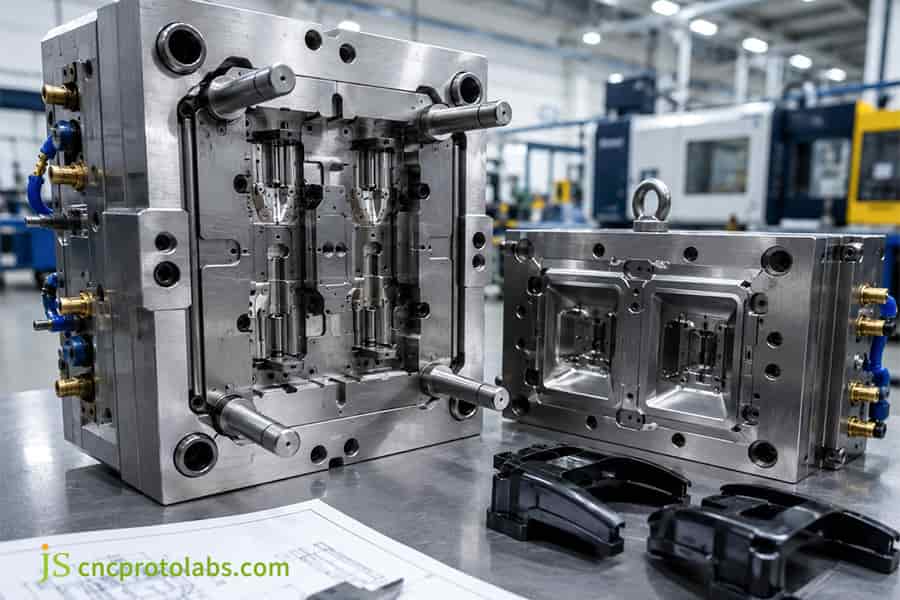
Figure 1: Steel molds and technical drawings for cost analysis.
How Does an Aluminum Mold Tooling Service Optimize Low-Volume Injection Molding Costs?
Aluminum mold tooling service reduces processing time by more than 50% by utilizing highly machinable aluminum, providing a path to reduce initial capital expenditure in low-volume production of 1,000 to 50,000 pieces.
High thermal conductivity reduces labor costs
In low volume injection molding tooling strategies, the technical advantages of Al7075-T6 are as follows:
- Thermal conductivity advantage: Thermal conductivity of aluminum Al7075-T6 alloy is quite high compared to steel molds (e.g. P20 steel molds). The typical thermal conductivity range is 130-160 W/m·K for Al7075-T6 versus only 29 W/m·K for P20 steel molds.
- Shorter cycle time: The greater cooling of the melt will allow you to decrease the time of one injection cycle by 30% to 40%, decreasing production costs related to rental and operating labor of injection molding machines.
- Decision Logic: If your order is less than 50,000 pieces and you're injecting a non-abrasive resin, using aluminum mold tooling service is the best option.
Lightweight Design Reduces Setup Costs
- Faster Installation: Using molds made from light weight aluminum reduces setting up time by half.
- Multi: Great for manufacturing civilian flexible parts in small quantities which cover a broad spectrum of product types.
- Fast Prototyping: Soft material properties enable higher rate of removal (metal removal) changes during ECO design revisions than with steel molds.
Need to validate the market feasibility of small-batch products? Contact our engineering team for a customized, rapid aluminum mold solution. We will deliver the first mold within 15 business days.
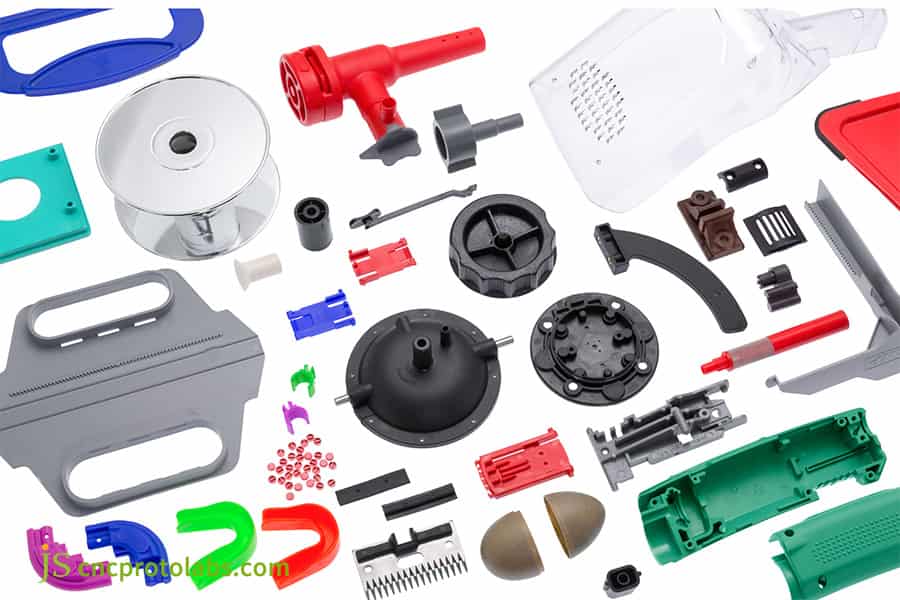
Figure 2: Colorful plastic parts produced with aluminum mold tooling.
Why Does a Steel Mold Tooling Service Deliver Superior ROI for High-Volume Injection Molding?
Steel mold tooling service, leveraging the wear resistance and compressive strength of hardened tool steel (such as H13/420SS), can withstand millions of stamping cycles without exceeding tolerances, achieving the lowest possible per-piece mold cost amortization in mass production.
Per-Piece Mold Cost Amortization
In mold tooling cost comparison analysis:
- Initial Cost Differentiation: Steel molds have an upfront expense of approximately 2 - 4 the total cost for aluminum molds.
- Cost After Depreciation: With the production cost amortized over 1 million units, each mold's depreciation is less than five cents.
- ROI Inflection Point: Once the total quantity produced passes 100,000 pieces, the lifetime of the mold is the dominant factor in deciding whether the project is profitable.
Dimensional Stability under High Pressure
- Compressive strength: A mold made with steel will easily hold up against the injection of a plastic that will give pressure of more than 150 MPa.
- Parting Line Tightness: A close-fitting mold ensures that dimensions remain within a tolerance of ±0.01 mm to ±0.05 mm.
- Flash Removal: With no manual de-flashing there no need for the cost of this operation.
Comparison of Physical Properties of Mold Materials
|
Material |
Hardness (HRC) |
Tensile Strength (MPa) |
Thermal Conductivity (W/m·K) |
Typical Tool Life (shots) |
|---|---|---|---|---|
|
Al7075-T6 |
85-90 HRB |
572 |
130-160 |
10,000-100,000 |
|
P20 |
28-32 |
965 |
29 |
100,000-500,000 |
|
H13 |
48-52 |
1650 |
24-29 |
500,000-1,000,000+ |
|
420 Stainless |
48-52 |
1350 |
25 |
1,000,000+ |
Planning for mass production? Let long-life precision steel molds ensure the success of your automated injection molding production line. Get a customized steel mold tooling service solution evaluation.
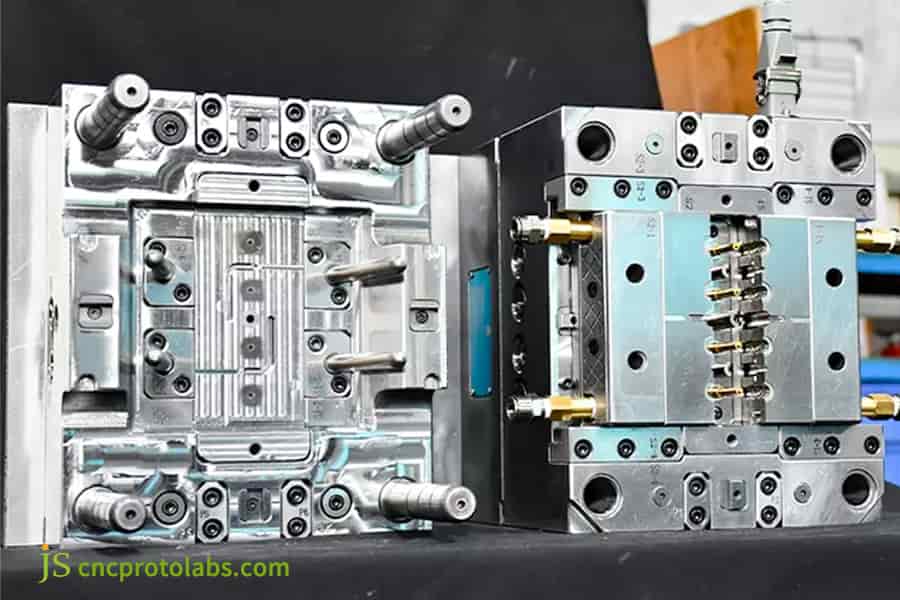
Figure 3: Machined steel molds for high-volume manufacturing.
How to Calculate the TCO Between Rapid Aluminum Tooling Service and Steel Molds?
Comparing rapid aluminum tooling service with steel vs. aluminum injection molds cannot be done solely by looking at the mold quotation. A comprehensive life-cycle cost (TCO) model, integrating mold expenses, machine labor costs, and scrap rate, is necessary to accurately calculate the cost break-even point.
TCO Calculation Formula:
TCO = Tooling Cost + (Unit Processing Cost × Production Volume) + Maintenance & Scrap Loss
Utilizing rapid aluminum tooling service can lower mold costs at the beginning by up to 60% and save around 35% in injection molding machine processing costs mainly due to the advantages in cooling.
Even so, the yield strength of Al7075-T6 (505 MPa) is lower to that of H13 hardened steel (1650 MPa), so the parting surface may be susceptible to wear when there is constant clamping pressure. When the total number of products approaches the range of 40,000 to 60,000 pieces, the rising maintenance and scrap costs of (aluminum) (molds) will nullify its cost benefits in the first place.
Actual TCO Comparison for 50,000 Units:
- Aluminum Mold Solution: Cost of mold was $8 000 unit processing cost was $0.22 and Total Cost of Ownership will be approximately $19,000.
- Steel Mold Solution: Cost of mold was $25 000 unit processing cost was $0.30 and Total Cost of Ownership will be up to $35,000.
- Financial Evaluation: At a production volume of 50,000 units, the aluminum mold will be very cost-effective. But, if the total volume of the project is expected to be 500,000 units, then the total cost of steel mold will become higher.
Which Mold Material Handles Abrasive Resins and High Tolerances Best?
In custom injection mold service, glass fiber reinforced resins (such as PA66-GF30) and high-temperature engineering plastics are highly abrasive and require the mold to have a hardness of HRC 50 or above, making steel molds a viable option for such materials.
Glass fiber abrasion mechanism
In the mold tooling cost comparison, the physical properties of plastic resin are the hard indicators that determine the selection of mold materials:
- Gate erosion: Using a 30% glass fiber reinforced nylon (PA66-GF30) causes the glass fiber to wear of the cavity surface when used under high speed injection molding conditions.
- Limited aluminum mold: After 15000 punches, the aluminum gate mold will expand and the part size will be over the standard deviation ±0.1 mm.
- Steel mold accuracy: If H13 or 420 vacuum hardened stainless steel mold, it can handle a melt temperature of 350℃ and high fiber erosion.
Resin-Mold Matching Matrix
|
Resin Type |
Glass Fiber % |
Recommended Mold Steel |
Aluminum Mold Limit (shots) |
Achievable Tolerance |
|---|---|---|---|---|
|
PP / ABS / PC |
0% |
Al7075-T6 or P20 |
50,000-100,000 |
±0.05 mm |
|
PA66 |
15% GF |
P20 / NAK80 |
10,000-15,000 |
±0.05 mm |
|
PA66 |
30% GF (PA66-GF30) |
H13 (HRC 48-52) |
15,000 |
±0.03 mm |
|
PEEK / PPS |
High temp & abrasive |
420 Stainless (HRC 50+) |
Not recommended |
±0.01 mm |
|
PC/ABS |
0% |
Al7075-T6 or P20 |
80,000 |
±0.05 mm |
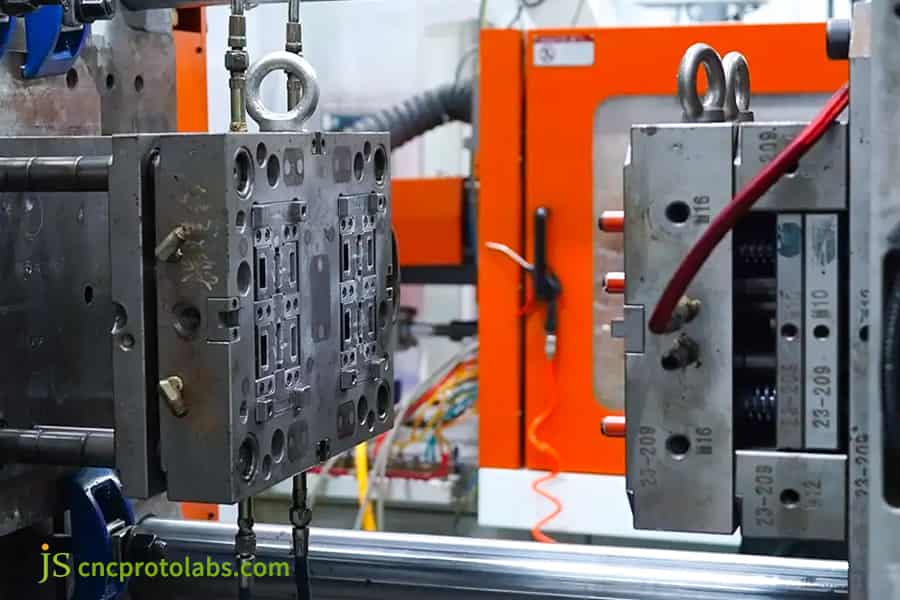
Figure 4: Machined steel and aluminum molds for precision.
What Are the Engineering Risks of DFM Modifications in Aluminum Molds?
Aluminum mold tooling service is fast when cutting metal (adding meat) using CNC, but when repairing welding layers (reducing meat), the high thermal conductivity of the aluminum alloy will cause pores and annealing softening in the welding area, making it more difficult to modify the mold.
Difficulty in meat reduction modification (metal filling)
In rapid aluminum tooling service:
- Welding defects: Laser micro-beam welding of aluminum alloys generates heat at a tremendous speed and tends to develop unfused pores, which are gas-entrapped voids.
- Local Softening: As the heat generated from welding locally affects the condition of Al7075-T6 heat treatment, it could cause the hardness in the affected area to reduce by 40%.
- Advantages of steel mould laminated welding: The steel mold welding procedure with H13 welding wire through a laser allows seamless repairing matching exactly the hardness level of the material base.
Comparison of operational difficulty between adding meat and reducing meat
Add meat (remove metal):
- Aluminum mold: The use of a CNC machine enables very rapid cutting speeds. It can complete the steel mold's workload of removing material in 4-5 hours within 1 hour just a single operation.
- Steel mold: The cutting speed is slower. Still, precise metal removal, by EDM, is possible.
Meat reduction (metal filling):
- Aluminum mold: Laser welding of aluminum should create pores, reduce its hardness by about half, and decrease reliability.
- Steel mold: H13 wire laser laminated welding will allow you to do flawless welding that will be perfectly matched hardness without being a joint.
Worried that design changes will lead to scrapped molds? We can reserve adjustable inserts in the mold to reduce the risk of ECO modifications and make your aluminum mold tooling service more flexible.
How Did JS Precision Save an Industrial OEM 42% Tooling Cost With Hybrid Tooling?
JS Precision developed a steel-core aluminum frame composite mold for an equipment supplier, reducing initial mold-making costs by 42% and shortening lead time by 12 days while maintaining a tolerance of ±0.05 mm for 150,000 cycles.
Client Challenges:
The customer required to mass-produce housings for non-military equipment from modified plastic PA66-GF20. The projected output is about 150,000 units and the dimension deviation tolerance is ±0.05mm. A complete steel mold at the price of $38,000 was too expensive, and the customer asked to get the first sample 20 days after the order was placed, directly using the pure aluminum mold would not reach 150,000-cycle wear.
This work was highly potential for injection molding tooling cost reduction. Though, the project was characterized by the extremely tight constraints of technical nature.
JS Precision Solution
For custom injection mold services, the team designed a hybrid tooling system:
- Aluminum Alloy Mold Base: Aluminum Alloy mold base of high-strength Al7075-T6 is used. Utilizing Al7075-T6's ability to be CNC machine-cut so fast, and have excellent heat conductivity for thermal cooling,
- Steel Critical Inserts: Hardened steel H13 is incorporated in the inserts at high-flow-rate gates and critical dimensional places that are highly affected by glass fiber abrasion.
ISO 16916:2016 stipulates: Define the description and specifications of injection molds during the inquiry and ordering stages, covering materials, equipment, structural design, and warranty information.
In order to strictly adhere to this standard, JS Precision solidified material grades, equipment parameters, mold structure design data, and warranty terms in the development of composite molds according to the ISO 16916:2016 tool specification table, ensuring that each output meets the ±0.05 mm tolerance specification.
Lessons Learned from Failures
Difference in the coefficient of thermal expansion (CTE) between aluminum (23×10^-6 / K) and steel (12×10^-6 / K) made it that a flash of 0.03 mm developed during the first trial molding at a mold temperature of 140℃. A team of engineers had to recalculate how much compensation they should have made originally and change that compensation to a dynamic method of adjusting the fit by heat.
Final Results
- Mold Cost: The cost of the mold was slashed from $38,000 to $22,000 i.e. a cut of 42%.
- Delivery Time: Reduced by about half since the timeline was cut short from 35 days to 16 days.
- Mold Life Validation: From failure to standards compliance after undergoing the test of 150,000 flashless injection molding cycles.
- Dimensional Stability: Improved from ±0.1 mm (out of limit) to ±0.05 mm (acceptable).
Facing dual constraints of budget and lifespan? Send drawings to JS Precision to apply for a free feasibility assessment of composite molds and obtain a customized hybrid tooling solution for your project.
Why Choose JS Precision as Your Precision Custom Injection Mold Service Partner?
Choosing JS Precision for your custom injection mold service means choosing a custom injection molding service expert with 15 years of experience in precision mold manufacturing, equipped with high precision CNC and CMM inspection equipment, and ISO 9001:2015 certified.
JS Precision's Four Core Advantages
We provide aluminum mold tooling service and steel mold tooling service, and eliminate design defects such as uneven wall thickness and insufficient draft angle through pre-mold analysis:
- Physical Factory and Advanced Equipment: We have a full-fledged factory in Dongguan equipped with high-precision CNC machining Centers and EDMs and also coordinate measuring machines (CMMs) which help us guarantee that all the molds and injection-molded parts leave the factory strictly compliant with civil and industrial tolerance requirements.
- Quality Management: Our molds and first inject mold (FAI) inspection are as ISO 9001:2015 standards. Every product is tested through a CMM coordinate measuring machine and an optical projector. We also deliver comprehensive Dimensional measurement Reports, a Mold Steel HT Certificate, and Sample Specimens before shipment.
- Mold Manufacturing full category: Whether you require a rapid aluminum mold for 1,000 pieces or a hardened steel mold for 1,000,000+ cycles, we assist you in achieving higher ROI with factory-direct pricing, transparent-cost accounting, and strict Intellectual Property Protection:
- Global Rapid Response: A professional bilingual engineering team can perform DFM assessment and provide quotations based on TCO for steel and aluminum molds within 24 hours.
Customer Benefits:
By opting for JS Precision, your project will get: the best mold material choices based on the TCA model, complete-process product traceability compliant with ISO 9001:2015 standard, plus a life span assurance of one million cycles for steel molds / one hundred thousand cycles for aluminum molds.
The risks of getting caught up and disputes over misunderstandings communication after-sales compensation through platform intermediaries, are higher. Whereas, directly operated factories offer committed and reliable engineering service teams, as well as a clear chain of responsibility which makes things easy and straightforward.
FAQs
Q1: What is the typical cost difference between steel and aluminum injection molds at JS Precision?
Simple aluminum molds at JS Precision are about one-third to a half cheaper than steel (H13) molds. To produce identical parts, H13 steel takes more time for CNC and EDM processes,more costly at the start in large-volume manufacturing per-piece costs are lower. To get a quick quote, you only need to upload some technical details.
Q2: How fast can I get a formal quotation for custom injection mold tooling services?
JS Precision guarantees your 3D CAD drawings will result in a DFM analysis report and a quotation to order the custom injection molds within 24 hours. Mold engineers check if your resin shrinkage is consistent, wall thickness uniformity, draft angle and gate locations to suggest the most suitable combination of steel vs aluminum molds.
Q3: Can an aluminum mold handle glass-filled resins like PA66-GF30?
Aluminum molds are great for small runs (up to 5,000 cycles) when you need a rapid tool to inject fiber-reinforced resins, but over time, the fibers will wear the metal and enlarge the gates. In this case, we suggest the use of H13 steel or hard steel inserts instead.
Q4: What are the production volume thresholds for choosing aluminum over steel tooling?
Aluminum is preferable for low-to-mid volume parts, say up to 10,000. Mid-volume (10,000-50,000) parts can either be made with P20 steel or with QC-10 aluminum depending upon the abrasiveness level of the resin. For high-volume runs in excess of 100,000 pieces, it is necessary to use hardened steel molds.
Q5: How many shots or cycles can an Al7075 aluminum mold last?
JS Precision's Al7075-T6 aluminum mold precision tool lasts up to 50,000 - 100,000 cycles if used to form non-abrasive plastics like PP, ABS or PE. The major factors are appropriate clamping force and regular up-keeps.
Q6: Can JS Precision modify an existing aluminum or steel mold if my product design changes?
Absolutely, JS Precision can handle engineering changes to both aluminum and steel molds. Aluminum molds are good because removing metal through cutting is relatively quicker while steel molds tend to be more durable as repairs are made via laser welded-overlays. We offer inserts that can be changed easily to make modifications cheaper.
Q7: Why does aluminum tooling reduce injection molding cycle times?
The thermal conductivity of aluminum alloys can reach 130-160 W/m·K which is about 5 times that of P20 steel molds (29 W/m·K). The high thermal conductivity of the aluminum mold is a fast way of carrying out heat from the melted plastic thereby reducing the duration of the cooling step by 30 percent to 40 percent.
Q8: What quality certifications and inspection standards does JS Precision apply to molds?
JS Precision is certified under the ISO 9001:2015 standard. Both the mold and the first injection molded part will be checked using a CMM coordinate measuring machine as well as an optical projector. Besides dimension inspection report, sample parts also be shipped together.
Summary
The decision to go with steel or aluminum molds is essentially an economic and technical trade-off. Aluminum molds being less expensive to purchase, have quick lead times, and are a perfect fit for prototyping and production of non-abrasive resins in small quantities. However, harden steel molds by being resistant to wear, preserving industrial-grade tolerances, and being able to last for about a million miles make them more cost-effective eventually if you are manufacturing in massive volumes. Stating the TCO (Total Cost of Ownership), which accounts for the mold price, injection cycle time, material waste, and maintenance, will help the decision maker in lowering their financial risk exposure.
Don't let mold selection delay new product launches. Send your 3D CAD drawings to JS Precision now to receive a free DFM report and a TCO-based quote for steel and aluminum molds, providing a cost-effective solution for your injection molding projects.

Disclaimer
The contents of this page are for informational purposes only. For JS Precision Services, there are no representations or warranties, express or implied, as to the accuracy, completeness, or validity of the information. It is the buyer's responsibility to identify specific technical requirements and request a formal parts quotation. Please contact us for more information.
JS Precision Team
Custom manufacturing solutions. With over 15 years of experience serving more than 1,000 customers, we specialize in high-precision CNC machining, sheet metal fabrication, 3D printing, injection molding, and metal stamping. Having successfully delivered over 300,000 precision parts, we maintain a 99.2% on-time delivery rate across all custom projects.
Our facility is equipped with over 100 state-of-the-art 5-axis machining centers and is ISO 9001:2015 certified. We deliver fast, efficient, and high-quality manufacturing solutions to B2B clients across 150 countries. Whether you require low-volume prototyping or large-scale customization, we support your project with lead times as short as 24 hours. Choose JS Precision for unparalleled efficiency, quality, and professionalism.
To learn more or submit your RFQ, visit our website: www.cncprotolabs.com
Resource