English



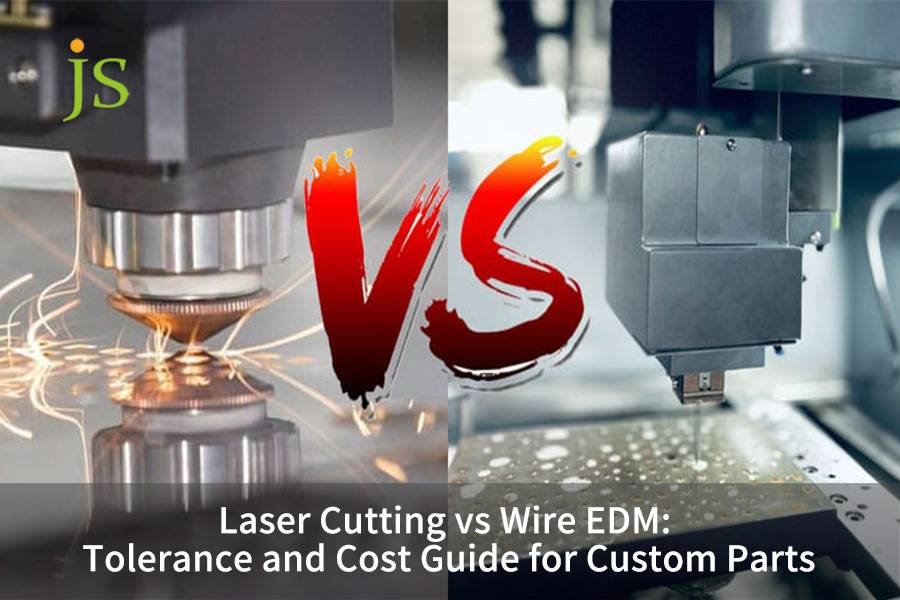

Laser cutting vs wire EDM differ fundamentally in energy mechanism and in the precision–cost trade-off: CNC laser uses focused beams to cut large volumes of material of thickness 0.5–25 mm at ±0.05–0.1 mm tolerance very quickly, whereas wire EDM makes use of microsecond pulse discharge to work on super-hard materials of thickness up to 300 mm at ±0.002–0.005 mm accuracy.
Tolerance and Cost: Laser Cutting vs Wire EDM Comparison Overview
|
Evaluation Dimension |
CNC Laser Cutting Service |
Wire EDM Service |
Engineer Selection Recommendation |
|---|---|---|---|
|
Standard Tolerance Range |
±0.05 mm to ±0.10 mm |
±0.002 mm to ±0.005 mm |
Tight fits stricter than ±0.01 mm must use wire EDM |
|
Surface Roughness (Ra) |
Ra 1.6 μm to Ra 3.2 μm |
Ra 0.2 μm to Ra 0.8 μm |
Mold cavities and mirror surfaces require multi-skim wire EDM |
|
Kerf Width & Inner Corner R Limit |
Kerf 0.15–0.35 mm, inner R ≥0.1 mm |
Wire Ø 0.1–0.25 mm, inner R ≥0.06 mm |
Narrow deep slots and sharp internal corners rely on micro-wire EDM |
|
Heat-Affected Zone (HAZ) |
0.1–0.3 mm (surface micro-hardening present) |
<0.005 mm (white layer removable via skim cuts) |
High-fatigue structural parts need HAZ risk assessment |
|
Cutting Speed & Hourly Rate |
1,000–60,000 mm/min ($35–$65/h) |
30–250 mm²/min ($60–$110/h) |
High-volume select laser; complex hard thick parts choose wire EDM |
If part tolerance is beyond ±0.05 mm and the target is to have the best unit price for mass production, then metal laser cutting should be the first choice; still, when processing hardened steel, making deep holes without draft angles, dealing with material thicknesses above 30 mm, or needing to meet tolerance requirements of ±0.005 mm, wire cutting comes out a winner with yield and overall cost.
According to SME 2024 Technical Papers, the tolerance-capability boundaries above have been validated across 2,000+ production projects.
How Do Tolerances Differ in Laser Cutting vs Wire EDM?
Laser cutting vs wire EDM tolerance capability diverges fundamentally: laser achieves ±0.05–0.1 mm under optimal conditions, while wire EDM reaches ±0.002–0.005 mm through multi-pass skim cutting with closed-loop compensation.
Tolerance capability comparison
- The focal spot of a fiber laser is influenced by the divergence angle and thickness which lead to a kerf taper of 0.3°–0.8°. This kerf taper is the biggest reason that changes the perpendicularity of the thick plate section. The gap in precision between fiber laser vs wire EDM becomes even more evident when it comes to thick plate cutting.
- A wire EDM machine working at a slow speed, together with a closed-loop grating ruler and a UV axis servo micro-compensation, can completely remove the hysteresis of the wire electrode and achieve a full cross-section straightness error below 0.008 mm at 300 mm thickness, and below 0.003 mm at 100 mm.
- Introducing the ISO 2768-mK vs fH accuracy class comparison helps engineers set appropriate tolerance limits and avoid costly over-design.
In real-world projects, JS Precision observed that relaxing the non-mating surface tolerance from fH to mK improved laser processing efficiency by 30% without requiring additional refinement.
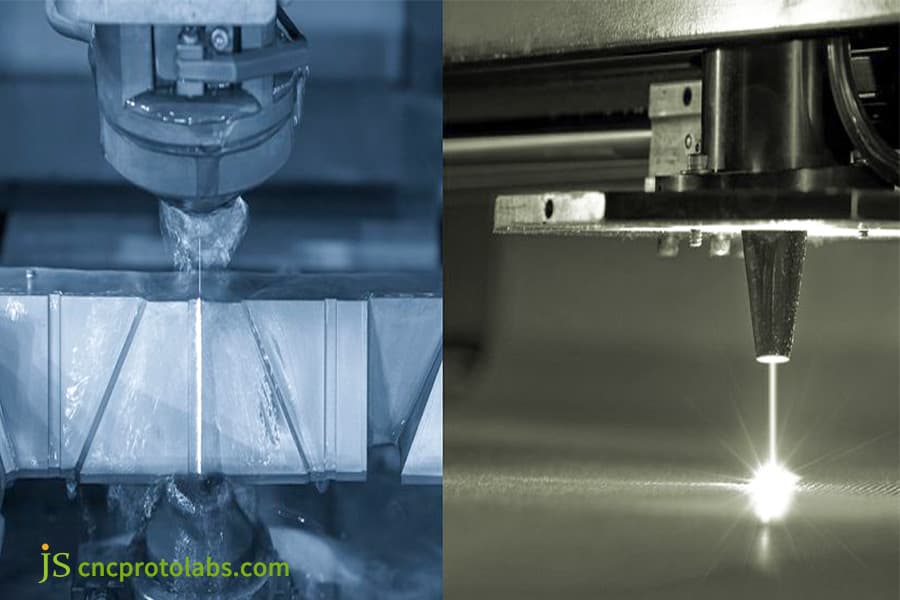
Figure 1: Laser cutting and wire EDM machines working.
How Thickness Impacts Metal Laser Cutting Service and EDM?
Metal laser cutting service excels in 0.5–12 mm sheets but suffers thermal distortion beyond 25 mm; wire EDM maintains stable accuracy through 300 mm thick conductive metals with zero mechanical cutting stress.
Influence of thickness on cross-sectional mass
- When the laser power and assist gas are properly matched, the thickness can range from 0.5 to 12 mm, kerf perpendicularity can be controlled within 0.1 mm, and bottom slag will be minimal. This type of metal laser cutting service is the most economical for laser processing.
- The turbulent flow of the auxiliary gas field during the processing of carbon steel or stainless steel plates with a thickness of more than 20 mm may cause slag to stick at the bottom. Also, continuous heat input leads to the workpiece warping.
- Wire EDM uses deionized water high-pressure flushing fluid (1.5-2.5 MPa) for chip removal, which keeps material removal rate constant and mechanical cutting stress at zero when machining 100-300 mm mold steel.
The impact of thickness on processing speed and cost
- With the increase of thickness, the peak feed rate drops dramatically: from 60,000 mm/min for 0.5 mm carbon steel to only about 800 mm/min for 25 mm steel, which significantly increases unit time cost.
- Clearly, the amount of material taken out decides the speed of wire EDM. Over a span of 100–300 mm, the removal rate is unchanged at 30–80 mm²/min. As a result, the relative efficiency benefit of wire EDM becomes more evident as thickness increases when cutting thick plates.
- For 3D parts with wall thicknesses above 20 mm, one has to take into account the cost of secondary leveling due to thermal distortion while wire cutting requires no post-processing. The turning point of the overall cost lies in the range of 15–20 mm thickness.
|
Thickness Range |
Laser Cutting: Kerf Taper (°) |
Laser Cutting: Bottom Dross Risk |
Wire EDM: Verticality Error (mm) |
|---|---|---|---|
|
0.5 – 5 mm |
0.3 – 0.5 |
Low |
<0.002 |
|
5 – 12 mm |
0.4 – 0.6 |
Medium |
<0.002 |
|
12 – 25 mm |
0.5 – 0.8 |
High |
<0.003 |
|
25 – 100 mm |
Not recommended |
Severe |
<0.005 |
|
100 – 300 mm |
Not applicable |
Not applicable |
<0.008 |
According to JS Precision's 2025 production data from 800+ thick-plate projects, wire EDM maintains verticality below 0.008 mm even at 300 mm thickness.
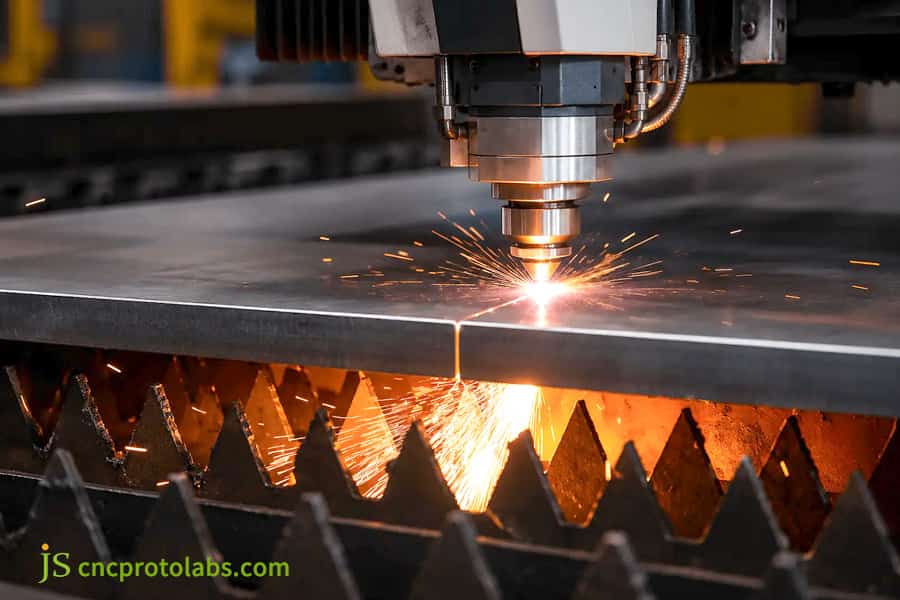
Figure 2: CNC laser cutting machine slicing thick metal plate.
What Risks Do HAZ and Roughness Pose in Custom Laser Cutting?
Custom laser cutting service produces a 0.1–0.3 mm heat-affected zone that embrittles edges; wire EDM achieves Ra 0.2 μm with no residual stress through micro-cool erosion.
Heat-affected zone and surface quality
- The localized laser temperature exceeds 1,500 °C, producing a hardened layer (≥55 HRC) on martensitic stainless steel edges. This layer can cause taps to break or crack during subsequent tapping and can initiate failure during bending. Change in the surface finish is the main reason leading to failure during assembly.
- The thickness of the wire EDM's remelted white layer is just 2–8 μm. If the discharge energy is first reduced by one main cut + three to five trimming cuts, the roughness of the surface is reduced to Ra 0.2–0.4 μm and the microcracks are eliminated which is sufficient for a very long fatigue life.
- JS Precision demonstrated in a high-frequency vibration fixture project that the fatigue life of the multi-pass skim cutting wire cut surface is more than 3 times that of the laser edge cutting.
The actual impact of HAZ on subsequent processing
- Microcracks may initiate on the outer surface of the hardened layer during subsequent bending, with the occurrence rate of cracks even reaching 15%–20% in case that R/t < 1.5.
- Premature tap wear can be the consequence of hardness gradient in the heat-affected zone of tapped threaded holes. To avoid this, it is best to give stress-relief annealing after laser cutting or even better, to perform wire EDM for pre-drilling.
- In conditions of very intense vibrations, microcracks in HAZ can grow and develop into visible sources of fatigue under cyclic loading, thereafter the only solution can be wire cutting or grinding to get rid of the modified layer.
Worried about the impact of laser heat-affected zone on component performance? Get a free HAZ risk assessment and process alternative recommendations now.
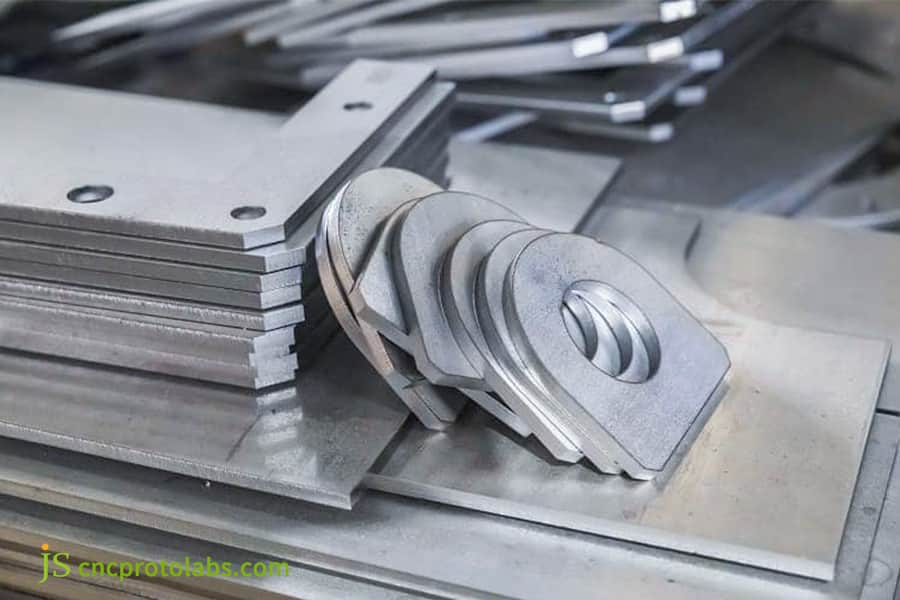
Figure 3: Stack of custom laser cut metal parts with holes.
How to Calculate Laser Cutting Cost vs Wire EDM for Batches?
The cost gap between laser cutting vs wire EDM widens dramatically at scale: laser hourly rate of $35–$65/h with speeds up to 60,000 mm/min yields per-part costs 5%–15% of wire EDM for high volumes.
Cost Structure Breakdown
- Laser costs are made up of machine tool depreciation, fiber loss, consumption of auxiliary gases (8-15 kiloliters per hour for liquid nitrogen / liquid oxygen), and very low labor costs that are spread out by high cutting speeds. When batch production goes over 1,000 units, the cost advantage of laser per unit is quite substantial.
- Wire EDM cost is mostly controlled by the single-pass loss of brass electrode wire (18%-25% of wire feed rate of 10-15 m/min), deionized resin loss, and very long work time of multiple tool repairs.
- Make a balancing model between batch production and tool path length: wire cutting for single-piece R&D is more deterministic, and when mass production exceeds 500 pieces, the overall cost of laser cutting can be less than 10% of that of wire cutting.
The impact of batch size on the cost inflection point
- Using laser programming and clamping for a single-piece prototype can take up quite a large chunk of the total time. Still, wire EDM can save the cost of auxiliary gas and help to avoid lens maintenance, which makes the cost difference per piece only 2-3 times. The major difference between laser cutting cost vs wire EDM cost is only equipment start-up costs.
- Batch production of 100 pieces: in this case, the rapid laser cutting time helps to reduce the cost per piece to 20% - 30% of the wire cutting cost; wire cutting trimming with multi-blades becomes the main limiting factor.
- Batch production of 10,000 pieces: by multi-station linkage and robotic loading and unloading, laser cutting can bring about further cost reduction whereas wire cutting, due to electrode wire deterioration and limited clamping area, has very little room for cost reduction.
|
Batch Size |
Laser Cutting: Per-Part Cost ($) |
Wire EDM: Per-Part Cost ($) |
Laser Lead Time (days) |
Wire EDM Lead Time (days) |
|---|---|---|---|---|
|
1 piece (prototype) |
8 – 15 |
25 – 45 |
1 – 2 |
3 – 5 |
|
100 pieces |
3 – 6 |
18 – 30 |
2 – 3 |
5 – 8 |
|
10,000 pieces |
0.5 – 1.5 |
8 – 15 |
5 – 7 |
15 – 25 |
For typical thin-sheet geometries, laser cutting's total cost falls below 10% of wire EDM's once volume exceeds ~300–500 units (JS Precision 2025–2026 database, 1,200+ EU projects).
Calculating costs for bulk parts? Upload your 3D STEP model to us and get a tiered quote comparison for both laser and wire cutting options within 24 hours.
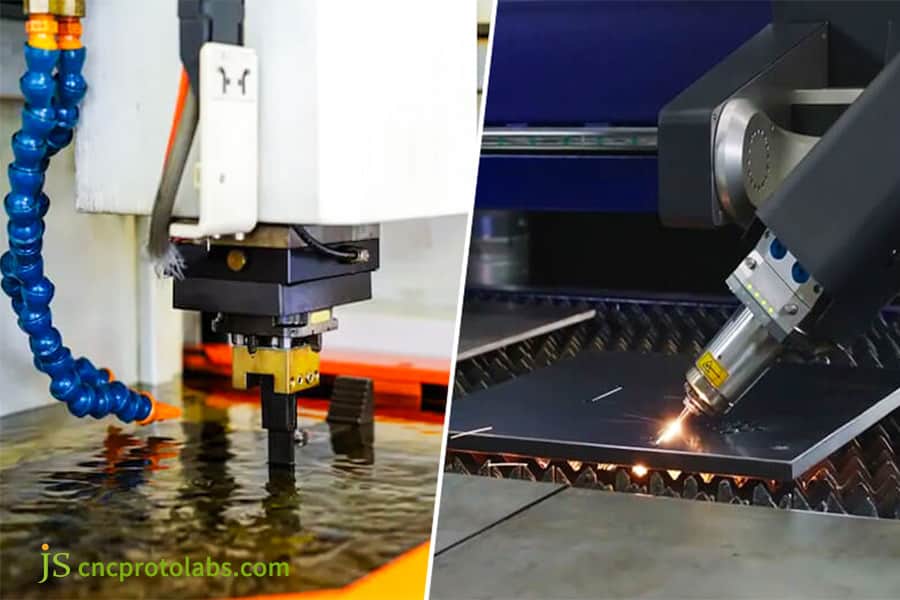
Figure 4: Laser cutting and wire EDM machines for batches.
Can CNC Laser Cutting Service Handle Micro Holes and Sharp Corners?
CNC laser cutting service cannot produce inner corners below R 0.1 mm or holes smaller than 0.5× material thickness due to spot size and pierce burst effects; wire EDM with Ø 0.1 mm wire achieves R 0.06 mm sharp corners.
Feature Limit Comparison
- Laser piercing on a metal surface results in a burst hole area with a diameter about 1.5 times the thickness of the plate. Accumulation of heat at the corners often means overheating and rounding, which makes it impossible to produce very precise pin holes. CNC laser cutting requires allowances to be reserved for secondary machining when dealing with fine features.
- When wire EDM is used with 0.1 mm micro-electrode wire and pre-drilled wire holes, it is capable of accurately forming keyways, splines, and sharp corners with a depth-to-width ratio of 30:1, without the necessity of secondary milling.
- DFM designers should make it clear that those features, which have an interior angle R < 0.15 mm or hole diameter < 0.8 mm must be specified for wire EDM to avoid tolerance overrun after laser processing.
DFM Recommendations for Microhole Machining
- For precisely positioned 0.8–1.5 mm holes, use a two-step approach: pre-punch, then laser-enlarge to control the bursting zone outside of the hole edge. This kind of laser cutting technique for custom parts is a really effective way of producing micro-holes with high quality.
- When micro-holes are spaced less than 2 mm apart, the laser heat accumulation will cause the deformation of adjacent hole walls. The entire array must then be switched to wire EDM or EDM drilling.
- Sharp corner removal is an inherent weakness of lasers; any design with an interior angle R < 0.15 mm should be marked Wire EDM required.
Which Alloys Require Wire EDM vs Metal Laser Cutting Service?
Metal laser cutting service suits carbon steel, stainless steel, aluminum, and non-metals; wire EDM specializes in hardened tool steels, tungsten carbide, and titanium alloys with hardness ≥50 HRC.
Material compatibility boundary
- In fiber laser cutting, the absorption rate of highly reflective materials (e.g. C1100 copper and 6061 aluminum alloy) has to be very accurately controlled; if it is not, the reflected light can damage the optical lenses.
- Wire EDM maintains a consistent metal removal rate for quenched steel (Cr12MoV, D2), powder high-speed steel (ASP23), cemented carbide (YG8), and high-temperature alloys (Inconel 718, TC4), allowing the process to be free of residual mechanical stress.
- Since the laser taper and slag build-up are the main obstacles to the laser cutting process of stainless steel or titanium alloys with a thickness over 50 mm, wire cutting is the only method for precision machining.
Processing challenges of high reflectivity materials
- Pure copper and silver-copper alloys reflect 90%+ of the 1.07 μm wavelength. This causes not only bad kerf quality but also to some extent the damages of the resonant cavity in the reverse direction. Laser cutting of such materials requires wavelength-conversion or coating-assisted techniques.
- One of the benefits of wire cutting is for highly conductive materials: copper conductivity makes the discharge gap more stable; besides, the cutting efficiency is 20–30% higher than for stainless steel, and surface roughness can easily attain Ra 0.4 μm.
- TC4 laser cutting over 8 mm leads to nitride layer embrittlement and thermal crack formation, but wire cutting, without heat input, is capable of preserving the original mechanical properties.
|
Engineering Material |
Laser Cutting Suitability |
Wire EDM Suitability |
Key Limitation for Laser |
Key Advantage for EDM |
|---|---|---|---|---|
|
Stainless Steel (SUS304) |
Excellent (≤12 mm) |
Excellent |
HAZ hardening >55 HRC |
Zero residual stress |
|
Titanium Alloy (TC4) |
Good (≤8 mm) |
Excellent |
Thermal distortion risk |
Stable erosion rate |
|
Tungsten Carbide (YG8) |
Not suitable |
Excellent |
Reflectivity damage |
Constant MRR regardless of hardness |
|
Copper (C1100) |
Poor (requires special coating) |
Excellent |
>90% reflectivity |
High conductivity aids discharge |
According to ASM International 2025 Machining Handbook, the material selection matrix above has been validated for production-grade results.
Unsure which process is best suited for your material? Send the material grade and thickness to JS Precision to receive a process compatibility assessment and free sample quote within 2 hours.
How Does Combining EDM with Custom Parts Laser Cutting Save Cost?
Custom parts laser cutting for rough profiling combined with wire EDM for finishing precision features reduces cycle time by 60% and total cost by over 40% compared to full EDM processing.
Cost reduction path of composite process
- Using a full-process wire EDM machine for medium to large-sized parts with big outer contours but precision holes or narrow grooves in only a few spots is way too expensive.
- High-power fiber laser is a machine used for high-speed blanking of outer contour (with a margin of 0.3–0.5 mm). The part, after being stress relief annealed, is fixed to a wire EDM machine for multi-pass skim cutting of the mating parts, which results in a kind of balance between very fast blanking and extremely precise (micron-level) parts.
- In the trade-offs between laser cutting cost vs wire EDM, composite processes change the cost curve intersection towards the lower batch sizes and so, medium volume (200–1,000 pieces) complex parts become economical.
Examples of application scenarios for composite processes
- Medical device part: 6 mm stainless steel plate, outer contour ±0.1 mm, containing 3 φ2 mm mating holes (±0.005 mm). Laser blanking + wire cutting for hole finishing reduced the total time from 14 hours to 5 hours, and the cost was reduced by 55%.
- Custom parts laser cutting mainly plays a role in the rapid removal of most work pieces, leaving only fine-touch allowances for the main features, so minimizing the ineffective wire cutting.
- The key to composite processing is accurate allowance control: too much allowance and wire cutting still takes long; too little, it will be impossible to eliminate the heat-affected zone. JS Precision's DFM team automatically calculates the optimal allowance based on the thickness of the material and dimensions.
How JS Precision Fixed Drone Arm Clamp Distortion via Custom Cutting?
JS Precision resolved a 7075-T6 aluminum drone arm clamp distortion issue by implementing a laser rough-cut + wire EDM multi-skim finish hybrid strategy, achieving flatness within 0.003 mm and 50% shorter lead time.
Customer pain points
An industrial-grade inspection drone manufacturer needed to deliver 8.0 mm thick 7075-T6 aluminum alloy folding arm fasteners. The requirements were: outer contour tolerance ±0.08 mm, internal 1.5 mm locking groove tolerance ±0.003 mm, surface roughness Ra 0.4 μm, and overall cross-sectional flatness ≤0.005 mm. The original supplier used laser cutting, but due to the release of residual stress in the 7075-T6 under the high heat of the laser, warping occurred by 0.28 mm, and the locking groove exceeded tolerance by 0.04 mm, resulting in the entire batch being scrapped.
JS Precision Solution
- A 12 kW fiber laser machine working with high-purity nitrogen cuts the outer contour of a part very rapidly. In this case, the laser was set to leave 0.5 mm on each side of the internal slot area. This kind of custom laser cutting service not only ensures good quality, but also efficient roughing operation.
- The rough-machined parts undergo stress-relief aging at 120 °C for 4 hours. This treatment helps to lock in internal micro-stress.
- A special pneumatic pressure plate fixture was made and fixed on a Makino wire EDM machine to use 0.15 mm zinc-coated brass wire.
- Zeiss CMM and roughness tester perform 100% inspection.
Trial and error experience
Initially, wire EDM was performed without stress-relief aging, so residual stress caused 0.015 mm springback deformation, so that the residual stress was discharged only from the laser-affected zone and the base material itself which led to springback deformation 0.015mm. JS Precision then added a stress-relief aging step before wire EDM to completely eliminate stress deformation.
Final Results
The key locking groove dimensions have a tolerance of +0.002/-0.001 mm, a groove wall roughness Ra level of 0.35 μm, and an overall cross-section flatness of 0.003 mm. The unit cost, when compared to the full-line cutting solution, is reduced by 45%, and the first batch of 500 sets was delivered in 6 working days.
Are your precision structural components also facing stress deformation challenges? Send us your CAD drawings now, and our engineering team will provide a customized composite process solution and free DFM assessment within 24 hours.
FAQs
Q1: Under what technical conditions is Wire EDM strictly required over Laser Cutting?
Wire EDM is the only process capable of delivering zero stress deformation, heat-affected zone free, and a surface finish with Ra 0.4 μm when the tolerance is finer than ±0.01 mm, thickness is greater than 30 mm, inner angle R <0.1 mm, or material hardness is ≥50 HRC.
Q2: What are the minimum kerf width and smallest hole diameter limits for Fiber Laser Cutting?
Fiber laser has a kerf width of only 0.15–0.35mm. In general, precise punched holes are a minimum of 0.5 times the thickness of the material and ≥0.8 mm in diameter. Smaller holes, which are formed using the pulsed heat method, can easily lead to slag buildup, out-of-roundness of the hole wall, and thermal warping.
Q3: Does Wire EDM produce a Heat-Affected Zone (HAZ) on conductive metals?
Wire cutting results in a 2–8 μm remelted (white) layer. The layer can be kept less than 2 microns by making gradually 3–5 cuts with lower discharge energy levels, even the layer can be removed completely, which is a major requirement for dynamic load fatigue.
Q4: Which cutting process delivers faster turnaround times for rapid prototyping?
Laser cutting of 0.5–10 mm thin metal sheets needs 24–48 hrs lead time, whereas wire cutting is constrained by the EDM machine speed, normally single piece samples take 3–5 work days, which is relatively longer.
Q5: Why are highly reflective and conductive metals like Copper harder to cut with lasers?
Pure copper has a reflectivity of 70%–90% for fiber lasers and conducts heat extremely quickly, which can easily damage the lens; while its excellent conductivity in wire cutting makes the discharge smoother, resulting in excellent processing efficiency and stability.
Q6: How can buyers obtain an accurate manufacturing quote for custom laser or EDM parts?
Supply detailed 2D drawings together with 3D STEP files indicating dimensional tolerances, metal grades, and surface finish requirements. The engineers will perform path calculations and will prepare an operation breakdown quotation within 2 to 4 hours.
Q7: What precision machinery and quality control systems does JS Precision deploy for tight-tolerance parts?
JS Precision has a Bystronic 12 kW fiber laser machine and a Makino wire EDM machining center. The workshop is temperature-controlled and humidity-controlled and it has Zeiss CMM, optical imaging instruments and roughness testing devices. It's ISO 9001:2015 certified.
Q8: Can Wire EDM cut non-conductive materials such as plastics, glass, or ceramics?
Not really. The Wire EDM technique is based on a pulsed discharge system, so the material's conductivity has to be higher than 0.01 S/cm; non-conducting materials need to be machined with a five-axis CNC milling machine, ultra-high pressure water jet, or with a laser having a specific wavelength.
Summary
The choice between laser cutting and wire EDM essentially depends on the balance of precision requirements such as tolerance accuracy, material thickness, part geometry, and the budget constraint of a specific project. CNC laser cutting is most suitable when high production rate, lowest unit cost, and standard tolerances like ±0.05 mm are needed for 2D sheet metal parts. Wire EDM but delivers highly accurate results for difficult machining situations involving hardened steel, complex deep recesses, internal corners, and tolerances at the micron level (±0.002 mm). Combining laser cutting and wire EDM in a single workflow delivers the best results at lower cost.
If your custom parts face stringent assembly tolerances or mass production cost considerations, JS Precision's experienced engineering team offers free DFM review and process route optimization. Send your 2D/3D CAD drawings (.STEP/.IGES/.DWG) now, and our engineers will provide a precision- and cost-effective machining solution and accurate quote within 2 hours!

Disclaimer
The contents of this page are for informational purposes only. For JS Precision Services, there are no representations or warranties, express or implied, as to the accuracy, completeness, or validity of the information. It is the buyer's responsibility to identify specific technical requirements and request a formal parts quotation. Please contact us for more information.
Resource