English



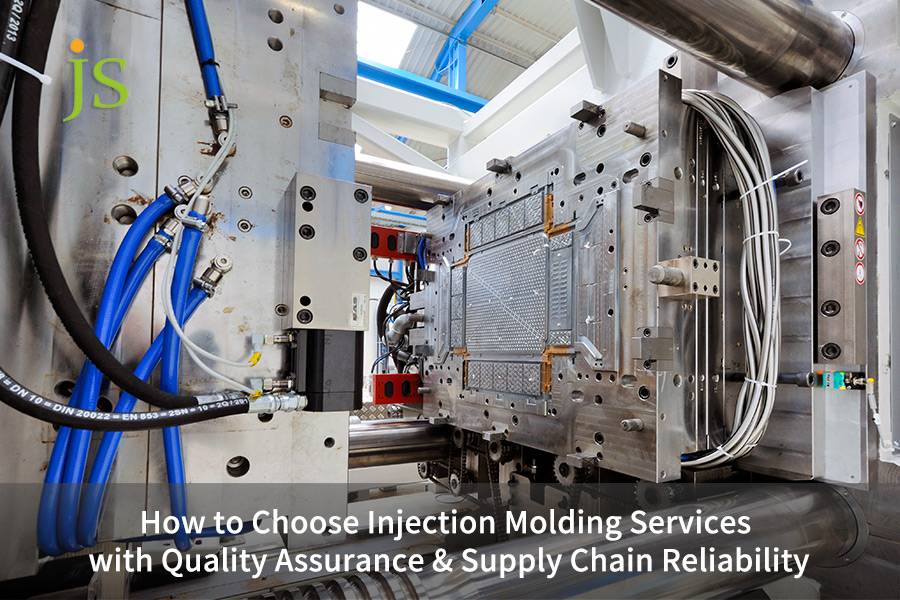

Reliable injection molding service requires auditing three core elements: Statistical Process Control (SPC) for key dimensions with Cpk≥1.33, tooling done in-house supported by Moldflow analysis, and having a multi-source resin supply chain that is resilient.
JS Precision's past ERP system data has already revealed a lot that we are a company capable of achieving component tolerance down to ±0.005 mm and keeping at least 99.2% of deliveries on time. Study our detailed performance indicators carefully.
Injection Molding Partner Selection: Core Evaluation Metrics Overview
|
Evaluation Dimension |
Audit Indicator |
Technical Parameter |
Supply Chain & Quality Value |
|---|---|---|---|
|
Quality System |
ISO 13485 / ISO 9001 certified |
Cpk ≥ 1.33, full CMM inspection report |
Ensures batch dimensional stability, controls defects |
|
Mold Engineering |
Moldflow analysis + conformal cooling |
Steel 48-52 HRC, SPI Class 101 |
Shortens cycle time by 20%+, prevents warpage |
|
Supply Chain Management |
Multi-source resin reserve + on-time delivery |
99.2% delivery rate, 2-4 week buffer stock |
Eliminates raw material shortage risk, guarantees schedule |
Key Takeaways
- Quality Control Metrics: Confirm that the supplier is equipped with an SPC real-time monitoring system (CPk ≥1.33) and has the ability to perform CMM (Coordinate Measuring Machine) inspection.
- Mold Technical Specification: Demand a Moldflow analysis report before the mold development process starts and specify a hardened steel with 48-52 HRC steel hardness for the mold.
- Supply Chain Continuity: Verify the secondary resin safety stock and 99.2% historical on-time delivery rate data of the mold and injection molding factory.
Why Trust JS Precision's Injection Molding Service? Because Of Its Rigorous In-Process Inspection?
Picking a reliable injection molding service should be more about process control than about the last inspection. In one of our cases where custom parts for a medical device housing were needed, pieces supplied by the previous vendor had 0.35 mm of warage and Cpk below 0.9, causing repeated delays on the production line.
JS Precision, after the change, introduced closed-loop pressure control with in-mold sensors, changed mold cores material to S136 steel which has 50 HRC hardness, and carried out conformal cooling. Warage was finally reduced to 0.04 mm, Cpk was raised to 1.45, and the project was completed 10 days earlier than planned.
ISO 9001:2015 mandates: An organization shall formulate, implement, and maintain, and continually improve, a quality management system which shall achieve desired results and ensure conformance of products and services with both customer-specific and applicable regulatory requirements.
To fully obey this regulation, JS Precision employs closed-loop control across the entire process: steel spectra analysis, hardening hardness test, EDM electrode log sheet, and mold trial movies are all traceable, and supported by process capability check (Cpk ≥1.33).
Want to evaluate your current supplier against these standards? Download JS Precision's Supplier Audit Checklist to compare your quality metrics point-by-point.
How to Audit an Injection Molding Service Provider Using ISO 13485 Quality Standards?
These three performance indicators will enable an objective assessment of the work quality and capability of an injection molding service provider: verification of Full-Dimensional First Article Inspection Reports (FAI), reviewing up-to-the-minute SPC (Statistical Process Control) charts and seeing data that supports the capability of Cpk≥1.33 for critical measurements.
Main Quality Assurance Principles
To pick a suitable injection molding vendor, the focus of the audit should be on the implementation of the ISO 13485 injection molding tooling standard. A standardized injection molding quality control system must meet the following technical requirements:
- Comprehensive Dimensional Check: Carrying out 100% FAI of critical dimension(s) for both the tooling and the first sample of parts, using equipment such as Zeiss optical scanners and CMMs.
- Process Capability Management: Continually computing Cpk values with SPC software for the most important (Critical To Quality) dimensions of the product, the required level being Cpk≥1.33.
- Material Traceability System: Setting up a system that will allow tracing each batch of plastic resin back to its original source via its Certificate of Analysis (COA), and also keeping records of all inventory coming in or leaving the company.
Essentially, it's like putting a black box recorder on every component, so that, in case of fault, you are able to determine exactly the time and cause of failure.
Why These Three Factors Are Crucial
In the absence of full-dimensional FAI, you may allow non compliant parts into the system, starting from the project launch. If SPC is totally absent, no one would be aware of dimensional drift until thousands of rejects are lying on the work floor. Lack of material traceability may cause the total production being affected by a contaminated batch of resin.
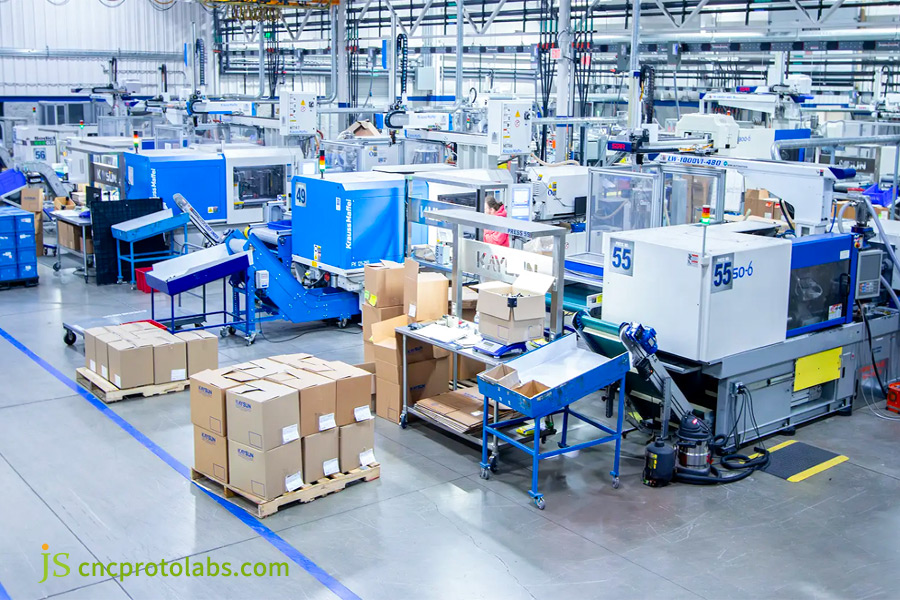
Figure 1: Automated injection molding factory with assembly lines and robotic systems.
How Does a OEM Injection Molding Service Eliminate Sink Marks and Warpage via DFM and Moldflow?
Using DFM (Design for Manufacturability) and Moldflow to foresee potential manufacturing challenges and adjust uniformity of wall thicknesses, and gate positions, one OEM injection molding service can cut the number of structural defects a lot before the mold cutting.
Simulation Process of DFM to Prevent Defects
The molding output level can be decided very precisely, when you are selecting a reliable injection molding service and taking advantage from initial design and design for manufacturing engineering as prevention measures. A trustworthy service provider will execute this design for manufacturability (DFM) analyses during the design of injection moulding:
- Wall Thickness Optimization: Equalizing the part cooling speed through balancing the wall thickness which is a way to avoid deformation due to non-homogeneous shrinkage.
- Mold filling and cooling simulation: Optimizing the location of gates and clearing the problems like weld lines and air traps before they happen.
- Shrinkage Compensation: Taking the specific resin shrinkage rate as basis in calculating the mold cavity dimension, like a shrinkage of 0.5%-1.0% in PA66+30%GF vs. 0.4%-0.7% in ABS.
Practical Impact
Upfront numerical simulation minimizes the number of mold trials (T1-T3). Avoiding a single round of mold modifications saves 2,500-8,000 in rework costs and prevents project delays of 1-2 weeks.
Send your CAD drawings to JS Precision to receive a comprehensive DFM analysis report within 24 hours with no obligation.
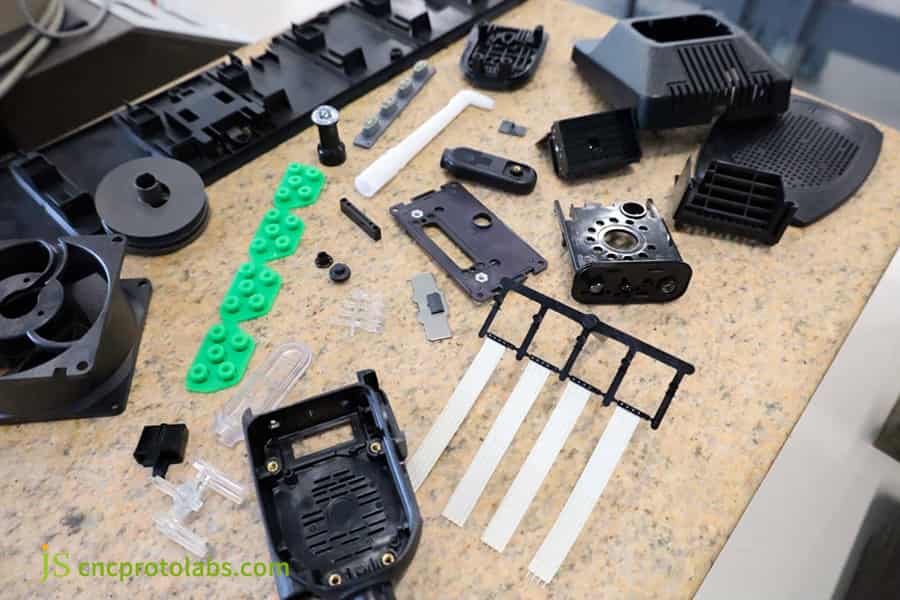
Figure 2: OEM injection molded parts with complex geometries and no sink marks.
What Steel Selection and Heat Treatment Standards Should a Qualified Injection Mold Tooling Supplier Meet?
A qualified injection mold tooling supplier should, for example, be working with steels like S136 or 718H, which have already been heat-treated to a final stage with vacuum quench and temper. This method leads them to a consistent hardness of 48-52 HRC and a long life expectancy of over 500,000 molding cycles.
Steel Grades and Hardness Requirements
The material and machining quality standard of the supplier plays a fundamental role in determining the service life of mold and the dimensional accuracy of molded pieces. When it comes to ISO 13485 injection mold tooling projects, mold steel hardness as well as its corrosion resistance is crucial to production continuity and quality soon.
For SPI Class 101 molds (longevity 500,000+ cycles):
- Core and cavity steel: Choose pre-hardened 718H steel or vacuum-quenched S136 stainless steel.
- Hardness certification: Request a third-party laboratory test report confirming a consistent hardness of 48-52 HRC.
- Corrosion protection: If the mold is going to produce medical or food-grade products then S136 stainless steel should be specified and at hardness of 50+ HRC to be resistant against gaseous corrosion from acids.
What happens when standards are not fulfilled?
If hardness of the steel is less than 48 HRC, flash or burr formation at parting lines is very likely when one uses high pressure mold tooling like the ones used in molding engineering plastics which range in pressure from 80 MPa to 140 MPa.The presence of such blemish is an additional manual work and also scrap material increase. Usually, after 50,000 to 100,000 cycles dimension fluctuation takes place due to mold deformation.
SPI Classification Reference
|
SPI Class |
Shot Life |
Required Steel |
Typical Application |
|---|---|---|---|
|
Class 101 |
1,000,000+ |
S136 / 718H (48-52 HRC) |
High-volume automotive, medical |
|
Class 102 |
500,000–1,000,000 |
P20 / NAK80 (28-40 HRC) |
Mid-volume consumer goods |
|
Class 103 |
100,000–500,000 |
7075 Aluminum |
Prototype, low-volume |
|
Class 104/105 |
Under 100,000 |
Soft steel / Aluminum |
Quick-turn samples |
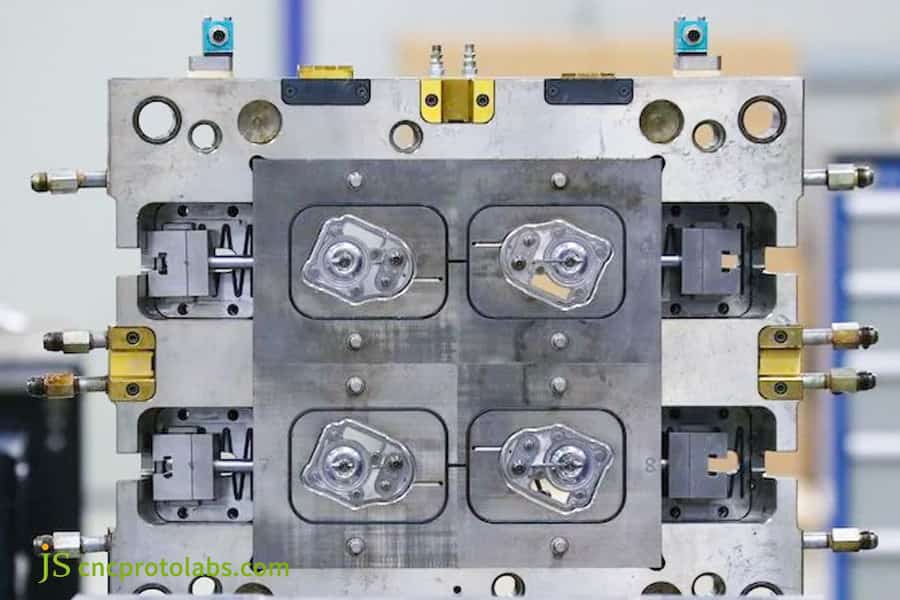
Figure 3: Precision injection mold tooling components with steel material and heat treatment.
How to Evaluate an Injection Molding Supplier’s Supply Chain Resilience for On-Time Delivery?
To evaluate the on-time delivery injection molding capability, it is necessary to verify the contingency plan for the secondary backup supplier of engineering resin, OEE monitoring of 80T-1200T machines, and the 2-4 week JIT safety stock mechanism.
The Three Levels of Supply Chain Protection
Timely delivery in injection molding depends on the supplier's supply chain management system. A reliable injection molding service provider must have what comes next defensive mechanisms:
- Contingency Plan for Raw Materials: Have at least two certified suppliers ready as secondary raw material suppliers in case of engineering resins like PEEK, PPS, and PC/ABS which would help prevent stock shortage caused by single-source dependency issues.
- Equipment Capacity Configuration: Keep OEE measurement for injection molding machines operating capacity real-time (including those ranging from 80T to 1200T tonnages) and keep 15% to 20 percentage as spare capacity for emergencies only.
- Safety Stock Plan: Install(buffer) JIT safety stock inventory control by keeping 2-4 weeks of safety stock in store for high-consumption parts.
Risk Comparison: Single-Source vs. Dual-Source Contingency Plans
|
Scenario |
Single Source |
Dual Source (Backup Plan) |
|---|---|---|
|
Resin plant shutdown |
Production stops 4-8 weeks |
Switch to backup within 48 hours |
|
Price spike |
No negotiation leverage |
Competitive bidding between suppliers |
|
Quality deviation |
Entire lot rejected, no fallback |
Backup lot released immediately |
Based on historical data from JS Precision's ERP system, this supply chain framework has enabled us to achieve a 99.2% on-time delivery rate.
Submit your project requirements to JS Precision to receive a detailed production schedule that includes contingency plans.
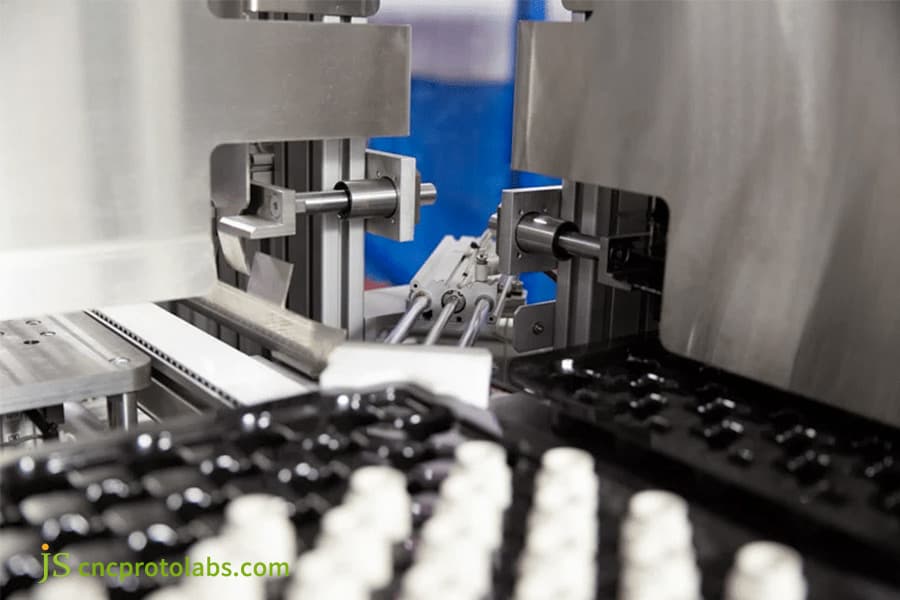
Figure 4: Injection molding supply chain with automated production and logistics.
How to Identify Hidden Costs and Accurately Analyze Quotes During Injection Molding Partner Selection?
In the process of injection molding partner selection, accurate cost accounting requires analyzing the structure of the quotation For example, you can ask suppliers to explain four crucial hollow points: mold maintenance liability, extra labor expenses, change of raw material prices as contracts, and scrap rate target goals.
Formula of Cost Break-down
In injection molding partner selection, it is not enough to only compare the initial quotation of a single item. The professional OEM injection molding service quotation adopts a disassembled structure, and the calculation formula is as follows:
Total Project Cost = T_tooling + (P_part × V) + S_secondary
Where:
- T_tooling = Mold development costs (steel grade, number of cavities, cooling design)
- P_part = Unit injection molding cost (resin, machine hours, labor)
- V = Purchase volume
- S_secondary = Secondary processing costs (spraying, screen printing, ultrasonic welding)
Four Hidden Costs to Clarify
When comparing quotes, make sure suppliers explain this four key factors:
- Shot life guarantee and maintenance responsibility: Who is responsible for costs of mold maintenance post 200,000 cycles?
- Labour for gate removal and flash trimming: What is accounted for unit price and what is extra charged item?
- Resin price fluctuation mechanism: What is the percentage of change in the price to automatically change the quote?
- Allowable scrap rate level: Who has to rework if the scrap rate is more than certain percentage?
Request a fully itemized quote from JS Precision to see exactly where every penny goes,no hidden fees, no surprises.
How JS Precision Custom Medical Device Enclosure Molding Overcomes Tolerance and Lead Time Bottlenecks via Cpk and Conformal Cooling?
This case study showcases how a reliable injection molding service was able to dramatically improve medical housing quality by decreasing warpage from 0.35 mm to 0.04 mm and also reducing lead times by 10 days using conformal cooling channels and Cpk closed-loop control.
Client's Problems
A medical device client asked JS Precision a PC/ABS custom housing which has structural elements such as thin walls (1.5 mm) and snap-fit mechanisms. The previous supplier's production had warpage of up to 0.35 mm and batch Cpk of less than 0.9 which caused the assembly line to stop completely and deliveries to be delayed.
JS Precision Solution
Initially, JS Precision took over the case and quickly implemented a three-phase engineering correction strategy
- Moldflow Re-simulation and Conformal Cooling: Designed 3D-printed conformal cooling channels to keep the mold surface temperature differential ±2℃.
- Mold Core Steel Upgrade and Tolerance Refinement: Changed the material to S136 steel (50 HRC) and adjusted snap-fit tolerances to ±0.005 mm.
- Mold sensor Deployment: Install a cavity pressure sensor to perform closed-loop injection molding quality control on injection pressure and holding time.
We were not about to randomly reduce our quality levels in case relaxing tolerances for non-critical dimensions was to be discussed, rather, we would follow recognized globally tolerance systems. It was a necessity to carry out a baseline measurement before adjusting the snap-fit tolerance to ±0.005 mm.
ISO 20457:2018 clearly defines: This document specifies possible manufacturing tolerances for plastic molded parts.
To fully conform to the standard, JS Precision put ISO 20457 TG6 grade tolerances (±0.15 mm to ±0.20 mm) on non-mating surfaces and TG4 on sealing and contact areas in the custom injection molding design service. At the same time, the tolerance limits of 0.005 mm for snap-fit mating surfaces were fixed with the help of DFM optimization, compliance standards and saving precision machining resources to the essential functional parts have been fulfilled.
Lessons Learned
During the T1 mold trial, localized sink marks of 0.05 mm appeared because the switch-over point for holding pressure was set too early. The technical team moved away from empirical trial-and-error methods and utilized DOE (Design of Experiments) to optimize the combination of holding pressure and cooling time, completely eliminating the sink mark defects.
Final Results
|
Parameter |
Before JS Precision |
After JS Precision |
|---|---|---|
|
Warpage |
0.35 mm |
0.04 mm |
|
Cpk (critical dimensions) |
Below 0.9 |
1.45 |
|
Cooling time |
Baseline |
Reduced 25% |
|
Delivery vs. schedule |
Delayed |
10 days ahead |
Facing similar challenges with tolerances or lead times? Contact JS Precision for a free DFM assessment to see how much your project can be improved.
Why Choose JS Precision as Your Long-Term Precision Injection Molding Manufacturing Partner?
Choosing JS Precision as your reliable injection molding service partner means obtaining a reliable production guarantee of 80T-1200T precision fleet, 100,000 level clean workshop, 24-hour DFM response, and 99.8% finished product qualification rate.
Equipment and Service Promises
As your injection molding service provider, JS Precision is committed to reducing manufacturing risks in the procurement process. We provide the following hardware and service guarantees:
- Production Setup: Our company operates with a team of 80T-1200T precision injection molding machines in cooperation with our environment production of Class 100,000 cleanroom.
- Technical Assistance: The engineering department brings cost proposals including DFM analysis within 24 hours after the submission of the CAD files.
- Quality Records: From ERP database we got the result of 99,2% on-time delivery and 99,8% finished-product pass rate.
What This Means for Your Project
From rapid prototyping all the way to high-volume injection molding production, JS Precision keeps to the same standards. We maintain full traceability for every dimension from the final product back to the machine parameter settings used in its manufacturing.
FAQs
Q1: What does ISO 13485 certification imply when auditing an injection molding supplier?
ISO 13485 certification means processes for medical-grade injection molding are standardized. These include lot number tracing, Class 100,000 cleanrooms, and risk management strategies covering mold manufacturing and part production.
Q2: How does a professional OEM injection molding service calculate part prices and tooling costs?
The injection molding cost comprises the tooling cost and the price per part. Tools prices depend on the quality of the steel and the number of cavities, prices per unit are based on resin feed stock cost, the required machine tonnage or molding press capacity, and the cycle time cost allocation. Upload your design drawings and get a detailed, itemized estimate.
Q3: Why is Moldflow simulation necessary prior to cutting injection mold steel?
Mold flow analysis uses simulated computer modeling of the filling and cooling of the mold that the flow can be simulated before the mold cutting commences. This can foresee potential defects like short shots, weld lines, trapped air and warpage and thereby eliminate additional costs and time delays due to post-production mold changes.
Q4: How is dimensional consistency maintained during volume injection molding runs?
To ensure that the dimensional consistency is maintained the supplier's process must be a closed SPC (Statistical Process Control) system. The supplier needs to regularly test for dimensional accuracy of Critical-to-Quality (CTQ) features in their production run to meet a CpK level of 1.33. Besides this, the plastic injection molding machines must have closed-loop regulation for temperature and pressure which can be at the millisecond level.
Q5: What key metrics dictate the overall lead time for custom injection molding projects?
Lead time is influenced by the mold production cycle (2-3 weeks for the development molds and 4-6 weeks for the production molds), the raw material procurement and the time to perform mold trials (T1-T3) and to make adjustments. Mold shops integrated mold shops can reduce the processing time.
Q6: How does JS Precision verify quality control and guarantee on-time delivery?
JS Precision is equipped with Zeiss coordination measuring machine (CMM) as well as a management system based on ISO standards. The ERP data history has 99.2% on-time deliver rate and 99.8% pass rate of finished product. We also assure that we respond to your inquiries, including the design for manufacturing (DFM) analysis, within 24 hours. Upload your drawings to request a quote.
Q7: What impact do SPI mold classifications (Class 101 to 105) have on tooling longevity?
SPI classification is based on the predicted lifetime of the molds. Tool class 101 is suitable for high-volume manufacturing (more than 1 million cycles) and necessitates the use of hardened steel materials (48-52 HRC, e.g. S136), on the contrary class 104/105 which is suitable for low-volume prototyping relies on aluminum alloys or mild steel.
Q8: How should Minimum Order Quantities (MOQ) be negotiated for custom injection molded parts?
MOQs in injection molding are a result from the expenses for purging the machines and changing the molds as well as the minimum orders specified by the resin material supplier. It is the high-level suppliers who provide adaptable MOQ solutions based on the phase of the project and who support the transition from prototyping to mass production.
Summary
Selecting an injection molding service provider is a critical decision when establishing a manufacturing supply chain. By vetting a supplier's ISO certification, Cpk process control capabilities, DFM/mold flow analysis, and mold steel heat treatment standards, companies can mitigate risks such as part warpage, dimensional deviations, and delivery delays. A transparent, itemized quote structure and robust supply chain contingency plans are essential to ensuring the project is executed within budget.
Ready to launch your precision injection molding project? Contact the JS Precision engineering team and submit your 3D CAD files to receive a complimentary DFM (Design for Manufacturability) analysis, mold flow assessment, and a fully itemized quote. Our engineers will provide a comprehensive solution within 24 hours, covering everything from prototyping to mass production.

Disclaimer
The contents of this page are for informational purposes only. For JS Precision Services, there are no representations or warranties, express or implied, as to the accuracy, completeness, or validity of the information. It is the buyer's responsibility to identify specific technical requirements and request a formal parts quotation. Please contact us for more information.
JS Precision Team
Custom manufacturing solutions. With over 15 years of experience serving more than 1,000 customers, we specialize in high-precision CNC machining, sheet metal fabrication, 3D printing, injection molding, and metal stamping. Having successfully delivered over 300,000 precision parts, we maintain a 99.2% on-time delivery rate across all custom projects.
Our facility is equipped with over 100 state-of-the-art 5-axis machining centers and is ISO 9001:2015 certified. We deliver fast, efficient, and high-quality manufacturing solutions to B2B clients across 150 countries. Whether you require low-volume prototyping or large-scale customization, we support your project with lead times as short as 24 hours. Choose JS Precision for unparalleled efficiency, quality, and professionalism.
To learn more or submit your RFQ, visit our website: www.cncprotolabs.com
Resource