English



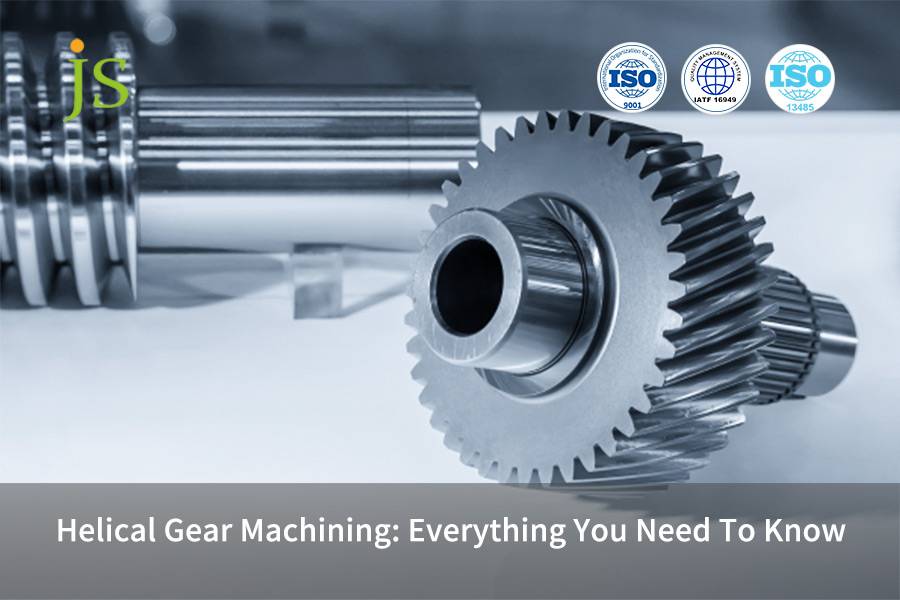

The helical gear machining technology is of prime importance to the functioning of basic machines like car transmission and aero engines. For wind turbine gearbox applications, helical gears require high torque, whereas for machine tools, negligible deviations of gears can impair the cutting process.
In both cases, helical gears are considered the best choice owing to their smoother transmission, high loading capacity, and noiselessness. To ensure that these gears work perfectly, very close attention needs to be paid to the gear machining process.
This report will give a thorough analysis of the entire process of production of helical gears and will demonstrate the importance of selecting a partner with technological expertise, such as JS Precision, in getting the ideal gear.
Quick Overview of Core Answers
| Core Questions | Key Answers | Value |
| How to achieve high performance and reliability of helical gears? | Use high precision gear manufacturing. This means controlling all of process stages: design and machining, gear hobbing, heat treatment processes, and gear grinding operations. | Understand the overall technology and establish correct quality expectations. |
| When would a customized service be required? | A custom helical gear machining service would be required in special working conditions or new prototypes. | Clearly define the scope of requirements and efficiently initiate projects. |
| How to select a trustworthy manufacturer? | Apart from geographical restraints, it is essential to make an assessment and select professional manufacturers such as JS Precision. | Obtain an evaluation framework and find high-value partners. |
Key Takeaways:
- Precision determines performance: Smooth and durable operations of helical gears are largely dependent on the precise profile and direction of the tooth, which requires high precision gear manufacturing with an accuracy of 0.01mm over its entire length.
- Design and manufacturing must be coordinated: The early DFM optimization process (for example, optimizing the helix angle β=15°~25°) can save up to 15% on helical gear machining difficulty and cost.
- Post-processing is essential: Carburizing & quenching (layer depth: 0.8-1.2mm) & Precision grinding are basic configurations for high load & long lifespan requirements.
- Value is in customization: While custom helical gear machining is more expensive in the beginning, it sidesteps inherent losses in system incompatibility in the long run.
Why Trust This Article? JS Precision's Guide To Helical Gear Machining
With 15 years of manufacturing experience in gear machining, JS Precision is an established partner of more than 30 Fortune 500 enterprises globally, executing successfully more than 1200 precision gear orders in the four main industries of the company: automobiles, aviation, wind energy, and machine tool instruments.
We rely on high-performance core machines from Switzerland and Germany, and our in-house gear profile modification technology to solve the noise issue of 7DCT transmission gears, and achieve a noise reduction of 8 decibels, and a defective rate below 0.3%, with a yearly savings of over $220,000.
All the information provided in the article is based on production verification and customer feedback, not mere hypothetical theories. Precision control precisely follows the ISO 1328-1:2013 global standard for gear precision. Full test reports and supporting documentation for projects can be provided.
Not only do we have the ability to control the basic technology of high precision gear manufacturing to an accuracy of micron-level tooth profile error ≤ 0.0025mm and tooth direction error ≤ 0.003mm, but we are also able to correctly grasp the custom helical gear machining requirements for high-temperature and corrosive environments with a 99.8% delivery quality qualification rate.
We offer comprehensive and doable solutions right from process development to equipment bug fixes, mass production, to after-sale services so that customers do not have to resort to third-party assistance.
Want to quickly verify our capabilities? Submit your gear parameters (module, helix angle, precision requirements, etc.), and our engineers will provide you with free process feasibility analysis, cost estimation, and optimization suggestions within 24 hours, demonstrating our professional capabilities with concrete data.
What Is Helical Gear Machining And Why Is Precision Critical?
Helical gear machining is a precision processing technique used in the production of helical gear shapes, and it is based on a number of key aims, including efficient transmission. The key to determining machinability is, therefore, accuracy, and it is a basic standard promoted by JS Precision.
Helical Gear Meshing: Engineering for Smooth Transmission
Helical gearings, with their staircase structure, are quite different from spur gearings owing to their ability to gradually engage and disengage their tooth contacts, thereby increasing the number of teeth in mesh by 30-50% and also reducing noise in transmission by 5-10 decibels because of their low levels of noise.
Multidimensional Definition of High Precision
Highly accurate helical gear machining needs multidimensional control:
- Dimensional Tolerance: Key dimension variation ≤ ±0.005mm.
- Tooth Profile Error: ≤ 0.003mm, which immediately impacts the noise.
- Tooth Direction Error: Tooth surface contact spot exceeds 80% of tooth length and 70% or more of tooth height.
- Batch Consistency: Variabilities in parameters are maintained under the control of SPC.
Hidden Costs of Non-Precision Machining
Low-precision gears are prone to vibrations and noises, wear faster, and undergo a lifespan shortened by more than 70%. It is recommended and economical to invest in expert helical gear machining services.
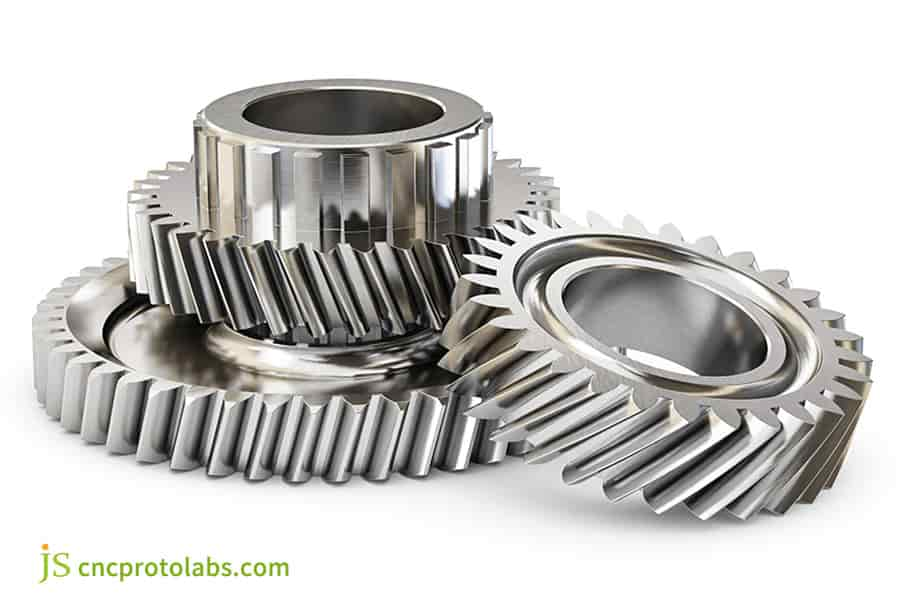
Figure 1 Spiral gears utilize inclined teeth to generate gradual contact, achieving quieter operation, higher load capacity, and smoother power transmission.
How Does Design Dictate The Helical Gear Machining Process?
The interaction of helical gear design and machining has been shown to affect gear cost and quality. There are various designs that can affect this process.
Core Parameters: Choosing Between Helix Angle, Pressure Angle, and Module
| Parameter Type | Common Range | Machining Impact | Performance Impact | Optimization Suggestions |
| Helix Angle | 15°-30° | The larger the angle, the higher the processing difficulty and the rigidity requirements of the machine tool. | The larger the angle, the more stable the transmission and the stronger the load, resulting in an increase in axial force. | Choose 18°-22°, balance machinability and performance. |
| Pressure Angle | 20° (Standard) | The smaller the angle, the finer the tooth shape, which is prone to elastic deformation. | The larger the angle, the stronger the tooth root strength and impact resistance. | Use 25° for heavily loaded gears and retain 20° for accurate work. |
| Module | 2-8mm | The larger the modulus, the longer the cutting amount and processing time. | The larger the modulus, the stronger the load-bearing capacity, and it is suitable for heavy loads. | Calculation must be performed based on loads instead of randomly increasing module values. |
| Tooth Width | 10-50mm | The larger the tooth width, the more difficult it is to dissipate heat and prone to deformation. | The larger the tooth width, the better the contact area and stability. | Coefficient 0.8-1.2, matched with tooth profile modification. |
Design for Manufacturing: Collaborative Value Creation
Inclusion of the manufacturer’s expertise in designing stage designs plays a critical part in a successful collaboration in helical gear design and machining. JS Precision engineers will provide optimization suggestions from the perspective of manufacturing feasibility (DFM):
- Optimize the fillet radius of the tooth root to avoid stress concentration and reduce tool wear.
- Adjust the wheel hub structure to make it easier to clamp and position, and improve machining accuracy.
- Reasonably choose the combination of helix angle and modulus to reduce processing difficulty while meeting performance requirements.
Another energy firm has successfully reduced by 12% the cost of production of helical gear machining while increasing gear transmission efficiency by 3% by working on designs with us earlier.
Need professional helical gear design and machining collaboration support? Upload your preliminary design drawings, and JS Precision engineers will provide a free DFM optimization report within 48 hours to help you identify the optimal solution during the design phase.
What Are The Core Steps In High Precision Gear Manufacturing?
The high precision gear manufacturing process is interconnected, and JS Precision ensures gear quality through end-to-end control.
Materials and Pretreatment
Material selection determines processing and performance, pretreatment (forging, normalizing, etc.) can eliminate stress and refine grain size.
| Material Type | Applicable Scenarios | Heat Treatment | Difficulty | Unit Price (USD/kg) | Lifespan (hours) |
| 4140 Alloy Steel | General Machinery | Quenching and Tempering (HRC28-32) | Medium | 8-12 | 8000-12000 |
| 8620 Alloy Steel | Heavy-Duty Scenarios | Carburizing and Quenching (HRC58-62) | Medium-High | 12-18 | 15000-25000 |
| 9310 Alloy Steel | Aerospace | Carburizing and Quenching + Tempering | High | 25-35 | 30000-50000 |
| 17-4PH Stainless Steel | Corrosion-Resistant Scenarios | Precipitation Hardening | Medium | 18-25 | 12000-20000 |
| Inconel Alloy | High-Temperature Corrosion Environment | Solution Strengthening + Aging | Extremely High | 80-120 | 40000-60000 |
Gear Forming: Hobbing and Scraping
Core Gear Forming Processes:
- Hobbings: Highly efficient and economical processes for mass production. They ensure a quality of ISO 6-8.
- Scraping: More precise (ISO 5-6), employed on more complex shapes such as double gears and internal gears.
Heat Treatment and Finishing
Heat treatment has been a crucial process involved in gear upgrading:
- Carburizing and Quenching: Employed in heavily loaded gears and a depth of carburized layer of approximately 0.8-1.2mm along with a surface hardness up to HRC58-62.
- Nitriding: For medium to light loads, high-precision gearing involving little deformation and surface hardness above HV 800.
- Quenching & Tempering: This provides assistance in achieving higher strength & hardness to the gear, which is sufficient for further machinating.
Grinding teeth is the core means of achieving high precision gear manufacturing in the precision machining process.
For the same purpose at JS Precision, imported German CBN grindings with the ability to enhance gear accuracy up to ISO 4-5 with surface roughness Ra values of less than 0.4μm are employed. Apart from the same, other processes such as tip chamfering and honing are also required.
Want to witness the complete process of high precision gear manufacturing firsthand? Schedule a visit to JS Precision's production workshop. Our engineers will demonstrate the core technologies and quality control points of each process, allowing you to intuitively experience the charm of precision manufacturing.
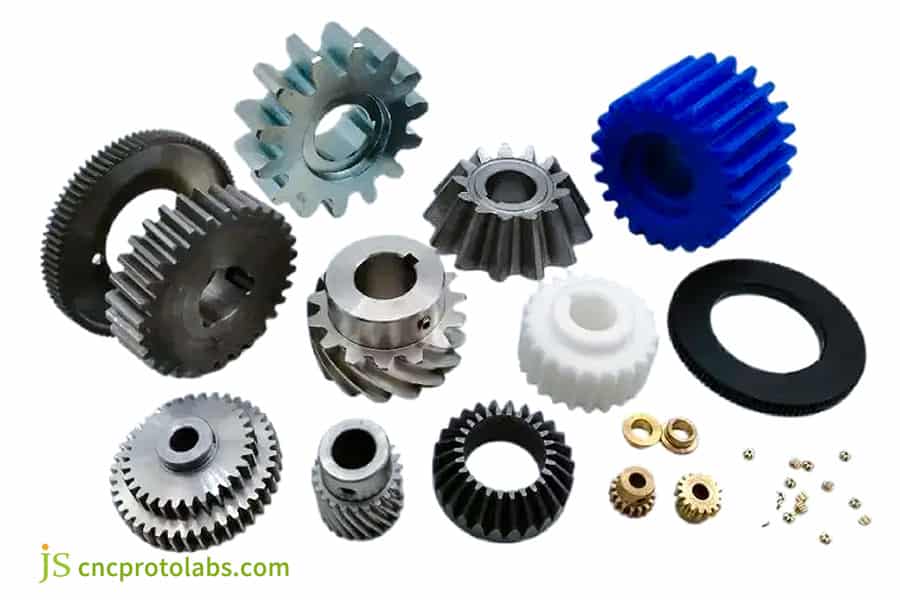
Figure 2 Helical gears made of different materials
When Should You Opt For Custom Helical Gear Machining Services?
Standard gears meet conventional requirements, while special scenarios require custom helical gear machining services. JS Precision can provide a full process customized solution.
Identifying Customization
Services requiring customization will receive preference under the following situations:
- Parameter Exceeded: The helix angle exceeded 30°, or the modulus is less than 2mm or above 8mm.
- Special environments: Requires materials resistant to high temperatures and corrosion.
- Space constraints: Needs in irregular gearboxes.
- Efficiency enhancement: For improved performance, low-noise, and increased lifespan.
- Prototype development: The gears for the process of prototype development.
From Concept to Delivery: The Entire Custom Service Process
JS Precision End-to-End Helical Gear Machining Services Process:
- Requirement Analysis: Clearly define core requirements such as performance and environment.
- Co-Simulation: Optimization of design solutions.
- Process Planning: Create customized requirements for machining and quality control.
- Flexible Production: Precise equipment machining through full monitoring.
- Complete Test: Multi-machine test and complete report.
- After-sales Support: Tracking & installation optimizations suggestions after delivery.
JS Precision Case Study: Cost Reduction Of 40%! Us Wind Power Company Breaks Through The Bottleneck Of Gearbox Growth
Challenges
A US-based wind power firm exclusively engaged in the production of 1.5MW wind turbines encountered various issues related to the high-speed helical gear used in its gearbox. The gear, which consisted of 8620 alloy steel and had a module of 6 and a helix angle of 18°, encountered two serious issues related to its initial supplier from Europe:
- Early failure rate of 5%, causing a significant cost for the maintenance of equipment.
- A lead time not exceeding 20 weeks, significantly affecting the production schedule of the company.
- In addition to this, the unit cost for custom helical gear machining stood as high as $3000 per piece, which put a tremendous amount of pressure on their overall procurement expenditure.
Solution
After JS Precision's involvement, a dedicated engineering team conducted a comprehensive analysis and developed a three-pronged solution:
1. DFM Optimization
Finite element analysis identified stress concentration problems at the transition curve of the gear root. This area has been smoothened and optimized. Additionally, it is also recommended that the carburized layer depth tolerance be reduced from ±0.2mm to ±0.15mm. This would improve the loading capacity of the gears.
2. Process Upgrade:
The original “hobbing + quenching + conventional grinding” system was replaced with a premium system chain of “precision hobbing (ISO 7 level) + carburizing & quenching (HRC59~61) + CNC grinding (ISO 5 level).” Online SPC monitoring was incorporated for monitoring the dimensional variation during production in real time to make necessary adjustments to the process parameters.
3. Supply Chain Integration:
Domestic high quality special steel sources were chosen, and composition verification, mechanical property verification, and other verification tests were conducted to ensure that the quality of indigenous materials was capable of meeting the standards of imports, and, in the process, costs of raw materials were lowered.
Results
Above optimization solutions bring comprehensive improvement to the wind power company's gear products:
- Performance Improvement: Gear fatigue life enhanced by more than 30%, fulfilling the requirement for a service life design of 20 years.
- Quality Stability: The defect rate of each batch was reduced from 5% to less than 0.5%, greatly reducing operation and maintenance costs.
- Cost Optimization: Reduction in overall procurement costs of 40%, purchase price per gear at $1800.
- Shorter Delivery Time: Stabilized production cycle to 12 weeks, 8 weeks shorter than the original supplier, effectively ensuring the firm's production schedule.
Want to replicate this client's success and achieve performance upgrades and cost optimization for your gear products? Contact JS Precision. We will provide you with one-on-one project evaluation services and develop customized solutions based on your specific needs to help you overcome production bottlenecks.
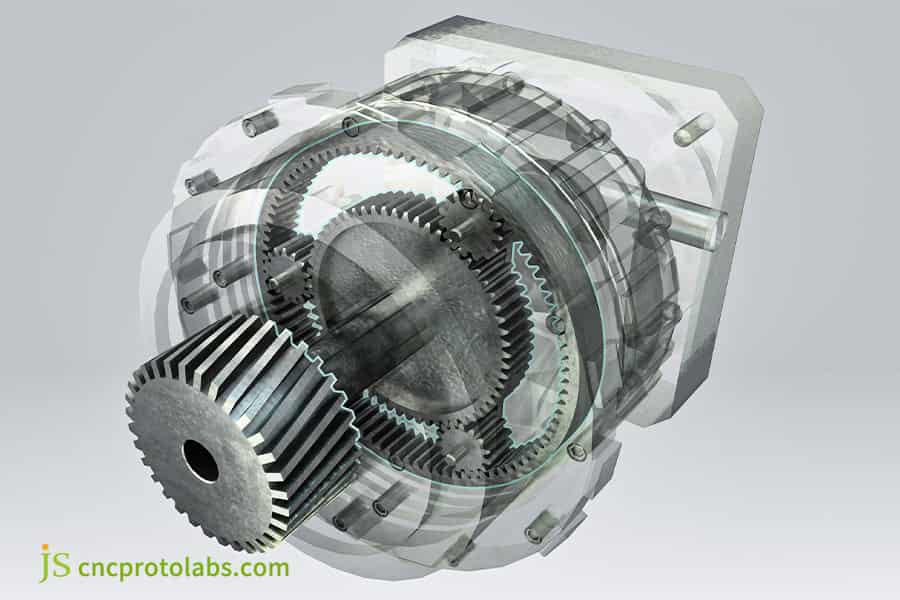
Figure 3 Gearbox in wind turbines
How To Evaluate And Select a Gear Manufacturing Company Near Me?
When searching for "gear manufacturing companies near me," there is no priority on the geographical distance but, mainly, on how well a manufacturer can assess their technology, quality control, and service capabilities. JS Precision can go beyond geographical boundaries to provide high-quality services.
Capability List: A Dimension More Important Than Distance
Core Assessment Dimensions:
- Device Strength: The devices should be equipped with advanced Swiss and German processing and testing equipment.
- Quality Certification: The equipment should be able to meet certifications like ISO 9001 and IATF 16949.
- Technical Team: Does the team include senior design and process engineers?
- Testing Capability: Is the equipment with a complete set of testing equipment?
- Project Experience: Are there successful case studies in similar industries?
Identifying True Experts
Quickly assess professionalism by answering the following questions:
- Tooth-profile modification schemes and reasons for gears having a helix angle of 25°, and a module of 3.
- What are the critical control points in carburizing and quenching 8620 material gears?
- Is the equipment able to provide data for fatigue tests under similar working conditions?
- How can the cost of gears be reduced by adjusting parameters?
Core Competency Data for Manufacturers at Different Tiers:
| Company Type | Precision Level (ISO) | Annual Customized Projects (pieces) | Standard Parts Lead Time (days) | Customized Parts Lead Time (weeks) | Batch Defect Rate (%) | Equipment Utilization Rate (%) |
| High-End Precision Manufacturing | 4-5 | 150-200 | 7-10 | 12-16 | ≤0.5 | 82-88 |
| Mid-Range Manufacturing | 6-7 | 50-80 | 10-15 | 16-20 | 1.2-2.0 | 75-80 |
| Small-Scale Processing | 8-9 | ≤30 | 15-20 | 20-25 | 3.5-5.0 | 68-73 |
| OEM Manufacturing | 6 | 80-120 | 12-18 | 14-18 | 1.0-1.8 | 78-83 |
| Specialized Customization | 5-6 | 40-60 | No Capacity | 18-22 | ≤0.8 | 70-76 |
Localization Advantages: JS Precision as Your Partner in China
Main Benefits of Choosing JS Precision:
- Cost Advantage: Taking advantage of the Chinese supply chain, exceptional cost management skills.
- Smooth Communication: Dedicated and competent English-speaking staff, no matter what time zone they are in.
- Rapid Iteration: Agile manufacturing, accelerating the delivery of the production prototypes.
- Global Experience: Exposed to standards of 30+ countries.
Searching for a trustworthy gear manufacturing company? Searching for a company that offers services for "gear manufacturing companies near me" or on a global scale is a thing of the past. JS Precision provides you with the best services that break all limitations. Just send us your requirements, and we'll offer you their company credentials, tools, and successful experiences to know their capabilities.
FAQs
Q1: What are the main advantages of helical gears compared to spur gears?
The helical gear has smoother operating contact, reduced noise during power transmission (a difference of 5-10 decibels lesser), increased load-carrying capacity, and a working life that is more than 30% longer than a spur gear.
Q2: What specific impact does the helix angle have on machining and performance?
Increasing the helix angle can improve transmission stability and load-bearing capacity, but it will increase axial force, which requires higher rigidity and bearing requirements for the machine tool. At the same time, it increases the difficulty and cost of helical gear machining, and needs to be balanced and selected according to the working conditions.
Q3: What grade does high-precision helical gear typically refer to?
It normally relates to ISO 6 or AGMA 12 and above precision levels, involving stringent control of various parameters like tooth profile error, tooth direction error, and tooth pitch error. JS Precision can stably achieve ISO 4-5 high precision gear manufacturing.
Q4: What is the maximum helix angle you can process?
In regard to helical gear machining by JS Precision, it is capable of handling helix angles of up to 45°. However, this is subject to consideration of measurements in accordance with the structure, materials, and level of precision of gears.
Q5: What is the typical lead time from inquiry to receiving samples?
Regarding normal helical gear machining services, the turnaround time for the first copy would be 2-3 weeks after receiving the drawings. Special requirements, depending on their complexity, would take about 4-6 weeks, though faster turnaround is possible.
Q6: How do you ensure the consistency of gears in mass production?
By following standardized operational procedures in SPC process statistical control and testing via batch samples at a gear measurement center, JS Precision is able to dynamically and statistically control deviations in parameter variations at ±0.005mm for consistency in their batches.
Q7: Can you provide gear noise test reports?
Yes. JS Precision is set up with a professional gear transmission noise test platform. They can provide a noise spectrum test report on the transmission noise according to the customers' needs. JS Precision can present the noise data accurately.
Q8: What is the process if my design needs modification?
Just give it updated drawings, and the JS Precision engineering team will promptly do a manufacturing feasibility check. Feedback will be provided on the modifications' effect on helical gear design and machining, along with optimization suggestions. The process is highly efficient, transparent, and absolutely free of any charges.
Summary
The high-performance code of helical gears is hidden in every precise control and collaborative optimization of helical gear design and machining.
When selecting JS Precision, as it is a gear manufacturing company with both technical expertise and experience, it means you are injecting.power into your transmission system. Whether you are looking for affordable standard components or need custom assistance, you can get exactly what you need in this outfit.
Please upload your equipment drawings or parameters, and our engineers will give you feedback within 24 hours, and through professional technology and dedication, we will enable you to achieve the inherent value of advanced helical gears.

Disclaimer
The contents of this page are for informational purposes only.JS Precision Services,there are no representations or warranties, express or implied, as to the accuracy, completeness or validity of the information. It should not be inferred that a third-party supplier or manufacturer will provide performance parameters, geometric tolerances, specific design characteristics, material quality and type or workmanship through the JS Precision Network. It's the buyer's responsibility Require parts quotation Identify specific requirements for these sections.Please contact us for more information.
JS Precision Team
JS Precision is an industry-leading company, focus on custom manufacturing solutions. We have over 20 years of experience with over 5,000 customers, and we focus on high precisionCNC machining,Sheet metal manufacturing,3D printing,Injection molding,Metal stamping,and other one-stop manufacturing services.
Our factory is equipped with over 100 state-of-the-art 5-axis machining centers, ISO 9001:2015 certified. We provide fast, efficient and high-quality manufacturing solutions to customers in more than 150 countries around the world. Whether it is small volume production or large-scale customization, we can meet your needs with the fastest delivery within 24 hours. Choose JS Precision this means selection efficiency, quality and professionalism.
To learn more, visit our website:www.cncprotolabs.com
Resource