English



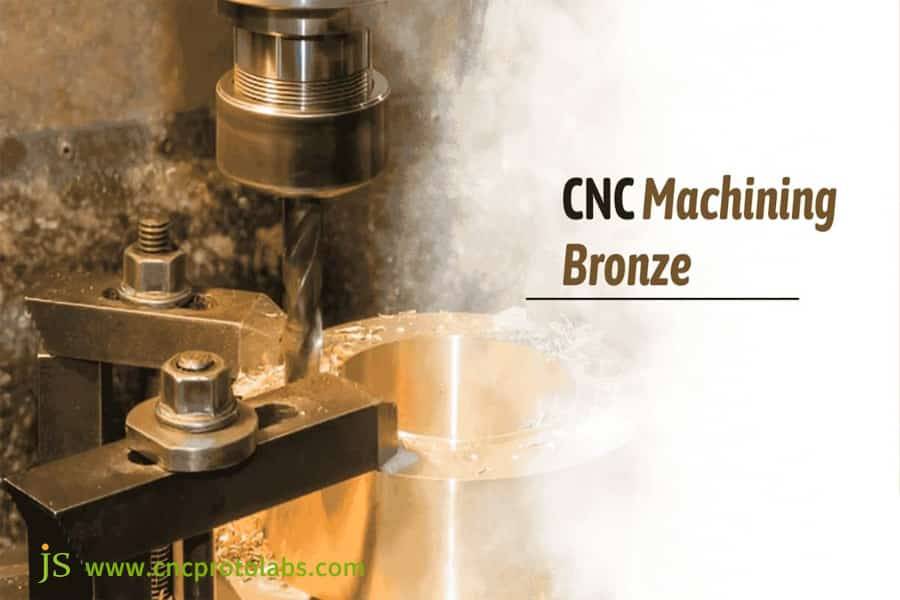

Among the many materials used in CNC metalworking, bronze stands out as it has a certain beauty—it provides corrosion and wear resistance superior to that of common metals as well as the essence of easy precision machining.
From bearings required to lubricate themselves at high strength, to marine parts that can withstand harsh sea conditions, corrosive seas, to castings having to be carved intricately, CNC machining bronze offers unmatched versatility, uniting the established trust of an old metal with the accuracy of computer-based production.
This guide will present an application-based evaluation of the advantages of using bronze in CNC machining, provide a detailed look at typical bronze alloys, cost structure analysis, and address frequently asked questions. It will help you make the proper choice for your CNC machining bronze component project, providing valuable insight for accuracy CNC machining and quick prototyping.
Core Answer Summary
| Key Issues | Key Information | JS Precision Support |
| Bronze Selection Factors | Compared to steel/aluminum, it is self-lubricating, corrosion-resistant, and high-strength, suitable for precision transmissions and marine equipment. | Professional bronze CNC machining with full process control. |
| Mainstream Alloys and Applications | C51000 (electronic components), C95400 (high-wear-resistant components), and other 5 categories, select as needed. | Experienced with various bronze alloys, providing precise machining recommendations. |
| Cost Control | Material (tin bronze $5-8/lb, beryllium copper $20-30/lb), labor hours, and post-processing affect costs, fine-tuning designs can reduce costs. | Provide transparent CNC machining pricing and provide optimization suggestions. |
| Value of Rapid Prototyping | No mold required, 30%-50% cycle time reduction, suitable for appearance/functional testing. | Accept CNC rapid prototyping services, delivering high-quality prototypes quickly. |
Choosing Bronze For Precision Parts: JS Precision's Handy Guide
JS Precision has over 15 years of actual experience in CNC machining bronze and has produced parts for customers in a range of industries, from aerospace to medical device and the auto industry.
For example, we once machined a series of bronze parts for aircraft hydraulic systems for an aerospace company. They required extremely high precision and high pressure tolerance. Our completed products met the client's strict requirements at a 99.8% pass rate. We have also manufactured complex bronze components for customers in medical devices, totaling over 5,000 pieces.
In all these projects, we encountered some material selection issues, such as how to control costs while ensuring wear resistance, and how to select the appropriate bronze alloy for diverse operating conditions.
This guide, an extract of our expertise, covers all essential steps from material choice to machining to cost management. You can trust it to provide you with sound guidance for your precision part selection whether you're CNC machining bronze or any other metal CNC machining operations.
JS Precision, with extensive CNC machining bronze experience, is here to help you with professional selection of precision parts. Just provide your specifications for your part, and we will contact you quickly to get you going.
Why Bronze? The Best Choice For CNC Metal Machining
Material choice in CNC metal machining has a direct influence on part performance and longevity. Bronze, due to its several irreplaceable properties, is a fine material for metal CNC machining, central to precision CNC machining and CNC rapid prototyping use.
The following table indicates how bronze stands with reference to steel and aluminum in such performance attributes:
| Material | Self-lubricity | Corrosion resistance | Strength | Appearance Treatment Requirements |
| Bronze | Excellent, does not require frequent lubrication. | Strong, does not rust in humid/corrosive environments. | High, impact resistant. | Develops natural bronze patina, no additional treatment required. |
| Steel | Poor, requires frequent lubrication. | Poor, can rust, requires corrosion protection. | High, but difficult to machine. | Requires surface treatment for improved look. |
| Aluminum | Poor. | Good, can fail under highly corrosive environments. | Low, will become deformed under heavy loads. | Requires surface treatment for improved finish. |
Bronze's intrinsic lubricity is perfect for precision instrument transmission components, corrosion resistance perfect for seacoast hardware, high strength perfect for load-bearing gears, and patina perfect for upscale appearance specifications—all properties that steel and aluminum struggle to match.
If you need metal CNC machining, bronze is the best choice hands down. JS Precision offers professional bronze CNC machining services, with end-to-end control from material selection to completed part. Reach out to us.
Learning About The Bronze Family: Choosing The Right Alloy For Your Precision CNC Machining Project
Bronze is not a single material, but a large family of alloys with individual properties between different bronze alloys. The right choice of bronze alloy makes or breaks your precision CNC machining project and also opens up new avenues for CNC rapid prototyping.
| Bronze Types | Main Alloying Elements | Core Properties | Useful Parts |
| Tin Bronze | Tin | Excellent castability, wear resistance, and corrosion resistance. | Bearing and bushings. |
| Aluminum Bronze | Aluminum | High strength, high hardness, and seawater corrosion resistance. | Marine equipment parts and petrochemical components. |
| Phosphorus Bronze | Phosphorus | Good elasticity, fatigue resistance, and excellent electrical conductivity. | Springs and relay contacts. |
Having these significant differences will enable you to make proper decisions for upcoming projects, serve as a foundation for precision CNC machining, and maximize CNC machining bronze efficiency.
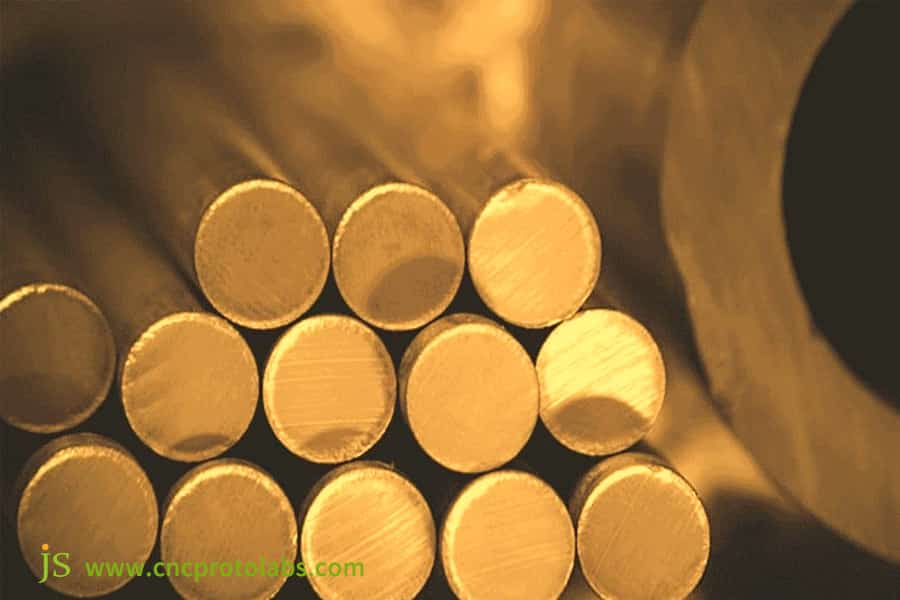
Figure 1: Aluminum Bronze
Detailed Analysis Of The Five Principal CNC Machining Bronze Alloys
This section will delve into the five mainstream CNC Machining Bronze alloys, so you can see their performance and application conditions fully, thereby making the optimal choice for your bronze parts CNC machining projects.
C51000 Phosphor Bronze
- Performance: Fine elasticity, high fatigue strength, good heat and electricity conductivity, and fine machinability.
- Applications: Often applied in the manufacture of parts which require good conductivity and elasticity, such as springs, switches, contacts for relay, and connectors. Widely used in the electrical and electronics industries.
C63000 Aluminum Bronze
- Performance: High strength, high hardness, and excellent corrosion resistance in seawater and acidic environments. It also possesses some wear resistance.
- Applications: May be used in the manufacture of parts for seashore engineering equipment, such as propellers, pump casings, and valves. It may be used for petrochemical corrosion-resistant fittings.
C93200 Tin Bronze
- Performance: Excellent casting properties, excellent wear resistance, good anti-friction and anti-seizure characteristics, and good machinability.
- Applications: Primarily utilized to create components prone to sliding friction, such as bearings, bushings, and bearing shells, and is widely used in the machinery manufacturing industry.
C95400 Aluminum Bronze
- Performance: Excellent overall performance, superior strength, hardness, corrosion resistance, and wear resistance, and a moderate level of impact toughness.
- Applications: Suitable for making high-strength, high-wear-resistant parts, such as gears, cams, and worm gears. Extensively used in heavy-duty machines, automotive production, etc.
C17200 Beryllium Bronze
- Performance: Extremely high strength and hardness, high elastic limit, satisfactory fatigue strength, and good electrical and thermal conductivity and corrosion resistance. It is relatively difficult to work.
- Applications: Primarily used to produce highly precise, high-elasticity parts such as precision springs, watch parts, and high-temperature-resistant parts for aircraft in aviation. But this process is relatively expensive.
JS Precision is endowed with deep experience in CNC machining bronze and is fully capable of processing these five outstanding bronze alloys, meeting your varied bronze parts CNC machining needs and providing you with superior bronze parts.
Drawing To Product: Bronze Machining Secrets In Custom CNC Machining Manufacturing
In order to successfully complete bronze machining in custom CNC machining manufacturing, it is vital to master useful tips for improving quality, productivity, and costs to facilitate smoother CNC metal machining.
Tool Selection
- Carbide tools are recommended because of their high hardness level and resistance against wear and their capacity to withstand the cutting forces in bronze machining, hence extending tool lifespan.
- In case of tool geometry, for bronze alloys that can be easily cut such as tin bronze, large rake and relief angles can be selected to reduce cutting forces and heat. For hard bronze alloys such as aluminum bronze, small rake and relief angles have to be selected to increase tool strength.
- In the case of tool coating, TiAlN-coated tools can be used to machine most bronze alloys. They increase tool wear resistance and high-temperature resistance, further extending tool life.
Cutting Parameters
- Speed: The optimum speed varies for each bronze alloy. For tin bronze, the speed would be in the range of 1000-3000 rpm. Aluminum bronze, being tougher, would require a slower speed, between 800-2000 rpm. Speeds for Phosphor bronze are similar to those for tin bronze, typically between 1000-2800 rpm.
- Feed: The feed rate should be adjusted based on the accuracy requirements of the parts and the type of bronze alloy. Generally, the feed rate for roughing can be 0.1-0.3 mm/min, while the feed rate for finishing should be controlled between 0.05-0.15 mm/min to ensure surface quality.
- Depth of Cut: In the case of roughing, the depth of cut can be slightly higher, usually between 2-5mm, to improve the machining efficiency. When completing, the depth of the cut will need to be less, typically 0.1-0.5mm, in order to preserve part dimensional accuracy.
Coolant and Lubrication
- Coolant in most cases will be required for cooling, anti-wear, and chip evacuation. For standard bronze, use emulsions or synthetic coolants, but with beryllium bronze, use specific coolants. Keep the coolant clean and remove chip residue on a timely basis to prevent contamination.
Challenges and Solutions
- Aluminum bronze cutting tools wear out quickly: Employ ultra-fine-grain carbide tools and optimize speed reduction parameters.
- Risk of dust while machining beryllium copper: Supply ventilation equipment, make operators wear protective equipment, and dispose of waste.
JS Precision is a specialized custom CNC machining manufacturing firm with bronze machining expertise. We are able to provide you with top-notch CNC metal machining services effectively. Provide us your drawings, and we will create high-quality bronze parts.
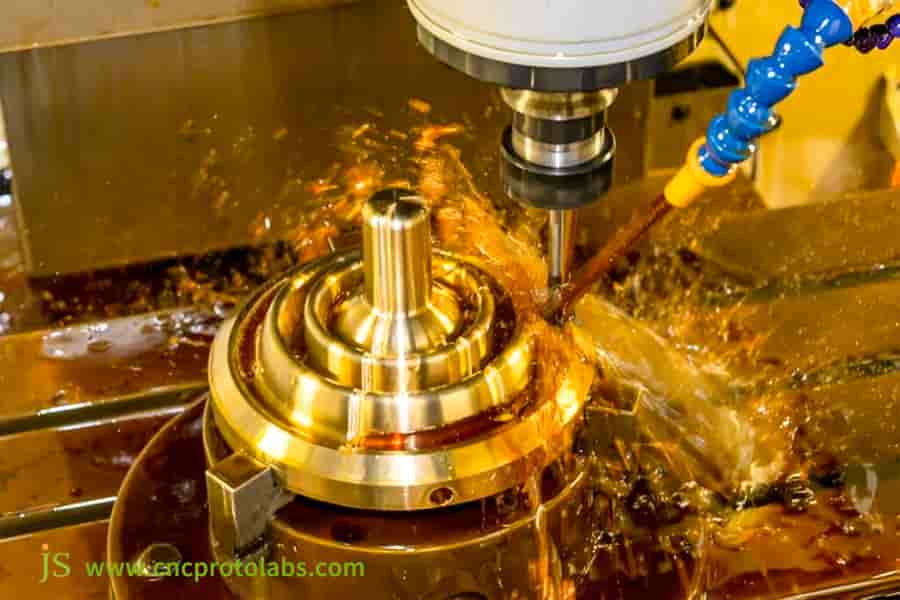
Figure 2: Bronze CNC Milling
The Special Value Of Bronze In CNC Rapid Prototyping
Bronze offers a unique value in CNC rapid prototyping, one that is not as well known as it might be, but it can bring several benefits to projects.
Bronze prototypes are not just excellent functional testing tools but also result in a better-looking prototype due to their color and texture. They are an excellent material for visual prototyping, market demos, and high-end proof-of-concept work.
For example, in new product launches, bronze prototypes would be able to better demonstrate the product design concept and high-end quality to catch the attention of customers. When conducting high-end concept validation,bronze prototypes are better able to reflect the end appearance and texture of the product.
With the CNC rapid prototyping technique to produce bronze parts, it is feasible to skip the mold-making process and directly produce bronze parts for demonstration or testing as per design drawings.
Not only does it significantly shorten prototyping cycles, typically reducing prototyping time by 30%-50%, but it also decreases mold-making expenses.
The saving in costs is particularly tremendous for small-batch prototyping work.CNC rapid prototyping technology also ensures bronze prototypes accurate enough to meet functional testing and visual presentation requirements, providing a reliable reference for subsequent mass production.
Case Study: A High-Wear-Resistant, Low-Friction Bronze Parts CNC Machining Project
Case Background
A heavy industry customer required a special core cam piece for high-speed packaging machinery (packing 2,000 products per hour). This section needed to withstand high cyclical wear and impact at 150 times per minute, and on top of that, it needed a low coefficient of friction to reduce noise and energy consumption.
The customer's previous steel parts needed to be oiled every two hours, generated 85 decibels of sound, and yielded an aluminum alloy life of only one month, both of which were below par.
JS Precision Solution
Material Selection
According to the client's requirements and considering the cam piece's need to withstand high impact and wear with a low coefficient of friction, JS Precision engineers compared the properties of various bronze alloys and ultimately proposed the employment of aluminum bronze (C95400).
Its compressive strength is more than 1000 MPa, and it has better wear resistance along with self-lubricity properties, meeting the demands.
Precision Machining
For surface quality and machining precision, JS Precision utilizes 5-axis CNC machining to process complex curved surfaces in one clamping, avoiding multiple clamping errors and retaining dimensional tolerances to ±0.005mm.
Cutting parameters are optimized based on aluminum-bronze's nature and yield a mirror finish with an Ra value below 0.2μm and reducing the friction to a higher degree.
Results
The lifespan of the new machined cam pieces made from aluminum-bronze has been extended by 300% (from one month to over four months), the noise levels of equipment have been reduced to levels under 65 decibels, and lubrication intervals have been extended to every eight hours, with the customer saving almost $20,000 in maintenance costs per year.
The newly processed aluminum bronze cam parts have brought significant benefits to customers, and the project execution ability and service level have also attracted the attention of TechBullion to JS Precision. We always help customers solve processing problems with professional strength.
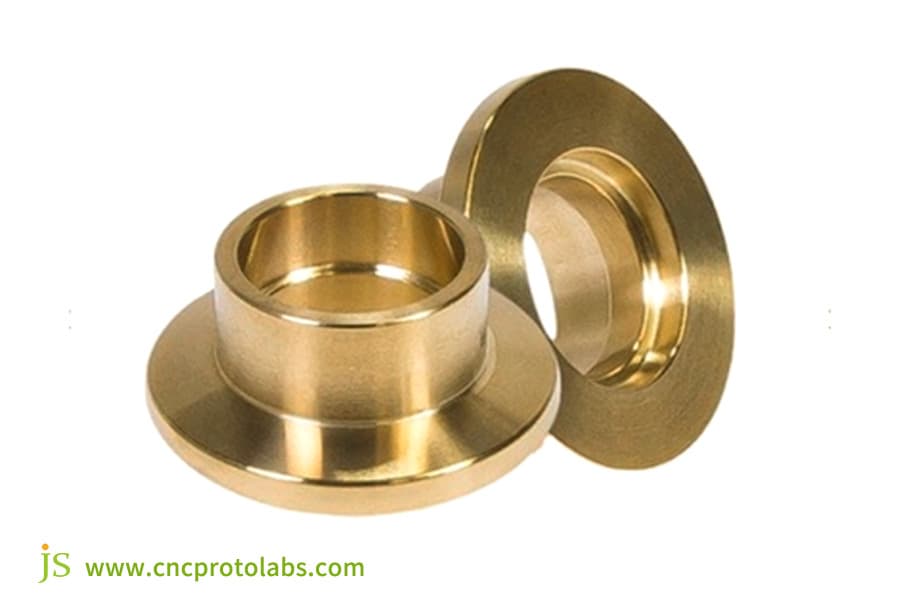
Figure 3: bronze parts CNC machining
Understanding Your CNC Machining Price: Bronze Part Cost Structure Analysis
When CNC machining bronze parts, CNC machining price is a concern to customers. Having knowledge of the cost factor will help you prepare your budget. Below are the main constituents and cost-cutting strategies to assist with custom CNC machining manufacturing tasks.
Material cost varies significantly among bronze alloys. Tin bronze costs $5-8 per pound, aluminum bronze costs $8-12 per pound, and beryllium bronze costs $20-30 per pound. Part weight affects material cost in a direct manner, with heavier parts costing more.
The cost and time of machining are affected by part geometry complexity, accuracy, and finish. Simple parts take less time and are less expensive to machine, precise or complex parts take more time and are more expensive to machine. In general, every extra machining hour costs $50-150, which depends on equipment and complexity.
Post-processing costs depend on part specifications. Polishing costs $20-50 per square meter, electroplating costs $50-100 per square meter, and passivation costs $10-20 per square meter. These costs can be reduced if post-processing is not done.
Money-Saving Tips:
1.Optimize the Design: Optimize the part design without sacrificing part performance. For example, eliminating sharp corners with rounded ones (highly recommended with a radius of a minimum of 0.5mm) can reduce tool wear, enhance machining efficiency, and ultimately save money.
2.Select the Right Tolerance and Finish Grade: If the application environment of the part is not demanding high precision and finish, there is no use going for excessively high grades since higher tolerances and finishes take a lot of machining time and money. For instance, lowering the tolerance grade from IT5 to IT7 can lower the cost of machining by 15%-20%.
JS Precision offers a clear-cut segregation of CNC machining prices. During the custom CNC machining manufacturing process, we'll also give cost optimization recommendations to reduce machining costs and create the most economical bronze products.
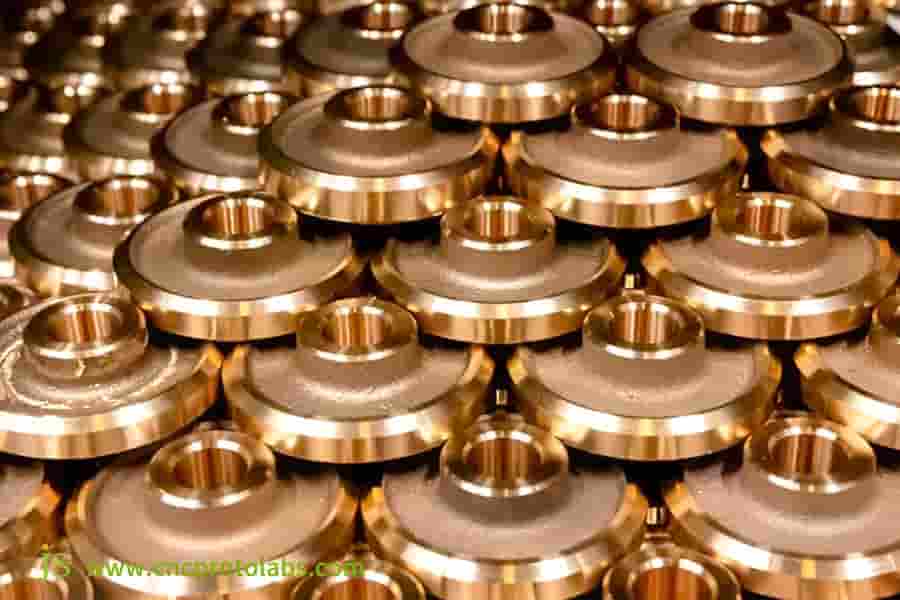
Figure 4: CNC machining bronze
Start Your Project: Get an Accurate Custom Bronze Part Quote
After learning about the advantages of bronze during CNC machining, alloy types, machining tips, and cost factors, it is now time to start your Custom Bronze parts processing project.
Bronze, through CNC machining, offers high accuracy, stability, and unique appearance. To produce precision mechanical parts, high-end decorative parts, or functional prototypes, it can meet your needs, especially in CNC machining bronze and custom CNC machining manufacturing projects.
If you already have a design idea or CAD drawing, just upload your CAD file to JS Precision, and our experienced personnel will provide you with an instant quote with a Design for Manufacturability (DFM) analysis.
In the course of the process, our engineers will also recommend the most suitable bronze alloy and machining plan to meet your needs to ensure a trouble-free implementation of your ideas, along with the reduction of your CNC machining price and minimization of expenses.
FAQs
Q1: How to decide between bronze and brass for CNC machining?
The choice between bronze and brass in CNC machining is primarily a matter of application. If there is a requirement for self-lubrication, high wear resistance, and corrosion resistance, bronze is the better choice. Aluminum bronze, a CNC machining bronze type, is a good fit. If good machinability and low price are desired, such as for show pieces or common connectors, brass is ideal.
Q2: What surface finishes are applicable to bronze parts?
Polishing improves surface finish and appearance, electroplating (such as nickel and chrome) increases corrosion and wear resistance, passivation forms a protective surface film, further improving corrosion resistance, and blackening gives a unique appearance. Such treatments can enhance the performance and aesthetic appearance of bronze CNC machining parts.
Q3: What are the usual tolerances realized for CNC-machined bronze components?
Standard tolerances for CNC-bronze parts are capable of high accuracy. In general, for standard precision parts, the tolerances can be held at ±0.01mm. For precision CNC machining operations that require high precision, the tolerances could be up to ±0.005mm. Part size, form, and machining process also have an impact on the specific tolerance. JS Precision is highly experienced in such instances.
Q4: Which bronze alloy is most resistant to marine corrosion?
Aluminum bronzes are the most corrosion-resistant in a marine environment, particularly C95400 aluminum bronze. It is seawater corrosion-resistant and easily rusts and is used extensively for components of marine engineering equipment such as propellers and valves. C95400 aluminum bronze is a popular choice for marine-associated bronze parts CNC machining work to ensure long-lasting, stable output.
Q5: How can I get a quote for custom bronze CNC machining parts?
You can quickly obtain a transparent, real-time quote by uploading your 3D CAD file to JS Precision. Our engineering team will provide an instant quotation along with a Design for Manufacturability (DFM) analysis to ensure optimal cost and manufacturability. For a detailed pricing estimate tailored to your project, please.
Summary
Getting the proper CNC parameters is not a one-time deal, it is an optimization and learning process. Avoid these errors not only to produce better parts, but to establish a viable and cost-effective system of production.
Are you looking for a reliable manufacturing partner for a challenging CNC metal project? We have expertise in precision CNC machining and extensive experience in handling intricate materials and structural concerns, from CNC rapid prototyping to production in volume.
Upload your 3D file today and receive a transparent, real-time quote along with a professional Design, Function, and Function (DFM) analysis report from our engineers, ensuring the success of your project from the very beginning.

Disclaimer
The contents of this page are for informational purposes only.JS Precision Services,there are no representations or warranties, express or implied, as to the accuracy, completeness or validity of the information. It should not be inferred that a third-party supplier or manufacturer will provide performance parameters, geometric tolerances, specific design characteristics, material quality and type or workmanship through the JS Precision Network. It's the buyer's responsibility Require parts quotation Identify specific requirements for these sections.Please contact us for more information.
JS Precision Team
JS Precision is an industry-leading company, focus on custom manufacturing solutions. We have over 20 years of experience with over 5,000 customers, and we focus on high precisionCNC machining,Sheet metal manufacturing,3D printing,Injection molding,Metal stamping,and other one-stop manufacturing services.
Our factory is equipped with over 100 state-of-the-art 5-axis machining centers, ISO 9001:2015 certified. We provide fast, efficient and high-quality manufacturing solutions to customers in more than 150 countries around the world. Whether it is small volume production or large-scale customization, we can meet your needs with the fastest delivery within 24 hours. Choose JS Precision this means selection efficiency, quality and professionalism.
To learn more, visit our website:www.cncprotolabs.com
Resource