English



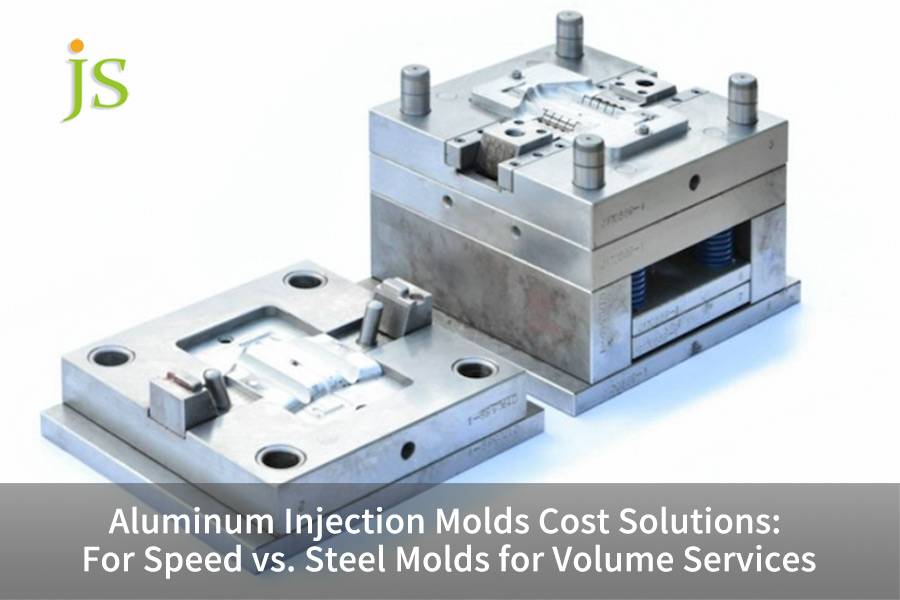

Aluminum injection molds provide an economical way for low volume fast prototyping, with delivery time of 1.5-3 weeks only. The initial tooling costs only account for about 30%-50% of steel's.
Steel molds with hardness HRC 30-52+ and more than 1 million shot life will be used for mass production.Class 104 (life ≤100,000 cycles) in SPI AN-102-78 classification includes mold while hardened steel mold is in Class 101 (life ≥1,000,000 cycles).
Aluminum vs Steel Molds Core Comparison Overview
|
Decision Dimension |
Aluminum Mold (QC‑10 / 7075‑T6) |
Pre‑hardened Steel Mold (P20 / NAK80) |
Hardened Steel Mold (H13 / S7) |
|---|---|---|---|
|
Typical Mold Life (cycles) |
5,000 – 100,000 |
100,000 – 500,000 |
1,000,000+ |
|
Mold Lead Time |
1.5 – 3 weeks |
4 – 6 weeks |
6 – 10 weeks |
|
Thermal Conductivity (W/m·K) |
130 – 160 |
29 – 34 |
24 – 28 |
|
Cooling Time Reduction |
20% – 40% shorter |
Baseline reference |
5% – 10% shorter (with conformal cooling) |
|
Suitable Resins |
PP, ABS, PC, TPE |
General plastics, low‑glass‑filled |
Abrasive resins (PA66+GF, PEEK) |
|
Upfront Tooling Cost (USD) |
$3,000 – $15,000 |
$12,000 – $40,000 |
$30,000 – $100,000+ |
Data compiled from SPI AN‑102‑78 mold classification standard, Alumold‑150 2025 material performance comparison report, and JS Precision's internal statistics from 150 delivered projects in 2025.
Key Takeaways
- Pick Aluminum if you want quickness: Lead time of 1.5-3 weeks, 50% less initial capital investment, and best for low volumes and fast validation.
- Steel is the choice for high volume production: 1,000,000+ shot life, great against wear, gives smallest amortization per part.
- Based on Resin will choose Material: Glass-filled or PEEK Resins require H13 steel molds or coated aluminum molds.
Why Trust JS Precision's Custom Injection Molding Service to Match Molds to Your Needs?
According to industry practice, the engineers working with JS precision have collected hands-on experience through over 150 real-life injection molding cases during 2025. For manufacturing a housing of a German car sensor, after the first trial we observed a flat deviation of 0.03 mm. Through analysis of the process based on their work, the engineers determined that the uneven cooling, which was a result of the non-conformal water lines, should have been the main reasons and they changed the water lines to 3D-printed conformal channels and redesigned the cooling system. A second trial resulted in 0.008 mm flat deviation only.
ISO 9001:2015 Clause 8.5.1 says, the organization shall carry out production and service provision under controlled conditions.
JS Precision strictly follows the standard and implements documented production and service procedures following DFM reviews up to the CMM final inspection. Our 2025 data reveal that a large 92% of the projects passed their first-article Cpk 1.33 criteria with no limitation as far as the scale (100-piece prototypes to million-piece mass production).
Want your production volume to help decide between aluminum vs steel molds? Download JS Precision Mold Selection Decision White Paper to explore more.
How Do Aluminum vs Steel Molds Compare in Performance and Cost?
Aluminum vs steel molds are mostly different in thermal conductivity and metal hardness: QC- 10 aluminum can reach a thermal conductivity of 130 W/m·K, which makes the cooling time much shorter and cuts the original cost of the tooling down tremendously, whereas steel (HRC 30, 52+) will keep the wear resistance and ultra-tight tolerance.
Effect of Thermal Conductivity on Molding Cycle Time
- Cooling with aluminum advantage: Thermal conductivity of 7075-T6 (130 W/m·K) is 4.5 times higher than that of P20 steel (29 W/m·K), which allows to decrease cooling time by 20%-40%.
- Machine hour cost is less: At the rate of $2/minute, reducing cooling from 30 s to 20 s will save 33 cents per part and 1,33 thousands of parts can be produced using $33,000 which is a very significant amount. This is a direct influence on injection mold cost, as the expense per part on the machine has been reduced.
- Hardness limitation: Due to its very low hardness of HB 150-160 (~HRC 25), 7075-T6 will wear out parting lines after 50,000 cycles.
Yield Strength and Material Selection
|
Material |
Yield Strength (MPa) |
Thermal Expansion (×10⁻⁶/°C) |
Max Recommended Cycles |
|---|---|---|---|
|
7075‑T6 Aluminum |
503 |
23.6 |
100,000 |
|
P20 Pre‑hardened Steel |
965 |
12.3 |
500,000 |
|
H13 Hardened Steel |
1,500+ |
10.4 |
1,000,000+ |
Data sourced from Alumold‑350 2025 material performance comparison report and JS Precision's internal material testing database.
Injection Mold Cost and Injection Mold Tooling Economics
- Low volume scenario (V < 10,000): Aluminum mold's lower price range of 3,000-15,000 being decisive factor, and per-part amortization remains low at 0.30-1.50 only.
- Medium volume scenario(50,000-100,000 parts): Faster cooling through aluminum partially compensating for the longer life of steel mold.
- High volume scenario(V > 500,000):Steel mold amortization reduces to just a few cents, the tooling cost ($30,000+) being entirely offset.
Contact JS Precision's engineering team for a DFM evaluation. We will output a quantitative cost comparison between aluminum vs steel molds based on your annual volume and resin characteristics.
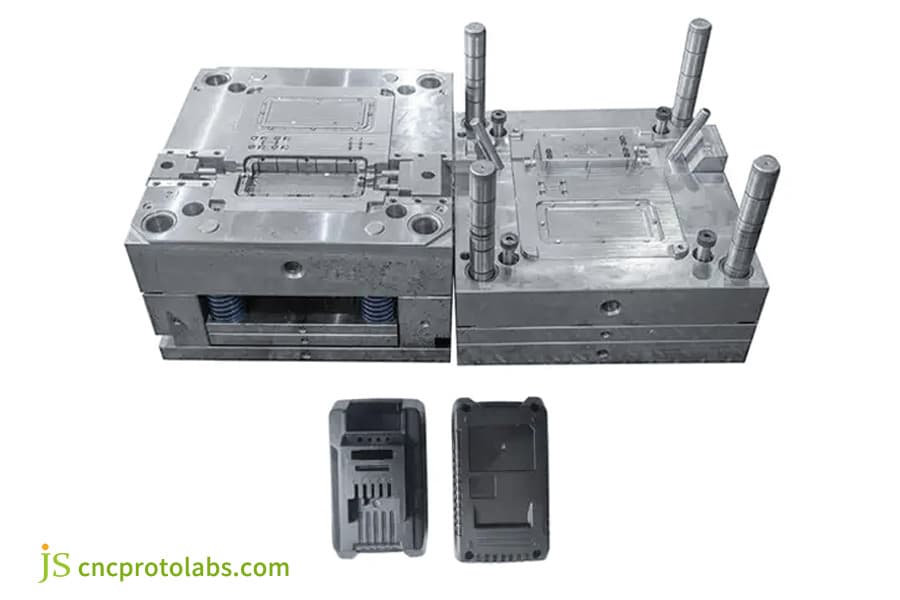
Figure 1: Two aluminum and steel molds side-by-side for performance and cost analysis.
How Do Aluminum Injection Molds Optimize Cost and Speed for Low‑Volume Production?
Aluminum injection molds are more economical than other materials in several ways because CNC machining on it is not only easier but also 3 times faster, no quenching or tempering is needed which altogether shortens the lead time to 10-15 days from mold manufacturing only and also decreases the first time tooling cost by 50%.
CNC Machining Efficiency Fundamentals
- The MRR (Metal Removal Rate) advantage: 7075-T6 material enables cutting speeds of 300-400 m/min, three times faster compared to P20 steel, which only reaches the speeds of 80-120 m/min. As a result, the machining time per cavity is Much reduced from 40 to 15 hours.
- No heat treatment required: Aluminum saves logistics time by skipping the 2-3 days quenching and tempering process.
- Simplified surface finishing: Hard anodizing is complete within 4-6 hours, while steel polishing to achieve a mirror finish takes 2-3 days.
Thermal Uniformity Eliminates Hot Spots
The high conductivity of aluminum leads to more uniform mold temperatures when using rapid injection molding:
- Remove hot spots: Localized temperature peaks are reduced due to thermal equalization of aluminum, resulting in more consistent shrinkage. Trial modifications of T1 decrease from an average of 3 to 1.
- Simplified cooling channel design: Aluminum reduces the complexity of the conformal cooling circuits, further shrinking machining time.
- Cycle time reduction. For a 2.0-2.5 mm wall ABS part, the cooling period decreases from 25 s to 15 s.
Economic Benefits of Low Volume Molding Service
For low volume molding service needs of 500 to 10,000 parts, aluminum investment molds give significant advantages:
- 50% lower capital tie-up: 3,000-15,000 vs. Steel's 12,000-40,000.
- 60% faster iteration: 10-15 day delivery vs. Steel's 4-6 weeks.
- Manageable per-part cost: A cost curve from validating at 100 pieces to ordering a small batch of 10,000 pieces.
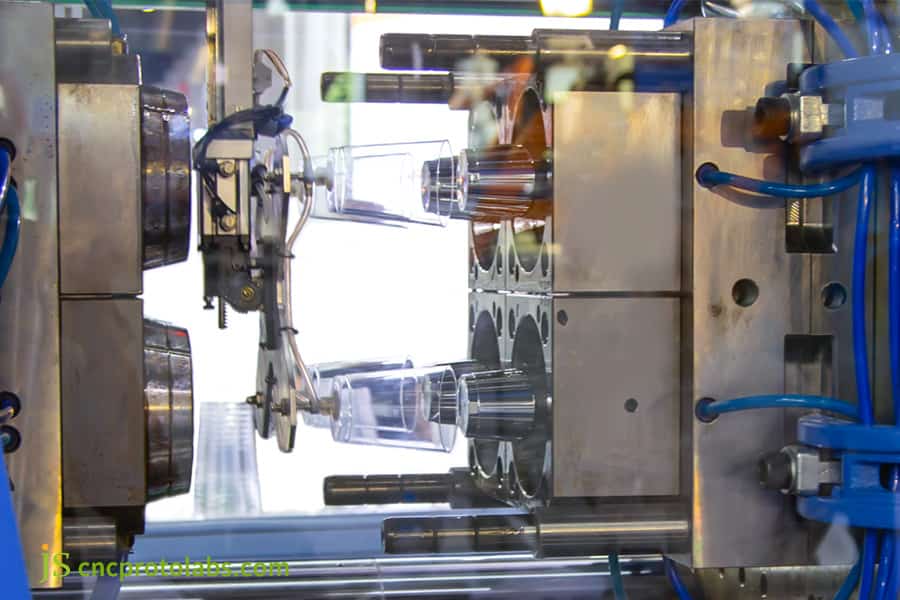
Figure 2: Clear plastic cups produced by aluminum molds in rapid manufacturing.
Why Do Steel Injection Molds Deliver the Lowest Per‑Part Cost in High‑Volume Manufacturing?
Steel injection molds of HRC 48-52 hardness are very durable and can deliver more than one million shots, making them the most cost-effective choice for long-term production even though they are expensive. With high volume runs, the tooling cost amortized per part drops to just a few nickels.
Cost Amortization Curve Breakdown
Hardened steel (H13/S7) and pre-hardened steel (P20/NAK80), in general, have different cost setups in the custom injection molding service:
- H13 hardened steel: The tooling price ranges from 30,000 to over 100,000 but due to a lifespan of over 1,000,000 shots, the per-part amortization is in the range 0.03-0.10.
- P20 pre-hardened steel: Tooling price is around 12,000-40 000 shot-life is 500,000 and per-part cost is in the range 0.024-0.08.
- The breakeven: If you get past more than 30,000 parts the steel will be the cheapest to own (total cost of ownership: TCO) than aluminum.
Dimensional Stability and Flash Resistance
ISO 16916:2016 regulations: When ordering injection molds, specification data such as materials, equipment, mold structure design, and tool surfaces should be clearly specified.
In order to strictly implement this standard, JS Precision used HRC 48-52 hardness treatment on the H13 quenched steel mold cavity in the development of steel injection molds.
- Dimensional Drift Control: Based on JS precision's 2025 data on 150 different projects, the dimensional drift within a cavity of a steel injection molds does not exceed ±0.003 mm after 500,000 cycles and it is in fact capable of delivering dimensional stability up to ±0.005 mm.
- FLash Resistance: With a rating of HRC 48-52, H13 steel seals parting lines for up to 1,000,000 cycles. However, aluminum molds require reconditioning only after 50,000 cycles.
- Maintenance downtime: Advanced cooling design and great reduce maintenance stops of the mold to minimal levels and allow a mold for injection molding service to operate without interruption.
Per‑Part Total Cost Comparison: 10,000 vs. 500,000 Parts
|
Cost Component (USD) |
Aluminum Mold (10,000 parts) |
H13 Steel Mold (500,000 parts) |
|---|---|---|
|
Tooling amortization (per part) |
$0.80 – $1.50 |
$0.06 – $0.20 |
|
Resin cost (per part) |
$0.50 – $2.00 |
$0.50 – $2.00 |
|
Machine processing (per part) |
$1.20 – $2.50 |
$0.90 – $1.80 |
|
Total per‑part cost |
$2.50 – $6.00 |
$1.46 – $4.00 |
Data from JS Precision's internal statistics on 150 delivered projects in 2025 and SPI AN‑102‑78 standard.
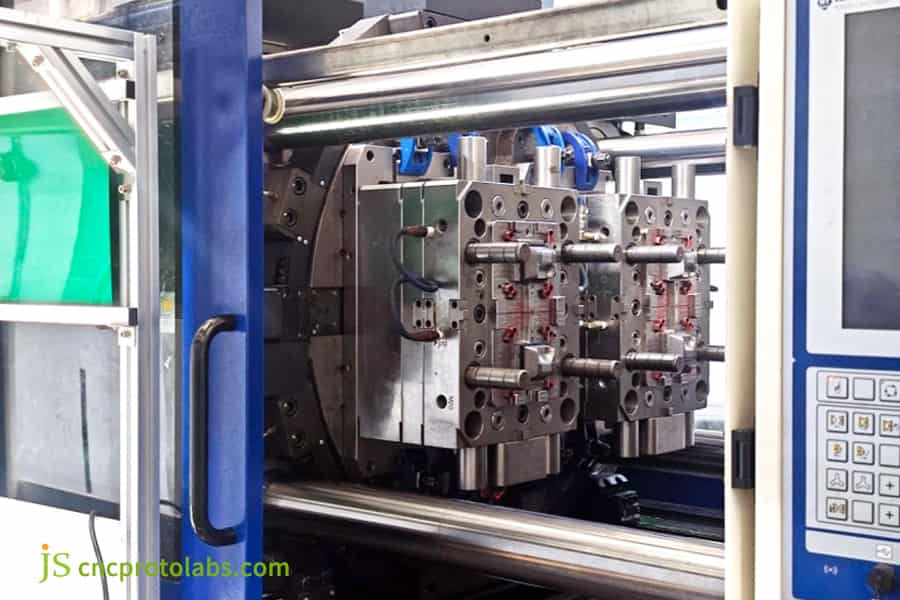
Figure 3: Industrial injection molding machine producing high volume plastic components.
What Is the Cost Crossover Point Between Aluminum vs Steel Molds?
The price breakeven between using aluminum vs steel molds is usually in about 10,000 to 30,000 units. Aluminum molds beat up steel molds by a big margin at prices of the equipment due to cheap tooling cost, after reaching the threshold steel molds are so fast on per-product cycle cost that they turn the whole matter upside down.
Quantitative Decision Model
The decision between aluminum vs steel molds is expressed by:
Total Cost=C_CapEx+V×(C_mat+R_machine×t_cycle)+C_maint
Where:
C_CapEx = Tooling capital expenditure (USD)
V = Total production quantity (parts)
C_mat = Per-part material cost (USD)
R_machine = Machine hourly rate (USD/hour)
t_cycle = Per-part cycle time (hours)
C_maint = Total mold maintenance cost (USD)
- Aluminum benefit area (V≤15,000): In 2025 JS Precision tracked 150 real injection mold projects. The aluminum mold projects got about 34% more average ROI than steel ones where production quantity was 15,000 parts. This further shows that injection mold cost is on the side of aluminum only for small quantities.
- Steel benefit area (V≥30,000): Steel dies come out top because the per-piece amortization is virtually nothing, the higher the quantity the bigger the edge.
- Earlier crossover with abrasive resins: Aluminum mold life would be only less than 20,000 cycles by using filled resins, for example, PA66+30% GF, and this would make the crossover between the two to move between about 3,000-5,000 items.
Injection Mold Tooling Service Strategy Selection
- Product life cycle (PLC) forecasting: Rather than focusing on a single order quantity it is better to consider the total demand over 3 years.
- Resin abrasiveness evaluation: H13 steel mold must be used, either if PEEK/SSP or glass fiber content is >30%.
- Iteration speed: Aluminum's economical ability to modify is suitable for products that are being changed rapidly with each new iteration.
Calculate your project's cost crossover point for free. Upload your 3D CAD file to JS Precision and receive a quantified comparison between aluminum vs steel molds tailored to your production plan.
Which DFM Optimization Strategies Can Cut Injection Mold Tooling Costs?
Optimization of different design parameters like wall thickness uniformity, draft angles increase by 1°–2°, and substituting complex EDM corners with inserts will result in cost reductions of injection mold tooling in a range of 20%-35% with no part quality or function losses.
Quantitative Benefits of Wall Thickness and Draft Angle
Key injection mold tooling DFM optimizations:
- Wall should be 2.0 - 2.5 mm: To go from 3.5 to 2.2mm for wall thickness, 17 reduces then-iron cool down time by 37% So reducing the per-unit machining cost by 0.40-0.80.
- For every additional 1 draft angle the ejection force will be reduced by 5%: VDI 24 class surfaces with embossed design require an additional 1.5 draft to avoid deformation.
- Rib thickness at 50% - 60% of wall thickness: Enables the formation of sink marks to be avoided. And no local thickening of the rib should form to prevent irregular cooling.
Inserts and Standard Mold Base Strategy
In custom injection molding service, smart use of standard bases dramatically lowers costs:
- MUD saves 40% of mold body price with standard base: Only the cavity insert is custom machine work, the aluminum mold machining hours decrease from 40 h to 15 h.
- Hand-loading inserts instead of complex EDM: Hand-loaded insert eliminated 4-6 h of EDM to cut cost 1.3 times.
- Set the location of gating properly: Well-designed gating would encourage the filling performance of the rapid injection molding also reduce the defect of the weld lines and air trap.
Upload your STEP file to JS Precision for a free DFM assessment and manufacturability analysis report.
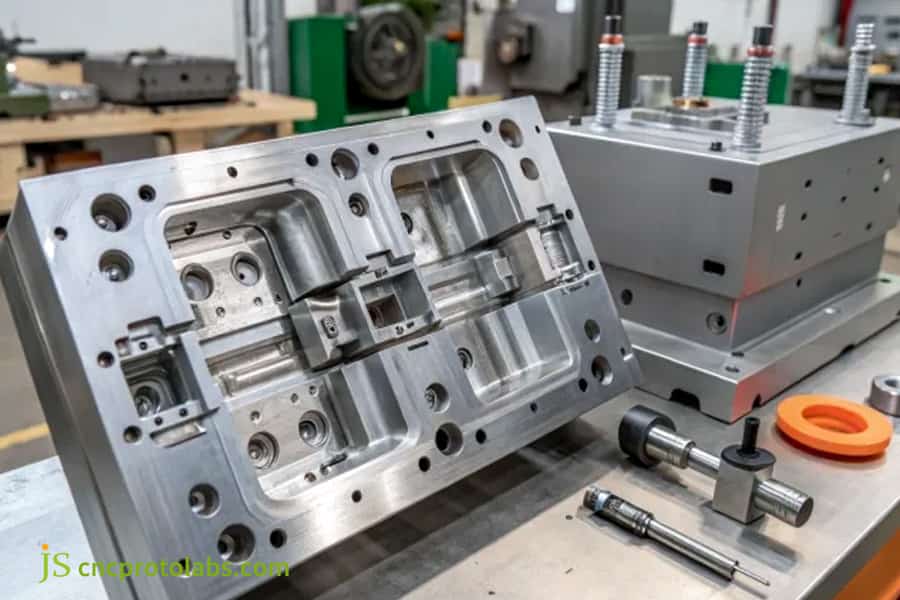
Figure 4: Complex mold cavity showcasing detailed DFM for cost reduction.
How Do Highly Abrasive Resins Affect the Lifespan of Aluminum vs Steel Molds?
Aluminum vs steel molds lifespan may be essential for abrasive resins processing. An untreated aluminum mold will lose more than 70% of the life, by contrast, hardened steel is resistant.
Physical Wear Mechanism of Glass Fibers
- Fiber abrasion mechanism: When glass fibers in PA66+30% GF are injected at a pressure of 120 MPa with a flow rate of 0.5-1.5 m/s, micro-plowing wear is generated that slowly removes the material from the aluminum cavity surfaces.
- Life reduction: When an untreated 7075-T6 material is molding a PA66-GF30, the life of the tooling reduces to 20,000-30,000 cycles from the original 100,000 cycles.
- Remedial coating: If the molds undergo Ni-PTFE electroplating or hard anodizing (HV 800), it will be possible to reach an aluminum injection molds life of 20,000 at low volume molding service.
Resin‑Mold Material Compatibility Matrix
|
Resin Type |
Recommended Mold Material |
Surface Treatment |
Expected Life (cycles) |
|---|---|---|---|
|
ABS / PP / TPE |
7075‑T6 Aluminum |
Hard anodizing |
50,000–100,000 |
|
PC / PMMA |
7075‑T6 Aluminum |
Nickel‑PTFE plating |
30,000–50,000 |
|
PA66+30% GF |
H13 Hardened Steel |
Hardened to HRC 50–52 |
500,000–1,000,000 |
|
PEEK / PPS |
H13 / 718H Steel |
Hardened + Chrome plating |
1,000,000+ |
Data from Plastics Technology 2024 wear test report and JS Precision's 2025 internal material adaptation statistics.
Steel Injection Molds Advantage in High‑Temperature Resin Scenarios
- H13 steel is used for PEEK because the hardness HRC48-52 is a good defense against erosion due to PEEK at 380 degrees C melting.
- Thermal expansion balance: Aluminum has a higher expansion coefficient (23.6x10⁻⁶/°C) than steel. This factor is to be taken into account when the PEEK material will be processed, and a 0.02-0.05 mm extra compensation has to be added.
- Benefit-cost comparison: aluminum injection molds with hard chrome plating will still be viable even for a production run of <5,000 PEEK parts only if the anticipated life of the mold is disclosed clearly in the quotation.
Case Study: How JS Precision Delivered Custom Injection Molding Service for Medical Device Enclosures Under Tight Deadlines
A medical device client urgently desired a custom injection molding service that could deliver them 5,000 ABS+PC enclosures in 20 days for their FDA clinical trials. The conventional way of manufacturing steel molds cost them $28,000 with a 6-week turnaround time which would have led them to miss their project goals.
Customer Challenge
- Tight deadline: 5000 parts have to be produced by the FDA trials of the clinical nature within 20 days.
- Exceeding budget: A $28,000 steel mold and 6 weeks of delivery will almost exceed the target cost and time by double.
- Difficult materials: The flow of ABS+PC is terrible and the snap-fit features are very likely going to cause weld lines.
JS Precision Solution
Material Optimization: By thoroughly assessing 5,000 parts in demand, the engineers proposed the use of 7075-T6 high strength aluminum casting instead of steel.
DFM Optimization:
- The localized wall thickness was decreased from 3.5mm to 2.2mm.
- The standard MUD quick mold base was utilized and it reduced the mold body cost by 40%.
- The cooling channels of high efficiency type were arranged.
Machining and cooling:
- 5 axis high speed CNC exact cutting, deviation control within ±0.01 mm.
- Sufficient cooling channels eliminated hot spots.
Failure Experience and Lesson Learned
Based on our hands-on experience with the JSP-MED-2025-014 project, the first Moldflow simulation showed that the aluminum mold's snap-fit area was cooling too fast resulting in insufficient weld-line strength. As a result, the team quickly modified the packing profile and also inserted small beryllium copper inserts at the snap-fit locations to fix the thermal balance problem. This change elevatedsnap-fit tensile strength from 18 MPa to 32 MPa which made it eligible for FDA clinical testing.
Final Quantified Results
- Mold manufacturing time: Just 11 days (traditional steel mold would take 6 weeks)
- Tooling cost: Reduced to $16,200 (42% savings)
- Cooling cycle reduction: 28% shorter
- Delivery: 5,000 parts zero‑defect, passed FDA clinical testing on schedule
This case underlines how an efficient injection mold tooling service working close to the customer coupled with a high level of expertise in low volume molding service can fully operate within tight timescales.
Explore JS Precision's full case library to see how we deliver custom injection molding service under tight deadlines for medical, automotive, and consumer electronics industries.
Why Choose JS Precision as Your Precision Injection Mold Tooling Service Partner?
JS Precision is a specialist in precision injection mold tooling service. Besides having more than 15 years in the industry, JS Precision is equipped with 5 axis CNC machining centers and automated injection workshops, and it is able to provide end-to-end injection molding service to global customers from DFM evaluation to mass production.
Technical Barriers and Quality Assurance
JS Precision's core capabilities of injection mold tooling service:
- 100% inspection of incoming raw materials through spectrometer: The Mill Certificate that accompanies each batch of mold steel guarantees the chemical composition and the hardness.
- CMM full-dimensional inspection report: A hundred percent inspection of critical dimensions with ±0.001 mm accuracy is guaranteed.
- ISO 9001:2015 quality system: Each stage from DFM to shipping is quality-controlled through proper documentation to meet process requirements.
- 5 axis CNC Mold Machining Center: Spindle speed of 24,000 RPM and cavity machining accuracy of ±0.002mm.
JS Precision Full Lifecycle Service Coverage
- Prototype Phase: Aluminum mold fast tooling of 100 pieces, delivery within 7 to 15 days.
- Transition Phase of Small Volume Production: low volume molding service for 1,000-10,000 parts.
- Mass Production Phase: production of 1,000,000 steel molds, Cpk≥1.33, and continuous monitoring.
JS Precision Rapid Injection Molding Engineering Response
- Quotation within 24 hours: Submit 3D CAD files and get DFM analysis and open quotation delivered the very same day by a team of engineers.
- Smooth engineering communication: High level project engineers communicate directly with the technical needs.
- Intellectual property protection: Standard NDA being signed, 100% mold rights to a customer, native 3D CAD files delivered.
FAQs
Q1: What is the typical cost difference between aluminum injection molds and steel molds?
The cost of aluminum injection mold is around 3,000 to 15,000, which is 30% to 50% less than prehardened steel (12,000 to 40,000) and hardened steel (30,000 to 100,000+) needs. The saving in tooling for aluminum is mainly due to shorter CNC machining time and the heat treatment time.
Q2: Can aluminum injection molds handle abrasive resins like glass-filled nylon?
Yes, but only kind of. Uncoated aluminum molds erode rapidly in the presence of glass-filled resins.JS Precision relies on hard anodizing or nickel-PTFE coatings over aluminum cavities to prolong tool life to about 10,000 cycles before compromising precision tolerances.
Q3: How fast can JS Precision deliver a custom rapid injection molding tool?
JS Precision can provide custom aluminum rapid injection molding tooling in 7 to 15 working days, which includes DFM approval, CNC mold machining and T1 sample inspection. Steel mold production can take from 4 to 8 weeks, given the internal complexity.
Q4: How does mold thermal conductivity impact the final piece-part cost?
Aluminum conducts heat 4 to 5 times better than normal mold steel. Improved thermal conductivity leads to decreased injection molding cooling time by 20 to 40%, directly decreasing cycle time and decreasing machine hourly operating costs per part.
Q5: Is it easy to modify an aluminum injection mold after initial sampling?
Yes, aluminum molds are much faster and much cheaper to change than steel. Aluminum, being softer material, is also easier to CNC remachine or co-add mechanical inserts for engineering change orders (ECOs) during prototype stage, takes less shop time and lower labor cost.
Q6: What production volume threshold makes steel molds more economical than aluminum?
The usual number of parts at which economics cross over should be in the vicinity of between 15,000 and 30,000 parts.Aluminum tooling cost per part should be less than steel tooling cost per part at less than 15,000 pieces due to smaller tooling investment. Aluminum tooling should be more economical than steel tooling at more than 30,000 parts because the amortization time per piece of steel tooling is insignificant.
Q7: How can I receive a detailed injection molding service cost quotation from JS Precision?
Upload your 3D CAD files (STEP/IGES) to the JS Precision portal for an instant, free DFM review and quoting. Our engineering group checks wall thickness, draught angles, and resin choice, then returns a detailed costing breakdown within 24 hours.
Q8: Why is JS Precision considered a reliable supplier for custom injection molding service?
JS Precision has a facility measuring to ISO 9001:2015 with advanced 5axis CNC machining centers and robotised injection molding presses. All jobs have a complete CMM dimensional report, resin certification and specific engineering team for the tooling lifecycle.
Summary
The decision of whether to go for aluminum injection molds or steel injection molds is based mainly on the balance between delivery speed, estimated total production volume, and resin physical properties. Aluminum molds are a very economical way of producing small lots with a rapid market validation and tight delivery schedule. Steel injection molds are the perfect foundation for million-shot high volume production and tough engineering plastics. A thorough DFM review done right at the beginning of the design stage can cause the prevention or minimization of unnecessary processing costs.
Tired of the lead time and costs related to injection molding? JS Precision is offering professional Engineering Team assistance for a complimentary DFM review and accurate quotation. If you're able to provide a 3D CAD Model we'll custom-engineer an aluminum or steel mold that meets your particular volume and material needs to ensure that it's the best value, fastest and high quality solution.

Disclaimer
The contents of this page are for informational purposes only. For JS Precision Services, there are no representations or warranties, express or implied, as to the accuracy, completeness, or validity of the information. It is the buyer's responsibility to identify specific technical requirements and request a formal parts quotation. Please contact us for more information.
JS Precision Team
Custom manufacturing solutions. With over 15 years of experience serving more than 1,000 customers, we specialize in high-precision CNC machining, sheet metal fabrication, 3D printing, injection molding, and metal stamping. Having successfully delivered over 300,000 precision parts, we maintain a 99.2% on-time delivery rate across all custom projects.
Our facility is equipped with over 100 state-of-the-art 5-axis machining centers and is ISO 9001:2015 certified. We deliver fast, efficient, and high-quality manufacturing solutions to B2B clients across 150 countries. Whether you require low-volume prototyping or large-scale customization, we support your project with lead times as short as 24 hours. Choose JS Precision for unparalleled efficiency, quality, and professionalism.
To learn more or submit your RFQ, visit our website: www.cncprotolabs.com
Resource