English



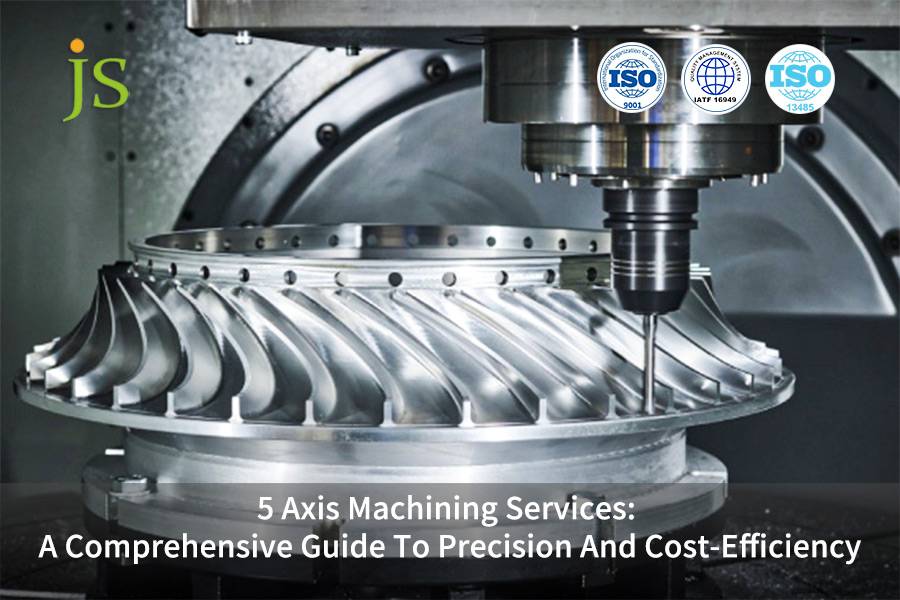

5 axis machining services form one of the core technologies within high-end manufacturing industries for solving complex machining problems.
From 5-axis aerospace components soaring through the skies to 5-axis medical device machining for life-saving implants, this technology is not just about shape, but about ultimate precision, complete surface integrity, and predictable costs.
However, between continuous 5-axis machining and high-speed 5-axis machining, when facing all the challenges of titanium 5-axis machining, it is the right strategy that makes a difference between success and failure.
This guide cuts through the marketing speak to get to the heart of the technology, revealing how you can leverage world-class precision manufacturing capabilities to realize your design vision.
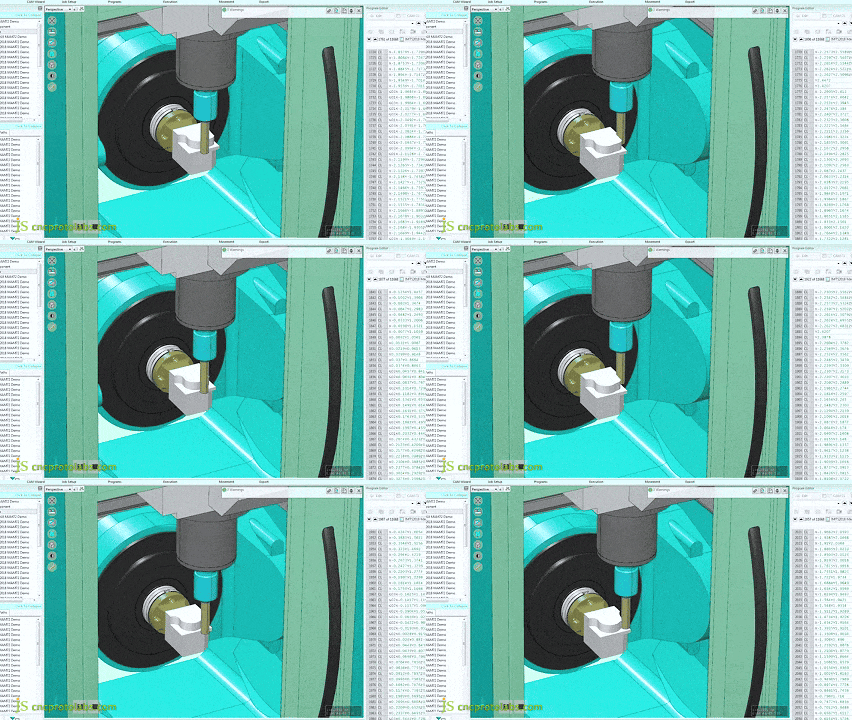
Figure 1:Real time simulation of the cutting process of drill bits on workpieces.
Core Answers Summary
| Technical Challenges | Key Influencing Factors | Technical Philosophy and JS Precision's Solutions |
| Precision control and Tolerance Control | Geometrical accuracy of machine tool, thermal stability, tooling system, process control. | "Repeatable excellence" is the definition of accuracy. By constant temperature workshop, high rigidity machine tool union and full-process metrology science, we stably control the tolerances up to micron level. |
| Complex Aerospace Component Machining | Thin-walled structure deformation prevention, multi-process integration, material removal strategies, and strict certification requirements. | We consider every 5-axis aerospace components a system engineering project. From simulation-driven tool path optimization up to on-machine measurement compensation, we guarantee first-shot success. |
| Cost of Machining Difficult Materials (Titanium Alloys) | Material costs, tool wear, machining cycle, special process requirements. | For titanium 5-axis machining, our value comes from our proprietary process database. With optimized cutting parameters, special tools, and high-pressure cooling, we maximize the material removal rate while extending tool life, controlling the overall cost. |
| Application Boundaries of Continuous Five-Axis and High-Speed Machining | Part geometric features, machine tool dynamic performance, programming complexity, surface quality requirements. | According to features, we select intelligently continuous 5-axis machining for complex surfaces or high-speed 5-axis machining for efficient area clearing instead of "one-size-fits-all" to get the best balance between efficiency and quality. |
5 Axis CNC Machining Services: Win-Win Of Precision And Cost By JS Precision
As a service provider with a 15-year experience in 5-axis CNC machining, JS Precision has established itself already in the fields of aerospace, medical device, and automobile precision parts.
We have processed 5-axis aerospace components for top global aerospace companies, overcome the challenge of the thin-wall deformation in titanium alloy brackets, and increase the pass rate from the industry average of 75% to 98%.
In the medical area, we follow the ISO 13485 standard and have finished over 500 orders about 5-axis medical device machining, including high-precision products such as orthopedic screws and surgical instruments.
So far, we have undertaken more than 8,000 orders involving complex part machining and served customers from over 20 countries, accumulating extensive process experience with a variety of materials such as aluminum alloys, titanium alloys, and stainless steel.
This guide is not a theoretical pile up, but an outcome of our experience acquired through many process optimizations and solving unexpected problems. Every word of advice herein has been tried in practice, and you can fully rely on it.
Want your 5 axis machining services project to achieve both precision and cost control? Please submit your part material, tolerance requirements, and production volume needs, and our engineers will offer a free, in-depth process plan that helps you balance precision and cost just right.
What Is The Achievable Standard And Ultimate Tolerance In 5 Axis Machining Services?
Excellent control of tolerance is one of the core competencies of 5 axis machining services, and also an important way to win customer recognition.
The basis for its accuracy evaluation can refer to the acceptance criteria for specimen accuracy in the ISO 10791-7:2020 machining center inspection condition standard, which provides an internationally recognized method for evaluating the comprehensive accuracy of 5-axis machine tools.
Standard Tolerance Range
Starting from standard production conditions, there are some benchmarks for the achievable tolerance of different materials, which is given in the table below:
| Material Type | Conventional Tolerance Range | High-Precision Tolerance Range | Applicable Scenarios |
| Aluminum Alloy | ±0.025mm | ±0.005mm | Automotive parts, general machinery |
| Steel | ±0.030mm | ±0.008mm | Industrial equipment, mold parts |
| Titanium Alloy | ±0.035mm | ±0.010mm | Aerospace, implants medical |
"Invisible" Factors Affecting Tolerance
1. The machine tool's static and dynamic precision: The machine tool's positioning precision and repeated positioning precision are the direct determinants of the basic tolerance, while tracking errors amplify deviation when machining a complicated surface, which affects the forming effect of this part.
2. Thermal deformation management: High speed rotation of the spindle during the processing, friction of the guiding rails, and fluctuations in ambient temperature may all result in minute deformations of machine tool components, leading to systematic errors that require targeted compensation strategies.
3. Total Tooling System Error: Just a couple of microns of runout in the tool holder will be transferred directly to the part, and the wear of the tool itself accrues with time taken for machining, directly impacting tolerance stability.
Accuracy Assurance System of JS Precision
- We strictly control the sources of precision, starting from the equipment selection stage: introducing high-end 5-axis machine tools from Germany and Japan, with positioning accuracy up to ±0.003mm.
- Meanwhile setting up a constant temperature workshop to control environmental temperature fluctuations within ±2℃.
- In the machining process, online detection equipment is used to monitor dimensional deviations in real time, with parameter adjustments through process compensation algorithms.
It is this system that allows our 5 axis machining services to keep output stable and of high precision consistently.
Want to ensure your 5 axis machining services project meets expected tolerances? Send in your part drawings with your needed tolerance requirements, and our engineers will give you a free accuracy feasibility review to help you avoid risk of error.
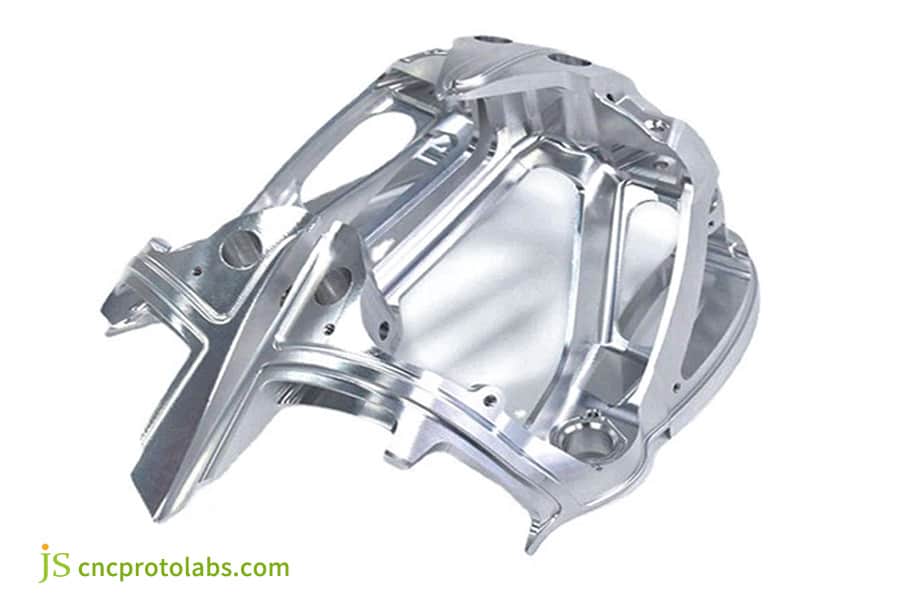
Figure 2:Five axis CNC machining can rotate parts and tools around multiple axes, resulting in more uniform and precise cutting effects, which helps to achieve stricter tolerances.
The Art Of Complexity: How To Machine Demanding 5-Axis Aerospace Components?
5-axis aerospace components are usually characterized by complex curved surfaces and thin-walled structures. Consequently, machining these parts turns out to be very challenging and requires scientific process planning and execution methodologies to be successful.
Process Planning: Beginning with Simulation
1. Virtual Manufacturing and Collision Detection:
The structure of 5-axis aerospace components is complicated. Even slight mistakes in the machining path lead to collisions between the tool, workpiece, and fixture.
We use advanced CAM software to build a complete virtual machining environment, simulate trajectories of machine tool motion, and identify collision risks in advance to avoid expensive material waste and equipment damage.
2. Cutting Force and Deformation Prediction:
The thin-walled structure in the aerospace parts is usually less than 2mm thick and easily deformed by the cutting force. We predict the trend of parts deformation under different cutting parameters through finite element analysis, optimize the cutting sequence and feed rate, and control the amount of deformation actively.
Execution Strategy: Stability First
1. Clamping Method Selection:
According to the characteristics of the 5-axis aerospace components, we flexibly select the method of machining. Parts with complex structures should be subjected to continuous 5-axis machining to accomplish all processes in one clamping, in the case of parts with poor rigidity, 3+2 axis oriented machining should be used to improve machining stability.
2. Dedicated Fixtures & Zero-Point Quick-Change System:
Minimize the effect that clamping force has on the parts while improving the clamping rigidity with our designed fixtures. The zero-point quick-change system allows for rapid changeovers, reducing preparation time in mass production and improving overall efficiency.
Having some difficulties with the complex machining of 5-axis aerospace components? Set up a consultation with our process engineers today, provide your part structure and precision requirements, and receive a free personalized process solution for more stable and efficient machining of complex parts.
Understanding Cost Drivers In Difficult Titanium 5-Axis Machining
Titanium 5-axis machining has been consistently expensive due to its unique material properties. Thereby, only when the cost structure is made well understood, effective cost reduction strategies can be found.
Cost Structure: In-depth Analysis
The cost of titanium 5-axis machining mainly comes from three parts, with the following proportions:
| Cost Type | Percentage Range | Core Influencing Factors |
| Direct Material Cost | 30%-40% | High price of titanium alloy blanks, material utilization directly affects cost. |
| Machine Tool Time Cost | 40%-50% | The low thermal conductivity of titanium alloy results in a slow cutting speed and a long processing cycle. |
| Tool Consumption Cost | 10%-20% | High price of specialized tools, fast wear rate, more frequency to replace. |
Approach to Cost Reduction and Efficiency Improvement by JS Precision
1. Process Parameter Optimization Library:
We have developed a dedicated parameter library based on thousands of titanium 5-axis machining experiments, which can match the cutting requirements for different titanium alloy materials accurately, such as Ti-6Al-4V, to reach a better balance between material removal rate and tool life.
2. Application of HPCT:
We have introduced a high-pressure cooling system that, with the aid of a high-pressure jet, breaks through the thermal barrier formed during machining of a titanium alloy, promptly removing chips and cooling the cutting edge.
This has significantly improved the conditions for performing cuts, with an extension of tool life by over 30%, which proportionally reduces the costs of tools consumed.
Efficiency Unlocked: When And How Does Continuous 5-Axis Machining Save Time?
Continuous 5-axis machining is a very effective way of 5-axis machining but not applicable to all occasions. Whereas in some special cases, it can greatly shorten the production time.
Where are the actual time savings?
1. Reduces setup number and datum transformations:
Conventional machining of complicated parts requires multiple setup and alignment processes, which is not only time-consuming but also introduces cumulative errors. Continuous 5-axis machining can complete all feature machining in one setting. Time required for set-up, alignment, and repeated inspection can be saved, avoiding possible cumulative errors.
2. Optimizing tool accessibility:
For deep cavities and complex curved surfaces, continuous 5-axis machining can adjust the posture of the machine tool and use shorter tools to machine. The rigidity of shorter tools is higher, which allows higher cutting parameters, considerably improving the metal removal rate and shortening the machining cycle.
Not Always the Best Solution
Continuous 5-axis machining also has many limitations: the programming difficulty is far greater than that of traditional machining, it requires professional CAM engineers for longer programming time. Meanwhile, multi-axis linkage of the machine tool increases the dynamic load, so the precision and stability of the equipment need to be further improved.
In some high-precision, small-allowance finishing cases, high-speed 5-axis machining can attain higher efficiency with faster feed rates and smoother cutting motions.
Would you like to know whether your parts are suitable for continuous 5-axis machining? Simply upload your 3D model and your machining requirements, and we'll perform a free process evaluation to help you select the most efficient machining method and save production time.
Taming The Heat: Advanced Strategies For Thermal Management In Titanium Machining
In addition, the fundamental reason for rapid tool wear and decreased part accuracy in heat accumulation is significant during titanium 5-axis machining, therefore, effective thermal management becomes very important.
The Dilemma of Heat Generation and Conduction
The thermal conductivity of the titanium alloy is only about l/4 of that of iron and about 1/16 that of aluminum. During the process of machining, because the heat brought out by cutting is not easy to be taken away, more than 90% of the heat gathers in the point of the tool.
This will not only accelerate tool wear and decrease tool life but also result in excessive local high temperatures in the part, thermal deformation, and tolerance inaccuracy.
Solutions of Systematic Heat Dissipation
1. Internal Tool Cooling: We use specialized tools with a number of internal cooling channels. The coolant moves through these directly to the cutting edge, thus precisely cooling the heat-producing core area and not allowing the dissipation of heat.
2. Coolant Selection and Pressure: High-performance cutting fluid specifically designed for titanium 5-axis machining, with great cool and lubrication effect, is employed, meanwhile, an ultra-high-pressure cooling system (>70 bar) is adopted in order to enhance the permeability of coolant to fast remove chips and heat.
3. "Thermal-Aware" Optimization of Cutting Parameters and Paths: Cycloidal milling and helical feeding are used to avoid the continuous friction and heat generation on the same area, while the cutting speed and feed rate are reasonably adjusted at the same time to decrease the amount of heat generated per unit time.
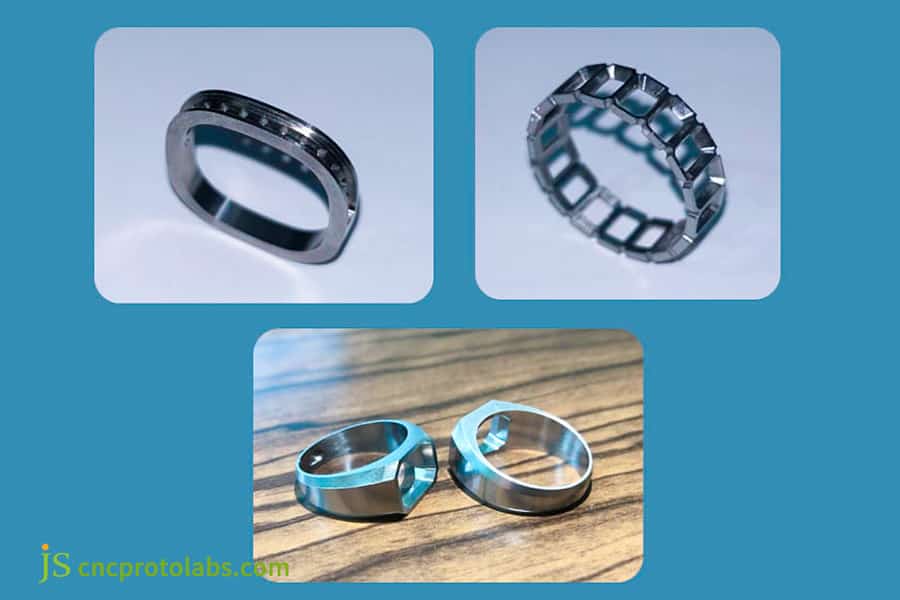
Figure 3:Five axis CNC machining can reduce heat accumulation and minimize tool wear, effectively challenging titanium machining.
Pushing The Boundaries: What Are The Practical Limits Of High-Speed 5-Axis Machining?
High-speed 5-axis machining can greatly improve processing efficiency, but due to the limitation of physical conditions and engineering technology, the speed will not be infinite. However, it has an irreplaceable advantage in certain fields.
Physical and Engineering Constraints on Speed
1. Machine Tool Dynamics Limits:
The acceleration capability of the spindle and the response speed of the servo system determine the maximum feed rate of high-speed 5-axis machining. In our high-end machine tool spindles, the maximum speed could be up to 24,000 rpm and the maximum feed rate for each axis is 60 m/min for most of the high-speed machining needs.
2. The Boundaries of Tooling Technology:
The dynamic balance level is very important under high-speed rotation, an unbalanced tool may break. Tools with a dynamic balance level of G2.5 and high-precision clamping systems are used to ensure the stability and accuracy during high-speed rotation.
3. Programming and Control Challenges:
In high-speed machining, the "look-ahead" processing capability of the CNC system becomes particularly critical. Our equipment is equipped with a high-end CNC system that can analyze more than 1000 segments of machining code in advance, avoiding pauses or overcutting at corners and hence allowing smooth machining.
Exquisite application in medical equipment processing
5-axis medical device machining needs extremely high precision and surface quality, high-speed 5-axis machining perfectly meets such requirements.
Given the small size and geometric complexity of some orthopedic implants, such as artificial joints, or surgical instruments, high-speed 5-axis machining can be done at high feed rates with a small cutting depth. This not only raises efficiency but also reduces cutting marks on the part surface, achieving an excellent surface finish that meets the requirements of biocompatibility.
Case Study: From 18 To 6 Hours – How We Slashed Lead Time For A Titanium Aerospace Bracket By 67%
Challenge
Our client is a leading global supplier of aerospace components looking for the machining of lightweight titanium alloy brackets and is engaged in 5-axis aerospace components. The size of the part is 320mm×210mm×160mm, the core problem is that there are three thin-walled structures with a thickness of only 1.2mm.
The client used to adopt the traditional three-axis machining process, with several steps of clamping, resulting in as long as 18-hour single-piece machining time, and serious thin-wall deformation, which leads to a product pass rate of only 70%. It cannot meet the needs of mass production.
JS Precision Solution
We have formed a specialized technical team and developed an integrated solution for the titanium 5-axis machining project.
1. Firstly, we adopted the continuous 5-axis machining strategy and designed some special fixtures to complete the machining of all features in one setup completely, which would avoid positioning error and risks of deformation caused by multi-setups.
2. Based on our self-owned database of titanium 5-axis machining, optimize the cutting parameters to increase the material removal rate in the rough machining process, and adopt a high-speed 5-axis machining method in thin-wall areas with small depths of cut and high feed rates to reduce the cutting force.
3. Finally, in the whole process of the manufacturing, we also introduced an on-machine measurement system to measure all critical dimensions in real time, compensating automatically for tool wear and expected deformation.
Results:
With this solution, the single-piece machining time of this titanium alloy bracket was reduced from 18 hours to 6 hours, with a production efficiency increase of 200%, thin-wall deformation was controlled within ±0.015mm, and the product pass rate increased to 98%.
In just one year, we saved the customer over $150,000 in manufacturing costs, helping them successfully complete mass production and delivery.
Would you like to recreate the cost savings and efficiency gain seen with these 5-axis aerospace components? Call our technical hotline, tell them your part type and machining challenges, and receive a personalized titanium 5-axis machining optimization solution.
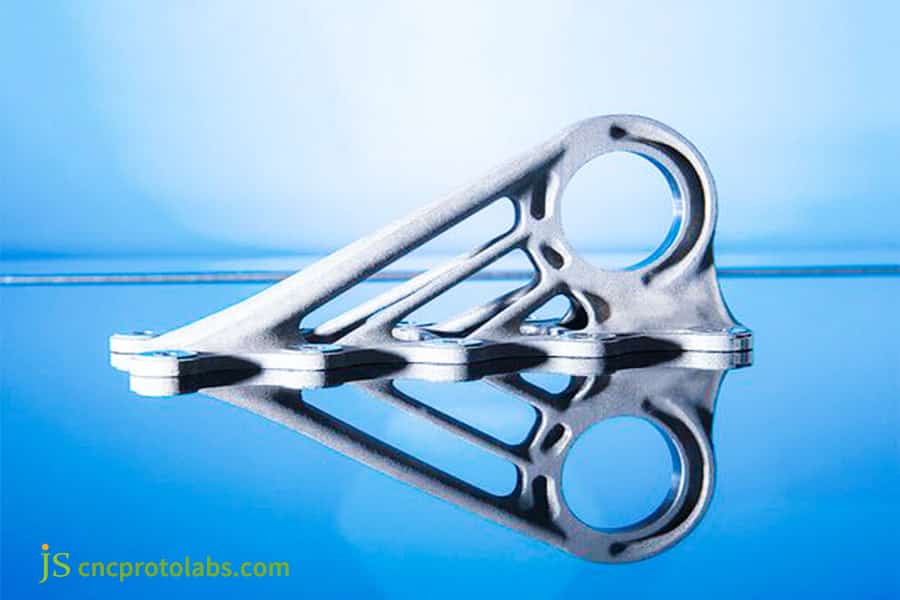
Figure 4:Lightweight titanium alloy bracket for aviation
FAQs
Q1: What file formats do you require for a 5-axis machining quote?
We prefer 3D solid models such as STEP or IGES files, which can fully represent the part structure. Please also attach PDF drawings that specify the critical dimensions, tolerance requirements, and material information for accurate quotation.
Q2: Can you handle both prototype and high-volume production?
Absolutely, for the prototypes, we have fast response and expedited machining services to meet your test needs, for mass production orders, we have mature, stable processes, and automation solutions to guarantee efficiency and consistency.
Q3: How do you ensure the surface finish quality for medical implants?
We ensure that the implants meet the required standards of surface finish for biocompatibility through careful tool path planning, optimized cutting parameters, and specialized post-processing techniques such as vibratory polishing or sandblasting.
Q4: What is the largest part size your 5-axis machines can accommodate?
The sizes of our worktable vary between 5-axis machining equipment in the range from 600mm to 1500mm. Just give the requirement for the length, width, and height of your part, and we will match you with the most suitable machining equipment.
Q5: Do you provide material certification and full inspection reports?
Yes, we can provide original manufacturer material certificates to ensure material traceability. The full inspection reports will also be provided, which include dimensions, roughness, and other indicators for either the first piece or the most critical parts in each batch.
Q6: What is your experience with ISO 13485 for medical device machining?
We have established a complete quality control system according to the ISO 13485 standard. Controls are tight, from the inspection of raw materials right through to delivering the finished product and ensuring the whole 5-axis medical device machining process is traceable and controllable.
Q7: How does the cost compare between machining aluminum vs. titanium on 5-axis?
In the course of five-axis machining, the cost of a titanium alloy is usually 3-5 times higher compared to an aluminum alloy. The main reason for this is the low thermal conductivity of a titanium alloy, which results in longer machining cycles and tool wear, as well as the higher cost of the raw material itself.
Q8: What is the typical lead time for a complex 5-axis prototype?
We normally deliver within 5-10 working days after receipt of your approved data. Due to the different complexity levels of the parts and material availability, the exact delivery period depends on this. We will, in any case, let you know in advance the exact schedule.
Summary
5 axis machining services are not simply a gathering of technologies but an art in precision control, process optimization, and cost balancing. Backed by 15 years of practical experience, JS Precision has proved that, by adopting the right approach, it is possible to achieve the win-win situation of "high precision" and "low cost" in complicated part machining.
Whether you need to process 5-axis aerospace components, 5-axis medical device machining, or face thermal management challenges with titanium 5-axis machining, we can provide customized solutions for you. Choose JS Precision, and let 5-axis machining become the driving force behind the competitiveness of your product.
It's time to give new life to your detailed designs in manufacturing.
→ Provide your part data to get a customized solution report comprising detailed technical analysis.
→ Setup a one-on-one video conference with our 5-axis machining experts today to dive deeper into your project details.

Disclaimer
The contents of this page are for informational purposes only.JS Precision Services,there are no representations or warranties, express or implied, as to the accuracy, completeness or validity of the information. It should not be inferred that a third-party supplier or manufacturer will provide performance parameters, geometric tolerances, specific design characteristics, material quality and type or workmanship through the JS Precision Network. It's the buyer's responsibility Require parts quotation Identify specific requirements for these sections.Please contact us for more information.
JS Precision Team
JS Precision is an industry-leading company, focus on custom manufacturing solutions. We have over 20 years of experience with over 5,000 customers, and we focus on high precisionCNC machining,Sheet metal manufacturing,3D printing,Injection molding,Metal stamping,and other one-stop manufacturing services.
Our factory is equipped with over 100 state-of-the-art 5-axis machining centers, ISO 9001:2015 certified. We provide fast, efficient and high-quality manufacturing solutions to customers in more than 150 countries around the world. Whether it is small volume production or large-scale customization, we can meet your needs with the fastest delivery within 24 hours. Choose JS Precision this means selection efficiency, quality and professionalism.
To learn more, visit our website:www.cncprotolabs.com
Resource