English



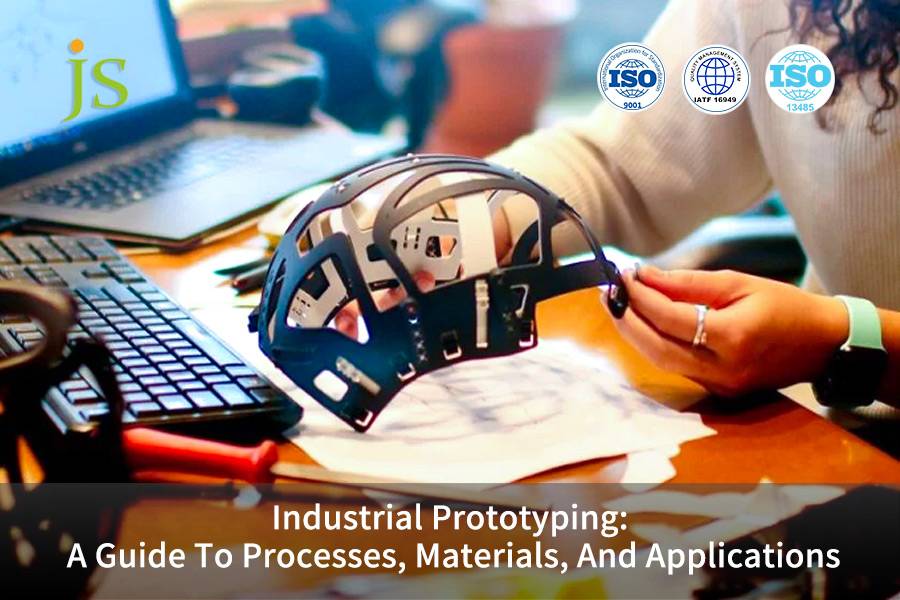

Industrial prototyping is one of the fundamental competitive strengths that a company can offer, and if the competition can prototype in weeks, while you can prototype in days, and if design issues are not caught until after mold making, tens of thousands of dollars will be wasted on mold tooling, and the competitiveness of the organization will be severely diminished.
In the current marketplace, speed to market is what makes a business successful or unsuccessful, and industrial prototyping is no longer just about prototyping, it's an investment, not only from a cost perspective, but from a marketplace perspective. In this article, the basic concept of industrial prototyping will be explored, providing a step-by-step overview.
Core Answer Overview
| Core Dimensions | Key Conclusions | Action Recommendations |
| Process Selection | 3D printing for complex geometries, ±0.1mm, and CNC for high precision functional parts, ±0.01mm. | 3D printing is used for complex appearance, and CNC is used for carrying functional components |
| Cost-Effectiveness | Outsourcing saves 60% of labor cost annually, and the break-even point for the number of units/year is 400-500. | Recommend outsourcing for annual demand <300 units. |
| Material Validation | Prototype materials should be compatible with the materials used for mass production, especially for high-temperature alloys and engineering plastics. | Request data sheets and test reports from the suppliers. |
Key Takeaways
- Accuracy Determines Functionality: For functional test prototypes, machinability using CNC machines is a necessity with tolerances up to ±0.01mm, while 3D printing is only applicable to appearance verification.
- Process Determines Speed: Hybrid prototyping (combining 3D printing and CNC machining) has the potential to reduce the product development process by 40%.
- Data Determines Success: Incorporating virtual prototyping has the potential to reduce physical prototypes by 26% and improve engineering by 52%.
Why Trust This Guide? JS Precision's Practical Experience In Industrial Prototyping
JS Precision has been actively involved in industrial prototyping for the past decade or more, working with global clients from over 20 different industries.
Till date, we have successfully completed over 1000 precision prototyping projects, including the creation of precision component prototypes with tolerances as low as ±0.005mm. This has collectively helped our clients save over 70% on the overall cost associated with changeovers during the next stages of the product development lifecycle.
JS Precision has a team of professional DFM engineers and senior process engineers who help deliver end-to-end solutions for our clients on virtual prototyping and physical prototype manufacturing under the aegis of ISO 9001:2015 quality standards.
JS Precision has also been actively involved in rapid prototyping projects, where we have successfully completed over 300 projects on hybrid prototyping using 3D printing and CNC machining. This has collectively helped our clients save an average of 40% on the overall product development lifecycle.
For example, one of our automotive parts industry clients was able to save 1.5 months on the overall product development lifecycle with our rapid prototyping solutions, going from 6 months to 3.5 months and hence successfully capitalizing on the market window.
For high-precision and high-confidentiality projects, we currently have a complete NDA confidentiality system. In addition, we have completed customized industrial prototyping projects for many Fortune 500 companies. Most importantly, we have a 100% record of zero design information leaks.
Not only does our experience align with the needs of our clients, but it also directly solves the pain points they are concerned with. For example, the pain points include non-compliance with tolerances, delivery cycles, the gap between material and mass production, and the challenge of moving from prototype to mass production.
JS Precision is capable of offering customized solutions for both simple conceptual prototypes and complex multi-material prototypes.
Want to initially verify the mass production feasibility of your design? Contact a JS Precision engineer, submit your basic product requirements, and you can receive a free industrial prototyping feasibility analysis.
What Is Industrial Prototyping And Why Is It The Core Of Product Development?
Rapid prototyping technology is one of the main parts of industrial prototyping. Prototyping, as a part of product development, plays a critical role in the development of a product from conceptualization to mass production, and without such a step, product development becomes a process fraught with unseen risks.
In this section, the core value of the subject will be analyzed from three aspects: definition, functionality, and cost control.
Definition and Core Concept
Industrial prototyping is the process of transforming digital designs into physical entities through the application of rapid manufacturing technology.
At its core, the process of industrial prototyping aims at developing manufacturing prototypes in the shortest time possible through the application of the rapid prototyping technology, which greatly increases the "iteration efficiency" of the process, beyond the simple "make something to see" approach.
Functionality, Assembly, and User Experience Validation
For high-quality manufacturing prototypes, the product has to be beautiful, functional, and user-friendly, completing the multi dimensional validation of the product, including feasibility of assembly, functional implementation, and human-computer interaction.
How Early Prototyping Significantly Reduces Overall Manufacturing Costs and Risks
Introduction of the industrial prototyping process early in the product development life cycle has the potential of reducing engineering change costs by more than 70%.
It has also been noted that dimensional errors corrected during the prototype stage of the product development life cycle cost only a few hundred dollars, compared to the hundreds of thousands of dollars spent correcting the same errors during the mold stage of the life cycle.
Virtual prototyping technology can reduce the number of physical prototypes by 26% and shorten the development cycle by 27%, effectively mitigating early-stage risks (Stratasys, 2024).
Cost and Risk Comparison at Different Prototype Stages
| Prototype Stage | Modification Cost (USD) | Modification Cycle | Mass Production Risk Percentage |
| Concept Prototype | 50-200 | 1-2 days | 10% |
| Structural Prototype | 200-500 | 3-5 days | 3-5 days |
| Functional Prototype | 500-2000 | 1-2 weeks | 60% |
| Engineering Prototype | 2000-5000 | 2-4 weeks | 80% |
| Post-Mold Opening | 10000-50000 | 4-8 weeks | 100% |
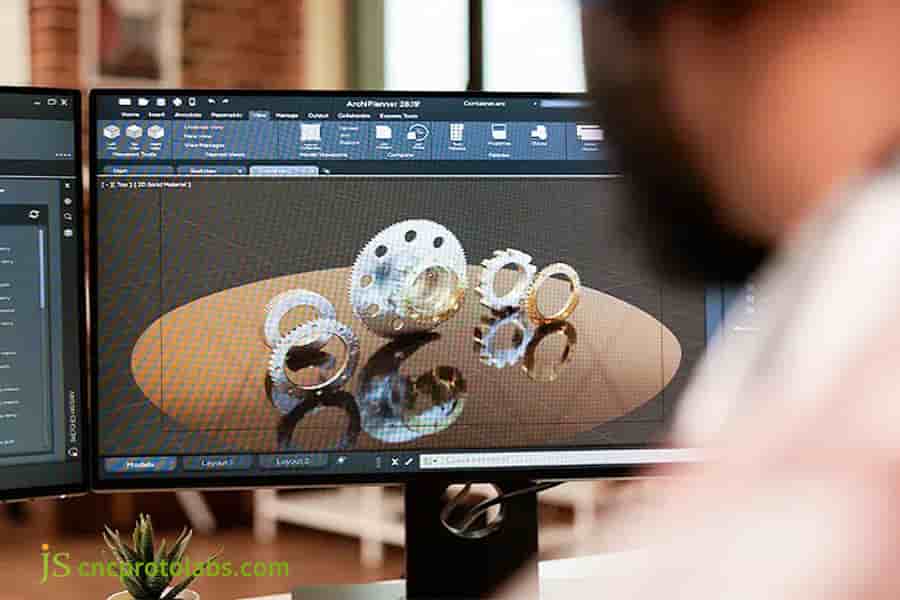
Figure 1: A computer screen displays 3D models of metallic gear-like parts in a professional CAD software interface, representing the digital design phase.
How Do Manufacturing Prototypes Bridge The Gap Between Design And Production?
Manufacturing prototypes are the core bridge connecting design and mass production, and prototype engineering is the key to ensuring its value. Without this link, the gap between design and production is difficult to bridge, and the risk of mass production will be greatly increased.
Levels of Prototype Fidelity
Manufacturing prototypes are divided into four fidelity levels based on verification purposes: appearance, structure, function, and engineering.
Corresponding to different stages of industrial prototyping, they gradually transition from initial appearance verification to near mass production trial production verification.
Key verification objectives design manufacturability assembly material properties
The core of prototype engineering is to verify manufacturability, assemblability, and material performance, ensuring that the design is compatible with mass production processes, easy to assemble, and materials meet standards, laying the foundation for mass production.
Case Study Successful Prototypes Reduce Engineering Costs in Production
When a medical equipment company was developing a handheld diagnostic instrument, during the industrial prototyping phase, manufacturing prototypes were created through prototype engineering.
It was found that the wall thickness design of the shell button area caused insufficient injection filling. After CNC iterative verification and optimization, the $20000 repair cost and 6-week delivery delay after mold opening were avoided.
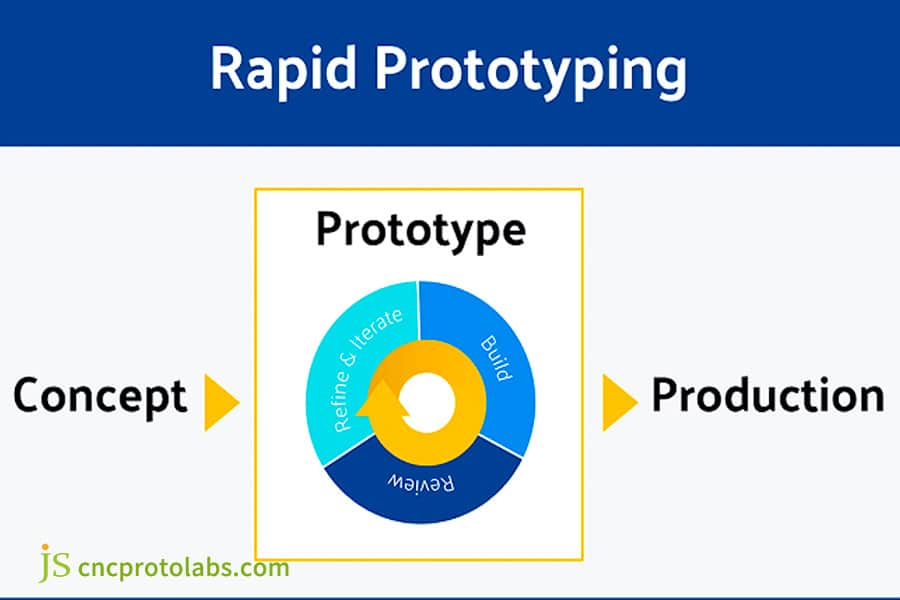
Figure 2: A circular flowchart illustrates the iterative process of rapid prototyping, connecting Concept, Build, Review, Refine, and Production stages.
What Critical Factors Must Be Validated During Prototype Engineering?
Prototype engineering is the core technical link of industrial prototyping, and its validation results directly determine the value of manufacturing prototypes. It is necessary to focus on verifying the three core dimensions of structure, environment, and manufacturability.
Structural Integrity: Strength, Stiffness, and Durability Testing
During the Prototype Engineering phase, static load, fatigue, impact and other mechanical performance tests need to be conducted on the prototype. The CNC prototype of metal parts can directly use mass-produced materials, and the test data has direct reference value for mass production.
Environment and Compliance Testing for Thermal Vibration and Industry Standards
Testing of the CNC model will commence once a prototype has been built, depending on where the actual product will be deployed. Depending on the area, the test methods will also change, as what works for one area will not work for another.
For example, household items, automobile parts, and aircraft parts all have different testing requirements for the CNC model. These have specific guidelines so that the result will meet the standards, such as the ISO 13485:2016 standard.
Manufacturability Assessment
The collaboration between manufacturing and prototyping is crucial. Through DFM analysis, the prototype engineering team can optimize part splitting, determine parting surfaces and gate positions, avoid mass production defects, and improve yield.
How To Select The Best Rapid Prototyping Tools For Your Project?
Rapid prototyping tools are the core carriers for realizing industrial prototyping. Their selection directly determines the accuracy, delivery time, and cost of manufacturing prototypes and must be precisely matched to project requirements.
Tool Overview: Comparison of 3D Printing, CNC Machining, Vacuum Molding, and Sheet Metal Forming
The core parameters of different rapid prototyping tools are compared as follows:
| Process Method | Best Application Scenarios | Accuracy | Delivery Time | Material Range |
| FDM 3D Printing | Conceptual Models, Rapid Iteration | ±0.1mm | 1-2 days | PLA, ABS, PETG |
| SLA 3D Printing | Fine Appearance, Small Parts | ±0.025mm | 1-2 days | Photosensitive Resin |
| SLS 3D Printing | Functional Testing, Complex Structures | ±0.05mm | 2-3 days | Nylon, TPU |
| CNC Machining | Functional Prototypes, Metal Parts | ±0.01mm | 3-5 days | Aluminum, Steel, Copper, Engineering Plastics |
| Vacuum Molding | Small Batch (20-30 pieces) | ±0.1mm | 7-10 days | PU Resin (ABS/PP-like) |
| Sheet Metal Forming | Metal Shells, Frame Structures | ±0.05mm | 3-7 days | Cold Rolled Steel, Aluminum Plate, Stainless Steel Plate |
Decision Matrix: Selection Based on Quantity, Material, Precision, Cost, and Speed
Choosing rapid prototyping tools follows core principles: CNC machining for metal parts, 3D printing for complex internal parts, vacuum molding for small quantities of 10-50 parts, and 3D printing for rapid delivery.
Partnering with Suppliers: Ensuring Technical Capabilities and Confidentiality
When selecting a prototyping supplier, the following need to be considered: multi-process flexible manufacturing capabilities, NDA confidentiality agreements, DFM feedback capabilities, and similar product successes.
New to prototyping processes and struggling to choose? Immediately review industry process selection case studies to quickly identify the appropriate rapid prototyping tools.
Is Rapid Prototyping Additive Manufacturing a Universal Solution?
Rapid prototyping additive manufacturing is the fastest-growing technology in industrial prototyping. It is the preferred choice for companies due to its high geometric freedom and rapid iteration. However, it is not a panacea and needs to be chosen on the basis of the project requirements.
In-depth analysis of core technologies: SLA, SLS, FDM, MJF, and metal 3D printing
Different 3D printing technologies have their own strengths and weaknesses. The appropriate 3D printing technology is required to be chosen on the basis of the precision required, cost involved, and structural properties required for the industrial prototyping.
Advantages and limitations: Handling complex geometries vs. surface treatment and anisotropy
The main benefits of 3D printing lie in its geometric flexibility, fast design iterations, and material efficiency. This helps in the creation of complex geometries, which may be hard to obtain with other manufacturing techniques.
However, there exist some drawbacks in using this technique, which include poor surface roughness, anisotropic mechanical properties, and poor efficiency in processing large parts.
When to use 3D printing, and when to use CNC or other techniques?
3D printing can be used in conjunction with other techniques. For a single technique or a hybrid of techniques, the selection of the method depends on the material of the prototype, the tolerance of the prototype, and the batch size and iterations.
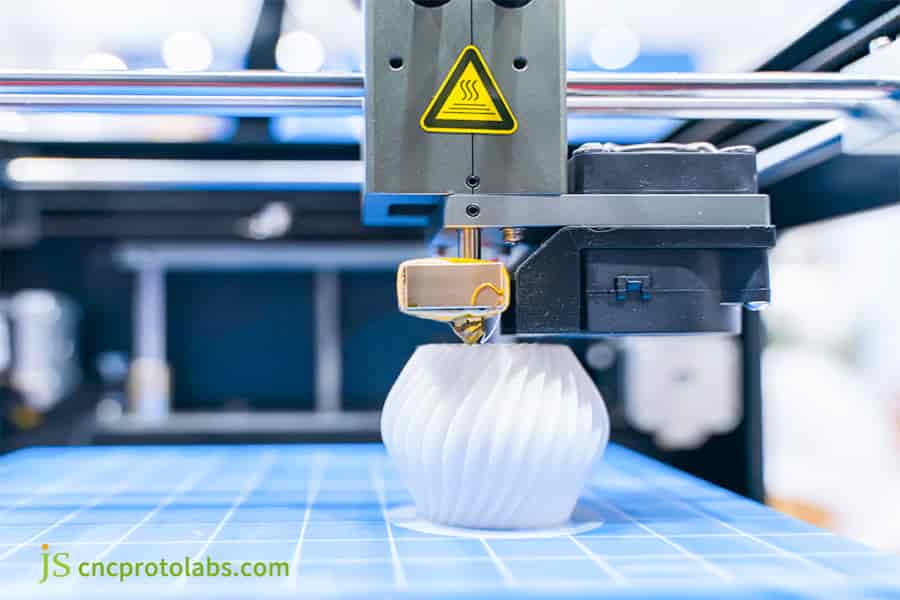
Figure 3: Close-up of an FDM 3D printer extruding molten white filament to build a spiral model, demonstrating layer-by-layer additive manufacturing.
How To Manage The Synergy And Transition Between Manufacturing And Prototyping?
The level of efficiency in the collaboration between manufacturing and prototyping is a key determinant of the level of smoothness experienced during the transition from industrial prototyping to mass production.
Using Prototype Processes to Guide Mass Production Tool Development
Process data collected during the industrial prototyping stage, such as the shrinkage rate, parting line, and gate designs, is essential for the mass production tooling stage.
Ensuring Seamless Integration of Design Documents and Process Parameters from Prototype to Mass Production
Effective management of data during the industrial prototyping stage is essential for the seamless integration between the prototype stage and the mass production stage.
Virtual Prototyping First: Reducing Physical Iterations
Virtual prototyping is a technology that is capable of identifying over 80% of the problems during the design stage before the start of the physical manufacturing stage.
It is also capable of reducing the number of prototypes by 26% and the product development period by 27%. JS Precision uses the prototype engineering approach for the success of the design on the first try.
Want to learn more about the details of prototyping and mass production collaboration? Download our end-to-end service white paper to learn detailed manufacturing and prototyping collaboration techniques.
JS Precision Case Study: 7-Day Rapid Prototype Delivery Of Complex Sensor Enclosures
Challenge
The European industrial automation client had to produce a high-precision housing prototype for their new LiDAR sensor product.
The specifications were: 6061 aluminum alloy for the housing, PEEK material for the mounting posts, tolerance for mounting hole position: ±0.02mm, delivery in 10 days to prepare for a trade show, and then 200 pieces/year for small-batch production.
Solution
According to the client's specifications, the industrial prototyping experts at JS Precision created a custom industrial prototyping solution for the client. The key to this solution was a hybrid approach that leveraged the advantages of traditional prototyping and rapid prototyping.
Here are the steps that were followed in this solution:
1. Process Breakdown and Optimization: For the housing part, CNC machining was utilized to guarantee precision and a metallic look. For the intricate mounting posts, SLS 3D printing was utilized to rapidly produce a prototype made of nylon.
2. DFM Collaborative Design: Feedback from DFM is provided within 2 hours of receipt of the client's CAD files to optimize the position of the threaded hole, increase the angle of the draft, and design the PEEK mounting posts to be removable to save space for future manufacturing.
3. Parallel Manufacturing and Assembly Verification: CNC program and material processing – Day 1-2. Machining of aluminum alloy bodies and printing of nylon brackets using SLS – Day 3-5. Anodizing of surface – Day 6. Full-size CMM inspection and on-site assembly verification by customer – Day 7.
Results
- 7-Day Delivery: Finished 3 days prior to the scheduled exhibition registration deadline.
- First Time Assembly Success: Mounting holes match perfectly with the circuit board without requiring rework.
- Data Continuity for Mass Production: CNC program for small batch production can be utilized directly from the optimized program for the CNC prototype, saving four weeks of development time.
- Customer Repeat Purchase: Customer signed small batch production contract for 200 units/year immediately after the exhibition.
Afraid of our rapid delivery capabilities? You can directly submit your CAD drawings to initiate customized industrial prototyping services and obtain a personalized quote.
FAQs
1. Is industrial prototyping and 3D printing the same?
No. 3D printing is one of the tools used in the process of rapid prototyping in industrial prototyping. Other tools used are CNC machining, vacuum casting, sheet metal formation, etc. These tools vary depending on the requirements.
2. Must functional test prototypes always be CNC machined?
If the functional test prototype has metal parts and/or tolerances of ≤ ±0.05mm, then CNC machining has to be done. Else, 3D printing is to be done for industrial prototyping.
3. How long does it take to produce a prototype?
It varies depending on the tools used in the process of rapid prototyping. If 3D printing is done, it will take 1-3 days. If CNC machining is done, it will take 3-7 days. If vacuum casting is done, it will take 7-10 days.
4. How precise can CNC prototypes be?
The accuracy that can be achieved is ±0.01mm. Also, if five-axis CNC machining is done in a temperature-controlled workshop in the process of industrial prototyping, the accuracy achieved is ±0.005mm.
5.Can mass production materials be used in the prototype phase?
Yes. CNC machining of industrial prototypes can directly use mass production materials such as aluminum alloy and stainless steel. The test results have direct reference values for mass production.
6.Which method is the most cost-effective for small-batch manufacturing prototypes (20-50 pieces)?
Vacuum molding is the most cost-effective method for small-batch manufacturing prototypes. The cost of vacuum molding is far lower than CNC machining. Vacuum molding can simulate the performance of mass production materials such as ABS/PP.
7.How can I guarantee the confidentiality of my design to the supplier of the prototype?
It is necessary to require the supplier to sign an NDA confidentiality agreement. Suppliers with good reputations and ISO certification should be preferred. Suppliers with good reputations and ISO certification should have a good information security management system.
8.Can JS Precision provide DFM feedback?
Yes. JS Precision provides professional Design for Manufacturing (DFM) analysis reports during the quotation phase of industrial prototyping.
Summary
The link between design and mass production is industrial prototyping. It is of critical importance that companies manage costs, minimize time to market, and manage risks in mass production through industrial prototyping, as it directly affects the success or failure of a product in the market.
Uploading your CAD drawings here will enable you to receive a free DFM manufacturability report and a quote. Let's work together to make product designs a reality as quickly as possible!

Disclaimer
The contents of this page are for informational purposes only.JS Precision Services,there are no representations or warranties, express or implied, as to the accuracy, completeness or validity of the information. It should not be inferred that a third-party supplier or manufacturer will provide performance parameters, geometric tolerances, specific design characteristics, material quality and type or workmanship through the JS Precision Network. It's the buyer's responsibility Require parts quotation Identify specific requirements for these sections.Please contact us for more information.
JS Precision Team
JS Precision is an industry-leading company, focus on custom manufacturing solutions. We have over 20 years of experience with over 5,000 customers, and we focus on high precisionCNC machining,Sheet metal manufacturing,3D printing,Injection molding,Metal stamping,and other one-stop manufacturing services.
Our factory is equipped with over 100 state-of-the-art 5-axis machining centers, ISO 9001:2015 certified. We provide fast, efficient and high-quality manufacturing solutions to customers in more than 150 countries around the world. Whether it is small volume production or large-scale customization, we can meet your needs with the fastest delivery within 24 hours. Choose JS Precision this means selection efficiency, quality and professionalism.
To learn more, visit our website:www.cncprotolabs.com
Resource