English




Automotive rapid prototyping service is the core support for automotive engineers to cope with aggressive R&D cycles in 2026. Securing a factory that has both DFM skills and IATF 16949 quality certification will be essential to avoiding failure in mass production.
In this guide, we have examined 5 of the leading automotive prototype factories, showing the variations in tolerance control and automotive grade adherence.
The formula is TOI is certified to IATF 16949. For functional components with +/- 0.01mm as minimum, select dedicated factories that have advanced DFM. Selection is made much easier when the key differences between manufacturers can be understood.
2026 Automotive Prototyping Selection Matrix
|
Supplier Name
|
Core Process (2026 Focus)
|
IATF 16949 Status
|
Typical Delivery Cycle
|
Areas of Expertise
|
Precision Tolerance Capability
|
|
JS Precision
|
5-axis CNC/LSR Molds/Titanium Alloy
|
Current Certification (Rules 6th)
|
3-5 Days
|
High-precision powertrain/sensor components.
|
±0.005mm
|
|
Protolabs
|
Current Certification
|
1-3 Days
|
Simple geometric shape verification parts.
|
±0.01mm
|
|
|
Xometry
|
AI-driven Multi-process Platform
|
Certified Network
|
5-10 Days
|
Cross-process integration/large-scale decentralized procurement.
|
±0.02mm
|
|
Star Rapid
|
High-end Surface Treatment/Prototyping
|
Current Certification
|
7-12 Days
|
Automotive interior/exterior parts.
|
±0.015mm
|
|
Stratasys
|
3D Printing/Composite Materials
|
Current Certification
|
2-4 Days
|
Lightweight structural optimization parts.
|
±0.01mm
|
Key Takeaways:
- IATF 16949 certification is basically the minimum bar for the global automotive supply chain by 2026, so it’s kinda required to have APQP (Advanced Process Quality Propagation) involvement already during the prototyping phase.
- For structural components, go with a rapid prototyping platform (like 3D based builds and so on), for functional parts that need ±0.01mm tolerances, you should rather select specialized factories with real DFM (Design for Manufacturing) know-how, for instance something like JS Precision, since their practical experience goes deeper.
- Genuine automotive-grade service should deliver closed-loop technical feedback within 3 hours, and not just spit out automated quotes.
Why Trust JS Precision's Automotive Rapid Prototyping Service? IATF 16949 Certified Expertise
We’re like a physical factory with 15 years of experience in automotive-grade prototype manufacturing, and JS Precision’s IATF 16949 prototyping service capability has been checked and proven across thousands of automotive R&D projects.
With customer R&D efficiency as the main focus, our high-precision machining consistency plus DFM prediction ability tends to beat the industry average, so yeah , we become the preferred partner for a lot of leading automakers.
Our real strength isn’t just that we “do certification stuff” for formality, but that we deeply integrate the IATF 16949 system with engineering know-how, even when the schedule is tight.
In one leading automaker’s autonomous driving radar prototype engagement, we delivered qualified samples within 7 days after taking over, which helped avoid those R&D delays from non-compliant suppliers in the early phase. So, our rapid prototyping service is kind of a balance between compliance, accuracy, and efficiency, all at the same time.
We also strictly follow the IATF 16949:2016 standard, and we complete potential failure analysis during the prototype stage.
For example, from our experience on a new energy vehicle company battery pack cold plate prototype, the compliant approach can cut clients’ later design-change expenses by 40% , not a small amount at all.
And unlike platform businesses that outsource everything, JS Precision owns a 20,000㎡ production workshop, 12 five-axis machining centers, and 3 Zeiss CMM inspection machines. That means we can keep full autonomy and control over the entire process, from machining to inspection, without too much handoff noise.
Plus, we have produced customized titanium alloy sensor housings for European and American automakers, reaching a positional tolerance of ±0.005mm, while also shortening the delivery timeline by 30%.
Choosing JS Precision eliminates concerns about inconsistent quality and delivery delays, we truly become your reliable partner on your R&D journey. Contact our technical team now to obtain JS Precision's IATF quality compliance manual and learn more about how we safeguard your automotive prototyping projects.
Why Choose a Manufacturer With IATF 16949 Prototyping Service Qualification?
IATF 16949 prototyping service certification is basically meant to make sure a plant dosen’t run into avoidable failures during the prototyping phase, using FMEA and control plans , so that the later design-change expenses can drop by 40%, and also so that the prototype data can actually steer the mass production run. it also helps prevent those unpleasant design defects that show up after mold production, when it’s too late to fix things cheaply.
IATF 16949’s basic engineering expectations for automotive R&D
At the center of IATF 16949 certification is setting up a full quality management system with explicit requirements and documented records in every step. For automotive rapid prototyping service, this mainly boils down to three key expectations, which then become the ground work for compliant production of precision prototype components.
- APQP is carried into prototype development to spot design risks and manufacturing hazards early, and then to write up suitable countermeasures.
- FMEA assessment is used, so the control effort focuses on critical part features and avoids batch-level failures later in mass production.
- A complete traceability mechanism is built, so that for each batch of prototype parts, the materials, manufacturing steps, and testing information can be traced properly.
Process control differences between JS Precision and ordinary factories
|
Control Link
|
JS Precision (IATF 16949 Certified)
|
General Factory (Non-certified)
|
Customer Benefits
|
|
Material Control
|
Provide material CoA report, special personnel for acceptance, and batch traceability.
|
No clear acceptance standards and unknown material sources.
|
Avoid part failure caused by inconsistent materials.
|
|
Process Control
|
Formulate special process cards and monitor processing parameters in real time.
|
Processing based on experience without parameter records.
|
Ensure part size consistency with CPK > 1.33.
|
|
Inspection Control
|
Full inspection with Zeiss CMM and provide FAI report.
|
Sampling inspection without detailed inspection records.
|
Accurately control part precision and avoid unqualified samples from entering the next link.
|
Even those big digital players like Protolabs still need IATF 16949 certification in order to satisfy OEM audit needs, which shows how necessary it is. In the 2026 autonomous driving bracket manufacturing process, the APQP process can reduce dimensional drift that comes from residual stress.
If you pick an IATF 16949 prototyping service, it can lower risks and costs for R&D work and also improve the mass production fit of automotive prototype components.
To gain a deeper understanding of how compliance systems safeguard your projects, you can obtain JS Precision's IATF quality compliance manual, where professional engineers will interpret the core points and help you quickly connect with the automotive supply chain.

Figure 1: Workers assemble automotive parts on a busy production line with multiple car bodies.
How To Evaluate The Precision Machining Accuracy Of Automotive Rapid Prototyping Services?
True automotive-grade precision isn't only about having ±0.01mm on the drawings, it’s also about how consistently those positional tolerances hold up, plus the surface roughness stays where it should be. So the best automotive rapid prototyping service providers really need Zeiss CMM equipment, and they should hand over detailed FAI inspection reports, not just “good enough” summaries.
Core Evaluation Indicators for Automotive-Grade Precision Machining
To judge automotive rapid prototyping precision you basically look from three angles. Here is a practical retelling of what we’ve seen, and what we treat as the core evaluation basis for high-precision prototyping.
1.Dimensional Tolerances: For critical mating areas, you’re talking ±0.005mm to ±0.01mm. For non-critical features it should follow ISO 2768-m standard, basically.
2.Positional Tolerances: Hole and shaft locations need to be ≤ ±0.005mm , so assembly alignment doesn’t drift over time.
3.Surface Roughness: Ra between 0.8μm and 3.2μm. For powertrain parts specifically, Ra should be ≤ 0.4μm, that’s the baseline.
JS Precision's Precision Control Strategy and Equipment Support
JS Precision manages 5-axis CNC placement errors to within 0.002mm for automotive powertrain components. Temperature influence isn’t ignored either, we compensate it using Heidenhain thermal compensation, which helps keep the precision tolerance stability at ±0.005mm.
On the surface side, Ra control goes beyond what some other providers claim in their high-precision surface processing. For comparison, Star Rapid’s surface treatment level is not as tightly controlled in our observations.
|
Part Type
|
JS Precision Precision Control
|
Inspection Equipment
|
Inspection Report
|
|
Powertrain Parts
|
Dimensional tolerance ±0.005mm, Ra ≤ 0.4μm.
|
Zeiss CMM, Roughness Tester
|
FAI Full-size Report
|
|
Sensor Housing
|
Position degree ±0.005mm, flatness 0.003mm.
|
Zeiss CMM, Laser Diameter Gauge
|
FAI + SPC Analysis Report
|
|
Interior Exterior Parts
|
Dimensional tolerance ±0.01mm, Ra ≤ 1.6μm.
|
Roughness Tester, Colorimeter
|
Appearance Inspection Report
|
By 2026, for top-tier suppliers, purchasing managers will insist on data traceability. JS Precision delivers complete, traceable, and verifiable inspection records for every batch of prototype parts, so customers can actually see each step in the prototyping quality control chain, without guessing.
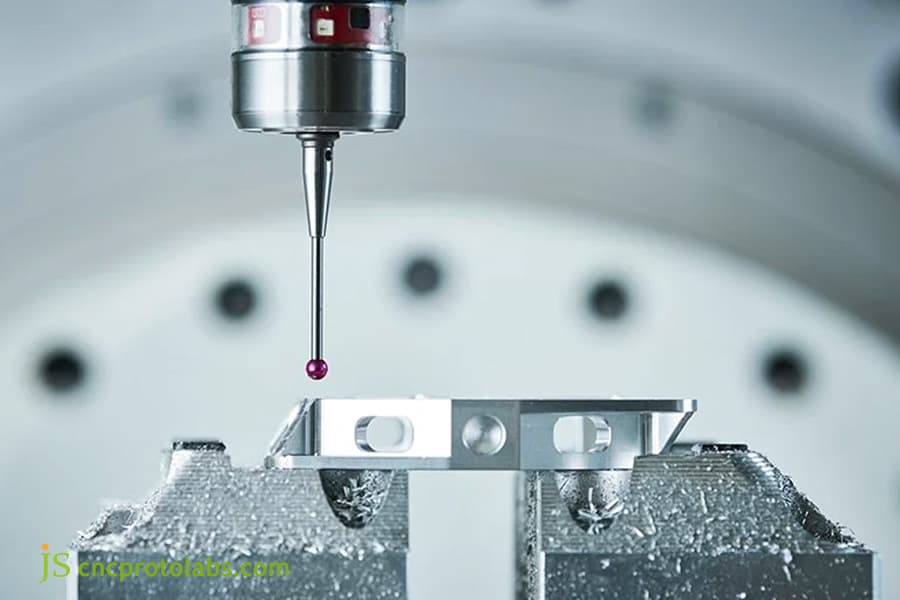
Figure 2: Close-up of a CNC cutting tool machining a detailed metal automotive component.
Why Does Rapid Prototyping For Electric Vehicles (EV) Need To Focus On Thermal Management?
Failures during rapid prototyping for electric vehicle (EV) prototypes usually come down to something basic, like a mismatch between the material coefficient of thermal expansion and the thermal conductivity. Still, in the best factories, they don’t just push “good enough” numbers—there is a real cost analysis behind it, trying to balance precision with thermal conductivity and overall stability, so the prototype doesn’t quietly fail later.
Core Trouble Spots for Thermal Control in EV Prototype Work
As the goal keeps moving toward reducing weight in EV battery packs by 2026, choosing and processing aluminum alloys becomes kinda unavoidable for thermal management. Most thermal management breakdowns trace back to thermal expansion mismatch, plus thermal conductivity that is simply not sufficient for the job. From our hands on experience, a questionable design choice can push the scrap rate of EV prototyping parts up by more than 30% , and it’s not always obvious at first.
EV Prototype: Material Selection vs Processing Comparison
|
Material Type
|
Thermal Conductivity (W/m·K)
|
Coefficient of Thermal Expansion (10^-6/℃)
|
Processing Technology
|
Application Scenario
|
|
6061-T6 Aluminum Alloy
|
167
|
23.4
|
JS Precision 5-axis CNC
|
Battery pack cold plates, housings.
|
|
7075 Aluminum Alloy
|
130
|
22.1
|
JS Precision 5-axis CNC
|
EV chassis structural parts.
|
|
Carbon Fiber Composite Material
|
100-400
|
2.5-4.5
|
Stratasys 3D Printing
|
Lightweight structural parts.
|
There’s also a non-unified take across the industry. Some people claim that a high thermal conductivity aluminum alloy can form latent cracks unless it is preheated, and the preheat window is often described as something like -40℃ to 85℃ (though details vary). JS Precision handles this by running a 120℃/2-hour preheating treatment, and that step basically keeps 3D printing prototyping stable and consistent, even when conditions aren’t that friendly.
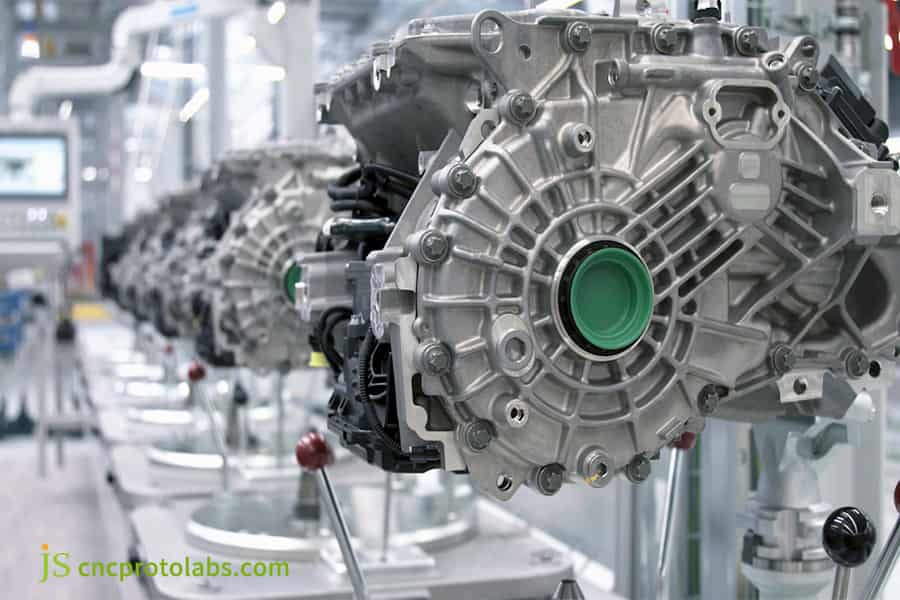
Figure 3: A precision EV prototype component with cooling features undergoes thermal testing in a lab.
How To Achieve Small Batch Production That Complies With IATF Certified Automotive Prototyping Standards?
Under the IATF certified automotive prototyping standard, small-batch production of automotive parts really has to move away from the more “manual” style of prototyping into something controlled. And getting prototype parts that actually meet PPAP standards within 10 days is still kind of the industry gold standard.
Key points of DFM for small-batch production
DFM analysis is important when shifting from small-batch to mass production, otherwise you end up chasing fixes later. JS Precision basically summarizes three main items that help customers go smoother through the transition, and this also sits at the center of improving both quality and efficiency in small-batch prototyping.
- Process consistency: make sure the small-batch workflow lines up with the mass-production workflow so design changes don’t keep popping up, or at least they don’t multiply.
- Quality stability: confirm dimensional stability using SPC control, targeting CPK ≥ 1.33, and keep it steady not just “good enough”.
- Cost optimization: cut costs while keeping quality by doing material swaps and refining the process steps, rather than lowering requirements.
Comparison of different small-batch production models
Xometry’s distributed supply chain approach can run into quality and delivery consistency problems, because parts and decisions spread out across locations. In contrast, JS Precision uses a physical factory model, so we can control the full end to end process for small-batch production.
With rapid prototyping technology, our LSR automotive connector prototypes reached 1000 thermal cycle tests, and they maintained IP67 sealing performance, while also improving the whole prototyping flow for better efficiency.
Because JS Precision operates our own factory, we can handle ECN updates 24/7 and make quick process adjustments. That means small-batch production schedules stay on track, with less interruption, which is honestly a major reason customers choose us for reliable service.
Need accurate cost calculations for your small-batch projects? Contact our engineers now for a free cost estimate and a cost-effective production solution that meets IATF certified automotive prototyping standards.
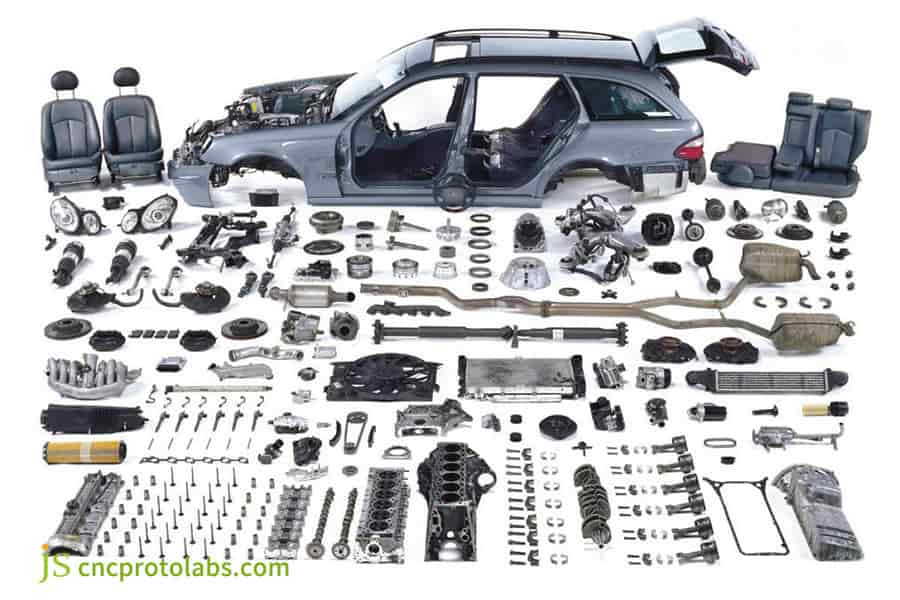
Figure 4: Various automotive components laid out in an organized manner for small-batch production.
JS Precision Manufacturing Case: Five Axis Linkage Precision Customization Of Autonomous Driving LIDAR Shell
This case shows, sort of, how to land a ±0.005mm positional tolerance on Grade 5 Titanium, you know. With purpose-built fixtures to manage deformation in thin-walled parts we enabled the client to finish R&D verification about two weeks early, while also reducing overall costs. Our rapid prototyping manufacturing service is really about tailoring, or customizing, high-precision and intricate components that are hard to make.
Client’s Core Challenges
1.Extreme Dimensional Requirements:
Keeping ±0.005mm hole positional tolerance on a 1.5mm ultra-thin wall thickness means the laser emission module axis stays aligned, if anything drifts outside that range radar detection accuracy gets impacted.
2.High-Pressure Sealing Requirements:
The internal liquid cooling channels have to guarantee zero leakage at 20 Bar, so there are demanding needs for material compactness plus thread machining accuracy. Not just “close enough”, but actually tight.
3.High Material Machining Difficulty:
Grade 5 Titanium is tough and also quite resistant, so it tends to thermally deform during machining, and it accelerates tool wear. Conventional processing often can’t hold the necessary geometry, which becomes the main obstacle when producing titanium prototyping parts in the first place.
JS Precision Exclusive Solution
1.Thermal Stress Management:
Basically, we ditch the usual machining logic and move into a three stage stress-relief heat treatment path, it’s like roughing — stress release treatment — semi finishing, then ultra deep cryogenic treatment, and finally finishing.
The result is that the internal stress release rate of the material climbs to more than 98% , which in practice stops post machining deformation. In short, doing several heat treatments means the material’s inner stress is pretty much released , so the parts don’t get so easy to distort after they are machined.
2.Innovative Tooling and Fixtures:
For thin walled parts that tend to bend from clamping forces, we designed a dedicated vacuum pneumatic fixture. It relies on uniform contact pressure across the surface, instead of using a point style contact pressure. That way the clamping deformation stays under 0.002mm, so the root cause of thin walled deformation is handled at the beginning, not later.
3.Five Axis Single Set Clamping:
Every key feature is machined with one single clamping action on a five axis machining center. This avoids the annoying accumulated datum error that comes from repeated clamping , and it also helps keep the hole position accuracy under ±0.005mm.
4.Tool Management Optimization:
We use purpose built diamond coated tools, and pair them with Renishaw online probes for real time monitoring of tool wear. This keeps machining accuracy stable, rather than drifting over time due to wear.
Failure Experience and Pitfall Avoidance Guide
Because the tool monitoring frequency was set in a kinda unreasonable way , we only inspected every 5 pieces. As a consequence, the fourth test sample showed a bottom hole diameter deviation of 0.003mm.
After that we switched to 100% single piece inspection and also introduced Renishaw online probe compensation. In the end, the problem was fully cleared out, and the precision control system for gear machining prototyping got improved a lot.
Final Results
- High-Standard Delivery: 50 LiDAR housing prototypes were inspected by Zeiss CMM, with a critical dimension CPK > 1.33 , hole position accuracy ≤ ±0.005mm, and zero leakage in the liquid cooling channel under 20 Bar pressure.
- Project Acceleration: From drawing confirmation to sample delivery, only 7 days, 2 weeks ahead of schedule, helping the client shorten the R&D cycle and get into the next testing phase faster.
- Customer Feedback: "JS Precision provides fundamental engineering level solutions, it tackles the core pain points directly, and delivers ahead of schedule too. So it’s a pretty solid long-term partner."
Does your project also face the challenge of machining high precision, complex structures? Schedule a consultation with a senior engineer for technical selection , we can combine our extensive practical experience to customize a precision machining solution exclusively for you
Why Choose Top Rapid Prototyping Service 2026 Must Consider DFM Depth?
A true top tier service is not just about pricing, it’s more like identifying those design failure points early. Expert level DFM analysis can reduce potential defects before machining by more than 30% . That basically becomes the core competitiveness of top rapid prototyping service 2026.
The Difference Between Automated DFM and Manual Engineering Intervention
Protocolabs software’s automated DFM can only identify the simpler design defects and it cannot manage complex structures found in automotive parts.
Meanwhile JS Precision’s DFM is led by engineers with over 10 years of experience, and we operate with IATF 16949 standards, so we can predict machining risks and enhance the professionalism of prototyping DFM analysis.
|
DFM Type
|
Advantages
|
Disadvantages
|
Customer Benefits
|
|
Protolabs Automatic DFM
|
Fast speed and real-time feedback.
|
Shallow analysis, unable to predict complex problems.
|
Quickly identify simple design defects.
|
|
JS Precision Manual DFM
|
In-depth analysis and ability to predict processing risks.
|
1-3 hours required for feedback.
|
Reduce more than 30% of potential pre-processing defects and lower costs.
|
Impact of DFM Depth on Project ROI
In 2026, ceramics series, in the automotive sensor housing CNC machining, "tool interference" and "heat stress distribution" such problems can only be predicted by the professional machinery scientist engineers at the prototypes prototype stage in physical factory to avoid the sample scrap, guarantee the machining pass rate of sensor prototyping parts.
Deep DFM can predict the risk of shrinkage during mass production injection molding, ensuring that prototype data guides mass production, reducing design change costs. Based on our experience, it can improve customer project ROI by over 25%.
How To Shorten The Overall Delivery Cycle Of Automotive Prototype Factories Projects?
In 2026 the whole point in the speed race for prototype projects is, kind of zero barrier communication, like don’t let the workflow get stalled anywhere for too long. A 24/7 machining center cluster with digital scheduling can compress a weekly delivery into about 72 hours and sure, that turns into a pretty big advantage for automotive prototype factories that need a cleaner, faster output.
Time Black Holes in Project Delivery Cycles and Solutions
From customer feedback we can tell delays usually show up in these “time black holes” where the effort just kind of disappears. We tried to map three common issues , and pair them with practical fixes , so the delivery can land inside the normal industry expectation for rapid prototyping.
1. Repeated Tolerance Checks: JS Precision sends technical feedback within 3 hours after receiving drawings. This helps clarify tolerances early , and it prevents the wasteful loop of rework and confusion.
2. Inefficient Logistics: We’re based in Dongguan and we run air freight routing through the Hong Kong hub, so European and American clients get parts in 3-4 days which is faster than most people think.
3.Time-Consuming Fixture Design: With a dedicated fixture library we adapt to standard components quicker, reducing fixture design time down to 1-2 days.
JS Precision's Delivery Cycle Optimization Strategy
JS Precision runs 24/7 machining centers with digital scheduling, and thats mostly how we squeezed those delivery cycles from 3-5 days down to 72 hours.
The whole factory setup on the ground gives extra grip over production and logistics, not like some platforms such as Xometry, so the shipment timing ends up being more predictable, plus the prototyping turnaround comes down quite a bit too.
For urgent projects, we can even cut around 20% off the lead time, primarily by simplifying customs clearance then adjusting the fixture design. So the delivery cycle shifts from 7 days to 5 days, and that helps keep our clients R&D momentum steady , even when timelines get tight.
Got a project with urgent delivery needs? Upload your drawings and you can get a professional solution within 3 hours. JS Precision will fully guarantee your project progress, quickly sending qualified prototypes without dragging your R&D pace.
Why Choose JS Precision As Your Automotive Prototype Partner?
We really deeply integrate engineering culture with the stringent IATF processes, like honestly. As a physical manufacturer that specializes in high-precision machining, JS Precision gives more in-depth customization support and IP protection than those platform companies , and we keep it tight.
JS Precision's Core Competitive Advantages
- Technological Advantages: We focus on high-precision machining, and we have strengths in complex materials and special processes, so tolerances can reach ±0.005mm to satisfy automotive-grade requirements. Also we do custom machining for complex prototyping parts, which is basically what we are built around.
- Compliance Advantages: We currently hold IATF 16949:2016 certification, and we strictly follow APQP and FMEA processes to make sure prototypes can meet automotive supply chain access standards, plus it helps clients connect with OEM audits.
- Service Advantages: A fully controllable physical factory, one-on-one engineer service, technical feedback within 3 hours, and ECN change response within 24 hours. This gives more room for tailoring compared with platform-based companies.
- IP Protection Advantages: We implement dual protection, including physical network isolation and NDA protocols. We strictly prohibit mobile phone photography on the production site, and we make sure all waste materials are destructively disposed of by designated personnel, so the confidentiality of client drawings is not leaked.
Customer-Centric Service Philosophy
In 2026, we are committed to providing customers with qualified parts and verification confidence, and yeah in practice. Our dedicated technical team provides end to end support from Design Factory DFM to delivery, helping customers shorten the cycle , reduce costs, and keep things steady.
JS Precision’s own physical factory lets us keep better control over quality and delivery schedules than platform based companies, and that also means we can offer more flexible customization services. We are a long term engineering partner, who understands technology, and follows regulations.
FAQs
Q1: Why must IATF 16949 requirements be applied if I am only working on certain prototype components for a vehicle?
The IATF system takes an FMEA risk evaluation during design phase. The goal is to verify the design is doable for mass production.Structural defects should be identified before molds are manufactured (actual mass production) so that large modification costs can be saved.
Q2:How do you deal with machining deformation of high end automotive grade plastics, like high performance ones such as PEEK ?
We were the last PEEK materials database released from 2026 for dispersion control then we carried out the machining deformation of 0.02 mm with vacuum thermoforming anneals and multi stage decompression cut method, which is the compared with the industry benchmark of 0.08 mm, so the improvement was quite observable.
Q3: What are the key variables that influence the cost of each prototype?
Pricing can vary as material specification, level of 3D geometry, surface finishing, and also delivery time. There are levelled prices that allow the operators a wider range of choosing between costs and accuracy.
Q4: Can you provide liquid silicone rubber (LSR) sealing prototypes that meet EV battery standards?
Third-party flame-retardant test reports are also provided that meet the EV battery sealing specifications, Beyond our independent IATF-based LSR workshops, which support 20-80 Shore A silicone rubber.
Q5: How low can you hold the machining tolerances for autonomous driving sensors housings?
It is safe to say we can control to +/- 0.005mm at the critical mating locations with a five-axis machine and Zeiss CMM feedback relay, enabling us to ensure pattern assembly be that of the radar housing assembly.
Q6: How does JS guarantee confidentiality of our drawings?
We ensure dual protection through the physical isolation of the networks and NDA guidelines. No pictures of the premises can be taken with a mobile phone & destruction of the waste materials all work together to provide absolute security of the design deliverables.
Q7: What if after the sample is received the measurements are not exactly what was ordered?
Providing a 100% quality assurance.If it is our machining the sample is reprocessed within 48 hours and 8D failure analysis report quality of our customers' project.
Q8: Which country is your factory?Do you provide worldwide transportation?
Based at Dongguan manufacturing center, we get parts shipped from Hong Kong Hub by air freight.Our Europe-USA customers can get parts within 3-4 days.Our communication skills is same as local suppliers. And we are global shipping.
Summary
Choosing the right IATF 16949 prototyping service partner is crucial for the success of automotive products in 2026. The five major manufacturers each have their own technical limits, therefor precise matching of your real needs is important, if you want the best possible efficiency and cost.
Automotive-grade prototype manufacturing is more than just making a part, it is about precision, adherence, and dependability. JS Precision, with IATF 16949 certification as a base, and built on strong DFM insight (Design for Manufacturing) plus high-precision machining, has turned into a trusted option for leading automakers.
Don’t allow low quality prototypes to drag down your R&D momentum. And don’t let compliance exposure sneak into your program outcome .
Contact JS Precision today, upload your Step drawings, and get a free DFM manufacturability analysis report, along with the most competitive automotive-grade quote. Let us partner with you, so you can speed up your automotive R&D process and get your product into the market without unnecessary delays.

Disclaimer
The contents of this page are for informational purposes only.JS Precision Services,there are no representations or warranties, express or implied, as to the accuracy, completeness or validity of the information. It should not be inferred that a third-party supplier or manufacturer will provide performance parameters, geometric tolerances, specific design characteristics, material quality and type or workmanship through the JS Precision Network. It's the buyer's responsibility Require parts quotation Identify specific requirements for these sections.Please contact us for more information.
JS Precision Team
JS Precision is an industry-leading company, focus on custom manufacturing solutions. We have over 20 years of experience with over 5,000 customers, and we focus on high precisionCNC machining,Sheet metal manufacturing,3D printing,Injection molding,Metal stamping,and other one-stop manufacturing services.
Our factory is equipped with over 100 state-of-the-art 5-axis machining centers, ISO 9001:2015 certified. We provide fast, efficient and high-quality manufacturing solutions to customers in more than 150 countries around the world. Whether it is small volume production or large-scale customization, we can meet your needs with the fastest delivery within 24 hours. Choose JS Precision this means selection efficiency, quality and professionalism.
To learn more, visit our website:www.cncprotolabs.com
Resource