English



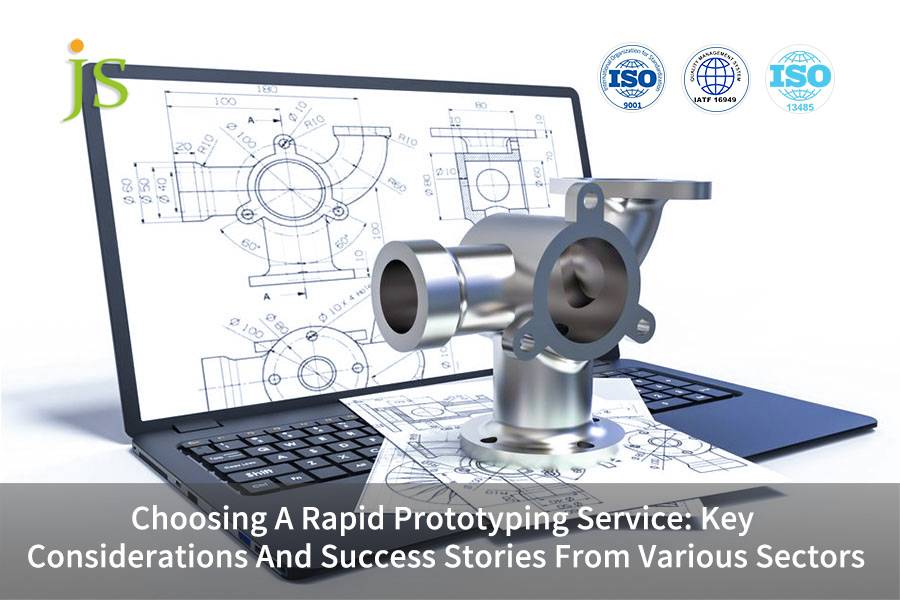

Rapid prototyping service is emerging as a prominent source of competitive advantage for cutting-edge companies.
When medical device manufacturers are required to manufacture compliant prototypes in 8 weeks to move forward with registrations, and when drone manufacturers are trying to strike a balance between weight reduction and increased strength in carbon fiber parts, specialized rapid prototyping service has become less about basic support and more about an important factor influencing product rollout speed.
This article will examine rapid prototyping cost evaluation and technology pathways through multi-industry examples with JS Precision, to expose how successful industrial prototyping projects are dependent on accurate partner choice to assist in speeding up your concept development into a key asset.
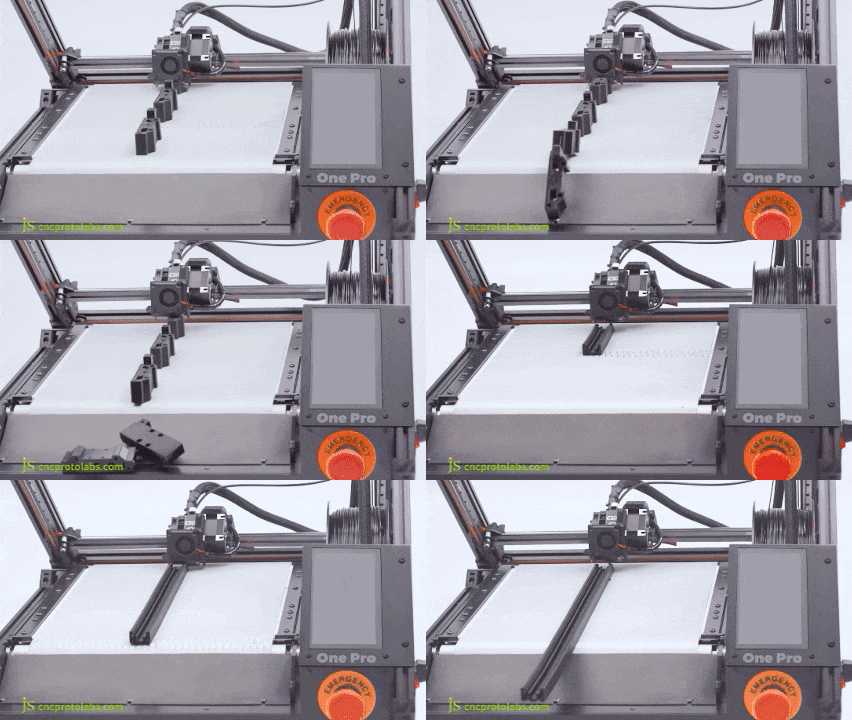
Figure 1 The industrial 3D printer is creating prototype components, demonstrating the additive manufacturing process for rapid prototyping.
Key Answer Summary
| Key Challenges | JS Precision Solution Core | For Your Value |
| Technology Path Selection | Integrating Rapid Prototyping CNC Machining ±0.025mm with SLS/SLA, Precisely Matching Solutions According to Function. | Avoid selection errors, ensure prototype performance meets standards, get it right the first time. |
| Industry-Specific Requirements | Deeply involved in medical device rapid prototyping/rapid prototyping in automotive industry, proficient in ISO 13485 and temperature resistance testing, providing compliance support. | Reduce compliance trial-and-error costs and time to accelerate product launch. |
| Cost-speed Balance | Transparent cost structure, DFM optimization + supply chain integration, 30%-50% less delivery cycle. | Speed up the iteration in budget and shorten the whole R&D cycle. |
Key Takeaways:
- Prototype purpose determines technology: Prototype CNC machining for high-intensity testing is preferred, and 3D printing used for complex structure verification. Objective definition begins the control process for rapid prototyping cost.
- Industry compliance is a threshold: Prototypes for both medical and automobile components have to be accomplished by certified service providers with requisite expertise. The failure will render the prototype useless and a complete wash for the entire developmental process.
- Partnerships As Accelerators: Only the best companies for rapid prototyping service should be engineering partners that handle material sciences, process development, and post-processing in a one-stop solution, they offer services far beyond just "processing costs."
Why Trust This Guide? The Key To JS Precision's Precise And Rapid Prototyping Services
This guide's authority stems from JS Precision's 15 years of practical experience in the industrial prototyping field.
We have over 300 worldwide clients, including demanding sectors like healthcare, automobiles, and aerospace, with more than 10,000 successful projects in precision prototyping.
To illustrate, we offered fast prototyping CNC machining services for engine parts for an auto company, and this enabled them to pass the verification process by 45% with one-time success in temperature resistance testing.
Our medical device prototype ISO 13485 compliance audits pass rate for clients is 98%, and in the auto sector, our fast prototyping service has expedited deliveries by an average of 40% for clients.
Our unique competitive edge is the fusion of "engineering thinking + compliance expertise," as not only do we offer rapid prototyping CNC machining and 3D printing, but also full support from material selection to design optimization according to our clients' testing goals.
Thus, as referenced by the ASME Y14.5-2009 standard, our prototyping precision is founded on the principle of dual precision "in both dimensions as well as function."
Through our European-standard quality control process, local rapid response capabilities, and complete service from prototype development to trial production for small batches, we have become a long-term partner for many multinational enterprises.
To gain a deeper understanding of our service capabilities, you can directly request the "JS Precision Precision Prototyping Success Case Collection" for direct reference to industry solutions.
What Is True Precision Rapid Prototyping?
After understanding the value of such professional services, a core explanation shall be provided: The precision rapid prototyping is not simply an ordinary sample, it is a critical step supporting product verification. It needs to conform to all requirements set by high-demand industry performance, precisiveness, and compliance with standards.
What is the essential difference between a precision prototype and a basic concept model?
Functional simulation is the core of precision rapid prototyping. JS Precision delivers prototypes with tolerances of ±0.025mm, using materials consistent with mass production and a surface finish Ra of 1.6μm, which can be directly used for critical testing and iterative verification.
What are the mainstream technical paths for achieving precision prototyping?
The mainstream technology path should be selected based on the verification purpose, not simply on the shape:
| Technology Path | Core Advantages | Applicable Materials | Typical Tolerances | Cost Range (per piece) | Core Application Scenarios |
| Rapid Prototyping CNC Machining | High material fidelity, stable mechanical properties, strong tolerance control. | 6061-T6 aluminum alloy, 304 stainless steel, Ti-6Al-4V titanium alloy, PEEK engineering plastics. | ±0.025-0.05mm | $50-500 | High-load testing, precision assembly verification, engine parts, tooling fixtures. |
| SLA Photopolymerization 3D Printing | Excellent surface finish, high forming accuracy, excellent detail reproduction. | Medical-grade rigid resin, transparent resin, high-temperature resistant resin (HDT 120℃+). | ±0.1-0.2mm | $80-300 | Anatomical models, appearance verification parts, fluid pipeline prototypes, orthopedic guides. |
| SLS Selective Laser Sintering | Strong forming capability for complex structures, no support required, high cost-effectiveness for batch production. | Nylon PA12, PA12+glass fiber, flame-retardant nylon, elastomer materials. | ±0.2-0.3mm | $100-400 | Lattice structure components, non-load-bearing shells, gears, connectors. |
| SLM metal 3D printing | High metal density, mechanical properties close to forgings, complex metal part forming. | Ti-6Al-4V titanium alloy, 316L stainless steel, Inconel 718 high-temperature alloy. | ±0.05-0.1mm | $500-1500 | Lightweight structural components, implantable medical components, high-temperature alloy components. |
| Prototype CNC machining (high-precision milling) | Ultra-precision machining, excellent surface finish, suitable for complex metal structures. | 7075 aluminum alloy, P20 pre-hardened steel, H13 mold steel. | ±0.01-0.025mm | $200-800 | High-precision guide rails, mold cavities, sensor housings, precision transmission components. |
The benefit of rapid prototyping service is realized through assisting customers in correctly aligning their technology vision. The table above discusses popular precision prototyping technology, which will help you quickly select a solution according to your industry need. Now is the perfect time to submit your part drawing to get a free customized DFM analysis report.
How To Choose: CNC Machining Vs. 3D Printing For Your Prototype?
Technological choice is very important for setting the parameters for controlling the rapid prototyping cost. Organizations tend to take wrong decisions and have to make judgments based on four important criteria, otherwise, all efforts during the whole development process go to vain.
What are the four key dimensions that define the technology path?
1. Material Performance Requirements: In case the prototype must resist high temperatures and high pressures or mechanical forces for example engine components in the case of rapid prototyping in automobile industry, the prototype CNC machining process must be selected that can utilize the same metals used in mass production.
2. Geometric Complexity: When there are internal fluid flow passages or lattices, for example in medical devices, 3D printing offers a better alternative for manufacturing these parts.
3. Precision and Surface Requirements: When working with prototypes and the required tolerance is beyond ±0.05mm, exact fitting for the surface is required. Here, CNC machining is more suitable.
4. Quantity & Cost: For production of complex parts and for a production volume ranging from single units up to 10 units, 3D printing is cost-effective, while for prototyping and a production volume ranging from 10 units to 50 units, CNC machining is more cost-effective.
| Process Type | Dimensional Tolerance | Surface Roughness Ra | Material Tensile Strength (MPa) | Heat Resistance Temperature (°C) | Single Piece Processing Time (h) | Suitable Batch Size | Material Utilization Rate (%) |
| Rapid Prototyping CNC Machining (6061-T6) | ±0.025mm | 0.8-1.6μm | 310 | 230 | 1.5-4 | 10-50 pieces | 75-85 |
| SLA 3D Printing (Medical Resin) | ±0.1mm | 1.6-3.2μm | 55-70 | 80-120 | 0.5-2 | 1-20 pieces | 90-95 |
| SLM Metal 3D Printing (Ti-6Al-4V) | ±0.05mm | 3.2-6.3μm | 860 | 400 | 4-8 | 1-10 pieces | 85-90 |
| SLS 3D Printing (PA12 + Glass Fiber) | ±0.2mm | 6.3-12.5μm | 65-80 | 150 | 1-3 | 20-100 pieces | 95-98 |
| Prototype CNC machining (304 stainless steel) | ±0.03mm | 1.0-2.0μm | 515 | 870 | 2-6 | 5-30 pieces | 70-80 |
This table clarifies process boundaries from performance and efficiency perspectives, providing a quantitative basis for precision rapid prototyping selection.
Why does high load functional testing usually rely on CNC machining prototypes?
Prototype CNC machining uses mass-production-grade materials with mechanical properties consistent with the finished product, irreplaceable by plastic 3D printed parts, and core choices for high-load testing.
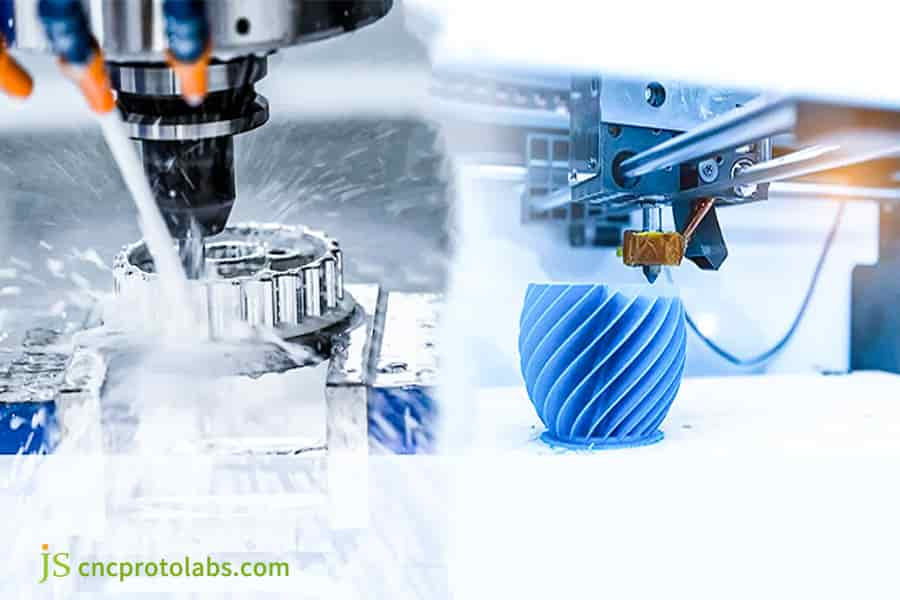
Figure 2 The two most popular prototyping methods nowadays are CNC machining and 3D printing.
How To Tackle The Prototype Challenges Of Highly Regulated Industries? Taking Medical Device Rapid Prototyping As An Example
Compliance is the most important and critical element in medical device rapid prototyping, and is directly related to whether registration will be passed or fail. JS Precision has rich experience in this area, and can precisely avoid wasting of upfront investment.
What unique requirements beyond technology do medical device prototypes face?
1. Biocompatibility Certification: Prototype materials shall pass ISO 10993-5 cytotoxicity testing and USP Class VI certification to avoid adverse reactions once the device comes into contact with the human body.
2. Sterilization Validation: The prototype should support such methods for sterilization as gamma rays and EO, its performance shouldn't change after sterilization.
3. Registration Support: The prototype system should be useful for type testing and supply full traceability reports regarding the material used, and test data, as part of the registration submission documents.
What qualifications and skills are to be verified when working with a medical prototypes service supplier?
- ISO 13485 Quality System Certificate: This is the basic certification for the prototype services for medical devices. It ensures that the production process is compliant with the medical industry standards.
- Cleanroom Environment: Prototyping must be performed at a Class 8 or higher cleanroom level to prevent any contamination which could adversely affect the system’s biocompatibility.
- Traceable Material Supply Chain: Provide capabilities for reporting batches and issuing certification certificates for materials.
- Registration-related Experience: Knowledge about regulations such as the "Guiding Principles for Medical Device Software Registration Review," and the capability to provide support in formulating UDI (Unique Device Identifier) along with information needed for registration.
Practical Analysis: How to Accelerate Product Registration and Market Launch for Orthopedic Guide Plate Prototypes?
Designed for spinal surgery, one of the largest challenges this startup faced was an anatomical guide plate that demanded the following three things: a very precise anatomical fit accuracy within 0.2 mm, sterile and rigid materials using standards, and prototyping needed to be completed in 8 weeks for type testing.
As its medical device rapid prototyping partner, JS Precision provided an integrated solution:
SLA 3D printing by using medical-grade rigid resin certified to ISO 10993-5 for ensuring accuracy and biocompatibility, early completion of gamma sterilization validation with a complete report, and assistance in designing the UDI marking area to make sure the prototype would meet the requirements of registration.
Consequently, the customer receives a qualified prototype within 5 weeks, passing type inspection on the first attempt with the development cycle reduced by 35%.
Customers currently developing medical devices can download the "Medical Device Rapid Prototyping Compliance Manual" to understand fully the requirements for industry compliance, proactively mitigate various risks during the registration phase, and lay a solid foundation for rapid product launch.
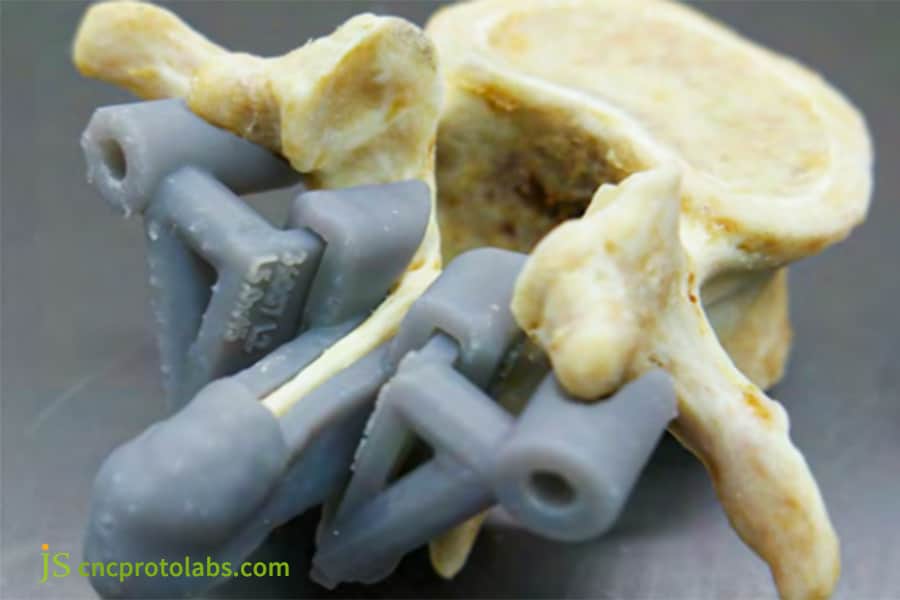
Figure 3 Personalized orthopedic positioning guide plate for spinal surgery using 3D printing.
What Is The Key To The Success Of Industrial Prototyping Development? From Project Management To Cost Control
The important point about successful industrial prototyping is related to management. The majority of organizations disregard the cost not included. JS Precision uses a closed management system, thus enhancing acceleration.
How to systematically manage an industrial prototyping project to achieve success?
1. Define requirements clearly: Engage with the client to prepare a "Requirements Definition Document" in the initial stages to clearly define the prototype testing requirements and acceptance criteria (e.g., critical dimension CPK > 1.33).
2. Pre-project DFM Meeting: This is a meeting that takes place before the start of a project with the aim of improving the design so that the manufacturing process becomes easier.
3. Transparent communication: Create a project team to coordinate information about the progress of production and quality checks in real-time.
4. Closed-loop verification: Include a 3D scanning inspection after the delivery of the prototype, where the comparison of the deviation level of the design model and the prototype will form the basis of the next iterations.
What constitutes rapid prototyping cost? How to optimize it?
Rapid prototyping cost includes programming fee, material fee, machine hour fee, and a 30% post-processing fee. This can be managed either through the use of DFM or through material substitution.
- Design Optimization: Optimize designs using DFM, removing hard-to-manufacturing features such as deep cavities or complex curved geometries,
- Material Substitution: Identify the usage of lower-cost materials that have similar properties.
- Batch Integration: Combine several small parts into an assembly to be processed, thus reducing the setup time.
- Supply Chain Advantage: Leverage the discounted prices for bulk purchases offered by JS Precision.
JS Precision combines process combination with DFM optimization to accurately balance rapid prototyping cost and performance, avoiding ineffective investment.
Practical Case: The Secret to Reducing Automated Gripper Prototype Costs by 40%
An automation industry-developed high-precision pneumatic gripper with a repeating accuracy of ±0.01mm with <200g weight. The outsourcing initial cost estimate went beyond budget by 50%, with delivery of 6 weeks.After assuming charge, JS Precision focused on optimizing the project through three main approaches:
- Simplifying the integrated alloy steel body to a “7075 aluminum alloy CNC machined base + standard hardened steel guide rails,” which cuts material colors by 35%.
- The key guide groove is ensured with rapid prototyping CNC machining to ensure accuracy, and the shell is accelerated by 60% using SLS 3D printing.
- With delivering a detailed cost breakdown so that the client could understand the optimization potential.
Ultimately, a prototype was delivered within 3 weeks, expenses were cut by 40%, and the solution was locked directly into a mass production solution.
Inform JS Precision of your project budget, delivery time, and performance requirements, and we will use DFM optimization and process integration to calculate accurate costs and delivery times free of charge, customizing a cost-effective industrial prototyping solution for you.
Aerospace Case: How JS Precision Helps Drone Companies Achieve High-Speed Iteration Of Carbon Fiber Components
Challenge
Rapid prototyping in the aerospace field has extremely stringent requirements for performance and weight. One industrial drone manufacturer needed to develop a new carbon fiber arm with the following requirements:
A weight reduction of 15% within a specific load, and concurrently perform aerodynamic shape and structural tests fast enough for an industrial process.
JS Precision Solution:
1. Technology Integration Path:
Precision machining of aluminum alloy molds using prototype CNC machining (surface error ≤ ±0.1 mm), with high-precision prepreg lay-up technology and autoclave curing (temperature control ≤ ±5℃) for the production of carbon fiber prototypes, to ensure simulating the processes involved in large-scale production and the mechanical properties of the materials.
2. Concurrent Engineering:
JS Precision engineers engage early in the design process to optimize the mold parting surface and venting system according to the molding properties of carbon fiber to prevent demolding difficulties in the future.
At the same time, a modular mold design approach is adopted to reduce the 12 weeks required for traditional mold development to 4 weeks while also holding back for process modifications in mass production.
3. Cost Balancing:
Test samples of lightweight carbon fiber fabrics of sizes appropriate for testing the strength of three grades of carbon fiber (T300, T700, and T800) are supplied, along with the results of simultaneous testing of their mechanical strengths.
This aids the client in identifying the best cost-effective solution within the required weight savings, strengths, and rapid prototyping cost. Cost per sample reduces by 20%.
Results:
In 6 weeks, it was possible to produce a functional prototype which could be subjected to wind tunnel testing and destructive loading tests, which saved 40% of time and 25% of cost relative to its original design. This case fully demonstrates that professional rapid prototyping service can be an innovation accelerator for aerospace companies.
Customers with aerospace prototype development needs can directly contact our dedicated team. We will provide full-process support from material selection to process implementation, helping products iterate efficiently and seize market opportunities.
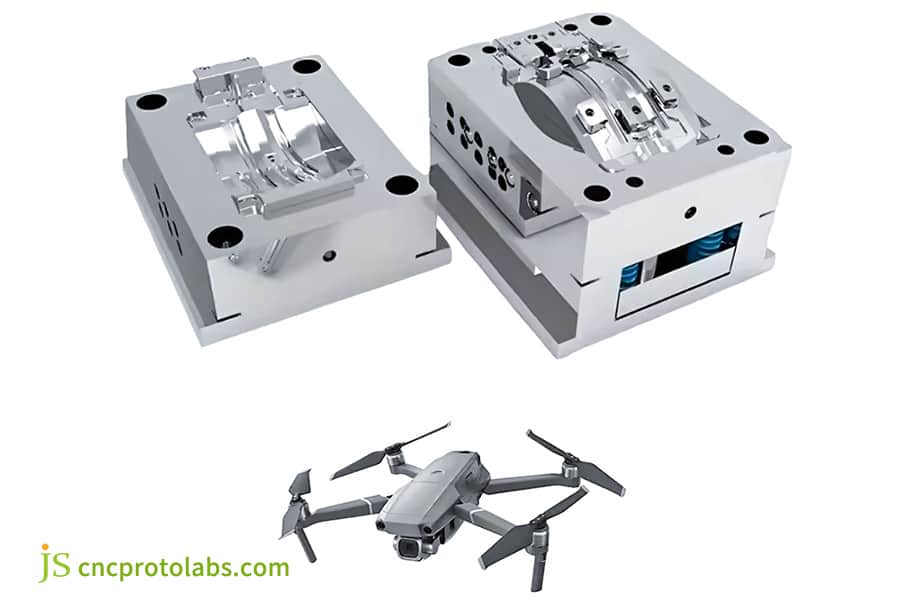
Figure 4 CNC machining precision aluminum alloy mold for high-strength carbon fiber arm of unmanned aerial vehicle.
FAQs
Q1: How long does it typically take from providing drawings to receiving the prototype?
JS Precision has proper lead times depending on the processes. For simple CNC machining processes, the time is 3-5 days. However, complex parts or small series 3D printing requires 1-2 weeks. JS Precision has a fast track option for handling immediate requirements.
Q2: What materials can you handle? Including medical-grade or high-performance engineering plastics?
JS Precision works with different materials such as metals (aluminum alloys, stainless steel, titanium alloys), medical materials (medical ABS/PC, PEEK), high performance engineering plastics (ULTEM 1010), and carbon fiber composites.
Q3: How do you guarantee the precision of the prototype parts? What level of precision can be achieved?
The precision for CNC machining at JS Precision for rapid prototyping involves an accuracy level of ±0.025mm, and the accuracy level for the 3D printing service involves an accuracy level of ±0.1mm. Critical measurements are checked by professional instruments, and the results are documented.
Q4: Can you support small-batch trial production (e.g., 50-500 units)?
Yes, small-batch trial production is one of JS Precision’s strengths. We are able to efficiently link prototyping and trial production with rapid mold manufacturing or small-batch CNC programming to meet customers’ transition requirements from prototyping to mass production.
Q5: After the prototype is completed, can you assist with subsequent testing or small-batch assembly?
Yes, JS Precision also provides MCM services such as functional test, paint, silkscreen print, and simple assembly, to help reduce communication as well as time costs for the customers.
Q6: How do you control the cost of multiple design iterations?
JS Precision advises that our customers should freeze the basic layout shape as soon as possible, with only minor variations in the last version. Additionally, we are capable of providing DFM optimization solutions that greatly decrease the rapid prototyping cost and development period of future revisions.
Q7: Which technology is most suitable for parts with complex internal structures?
For parts with complex conformal flow channels or lattice structures, metal 3D printing or nylon 3D printing using the SLS process would be the best method. JS Precision can offer accurate 3D printing services depending on the requirements of the parts regarding the structure and performance.
Q8: What are the main advantages of choosing you as a rapid prototyping service provider in China?
JS Precision combines Engineering standards at the European level, flexibility for rapid response to the localization needs for low costs, with full-chain service capabilities from design help through to mass production implementation.
Summary
Selecting a rapid prototyping service essentially means selecting an engineering partner to help you manage risks and speed up innovation.
From compliance breakthroughs in medical equipment, to performance validation of automotive components, to the ultimate pursuit of aerospace, JS Precision has proven with 15 years of practical experience that professional precision rapid prototyping can not only produce qualified prototypes, but also help you save costs, shorten cycles, and seize market opportunities.
If you are at a crossroads in your product development cycle and need expert technical guidance and a streamlined execution process, JS Precision is here to help.
Welcome to visit our official website or contact us directly to submit your project requirements and obtain free manufacturing feasibility analysis and targeted quotation solutions. Let's work together to accelerate the transformation of your ideas into the next market success.

Disclaimer
The contents of this page are for informational purposes only.JS Precision Services,there are no representations or warranties, express or implied, as to the accuracy, completeness or validity of the information. It should not be inferred that a third-party supplier or manufacturer will provide performance parameters, geometric tolerances, specific design characteristics, material quality and type or workmanship through the JS Precision Network. It's the buyer's responsibility Require parts quotation Identify specific requirements for these sections.Please contact us for more information.
JS Precision Team
JS Precision is an industry-leading company, focus on custom manufacturing solutions. We have over 20 years of experience with over 5,000 customers, and we focus on high precisionCNC machining,Sheet metal manufacturing,3D printing,Injection molding,Metal stamping,and other one-stop manufacturing services.
Our factory is equipped with over 100 state-of-the-art 5-axis machining centers, ISO 9001:2015 certified. We provide fast, efficient and high-quality manufacturing solutions to customers in more than 150 countries around the world. Whether it is small volume production or large-scale customization, we can meet your needs with the fastest delivery within 24 hours. Choose JS Precision this means selection efficiency, quality and professionalism.
To learn more, visit our website:www.cncprotolabs.com
Resource