English



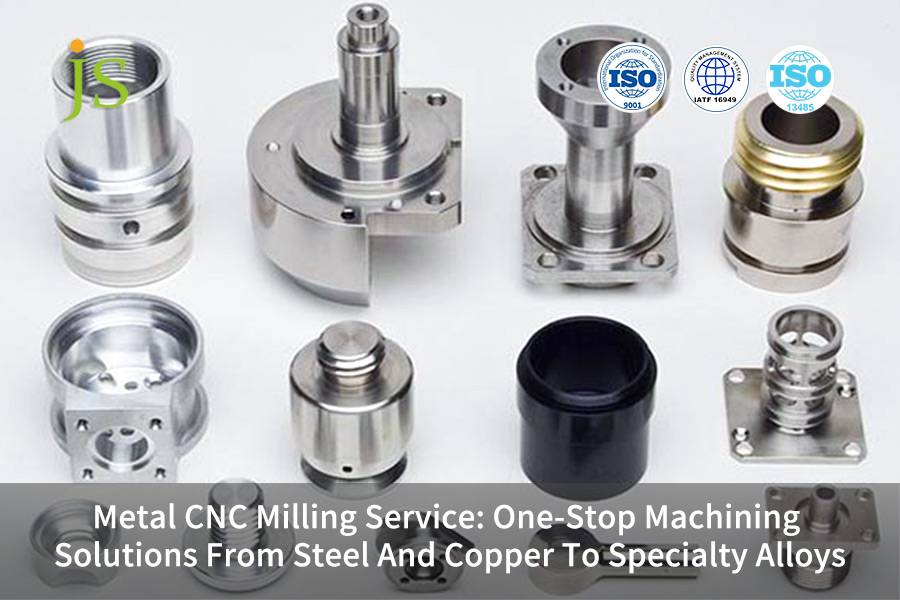

Metal CNC milling service is a common option for the processing of metal parts for the manufacturing industry.
But when positions are involved, you are confronted with the machining of titanium alloys for the aerospace industry, high conductivities for copper parts for the electronics industry, or deformation for the machining of thin-walled parts, do you have difficulty deciding what to do or not to do?
However, a professional guide is always helpful in avoiding common pitfalls.
The integration of CNC milling technology into various sectors of manufacturing is nothing new, but the differences involved in each process can be vast. Many times, the wrong decision regarding a service provider might result in cost escalation, lack of accuracy, or even delays.
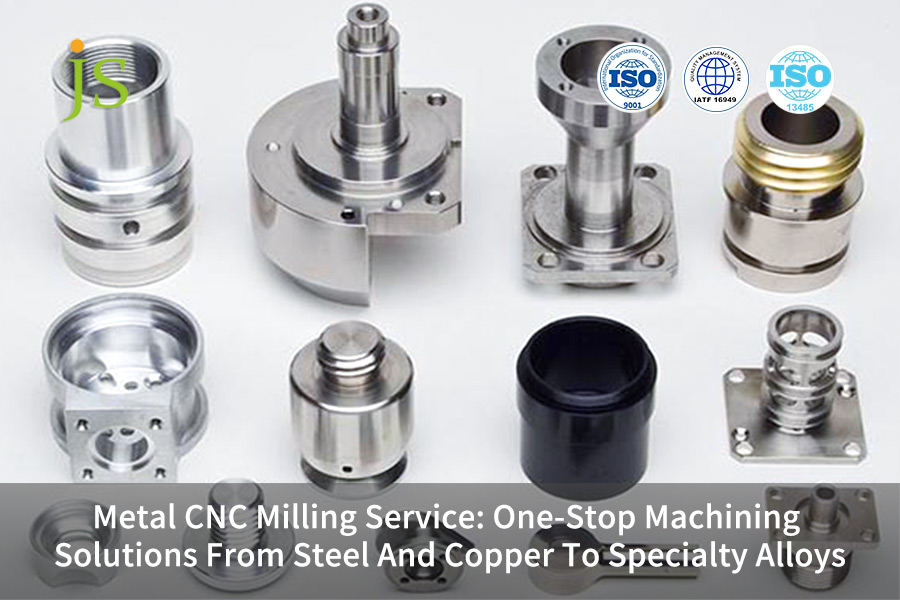
This handbook combines the years of JS Precision's expert knowledge, from the most basic information of aluminum parts to the most complex difficult-to-machine materials required in the aerospace industry. It takes you beyond to the most critical information involving the control of precision and the optimization of cost in selecting a suitable CNC milling of metals.
Core Answer Table
| Decision Core | Common Pitfalls | JS Precision Solution Essence |
| Process Professionalism | The use of universal parameters for metal cutting results in poor quality. | There are specialized process databases for metal cutting to provide tailored parameter strategies for steel, aluminum, copper, and titanium to prevent metal deformation and burr formation. |
| Quality Consistency | First item is tolerable, but variations within a batch are harder to manage when orders are for multiple materials. | Adaptable process controls and calibrations guarantee precision no matter how many materials or batches are involved. |
| Cost Verification | Initial pricing can appear attractive up front, but secondary charges are required due to inefficient processes. | Comparisons of DFM (Design for Manufacturing) optimized solutions on the source level and the breakdown of pricing lock in the total price with no hidden charges. |
| Technological Competitiveness | Inefficiency and cost are a result of an inability to process difficult-to-machine material. | Difficulty in machining titanium alloys is addressed through technologies like high pressure cooling and cycloidal milling. |
| Collaboration Reliability | Inefficient remote communications lead to doubts about satisfying strict requirements in the aerospace industry. | The digitalized end-to-end visualization, in addition to the quality management system AS9100, creates reliable remote collaborations. |
Key Takeaways:
- Material-Driven Processes: Top service companies have an understanding or database for different materials like metals, whereas current processing utilizes the same set of factors for every material.
- Precision as a Systems Engineering Process: Consistency requires the integration of apparatuses, processes, and control systems rather than single-point solutions.
- DFM Collaboration is Key: DFM analysis with suppliers is essential in the early stages for optimal costs, performance, or to address quote variations.
- Technology related to difficult-to-machine materials: The technological level of suppliers can indeed be measured by how well they can handle difficult-to-machine materials such as titanium alloys.
- Benefits of hiring qualified Chinese manufacturers: Hiring qualified Chinese manufacturers such as JS Precision guarantees technological competency on a level similar to European and American manufacturers, with substantial overall cost benefits.
Why Trust This Guide?
In determining a good metal CNC milling service, it requires professional advice that can be derived only from experience rather than theoretical thinking alone.
For instance, we recently helped an aerospace client reduce the weight of a titanium satellite bracket by 35% while improving its batch yield to 99.8%, and consistently maintain 99.5% conductivity for medical copper electrodes through our proprietary machining process.
JS Precision is deeply involved in this industry for the past 15 years, having served more than 5,000 corporate clients globally and completed more than 100,000 orders for metal processing, including over 20 metals like aluminum, stainless steel, titanium metals, copper, and other difficult-to-cut materials like Hastelloy.
- Authorized Certification: In the complex area of aerospace CNC milling services, we are proud of our achievement in AS9100D aerospace quality system certification, having supplied crucial components to many world-famous aerospace manufacturers.
- Expert Data and Expertise: When it comes to precision electronics, the control of conductivity loss to within 1% in our copper CNC milling process is data from our internal testing and optimization.
- Experience and Credibility: The fact that every process point defined in this guide has solutions based on orders, as well as every point of consideration derived from the challenges that have been overcome, is geared at ensuring that you have a grasp of the overall logic for high-quality CNC milling services based on this guide.
If you have some specific parts in mind, you can supply us with drawings, and our engineers will provide you with a free process feasibility analysis and a preliminary, transparent CNC milling quote.
How To Choose a Metal CNC Milling Service That Can Handle The Transition From Aluminum To Stainless Steel?
When selecting a metal CNC milling service provider, the essence is to look at their unique process capability for various materials and not just focus on their brand and number of machine tools available.
Overcoming Deformation in Aluminum Machining: Thermal Control and Stress Management Solutions
The challenge in machining aluminum alloy metals lies in the deformation generated because of the heat of cutting and internal stresses. The solution to this challenge offered by JS Precision lies in the following parameters:
- Optimized Toolpath: The use of trochoidal milling and high feed milling techniques prevents the accumulation of cutting heat.
- Stress Relief Process: A shear-cutting compression strategy introduced in the stress relief step removes the material stress inside.
- Precision Temperature Control: Using a constant temperature cooling system (maintained within a margin of ±1°C) for cooling down the heat generated in real time.
Eliminating Burrs in Stainless Steel Machining: Sharp Tools and Precise Parameters
The hardness of stainless steel materials easily generates burrs. The remedy is:
- Tool choice: The use of sharp, P/C-cutting end mills with a TiAlN coating.
- Parameter Matching: Matching the spindle speed and feed rate. For instance, when processing 304 stainless steel, our recommended operating spindle speed (SFM) needs to be 150 – 200 rpm with corresponding coolant concentration.
- Post Processing: With high requirement parts, post-processing or electrochemical deburring along with secondary processing helps to achieve a finish edge that is Ra. below 0.8μm.
What Are Your Unique Metal CNC Milling Solutions For Difficult To Machine Metals Such As Titanium Alloys?
Titanium Alloys like TC-4 are taken as a standard for assessment of technical expertise on the part of the service provider based on their strength properties, low thermal conductivity, and work-hardening capabilities. We have designed a unique system for metal CNC milling.
Core Thermal Management Technologies
- High Pressure Cooling Technology: This uses high-pressure penetrating coolant of 1000-1500 psi to cool effectively at the tool tip.
- Trochoidal Milling Strategy: This involves reducing the area of contact between the tool and the workpiece. This strategy also leads to lower heat generation during the machining process and ensures that the tool life increases by 30%.
Process Strategy Optimization
- “Low Speed, High Depth of Cut" Strategy: By using a lower spindle speed with a higher depth of cut, along with a tool holder and fixture of higher rigidity, the strategy is able to dampen vibrations, ensure smoother cutting, and prevent phase transformation or tool chipping due to high temperatures.
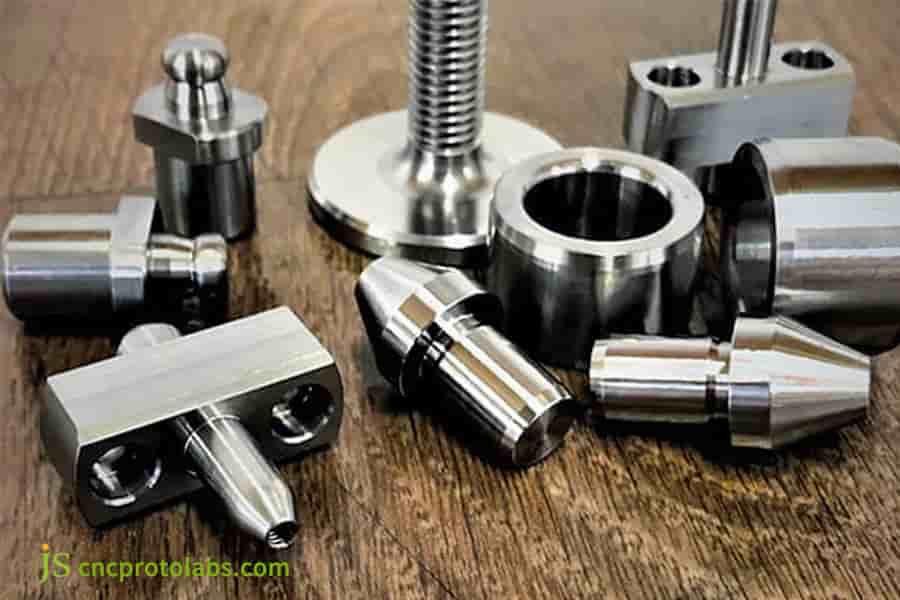
Figure 1 A batch of precision parts for titanium alloy CNC milling, including threaded cylinders, block shaped parts with holes, etc.
How To Ensure Consistent Accuracy For Multiple Material Orders When Conducting CNC Milling Metals?
In cases where the order contains parts that are made of steel, aluminum, or copper, the challenge of ensuring that each part satisfies the requirements specified for the drawings is a test for the standardization capacity of the system.
During the CNC milling metals process, JS Precision repeat precision for orders involving several materials is achieved using adaptive machining based on data calibration.
Systematic calibration and compensation: exceeding the accuracy of a single machine tool
For this purpose, a common precision standard is ensured by geometric accuracy tests performed on machine tools using full equipment, thermal error compensation models, and standard parts checks on various machine tools working on different materials.
Data-Driven Adaptive Machining: Employing Real-Time Feedback and Parameter Tuning
By making use of sensors used in machine tools that enable us to monitor cutting forces, vibrations, and other machining data in real time, we dynamically fine-tune machining parameters to compensate for fluctuations in material properties.
| Material Type | Accuracy Control Focus | Technologies Used |
| Aluminum Components | Thermal Deformation Control | Temperature-Controlled Cooling, Stress Relief Process |
| Steel Parts | Tool Wear Compensation | Tool Life Monitoring, Parameter Adaptation |
| Copper Parts | Surface Quality and Deformation | Low-Cut Force Machining, Soft-Jaw Clamping |
If your order fulfills multiple metal materials and if the lack of consistency in precision ends up affecting the final product, then JS Precision welcomes your choice to opt for CNC milling metals. JS Precision will offer a total solution to cater to all precision needs.
How To Ensure The Core Conductivity Of Copper CNC Milling?
Shaping is not the main concern regarding copper, it is protecting its desirable properties of being an excellent conductor of electricity and heat from being impaired by the machining process itself. JS Precision, being a copper CNC milling machine supplier, aims to protect this material from any deformation that could affect its properties after processing.
Accurate use of materials science and cooling and lubrication
Copper is too reactive in oxygen in air and is also corroded by chemical constituents in cutting fluids, reducing its conductivity. In our case, we therefore:
- Requires the use of a non-reactive, electrically neutral specifically formulated cutting fluid. This type fluid will not chemically react with copper and will not leave any impurities on the surface.
- Ensure that the cutting zone is cleaned during cutting to prevent scratching of the surface or impurities due to remaining chips.
- Clean and dry the surface promptly after processing to prevent oxidation.
Unstressed clamping and micron-order deformation accuracy
The residual stresses caused by clamping deformation tend to damage the microstructure of copper, thereby influencing its conductivity. We use the following clamping methods:
- Low clamping force clamping, by accurately calculating the required clamping force, minimizes the clamping pressure while ensuring the stability of the workpiece.
- Fully enclosed soft claws or vacuum suction cups increase the clamping contact area, disperse clamping force, and avoid deformation caused by excessive local pressure.
- In the case of thin-walled copper components, we employ custom fixtures that are designed to support vulnerable areas and reduce deformation.
If your application has very tight tolerance requirements for copper parts conductivity, JS. Precision's copper CNC milling services ensure that your parts are dimensionally accurate, with maximum preservation of intrinsic conductivity.
How Can Aerospace CNC Milling Meet The Material And Precision Requirements In Extreme Environments?
The aerospace sector requires a combination of strength, lightweight properties, fatigue resistance, and reliability in aerospace metal components in extreme operating conditions. For aerospace CNC milling components, the stringent safety standards prescribed by ISO 15641:2001 for high-speed milling cutters are an important concern for JS Precision.
Full Process Traceability and Materials Certification
The quality of components is of high importance to aerospace products' safety and reliability. You can choose a supplier with an end-to-end traceability system that involves verifying raw material MTC, managing each batch quantity, and ultimately providing detailed reports of all test results according to AS9100 specifications.
Machining for Performance: Surface Integrity and Micro-Deformation Control
For assured fatigue life for aerospace parts, a residual compressive stress surface layer is developed by using low cutting parameters, employing sequential processing for removal of internal stress for thin-walled deep cavities, and stress release treatment after machining.
In cases where you may require Aerospace projects that involve high reliability part machining, JS Precision's aerospace CNC milling services may be the best solution.
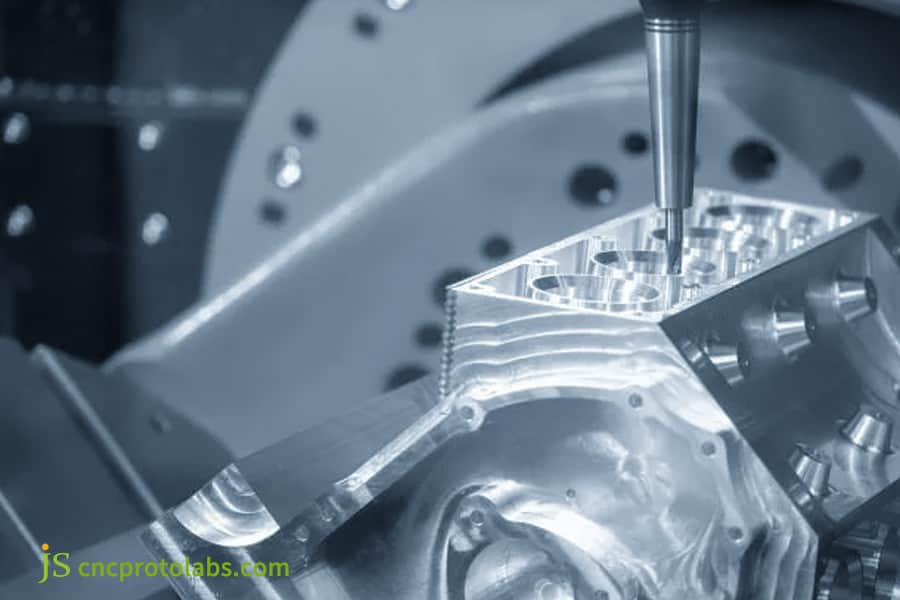
Figure 2 The five axis milling machine is currently processing and manufacturing aluminum cylinder blocks.
How To Control Machining Deformation Of Thin-Walled Metal Parts Through Metal CNC Milling Process?
Thin-wall machining is the most demanding task in metal milling. JS Precision utilizes an effective control over the deformation that occurs in the machining of thin-walled parts in metal CNC milling.
Simulating Processes – Beginning with Pre-deformation in a Virtual World
With the help of a simulation program, such as FEA, for modeling shearing force, temperature, and deflection distributions, pre-optimizing clamping strategies and trajectories helps to exclude high risk-of-deflection areas
Stages of Progressive Forming and Symmetrical Machining Approach
In multi-stage progressive forming, the internal stress can be eliminated with the use of symmetric cutting paths. Multiple checks and adjustments in terms of parameters take place during the process.
| Process Type | Deformation Control Effect | Machining Efficiency | Use Cases |
| Traditional One-Step Forming | Poor | High | Parts with low precision requirements. |
| Stage-by-Stage Progressive Forming | Good | Medium | Thin walled parts with medium precision requirements. |
| Simulation Optimization + Symmetrical Machining | Good | Medium-High | High precision, complex thin-walled parts. |
What Hidden Factors May Trigger Changes After Obtaining The CNC Milling Quote?
The clear quote must fix the price as tightly as possible. It is important to be aware of possible variables to be an effective buyer and cost manager. JS Precision takes all possible variables into consideration while giving a CNC milling quote.
- Billet utilization and optimization area variability: Estimated initial pricing is done on predicted actual billet utilization. Layout optimization using DFM or optimal billets may lower costs, but design changes that enhance scrap material may add to the cost.
- From first article verification to mass production: First article verification and full-size inspection may be costly. JS Precision's quotes will specify such costs, thus ensuring an unchanged unit price for mass production.
Case Study: From Welding 4 Pieces To Forming 1 Piece, The Titanium Alloy Satellite Bracket
Background and Challenges:
There existed a need for a TC4 titanium alloy connecting support in a remote sensing satellite. The original design involved a total of four welded parts, weighing 210 grams, with a possibility of weld fatigue, having a possible 85% yield, and a CNC milling quote of $2000, along with a delivery term of 8 weeks.
JS Precision Solution:
- Design Optimization: With the use of topology optimization, the design was modified into a single-piece biomimetic ribbed structure, which decreased the thinnest wall thickness to 0.8 mm.
- Advanced Machining: Based on a five-axis machining center with directional high-pressure cooling technology, all machining processes can be completed in one setup with perfectly controlled machining stress and deformation of the titanium alloy.
- End-to-End Quality Control: Testing from raw material to end product was done strictly.
Results:
- Weight: Reduced from 210 grams to 137 grams (35% weight reduction), increased rigidity by 15%.
- Reliability: The number of welds eliminated to double reliability.
- Yield and Cost: The batch yield increased to 99.8 percent, total cost reduced by 40 percent, price reduced to $1200, and lead time reduced to 5 weeks.
This particular case can be used as an example of our metal CNC milling service in addressing the manufacturing issues of complex high-value parts. If you are looking for complex parts machining solutions with the aim of reducing weight, costs, and the need for efficiency improvements, then JS Precision should be contacted.
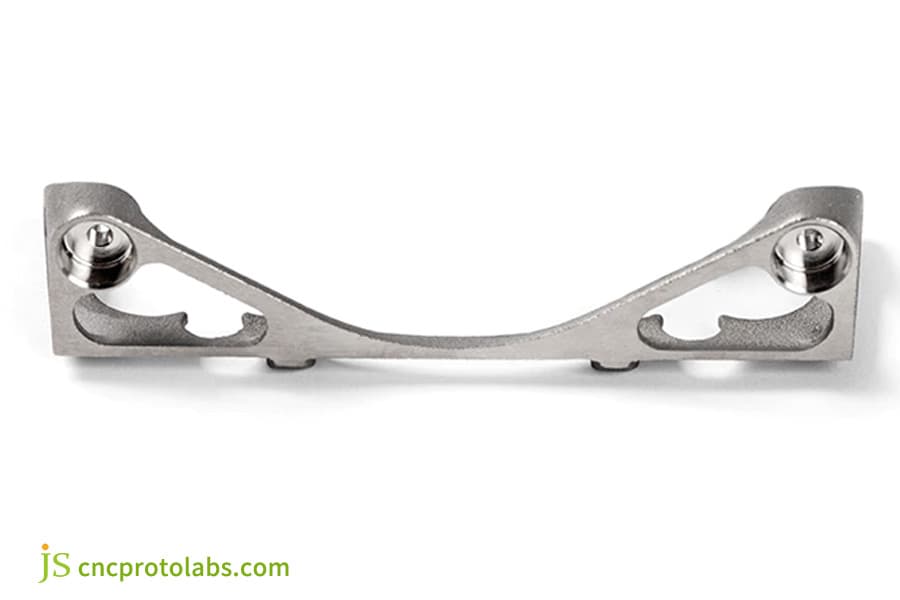
Figure 3 Titanium alloy remote sensing satellite connection bracket
FAQ
Q1: What is the best method to achieve effective rust resistance after machining stainless steel?
It is essential to control the heat generated in cutting to prevent “overheating” that may damage the passivation layer. We shall optimize variables like SFM to minimize heat and suggest subsequent passivation for best corrosion protection.
Q2: Is the delivery time of titanium alloy processing much longer than that of aluminum alloy?
Yes. Because of the higher strength and lower thermal conductivity of the titanium alloys, the cutting speed is lower than that of the aluminum alloys by a value of less than 1/4. But by optimizing our strategy, we can minimize the delivery time to the greatest extent possible.
Q3:Copper parts tend to get scratched after they are machined. What do you do to protect them?
We use high-performance, non-woven materials to protect the parts from each other, as well as a peelable protection film for critical conductive surfaces.
Q4: Do you support research and development projects with small batches and multiple varieties?
Yes, we do support them. Actually, we have a rapid prototyping production line that is equipped to handle small batch, high complexity, multi-material development projects.
Q5: Does the quote include all costs of tooling and fixtures?
The conventional quotation would also comprise conventional tools and general-purpose fixtures. Specialized tooling or high-cost dedicated tools would be listed separately to provide transparency to customers.
Q6: My design has strict isotope requirements. How do you guarantee this?
In cases where projects involve tight isotope tolerances, like in our aerospace CNC milling services, we make sure that critical design areas are accomplished in one clamping circle through process planning and checked by a coordinate measuring machine.
Q7: How to deal with the moisture problem during long-distance transportation of metal parts shipped from China?
We pack precision parts in shock-resistant materials with sufficient desiccant and use rust-proof oil or vacuum packaging.
Q8: What would be the principal benefits with JS Precision over other vendors on home market?
Depth of technical expertise (hard-to-machine material machining) + substantial cost differentiation through Chinese value chain + seamless global teamwork through digital platform and AS9100 process system. Our competencies rival best in class, but at a higher value overall.
Conclusion
Selecting an appropriate metal CNC milling service means, therefore, finding a deep-level partner able to properly correlate material properties, control precision systems, and truly avoid cost pitfalls.
Choosing JS Precision as your metalworking partner means gaining top precision manufacturing capabilities in China while enjoying significant cost advantages compared to European and American manufacturers.
Not only do we offer a CNC milling quote, but also an assurance of dependability based on thorough engineering analysis.
Seek expert advice for your project today!
Upload your metal component drawings on the JS Precision platform today itself! Not only will you get a very detailed quote, but also expert process elucidations from experienced engineers who have over 15 years of knowledge in this domain.
Also,if you have specific metal processing challenges, please feel free to leave a comment in the comments section for discussion, or contact our experts directly. Let us team up and turn your most complex metal designs into flawless products of exemplary quality!

Disclaimer
The contents of this page are for informational purposes only.JS Precision Services,there are no representations or warranties, express or implied, as to the accuracy, completeness or validity of the information. It should not be inferred that a third-party supplier or manufacturer will provide performance parameters, geometric tolerances, specific design characteristics, material quality and type or workmanship through the JS Precision Network. It's the buyer's responsibility Require parts quotation Identify specific requirements for these sections.Please contact us for more information.
JS Precision Team
JS Precision is an industry-leading company, focus on custom manufacturing solutions. We have over 20 years of experience with over 5,000 customers, and we focus on high precisionCNC machining,Sheet metal manufacturing,3D printing,Injection molding,Metal stamping,and other one-stop manufacturing services.
Our factory is equipped with over 100 state-of-the-art 5-axis machining centers, ISO 9001:2015 certified. We provide fast, efficient and high-quality manufacturing solutions to customers in more than 150 countries around the world. Whether it is small volume production or large-scale customization, we can meet your needs with the fastest delivery within 24 hours. Choose JS Precision this means selection efficiency, quality and professionalism.
To learn more, visit our website:www.cncprotolabs.com