English



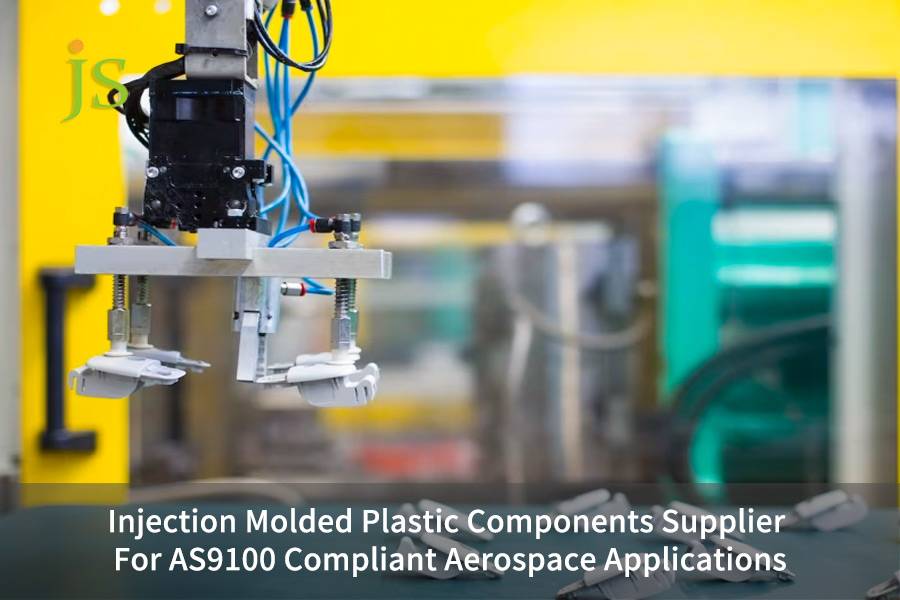

Injection molded plastic components contribute greatly to the safety and efficiency of aerospace projects where component failure can lead to irreversible consequences.
A partner who not only understands the manufacturing process but also has the knowledge of the strict AS 9100 certification standards is a must for making sure that the flight is safe and the project is successful.
It is said that by selecting the right partner, components can be made 30%-50% lighter, molds can be so accurate as to be within 0.005mm, development time can be cut by 40%, and overall costs can be reduced by more than 30%.
Using its long term involvement in aerospace injection molding, JS Precision assists clients worldwide with a comprehensive service chain, starting from design optimization and going on to the production of highly precise injection mold tooling.
Core Content Overview
|
Core Issues
|
Key Solutions
|
Technical Specs
|
|
Lifecycle Safety
|
Risk management and full traceability under the AS 9100 certification system.
|
Cpk ≥1.33 / 100% batch traceability
|
|
Metal Part Weight Reduction
|
High-performance polymers (PEEK/PEI) realize plastic replacement of steel.
|
Weight reduction 30%-50% / Tensile strength up to 100MPa+
|
|
Precision Part Tolerance
|
Ultra-precision plastic injection molding tooling manufacturing.
|
Mold precision ±0.005mm / Part ±0.02mm
|
|
Short R&D Cycle and Cost Constraints
|
Aluminum molds for injection molding rapid verification.
|
Cycle shortened by 40% / Cost saved by 30%+
|
|
Overly Complex Assembly Process
|
Insert Molding to achieve multi-functional integration.
|
Part quantity reduced by 15% / Post-processing-free surface
|
Key Takeaways
- Prioritize Compliance: AS 9100 forms the foundation for risk management and unique part traceability in the aerospace and defense industry.
- Science of Materials: Weight reduction of more than 30% is achieved by using high performance thermoplastics combined with scientific design for injection molding.
- Technology of Mold: Plastic injection molding tooling offers micron level tolerances and complicated integration.
- Pricing Strategy: Cost of ownership is optimized by significantly reducing post processing through the use of aluminum mold prototyping and DFM.
Injection Molded Plastic Components: Aerospace AS9100 Solutions From JS Precision
Injection molded plastic components are central to lightweight, reliable design, and a well chosen supplier is essentially a first step to project success or failure.
Through JS Precision, you get to tap into our decades long aerospace injection molding know how, up-to-date injection mold tooling technology, and strict adherence to AS 9100 certification standards that all lead you to the core service guarantees for global aerospace customers.
We have a good track record of providing plastic component solutions customized to the needs of clients in over 50 different aerospace companies. Cabin structure, fuel connections, and avionics housing are typical areas that we have covered and you can count on us, matching your project requirements exactly.
To name one instance, we had a PEEK fuel support project with a European airline. The client's challenges were: over heavy aluminum alloy support, high corrosion risk of aviation fuel, and need to control critical tolerances within 0.02mm - problems that you might be facing as well.
They achieved 42% weight reduction in parts, passed 2,000 hours of accelerated aging testing and the overall costs were reduced by 25% by choosing us and taking advantage of our precision injection mold tooling and process optimization.
We ensure all our solutions fulfill the traceability requirements of AS9100:2016, and offer globally acknowledged aerospace quality assurance for your projects while effectively minimizing quality risks.
If you want to find a trustworthy partner in the aerospace injection molding industry, JS Precision is ready to show you actual project case studies and third party certification reports as proof of our capabilities, which will give you more peace of mind and confidence in your decision and will help you avoid cooperation risks.
If you want to understand how injection molded plastic components can solve your project pain points, contact JS Precision to receive a free DFM assessment report and an accurate quote within 24 hours.
Why Is As 9100 Certification Essential For Aerospace Injection Molding Suppliers?
AS 9100 certification is a must have for suppliers providing aerospace injection molding products.
Besides meeting ISO 9001 standards, this certification requires managing risks specific to aerospace, controlling critical characteristics, and ensuring 100% traceability through the whole process to significantly lower the chance of a component failing even in the harshest environments.
Getting a supplier with this certification means changing the game in risk of quality issue.
Main Risk Control Differences Between AS 9100 and ISO 9001
The major difference between AS 9100 and ISO 9001 is aerospace specific risk management.
JS Precision carries out comprehensive Failure Mode and Effects Analysis (FMEA) for each aerospace part and keeps the process in line with the critical characteristic Cpk 1.33 level, resulting in a product qualification rate higher than 99.4%.
Such meticulous regulation of production processes guarantees product dependability.
In other words, it is like having "double insurance" on every part by keeping an eye on the whole procedure from design to production and cutting down the consequences of part defects on the project timeline and flight safety.
Full Lifecycle Traceability and Record Preservation Agreement
JS Precision sets up a thorough traceability link from raw material batches to molding parameters, keeping both electronic and paper records for more than 10 years in compliance with FAA standards to back up accident investigations and long term maintenance.
Additionally, this system also covers completely the processing and usage history of injection mold tooling.

Figure 1: A large aviation engine assembly in a clean, organized factory workshop, with parts bins and equipment nearby.
How Does Aerospace Injection Molding Solve The Weight-To-Strength Dilemma?
Aerospace projects are extremely challenging as they require balancing the weight and strength of the different components. One of the main ways to solve this issue is through aerospace injection molding.
By simply substituting metal parts with high performance engineering plastics like PEEK, PPS, and PEI, it is possible to reduce the weight by 30%-50%. In addition to this, these plastic materials possess very high rigidity levels even at temperatures over 200℃.
Also, it is through very precise control of the injection molding molecular chains orientation that we are able to achieve the fatigue strength of complicated parts, which completely satisfy FAA AC 20-107B material standards.
Applications of Physical Properties of High Performance Thermoplastics (PEEK/Ultem)
Each type of high performance thermoplastics has different properties, advantages, and applications in the aerospace industry. Specific performance data are shown in the table below:
|
Material Name
|
Tensile Strength (MPa)
|
Long-term Service Temperature (℃)
|
Weight Reduction Ratio (%)
|
FST Rating
|
Application Scenarios
|
|
PEEK
|
100-150
|
260
|
40-50
|
UL94-V0
|
Fuel connectors, high-temperature structural parts.
|
|
PEI (Ultem 9085)
|
85-100
|
170
|
35-45
|
FST Pass
|
Cabin structural brackets, avionics enclosures.
|
|
PPS
|
70-90
|
200
|
30-40
|
UL94-V0
|
Electrical connectors, high-temperature gaskets.
|
|
30% Glass Fiber Reinforced PEEK
|
150-180
|
260
|
35-45
|
UL94-V0
|
High-strength load-bearing structural parts.
|
|
Aerospace Aluminum Alloy
|
200-300
|
150
|
0
|
None
|
Traditional load-bearing parts.
|
PEEK can resist corrosion from aviation fuel, and Ultem 9085 is capable of passing the FST flame retardant cabin interior trim standards. Besides, by a suitable material choice, it is possible to simultaneously reduce both weight and cost.
The Effect of Crystallinity Control on the Performance of Complex Structural Components
The crystallinity of the polymer material is the main factor determining the performance of the finished part made of high performance plastic.
JS Precision adopts a mold temperature control system with a temperature difference of ±1℃ to optimize crystallinity, which can effectively avoid deformation of complex structural components, ensure dimensional stability, and ensure the reliability of parts under extreme conditions.
Precisely controlling crystallinity is like giving your parts a "strong skeleton" that can even withstand extreme high altitude temperature environments, staying stable in shape, and thus, preventing deformation and failure, which would otherwise require you to spend time on maintenance and rework.
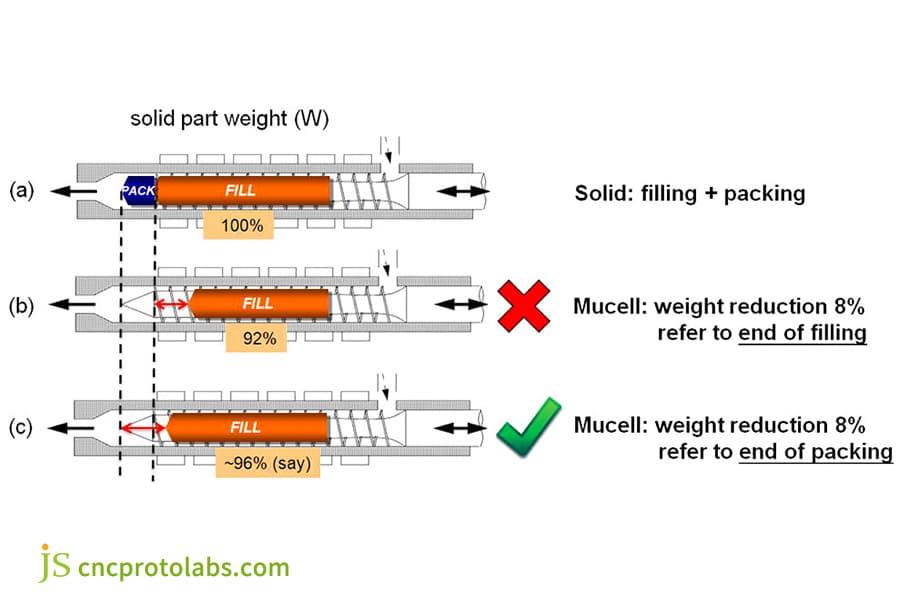
Figure 2: A technical diagram comparing weight changes in aerospace plastic parts under different injection molding filling and packing processes.
How To Optimize Complex Geometries When Designing For Injection Molding?
The main challenge in designing for injection molding is optimizing complex aerospace geometric parts that balance weight reduction with molding integrity.
JS Precision thoroughly analyzes the design for manufacturing to prevent internal stress from the uneven wall thickness, scientifically designs reinforcing ribs to make them more resistant to impact, and uses Moldflow simulation for deformation prediction so that there are no changes in part tolerances.
Solution for Designing Reinforcing Ribs and Maintaining Consistent Wall Thickness
The highest reinforcement rib to base wall thickness ratio that still eliminates the surface shrinkage is 0.4-0.6. Besides, adding a 0.5-2 degree draft angle will demolding stress, will not only prevent part scratches and deformation but also will reduce the scrap rate.
The Role of Moldflow Simulation in Deformation Prevention
The Moldflow software allows us to follow every injection molding step and thus anticipate the warp level of the part beforehand, which we can use to modify our solution accordingly.
Thanks to this, the dimensional variation between the molded part and the CAD model is controlled within 0.1mm, resulting in fewer trial moldings, and a shorter development cycle.
How To Make Injection Molds To Meet Micron-Level Aerospace Tolerances?
Injection molds for the aerospace industry require micrometer level precision tolerances. Since precision molds are at the center of the system, JS Precision selects resistant mold steels like H13 and S136.
These top quality materials in combination with finely machined runners and a highly efficient temperature control system help to keep a stable tolerance of 0.005mm during long cycle production.
Mold Steel Selection and Ultra Precision CNC/EDM Machining Processes
The mold steel and machining process directly determine the precision and lifespan. Specific parameters are shown in the table below:
|
Mold Material
|
Processing Technology
|
Mold Precision (mm)
|
Surface Roughness (Ra, μm)
|
Applicable Materials
|
Mold Life (Shots)
|
|
H13 Steel
|
CNC + Wire EDM
|
±0.005
|
≤0.2
|
High-temperature plastics such as PEEK and PEI.
|
500,000+
|
|
S136 Steel
|
CNC + EDM
|
±0.008
|
≤0.15
|
High-precision decorative parts, optical-grade parts.
|
400,000+
|
|
QC-10 Aluminum
|
±0.01
|
≤0.3
|
Prototypes, small-batch parts.
|
3,000-10,000
|
|
|
P20 Steel
|
Ordinary CNC Machining
|
±0.02
|
≤0.4
|
Ordinary engineering plastic parts.
|
300,000+
|
|
Hard Anodized Aluminum
|
CNC + Anodizing
|
±0.012
|
≤0.25
|
Glass fiber reinforced plastic parts.
|
5,000-8,000
|
To address dimensional stability of the mold, we perform vacuum heat treatment.
Additionally, we implement rigorous monitoring of the wire EDM machining accuracy and EDM surface roughness, which not only helps the molds retain their precision long term but also customers' maintenance costs are consequently reduced.
High Efficiency Temperature Control and Runner System Design for High Temperature Aerospace Plastics
Temperature resistant materials like PEEK partially melt, as their melting point is as high as 380℃. JS Precision purchases mold temperature controllers dedicated to their molds for temperature stabilization.
However, besides this measure, the venting system is optimized to prevent degradation at high temperature or gas charring due to trapping which is likely in turning, thus resulting in high part yield.
Do you have a demand for micrometer level molds? Submit part drawings, JS Precision will customize a how to make injection molds solution for you and provide accurate quotes.
When To Choose Aluminum Molds For Injection Molding In Aerospace Prototyping?
Aluminum molds for injection molding are a perfect solution for the T0-T3 validation phase of aerospace parts. Their working rate is 40% faster than steel molds, and because of their excellent thermal conductivity, the molding cycle is reduced.
Additionally, they are capable of small batch testing of high glass fiber materials after hard anodizing, thus decreasing prototype stage costs.
Cost and Cycle Advantage of Aluminum Molds during Validation Phase (T0-T3)
The processing time of QC-10 aluminum is more than 40% less than that of P20 steel. Also, the use of aluminum molds during the prototype stage is a 30% cheaper option than steel molds. It is an effective way to keep initial investments and project risks under control.
Shortening Molding Cycle and Enhancing Part Quality by High Thermal Conductivity
Aluminum produces heat four times faster than a regular steel, which leads to faster cooling, as well as a reduction in the molding cycle. Also, it upgrades parts dimensionally due to a drop in internal stress.
Besides, even with a high portion of glass fibers material, it is possible to rely on the wear resistant treatment when it comes to aluminum, ensuring, in this way, the quality of the prototype piece.
How To Reduce Post-Processing With Advanced Plastic Injection Molding Tooling?
Post processing will increase the cost and cycle of aviation injection molding components, and advanced plastic injection molding tooling can effectively solve this problem.
Using methods like insert molding or dual material forming, JS Precision builds metal sleeves, plugs, and similar pieces right into the molded shape. This skips extra buildup work later while boosting how tightly parts fit together and perform over time.
Insert molding enables functional integration
Midway through a build, insert molding slips metal threads right into plastic forms. Instead of stacking parts together later, the process traps them during shaping.
That shift removes extra bits that add bulk. Strength grows because bonds form at a deeper level. One aircraft electronics job saw pieces drop by 15 percent. Time spent linking those pieces fell nearly one fifth. Pull resistance climbed three tenths higher than before.
Lower Costs with Better Surface Quality Management
One way JS Precision hits SPI A-1 finish? Tight control over mold tools and the injection process. That smooth result comes without paint layers afterward. Fewer steps mean lower costs - each piece drops over 15% in price. Savings add up fast when you skip extra work.
Want to reduce post processing costs through plastic injection molding tooling? Review JS Precision's successful insert molding case studies and learn from our proven experience.
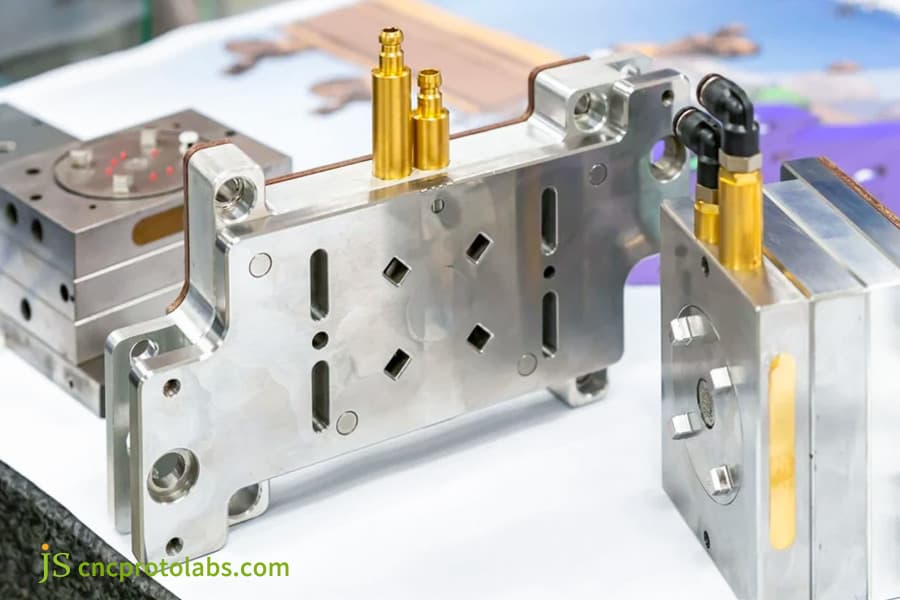
Figure 3: A close-up view of a complex, high-precision aluminum injection mold with multiple channels and connections.
How To Evaluate Supplier Supply Chain Resilience For Custom Plastic Components?
At the heart of supplier assessment for custom plastic components stands the capability of the suppliers to withstand supply chain challenges.
To be resilient, suppliers are expected to stocks FAA/EASA standard FST materials and, through VMI inventory management systems and early design collaboration, they should be able to handle the aerospace industry's long lead times and very limited batch sizes, thereby minimizing the risk of supply chain breakdowns.
Material Certification and Compliance with FAA/EASA Standards
Attention during supplier evaluation needs to be directed at the validation of COC compliance certificates, UL94-V0 fire resistance certification, and FST test reports to ascertain that materials are compliant to aerospace standards.
JS Precision, for instance, offers an extensive range of materials that are stringently certified with full compliance documentation readily available.
Business Collaboration from Collaborative Design (EPI) to Flexible Delivery
JS Precision through its Early Intervention in Design (EPI) has been able to preempt and eliminate some 80% of customer's engineering changes later on, with a VMI inventory model, it manages to respond to the fluctuations of market demand by providing parts on time and thus it does not face supply chain disruptions.
JS Precision Case Study: Precision Weight Reduction Scheme For Peek Fuel Bracket Of Aircraft
The pivotal challenge of a PEEK fuel bracket project for an international airline was the PEEK material. The initial aluminum alloy bracket was heavy and prone to fuel corrosion.
The customer stipulated a flatness of 0.1mm at 150℃, and a very tight 0.02mm tolerance for the critical mating dimension, which was quite a tall order with traditional metal processing methods.
Problems Faced
Prototypes needed to be verified by the client within 8 weeks, and the part cost should be lowered by more than 20% compared to the original aluminum bracket. The main issue was the significantly high shrinkage of PEEK, which led to warping of injection molded plastic components and loss of accuracy control.
Lessons Learned and Experiences
Due to underestimating the shrinkage rate of PEEK, the initial batch of parts were warped by over 0.5mm and did not pass the test.
Essential takeaways: It is necessary to use advanced thermodynamic coupling simulation while designing for injection molding, also, the mold temperature control should be capable of independently adjusting the temperature of different areas in order to compensate for uneven cooling and shrinkage.
Solution
To address the pain points of our client, we devised a thorough solution that focused on their benefits:
1. Design Optimization:
By using a design for injection molding approach, we transformed the solid metal component into a scientifically designed I-beam reinforced structure. This not only enhanced the rigidity-to-weight ratio but also lessened the amount of material used resulting in a further 10% reduction in costs.
2. Mold Upgrade:
We employed plastic injection molding tooling with a high hardness H13 steel mold that was subjected to a 48-hour vacuum stress relief treatment to ensure the thermal stability of the mold. We were able to maintain the accuracy within 0.005mm.
3.Process Control:
We used 30% glass fiber reinforced PEEK and a dedicated mold temperature controller to heat and maintain the mold above 180℃. We held the injection pressure at a constant 140MPa to achieve uniform material filling and stable crystallinity.
Final Results:
The implemented solution resulted in remarkable outcomes: components were 42% lighter, the client saved $100,000 a year in fuel costs, 2,000 hours of accelerated aging and fuel immersion testing revealed 100% dimensional consistency, a 25% reduction in overall costs, and project delivery one week ahead of schedule.
Facing similar challenges in precision weight reduction? Contact JS Precision engineers for a custom plastic components solution.
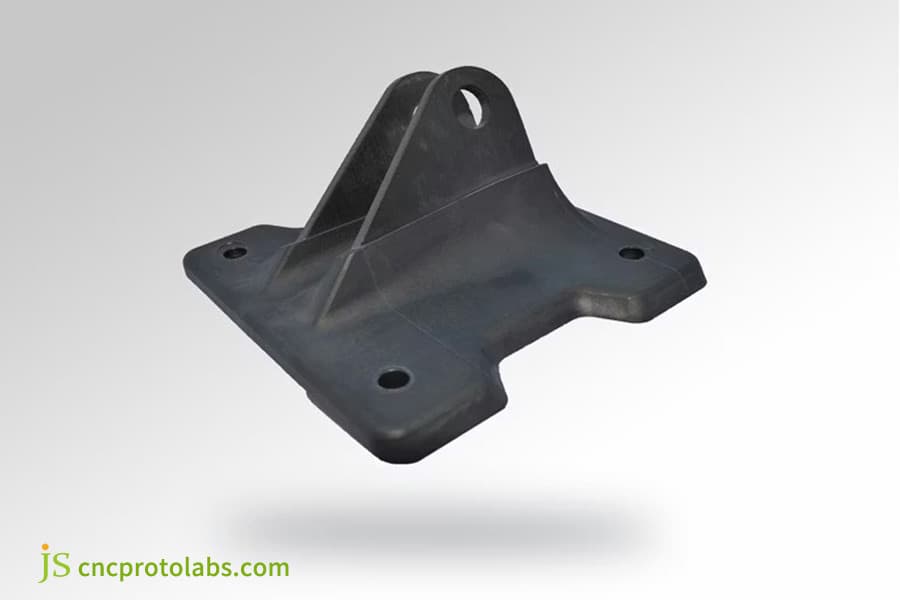
Figure 4: A high-precision, geometrically complex black plastic bracket, showcasing the result of advanced injection molding for aerospace applications.
FAQs
Q1: What does AS 9100 certification mean for injection molded parts?
It is a means of achieving total traceability from each individual particle to the finished product and having very tight controls over risks. In fact, it is a necessity from a legal standpoint to be able to enter the aerospace supply chain, and it significantly reduces the chances of defect or failure of injection molded plastic parts.
Q2: What is the biggest challenge in injection molding PEEK materials?
The difficulty is mainly due to the fact that it has a very high melting point (around 343), so injection molds must be capable of heating up to at least 180 in a stable manner and the level of crystallinity has to be strictly controlled.
Q3: How many cycles can an aluminum mold typically produce?
For the case of plastics without any reinforcement, an aluminum mold may yield up to 10,000 cycles, however, when the material is glass fiber reinforced and the mold has been subjected to the hardening process, it may operate for 3,000 cycles, thus it is a good choice for a prototype trial.
Q4: How to ensure the dimensional stability of aerospace parts?
Injection molded plastic parts can have their dimensional stability guaranteed if the wall thickness is optimized by designing for injection molding, internal stress is relieved by post injection heat annealing, and all these are coupled with a precision mold temperature control system.
Q5: How to reduce the starting mold cost for small batch aerospace parts?
To save on cost for mass production verification, we suggest using quick-change mold bases or making use of aluminum molds for injection molding. This is less expensive than standard steel molds for injection molding and can lead to a cost reduction of mold by more than 30%.
Q6: Can JS Precision do insert molding?
Absolutely! We have extensive experience in the precision process of embedding metal threads, sensors, or circuits into custom plastic components. Using high end plastic injection molding tooling, we are able to integrate parts and minimize the post processing steps.
Q7: How feasible are injection molded parts as replacements for aerospace aluminum alloys?
For non load bearing structural parts and interior parts, injection molded plastic components produced from high performance plastics can be 30%-50% lighter than the corresponding aluminum parts, so these should be considered as a viable weight saving and corrosion resistant alternative.
Q8: How long does it usually take to get aerospace injection molded parts?
It is possible to get prototype injection molds in as short a time as 2 weeks. Production steel molds to AS 9100 standards generally take from 5 to 8 weeks, and thus fulfill the requirements of customer project timelines.
Summary
A partner who is skilled in AS 9100 certification and expert in the advanced tooling for plastic injection molding will be a critical factor in a successful aerospace project.
We've made customer focus a priority, coupled with precision processing and rigorous quality control, resulting in not only the transformation of complicated designing for injection molding but also high performance injection molded components of plastic which can help customers to cut costs, improve efficiency, and ensure safety enhances.
If you are seeking aerospace standard injection molding solutions, connect with the JS Precision knowledgeable team for your DFM review report and accurate pricing within the next 24 hours. Together, we can make your aerospace projects a success.

Disclaimer
The contents of this page are for informational purposes only.JS Precision Services,there are no representations or warranties, express or implied, as to the accuracy, completeness or validity of the information. It should not be inferred that a third-party supplier or manufacturer will provide performance parameters, geometric tolerances, specific design characteristics, material quality and type or workmanship through the JS Precision Network. It's the buyer's responsibility Require parts quotation Identify specific requirements for these sections.Please contact us for more information.
JS Precision Team
JS Precision is an industry-leading company, focus on custom manufacturing solutions. We have over 20 years of experience with over 5,000 customers, and we focus on high precisionCNC machining,Sheet metal manufacturing,3D printing,Injection molding,Metal stamping,and other one-stop manufacturing services.
Our factory is equipped with over 100 state-of-the-art 5-axis machining centers, ISO 9001:2015 certified. We provide fast, efficient and high-quality manufacturing solutions to customers in more than 150 countries around the world. Whether it is small volume production or large-scale customization, we can meet your needs with the fastest delivery within 24 hours. Choose JS Precision this means selection efficiency, quality and professionalism.
To learn more, visit our website:www.cncprotolabs.com
Resource