English



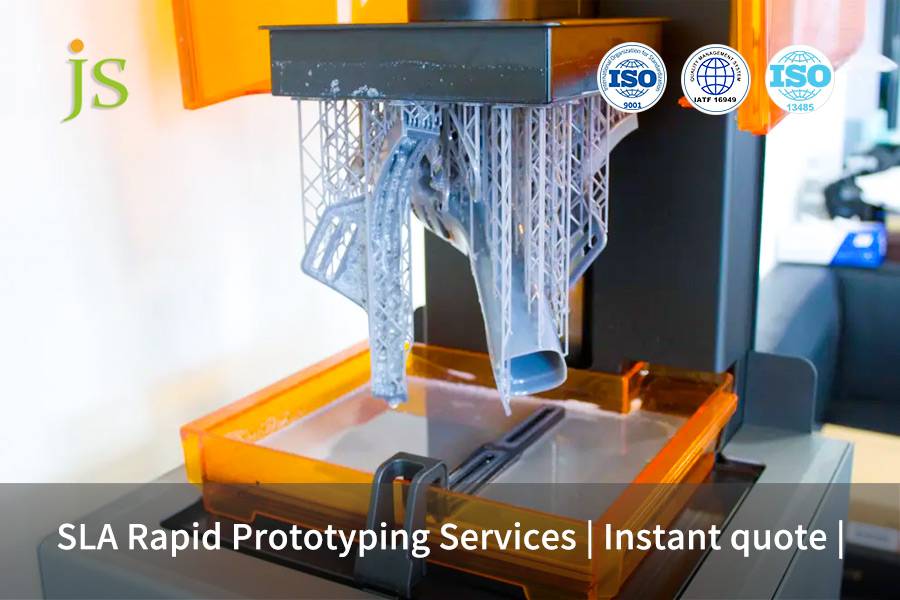

SLA rapid prototyping services have become a core support for product development – you might have concluded a revolutionary design, but now find yourself forced to consider a most essential query: how can a cheap solution be procured for a fast construction of a prototype that flawlessly captures your design elements?
Because there are so many options such as SLA rapid prototyping services and Prototype Manufacturers available, things can get a little confusing. Should you opt for the amazing detail of SLA, or perhaps the incredible strength offered by SLS? Also, when is it a good idea to call on prototype CNC machining?
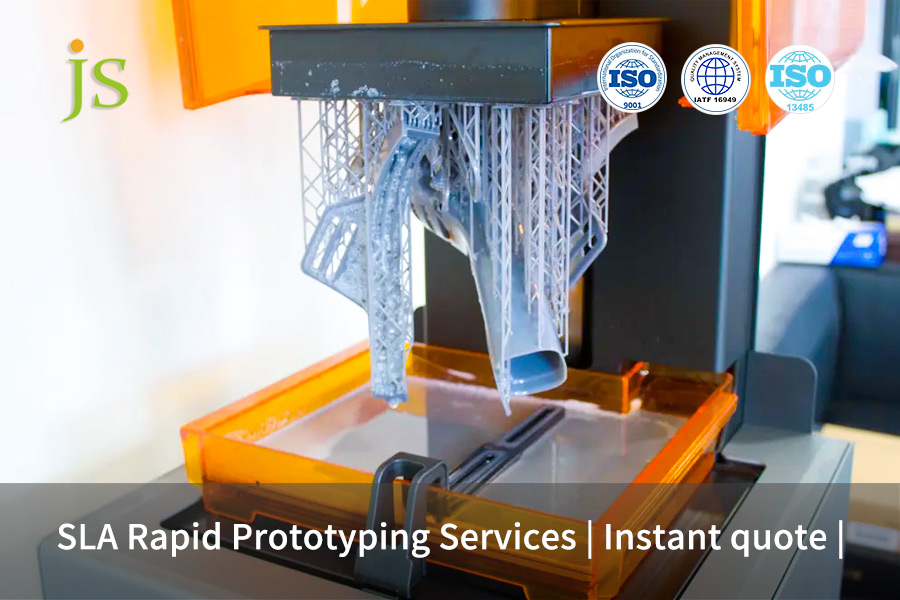
This guide is a way of sharing the accumulated knowledge of JS Precision, a significant number of years of which has been spent in our industry, with the aim of helping you define your needs, identify the most appropriate process, and, consequently, make quick prototyping a real “booster" in shortening the time to market.
Core Answers Table
| Key Decision Points | Comparison of Core Technology Options | Your Smart Choice |
| Following the Ideal of Appearance and Speed |
SLA: High surface quality, transparent components, details are fine. SLS: No support, high strength, heat resistance. |
In appearance evaluation, parts inspection, and display models, SLA is preferred. In functional prototypes with complicated structures, SLS is taken into consideration. |
| Functional Requirement and Authenticity of Materials |
Prototypes via 3D Printing (plastic-based prototypes): Prototyping of complex shapes. Prototype CNC Machining (metal & engineering plastics)): Realistic properties of materials, high accuracy.
|
For prototypes from actual materials, CNC machining is the only authentic way for conducting stress, temperature, and fatigue tests. |
| Key Cost Optimization Techniques | Design Optimization: Use fewer materials, simplify post-processing steps. Process Matching: Don’t pay for more than needed. Supplier Collaboration: Early collaboration with DFM experts. | Partner with instant quote rapid prototyping service providers such as JS Precision, which provides free DFM analysis to optimize rapid prototyping costs from the source. |
Key Conclusions
- Starting with the purpose of the prototype (verification of appearance vs. functionality), a precise correspondence with the SLA, SLS, or CNC process is necessary, thus providing functionality that is not redundant and sufficient, eliminating waste from the source.
- Cost control comes from transparent collaboration: choose suppliers who provide real-time quotes and professional DFM feedback, prioritize cost optimization for rapid prototyping, and achieve full process savings.
- The benefit of one-stop service is obvious: High-quality prototype manufacturing companies can leverage various solutions within their processes, thus ensuring a drastic reduction in communication as well as management costs, with a faster time-to-market.
- The key to a successful collaboration is the quality of files: The precondition for an efficient collaboration with a rapid prototype design service is the delivery of clean 3D-files, which has a direct impact on the speed of quotation, as well as the accuracy of the result.
Why Choose JS Precision? Professional SLA rapid prototyping services
With 15 years in rapid prototyping, JS Precision has evolved beyond being just another manufacturing service provider to becoming a trusted partner in its clients' product development journey. We are a proud ISO9001 quality management system and ISO 13485 medical-grade manufacturing certified company.
Our core engineering team is made up of highly experienced industry professionals with over 10 years of practice, who are not only well-versed in multi-process optimization such as SLA, SLS, and CNC, but have also developed process optimization algorithms on their own to pinpoint and resolve prototype development pain points in line with international industry standards.
Our client base has grown to more than 5, 000 globally, spanning 12 key industries such as medical, automotive, aerospace, and consumer electronics. We have collaborated with numerous Fortune 500 companies and top-tier medical device manufacturers, and the cumulative orders of high-quality prototypes we've delivered exceed 80, 000.
Take the case of a world, renowned medical device manufacturer, for whom we produced 30 prototypes of minimally invasive devices that were extremely accurate to an extent of ±0.04mm and the delivery time was cut down by 35% compared to the industry standard, thereby fully satisfying their urgent R&D requirements.
From extremely accurate prototypes for medical implant devices to functional test pieces for automotive components, as well as appearance verification parts for consumer electronics, we have gained invaluable practical experience in dealing with a variety of complex requirements. This has enabled us to help a great number of clients shorten their R&D cycles by more than 30%.
At our disposal is a collection of more than 20 industrial-grade machines, among which two are the 3D Systems ProX 950 and UnionTech RSPro 800, the best SLA devices.
A CMM (Coordinate Measuring Machine) inspection is done for each prototype batch to make sure that the dimensional accuracy errors are within the ±0.05mm range, thus strictly following the industry compliance standards.
Each and every proposal in this manual has been pulled from actual project cases and client feedback, thus blending the core technical experience with the industry standards. It is a reflection of market, tested practical experience that you can rely on with confidence.
Want to take advantage of professional SLA rapid prototyping services? Now, you can send your 3D files to JS Precision, which guarantees a free DFM analysis and quote within 2 hours, helping you launch efficient prototype development quickly.
Finding The Best Partner: How To Select Truly Reliable SLA Prototype Manufacturing Companies?
In the evaluation of SLA rapid prototyping services, "focusing merely on price" can invite potential difficulties. Inaccuracies in prototypes, coupled with late deliveries, will offset the cost benefits at the onset. Good prototype manufacturing companies are always tight on "technology stacks" as well as service level, which is what JS Precision always improves on.
Moving Beyond the Price: Technology Stack & Service Level
Evaluating technological competence is centered on these three aspects:
- Equipment Configuration: Is the equipment used by the supplier industrial-grade SLA equipment such as 3D Systems, UnionTech, etc.?
- Post Processing Capabilities: Are they capable of providing full solutions involving support removal, sanding, and painting with set standards on quality?
- Quality Inspection: Are they equipped with professional equipment such as CMM coordinate measuring machines, and are they capable of providing traceable reports on inspections?
The equipment used by JS Precision is a complete set of SLA machines that are of high quality, enabling the establishment of a standardized workshop for post-processing, ensuring that all prototypes produced are of the required standard.
Service Soft Power: Communication Response, Design Feedback, and Project Management
The best rapid prototype design company would be one that actively solves problems, with attributes that include:
- Fast Response: Attending to inquiries and quotes within 24 hours.
- Active DFM Analysis: Identifying design optimization points, as well as making recommendations on cost savings and improvement of efficiency.
- Project Collaboration: The details of progress, such as updates on the status of production.
JS Precision has a professional team of engineers and project managers who are bilingual, speaking English and Chinese, to facilitate cooperation with customers worldwide.
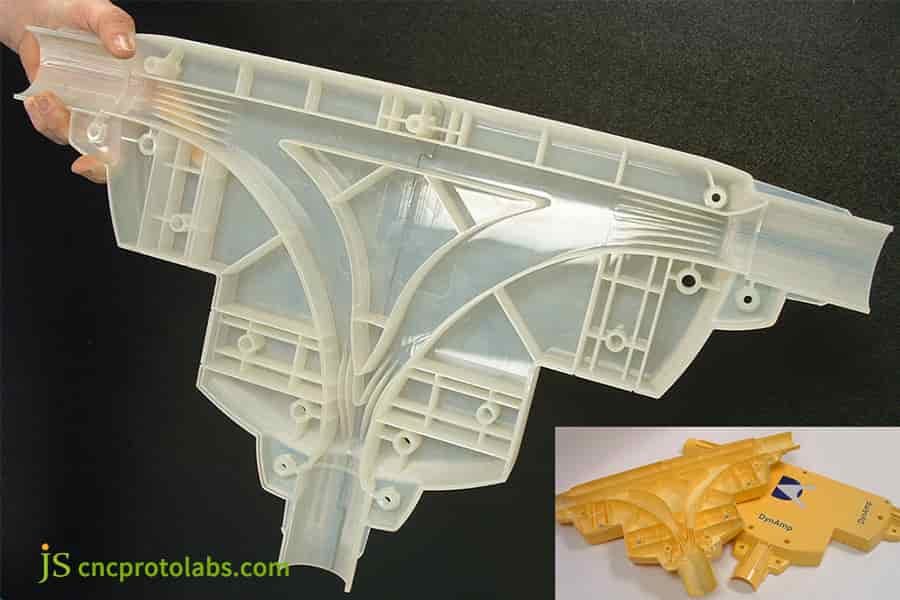
Figure 1: By utilizing SLA printing technology, prototypes can be iterated quickly and cost efficiently.
Price Composition: Three Core Variables That Affect The Cost Of Printing Prototypes
Customers are puzzled when they see that "quotes for the same part vary so much." In all honesty, the factors that mainly affect the rapid prototyping cost are the cost of the materials, the part volumes, and the post-processing needs. Providing complete transparency on these factors ensures that costs are optimized perfectly.
Material Cost and Volume: In what way exactly does “light weight design” cut costs directly?
SLA 3D printing prototype is often charged by volume/weight, with significant differences in resin prices
| Type of Resin | Price Per Cubic Centimeter (in USD) | Use Cases |
| Standard Photopolymer Resin | 5-8 | Appearance verification, non-functional prototypes. |
| Tough Resin | 9-12 | Limited light functionality testing, impact-resistant components. |
| High Temperature Resistant Resin | 15-18 | Temperature testing components over 80℃. |
| Medical Grade Resin | 20-25 | Medical equipment, parts with high biocompatibility requirements. |
Optimized design can cut costs directly, such as the use of a lattice infill structure rather than a solid infill structure, which can reduce material use by 30%-60%.
Post Processing: Starting from removal of support, painting, and coloring, clearly stated price additional value
Post-processing has a direct impact on cost, quality, and results. The following are common process quotes:
| Post Processing Process | Processing Cost per Piece (in USD) | Effect of Processing |
| Basic Support Removal | 10-30 | Support removal, slight marks left on the surface. |
| Fine polishing | 30-80 | Surface roughness Ra<1.6 μ m, no obvious processing marks. |
| Single Color Spray Painting | 50-120 | Even color, error in color ±5%. |
| Multi-Color Spray Painting/Screen Printing | 80-200 | True-to-life color replication, with ability to print patterns. |
| Electroplating | 100 - 300 | Metal plating, improved wear resistance, and appearance. |
| Assembly | 20-50/set | Multi-part assembly, ensuring fitting accuracy. |
Want to accurately control the cost of your 3D printing prototype? Upload your 3D file, and JS Precision will furnish you with a cost breakdown analysis, ensuring that every single penny is spent effectively.
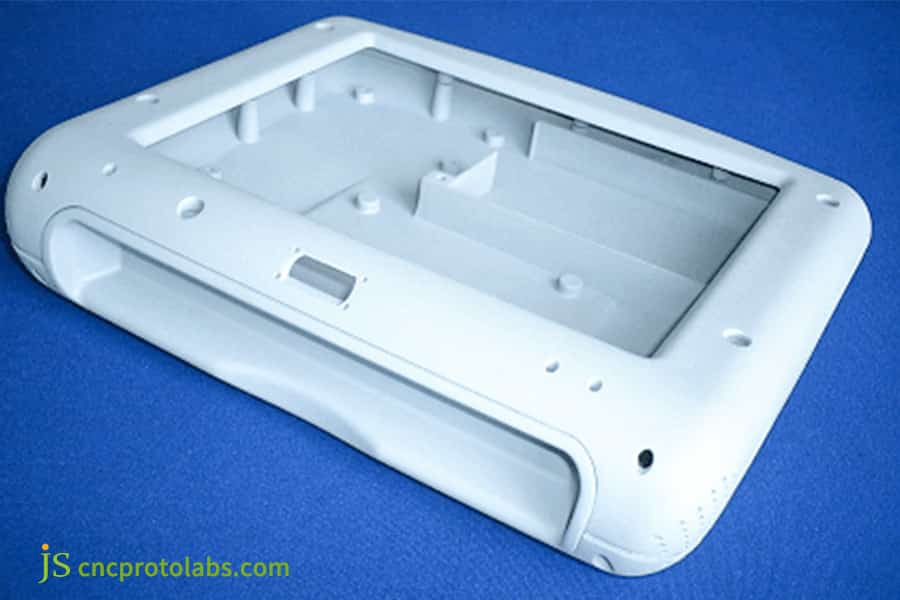
Figure 2: A simple 3D printing prototype example.A simple 3D printed prototype with minimal post-processing and assembly can cost between $30 and $5000, depending on the size and complexity of the design.
A Practical Strategy To Reduce Rapid Prototyping Cost Without Sacrificing Quality
Controlling the rapid prototyping cost is not about suppressing prices but a scientific optimization of design and process. As a professional rapid prototype design company, JS Precision has summarized two core strategies:
Value Engineering in Design: What are the benefits of DFM analysis in the design stage, avoiding costly changes later on?
Design optimization brings considerable cost savings:
- Draft angle > 3°, which lowers support costs and post-processing.
- Corners with sharp edges should be rounded with a minimum radius of R0.5mm, thus eliminating extra polishing.
- No less than wall thickness of 1.5mm (2mm for complicated geometries), which minimizes deformation and wastes.
- Combine small parts for printing or break apart complicated shapes to make a simpler structure.
Smarter use of batching and processes: when is it necessary to "batch orders" or consider other processes?
- Batch Printing: Smaller components are combined together into a single batch, with a shared platform in order to cut startup costs.
- Process substitution: Substitute SLA with FDM in non-critical components, which cuts costs by 40%-60%. compare CNC machining cost with metal 3D printing cost for simple metal components.
Hidden Advantages Of Globally Leading Prototype Manufacturing Companies
The distinction between best prototype manufacturing companies and other facilities is that best ones are capable of handling tricky problem solutions. The merger of SLA rapid prototyping services with prototype CNC machining solutions is offered by JS Precision.
Multi-process collaboration: Why is a supplier that can provide both SLA and CNC better?
Multi-process suppliers have many advantages:
- Data consistency: Data integration complies with the ISO 15926 industrial automation system data sharing standard to avoid cross vendor transmission errors.
- Explicit responsibility: There is a single responsible party, a company, which is able to rapidly identify problems, resolve them.
- Coordinated Progress: Effective ordering of the processes reduces overall timespan.
Smooth transition from prototype development to trial production: The secret to product uniformity
Highly capable suppliers can be coupled with later stages of production. JS Precision system utilizes mass production quality material libraries, as well as processing standards, to facilitate the application of the results of prototype testing to production.
SLA Vs SLS: Technical Choices For Deepening Cost Structure
The choice between SLA vs SLS when selecting a 3D printing prototype process depends on your needs. Cost differences between the two primarily arise in the following: materials, post-processing, and applicable scenarios.
Comparison of Single-Part Cost: Equipment Costs, Material Costs, and Post-processing Time
- Material Cost: SLS nylon powder, $8-12/cubic centimeter, utilization ≥ 95%, recyclable. SLA Standard resin, $5-8/cubic centimeter.
- Post-processing Cost: SLA needs very extensive support structures, taking 30%-40% of the cost. SLS does not require any support structure, ≤15% costs.
- Equipment Cost: SLA prints more economically per piece, but the prints could take a considerable time to make complex parts. SLS has had a high initial purchase price in the past but is generally more economical in batch printing.
Single complex part cost comparison:
| Cost Components(USD) | SLA | SLS |
| Material Cost | 60-80 | 70-90 |
| Equipment Cost | 40-60 | 50-70 |
| processing cost | 50-80 | 20-40 |
| Total Costs | 150-220 | 140-200 |
Economic Analysis of Application Scenarios: Choosing the "Best Value" for Your Parts
- SLA: Smooth surfaces, transparent effects, fine details, and 1-5 prototypes.
- SLS: Complex internal cavities/moving parts, ≥5 prototypes, heat and impact resistance required.
- Compromise Solution: Have quoting for both processes and select based on cost and performance.
Difficult to choose between SLA vs SLS? Simply upload your 3D files and requirements, and JS Precision will provide you with detailed quotations and performance comparisons to determine the most effective economical solution.
Key Turning Point: When Must We Abandon 3D Printing And Turn To prototype CNC machining?
While 3D printing prototype is flexible, when material authenticity and ultra-high precision are required, you need to switch to prototype CNC machining. JS Precision has both capabilities and is capable of determining the boundaries of these processes quite precisely.
Material Authenticity Requirements: When testing requires materials identical to the final product
The following tests can be performed only with the use of CNC:
- Testing structural strength, fatigue, thermal expansion, or chemical resistance.
- Requires the use of production-grade metals or engineering plastics in order to deliver reliable test results.
In Pursuit of Accuracy and Performance Beyond the Limits of 3D Printing Processes
Use CNC in the following situations:
- The tolerances required are at least IT7 grade.
- Ra surface roughness < 0.8μm without further polishing.
- Mechanical properties must be isotropic.
Want to know whether to choose 3D printing prototyping or prototype CNC machining for your parts? Tell us your precision and material requirements and testing objectives, and JS Precision engineers will provide free process diagnosis and professional advice.

Figure 3: If your design is advanced enough or the 3D parts are not sturdy enough to meet the functional requirements of your project, then consider switching to CNC machining.
Precision Improved By 40%, Cost Reduced By 25%: Prototype Optimization Of a Medical Endoscope Component
JS Precision, as a professional rapid prototype design company, insists that the high-quality SLA rapid prototyping services are more than "printing according to the drawings," but creating value with technological optimization.
Overview of Client Background
A minimally invasive medical device company needed to develop a prototype for an endoscope connector featuring three complex internal fluid channels. It had to pass sealing and fluid testing while considering cost and delivery time.
The client originally planned to use SLA but was concerned about the chemical resistance of the resin. The CNC solution was quoted at $2800 with a 12-day delivery time, far beyond their budget and time requirements.
JS Precision Solution
Our engineering team was presented with the request and immediately carried out a detailed DFM study to suggest a targeted solution:
Process redefinition:
Instead of using ordinary SLA resin, we suggested using medical SLS nylon material.
It has a tensile strength of as high as 50MPa and chemical resistance far superior to that of ordinary resins, it is able to meet the requirements for contact with pharmaceutical liquids. This material allows the integrated molding of complex internal cavities, perfectly solving the difficulties of CNC machining.
Collaborative Design Optimization:
In the client's 3D model, we identified that the corners of the fluid channel were set at right angles, which would be very likely to cause powder residue during printing and create too much resistance to the fluid.
We suggested a revision to R2mm rounded corners for optimization and readjusted the supportive structure layout to ensure print stability and ease in post-print cleaning of powder.
Innovation in post-processing:
The fluid channel surface requires smoothness. Herein, we adopted an internal sandblasting and ultrasonic cleaning process. By controlling the roughness of the inner wall, Ra<1.2μm can be realized to meet the fluid flow smoothly, and a sealing test is performed as required.
The Final Outcome
Through process optimization and design collaboration, this prototype of the medical endoscope connector finally made a three dimensional breakthrough: key dimensional accuracy improved to ±0.07mm from ±0.12mm, which increased by 40%, cost decreased to US$ 2100, down 25%, delivery time shortened to 4.5 days, down 60%.
Using this prototype, the customer was able to make a lot of passes in various tests and took less time for product development, thus, they entered into a long-term partnership with us.
Want your prototype to also achieve "improved accuracy and reduced costs"? Send your project challenges and 3D files to JS Precision, and we use our years of industry experience to offer you custom SLA rapid prototyping services solutions.
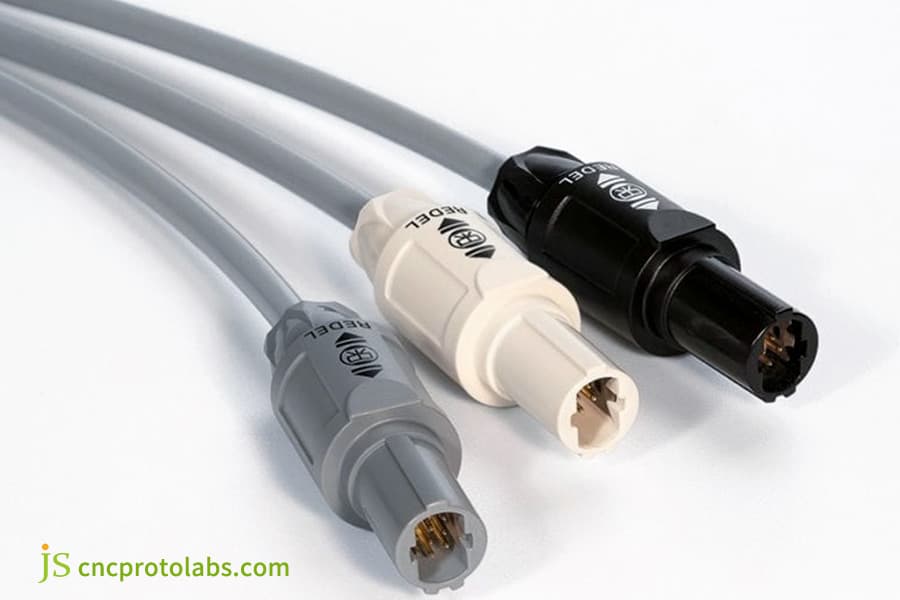
Figure 4: Prototype of medical endoscope connector
From Concept To Inquiry: Essential Checklist For Effective Communication With Rapid Prototype Design Company
Effective communication with a rapid prototype design company can help speed up the quotation process and ensure the quality of the prototype. The following should be prepared for easier cooperation:
File Preparation: What kind of 3D model will get the best quote and delivery time?
- Preferred format: STEP or IGES, to avoid the mistakes related to format conversion.
- Mark the key information: Key dimensions, tolerances, surface treatment standard and non-critical features.
- Avoid the following defects: uneven wall thickness, unsupported overhangs, and small features which easily break.
How to Clearly Specify Your Requirements: Five Essentials You Need to Communicate to Your Supplier
- Prototype purpose: Appearance display, functional/assembly testing, or market validation.
- Production Quantity: It affects process selection and quotation.
- Material properties: high temperature resistance, impact resistance, transparency, and other special requirements and compliance needs.
- Accuracy level required: Main dimensional tolerances and whether a test report is to be submitted.
- Date of delivery required: The latest possible date and whether expedited service is needed.
FAQs
Q1: How long does it take from the placing of an order to the reception of the SLA prototype?
The standard is 3-5 business days depending on the size, complexity, and post-processing requirements of the part. We offer expedited service to meet urgent customers' needs within 24-48 hours.
Q2: How do you ensure that the prototype I receive is the exact size as the 3D model?
We adopt high-precision industrial-grade SLA equipment manufactured by 3D Systems, UnionTech, etc., whose printing accuracy can be up to ±0.05mm. For key dimensions, we will inspect them on the CMM coordinate measuring machine and provide detailed inspection reports.
Q3: For small batches of prototypes, say 50-100 pieces, which process is more economical?
It depends on the part structure complexity and material requirements. We would be able to achieve more economical CNC batch processing for parts with simple structures, but SLS 3D printing has a much greater cost advantage for those with complex structure and/or integral molding requirements. We recommend comparing these using our instant quotation system.
Q4: How do you treat my design files, and how is the principle of confidentiality guaranteed?
We will sign a formal confidentiality agreement with every customer. Encrypted transmission and storing, access to design files is strictly limited to authorized engineers. When the project is done, the files can be destroyed if the customer so requires for information security.
Q5: In case testing reveals that the prototype needs to be modified, how would the price for remanufacturing be determined?
We will offer a new price according to the modified 3D file. If it is just a partial modification and the original printing layout can be applied, then the remanufacturing usually will be 20%-30% lower than the first production to encourage customers to iterate and optimize their designs.
Q6: Are assemblies with parts supposed to be printed as one whole piece or in separate parts?
Both methods are possible, depending on the purpose of testing. An integral printing is without assembly and allows testing for moving clearances directly. However, the material used in such printing is limited. Separate part printing allows for assembly and selection of suitable material, depending on the various different parts. We will have the best recommendation.
Q7: Is the result of the online instant quotation the final price?
The online instant quote is a benchmark based on the size of the file and the basic process. If the engineer feels that the design can be optimized after review, having confirmed with you about the modifications, or you have other special post-processing requirements, the price shall be adjusted. Price will be subject to official quotation.
Q8: Will communication and time differences be a problem in choosing a prototype manufacturing company in China?
Of course not. The project support provided by JS Precision is bilingual in both Chinese and English, with respective contact windows during European and American working hours in order to reply to inquiries in a timely manner and update progress on the projects.
Summary
Balance between "speed" and "accuracy" is core competitiveness in product development, professional SLA rapid prototyping services are contributory factors in achieving this delicate balance.
As one of experienced prototype manufacturing companies, JS Precision can provide high-precision, low-cost prototype products and help you avoid development pitfalls through professional DFM analysis, multi-process collaboration, and comprehensive project management to speed up product launching.
Accelerate Innovation Now:
Go onto our platform now, upload your 3D files, and receive a free detailed plan including process suggestions and transparent pricing. Let us help you seamlessly turn your ideas into a competitive advantage.

Disclaimer
The contents of this page are for informational purposes only.JS Precision Services,there are no representations or warranties, express or implied, as to the accuracy, completeness or validity of the information. It should not be inferred that a third-party supplier or manufacturer will provide performance parameters, geometric tolerances, specific design characteristics, material quality and type or workmanship through the JS Precision Network. It's the buyer's responsibility Require parts quotation Identify specific requirements for these sections.Please contact us for more information.
JS Precision Team
JS Precision is an industry-leading company, focus on custom manufacturing solutions. We have over 20 years of experience with over 5,000 customers, and we focus on high precisionCNC machining,Sheet metal manufacturing,3D printing,Injection molding,Metal stamping,and other one-stop manufacturing services.
Our factory is equipped with over 100 state-of-the-art 5-axis machining centers, ISO 9001:2015 certified. We provide fast, efficient and high-quality manufacturing solutions to customers in more than 150 countries around the world. Whether it is small volume production or large-scale customization, we can meet your needs with the fastest delivery within 24 hours. Choose JS Precision this means selection efficiency, quality and professionalism.
To learn more, visit our website:www.cncprotolabs.com
Resource