English




Choosing abs plastic material over PVC often leaves many in a dilemma when it comes to choosing materials for the next injection molding project. It affects everything from the strength and feel of the product to cost, safety certifications, and time-to-market.
To product engineers and project managers, any single material selection might represent the difference between the market success of a product versus its failure because of inadequate performance.
This article focuses on the critical differences between abs plastic material and PVC, while providing real-life case studies to help you choose the most appropriate injection moulding parts for your project, reducing potential risks.
Core Answer Summary
| Comparative Dimension | ABS (Acrylonitrile Butadiene Styrene) | PVC (Polyvinyl Chloride) |
| Core Properties | Hardy, shock-resistant, and rigid. | Flexible, fire-resistance, and resistance to corrosion. |
| Feel and Appearance | Matte opaque finish, hard texture, and dull sound when struck. | Transparent or opaque finish, soft or yielding feel, and muffled sound. |
| Chemical Name Card | Burns with yellow flame, black smoke, and pungent odour (not recommended). | Refractory to ignition, extinguishes the instant it is removed from the flame, green base and acidic scent. |
| Cost Overview | Raw material cost is typically a bit higher than PVC. | Raw material cost is generally lower, therefore the most cost-effective option. |
| Manufacturing Process | Injection molding, extrusion, and 3D printing (filaments). | Extrusion, injection molding, and calendaring (with the requirement to add a heat stabilizer). |
| Safety | Food-safe grade, can be applied to tableware and toys. | Naturally flame retardant, medical grade can be used for blood transfusion equipment. |
| Typical Applications | Automotive interior, Lego, electronic enclosures, and helmets. | Water pipes, window frames, wire insulation, credit cards, fake leather. |
Why Trust This Guide? JS Precision Team Real-World Testing
Our materials engineering team has handled over 350+ client projects on the selection of abs plastic material versus PVC, covering the fields of medical catheters, automotive interior parts, and high-end electronic housings.
Our expertise is based on solid practical experience. Every lot of material produced is tested using a range of tests in our in-house laboratory, such as melt flow index testing (MFR), cantilever beam impact strength testing-standard reference ASTM D256-and heat distortion temperature testing, making sure that the performance data matches the project requirements precisely.
For example, when selecting interior materials for an automotive customer, we used a systematic injection molding parts testing process to confirm that modified ABS outperformed PVC in long-term heat resistance and avoided the risk of product deformation under high summer temperatures.
This attention to detail in the process ensures that any recommendation for a custom ABS injection molding service is based on solid, reliable data.
This guide is based on this hands-on experience. You can depend on these tried-and-trusted instructions in selecting material for your project.
Do you want to obtain our 'ABS/PVC Selection Checklist' based on hundreds of case studies? Contact our engineers immediately to receive it for free, helping you quickly avoid common pitfalls in ABS plastic material selection.
No More Confusion: How To Quickly Distinguish Between ABS And PVC
Now that we've established the dependability of this guide, let's discuss a useful question: How can you conveniently distinguish ABS from PVC in injection molding material choice? Here are four simple techniques you can use based on your specific situation.
Flame Test (Warning!)
In order to perform a flame test, you will need to use a lighter to ignite the material sample.
ABS produces black smoke with an acrid odor reminiscent of styrene and will continue to burn after removed from the flame. PVC plastic is difficult to ignite and releases hydrogen chloride gas (with an acrid, sour odor) when burned and will extinguish immediately after being removed from the flame.
Note: Take the test under good ventilation so that toxic gases are not inhaled.
Density Method (Sink/Float Test)
Fill a water cup with a density of about 1g/cm³ and a cup of salt solution with 1.2g/cm³. Place a piece of ABS into the water, it floats, in the salt solution, it sinks.A sample of PVC will sink in water but will float in salt water.
This method does not require any equipment and can be used to differentiate between the two materials at the beginning.
Bending Method
Hold the ends of the material sample in your hand and gently press down to bend it.
ABS is quite robust and will come back to shape when bent to a certain angle (about 90°) without snapping. PVC, on the other hand, is extremely brittle and, especially at temperatures of about 10°C or below, can easily crack or even snap when bent.
Solvent Test (Acetone)
Dip a swab in a minimal amount of acetone and use it to wipe the surface of the material lightly. The surface of the ABS will quickly dissolve and turn tacky, showing evident marks upon wiping. However, the surface of the PVC will have little impact because PVC is more resistant to acetone.
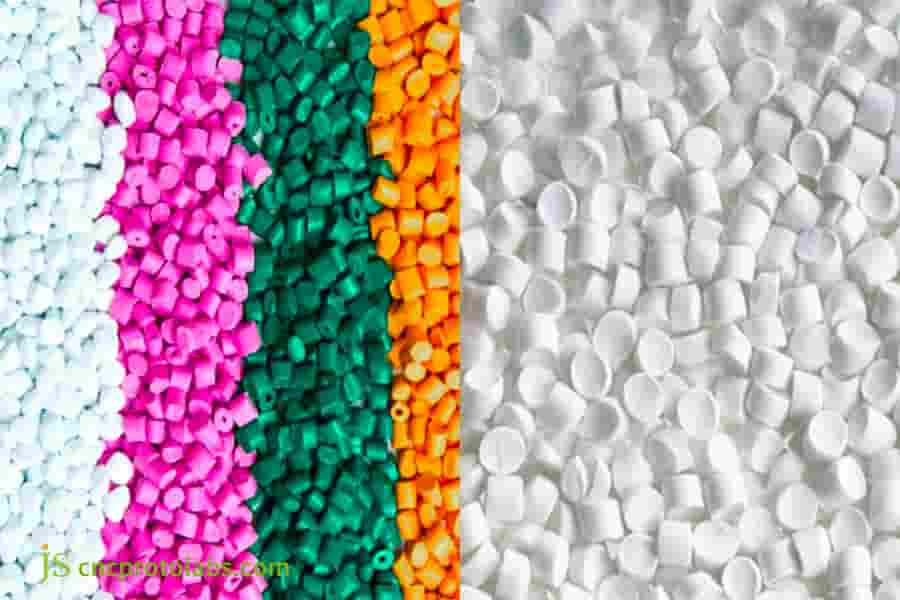
Figure 1:ABS plastic material offers a wider range of color options compared to PVC.
Deep Performance Analysis: The Core ABS Vs PVC Comparison
After the differentiation of the two materials, let's explore their inner performance in more detail, which is important for material selection in injection molding. Although nylon is plastic and a commonly used engineering plastic, this article focuses on the application of ABS and PVC in common scenarios.
The specific performance comparison is shown in the table below:
| Performance | ABS Plastic Material | PVC Plastic |
| Impact Resistance | High, with a notched impact strength of approximately 20-30 kJ/m² at room temperature. It is also hard at low temperatures and hence can be utilized in injection molding parts that are prone to impact. | Moderately low, with a notched impact strength of approximately 5-15 kJ/m² at room temperature. It is prone to brittle fracture at low temperatures. |
| Insulation | Good, with a volume resistivity of approximately 10 ¹⁴ -10 ¹⁶Ω· cm, suitable for electronic casings. | Excellent, with a volume resistivity of approximately 10 ¹⁶ -10 ¹⁸Ω· cm, commonly used in electrical insulation components. |
| Weather Resistance | Poor, with coloration discoloration and decreased toughness after three months' steady exposure to sunlight. | Good, after adding a weathering agent, it has stable performance after one year of outdoor exposure, and hence can be adopted as an indoor or outdoor injection molding parts. |
| Chemical Resistance | It is resistant to weak acid and base but not to solvents like acetone and methyl ethyl ketone. | It possesses greater resistance to acids and alkalis than ABS and can also resist hydrochloric acid of concentration less than 30% but is not resistant to strong oxidants. |
| Surface Gloss | High, with a surface roughness of approximately 0.2-0.4 μm Ra after injection molding and requiring minimal post-processing. | Medium, with post-molding Ra of approximately 0.6-0.8 μm and requiring special treatment to enhance gloss. |
As can be seen from the table, ABS is more impact resistant and has a smoother appearance and is thus better suited for injection molding parts that require performance and appearance,e.g., consumer electronics and appliance housing.
PVC is more weather resistant, chemical resistant, and has greater electrical insulation and is thus better suited for outdoor use, pipes, and electrical insulation.
Visit our official website to download the complete ABS/PVC performance parameter comparison table (PDF printable version), or upload your part drawings immediately to receive material recommendation reports based on your specific performance requirements, helping you accurately balance injection molding price and performance.
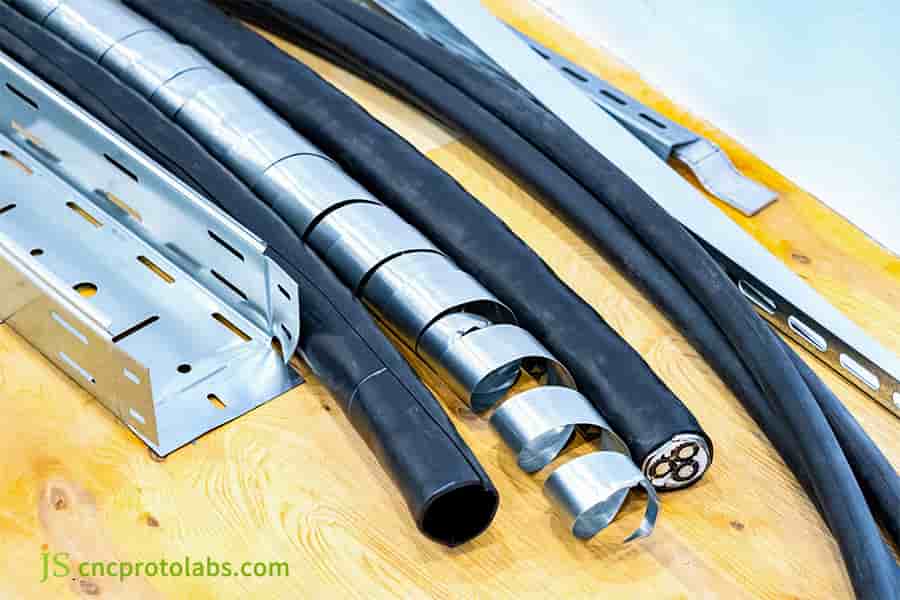
Figure 2:PVC is widely applied in pipes, profiles, wire and cable jackets.
Cost Competition: What Is The Truly "Affordable Material"?
Apart from performance, cost is also an important consideration in selecting injection molding material. We examine the economics of ABS plastic material and PVC on three dimensions: raw material cost, cost of processing, and cost of ownership:
| Cost Type | ABS Plastic Material | PVC Plastic |
| Raw material cost | $1.5-2.5/lb and heavily influenced by crude oil price changes, varying by around 20%. | $0.8-1.2/lb, with more stable prices and fluctuations typically within 10% |
| Cost of processing | Reduced. ABS has a melt point of about 10-20g/10min, injection molding provides a rapid cycle time and less energy consumption and therefore the cost of processing will be about $0.5/kg. | PVC has a melt point of about 1-5g/10min, requires temperature regulation so that it is not deformed, and is more difficult to process and therefore the cost of processing will be about $0.7/kg. |
| Total cost of ownership | Higher. For example, it would take around $120,000 to manufacture 100,000 housings for home appliances per year. | Lower. For an equal volume of outdoor pipe manufacturing, the overall cost would be around $8. $10,000, lower cost in the long run. |
According to the data, the raw material cost of PVC is significantly lower than that of ABS. Although its cost of processing is slightly higher, its overall cost of ownership is lower and is therefore more suitable for large-scale long-term applications.
Although ABS's injection molding price is higher, its cost-effectiveness is still worth considering if a product has tremendous performance requirements.
Manufacturing Process Showdown: Various Challenges In Injection Molding
ABS and PVC undergo various process challenges during the injection molding process due to their varying characteristics, which has a direct relation to the injection molding parts's quality as well as the production efficiency.
Our production quality control system strictly follows the ISO 9001 quality management system standard, which means that every step from raw material storage, process parameter setting to final inspection is recorded in standardized procedural documents, ensuring process stability and traceability of results.
ABS Injection Molding
ABS possesses the significant advantage of excellent melt flowability. In molding delicate parts (e.g., thin-lined mobile phone shells), it can flow freely into the mold cavity and achieve a molding success rate of more than 95%. Its molding cycle time is commonly only 30-60 seconds per piece.
ABS also possesses a broad temperature tolerance for injection molding (220-260°C), enabling easy adjustment of process parameters and making it ideal for inexperienced operators.
PVC Injection Molding
PVC, on the other hand, introduces a higher level of processability challenge.
- PVC easily degrades at high temperatures (above 200°C), emitting hydrogen chloride gas that corrodes the mold and screw, and necessitating the use of corrosion-resistant stainless steel equipment.
- The low melt flowability of PVC exposes it to material starvation upon filling of thin mold structures, necessitating larger gate sizes or the use of hot runner systems.
- PVC does not cool as fast, resulting in a molding cycle time 20%-30% longer than ABS, impacting the efficiency of production.
In custom injection molding manufacturing, ABS provides more process adaptability, while PVC requires an experienced team to precisely control parameters not to create defects.
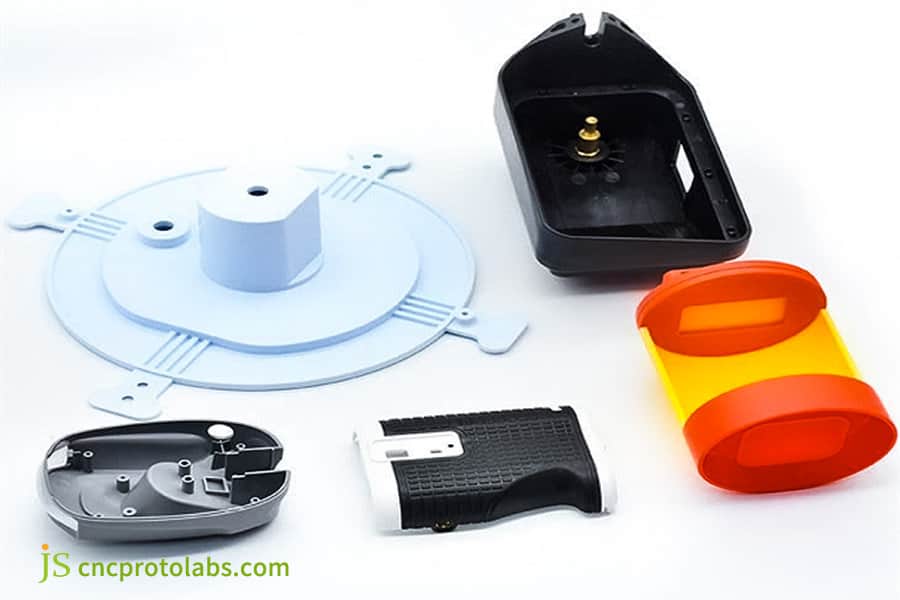
Figure 3:Various ABS plastic parts are displayed, including light blue brackets, black containers, and colored shells, reflecting the diversity of industrial applications.
Safety First: Health And Environmental Considerations
When choosing ABS plastic materials, neither health nor environmental safety should be overlooked, especially for injection molding parts that come into contact with the human body or are used in sensitive applications.
PVC Has Certain Safety Issues
- Phthalate plasticizers are usually used in soft PVC. They are known to leach into the environment and might have effects on children's endocrine systems, so their use is regulated in products intended for use by children in the EU and elsewhere.
- Dioxins are released when PVC is burned, dioxins being highly carcinogenic and an active environmental pollutant.
- During the PVC production process, heavy metal stabilizers such as lead and cadmium may be used. When improperly disposed of, these waste by-products contaminate soil and water resources.
ABS is Generally Safe
At standard working temperatures of -20 to 80°C, ABS does not emit toxic gases, and its residual content of its primary composition, styrene, is below 0.1%, conforming to international safety specifications.
However, ABS does emit black smoke and toxic gases when ignited, and thus flame retardance must be taken into account if it is to be used in an enclosed space.
Flame retardancy
PVC has excellent flame retardancy by nature and may meet the UL94 V-0 rating without the addition of flame retardants. ABS has poor flame retardancy and requires the addition of brominated or phosphorus-based flame retardants to come in standard. This will increase costs and some of these brominated flame retardants can have environmental concerns.
Regardless of the material chosen, products that comply with environmental laws such as RoHS and REACH should be prioritized to minimize health and environmental hazards.
Faced with multidimensional choice dilemma? By informing you of your core product requirements (such as weather resistance for ten years, V-0 flame retardant), our team can screen out 2-3 most suitable get a quote for ABS parts material solutions for you.
Beyond Common Questions: The Ultimate Material Selection Decision Tree
Even after learning about performance, cost, and process, you may still be unsure of which material to choose. These next six most important questions can make it very easy for you to select the right ABS plastic material:
1.Do my product and/or assembly need to be impact resistant?
If the product is likely to be dropped or bumped (such as a handheld electronic device), use ABS, since it has superior impact resistance. If the product is not going to be relocated (such as a wall pipe), use PVC.
2.Must it be flexible or maintain shape?
If the product has to be somewhat flexible (like a hose), select soft PVC. If it must be rigid and resistant to deformation (like an appliance casing), select ABS.
3.Will the product be exposed to the outside or to chemicals?
Choose PVC for outdoors exposure, as it is more resistant to weather. Choose PVC for mild acid and base exposure, and choose ABS for solvent exposure (with the exception of strong solvents like acetone).
4.Is flame retardance a necessity?
If the UL94 V-0 rating is needed, the PVC is best, as there are no additional flame retardants needed. If flame retardation is unnecessary or if adding flame retardants is possible, ABS is also an option.
5.Is cost the primary consideration?
If your budget is low and you are making large quantities, use PVC for less overall cost. If you need high performance and can tolerate higher cost, use ABS.
6.Does the surface require high-quality plating or painting?
If you need a high-quality finish (e.g., plated appliance parts), choose ABS for its better surface bonding. If reduced appearance criteria are acceptable, choose PVC for less expense.
Still unable to make up your mind? Submit your part information and performance priority list immediately to obtain our customized Material Selection Decision Matrix, making the selection of high volume injection molding supplier clear at a glance.
Injection Molding Success And Failure Case Study: JS Precision Assisted With Material Selection For A Medical Device Housing
Client Needs
Medical company that specializes in emergency medical equipment designed a portable monitor housing. The device is used for outdoor emergency medical treatment and mobile monitoring inside hospitals.
The case must meet the following: a UL94 V-0 flame retardant rating, drop resistance from a drop of 1.2 meters, a matte, non-specular surface finish, recyclability, and controllable cost for a batch of 5000 pieces.
Original Proposal and Failure
The customer first chose ABS because of ease of injection molding intricate geometries (the housing had several interfaces and heat dissipation holes) and smooth surface, which suitable for the appearance requirements of injection molding parts.
However, testing revealed that when aged at 60°C for 72 hours, the rating for flame retardancy of ABS with the included flame retardants reduced from V-0 to V-1, which did not satisfy medical standards. Moreover, the flame retardant increased the price of ABS from $1.80 per pound to $2.30 per pound, which exceeded the budget.
JS Precision Precision's Final Solution
1.Detailed Challenge Analysis: Our team found, through Moldflow mold flow analysis, that the shell's thin-walled structure was a main bottleneck for the customer, contributing to potential infilling.
2.Innovative Material Solution: Based on testing, JS Precision's material engineering department recommended the switch to a high-flow, high-impact-strength modified rigid PVC formulation. This formulation achieved V-0 certification without additional flame retardants.
3.Precision Process Control: In order to overcome the poor flowability of PVC, we optimized the mold runner by enlarging the gate and using a hot runner system. Meanwhile, we strictly controlled the injection temperature in a narrow window of 175~185°C and resolved the material shortage issue.
4.Aesthetic Enhancement: A special matte spraying process was used on the PVC shell to achieve the look desired for the customer, giving it a high-quality feel similar to ABS.
Results
The final product inherently met UL94 V-0 flame retardancy specifications, lowering material cost to $1.1 per pound, 30% lower than the original cost per piece. It incurred only slight scratches and no harm after drop testing.
The level of PVC recycling is 80%, meeting environmental standards.The customer highly appreciates the final matte surface texture achieved through special spraying.
This case demonstrates JS Precision's expertise in custom injection molding manufacturing.
Does your project also face the challenge of balancing performance and cost? Call our hotline immediately to describe your challenge and make an appointment for a comprehensive review and consultation on custom ABS injection molding service cases.
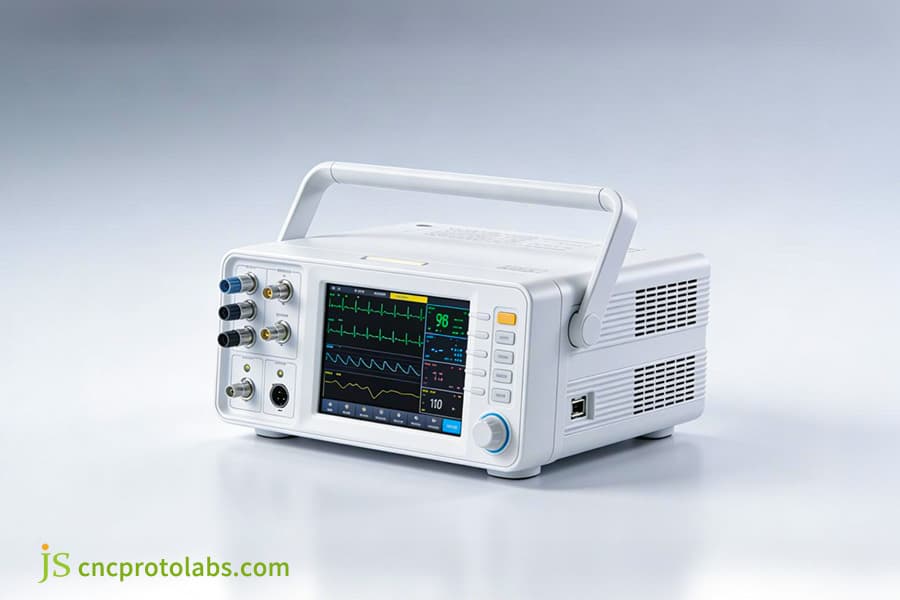
Figure 4:White medical monitoring equipment, with an ABS plastic casing, displays vital sign data such as electrocardiograms.
FAQs
Q1: Which has the highest surface gloss?
ABS parts have the highest surface gloss. As ABS has a uniform molecular structure, melt flows smoothly in injection molding to take the mold surface shape. The ensuing Ra is approximately 0.2-0.4μm, and treatment is not required. PVC on the other hand has poor flow and the Ra is approximately 0.6-0.8μm after molding. Polishing or spraying to regain gloss is needed, which increases cost and process steps.
Q2: My PVC part has yellowed and turned brittle. Why?
This is the usual sign of PVC aging. The two reasons are: First, the plasticizer evaporates or migrates over time and makes the material stiff. Second, ultraviolet light and high temperatures break down the PVC molecular chain, causing yellowing and deterioration of function. Utilizing a weather-resistant PVC formula or replacing it with ageing-proof ABS can effectively improve and extend the lifespan of the product.
Q3: Can ABS and PVC be mixed for injection molding?
Absolutely not! ABS and PVC cannot be mixed on the molecular level. Mixing them in injection molding will lead to phase separation, producing irregular internal structures in injection molding parts, a significant loss of mechanical properties, and brittle fracture under stress. At the same time, defects such as stripes and bubbles may appear on the surface.
Q4: My product requires ABS to be impact-resistant and PVC to be fire-retardant. What should I do?
You can choose flame-retardant ABS (FR-ABS) or ABS/PVC alloy. FR-ABS retains the toughness of ABS but achieves a UL94 V-0 rating, and hence is suitable for injection molding parts where both toughness and flame retardancy are required. ABS/PVC alloy has balanced performance, but slightly higher cost.Choose according to your budget or consult the JS Precision team for recommendations.
Q5: What is the unit price of custom ABS injection molding parts?
Pricing for custom ABS injection molding service depends on part size, complexity, production volume, and post-processing requirements. Generally speaking, high-volume production can substantially reduce the unit price. Please upload your 3D file, and we will provide you with a clear injection molding price within one hour so you can precisely plan your budget.
Q6: What is the lead time for ABS or PVC parts prototyping and production?
Our rapid prototyping delivery time can be as short as 3-5 business days. Mass production depends on quantity and is generally within 2-4 weeks. As a reliable high volume injection molding supplier, we offer expedited services for urgent projects; please contact our sales team for specific solutions.
Q7: How do you ensure mass-produced consistent quality for plastic parts?
We assure quality through the ISO 9001 system. From incoming raw material inspection to first-article and patrol inspections using a coordinate measuring machine during production, every batch of injection molding parts will meet your specifications. We can provide complete quality inspection reports.
Q8: Can you help with material selection if my product has special requirements?
Absolutely. Our material engineers are experienced in suggesting a variety of material types, such as ABS/PVC alloys or special engineering plastics, depending on your specific requirements-food contact, biocompatibility, UV resistance, etc. Set up a free technical consultation today.
Summary
Choosing the right material is half the war of success for your product. There is no hard "ABS is better" or "PVC is better", each material has its own strength. Whether it is the strength of ABS or the flexibility of PVC, there is serious materials science behind them.
Still unsure what material is best for your project? You don't need to be a plastics expert.JS Precision is here to offer you material recommendations and world-class custom ABS injection molding service to help you determine the best material to use and create the perfect product.
JS Precision offer online injection molding services, transparent injection molding price, and expert technical support to meet your diverse requirements.Contact our materials engineers today to get a quote for ABS parts and free expert material selection advice. Upload your 3D designs and let us help you turn your ideas into market-ready products.

Disclaimer
The contents of this page are for informational purposes only.JS Precision Services,there are no representations or warranties, express or implied, as to the accuracy, completeness or validity of the information. It should not be inferred that a third-party supplier or manufacturer will provide performance parameters, geometric tolerances, specific design characteristics, material quality and type or workmanship through the JS Precision Network. It's the buyer's responsibility Require parts quotation Identify specific requirements for these sections.Please contact us for more information.
JS Precision Team
JS Precision is an industry-leading company, focus on custom manufacturing solutions. We have over 20 years of experience with over 5,000 customers, and we focus on high precisionCNC machining,Sheet metal manufacturing,3D printing,Injection molding,Metal stamping,and other one-stop manufacturing services.
Our factory is equipped with over 100 state-of-the-art 5-axis machining centers, ISO 9001:2015 certified. We provide fast, efficient and high-quality manufacturing solutions to customers in more than 150 countries around the world. Whether it is small volume production or large-scale customization, we can meet your needs with the fastest delivery within 24 hours. Choose JS Precision this means selection efficiency, quality and professionalism.
To learn more, visit our website:www.cncprotolabs.com
Resource