English



/01
Cost-Effective Solutions
Focus on Nylon 12/PP practical materials, paired with economical post-processing, 15%-20% lower cost, balancing performance and cost for low-medium volume production.
Cost-effective Multi Jet Fusion 3D printing that produces functional parts with excellent mechanical performance. Stable batch forming capabilities deliver consistent production for low-volume runs and rapid iteration.
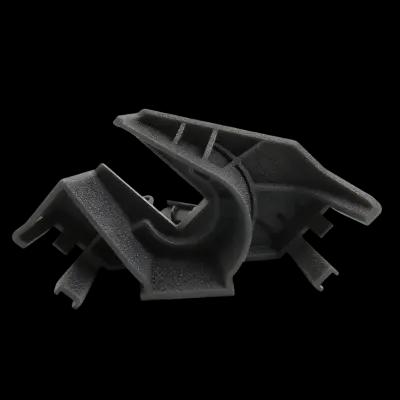
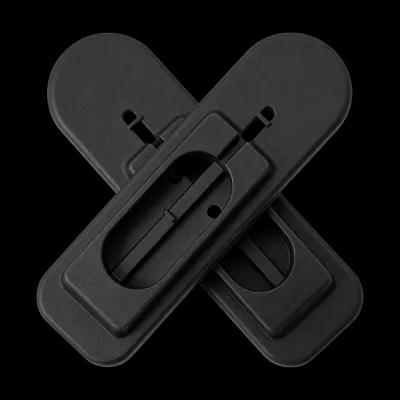
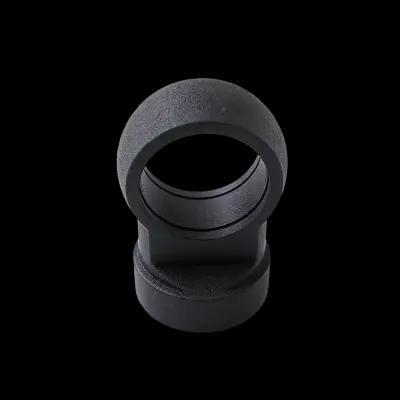
Upload Your Design & Get an Instant Quote Now!
Get instant pricing, project lead times, and DFM feedback
STEP | STP | STL | OBJ | IGS | 3MF | SLDPRT files
File size: 15MB
Trusted by Engineers and Purchasing Leaders at the World's Most Successful Companies






JS Precision delivers 0.3% dimensional accuracy across 18,000+ projects, backed by 15+ years of expertise, ISO 9001:2015 certification, and 99.8% on-time delivery.
Standardized production processes deliver low-volume orders in 3-5 business days, reducing lead times by 40% compared to traditional manufacturing.
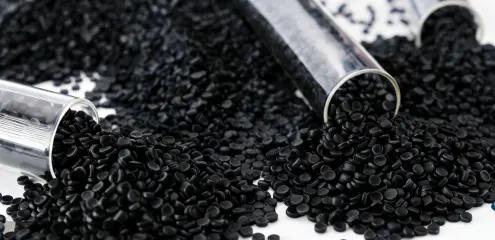
Offers practical materials such as nylon and glass fiber-reinforced nylon, balancing performance and cost for most industrial scenarios.
Supports 1-100 piece low-volume customization without mold opening, meeting multi-variety iteration needs.
Provides common post-processing such as depowdering, sandblasting, and dyeing to quickly enhance part practicality and appearance.
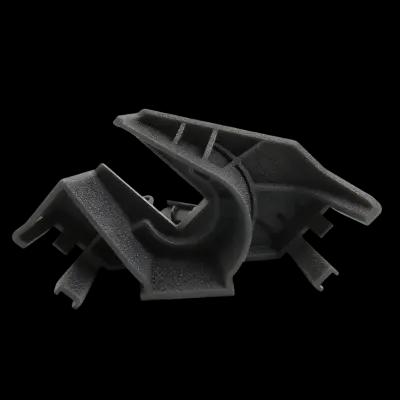
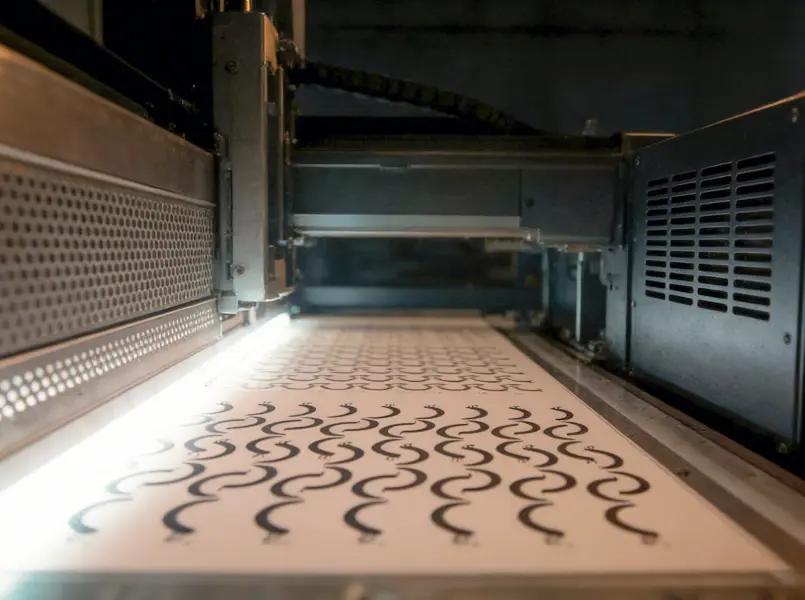
MJF (Multi Jet Fusion) is a 3D printing technology that jets fusing agents via multi-nozzles and sinters powder with infrared radiation, rapidly producing nylon parts with uniform surfaces and stable mechanical performance.
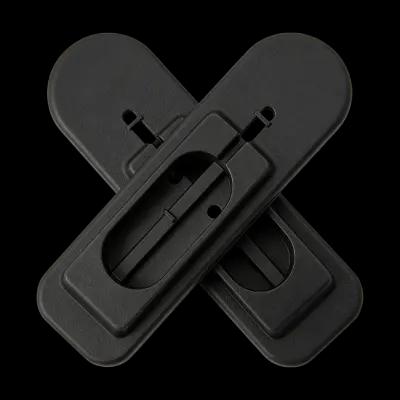
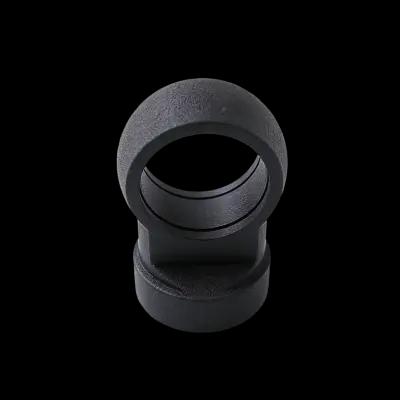
Capable of forming complex structures without supports, it is ideal for low-volume functional part production and design verification, widely used in automotive accessories, industrial fixtures, and consumer products, making it an efficient and cost-effective manufacturing solution.
Below are our standard MJF tolerances for rapid prototype orders, including first-time validation prints, non-production orders, and auto-quoted orders that have not received a manual engineering review. All data is based on HP 5200-Series, Balanced Mode, optimized for rapid validation needs.
| Material Type | Under 30 mm (1.2") | 30–50 mm (1.2"–2.0") | 50–80 mm (2.0"–3.2") | > 80 mm (3.2") |
|---|---|---|---|---|
| Rigid Materials (Nylon, PP) | ±0.70 mm (0.028") | ±0.85 mm (0.033") | ±1.40 mm (0.055") | ±1.75 % |
| Rubber-Like (TPU) | ±1.05 mm (0.041") | ±1.35 mm (0.053") | ±1.80 mm (0.071") | ±2.25 % |
Note: These are typical tolerances for rapid prototype orders, suitable for low-to-medium volume and validation scenarios, provided for reference only.
More stable tolerance performance can be achieved after engineering team optimization, applicable to low-to-medium volume production and orders requiring precision refinement (often following an initial prototyping run). All data is based on HP 5200-Series, Balanced Mode, balancing precision and efficiency.
| Material Type | Under 30 mm(1.2") | 30–50 mm(1.2"–2.0") | 50–80 mm(2.0"–3.2") | > 80 mm(3.2") |
|---|---|---|---|---|
| Rigid Materials (Nylon, PP) | XY= ±0.25 mm (0.010") | XY= ±0.30 mm (0.012") | XY= ±0.39 mm (0.015") | XY= ±0.5 % |
| Z= ±0.42 mm (0.017") | Z= ±0.50 mm (0.020") | Z= ±0.60 mm (0.024") | Z= ±0.75 % | |
| Rubber-Like (TPU) | XY= ±0.60 mm (0.024") | XY= ±0.60 mm (0.024") | XY= ±0.60 mm (0.024") | XY= ±0.75 % |
| Z= ±1.05 mm (0.041") | Z= ±1.35 mm (0.053") | Z= ±1.80 mm (0.071") | Z= ±2.25 % |
Note: These are typical tolerances for orders that have undergone engineering optimization and prototyping, suitable for low-to-medium volume production. For precision performance data, please contact us to obtain a detailed report.
| Material Name | Description | Shore Hardness | Elongation at Break (XY, ZX%) | Impact Strength (XY, ZX kJ/m²) |
|---|---|---|---|---|
| Nylon 11 | Cost-effective high-reusability PA11 balancing impact resistance and cost, suitable for low-to-medium volume structural component production | 80D | 55%, 40% | 6 kJ/m, 5 kJ/m |
| Nylon 12 | Cost-effective high-reusability PA12 with stable performance and economy, ideal for prototype validation and low-volume production | 80D | 20%, 15% | 3.6 kJ/m, 3.5 kJ/m |
| Nylon 12, Glass Fiber Reinforced | Cost-effective high-reusability PA12 glass bead reinforced (40% GB) with high rigidity and practicality, suitable for industrial fixtures and other scenarios | 82D | 10% | 3 kJ/m |
| Polypropylene (PP) | Cost-effective high-reusability PP with chemical resistance and toughness, ideal for rapid validation and functional testing | 70D (Estimated) | 20% | 3.5 kJ/m, 3.0 kJ/m |
| TPU 88A | BASF Ultraint™ TPU01 with high elasticity and wear resistance, suitable for flexible prototype and seal validation | 88A | 220%, 120% | Partial break, no complete fracture |
Cost-effective high-reusability PA11 balancing impact resistance and cost, suitable for low-to-medium volume structural component production
Shore Hardness
80D
Elongation at Break (XY, ZX%)
55%, 40%
Impact Strength (XY, ZX kJ/m²)
6 kJ/m, 5 kJ/m
Cost-effective high-reusability PA12 with stable performance and economy, ideal for prototype validation and low-volume production
Shore Hardness
80D
Elongation at Break (XY, ZX%)
20%, 15%
Impact Strength (XY, ZX kJ/m²)
3.6 kJ/m, 3.5 kJ/m
Cost-effective high-reusability PA12 glass bead reinforced (40% GB) with high rigidity and practicality, suitable for industrial fixtures and other scenarios
Shore Hardness
82D
Elongation at Break (XY, ZX%)
10%
Impact Strength (XY, ZX kJ/m²)
3 kJ/m
Cost-effective high-reusability PP with chemical resistance and toughness, ideal for rapid validation and functional testing
Shore Hardness
70D (Estimated)
Elongation at Break (XY, ZX%)
20%
Impact Strength (XY, ZX kJ/m²)
3.5 kJ/m, 3.0 kJ/m
BASF Ultraint™ TPU01 with high elasticity and wear resistance, suitable for flexible prototype and seal validation
Shore Hardness
88A
Elongation at Break (XY, ZX%)
220%, 120%
Impact Strength (XY, ZX kJ/m²)
Partial break, no complete fracture
Note: The above values represent typical performance under standardized production, suitable for low-to-medium volume and prototyping/validation scenarios. They are provided for reference only. For precision performance data, please contact us to obtain a detailed report.
Tailored to MJF process characteristics, we offer practical surface finish solutions that balance cost and effectiveness, suitable for prototyping and low-to-medium volume production.
Process Description:Standard depowdering + sandblasting to remove residual powder and create a uniform matte surface, meeting basic functional needs.
Application Scenarios:Rapid prototypes, internal test parts, and other scenarios with no special surface requirements.

Process Description:Sealing coating + basic dyeing to seal pores for dust resistance, with customizable basic colors to improve visual appeal.
Application Scenarios:Display prototypes, low-to-medium volume functional parts, and other scenarios requiring basic appearance enhancement.

Process Description:Economical painting, textured sandblasting to achieve specific colors or rough textures, adapting to personalized needs.
Application Scenarios:Consumer product prototypes, cultural and creative display parts, and other scenarios requiring specific surface textures.
Standardized production combined with refined cost control enables rapid delivery and flexible customization for R&D and low-medium volume production.
Focus on Nylon 12/PP practical materials, paired with economical post-processing, 15%-20% lower cost, balancing performance and cost for low-medium volume production.
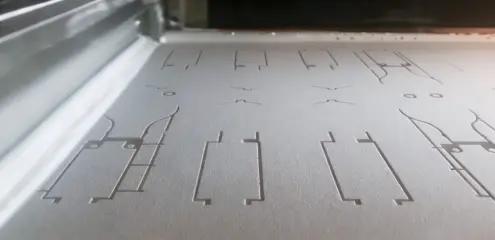
Standard orders in 5-7 days, expedited in 2-3 days, real-time tracking via online system, no complex procurement, rapid R&D iteration support.
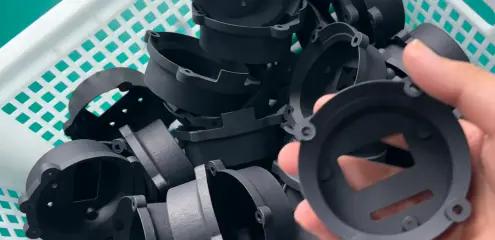
Supports 1-100 pcs multi-variety production, free basic DFM, no mold opening needed, for consumer electronics, industrial fixtures, etc.
MJF (Multi Jet Fusion) is a cost-effective 3D printing technology balancing efficiency and cost. Through standardized production processes and batch optimization, it provides stable and reliable forming solutions for low-to-medium volume production and R&D validation.
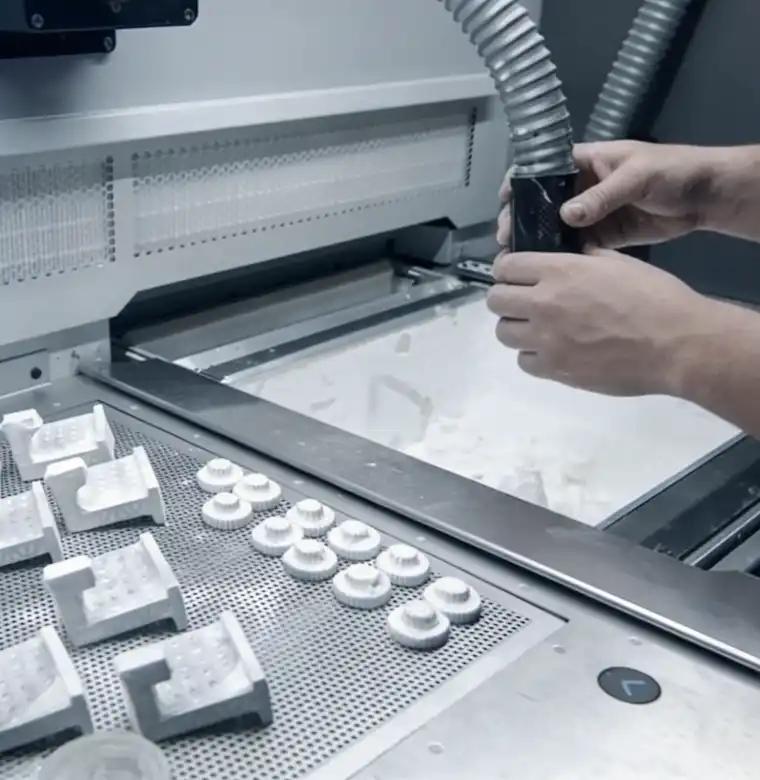
Cost-Effective Forming Solutions
Focus on practical materials such as Nylon 12, paired with economical post-processing, reducing comprehensive costs by 15%-20% compared to SLS, suitable for low-to-medium volume production.
Rapid Delivery Response
Full-field parallel sintering + intelligent scheduling, standard orders delivered in 5-7 days, expedited in 2-3 days, meeting rapid validation needs for R&D iteration.
Stable Batch Consistency
Standardized process control, batch part dimensional deviation ≤0.1mm, ensuring consistent performance and appearance across multiple production runs.
Practicality of Thermoplastic Materials
Based on general thermoplastics such as Nylon and PP, with good toughness and chemical resistance, suitable for functional testing and end-use component production.
Flexible Low-Volume Adaptation
Supports 1-100 piece multi-variety parallel production, no mold opening required, quickly implementing customized needs to shorten product launch cycles.
Generate multi-version appearance validation models with high printing speed, adapting to design iteration of all product types, balancing efficiency and cost.
Use practical materials to produce functional prototypes with good toughness, supporting assembly testing of various moving parts, suitable for low-to-medium volume R&D needs.
Supports low-volume, multi-variety parallel production, no mold opening required, short delivery cycles, enabling rapid deployment of low-volume end-use components for all product types.





Stay informed with the latest updates and announcements from JS Precision. Learn about our most recent projects.
We focus on low-to-medium volume customized production, and can flexibly adjust production plans according to product needs to adapt to various customized production requirements.
We provide free basic DFM design advice, and give optimization schemes for manufacturability problems in product production to reduce production risks.
We support the flexible selection of a variety of practical surface treatment processes, and can match suitable treatment schemes according to the application scenarios and budget of products.
Yes, we will fully communicate the appearance requirements with customers in the early stage of production. If there is any adjustment, we can connect with the engineering team in a timely manner to optimize the process plan.
We support the synchronous production of multiple varieties in small batches without additional scheduling waiting, adapting to the multi-version production demand in R&D iteration.
We have a professional customer service and technical team to connect, provide full-process process docking guidance for first-time cooperating customers, and answer production-related questions.
It is highly suitable for product verification needs in the R&D stage, can quickly respond to process adjustments of products, and match the rhythm of R&D iteration.
Through standardized production operations and basic quality inspection processes, we inspect the appearance and structure of each batch of products to ensure the quality consistency between batches.
We provide free secondary processing adaptation advice, and recommend a suitable secondary processing method according to product characteristics to improve the use effect of the product.